Tag: exports

  • Mobile data service suspension to cost Pakistan’s IT industry $3-4 million in daily losses

    Mobile data service suspension to cost Pakistan’s IT industry $3-4 million in daily losses

    The suspension of mobile data services in Pakistan is expected to result in a daily loss of $3-4 million to the country’s IT exports.

    The Pakistan Software Houses Association (P@SHA) has called on the government to restore mobile broadband services, which have been suspended since Tuesday due to the political turmoil that erupted after the arrest of the PTI party’s chairman, Imran Khan.

    The government has blocked 3G/4G mobile broadband services and major social media platforms like Twitter and Facebook, as well as slowing down YouTube services to control the spread of “unwanted information” that could cause disinformation and panic among the masses.

    According to The News, Muhammad Zohaib Khan, the Chairman of P@SHA, warned that the suspension of mobile broadband services could result in significant losses for the IT industry, which relies heavily on internet connectivity.

    The IT industry has come to a standstill since Tuesday evening, and professionals are working from home due to the precarious law and order situation in the entire country. Zohaib urged the government to resume internet services to the IT industry immediately, saying that the sudden blockade of broadband services has completely halted IT operations, and the IT industry is already facing pressure due to poor governmental policies.

    Zohaib requested Prime Minister Shehbaz Sharif to intervene directly and asked for the support of the Ministry of IT and Telecom, Pakistan Software Export Board (PSEB), and Tech Destination Pakistan administrations to request the premier to issue categorical instructions.

    The suspension of mobile broadband services has also affected individuals who rely on digital apps for commuting or ordering/delivering food and other products. However, an official stated that it is difficult to calculate the losses at this stage.
  • Alarming decline in Pakistan’s manufacturing sector, latest data reveals

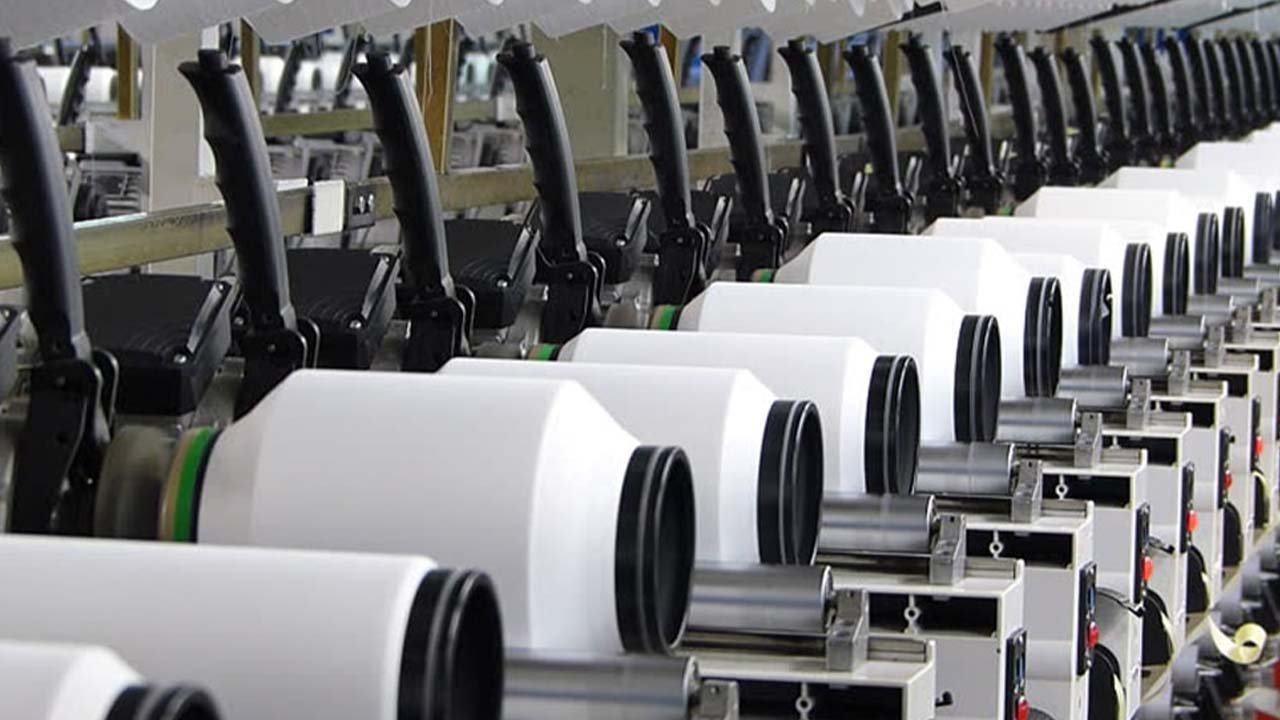
    Alarming decline in Pakistan’s manufacturing sector, latest data reveals

    The manufacturing industry in Pakistan, which is responsible for about 20 per cent of the country’s economic growth, has experienced its eighth consecutive month of decline. This is a major cause for concern as it could have negative impacts on the overall economy.

    In February, the rate of decline was particularly severe, with a contraction of 11.59 per cent compared to the same period in the previous year, according to data from the Pakistan Bureau of Statistics.

    This decline will impact Pakistan’s overall economic growth, with the gross domestic product (GDP) also expected to suffer a significant blow this fiscal year.

    The negative growth of the sector is due to both domestic and global factors, including high energy costs, rupee devaluation, and the government’s tightening of monetary and fiscal policies. Industrial output fell by 5.56 per cent in the first eight months (July-February) of the ongoing fiscal year, compared to the same period last year.

    The global economic slowdown has further worsened the situation, with many businesses scaling back operations or reducing operating hours, while others have shut down their plants. The LSM sector has witnessed a decline in production from August 2022 to February 2023.

    All major and small sectors’ output contracted in February, including textile, food, coke and petroleum products, chemicals, automobile, pharmaceuticals, cement, fertilisers, iron and steel, furniture, leather products, electrical equipment, and non-metallic mineral products.

    To combat soaring inflation, the State Bank of Pakistan (SBP) also raised the discount rate to 21 per cent, hindering industrial activities by making bank financing more expensive.

  • Pakistan records 17% increase in exports to Afghanistan, SBP data shows

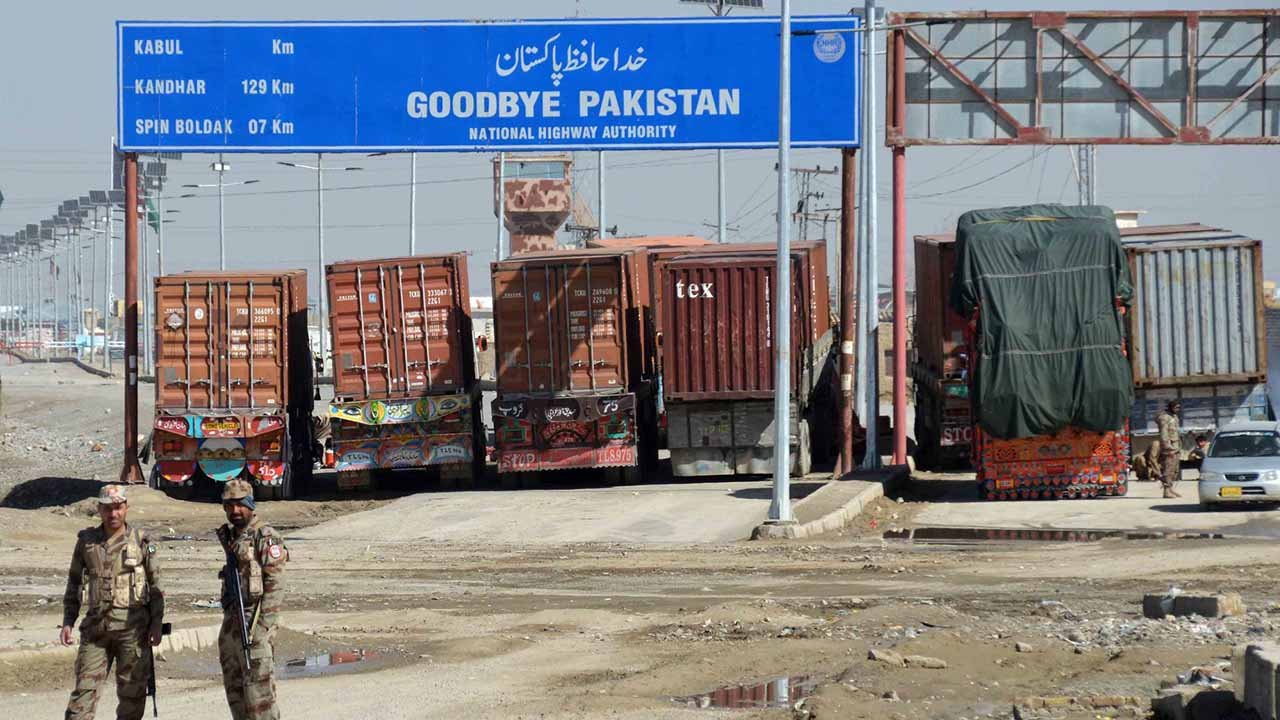
    Pakistan records 17% increase in exports to Afghanistan, SBP data shows

    According to a report by the State Bank of Pakistan (SBP), Pakistan’s export of goods and services to Afghanistan has increased by 17.02 per cent during the first eight months of the current fiscal year (2022-23) compared to the corresponding period of the previous year.

    From July-February (2022-23), overall exports to Afghanistan reached US $346.522 million, while during the same period last year, exports were recorded at US $296.109 million, showing a growth of 17.02 per cent.

    Furthermore, the year-to-year basis also showed an increase of 60.49 per cent in exports to Afghanistan, rising from US $38.222 million in February 2022 to US $61.345 million in February 2023. Meanwhile, on a month-on-month basis, exports to Afghanistan also rose by 82.58 per cent during February 2023, reaching US $61.345 million, compared to US $33.598 million in January 2022.

    In contrast, Pakistan’s exports to other countries decreased by 9.65 per cent during the eight months, dropping from US $20.632 billion to US $18.639 billion, according to SBP data.

    The imports from Afghanistan into Pakistan during the period under review were recorded at US $13.540 million, which was a significant decrease of 88.65 per cent compared to last year’s US $119.328 million in July-February (2021-22).

    Year-on-year, imports from Afghanistan also dropped by 98.89 per cent, from US $13.723 million in February 2022 to US $0.151 million in February 2023. However, on a month-on-month basis, imports from Afghanistan increased by 11.02 per cent during February 2023, reaching US $0.136 million, compared to US $0.122 million in January 2022.

    Overall, the imports into Pakistan also witnessed a decrease of 21.02 per cent, from US $47.336 billion to US $37.388 billion, according to SBP data. Based on the trade figures, the trade of goods and services with Afghanistan witnessed an 88.35 per cent increase in surplus during the period under review compared to the previous year, with a recorded surplus of US $332.982 million against US $176.781 million during the last year.

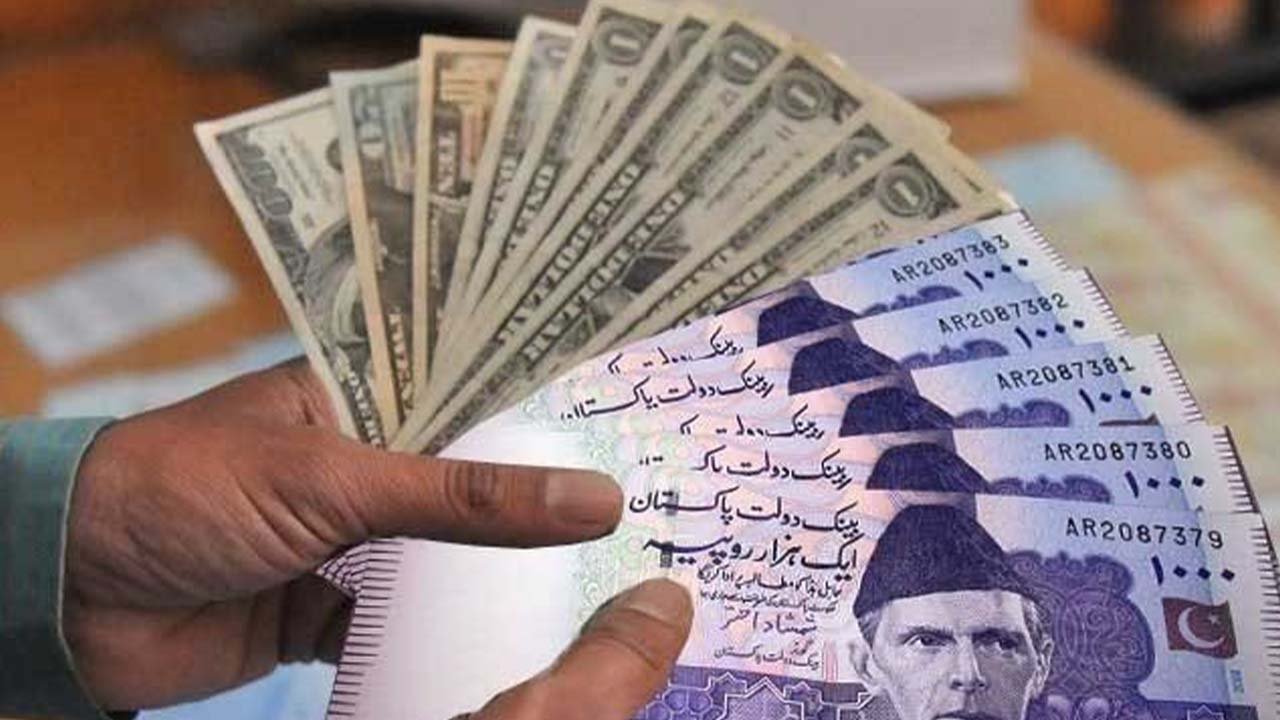
  • Pakistani rupee reverses marginal gains, closes at Rs281.61 against US dollar

    Pakistani rupee reverses marginal gains, closes at Rs281.61 against US dollar

    On Monday, the Pakistani rupee faced renewed pressure against the US dollar, declining by 0.30 per cent in the inter-bank market after posting marginal gains on Friday. According to the State Bank of Pakistan (SBP), the rupee settled at Rs281.61, representing a decrease of Re0.84.

    Despite the rupee having found some relief on Friday with a 0.54 per cent appreciation in the inter-bank market, the currency had depreciated by 0.82 per cent against the US dollar during the previous week.

    The SBP has received inflows from China, which have provided support to critical levels of foreign exchange, but concerns over the delay in the International Monetary Fund (IMF) programme have continued to impact sentiment.

    Miftah Ismail, former Federal Finance Minister, suggested on Sunday that Pakistan should ensure 15 per cent tax on Gross Domestic Product (GDP) and 15 per cent exports to GDP in order to avoid the need for IMF programs.

    Internationally, the US dollar experienced a sharp decline on Monday due to the sudden collapse of Silicon Valley Bank (SIVB). The US government announced various measures on Monday to mitigate the impact of the bank’s collapse, including ensuring access to deposits for SVB customers and depositors of New York’s Signature Bank.

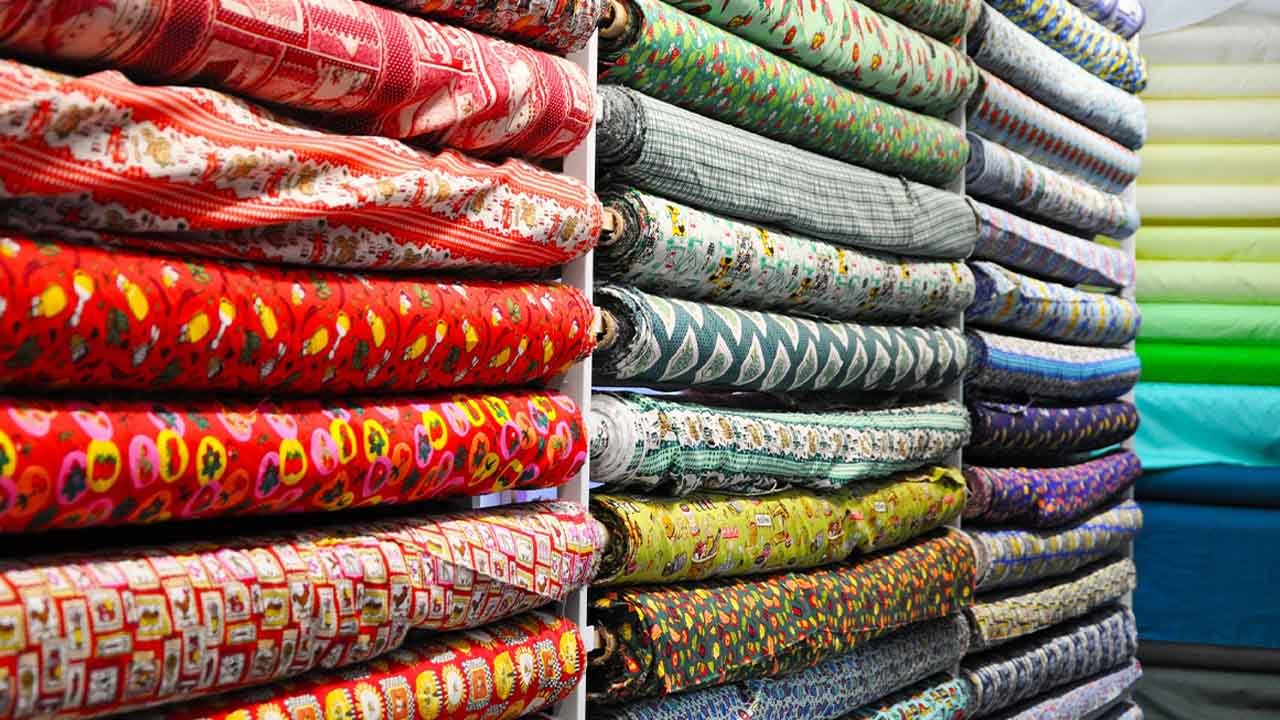
  • Pakistan’s textile industry struggles as exports fall by 28% in February

    Pakistan’s textile industry struggles as exports fall by 28% in February

    On Monday, the All Pakistan Textile Mills Association (APTMA) released provisional data indicating that Pakistan’s textile sector exports declined significantly by 28 per cent, totaling $1.2 billion in February 2023, compared to $1.67 billion in the same month the previous year.

    Additionally, APTMA reported that textile exports for the first eight months of FY23 decreased by 11 per cent to $11.24 billion, down from $12.60 billion in 8MFY22. These declines are alarming for Pakistan, whose economy is already struggling with depleting foreign exchange reserves.

    The country’s central bank has only $3.81 billion in reserves, which is barely enough to cover a month of imports.

    Industrialists in Pakistan have expressed concern about the ongoing slump in the textile sector. Data released by the Pakistan Cotton Ginner’s Association (PCGA) on Friday revealed that cotton arrival in Pakistan also decreased by 34.5 per cent year-on-year.

    Last month, APTMA urged the federal government to implement a uniform gas price of $7 per MMBtu for the export industry throughout the country to ensure a level playing field.

    APTMA also warned that the government’s decision to suspend the regionally competitive energy tariff (RCET) of electricity for Export Oriented Units (EOUs) would harm the textile industry, particularly in Punjab.

    In December, APTMA wrote a letter to Prime Minister Shehbaz Sharif, warning that the country’s textile exports could fall below $1 billion a month from 2023 onwards, highlighting a range of issues affecting the sector, which is currently operating at less than 50 per cent capacity utilization.

  • Exports from Pakistan witness 35.7% increase in first four months of FY23

    According to data from the Pakistan Bureau of Statistics (PBS), exports from Pakistan increased by 35.77 per cent in rupee terms during the first four months of the current fiscal year (2022-23) compared to the same time previous year.

    According to Geo, exports from July through October (2022-23) were Rs2,131,776 million, up from Rs1,570,136 in the corresponding period the previous year. This represents a growth of 35.77 per cent.

    In comparison to October 2021, when exports were Rs423,063 million, the country’s exports rose by 24.29 per cent to Rs525,831 million in October 2022.

    When compared to the exports of Rs563,714 million reported in September 2022, the exports climbed by 6.72 per cent in October 2022 on a monthly basis.

    The main commodities of exports during October 2022 were:

    Knitwear (Rs86,400 million), readymade garments (Rs60,778 million), bedwear (Rs47,895 million), cotton cloth (Rs37,407 million), rice other than basmati (Rs20,344 million), towels (Rs17,553 million), made-up articles, excluding towels & Bedwear (Rs12,758 million), fish products (Rs12,057 million), rice Basmati (Rs11,375 million) and cotton yarn (Rs10,819 million).

    On the other side, imports increased by 12.87 per cent from July through October 2022 to a total of Rs4,701,648 million, compared to Rs4,165,590 million during the same time previous year.

    Imports totaled Rs1,039,036 million in October 2022 compared to Rs1,232,299 million in September 2022 and Rs1,093,545 million in October 2021, a drop of 15.68 per cent over September 2021 and 4.98 per cent over October 2021.

    The major imports during October 2022 were:

     Petroleum products (Rs100,436 million), petroleum crude (Rs82,124 million), natural gas, liquified (Rs65,485 million), palm oil (Rs59,739 million), plastic materials (Rs47,301 million), iron & steel (Rs38,517 million), raw cotton (Rs29,943 million), iron & steel scrap (Rs26,037 million), electrical machinery & apparatus (Rs24,058 million) and medicinal products (Rs23,234 million).

  • IT minister announces new launch date for 5G

    IT minister announces new launch date for 5G

    The government is expected to introduce 5G in July 2023 instead of next month.

    Syed Amin ul Haq, the minister of information technology and telecommunications, said that the effort would help further expand the IT industry and its export at an exponential rate while announcing the new date.

    Speaking at a ceremony for the UBIT Career Fest 2022, which was put on by the University of Karachi’s Department of Computer Science, the minister expressed confidence that the new deadline for the introduction of 5G technology would be met without further delay.

    “Our IT industry has already witnessed robust growth,” he said. “As compared to the other 43 ministries of Pakistan, the highest increase in exports has been registered by the IT and telecommunication sector. The exports of other ministries increased by 2 to 3 per cent only over the last couple of years while the exports of IT and telecom jumped by 47.44 per cent during the same period. “It reflects the potential which we need to capitalise on,” the minister remarked.

    The young IT graduates can seize the expanding opportunities being offered by the IT companies amid huge funding of $373 million from the government for the startups, he claimed, demonstrating that future job needs can be met with the cooperation of industry and universities.

  • Exports of leather garments witness 10.15 per cent increase

    Exports of leather garments witness 10.15 per cent increase

    Owing to a partial recovery of international orders and government support programmes, Pakistan’s non-textile exports increased by 25.85 per cent year over year to $12.46 billion in the preceding 2021–22.

    The value-added sectors are primarily driving overall growth in the non-textile sector. According to data produced by the Pakistan Bureau of Statistics (PBS) on Thursday, the non-textile sector has not yet received full orders to pre-Covid levels.

    Despite lockdowns in several nations, three industries—leather clothing, medical equipment, and engineering goods—maintained growth in export revenues in FY21.

    Exports of leather clothing increased by 10.15 per cent and those of leather gloves by 10.60 per cent in the value-added leather industry. In contrast, raw leather exports rose by more than 28.50% over the previous fiscal year.

    One of the major producers of surgical instruments worldwide is Pakistan. However, well-known brands resell these instruments in western nations. Because of this, the export value of these goods is still extremely low.

    In FY22, surgical tool exports experienced a 1.29 per cent decline. Pharmaceutical exports, however, decreased by 0.49 per cent.

  • DG Khan Cement to export 50,000 tonnes of cement to the United States

    DG Khan Cement to export 50,000 tonnes of cement to the United States

    Following long and complex certification processes, D.G. Khan Cement Company Limited (DGKCL), one of Pakistan’s largest cement producers, is set to export 50,000 tonnes of the building material to the sophisticated US market.

    This is a positive development for Pakistan, which is struggling to boost exports in the face of a burgeoning trade deficit that has steered the rupee to historic depths. The process took almost ten months for the renowned industrial group to complete the necessary certifications for delivering cement to US markets after winning the contract. TXDOT, LDOT, NCDOT, and SCDOT are among the certifications available.

    According to Brecorder, the company’s CFO, Inayat Ullah Niazi, stated that a ship was currently loading cement at a port in Karachi for delivery to Houston.

    It was not easy for the company to meet the contract for a monthly supply of 100,000 tonnes of cement to Texas. In August of last year, DG Khan Cement signed a contract with a US company for the year 2021.

    Since the United States lacks cement production, it imports it from Mexico, Canada, and Turkey.

    Finally. a Pakistani cement supplier has entered the US market for the first time, as demand for the construction material has risen dramatically, with buyers looking for other options in the wake of President Joe Biden’s $6 trillion infrastructure package.

    All of the mega infrastructure in the United States, including roads, bridges, and other structures, would be rebuilt as they were nearly a century ago under the announced package.

    Pakistan exported 4.971 million tonnes cement in the first 11 months of the current fiscal year (July-May), a negative growth of 43.32 per cent, according to export data. Cement exports to Afghanistan were only 813,493 tonnes during this time, a negative 65.04 per cent increase.

    With only 1.478 million tonnes exported, exports to other countries experienced negative growth of 27.2 per cent.

    As per industry insiders, after DG Khan Cement began discovering the US market for cement exports, other larger players began the certification process for their goods.

    According to the latest figures released by the Pakistan Bureau of Statistics (PBS), the country’s exports declined by 10.22 per cent on a monthly basis in May 2022, falling to $2.6 billion from $2.897 billion in April 2022.

    D.G. Khan Cement, one of Pakistan’s largest cement producers, earned Rs4.1 billion in the nine-month period ending March 31, 2022, a 26 per cent increase in profit. In the same period of 2020-21, the company made Rs3.25 billion in profits.

    It is worth noting that the business also received orders for cement export to the Philippines back in 2020.

    With a nearly 50 per cent (Rs300 per bag) increase in the last 12 months, more price increases would be required to offset the coal cost impact.