Tag: Extended Fund Facility

  • Pakistan is making desperate efforts to revive IMF programme before deadline

    Pakistan is making desperate efforts to revive IMF programme before deadline

    Pakistan is facing a critical situation as it seeks to revive its stalled Extended Fund Facility (EFF) programme with the International Monetary Fund (IMF). The $6.5 billion programme is set to expire on June 30, and negotiations for the ninth review, due last November, have not been successful.

    Efforts to reach a Staff Level Agreement (SLA) with the IMF have been ongoing, but disagreements persist regarding the conditions set by the Fund. The SLA must be signed before Pakistan unveils its 2023-24 budget on June 9, or the current programme will fail.

    According to The News, two options are being considered. The first involves signing the SLA immediately, requesting approval from the IMF Executive Board for the next $1 billion tranche, and extending the EFF programme for a few months to complete the 10th and 11th reviews. The second option is to combine the 9th and 10th reviews, share budgetary figures with the IMF, and sign the SLA after the budget announcement. If approved by parliament, the IMF’s Executive Board could then grant an extension for the completion of the 11th Review by July or August 2023.

    However, finding a solution is proving challenging. Maintaining the status quo will not lead to any breakthroughs, and consensus must be reached between Pakistan and the IMF. Political uncertainty, inadequate economic management, and the inability to secure sufficient external financing have hindered progress.

    Without an IMF programme, Pakistan’s options are limited. The risk of default would increase, and reserves would remain weak. Although there are options available, such as striking the SLA in the next few days or combining reviews, they are becoming increasingly difficult. Life without the IMF would require seeking financing from other sources at higher costs.

    It is crucial for Pakistan to resolve its differences with the IMF and secure the continuation of the EFF programme. Failure to do so would have severe consequences for economic stability and future financing prospects.
  • IMF loan delay continues to impact Pakistani rupee

    IMF loan delay continues to impact Pakistani rupee

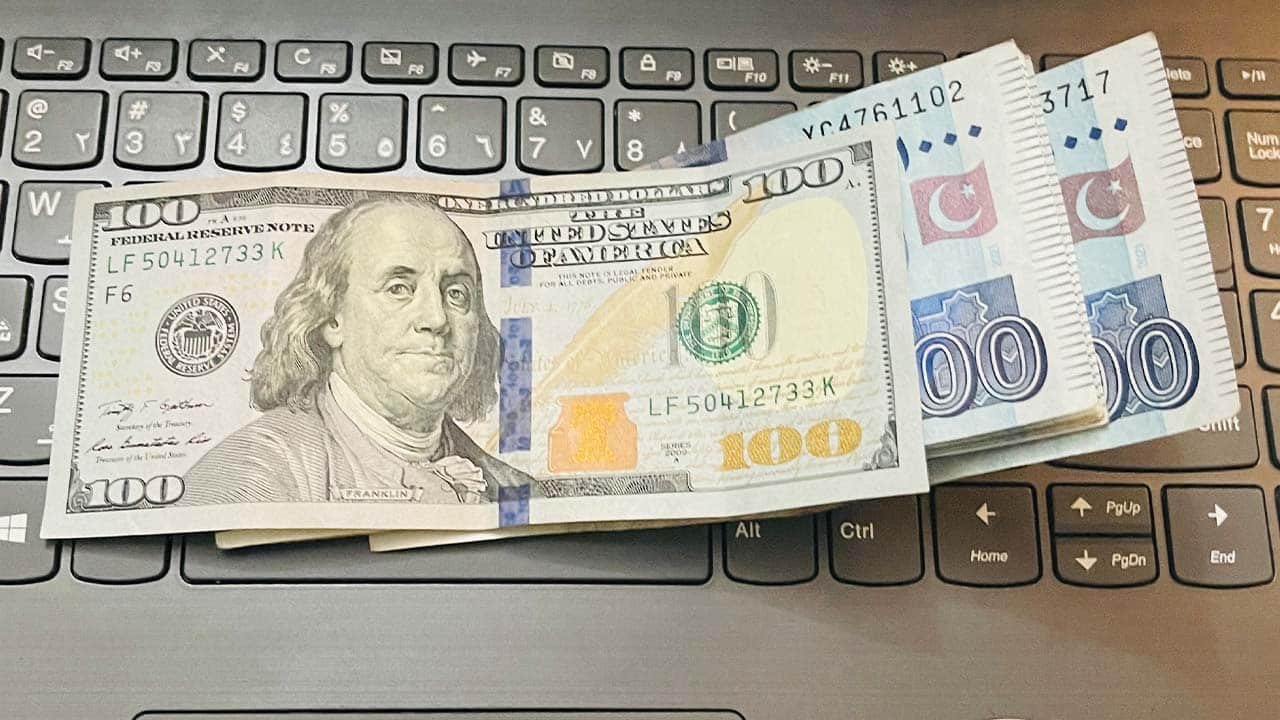
    During trading on Wednesday, the Pakistani rupee experienced a slight decrease against the US dollar, with a depreciation of almost 0.06 per cent in the inter-bank market. At around 12:45 pm, the currency was being traded at Rs284.06, which is a decline of Re0.16.

    This comes after the rupee had previously regained some ground against the US dollar on Tuesday, settling at Rs283.9 in the inter-bank market. The International Monetary Fund (IMF) Extended Fund Facility (EFF) has been stalled since last year, and market participants are waiting for its resumption.

    Experts have suggested that the reduced demand for US dollars can be attributed to the increase in inflows from workers’ remittances and a decline in import payments. Globally, the dollar saw some stability on Wednesday after being influenced by bond market volatility. Investors closely monitored US economic indicators, Federal Reserve commentary, and corporate earnings for indications about the path for interest rates.

    The dollar index, which measures the greenback against six major peers, rose by 0.11 per cent to 101.83 in Asian trading, following a 0.36 per cent decline on Tuesday that reversed the 0.54 per cent increase from the previous session.

    Oil prices, which serve as a significant indicator of currency parity, declined on Wednesday as the market considered potential interest rate hikes from the Federal Reserve. Such hikes could slow growth and dampen oil consumption, offsetting the impact of falling US inventories and strong Chinese economic data.

  • Ishaq Dar to attend IMF, World Bank meetings in US

    Ishaq Dar to attend IMF, World Bank meetings in US

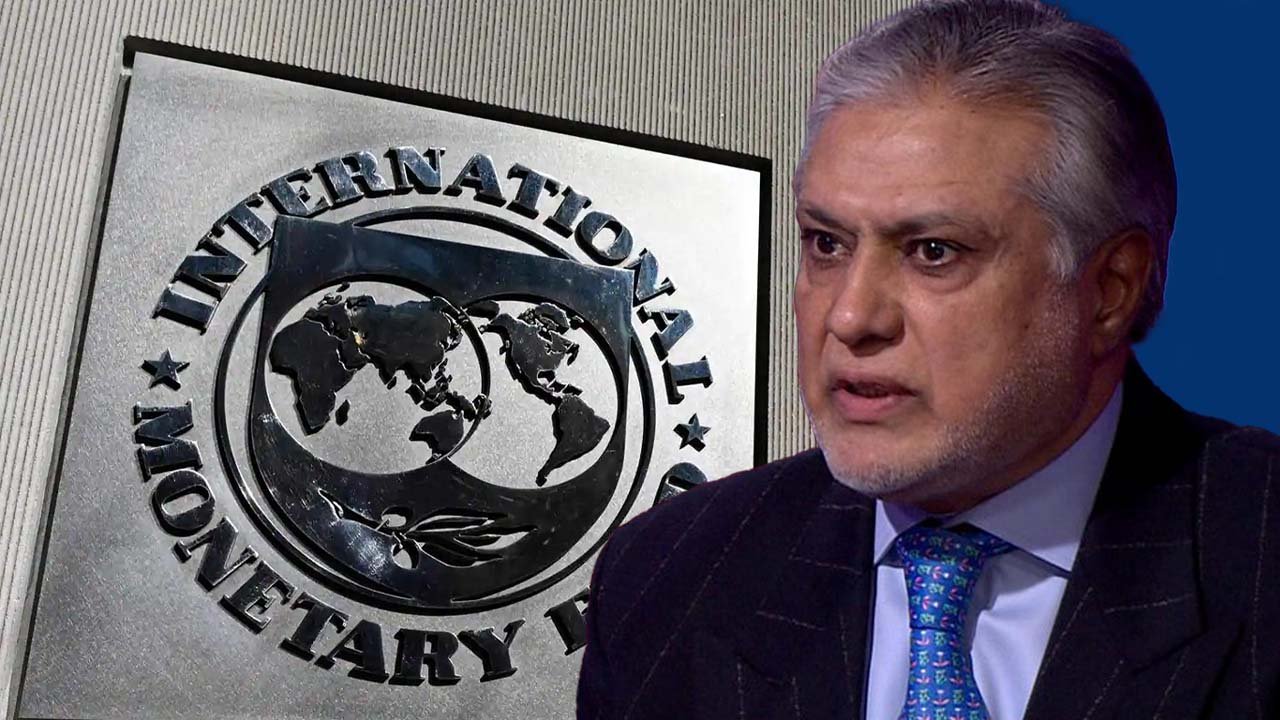
    Finance Minister of Pakistan, Ishaq Dar, will lead a delegation to the United States to attend the annual spring meeting of the Breton Wood Institutions (BWIs), comprising the International Monetary Fund (IMF) and World Bank, from April 10 to 16.

    The delegation includes officials from the Finance and Economic Affairs Division and the State Bank of Pakistan (SBP) governor. The delegation is expected to present new proposals to the IMF and World Bank for the provision of dollar inflows.

    IMF and Pakistan will also discuss the possibility of combining the remaining 10th and 11th reviews under the Extended Fund Facility (EFF) program, worth $6.5 billion, if the pending 9th review is completed. The EFF program, signed in 2019, is set to expire on June 30, 2023, and cannot be extended beyond the deadline.

    The delay in the 9th Review’s completion, scheduled for December 2022, has resulted in the delay of the 10th Review, which was to start in February 2023. The 11th Review was scheduled to begin on May 3. The delay in the 9th Review will increase the cost of correcting the situation.

    The government of Pakistan has taken difficult decisions to revive the IMF program, but there is no easy solution to the country’s ailing economy. The IMF is seeking verification from Pakistan’s bilateral friends, including Saudi Arabia, the UAE, and Qatar, to provide additional assistance of $6 billion until the end of June 2023.

    SBP’s foreign exchange reserves currently stand at $4.2 billion, which is insufficient to meet obligations related to foreign debt servicing, including principal and markup. It remains to be seen how the completion of the bailout program will proceed, given the delay in the 10th Review.

  • Another IMF condition met as Pakistan imposes 25% sales tax on luxury items

    On Tuesday, the federal cabinet led by Prime Minister Shehbaz Sharif approved the imposition of a 25 per cent sales tax on luxury items, fulfilling a condition set by the International Monetary Fund (IMF) for the revival of the $7 billion Extended Fund Facility (EFF) that had been stalled for months.

    The cabinet approved the 25 per cent general sales tax (GST) on luxury items through a circulation summary. The Federal Board of Revenue will issue a formal notification in the coming days, and the new rate will be applicable from March 1.

    The list of items subject to the 25 per cent GST includes aerated water and juices, imported cars, mobile phones, pet food, sanitary and bathroom wares, carpets (excluding Afghanistan), chandeliers and lighting devices or equipment, chocolates, cigarettes, confectionery items, corn flakes, cosmetics, shaving items, tissue papers, crockery, decorative devices, doors and window frames, fish, footwear, fruits and dry fruits, furniture, home appliances (CBU), luxury leather jackets and apparel, mattress and sleeping bags, frozen or processed meat, musical instruments, arms and ammunition, shampoos, sunglasses, tomato ketchup and sauces, and travel bags and suitcases.

    The federal government also imposed a 25 per cent GST rate on locally manufactured luxury vehicles of 1,400cc and above. The FBR has estimated that it will collect an additional Rs15 billion in taxes through the enhanced GST rate of 25 per cent in the four-month period.

    According to sources, Pakistan and IMF held virtual negotiations on Monday to revive the loan program that had been stalled for months. During the meeting, the lender expressed satisfaction with the country’s measures, while Pakistan insisted on early finalization of the staff-level agreement.

    The negotiations were moving positively as the Fund did not place any new demands during the virtual session. The State Bank of Pakistan (SBP) informed IMF representatives about the estimated collection of foreign exchange reserves of $10 billion until June, and sources claimed that Pakistan had achieved future targets before the staff-level agreement.

    It is worth mentioning that the government has expedited the implementation of IMF demands to unlock the loan tranche for the country’s economic recovery.

  • IMF Executive Board meeting to discuss revival of loan plan today

    IMF Executive Board meeting to discuss revival of loan plan today

    The International Monetary Fund (IMF) executive board will meet on Monday (today) to discuss the bailout plan for Pakistan.

    The 8th and 9th tranches, totaling over $1.2 billion, are anticipated to be disbursed with board approval.

    According to Geo, Pakistan also requested that the Extended Fund Facility (EFF) be increased from $6 billion to $7 billion and that the term be extended from September 2022 to June 2023.

    If the contract is approved by the board, the IMF will give Pakistan an initial payment of roughly $1.2 billion and could give up to $4 billion during the remaining months of the current fiscal year, which started on July 1.

    The board gave its approval for the transfer of $1.386 billion to Pakistan under the RFI in April 2020 to help with the economic effects of the Covid-19 shock.

    Additionally, according to The Wall Street Journal, Pakistan has secured at least $37 billion in foreign loans and investments in recent weeks, saving it from a financial catastrophe similar to that of Sri Lanka.

    The restart of the programme will greatly benefit the government led by Prime Minister Shehbaz Sharif as it will assist prevent what would be the second default in Asia this year after Sri Lanka.

    Bloomberg estimates that Pakistan would have to pay at least $3 billion in debt payment during the first half of the fiscal year 2023.

    The State Bank of Pakistan anticipates that foreign exchange reserves would increase to around $16 billion this fiscal year from $7.8 billion, thanks to the IMF loan opening the door for additional funding.

  • IMF to send Letter of Intent soon to release $1.17 billion tranche

    IMF to send Letter of Intent soon to release $1.17 billion tranche

    The International Monetary Fund’s (IMF) agreement with Pakistan to release two tranches totaling $1.17 billion as part of a loan facility that was stalled is nearing completion, as the Letter of Intent (LoI) from the fund may arrive in a few days.

    Pakistan is likely to receive the LoI, which the governor of the State Bank of Pakistan (SBP) and the Finance Minister, Miftah Ismail, will jointly sign, according to The News.

    The IMF mission leader had to rush to Australia for a personal engagement, according to senior officials at the Finance Ministry, thus the Fund was likely to submit the LoI “anytime soon.”

    The IMF board would also discuss adding $1 billion to a $6 billion programme agreed upon in 2019 at its meeting scheduled for August 24.

    The government may impose higher taxes on cigarettes, tobacco leaves, fertiliser, and other items in order to appease the IMF.

    Additional taxes are being considered for a variety of sectors. Through a Presidential Ordinance, tax rates on cigarettes and the processing of tobacco leaf might be increased.

  • IMF, Pakistan reach staff-level agreement on policies and reforms

    IMF, Pakistan reach staff-level agreement on policies and reforms

    The International Monetary Fund (IMF) and Pakistan reached a staff-level agreement on policies and reforms needed to complete the sixth review under the $6 billion Extended Fund Facility (EFF), which has been ‘in recess’ since April, the Fund announced in a statement on Monday.

    The agreement is subject to approval by the Executive Board, following the implementation of prior actions, notably on fiscal and institutional reforms. The approval of the agreement will make available 750 million in Special Drawing Rights (SDR), equivalent to $1,059m, read the statement.

    The Fund acknowledged Pakistan’s progress in improving its anti-money laundering and combatting the financing of terrorism (AML/CFT) regime. However, additional time was needed to strengthen its effectiveness, according to the statement.

    “Available data suggest that a strong economic recovery has gained hold, benefiting from the authorities’ multifaceted policy response to the Covid-19 pandemic that has helped contain its human and macroeconomic ramifications,” the IMF said.

    “At the same time, external pressures have started to emerge: a widening of the current account deficit and depreciation pressures on the exchange rate — mainly reflecting the compound effects of the stronger economic activity, an expansionary macroeconomic policy mix, and higher international commodity prices.”

    The IMF emphasised that the monetary policy needs to remain focused on curbing inflation, preserving exchange rate flexibility, and strengthening international reserves.

    The introduction of the Finance Bill in the National Assembly to increase taxes and approval of the State Bank of Pakistan (SBP) Amendment Bill are pre-conditions for the revival of the IMF loan programme, Finance Adviser Shaukat Tarin said last week.

    The IMF said that despite a difficult environment, progress continues to be made in the implementation of the EFF-supported programme.

    “All quantitative performance criteria (PCs) for end-June were met with wide margins, except for that on the primary budget deficit”, said the IMF.