Tag: external financing

  • Moody’s upgrades Pakistan’s credit rating to Caa2, citing improved economic stability

    Moody’s upgrades Pakistan’s credit rating to Caa2, citing improved economic stability

    Moody’s Investors Service has upgraded Pakistan’s long-term issuer rating from “Caa3” to “Caa2” with a stable outlook, reflecting a moderate improvement in the country’s macroeconomic conditions and external financial position.

    This decision follows a similar move by Fitch Ratings in July, which upgraded Pakistan’s credit rating from “CCC” to “CCC+.”

    Moody’s stated that the upgrade is a result of reduced default risks, which are now more consistent with a Caa2 rating.

    This improvement is partly due to greater certainty in Pakistan’s external financing, bolstered by the sovereign’s staff-level agreement with the International Monetary Fund (IMF) on 12 July 2024, for a 37-month Extended Fund Facility (EFF) worth $7 billion. The IMF Board is expected to approve the EFF in the coming weeks.

    Pakistan’s foreign exchange reserves have nearly doubled since June 2023, although they remain below the levels required to meet its external financing needs. The country continues to rely on timely support from official partners to fully meet its external debt obligations.

    Despite the upgrade, Pakistan’s Caa2 rating still reflects very weak debt affordability, which poses a significant risk to debt sustainability. Moody’s expects interest payments to consume about half of the government’s revenue over the next two to three years. The rating also takes into account the country’s weak governance and high political uncertainty.

    The stable outlook indicates a balance of risks, with potential for further improvement if the government can reduce its liquidity and external vulnerability risks and achieve better fiscal outcomes, supported by the IMF programme.

    Sustained implementation of reforms, particularly those aimed at increasing government revenue, could enhance debt affordability. Timely completion of IMF reviews would enable Pakistan to secure continued financing from official partners, essential for meeting external debt obligations and rebuilding foreign exchange reserves.

    The upgrade to Caa2 from Caa3 also applies to the backed foreign currency senior unsecured ratings for The Pakistan Global Sukuk Programme Co Ltd, which Moody’s views as direct obligations of the Government of Pakistan. The outlook for The Pakistan Global Sukuk Programme Co Ltd is positive.

    Additionally, Moody’s has raised Pakistan’s local and foreign currency country ceilings to B3 and Caa2 from B3 and Caa1, respectively.

    The two-notch gap between the local currency ceiling and the sovereign rating is due to the government’s significant role in the economy, weak institutions, and high political and external vulnerability risks.

    The two-notch gap between the foreign currency ceiling and the local currency ceiling reflects limited capital account convertibility and relatively weak policy effectiveness.
  • Pakistan eyes up to $4 billion from Middle Eastern banks by 2026, says SBP governor

    Pakistan eyes up to $4 billion from Middle Eastern banks by 2026, says SBP governor

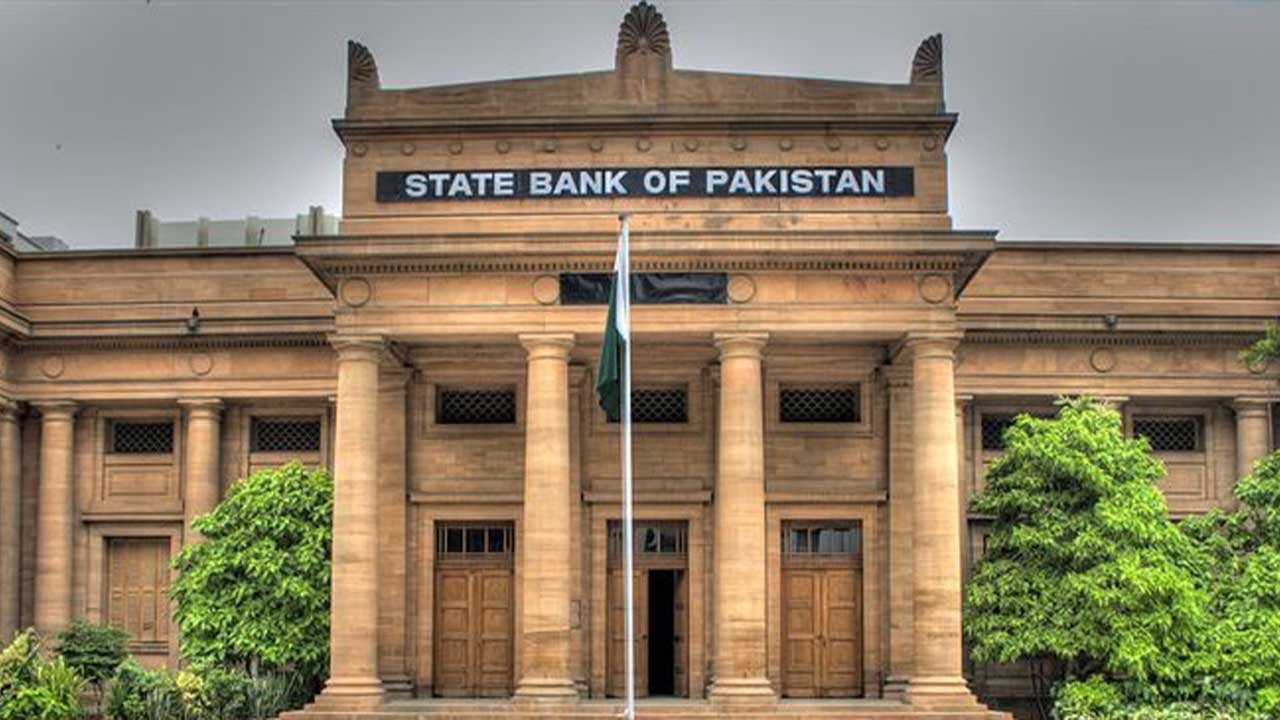
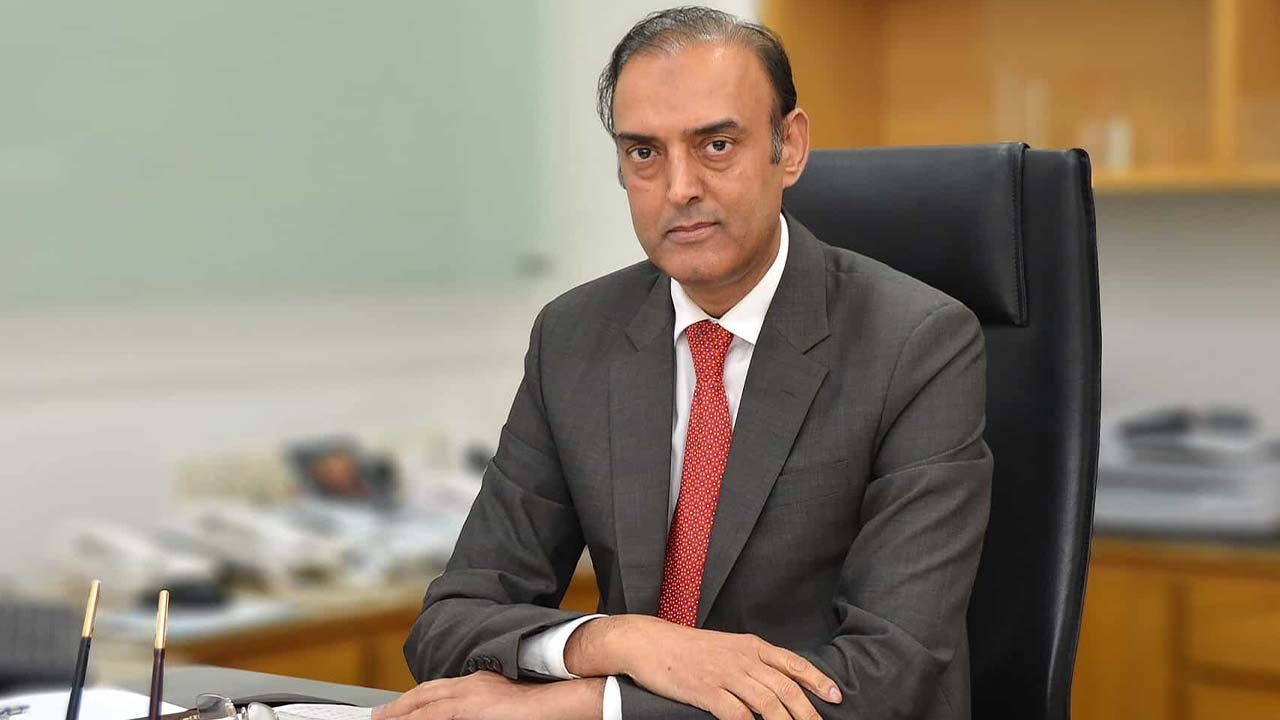
    Pakistan plans to raise up to $4 billion from Middle Eastern commercial banks by the fiscal year 2026, according to the Governor of the State Bank of Pakistan (SBP), Jameel Ahmad.

    In his first interview since assuming office in 2022, Ahmad revealed that Pakistan is also in the final stages of securing an additional $2 billion in external financing, which is essential for the approval of the $7 billion bailout programme from the International Monetary Fund (IMF).

    The IMF and Pakistan reached a preliminary agreement on the loan in July. However, the agreement still needs approval from the IMF’s executive board and confirmation of financing assurances from Pakistan’s development and bilateral partners.

    Ahmad expressed confidence that Pakistan’s financing needs will be met smoothly in the next fiscal year and in the medium term. Historically, Pakistan has depended on long-time allies like China, Saudi Arabia, and the UAE to extend loans rather than demand immediate repayment. Ahmad expects similar support for the next three years, giving the government more time to stabilise its finances.

    Read more: Exchange rates for Tuesday: PKR gains 9.6 paisa against US dollar, 37 paisa against Euro

    He also mentioned that Pakistan’s financing needs might be lower than the 5.5 per cent of GDP projected by the IMF. This is because the country’s external financing requirements have been declining, and the IMF’s projections were based on a higher current account deficit than what has materialised.

    Regarding monetary policy, Ahmad noted that recent interest rate cuts have successfully reduced inflation, which stood at 11.1 per cent in July, down from over 30 per cent in 2023. He emphasized that future interest rate decisions would be based on economic developments. Pakistan’s central bank had reduced interest rates from a record high of 22 per cent to 19.5 per cent and will review its monetary policy again on September 12.

    Ahmad, reflecting on his first year as governor, described it as challenging but expressed optimism that the situation has improved, with a focus now on growth, digitalisation, and financial inclusion.

  • Pakistan working to secure foreign investment and extend existing loans: Finance Minister

    Pakistan working to secure foreign investment and extend existing loans: Finance Minister

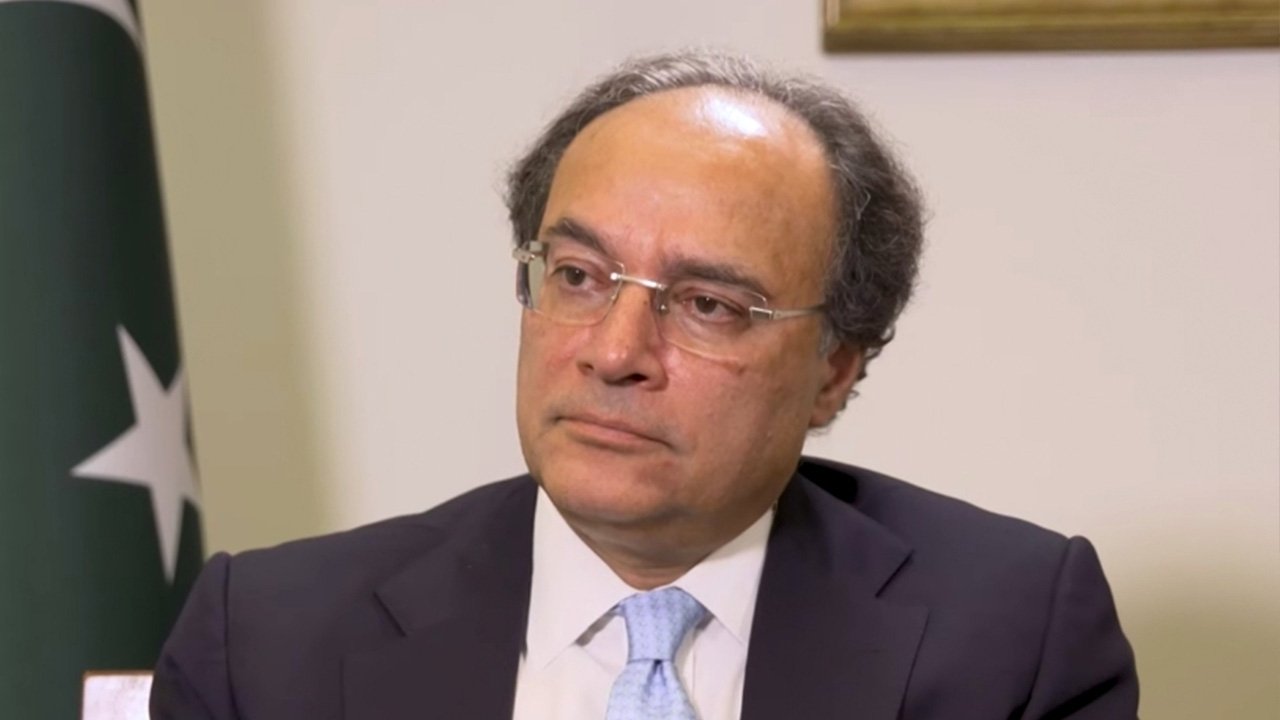
    Pakistan is working to secure foreign investment and extend existing loans to meet its external financing needs, as it prepares to implement a new $7 billion deal with the International Monetary Fund (IMF). Finance Minister Muhammad Aurangzeb shared these plans with Reuters on Friday.

    The new 37-month IMF agreement requires Pakistan to enforce tough measures, including higher taxes on agriculture and increased electricity prices. These changes have raised concerns about their impact on the country’s poorer and middle-class citizens, who are already struggling with inflation.

    Historically, Pakistan has frequently relied on IMF programmes to avoid financial crises, sometimes coming close to default. The country has also depended on financial support from allies like the United Arab Emirates (UAE) and Saudi Arabia to meet its IMF targets.

    Aurangzeb highlighted that while external financing remains essential, the government is now focusing on sustainable solutions, such as attracting foreign direct investment and securing climate finance. “We expect loan rollovers to continue and have requested extensions for loan maturities,” he said.

    Past support from Saudi Arabia, the UAE, and China, along with IMF backing, has been crucial for Pakistan’s financial stability. The IMF has stated that the new Extended Fund Facility programme requires approval from its Executive Board and confirmation of necessary financing from Pakistan’s development and bilateral partners.

    Aurangzeb is optimistic about managing the external financing gap, describing it as “manageable and doable.” He emphasized a shift towards foreign direct investment, particularly in the Reko Diq copper and gold mine. The finance minister also noted that his government is working on projects to attract investment from Saudi Arabia and the UAE.

    Pakistan, currently the IMF’s fifth-largest debtor with $6.28 billion owed as of 11 July 2024, is also expecting a significant investment from the World Bank’s International Finance Corporation (IFC) in the Reko Diq project. Aurangzeb plans to discuss further reforms with China during a visit by the end of July.

  • IMF deal to improve Pakistan’s financial outlook, but continuous reforms are essential: Moody’s

    IMF deal to improve Pakistan’s financial outlook, but continuous reforms are essential: Moody’s

    Moody’s Investors Service has stated that Pakistan’s recent staff-level agreement with the International Monetary Fund (IMF) enhances the nation’s funding prospects.

    However, the global rating agency stressed the necessity of sustained reforms to mitigate liquidity risks.

    On 12 July, Pakistani authorities and the IMF reached a staff-level agreement on a 37-month Extended Fund Facility (EFF) worth approximately $7 billion. This agreement still awaits approval from the IMF Executive Board, with no specific date set for the vote.

    Moody’s commented that once the loan deal is approved, which is highly anticipated, it will significantly boost Pakistan’s funding prospects. The new IMF program is expected to provide reliable financing from the IMF and attract additional funding from other bilateral and multilateral partners, addressing Pakistan’s external financing needs.

    Nonetheless, Moody’s cautioned that the government’s ability to consistently implement reforms will be crucial to maintaining continuous financial support throughout the IMF program, ultimately reducing liquidity risks.

    The new IMF EFF requires Pakistan to undertake extensive reforms, including broadening the tax base, eliminating exemptions, timely managing and privatising energy enterprises, phasing out agricultural support prices and related subsidies, advancing anti-corruption measures, enhancing governance and transparency, and gradually liberalising trade policy.

    Moody’s also warned that rising social tensions, driven by the high cost of living—which could be exacerbated by increased taxes and future energy tariff adjustments—might hinder reform implementation. Furthermore, the coalition government may struggle to maintain sufficient electoral support to implement these challenging reforms consistently.

    An IMF report published in May highlighted Pakistan’s external financing needs, estimated at $21 billion for fiscal year 2025 (ending June 2025) and approximately $23 billion for fiscal years 2026-2027.

    Moody’s noted that Pakistan’s external position remains precarious, with substantial external financing requirements over the next three to five years.

    The country remains vulnerable to policy slippages, weak governance, and high social tensions, which could impair the government’s ability to advance reforms, complete IMF program reviews, and secure external financing.

  • Pakistan secures over $228 million in loans from multiple foreign sources

    Pakistan secures over $228 million in loans from multiple foreign sources

    In April 2024, Pakistan secured $237.24 million in external financing from various sources, according to the Economic Affairs Division (EAD). This sum included $228.64 million in loans and $8.60 million in grants.

    Throughout the first ten months of the fiscal year 2024 (10MFY24), the country managed to obtain a total of $7.14 billion in external financing, significantly less than the annual budget estimate of $17.62 billion.

    In April, the government received a substantial loan of $117.39 million for non-project aid, aimed at providing program and budgetary support to help restructure the economy. Over 10MFY24, loans for non-project aid amounted to $4.84 billion.

    The Ministry of Economic Affairs noted Pakistan’s continued reliance on foreign commercial borrowing, which amounted to $107.95 million in April and $889.43 million in 10MFY24. This was primarily facilitated through the Naya Pakistan Certificate.

    Notably, no funds were secured from foreign commercial banks in 10MFY24, despite a budget estimate of $4.5 billion for the fiscal year.

    Disbursements from bilateral and multilateral development partners remained strong, totaling $129.29 million in April and $3.74 billion in 10MFY24. Although these inflows helped bolster foreign exchange reserves, they fell short of the government’s budget estimates.

    Multilateral sources provided nearly $121.61 million in April and $2.87 billion in 10MFY24. Among these, the International Development Association-World Bank (IDA) led with $61.73 million in April, followed by the Asian Development Bank (ADB) with $42.78 million.

    The International Bank for Reconstruction and Development (IBRD) contributed $8.52 million, and the Asian Infrastructure Investment Bank (AIIB) provided $6.33 million. Cumulatively, IDA’s disbursements totaled $1.35 billion, ADB’s $708.30 million, and AIIB’s $309.95 million.

    Bilateral development partners contributed $7.68 million in April and $877.76 million in 10MFY24. In April, Germany provided $3.10 million, Korea $1.80 million, France $1.77 million, and the USA $1.01 million. Over 10MFY24, Saudi Arabia’s Oil Facility dominated bilateral disbursements with $595.18 million.

    While foreign assistance has been crucial in maintaining financial stability, the shortfall compared to budget estimates highlights the need for improved fiscal strategies and diversified financing avenues to achieve Pakistan’s economic goals.

  • State Bank of Pakistan’s forex reserves decline to $7.02 billion amidst debt repayments 

    State Bank of Pakistan’s forex reserves decline to $7.02 billion amidst debt repayments 

    During the week ending December 1, 2023, the State Bank of Pakistan (SBP) witnessed a decline of $237 million in its foreign exchange reserves, bringing the total to $7,020.2 million. This reduction is attributed to debt repayments.  

    As of the same date, the country’s overall liquid foreign reserves amounted to $12.1 billion. Commercial banks held net foreign reserves totaling $5.08 billion. 

    Notably, the central bank’s reserves received a boost in July of the current year when Pakistan secured the initial tranche of approximately $1.2 billion from the International Monetary Fund (IMF).  

    This was part of a newly approved $3 billion stand-by arrangement (SBA). Additionally, inflows were received from Saudi Arabia and the UAE. 

    Despite these positive developments, the SBP’s reserves have been under pressure due to ongoing debt repayments, increased import payments following eased restrictions, and a lack of new inflows. 

    In a significant development, the IMF announced last month that a staff-level agreement (SLA) had been reached between its team and Pakistani authorities regarding the first review of the SBA.  

    However, the approval of the IMF Executive Board is required for this agreement to take effect. 

    Upon approval, approximately $700 million (SDR 528 million) will become available, bringing the total disbursements under the programme to almost $1.9 billion. 

    Addressing the media after the SLA with the IMF, Caretaker Finance Minister Dr Shamshad Akhtar expressed confidence that external financing would not be a concern.  

    The government anticipates inflows in December 2023, which are expected to contribute to an increase in foreign exchange reserves. 

  • Govt plans to increase gas and electricity prices in January

    Govt plans to increase gas and electricity prices in January

    The interim Finance Minister, Dr Shamshad Akhtar, announced during a press conference that the caretaker government is planning to increase electricity and gas tariffs in January to address the circular debt issue, in line with the International Monetary Fund’s (IMF) Stand-By Arrangement (SBA). 

    The circular debt in the power and gas sectors, currently exceeding 4 per cent of the Gross Domestic Product, requires urgent action for reduction. 

    Dr Akhtar also discussed tariff revisions with the IMF and the potential imposition of additional taxes on sectors like real estate and retail, emphasizing that final decisions are pending. 

    She highlighted the necessity for a new short-term IMF program and anticipated a medium-term program under the Extended Fund Facility (EFF) after the SBA concludes. 

    Regarding the external financing gap, Finance Secretary Imdad Bosal expressed optimism that a successful IMF review would unlock programme and project loans from multilateral lenders. 

    He anticipated approvals in December for loans from the World Bank, Asian Development Bank, Asian Infrastructure Investment Bank, and Islamic Development Bank. 

    Bosal assured that there is no external financing gap, and the improved ratings post-review would attract foreign loans. 

    Dr Akhtar stated that the World Bank is expected to disburse $2 billion during the current fiscal year, contributing to foreign exchange reserves along with the $700 million tranche approval from the IMF, bringing the total disbursement under the SBA to $1.9 billion out of $3 billion. 

    The approval for the second tranche from the IMF’s Executive Board is anticipated within a month.

  • Pakistan successfully secures final IMF approval for $3 billion bailout

    Pakistan successfully secures final IMF approval for $3 billion bailout

    The International Monetary Fund (IMF) has officially granted approval to Pakistan for a 9-month Stand-By Arrangement (SBA) amounting to approximately $3 billion. This decision comes shortly after reaching a staff-level agreement with the country.

    In a statement, the IMF announced, “Today, the Executive Board of the International Monetary Fund (IMF) approved a 9-month Stand-By Arrangement (SBA) for Pakistan for an amount of SDR2,250 million (about $3 billion, or 111 percent of quota) to support the authorities’ economic stabilization program.”

    Earlier on the same day, Finance Minister Ishaq Dar confirmed that Pakistan had received $1 billion from the United Arab Emirates (UAE) as part of their financial commitment to assist Pakistan in securing the IMF bailout package. During a televised media address, the finance minister stated, “The UAE has deposited the amount into the State Bank account.”

    Additionally, Saudi Arabia had previously deposited $2 billion in the State Bank of Pakistan (SBP) account, fulfilling the IMF’s condition to bridge the external financing gap and bolster the country’s foreign reserves. This contribution aims to support the economic stability of Pakistan.

    Pakistan had signed a short-term IMF deal on June 30, under which the country was set to receive $3 billion over nine months, pending approval from the IMF’s board. With the Executive Board’s approval, an immediate disbursement of SDR894 million (approximately $1.2 billion) is authorised, as stated by the IMF.

    The remaining funds will be disbursed in phases throughout the duration of the programme, subject to two quarterly reviews, according to the IMF’s statement. The IMF acknowledges that Pakistan is currently facing a challenging economic situation due to external difficulties, devastating floods, and policy missteps, resulting in significant fiscal and external deficits, rising inflation, and depleted reserve buffers in the fiscal year 2023.

    The IMF sees the new SBA-supported programme as a means to address both domestic and external imbalances and provide a framework for financial support from multilateral and bilateral partners. Pakistan’s successful acquisition of the IMF bailout package was contingent upon implementing difficult economic measures, such as interest rate hikes and tax increases, to fulfill the IMF’s conditions.

  • Finance Ministry responds to IMF’s concerns on budget, pledges commitment to programme

    Finance Ministry responds to IMF’s concerns on budget, pledges commitment to programme

    The International Monetary Fund (IMF) has publicly raised reservations regarding Pakistan’s budget, prompting a response from the Finance Ministry. The ministry clarified that the budget is not part of the pending ninth review, which has been delayed since November of last year. However, it emphasised its commitment to finding an amicable solution through ongoing engagement with the IMF.

    In a statement addressing the IMF’s concerns, the ministry highlighted the completion of the ninth review in early February 2023, with all technical issues promptly addressed. The only outstanding matter was external financing, which was resolved after discussions between Prime Minister Shehbaz Sharif and the IMF managing director.

    The ministry clarified that although the FY24 budget was not part of the ninth review, it shared the budget numbers with the IMF mission in line with the prime minister’s commitment. Continuous engagement with the IMF, including discussions on the budget, is ongoing.

    Addressing the IMF’s concerns about broadening the tax base, the ministry noted the addition of 1,161,000 new taxpayers by the Federal Board of Revenue (FBR) over the past 11 months. It emphasised that efforts to expand the tax base will continue, highlighting the introduction of a 0.6 per cent advance adjustable withholding tax on cash withdrawals over Rs50,000 as a significant step.

    The ministry defended the tax exemptions announced in the budget, describing them as catalysts for growth in the real sectors of the economy. It assured that the budget provides targeted subsidies for families with a PMT scorecard of up to 40, not limited to the Benazir Income Support Programme (BISP) beneficiaries.

    Regarding the amnesty measures, the ministry explained that the only change made was to “dollarize” the value of an existing provision in the IT Ordinance. It clarified that this facility has always been available and that the cap of Rs10 million ($100,000 approximately) introduced in FY2016 is being resolved based on the rupee equivalent of $100,000.

    The ministry reiterated its full commitment to the IMF programme and eagerness to at least complete the ninth review. It emphasised the government’s willingness to make difficult decisions and engage with the IMF to find an amicable solution.

  • Pakistan shares plan with IMF to bridge $3 billion financing gap

    Pakistan shares plan with IMF to bridge $3 billion financing gap

    The coalition government of Pakistan has revealed its plan to the International Monetary Fund (IMF) for obtaining an additional $3 billion to fill the financing gap as it tries to persuade the lender to release the next loan tranche.

    In order to conclude talks with Pakistan regarding its delayed bailout, the IMF required “necessary” financing guarantees as soon as possible. Pakistan was asked to raise $6 billion in external financing, which is required by the country until June to avoid a potential default.

    This figure was determined on the assumption that the current account deficit would remain at around $7 billion in the current fiscal year. The IMF welcomed the recent announcement of financial support from key bilateral partners, but this support is inadequate for Pakistan’s requirements.

    Islamabad informed the IMF about its plan to secure a $450 million second Resilient Institutions for Sustainable Economy (RISE-II) budget support loan, as well as its plans to obtain $1 billion from the Asian Infrastructure Investment Bank (AIIB) and other commercial banks, and to materialise pledges made at the Geneva moot. According to sources, once the staff-level agreement is signed with the IMF, it will become easier for Pakistan to obtain financing.

    Pakistan’s foreign exchange reserves have fallen to cover barely a month of imports following the stall in IMF funding in November, which was later complicated by snags over fiscal policy adjustments after officials from the lender visited Islamabad for talks in February. The fiscal policy adjustments were part of the ninth review exercise on a bailout package agreed upon in 2019, whose resumption is crucial for Pakistan to avoid the risk of defaulting on external payment obligations.

    Pakistan will receive another disbursement of more than $1 billion from the IMF programme before it ends in June, which will unlock other bilateral and multilateral financings for the country, helping to ease its financial difficulties.

    Programme loans from other multilateral agencies await completion of the IMF review, as reported by central bank governor Jameel Ahmad during the spring meetings of the lender and the World Bank in Washington.