Tag: extrajudicial killings

  • FC man gets death sentence for killing Turbat student

    A Frontier Corps sepoy, Shadiullah, who was accused of killing a 25-year-old student in front of his parents in Turbat has been sentenced to death by a local court in Balochistan.

    During the hearing of the case, Turbat District and Sessions Judge Rafiq Langau decided the case in the presence of Shadiullah and Hayat’s brother Murad Baloch and sentenced the accused to death under Section 302 of the Pakistan Penal Code (PPC).

    The family had recognised Shadiullah during the identification parade while the FC soldier also confessed to the killing.

    Shadiullah had shot dead Hayat Baloch — a BS student at the University of Karachi, in Aug 2020 following a bomb blast in the area in which three soldiers were wounded. Subsequently, the FC officials picked Hayat up — who was helping his parents at their date orchard — and tortured him before shooting him dead as his family pleaded for mercy.

    It was reported that Hayat, who was in Turbat because his university was closed due to the COVID pandemic, had shot more than eight times.

    The killing had resulted in outrage on social media, with people, including lawmakers, demanding justice for the slain youth.

    After the murder, an inquiry was conducted by the paramilitary force. An internal investigation by the Frontier Corps found that the accused FC man “reacted in haste”, Turbat SSP had told media. After this inquiry, Shadiullah was handed over to the police for further investigation in the case.
  • Naqeeb’s brother says Sindh govt trying to save ‘encounter specialist’ Rao Anwar

    Naqeeb’s brother says Sindh govt trying to save ‘encounter specialist’ Rao Anwar

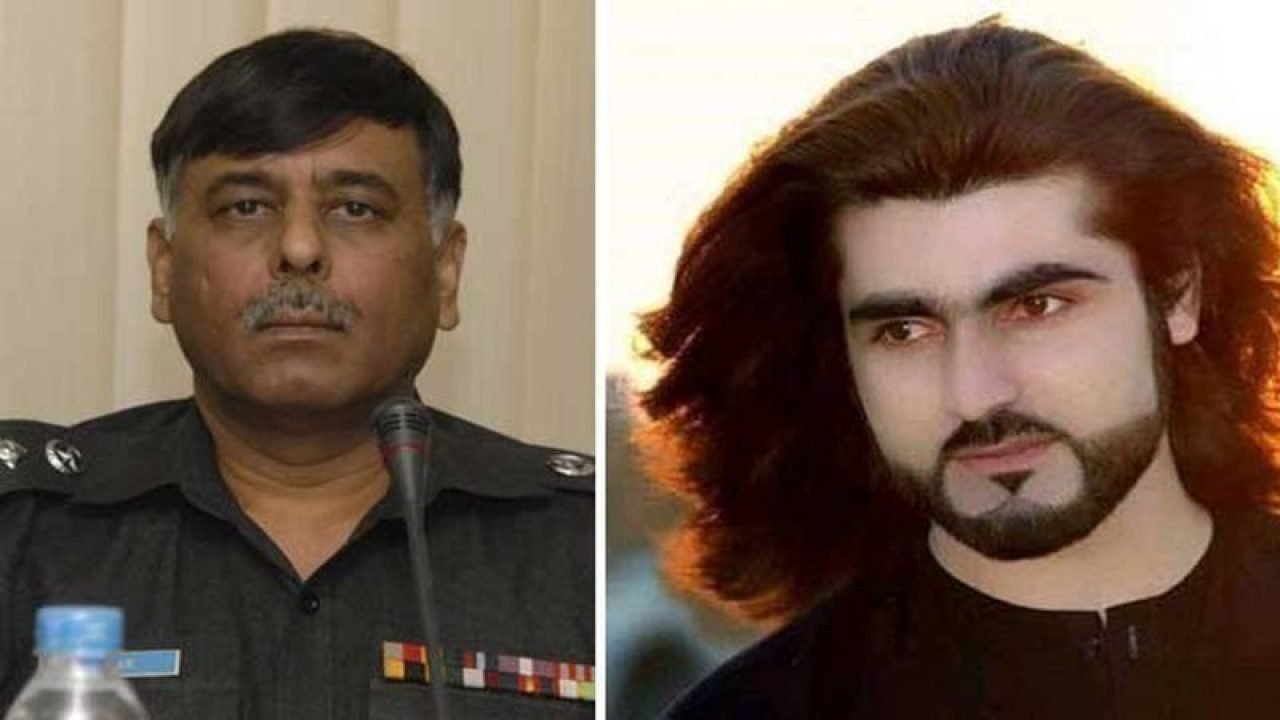
    The Sindh government is helping former Malir SSP Rao Anwar to get a clean chit in the Naqeebullah Mehsud murder case by pressurising the witnesses, alleged Naqeeb’s brother Alam Sher.

    In a press conference alongside his attorney Jibran Nasir, the younger brother alleged that the witnesses were turning hostile at the behest of the Sindh government and the prosecution.

    “The case was registered on behalf of the state, not from the family and if the charges were not proved in the court, the state will lose,” said the attorney.

    Jibran also criticised the National Accountability Bureau (NAB) for ignoring an application filed by the family of Naqib to look into the assets of Rao Anwar. “The US and UK have frozen the assets of Anwar besides imposing travel restrictions on him due to human rights violations, but still NAB has refused to investigate the former police officer,” he added.

    Instead of being detained in a jail, he was confined for a short time in the comfort of his own home and given the protocol of a federal minister, Jibran said. If top politicians, like Shehbaz Sharif, Maryam Nawaz and Asif Ali Zardari, could be sent to jail then why can’t they send Anwar to prison, he asked.

    On January 13, 2019, Mehsud and three others were killed in a fake encounter carried out by a police team headed by then Malir SSP Anwar in Karachi. On January 17, his body was handed over to his relatives at the Chhipa Welfare Association morgue in the metropolis.

    The fake encounter had sparked countrywide protests against extrajudicial killings in the country and to bring Anwar to justice.

    Subsequently, the former SSP and around 20 of his subordinates were charged with killing Naqeebullah. In March 2019, an anti-terrorism court (ATC) had framed charges on Anwar and others for the alleged murder of Naqeebullah and implicating him in bogus cases.

    In Dec 2019, On International Human Rights’ Day, Anwar was also blacklisted by the United States for engaging in “serious human rights abuse” by carrying out alleged fake police ‘encounters’ in which scores of individuals including Naqeebullah Mehsud were killed.

  • Killing of rape-murder suspects in ‘police encounter’ spark celebrations in India

    Killing of rape-murder suspects in ‘police encounter’ spark celebrations in India

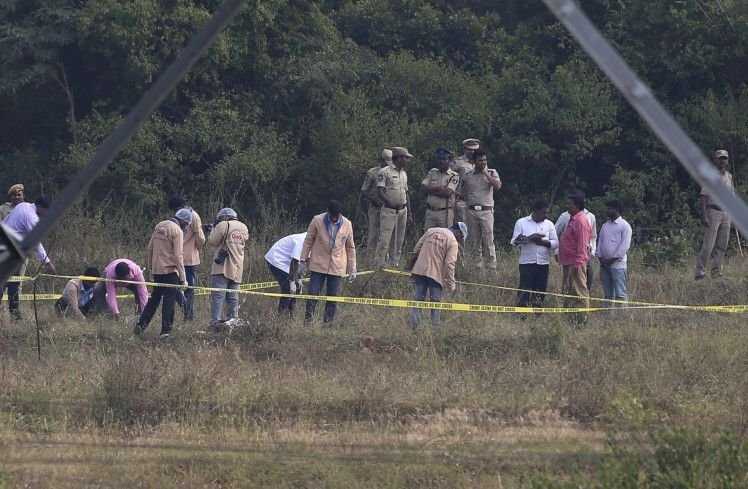
    Indian police on Friday shot dead four detained gang-rape and murder suspects as they were re-enacting their alleged crime, prompting celebrations but also accusations of extrajudicial killings.

    The men, who had been in custody for a week over the latest gruesome case of violence against women to shock India, were shot in the early morning as they tried to escape during the staged re-enactment in Hyderabad.

    Deputy police commissioner in the southern city Prakash Reddy revealed that “They were killed in crossfire. They tried to snatch weapons from the guards but were shot dead.”

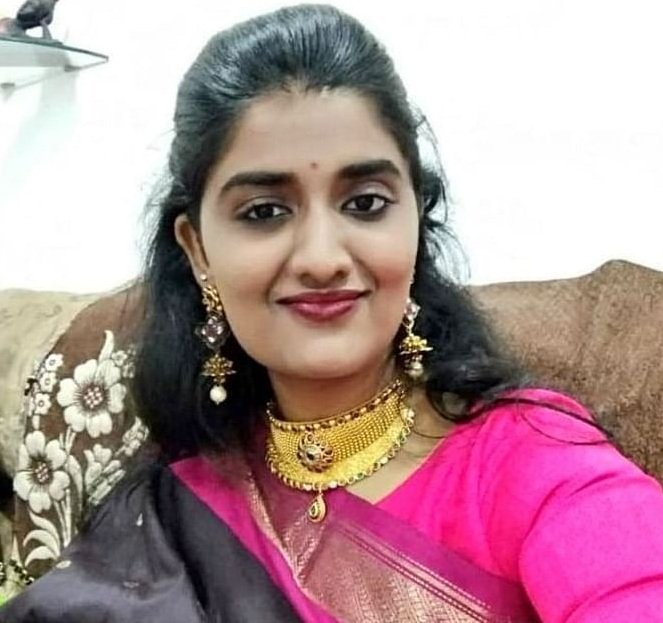
    The four were accused of gang-raping and murdering a 27-year-old veterinary doctor Dr Priyanka Reddy before setting fire to her body with petrol underneath an isolated bridge late on November 27.

    The woman had phoned her sister saying she was scared of the men before her phone went dead. She said police did not take her seriously when she said her sister was missing.

    The victim

    Like in the infamous 2012 rape and murder of a woman on a Delhi bus, the case sparked demonstrations and calls for swift and tough justice, with social media swamped with demands for them to be put to death.

    Shortly after their arrest hundreds of protesters also tried to storm the Hyderabad police station where the four accused were held. One lawmaker in the parliament called for the men to be “lynched” and another for rapists to be castrated.

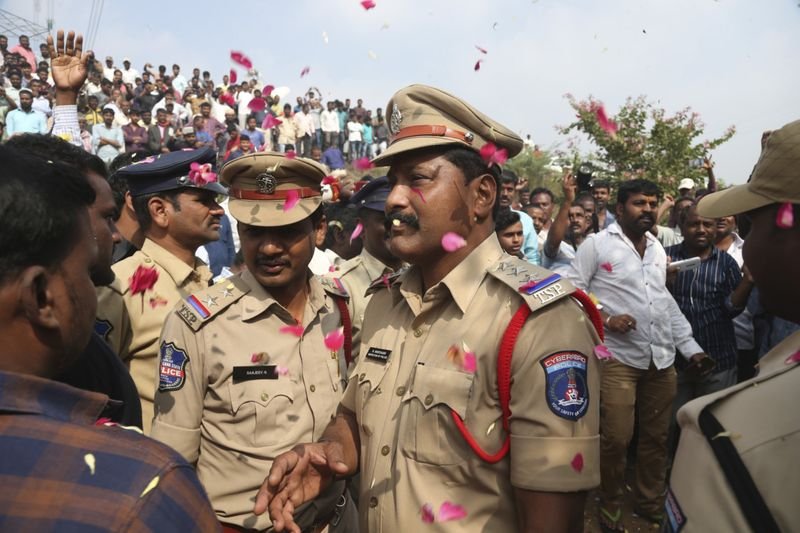
    Several hundred people flocked to the scene of the men’s deaths on Friday, setting off firecrackers to celebrate and showering police with flower petals.

    The victim’s sister also welcomed the killings.

    “I am happy the four accused have been killed in an encounter. This incident will set an example. I thank the police and media for their support,” the sister told a local television station.

    Women in technology hub Hyderabad, home to Google, Apple and Microsoft, distributed sweets and tied Hindu ritual threads on the wrists of policemen to thank them.

    On the other hand rights activists were aghast with the killing – police in India are often accused of using extrajudicial killings to bypass the legal process, often as a cover-up in botched investigations or to pacify public anger.

    India’s former federal minister for women and child developement, Maneka Gandhi termed the incident as dangerous, saying killings cannot be an alternative to the process of law.

    “They would have anyway got hanging for their heinous crime, but you can’t just pick up guns and kill people because you want to. Because law is tardy, you can’t kill people. What has happened is dangerous,” Gandhi told reporters.

    A Supreme Court lawyer is reported to have said, “This is murder in cold blood. Fake encounter is not the solution, reforming criminal justice system is.”

    “Now no one will ever know who really raped and murdered the Hyderabad woman.”