Tag: extremism in India

  • Businesses suspected of criminal activities involved in donating for ruling BJP in India

    Businesses suspected of criminal activities involved in donating for ruling BJP in India

    Last week, India’s election commission published a list detailing buyers of electoral bonds, a contentious funding scheme that has helped Prime Minister Narendra Modi’s party build an immense campaign war chest dwarfing rivals.

    Electoral bonds account for more than half of all political donations and were anonymous until India’s top court ruled them illegal weeks before the start of national elections next month.

    An AFP review of the list found that of the $1.5 billion donated through the scheme, at least $94 million was donated by 17 companies after they faced — either directly or through their subsidiaries — investigations for tax evasion, fraud or other corporate malfeasance.

    “The electoral bond scheme was sinful in conception, faulty in design and intended to prevent transparency,” lawmaker Abhishek Singhvi of the opposition Congress party told AFP.

    “Each of these vices stand exposed… by the huge disclosures tumbling out of the closets.”

    ‘Knocked at their doors’

    Opposition party lawmakers claim the electoral bonds list shows that firms were donating to Modi’s ruling Bharatiya Janata Party (BJP) in the hopes of influencing the outcome of criminal probes.

    The BJP was far and away the single biggest beneficiary of the scheme, receiving $730 million or around 47 percent of total bonds cashed since April 2019.

    Its main competitor Congress received around $171 million over the same period.

    Among the companies named as donors are Hero MotoCorp, the country’s biggest motorbike maker by sales. It donated $2.4 million to the BJP seven months after confirming its finances were being investigated by the tax department.

    Glenmark Pharmaceuticals, a top drug firm, bought $1.17 million worth of electoral bonds for the BJP eight months after Indian media reported an investigation for alleged tax evasion.

    Indian miner Vedanta, whose parent company was once listed on the London Stock Exchange, donated more than $40 million spread across half a dozen parties over the past five years.

    Local media reported in 2022 that the country’s main financial crime agency began investigating the company in 2018 for allegedly paying bribes to facilitate Indian visas for Chinese technicians.
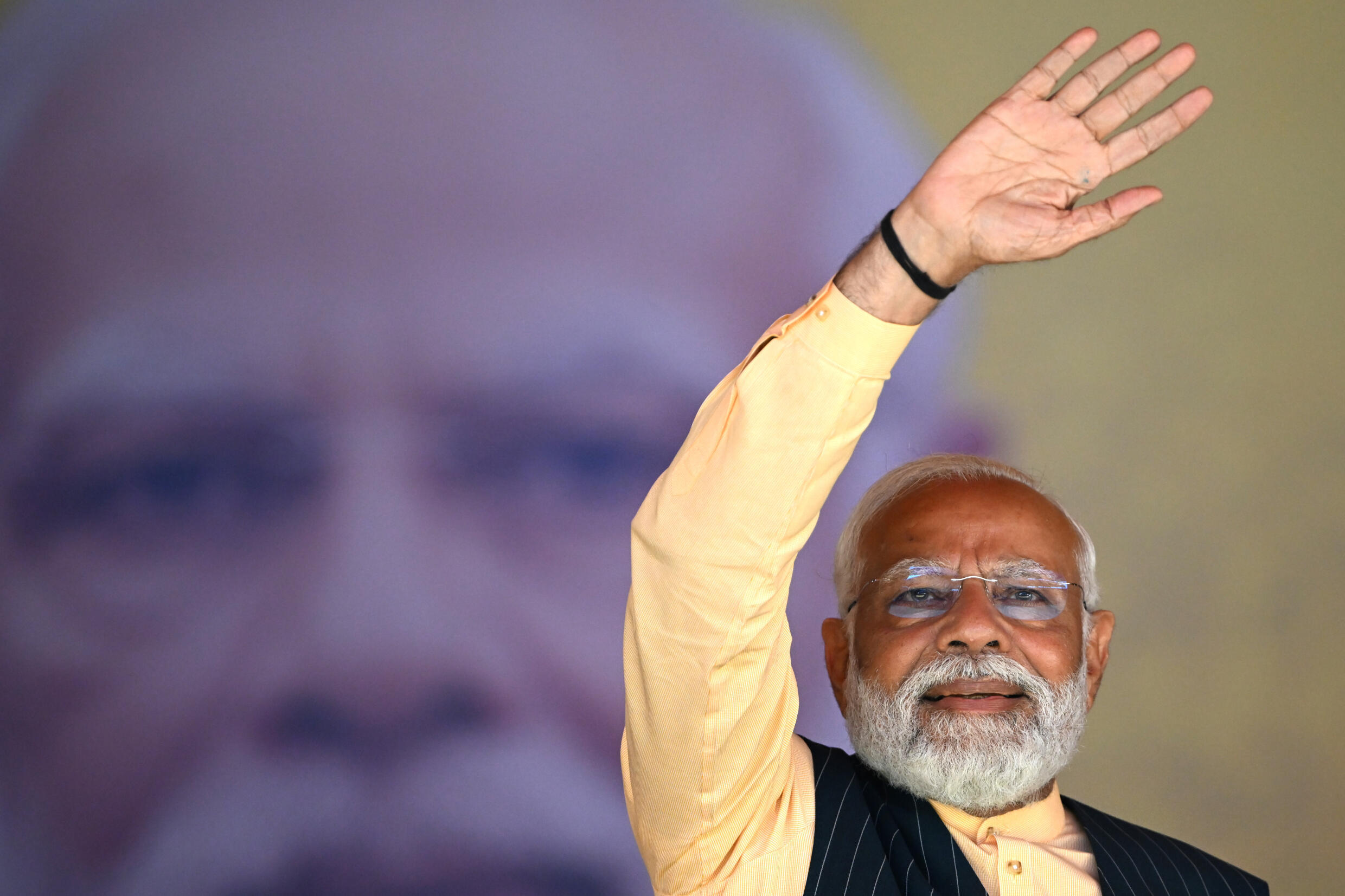
    The contentious electoral bond funding scheme has helped Prime Minister Narendra Modi's party build an immense campaign war chest dwarfing rivals
    The contentious electoral bond funding scheme has helped Prime Minister Narendra Modi’s party build an immense campaign war chest dwarfing rivals © DIBYANGSHU SARKAR / AFP/File

    Hero, Glenmark and Vedanta did not respond to requests for comment.

    No definitive proof of such a quid pro quo has surfaced. Authorities have also not publicly announced whether investigations against donor companies have been closed or withdrawn.

    Nirmala Sitharaman, Modi’s finance minister, said last week that any allegation of a link between criminal investigations and political donations was based on “huge assumptions”.
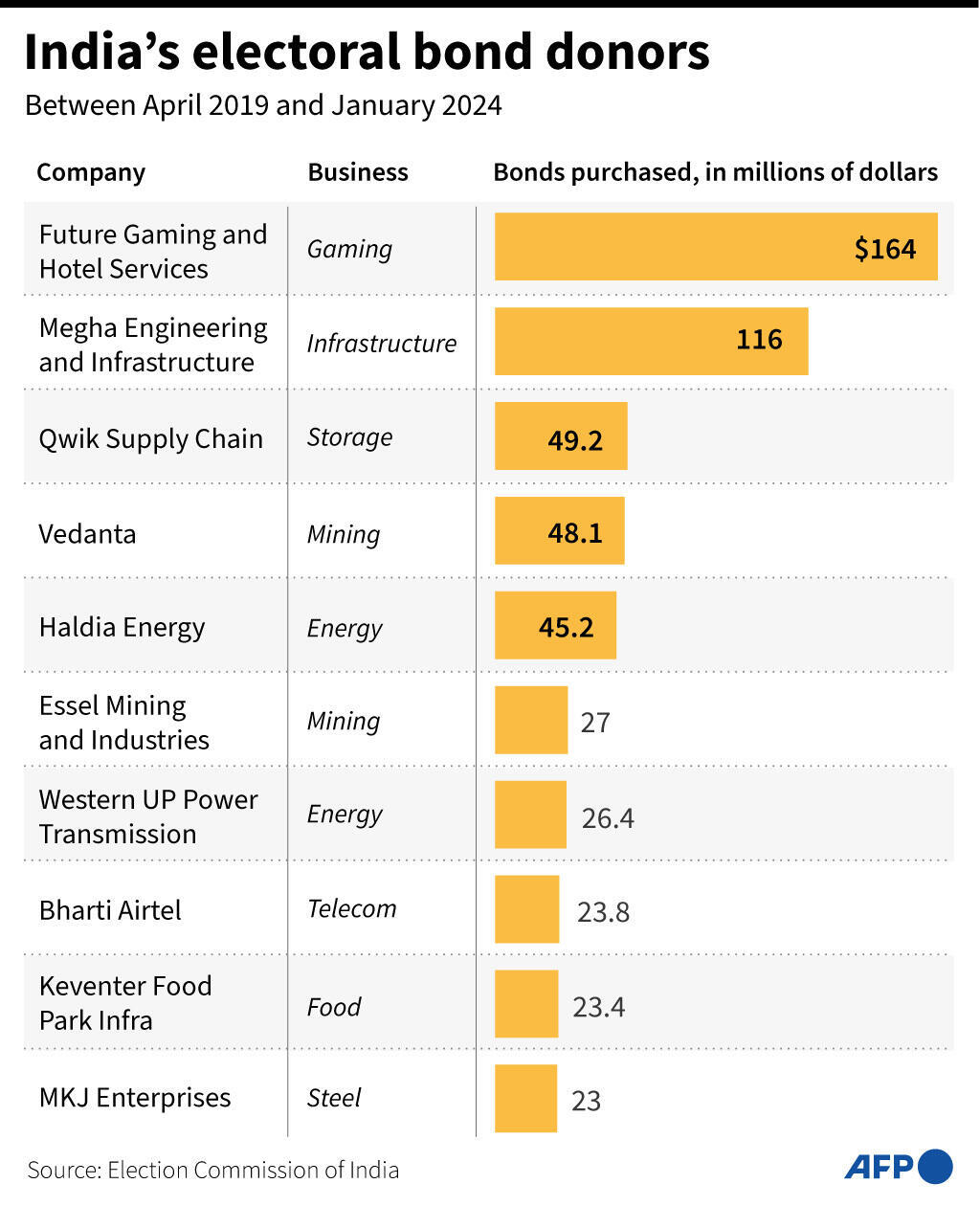
    India's electoral bond donors
    India’s electoral bond donors © Nicholas SHEARMAN / AFP

    “What if the companies gave the money, and after that, we still went and knocked at their doors?” she told a panel hosted by television channel India Today.

    The BJP was not the only party to receive electoral bonds from companies facing legal investigation.

    Among the several parties funded by lottery company Future Gaming — the biggest single donor under the scheme with a spend of $164 million — were the government and opposition of southern Tamil Nadu state.

    Future Gaming has since 2011 been the subject of several investigations on suspicion of unpaid income tax, money laundering and fraud, according to media reports.

    ‘Black money’

    Ties between corporate India and the country’s political class have previously blown up into public scandal — including to the benefit of Modi, who was swept to office a decade ago on a wave of public discontent over corruption.

    Modi made hay from a number of corporate bribery accusations directed against his opponents, including allegations that ministers and bureaucrats had taken money from telecom companies in return for favourable licensing deals.

    His government introduced electoral bonds in 2017, pledging the scheme would clear up the illicit “black money” donated to parties in return for political favours.

    But the new scheme did not close off other avenues of funding, including anonymous cash donations or tax-deductible electoral trusts in which multiple companies can pool money together for parties without public scrutiny.

    Indian media also identified several other irregularities with the electoral bond scheme, reporting that several companies donated amounts far in excess of their annual profit or revenue.

    Others were loss-making or had been freshly incorporated, suggesting they had been used as front companies to make donations on behalf of an unidentified third party.

    Milan Vaishnav, of the Carnegie Endowment for International Peace, said the donation list vindicated the election commission’s objections to the scheme when it was first unveiled.

    “This is precisely what the EC had warned, (that) the creation of this opaque instrument could allow for shell companies, foreign firms, and unknown third parties to give to parties without detection or outside scrutiny.”
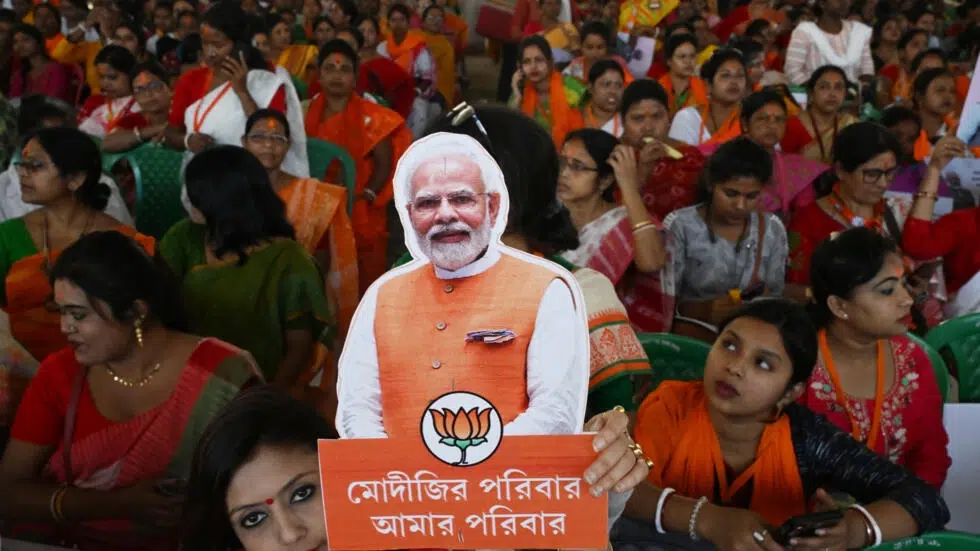
    India’s ruling Bhartiya Janata Party (BJP) was far and away the single biggest beneficiary of the electoral bond scheme © DIBYANGSHU SARKAR / AFP/File
  • Indian policeman beats Muslim men offering jummah on Delhi roadside

    Indian policeman beats Muslim men offering jummah on Delhi roadside

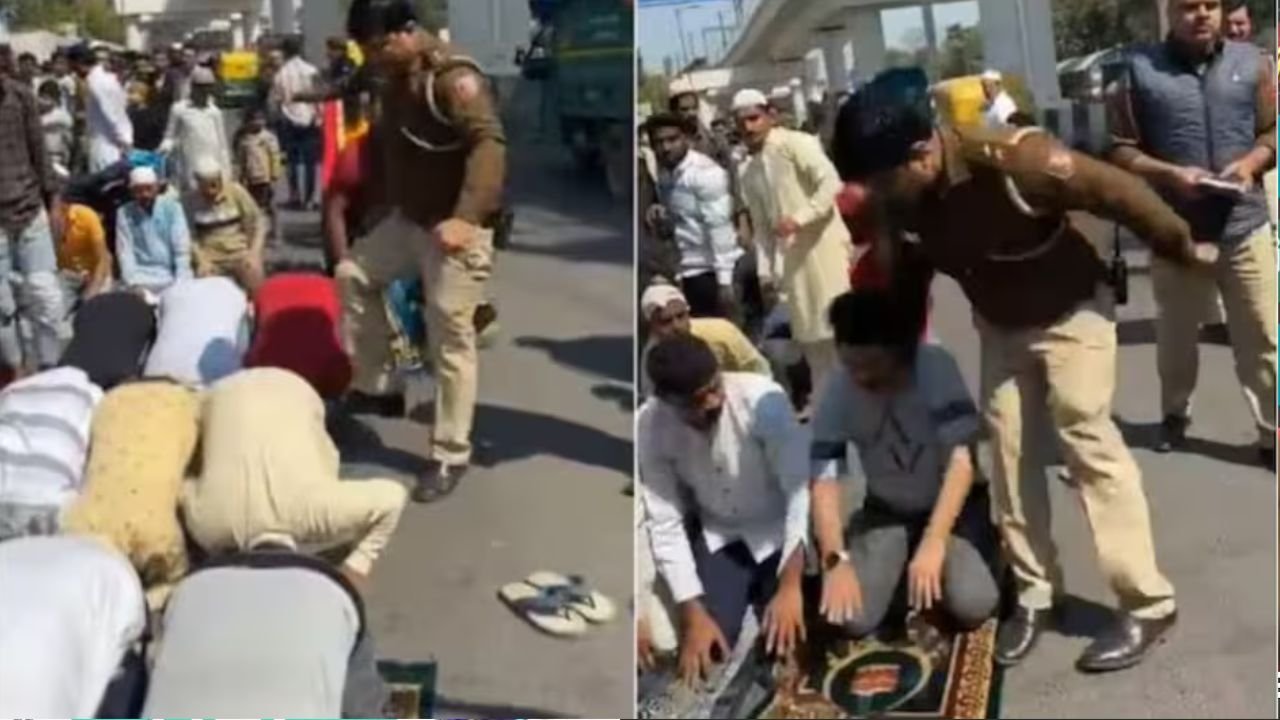
    A video of an Indian cop brutally beating Muslim men offering jummah prayers on the roadside in Delhi has gone viral. The video shows the policeman kicking and hitting Muslims who were kneeling down for sajdah (prostration).

    The incident took place in Delhi’s Inderlok area where a large number of Muslims gathered at a mosque on Friday, leading to several men praying on the road as the crowd overflowed the premises.

    Police officials arrived at the spot mid-prayers and started kicking and punching the Muslims. They can be heard telling the worshippers to vacate the place.
    The video shows one of them kicking and hitting the Muslims who were kneeling down for prayers. However, a crowd surrounded the cop and objected to his attitude, getting into a verbal brawl.

    Sharing the video of the incident, Congress Rajya Sabha MP Imran Pratapgarhi said, “What is this hatred that is filled in the heart of this soldier? Delhi Police is requested to file a case against this official under appropriate sections and terminate his service.”

    In an interview with Hindustan Times, Deputy Commissioner of Police (north) MK Meena said that an inquiry into the matter has been initiated. The official has been suspended with immediate effect and disciplinary action will also be taken, the DCP added.

  • Indian court allows Hindus to pray inside disputed mosque

    Indian court allows Hindus to pray inside disputed mosque

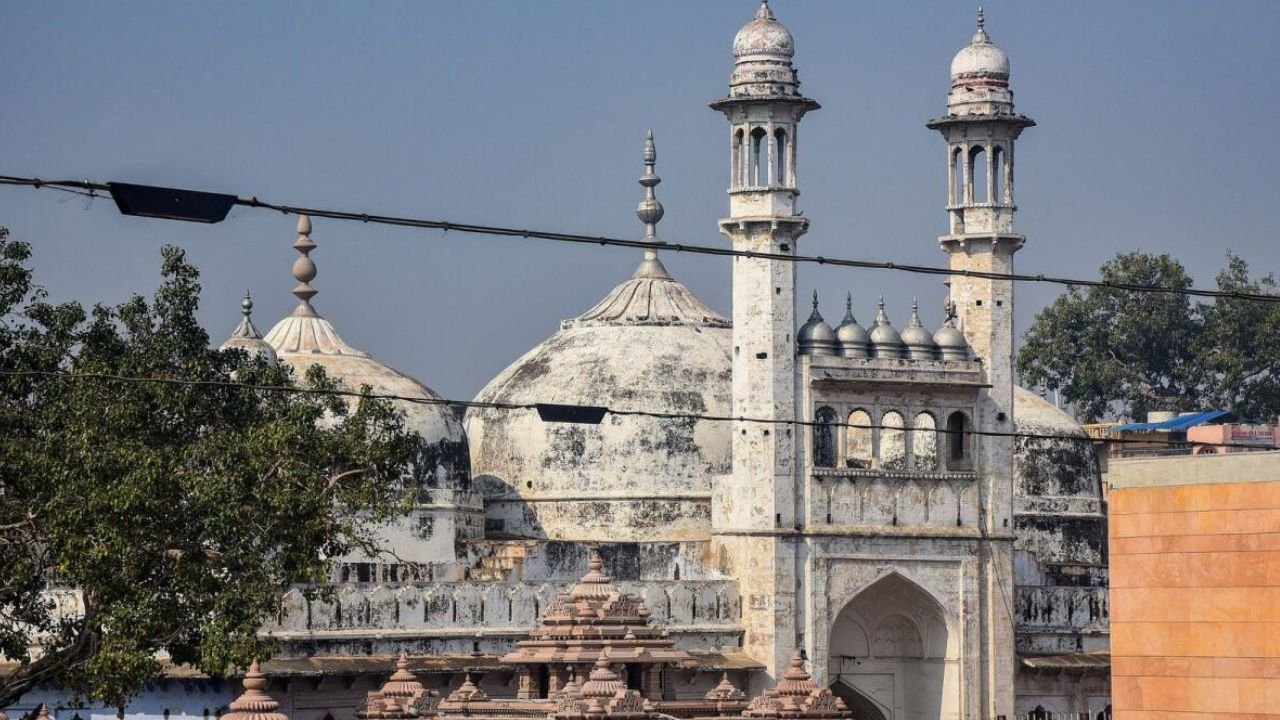
    An Indian court weighed in on one of the country’s most sensitive religious disputes Wednesday by permitting Hindu worshippers to pray inside a mosque in the city of Varanasi.

    The Gyanvapi mosque is one of several Islamic houses of worship that Hindu activists, backed by Prime Minister Narendra Modi’s party, have sought for decades to reclaim for their religion.

    It was built in the 17th century by the Mughal empire in a city where Hindu faithful from across the country cremate their loved ones by the Ganges river.

    The court in Varanasi ruled that Hindu worshippers — who believe the mosque replaced a destroyed temple to the deity Shiva — could pray in the building’s basement.

    Its verdict ordered district authorities to “make proper arrangements within the next seven days” to facilitate worshippers.

    The decision is the latest in a long-running legal saga over Gyanvapi’s future.

    This month, India’s official archaeological agency said a survey of the site appeared to corroborate the belief that it was originally home to a temple, according to local news reports.

    Emboldened right-wing Hindu groups have laid claim to several Muslim sites of worship they say were built atop ancient temples during Mughal rule.

    Last week, Modi presided over a grand inauguration ceremony in the nearby city of Ayodhya for a Hindu temple built on grounds once home to the centuries-old Babri mosque.

    Hindu zealots had torn down that mosque in 1992 in a campaign spearheaded by members of Modi’s party, sparking sectarian riots that killed 2,000 people nationwide, most of them Muslims.

    The decades-long court battle that ensued over the future of the Babri site ended in 2019 when India’s top court permitted the construction of a temple to the deity Ram, who according to Hindu scripture was born in the city.

    Members of Modi’s party routinely refer to India’s history of Muslim rule under the Mughal emperors as a time of “slavery”.

    The prime minister described last week’s opening of the temple as “the advent of a new era”.

    Calls for India to enshrine Hindu supremacy have rapidly grown louder since Modi took office in 2014, making its roughly 210-million-strong Muslim minority increasingly anxious about their future.

  • After Ayodhya, Hindutva leaders now targeting muslim dargah in Mumbai

    After Ayodhya, Hindutva leaders now targeting muslim dargah in Mumbai

    Maharashtra Chief Minister Eknath Shinde has ignited controversy by announcing his intent to “liberate” the 700-year-old Haji Malang dargah, a historic Muslim shrine situated on the outskirts of Mumbai, exclusively for Hindus. The shrine, known for its Sufi heritage and cultural significance, has become the focal point of a heated religious dispute.

    After the inauguration of Ram Mandir in Ayodhya, Prime Minister Narendra Modi has invoked a significant amount of “divine” support from his followers for upcoming elections. The next target to double the effect is the Sufi shrine. This is aimed to polarize the voters even more.

    CM Shinde while speaking at the annual Malang-gad Harinam Mahotsav in Thane distinct, broke away from the late Bal Thackeray’s Shiv Sena to lead a BJP-backed coalition, said he is “committed to liberate Malang-gad”, adding he would not rest till he has fulfilled the promise.

    Malang-gad (’gad’ means a fort in Marathi) is famous for its 12th-century shrine of Sufi saint Haji Abdul Rahman, popularly known as ‘Haji Malang’. According to Kashmir Media Service, Haji Malang dargah, atop a hill, is believed to house the tomb of an Arab missionary who arrived in India over seven centuries ago. On the contrary, Hindus believe the place holds the samadhi of Machindranath, a revered deity in the Nathpanthi sect, which was later converted into a dargah.

    An article published in The Times of India on Feb 14, 1993 reveals the arrest of Thane’s top Shiv Sena leader late Anand Dighe while leading an agitation demanding the renaming of Malang-gad as Shri Malang. Dighe was Mr Shinde’s mentor and the promise to liberate Malang-gad is a logical political move on the chief minister’s part to claim his master’s legacy, quotes Dawn.

    Nasir Khan, chairman of the Peer Haji Malang Saheb Trust, refers to the Gazetteer of Bombay Presidency which mentions the structure as the shrine built in honour of Arab missionary Haji Abd-ul-Rahman. “It is only in the 1980s that the Shiv Sena began making claims of it being a Hindu temple. If it was a Hindu temple, why did the Peshwa kings send gifts to the shrine?” asks Mr Khan.
    According to the chairman of the Trust, Haji Malang is equally revered by Hindu and Muslims. He says that even Christians and Parsis visit the shrine to seek blessings.

  • India continues becoming unsafe for Muslims as Ram Mandir consecration emboldens extremists

    India continues becoming unsafe for Muslims as Ram Mandir consecration emboldens extremists

    A number of violent incidents have been reported in at least six states after the consecration of Ram Temple in Ayodhya, India.

    A report published by the Indian outlet The Quint says that from a graveyard in Bihar to a mosque in Telangana, India saw multiple attacks and violent incidents on 22 January. The incidents were of varying scales, ranging from sandals allegedly thrown inside a mosque and a shop being burnt in Telangana to a graveyard set on fire in Bihar, to violent skirmishes in different parts of Maharashtra.

    In the capital of Uttar Pradesh, Lucknow, a video of a hateful song being played in Narhi, Hazratganj, surfaced on social media. The song was allegedly played by a procession celebrating the consecration of Ram Temple.

    Journalist Rana Ayyub shared the video with a caption stating, “Trigger warning for abusive, misogynistic language. Do listen to this song. To go to a Muslim locality and celebrate Ram Mandir’s inauguration with this song. And you still think this is about faith? Is this how you want to raise your kids? Is this the culture you want to normalise? Why send your kids to Ivy League, why give them quality education, let them be a part of this crass revelry.”

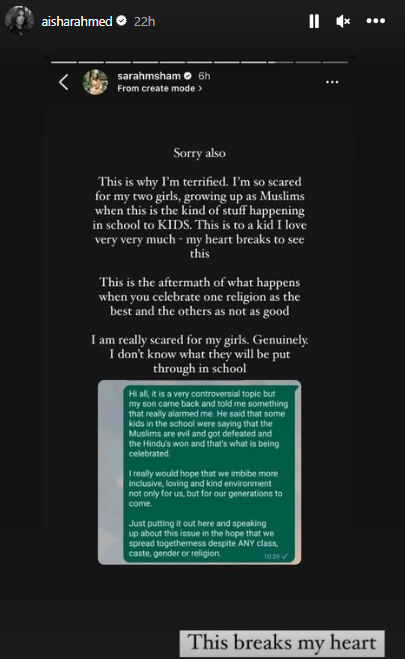
    Famous Indian actor Aisha Ahmed, popular for her roles in web-series ‘Adulting’, shared her experience via an Instagram story of Sarah Sham, the influencer and wife of Indian Tennis player, Mustafa Ghouse who shared her heartbreaking experience of getting a message from a fellow parent about their kid being harassed in school for being Muslim.

    Sarah said it had taken a lot of effort to share her experience of feeling like a second-grade citizen in her country. She went on to explain that the persecution has exacerbated after the establishment of Ram Mandir.

    Indian publication The Wire posted two days ago that activist and journalist Umar Khalid’s bail plea got adjourned yet again. He has been detained since September 2020. Commenting upon this, Professor of Peace Studies at Uppsala University Dr. Ashok Swain said, “If you are a Muslim in India, you have no one, I repeat no one to save you from the wrath of Modi!”

    He even shared a video of a Hindu supremacist mob attacking Muslims and their properties in Mumbai, screaming “Jai Sri Ram”.

    Extremist Hindus in Pune University beat up students of the Film and Television Institute of India for putting up banners that read “Remember Babri, death of constitution.”

    Mob beating or lynching Muslims in India has become a frequent sight in India lately.

    One of the Khans of Bollywood, Aamir Khan, once slammed fellow countrymen for their growing intolerance. He later redeemed himself to the extremists by praising Prime Minister Narendra Modi.

    Yusra Hussain, a freelance journalist from Lucknow told Al-Jazeera, “After Ayodhya, there might be a snowballing effect on other disputed places like Mathura and Kashi,”.

    Mathura and Varanasi – Modi’s parliamentary constituency also known locally as Kashi – are also home to historic mosques that the prime minister’s Bharatiya Janata Party (BJP) and its Hindu majoritarian allies say were built on demolished temples.