Tag: Facebook

  • Indian Home Ministry accidentally posts whiskey pictures while advertising cyclone relief efforts

    Indian Home Ministry accidentally posts whiskey pictures while advertising cyclone relief efforts

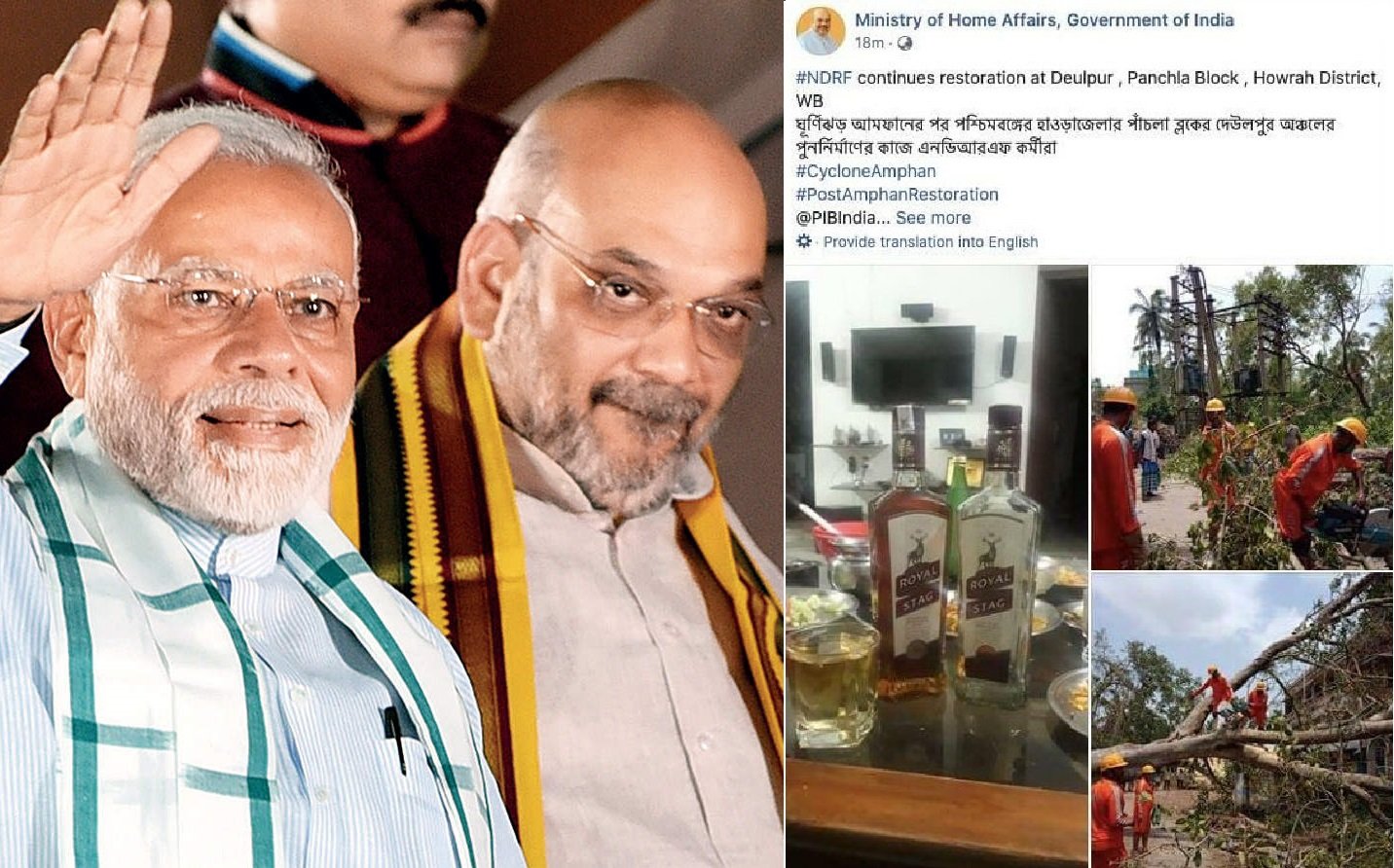
    There was panic in the Indian Ministry of Home Affairs (MHA) after efforts to advertise its relief operations in Cyclone Amphan-hit West Bengal, went awry.

    According to the details, the MHA had taken to Facebook to highlight the work that personnel of the National Disaster Response Force (NDRF), which falls under the ministry, were carrying out in the Trinamool Congress-governed West Bengal.

    However, with ‘work from home’ having its perils, one of the handlers of MHA’s social media accounts inadvertently posted images of two bottles of whiskey and snacks along with those of the rescue and relief work

    While the photos were posted on MHA’s official Facebook around 9 am and were taken off around 30 minutes later, screenshots of the post started doing rounds over social media. The post sparked exasperation and elation in equal measure as some were enraged by the “irresponsible behaviour” and others saw the funny side of the “accident”.

    The MHA refused to comment on who uploaded the picture but reports quoted officials as saying that the ministry was treating it as a case of human error that should not be shown out of proportion.  

    They added that although most officers were enraged at the “callousness”, many other civil servants laughed off the “disaster”.

  • Facebook, Amazon chiefs’ wealth rose 15pc amid coronavirus pandemic

    Facebook, Amazon chiefs’ wealth rose 15pc amid coronavirus pandemic

    Amid the coronavirus pandemic, wealth of the chief executive officers (CEOs) of Amazon and Facebook increased by 15 per cent.

    According to reports, wealth of Jeff Bezos and Mark Zuckerberg witnessed the increase within the past two months.

    More than 600 billionaires in the United States (US) became even richer as tech stocks rose during virus lockdowns.
    Between March 18 and May 19, their total net worth went up by $434 billion while coronavirus continued to cause unemployment around the world.

    Bezos’s wealth grew over 30 per cent to $174.6 billion while Zuckerberg’s fortune increased by more than 45 per cent to $80b billion.

    As per a study conducted by Americans for Tax Fairness and the Institution for Policy Studies’ Programme for Inequality, Amazon and Facebook stocks have surged following new programmes that pushed their businesses ahead at a time when many consumers are stuck at home.

    Reportedly, job losses in the US have surpassed 36.8 million since business shutdowns began in the middle of March to stop the spread of the deadly new disease.

    Data also shows that housing sale and manufacturing businesses also collapsed during the said time period.

    Coronavirus has killed at least 94,700 people in the US where more than 1.5 million infections have so far been confirmed.

  • Work-from-home causes burnout, isolation: Microsoft CEO

    Work-from-home causes burnout, isolation: Microsoft CEO

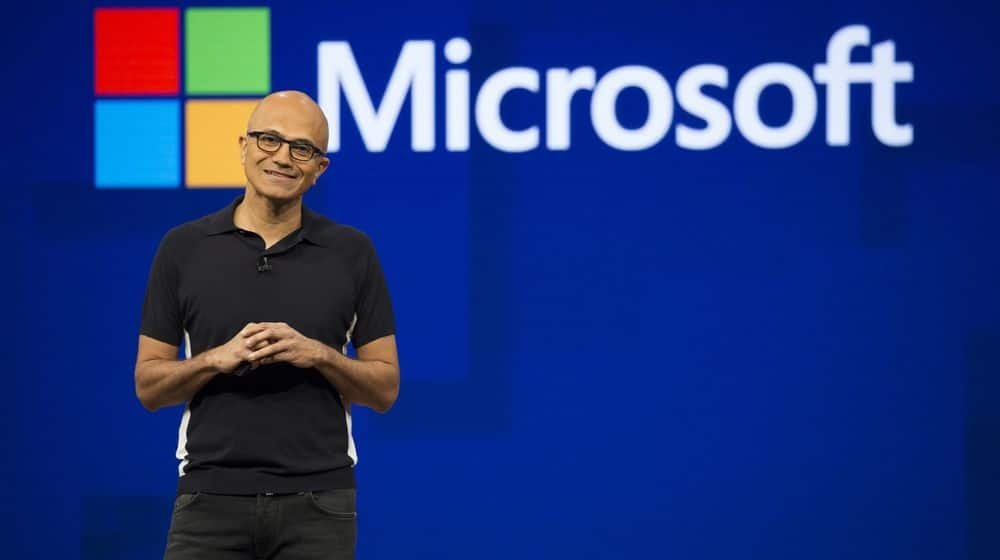
    The chief executive officer (CEO) of Microsoft, Satya Nadella, has said that making remote work permanent can have a deteriorating impact on social interactions and mental health of the workers, whereas virtual conferences cannot replace in-person meetings. 

    “Those who are used to traditional office setting and appreciate social interactions that take place at the office, a sudden shift to remote work will impact their mental health due to isolation and burnout.”

    After the outbreak of coronavirus, companies around the world made work from home mandatory as a safety measure but according to Nadella, this step is not good for the wellbeing of workers.

    Speaking to a private media outlet, Nadella said that remote setup would be “replacing one dogma with another dogma”. 

    “What does burnout look like? What does mental health look like? What do connectivity and community building look like? One of the things I feel is, hey, maybe we are burning some of the social capital we built up in this phase where we are all working remotely. What’s the measure for that?,” Nadella added.

    His remarks come after Twitter allowed its staff to work from home “forever” even after the end of COVID-19 pandemic. 

    Twitter has become the first company to allow employees to work from home indefinitely as the pandemic changes work culture around the world.  

    Tech giants like Facebook and Google have also allowed most of their employees to work remotely until the end of this year.

    Microsoft has also extended its work-from-home policy until October at least, besides, nothing will hinder the operations and progress of Microsoft as the CEO clearly stated, “We’re going to boldly allocate and acquire, build, innovate, partner, whatever.”

    “We are also going to make sure that we have the ability to do credit for small businesses and other organisations that need that help.”

  • Amazon owner likely to become world’s first trillionaire

    Amazon owner likely to become world’s first trillionaire

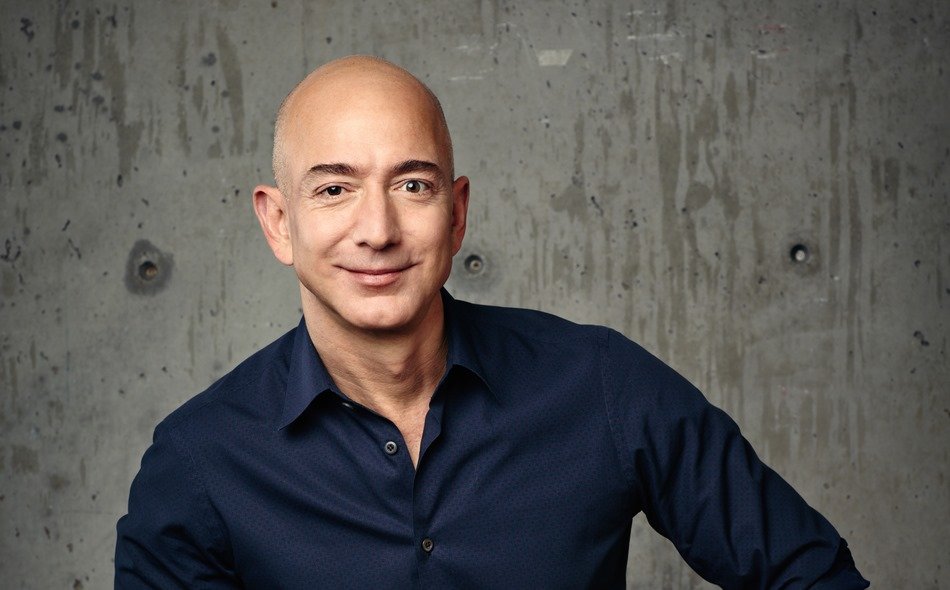
    While the coronavirus pandemic has racked the global economy with uncertainty, Amazon founder Jeff Bezos is on track to become the world’s first trillionaire by the year 2026.

    The business software comparison site used data collected from the last five years of the Forbes Rich List to calculate the yearly wealth growth rate of the world’s richest billionaires.

    The results concluded that Bezos, whose wealth is over $140bn, could become the world’s first trillionaire in 2026, by then he will be 62 years old.

    The study also says that Mark Zuckerberg, founder of Facebook, could become the youngest trillionaire in the world in 2036 when he will be 51 years old.

    Physical shopping is not a thing at the moment, therefore, Amazon is doing well at the moment because the demand for online is very high.

    Last month Jeff Bezos donated $100 million to US food banks which are struggling to feed a growing number of Americans who have lost their jobs due to the coronavirus crisis.

    According to the Billionaires Index, Bezos is one of the world’s five richest people who hasn’t lost money in 2020 as a result of the coronavirus pandemic. Amazon has reported $75.5 billion in revenue for the first quarter of 2020.

  • Facebook introduces ‘care’ emoji to express support amid COVID-19 crisis

    Facebook introduces ‘care’ emoji to express support amid COVID-19 crisis

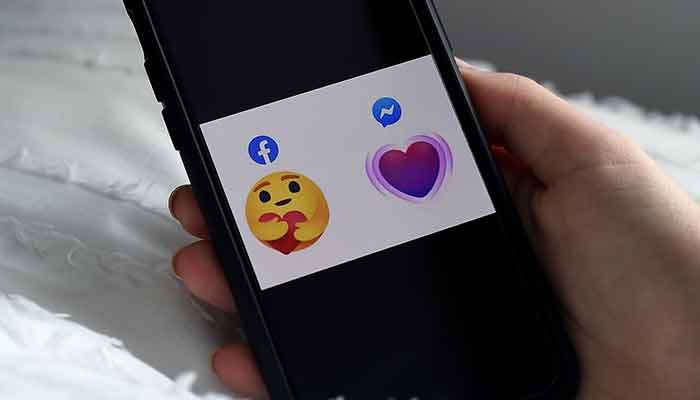
    Facebook has launched a new ‘care emoji’ for its 2.6 billion users to express empathy during coronavirus crisis.

    The new ‘care emoji’ is intended to show care and solidarity when commenting on a status update, message, photo or video during the pandemic. The emoji is a smiley face, hugging a heart for the basic Facebook service, while in Messenger app it appears as a pulsating, purplish heart.

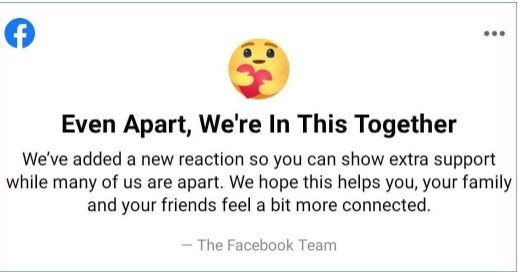
    “Even apart, we are in this together,” read Facebook’s official message.

    To insert a reaction, users hold down the Like button on mobile apps or hover over the Like button on the desktop version of the site to see the reaction-emoji options.

    Facebook is also working to connect people to provide accurate information from health experts and keeping misinformation away about the COVID-19 from spreading on their related apps.

    “We’ve now directed over 2 billion people to resources from the WHO and other health authorities through our COVID-19 Information Center and pop-ups on Facebook and Instagram with over 350 million people clicking through to learn more,” read the company’s website.

    Facebook is also planning to share some additional steps to fight COVID-19 related misinformation and make sure people have the correct and credible information they need to stay safe.

  • Google, Facebook and Twitter threaten to shut services in Pakistan

    Google, Facebook and Twitter threaten to shut services in Pakistan

    When PTI’s government unveiled some of the world’s most sweeping censorship rules for the internet, global internet companies like Facebook, Google and Twitter threatened to shut services in the country, a step which would leave 70 million internet users in digital darkness, New York Times reported

    Through the Asia Internet Coalition, they wrote a letter to Prime Minister Imran Khan, warning him that “the rules as currently written would make it extremely difficult for AIC Members to make their services available to Pakistani users and businesses.”

    READ MORE: Punjab govt’s first-ever digital payment method collects Rs1 billion

    This undemocratic policy of PTI’s government faced severe backlash from rights groups forcing the government to retreat. Pakistani officials, this week, pledged to review regulations by doing a broad-based consultation process with all relevant stakeholders of civil society and technology companies.

    Pakistan’s digital censorship law will give power to the government to take-down a wide range of content. These laws can be easily abused by the powerful if they consider any sort of content harmful, distasteful or simply a threat to their interests.

    The unified resistance by Facebook, Google, Twitter and other tech companies in Pakistan is highly unusual. Companies often protest these types of regulations, but to leave a country is very unusual. Google pulled its search engine out of China in 2010 rather than submit to government censorship of search results.

    READ MORE: OGRA to drastically cut down petrol prices

    Under the new regulations, formally known as the Citizen Protection (Against Online Harm) Rules 2020, social media services must remove or block content within 24 hours of a request from a newly appointed officer, called the national coordinator.

    Companies must also prevent the live-streaming of any type of content the authorities say is objectionable.

    In addition, the companies must open permanent offices in Islamabad and set up servers to store data in the country. Violations of the law are subject to fines of more than $3 million, with the authorities even empowered to block services entirely.

    READ MORE: Christian youngster killed for ‘polluting’ tube-well water by bathing in it

    The new laws are a direct threat to the digital economic future for Pakistan. This will also decrease freedom of expression, increase censorship and diminish digital rights.

    What is interesting to note is that PM Khan rose to power in Pakistan in 2018 largely because of his party’s strong presence on social media. But now that he is in charge, and he is very intolerant towards online criticism.

    Pakistan’s powerful military is also averse to debates on social media platforms, especially on Twitter, which is used by critics to question human rights violations and Pak-military’s involvement in politics.
  • Facebook CEO shares views on social media regulations

    Mark Zuckerberg, the chief executive officer (CEO) of Facebook, has said that the social media giant is working to counter online election interferences, Business Recorder reported.

    According to reports, Mark, while speaking at the Munich Security Conference in Germany, said that so far there were no well-defined rules to regulate social media, however, the subject had been brought to debate for privacy and security reasons.

    Read more: WhatsApp reaches 2 billion users

    In his opinion, social media should be regulated with a system somewhere between the existing rules used for telecommunication and media industries.

    “Right now there are two frameworks that I think people have for existing industries – there’s like newspapers and existing media, and then there are the telecommunication type models, which is ‘the data just flows through you’, but you’re not going to hold a telecom responsible if someone says something harmful on a phone line.”

    Read more: PTI’s new social media laws: Are you in some sort of danger?

    “I actually think where we should be is somewhere in between,” he said.

    Facebook and social media giants including Twitter and Alphabet’s Google have come under increasing pressure to better combat governments and political groups using their platforms to spread false and misleading information.

    Read more: The inconvenient truth about Pakistan’s economy

    Mark maintained he had employed 35,000 people to review online content and implement security measures to counter fake news and privacy protection.

  • WhatsApp reaches 2 billion users

    WhatsApp reaches 2 billion users

    Facebook-owned instant messenger — WhatsApp — has crossed 2 billion users around the world, and on this success, has reaffirmed its commitment to strong encryption to protect the privacy of users’ data.

    WhatsApp, which was acquired by Facebook in 2014, turned into the most widely-used free messaging app that provides free text, voice and video communication services; enabling more than 2 billion people to have conversations from anywhere in the world.

    “Strong encryption is a necessity in modern life. We will not compromise on security because that would make people less safe,” WhatsApp said in an official statement. “For even more protection, we work with top security experts and employ industry-leading technology to stop misuse as well as provide controls and ways to report issues without sacrificing privacy.”

    The social network is working to extend end-to-end encryption across its messaging applications, including Facebook Messenger and Instagram.

    In a recent statement, Facebook had said some 2.89 billion people globally were daily users of at least one of its services. The growth has attracted more attention of regulators and activists concerned over the dominance of major tech platforms.

  • YouTube, Facebook content moderators sign PTSD disclosure

    YouTube, Facebook content moderators sign PTSD disclosure

    Technology and media company Verge has published a detailed report on Facebook and YouTube’s ‘content moderation’ processes in which people have to sign a form that says:

    “I understand the content I will be reviewing may be disturbing, It is possible that reviewing such content may impact my mental health, and it could even lead to Post Traumatic Stress Disorder (PTSD). I will take full advantage of the weCare program and seek additional mental health services if needed. I will tell my supervisor/or my HR People Adviser if I believe that the work is negatively affecting my mental health.”

    However, this policy is not for everyone, here is the reason why.

    According to the report, only new joiners were asked to sign the forms, whereas existing employees were being sent the form as an update. In addition, this policy is being implemented in a company called ‘Accenture.’

    The Accenture is a multinational company that provides content moderation services to various social media platforms like Facebook, Twitter, and Google. The job of content moderation is outsourced because a huge amount of Data is posted on social media platforms. It is certainly not possible for the company to moderate all content on its own.

    However, the nature of the job is gruesome because the moderators have to view highly sexual and violent content which results in severe mental health issues. The reports come as Facebook faces lawsuits from former content moderators over a range of mental health issues in California and Ireland.

    Cases of PTSD and other mental health issues have been on the rise among content moderators. In 2019 The Verge published a behind the senses report of the Facebook Moderators.

    One moderator quoted in that report said he “sleeps with a gun by his side” after doing the job.

    Mental health experts say understanding the psychological strains of this job does not mitigate its risks.

  • How to reduce social media’s toxicity

    How to reduce social media’s toxicity

    You often decide to take a break from social media that is called “toxic” by a large number of people.

    Toxic social media is disturbing the sanity of their minds because there are tons of disturbing news out there. Despite deactivating all social media profiles, you see them coming back again. Yes, it is addictive, but here is what you can do to reduce its toxicity.

    1. UNFOLLOW ON FACEBOOK

    Most of us have Facebook profiles along with other 1.5 billion people who use it every day. We all started with sharing pictures on our profiles, or with our friends, but now it has turned into a battlefield of narratives between people. The best thing you can do is to ‘unfollow‘ those people who you want to avoid.

    Facebook is structured in a way that it will show you everything that you have searched in the past or what your friends are discussing, but when you unfollow someone, you’ll no longer see their activities or discussions.

    In some circumstances, you cannot unfriend or block a person, because of the reaction that you will get would be proportional to a threat of breakup or a divorce. So unfollow that person to cut down negativity.

    2. Stop tapping on everything on Instagram 

    Although you might have control over what you follow on Instagram, you may turn off comments on your posts, or you do not follow hashtags that you do not like. But, what about the search tab that shows you the weirdest stuff you cannot even imagine in your nightmare. Here come the algorithms of Instagram.

    If you are tapping on the pictures of dogs, 50-60% of the picture you might see would be of dogs – the rest of the pictures will depend on the previous searches done from your account. So, if you want to cut down what you see in the search tab, skip it for a few days and tap on only those items that you want to follow.

    3. Twitter is not easy

    Cutting toxicity on Facebook or Instagram might be little convenient, but handling Twitter in this regard is tricky. You might follow a writer that posted something you like, but their next tweet ruins your entire day, what you can do about it? Here is what you can do.

    To block or unfollow that most toxic account would be just right. But if you like the real tweets of someone’s account and do not like their retweets, you can simply turn off retweet on a per-account basis. Moreover, you can use quality and advance filters to censor the words you do not like.

    These are few tools you can tweak to filter toxicity, but if you really want to cut down of social media poison; discipline yourself. The biggest filter one can use is to have positive thinking, but that is another topic for some other day.