Tag: Faizabad sit-in

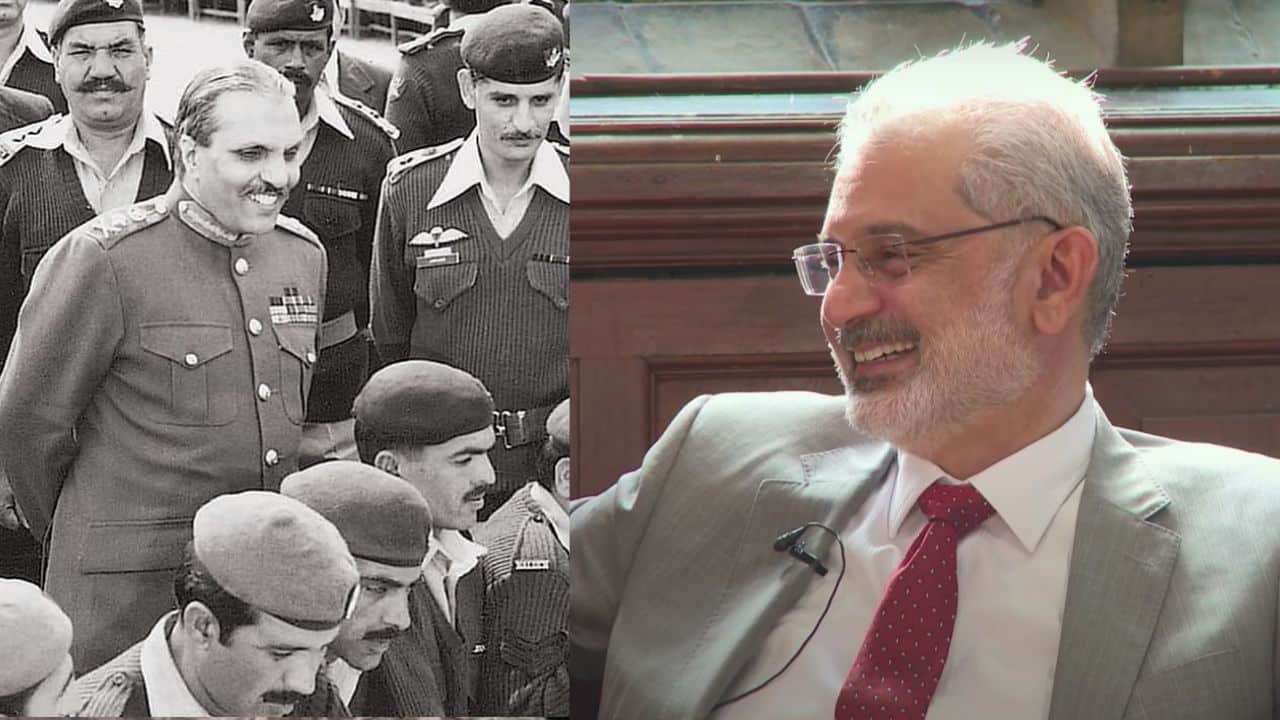
  • Former DG ISI Faiz Hameed denies meeting former judge Shaukat Aziz Siddiqui

    Former DG ISI Faiz Hameed denies meeting former judge Shaukat Aziz Siddiqui

    Lieutenant General (retd) Faiz Hameed, former director general of Inter-Services Intelligence (ISI), has firmly denied allegations of him meeting former Islamabad High Court judge Shaukat Aziz Siddiqui and manipulating the judicial proceedings related to the Panama Papers case, Geo has reported.

    General Hameed labeled the accusations as “absolutely false, frivolous, concocted, and based on an afterthought.”

    He emphasized that he neither contacted Judge Siddiqui nor engaged in any meetings with him, rejecting any involvement in discussions about the appeals filed by Pakistan Muslim League-Nawaz (PML-N) leader Nawaz Sharif in the court.

    IHC former chief justice Muhammad Anwar Khan Kasi also submitted his response to the Supreme Court rejecting Siddiqui’s allegations.

    In addition, Brigadier (retd) Irfan Ramay’s reply has also been submitted to the top court, in which he denies the allegations against him and meeting Siddiqui.

    Contrary to Faiz Hameed’s reply, Siddiqui claims he has concrete evidence of two meetings with Gen (retd) Faiz Hameed at his official residence in 2018.

    Talking to Geo News, Siddiqui says he not only has a list of witnesses but also material evidence to prove his allegation that the then-DG ISI visited him twice when he was a senior serving judge.

    Siddiqui says if required, he can furnish the evidence to the Supreme Court, which is presently hearing an appeal against his dismissal by the Supreme Judicial Council (SJC) in October 2018.

    Referring to the replies of Gen (retd) Faiz and others submitted to the Supreme Court in his case, he says the replies that deny his allegations prove the point that he was dismissed from service by the SJC without inquiring about the matter.

    Siddiqui says a day after his address to the Rawalpindi Bar Association on July 22, he had formally approached the then chief justice Saqib Nisar requesting him to constitute a commission to probe the authenticity and truthfulness of what he had alleged in the address.

    “If an independent commission holds that there’s no reality in the facts presented in the meeting of District Bar Association Rawalpindi, I am ready to face the consequences, but at the same time, I have a right to enquire that if my presented facts proved correct, what would be the fate of those persons, be they the serving army personnel who are involved in manipulating the judicial system,” reads his letter written to the then CJP.

    Siddiqui requested the issuance of directives for open proceedings of an independent commission, allowing media, civil society, and the legal fraternity to attend the inquiry into his allegations.

    Expressing his distress, Siddiqui stated, “It is a matter of concern that the independence of my institution has been compromised by the intervention of a few individuals of the prestigious institution of the Army and its allied agencies.”

    He noted that he had previously pointed out this intervention, leading to the initiation of a reference against him, along with another he deemed fabricated.

    Siddiqui’s troubles began after he addressed the District Bar Association on July 21, 2018, at the invitation of the executive body.

    During this address, he presented facts related to the Constitution’s applicability, the rule of law, the independence of the bar and bench, and the dispensation of justice.

    Following his revelations, Siddiqui claimed that a false and malicious campaign was launched against him on social and electronic media.

    The former judge expressed his disappointment, revealing that he learned of the Supreme Court’s instant annoyance through social media and the press release of the Supreme Court’s Public Relations Officer (PRO). Siddiqui noted that such outbursts of anger from the Supreme Court were not new and unusual in his experience.

    Despite Siddiqui’s request for an independent commission to probe the authenticity of his claims, none was constituted.

    Read more: Supreme Court issues notice to ex-DG ISI Faiz Hameed in Shaukat Aziz Siddiqui plea
  • Faiz Hameed denies ‘conspiracy’ against government in Faizabad commission case

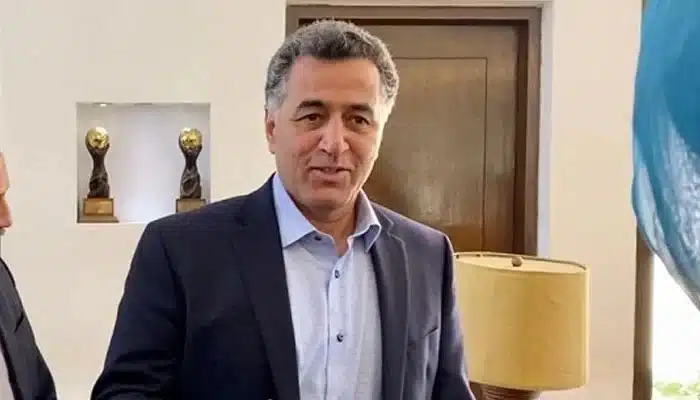
    Faiz Hameed denies ‘conspiracy’ against government in Faizabad commission case

    Former Director General of Inter-Service Intelligence (ISI), General (retd) Faiz Hameed, recorded his statement before the Faizabad sit-in commission on Thursday. The former spymaster denied allegations that he conspired against the government.

    Faiz Hameed was called three times by the committee investigating the 2017 sit-in organised by Tehreek-e-Labaik Pakistan (TLP), but the former DG ISI did not do so.

    After that, the commission sent him a questionnaire, to which he responded that he held negotiations with TLP on the directions of the government.

    Sources told Geo News that the commission called the former spymaster on January 2, but he did not appear before the panel.

    Earlier last year, the panel summoned him in the second week of December and then on December 29th.

    In November last year, the caretaker federal government constituted the inquiry commission for the implementation of the Supreme Court’s 2019 Faizabad verdict.

  • ‘Zia-ul-Haq ko Sadar Nahi Maanta’: Chief Justice of Pakistan

    ‘Zia-ul-Haq ko Sadar Nahi Maanta’: Chief Justice of Pakistan

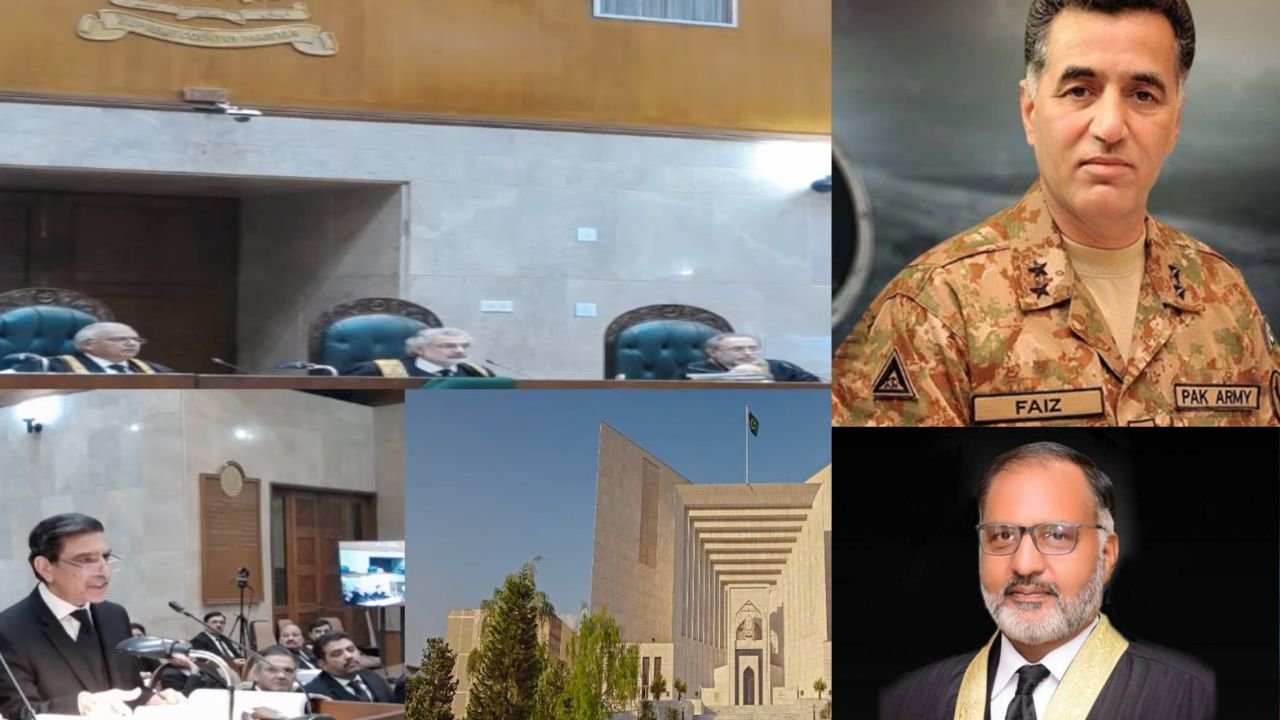
    Chief Justice of Pakistan, Justice Qazi Faez Isa gave an unexpected but strongly worded statement during the hearing of the Faizabad sit-in case, stating that he doesn’t recognize the late military dictator General Zia-ul-Haq as president, as per Neo News.

    During the hearing of the Faizabad sit-in case, Justice Faiz Isa, addressing Ijaz-ul-Haq’s lawyer, said that he does not consider Zia-ul-Haq the President of Pakistan.

    When the Attorney General revealed that Ijaz-ul-Haq’s lawyer had been asked to provide a written reply with an affidavit to withdraw the statement, the lawyer of countered the Attorney General’s statement, denying that he had been asked to retract the statement.

    Ijaz-ul-Haq’s lawyer informed the court that his client had merely stated that his name should be removed from the verdict, to which Chief Justice Justice Faiz Isa remarked that Ijaz-ul-Haq’s name was only mentioned in the report by intelligence agencies, and it was not included in the verdict.

    During the same conversation, when Chief Justice Justice Faiz Isa mentioned that Ijaz-ul-Haq is the son of former army chief Zia-ul-Haq, his lawyer replied that his father was also the President of Pakistan. In response, the Chief Justice stated, “I do not consider Zia-ul-Haq the President of Pakistan. No one can become the President by the force of arms. Do not call Zia the President again in this court.”

    The lawyer of Ijaz-ul-Haq, the son of former military ruler Zia-ul-Haq, asserted that it is documented in the constitution that Zia-ul-Haq was the president. Chief Justice Justice Faiz Isa responded by remarking that Zia-ul-Haq had written in the constitution that he was the president for five years.

    Earlier today, the Supreme Court of Pakistan issued summons for the chairman of the Pakistan Electronic Media Regulatory Authority (PEMRA) following allegations of “media coercion” during the 2017 Faizabad sit-in.

    The summon was initiated by a three-member bench of the apex court, led by Chief Justice of Pakistan (CJP) Qazi Faez Isa, and including Justice Aminuddin Khan, and Justice Athar Minallah.

    The hearing, part of a series of nine review petitions against the Supreme Court’s February 6, 2019 verdict on the Faizabad sit-in case, was marked by significant developments.

    Authored by Justice Isa years before he took oath as the chief justice of Pakistan (CJP), the searing judgement had instructed the defence ministry and the tri-services chiefs to penalise personnel under their command who were found to have violated their oath.

  • Faizabad sit-in: What is happening in court?

    The Supreme Court of Pakistan has issued summons for the chairman of the Pakistan Electronic Media Regulatory Authority (PEMRA) following allegations of “media coercion” during the 2017 Faizabad sit-in.

    The summon was initiated by a three-member bench of the apex court, led by Chief Justice of Pakistan (CJP) Qazi Faez Isa, and including Justice Aminuddin Khan, and Justice Athar Minallah.

    The hearing, part of a series of nine review petitions against the Supreme Court’s February 6, 2019 verdict on the Faizabad sit-in case, was marked by significant developments.

    Authored by Justice Isa years before he took oath as the chief justice of Pakistan (CJP), the searing judgement had instructed the defence ministry and the tri-services chiefs to penalise personnel under their command who were found to have violated their oath.

    Notably, the court addressed the allegations made by Justice Isa in a prior judgment, emphasizing the importance of upholding the Constitution and the rule of law.

    Former PEMRA chairman, Absar Alam, alleged that the then-Director General of Inter-Services Intelligence (ISI), General Faiz Hamid, and his subordinates exerted undue influence on media policies.

    In his written reply, Alam said, PEMRA officials were under pressure from “serving officers”, adding that he himself “received calls” from the then DG(C) Major General (retd) Hamid and or his subordinates complaining that their requests were not acceded to by him.

    “The Applicant-in-Person had been asked to: i) to take action against Najam Sethi a prominent senior journalist; and ii) to completely blackout Hussain Haqqani from TV Channels, however, both illegal/unlawful demands remained unmet,” read the affidavit, seen by Geo News.

    According to the ex-Pemra chairman, Gen (retd) Hamid and or his subordinates “controlled TV Channel policy through illegal/unlawful means by changing their numbers and moving them at the tail end, when they refused to follow instructions”.

    He further said that the situation became “untenable” in April 2017, adding that he addressed the matter in writing to then-prime minister Nawaz Sharif, then-chief justice Mian Saqib Nisar and then-Chief of Army Staff General (retd) Qamar Bajwa, to inform that due to grave threats by unknown persons to Pemra officials for not following instructions fear had paralysed the latter.

    Chief Justice Isa, expressing concern over the government’s handling of the matter, noted that the investigation committee formed by the government was inadequate.

    The fact-finding committee was constituted by the government, on Friday, to investigate the “role and directions” of all “concerned” officials in the management and handling of the sit-in in 2017.

    During the hearing today, Chief Justice Qazi Faez Isa said the apex court wanted to know who was behind the Faizabad sit-in.

    “We want to know who was the mastermind of the Faizabad sit-in,” he remarked, expressing annoyance over the decision not being implemented since its issuance on February 6, 2019.

    “Our job is to order, and your job is to implement,” he stressed, underlining the need for a comprehensive and transparent inquiry.

    In response to these developments, the Supreme Court rejected the government’s fact-finding committee, urging the Attorney-General for Pakistan, Mansoor Usman Awan, to swiftly form a new inquiry commission to ensure the implementation of the court’s verdict on the Faizabad sit-in case.

    The Faizabad sit-in, which occurred in 2017, disrupted daily life in Islamabad for 20 days, resulting in six casualties and numerous injuries.

    The sit-in was organized by the Tehreek-e-Labbaik Pakistan (TLP) to protest alleged modifications to the Khatm-i-Nabuwwat oath during the passage of the Elections Act 2017, later rectified by an act of Parliament.

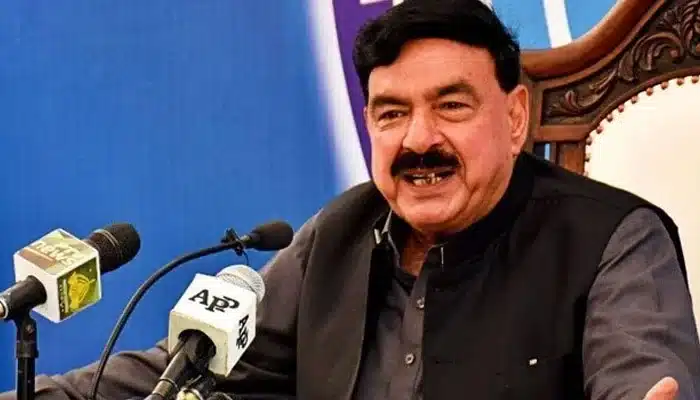
  • Sheikh Rashid petitions court to withdraw review request in Faizabad sit-in case.

    Sheikh Rashid petitions court to withdraw review request in Faizabad sit-in case.

    Sheikh Rashid Ahmed, the leader of the Awami Muslim League (AML), submitted an application for the withdrawal of his review plea in the Faizabad sit-in case before Supreme Court of Pakistan (SC) on Friday.

    In the top court’s miscellaneous application, the former minister argued that he had no affiliation with Tehreek-e-Labaik Pakistan (TLP) and had not participated in the relevant sit-in.

    Multiple pleas were filed challenging the SC verdict — given by the apex court’s two-member bench comprising now-Chief Justice of Pakistan (CJP) Qazi Faez Isa and Justice Mushir Alam — on the Faizabad sit-in staged by the TLP in 2017 against the then-Pakistan Muslim League-Nawaz (PML-N) government.
    Rashid’s withdrawal request follows the federal government’s request to have the review petitions from Pakistan Tehreek-Insaf (PTI), the Election Commission of Pakistan (ECP), the Intelligence Bureau (IB), the Muttahida Qaumi Movement (MQM), and Pakistan Muslim League-Zia (PML-Z) President Ijaz Ul Haq withdrawn.

    The three-member Supreme Court bench led by CJP Isa will hear review petitions in the Faizabad sit-in case on November 1.

  • Ahsan Iqbal reveals what Gen Faiz Hameed wanted in Faizabad sit-in deal

    Ahsan Iqbal reveals what Gen Faiz Hameed wanted in Faizabad sit-in deal

    Pakistan Muslim League-Nawaz (PML-N) senior leader and former interior minister Ahsan Iqbal has disclosed that former Inter-Services Intelligence (ISI) chief Lt Gen. (retired) Faiz Hameed had expressed a strong desire to be included as a signatory in the agreement reached during the Faizabad sit-in in 2017 with the Tehreek-e-Labbaik Pakistan (TLP).

    Speaking on Monday on the Geo News programme ‘Capital Talk’ hosted by Hamid Mir, Iqbal expressed that neither he nor the then Prime Minister Shahid Khaqan Abbasi supported the idea of a high-ranking military official becoming a signatory to that agreement.

    However, the former interior minister said Gen. Faiz maintained that the protesting TLP would only agree to the accord if he was the guarantor.

    “When I read out the contents of the agreement to the prime minister, he also suggested that it would be better that General Sahib didn’t sign it,” said Ahsan Iqbal.

    He also stated that “I also conveyed to General Sahib that it wouldn’t be good for him and his institution to sign the agreement given its political nature.”