Tag: fake

  • How to identify and protect your mobile from cyber attacks

    How to identify and protect your mobile from cyber attacks

    Smartphones are ideal targets for hackers as they contain so much personal information all in one place, from email and phone contacts to banking and social media details. This information can be used by hackers to steal identities, sell them on the dark web, and perform a variety of other cybercrimes.

    Cybercriminals are always refining their methods, making their attacks increasingly difficult to spot. We have heard of the phone and call tapping but recently there has been a debate that if WhatsApp calls can be tapped.

    Can WhatsApp audio or video call be hacked?

    Bugging can occur at all kinds of levels from political worthies to average people with no technological wisdom. A cyber security expert claims that since nothing is impossible and no code is perfect, WhatsApp’s end-to-end encryption makes it safer.

    However, WhatsApp employs some of the best coders around, and the business has invested heavily in the security of its messenger. Therefore, for not-so-pro hackers, it is ‘almost impossible’ to hack WhatsApp.

    All WhatsApp conversations—video or audio—are encrypted from beginning to end. Although the implementation of that encryption can’t be examined for security because the app is closed-source.

    However, let’s presume it’s solid. Any video or audio data sent during your video chats that are end-to-end encrypted can only be decoded on the device you’re using to make the call. So even if anyone were to intercept the data, they couldn’t decrypt it, it’d be useless. Not ‘leakable’ in that manner.

    Unless you exploit your smartphone by doing these and have it compromised by:

    • Installing third-party apps or particularly APKs (not from the play store) which are modified by developers
    • Allowing hackers to install malware on your phone so they can access anything by clicking on a link
    • Installing fake WhatsApp, such as WhatsApp PLUS or GB WHATSAPP

    Man-in-the-middle (MITM) attacks or even data sniffing can be used to collect video processing from your device. However, a hacker must first get access, which it does by utilising social engineering to trick you into clicking links or downloading files.

    By simply copying the WhatsApp database file and encryption key from your phone by using some software, anyone may read your message.

    Each WiFi network adapter smartphone has a 12-character MAC address, a unique identification number that can be falsified. Hackers can use the MAC address of your phone to replicate your WhatsApp on their system.

    How to protect your WhatsApp account

    • Never give your phone to someone you don’t trust.
    • Keep your messages locked down with a different key so that no one else can see your messages.
    • Go to your WhatsApp settings and select “log-out from all browsers” or a comparable option if you are signed into numerous devices using your number to access WhatsApp Web.

    How to enable two-step verification

    To enable two-step verification, open WhatsApp > Settings > Account > Two-step verification > Enable.

    You will be prompted to create a password at this step, which will stop someone else from using your phone number for WhatsApp verification.

    Additionally, according to the experts, hackers won’t be able to track the user’s whereabouts if they don’t get access to any vital information.

    Phantom Calls

    A call is deemed Phantom if there is no one chatting from the other side. They all come from various numbers, and you won’t be able to hear any of them. You should report PTA if you frequently receive phantom calls. Most likely, a hacker is attempting to access your mobile device if you receive excessive random calls.

    Random messages

    We must have gotten several texts from unknown sources. Just checking a text message will not cause your phone to be hacked. You should use caution when clicking on links or using coupon coupons in communications, though. Consider whether the link looks authentic before clicking it to ensure that your personal information won’t be disclosed.

    Malicious links

    You can accidentally tap a malicious link and wind up installing spyware on your phone, that may transmit private information to hackers, if you are unable to identify this fake message. Or else, you can be taken to phishing websites that request information from your private accounts.

    Therefore, if you receive a text message advertising a great offer that requires you to click on a link in order to activate it, wait before doing so. As these links will direct you to a trap. This can considerably decrease the risk of someone hacking into your phone using messages.

    By avoiding suspicious links and only downloading apps from Apple and Google stores, we can reduce the risk of being hacked.
  • Woman fakes kidnapping four times to take money from her mother

    Woman fakes kidnapping four times to take money from her mother

    A 30-year-old woman was arrested for reportedly staging her own kidnapping four times in order to extort money from her mother.

    The woman allegedly texted her mother a video of herself blindfolded and splattered with blood, a kidnapping she had staged on her own.

    “Mommy. They’ve kidnapped me,” the woman sobs in the video sent to her mother. “You can’t say anything to the police. If you do, they’ll kill me.” She told her mother that the kidnappers will release her for $50,000.
    She also claimed that she was assaulted and denied foo

    d. The girl executed the plan with the help of her boyfriend and his family.

    This is not the first time that the woman tried extorting money from her mother. In the past the woman extorted at least $45,000 from her mother in three incidents.

    The woman and four others were arrested on September 5 from a casino. They were discovered with the knife and fake blood from the video. All five face charges of extortion, among other offenses.

  • WhatsApp bans 2.4 million Indian accounts due to violations

    WhatsApp bans 2.4 million Indian accounts due to violations

    WhatsApp banned 2.39 million Indian accounts in July, the most this year, according to a monthly report released by the Meta-owned popular instant messaging platform.

    Owing to the Asian country’s tighter IT legislation, huge internet platforms are required to produce compliance reports every month.

    According to Reuters, draft guidelines issued in June recommended establishing a panel to review user appeals and stated that major social media messaging platforms must allow identity of the primary creator of material if ordered to do so by courts.

    1.42 million accounts were “proactively blocked” before any reports from users.

    According to the social media platform, some accounts were blocked based on complaints received through the company’s grievances channel and the techniques and resources it utilises to detect such infractions. WhatsApp received a total of 574 complaints in July.

    The messaging app, which has previously been chastised for spreading false news and hate speech in India and throughout the world, deactivated 2.21 million accounts in India in June.

  • Top 10 funniest ads listed on OLX Pakistan

    Top 10 funniest ads listed on OLX Pakistan

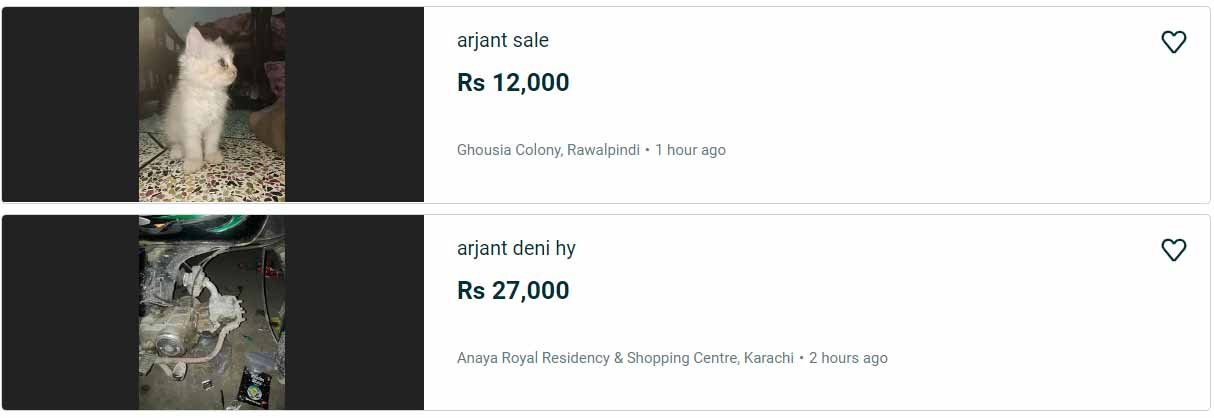
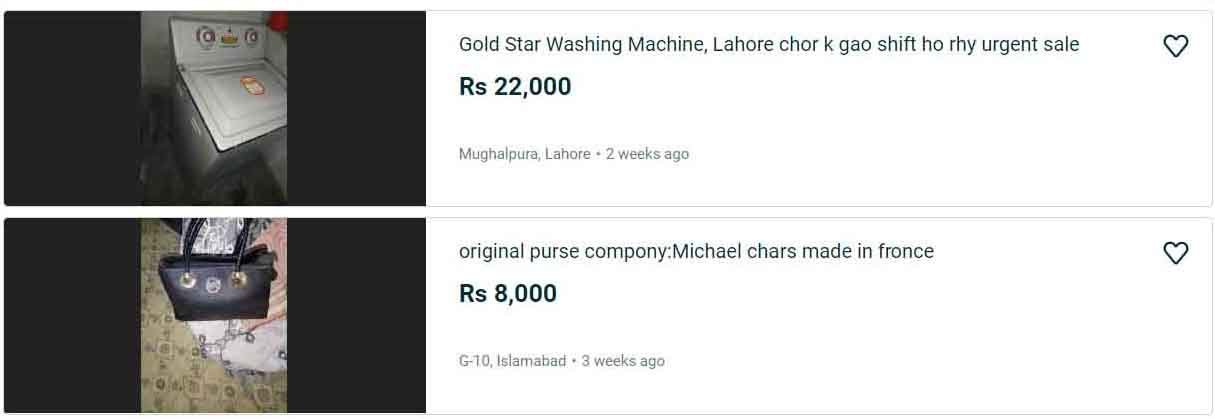
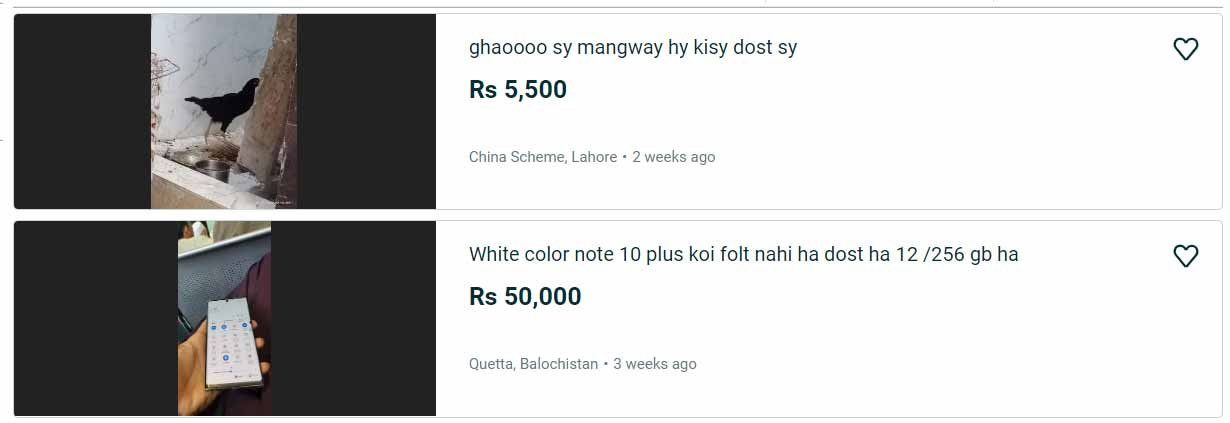
    OLX is one of the most popular platforms in Pakistan for online buying and selling everything from cheap pencil boxes to luxurious and pricey bungalows.

    Everyone now finds it really simple to place an ad for anything they need to sell right away thanks to the website. Aside from those that give their listings a slick or clear title, some sellers end up adding humorous wording.

    Here are some of the funniest ads recently posted on the online marketplace:

    OLX is the top shopping app in the Apple App Store with 4.4-star rating and thousands of daily sellers, regardless of how many bizarre and peculiar ads are posted on it every day.

    It is also among the earliest platforms in Pakistan for buying and selling, and it keeps improving after each update.

  • Sindh Police launches operation against fake government number plates

    Sindh Police launches operation against fake government number plates

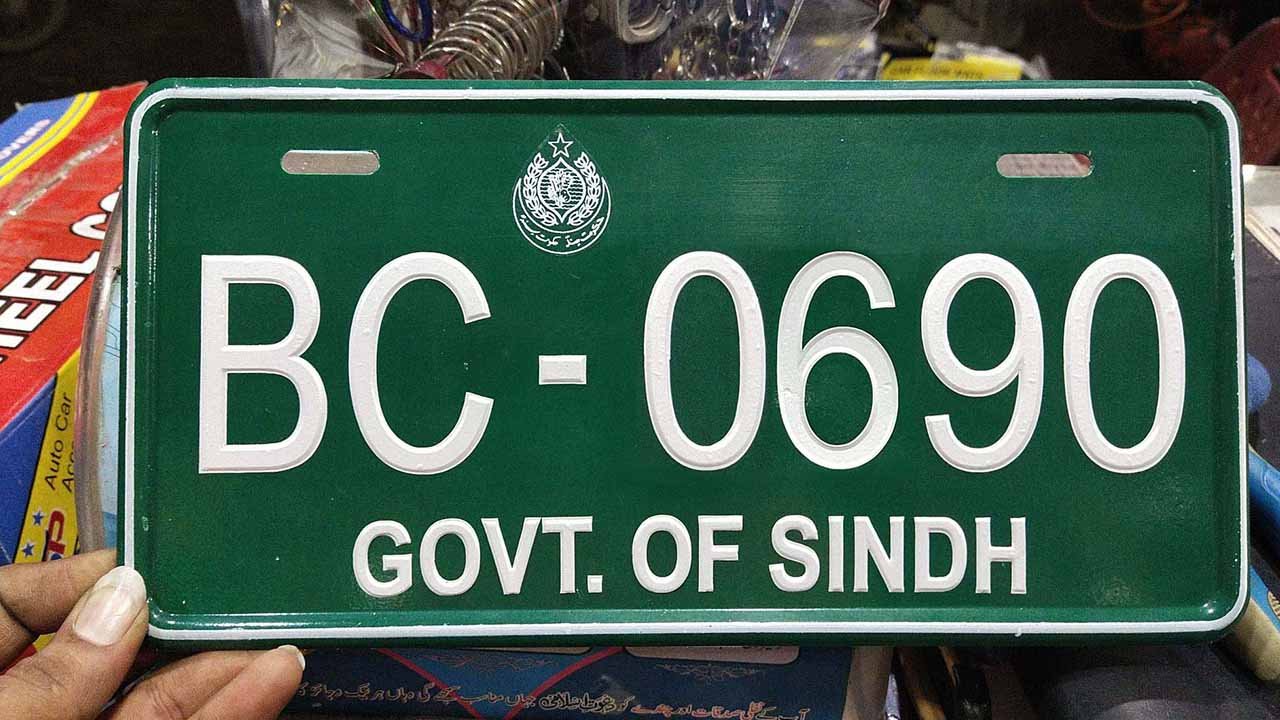
    Sindh police has launched an operation against motorists using bogus green and blue government license plates. The police will monitor different roads in Karachi and punish anyone found running a vehicle with a fake or unauthorised registration plate.

    Following the Inspector-General’s (IG) directives, Sindh Ghulam Nabi Memon Sindh Police have started a campaign against those who have phoney green and blue number plates on their cars.

    The IG gave the go-ahead to commence a crackdown on bogus green and blue license plates on July 25, but monsoon rains caused the operation to be postponed.

    According to the IG, it is illegal and punishable by law to use a blue or green number plate on a private car. He stated that all district police officers have been told to conduct strict operations against fake license plates.

    Following the IG’s directives, the Traffic Police started conducting spot checks on Muhammad Ali Jinnah Road in Karachi.

    A recent report from ARY News claims that a speeding vehicle that was using a phoney green license plate attempted to run over a traffic police officer when it was pulled over for inspection.

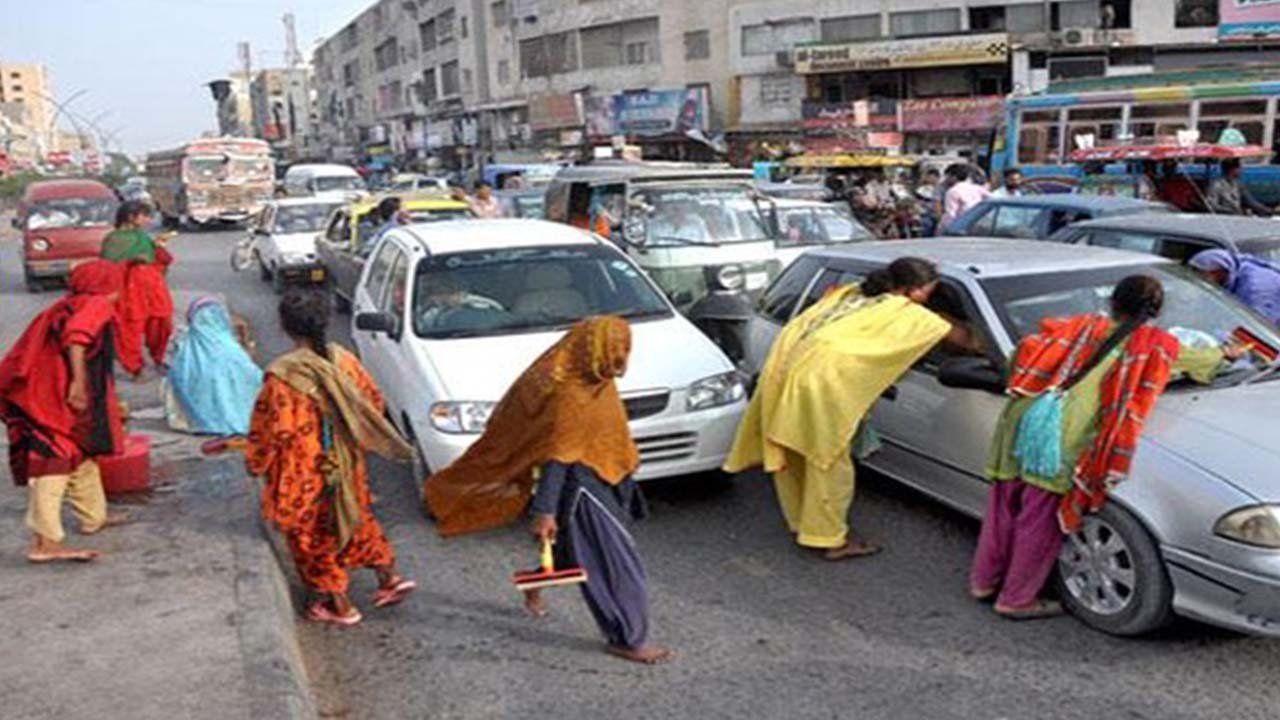
  • Police arrests 106 professional beggars in a crackdown

    Police arrests 106 professional beggars in a crackdown

    In a crackdown against professional beggars, the Rawalpindi Police arrested 106 beggars over the course of three days in an effort to reduce the issue of panhandling and lower the risk of traffic accidents caused by jaywalking.

    According to a police spokesman, the anti-beggary squads carried out raids in various neighborhoods, took action against professional beggars, and detained them in various police stations throughout the city on the orders of Senior Superintendent of Police, Operations Rawalpindi, Waseem Riaz.

    SSP Riaz claimed that specialised anti-begging squads were making a valiant effort to combat the rise in professional beggars.

    “The professional beggars stand on various highways and squares of Rawalpindi city and not only affect the flow of traffic but also increase the risk of accidents. Therefore, the public is requested not to serve alms to them, as discouraging such factors will not only improve the society, but also the flow of traffic,” he said.

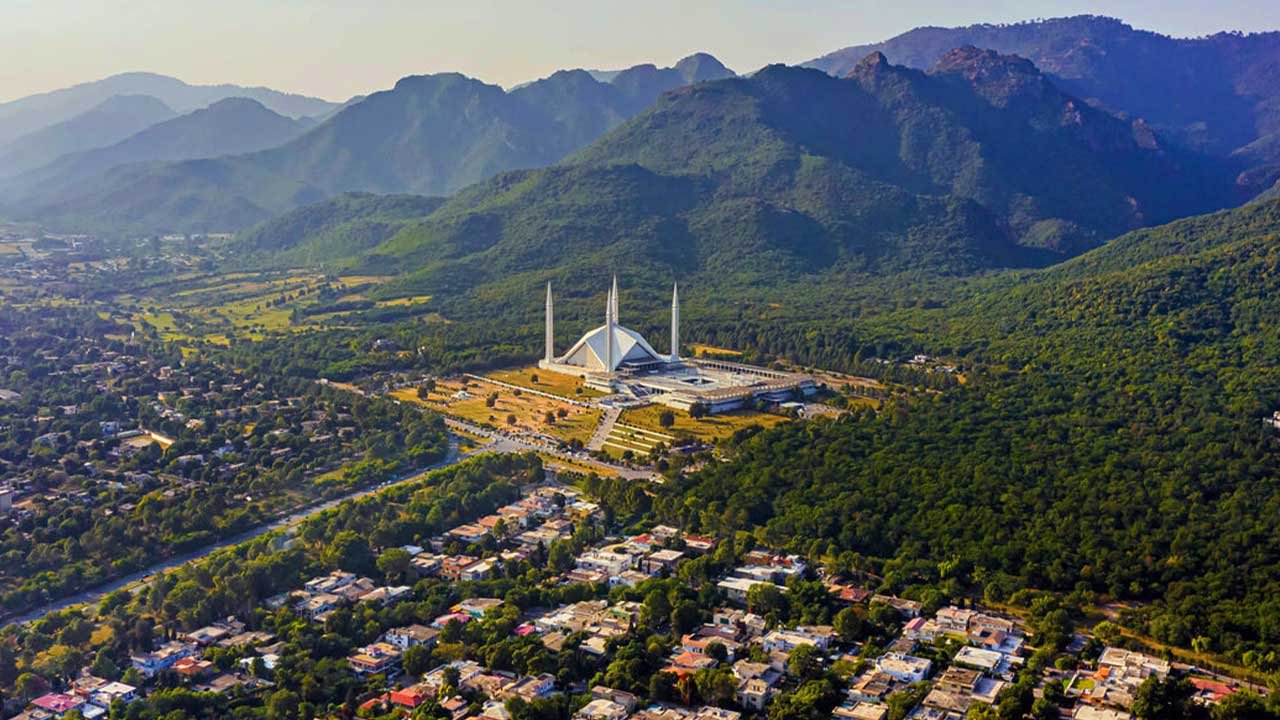
  • Offices of illegal housing society sealed by CDA

    Offices of illegal housing society sealed by CDA

    The Capital Development Authority’s (CDA) Planning Wing sealed the management offices of an illegal housing society along the Islamabad Expressway on Thursday, preventing the sale, acquisition, and transfer of plots.

    Since neither the layout design for this housing society was approved nor the management received an NoC, the planning division of the CDA has already declared all stages of this housing society to be illegal.

    Along with physically shutting the office, CDA’s Director of Regional Planning also issued a letter in this regard, according to The News.

    According to the letter, despite warnings about the housing society’s management’s illegal behaviour, the management proceeded to sell and transfer plots, which prompted the authorities to take enforcement action.

    Due to violations of the CDA Ordinance 1960, ICT Zoning Regulations 1992, and ICT Building Control Regulations 2020, the housing society’s offices have been sealed.

    The PTCL, Islamabad Electric Supply Company, and Sui Gas Northern Gas Company have also been advised by the CDA planning wing not to offer their services during all stages of the private housing society.

    A dozen unauthorised housing societies in the Rawalpindi district were also sent notifications by the Rawalpindi Development Authority (RDA) in a similar development.

    New Metro City, Smart City, Prism Town, Capital Valley, Life Residencia, Seven Enclave, Manan City, Lake View City, Faha Fatima, Park Zameen Town, Hawks Melbourne City, and Kashmir Valley have all received notices from RDA’s Metropolitan Planning and Traffic Engineering (MPTE) Directorate.

    The Punjab Private Housing Schemes and Land Subdivision Rules 2010 were used to issue the notices. These societies have been requested by the RDA to produce mortgage deeds, surrender deeds, and NOCs. Otherwise, they will be the target of legal action.

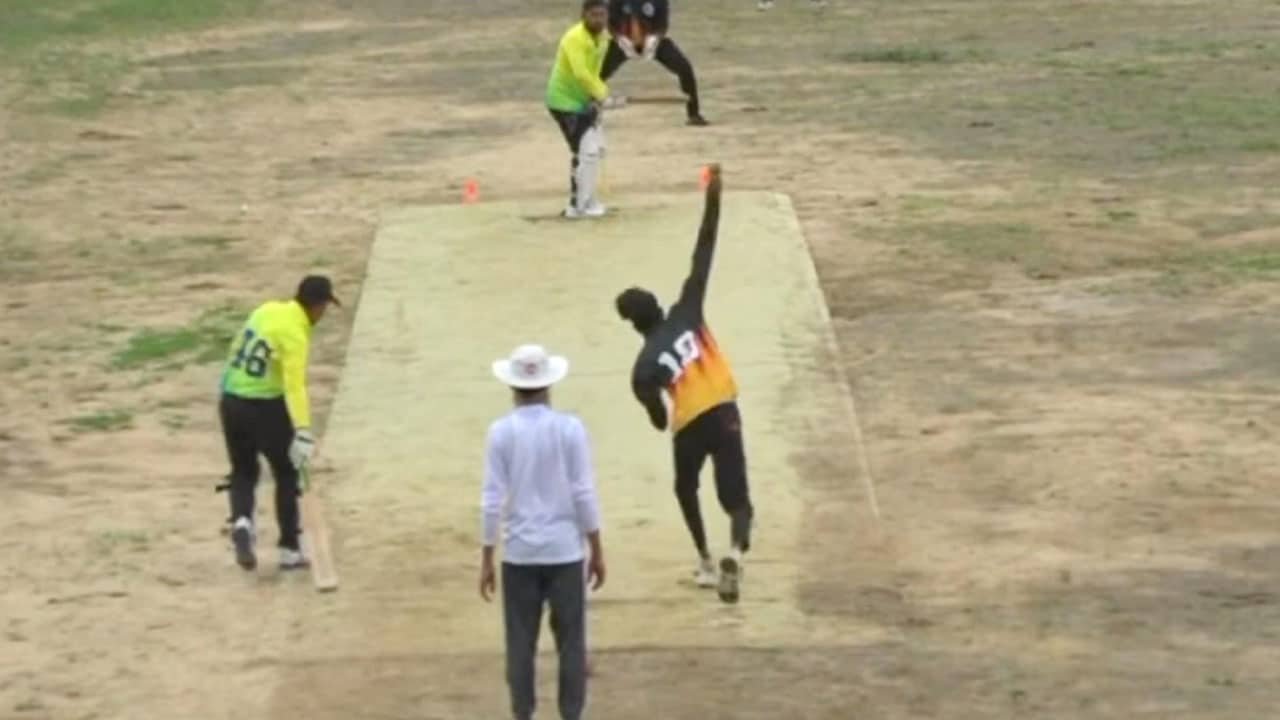
  • Gang caught running fake IPL to scam Russian gamblers

    Gang caught running fake IPL to scam Russian gamblers

    In a betting fraud similar to the 1973 movie The Sting, a gang staged a phony “Indian Premier League” competition with farmers serving as the participants.

    Before Indian police broke the scheme, the so-called “Indian Premier Cricket League” advanced to the quarterfinal round.

    Police claim that the tournament started three weeks after the original IPL ended in May, but that did not stop the gang, which they claim rented a secluded farm in the western state of Gujarat.

    According to Insp. Bhavesh Rathod, they set up a cricket field replete with “boundary lines and halogen lamps.” In addition, the accused had mounted high-definition cameras to the ground and employed computer-generated graphics to show results on a live-streaming screen.

    The group allegedly paid unemployed youth and labourers Rs1,054 (£4.20) per game to broadcast the matches live on the “IPL” YouTube channel.

    According to the authorities, players followed the orders of the “Russia-based mastermind” and alternately wore the jerseys of the Gujarat Titans, Mumbai Indians, and Chennai Super Kings.

    To give the competition an authentic feel, crowd noise sound effects were downloaded from the internet and a speaker with a talent for impersonating an Indian commentator from the real IPL was employed, according to Fox Sports.

    The cameraman simultaneously made cautious not to show the full field, beaming close-ups of the players instead.

    Russian gamblers were duped into placing bets on a Telegram channel the gang had set up, and the group would then use walkie-talkies to warn the phony umpire on the field.

    According to Rathod, the fictitious official “would signal the bowler and batsman to strike a six, four, or get out.”

    The policeman said, “We got a tip-off and we busted the racket while a ‘quarter-final’ match was being played.

    In the first instalment, the Russian gamblers gave the accused more than 300,000 rupees, according to Rathod.

    A gangster is duped by a bunch of con artists who set up a fictitious betting enterprise in the movie The Sting with Paul Newman and Robert Redford.

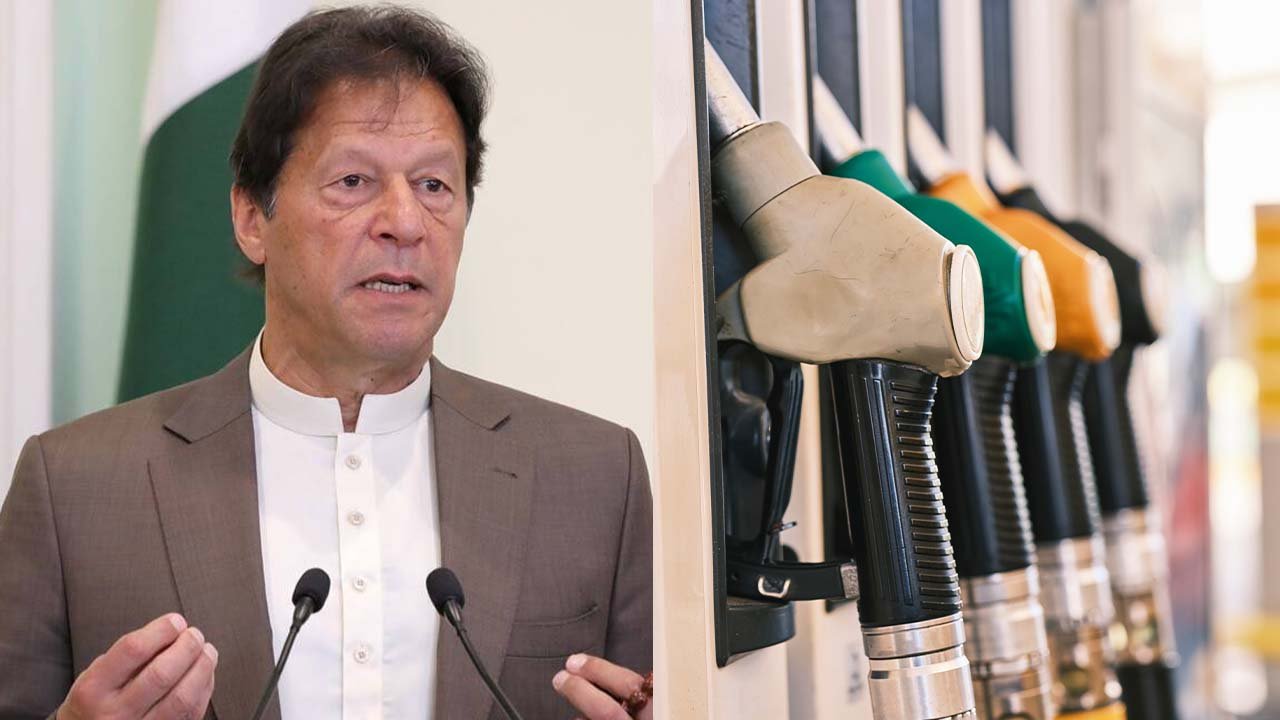
  • Petroleum Division refutes Imran Khan’s assertion about Russia’s low-cost fuel offer

    Petroleum Division refutes Imran Khan’s assertion about Russia’s low-cost fuel offer

    There is no formal evidence in the petroleum division of Russia’s offer of inexpensive LNG, crude oil, and POL products, as former Prime Minister Imran Khan has often claimed.

    Syed Zakria Ali Shah, Joint Secretary of Development and a spokesman for the Petroleum Division, stated this to a reporter.

    According to sources in the petroleum sector, trading of crude oil, POL products, and LNG was not even on the table when Khan discussed the purchase of LNG. There was no mention in the meeting minutes of any Russian offer of providing LNG and gasoline at a 30 per cent lower rate.

    According to the spokesman, the government wrote letters to Russia on March 30 through the Ministry of Foreign Affairs in reference to the February 2022 visit of a Pakistan delegation, expressing Pakistan’s desire to enter long-term agreements on the import of crude, POL products, and LNG at discounted rates.

    The Petroleum Division also wrote to the Foreign Ministry, asking if Russia had provided any lower tariffs on LNG and fuel items. He also stated that it had given two reminders to this effect in the first week of April 2022, but the ministry stated that it had not received any letter from Russia for conversation in this respect.

    The Former energy minister, Hammad Azhar attracted the attention of his Russian peer, in a letter dated March 30, 2022, to an Inter-Governmental Agreement (IGA) on LNG cooperation that had been in force between the two friendly nations since 2017. The Russian minister was informed that Pakistan was willing to strengthen its partnership by expediting negotiations between the two selected nominees so that a long-term agreement for LNG delivery on a G2G basis could be reached as soon as possible.

    Then-energy-minister recommended two to three Russian LNG cargoes each month, each holding 140,000 cubic metres of LNG.

    There was no mention of any Russian offer in that letter, only a request for negotiation on a long-term contract for the import of gasoline and LNG at a reduced rate.

    According to officials at the energy ministry, India has been purchasing crude oil from Russia for decades and has continued to do so despite EU and US sanctions imposed as a result of its conflict with Ukraine. They claimed that India’s foreign policy was largely independent due to its strong economic power and enticing market for large economies.

    They further claimed that India had obtained a special dispensation from the US from its sanctions against Iran and had been buying crude oil and POL products from Iran despite US and UN sanctions for a long time. They claimed that India was the US’s strategic partner in the area against China.

    “India always pitches its argument before the US saying if it does not import fuel from Iran, its economy will hurt and it will never be on a par with China. As far as Pakistan is concerned, it is not possible to import crude oil, POL products, and LNG at discounted rates even in the wake of EU and US sanctions on Russia, as the country’s economic muscle is very weak and the country is always dependent on the IMF programme”. The officials said that Pakistan had also failed to complete the IP gas line project just because of US and UN sanctions on Iran.

    Via: The News

  • Safe to fill up fuel tanks to the max in this heat?

    Safe to fill up fuel tanks to the max in this heat?

    Considering Pakistan’s scorching summer and rising petroleum prices, a claim has been made regarding how much fuel should be topped inside a vehicle.

    According to a viral image being attributed to Pakistan State Oil (PSO), motorists should not fill gasoline to the full capacity of the tank owing to rising temperatures since it may trigger an explosion in the tank. Drivers can fill half of their tank and leave the rest for air.

    Conversely, there has been no official word from the oil company in this regard; however, a similar image went viral years ago when PSO clarified that filling fuel tanks to their full capacity poses no harm to automobiles or passengers.

    The announcement came after a Whatsapp message went viral on the internet in 2018. In view of rising temperatures, the message falsely claimed that PSO had warned the public against filling gasoline tanks to full capacity.

    According to the statement from PSO, the auto-igniting temperature of gasoline is far higher than the peak summer temperatures in Pakistan. Filling a petrol tank to the maximum capacity poses no danger to the automobile or its occupants, and is considered fully safe and advantageous to the vehicle’s operation.

    Read more: CNG prices pushed to Rs140 per kg for sales tax collection

    Also, the idea that filling the vehicle’s gasoline tank to the full capacity will cause an explosion defies scientific logic.

    This is because the auto-ignition temperature for petrol is 495°F (257°C), which is the lowest temperature required to ignite a gas or vapour in air without the presence of a spark or flame. The highest recorded temperature on earth was 56.7°C (134°F), observed on July 10, 1913, at Greenland Ranch, Death Valley, California, USA.