Tag: Famine

  • How humanitarian aid reaches war-torn Gaza

    How humanitarian aid reaches war-torn Gaza

    Most aid bound for war-ravaged Gaza arrives overland from neighbouring Egypt but Israel and UN agencies clash on how much actually makes it inside the Palestinian territory.

    The volume of aid entering Gaza by road each day through the Rafah crossing from Egypt is insufficient, aid workers say, blaming rigorous Israeli inspections at least in part.

    With no truce in sight to pause the Israel-Hamas war, here is a look at how aid currently reaches Gaza and what alternatives are being weighed to alleviate the crisis in the besieged Palestinian territory.

    First stop: Egypt

    Most Gaza-bound goods arrive by sea in the Egyptian ports of Port Said or El-Arish.

    El-Arish is closer to Gaza but also smaller, and was quickly overwhelmed by the volume of shipments arriving, aid groups say.

    Israeli authorities, who have blockaded Gaza since Hamas took sole control of the Palestinian territory in 2007, require that all aid entering Gaza be inspected by them.

    The main inspection area for goods is Kerem Shalom in southern Israel, not far from the Rafah crossing.

    Another inspection area exists in Nitzana, on the Israeli-Egyptian border about 40 kilometres (25 miles) to the southeast.

    Long wait for trucks

    Before reaching the inspection areas, many aid trucks wait for days at the Egyptian side of the Rafah checkpoint.

    Once inspected, goods that are cleared to enter by Israel are unloaded from the mostly Egyptian trucks in the zone between Egypt and Gaza.

    The supplies are then loaded onto separate vehicles, driven by Gazans working for aid groups, for distribution inside the Palestinian territory.

    Cumbersome screenings are a major reason shortages are so glaring, aid workers say.

    Israel blames a lack of sufficient capacity on the Palestinian side to distribute the aid once it gets in.

    In recent days, Israel took issue with UN figures on the number of trucks entering Gaza, accusing UN Palestinian refugee agency UNRWA of counting only trucks it had processed, not those processed by Israel.

    Heading north

    For months, aid groups and foreign governments including top ally the United States have urged Israel to reopen border crossings into the north of Gaza, where the humanitarian crisis is most severe.

    Israel announced that six World Food Programme (WFP) aid trucks entered the north directly from its territory in early March, in what it described as a “pilot project”.

    The trial was not extended, however, and aid convoys bound for northern Gaza must travel the length of the territory negotiating battlegrounds, Israeli bombardments and mobs of desperate civilians.

    In March, the WFP said one of its convoys had been blocked by Israeli forces inside Gaza before it could reach the north.

    After turning back, the agency said the convoy was looted by a “crowd of desperate people”.

    According to Israeli authorities, 28 trucks reached northern Gaza on Wednesday.

    They were among 298 trucks that Israel said entered Gaza on Wednesday, still far below the number aid groups say is needed to sustain the territory’s 2.4 million people.

    Under pressure from the international community, Israel announced on April 5 that it would open a new crossing directly into northern Gaza, without specifying its exact location or when it would open.

    By air and by sea

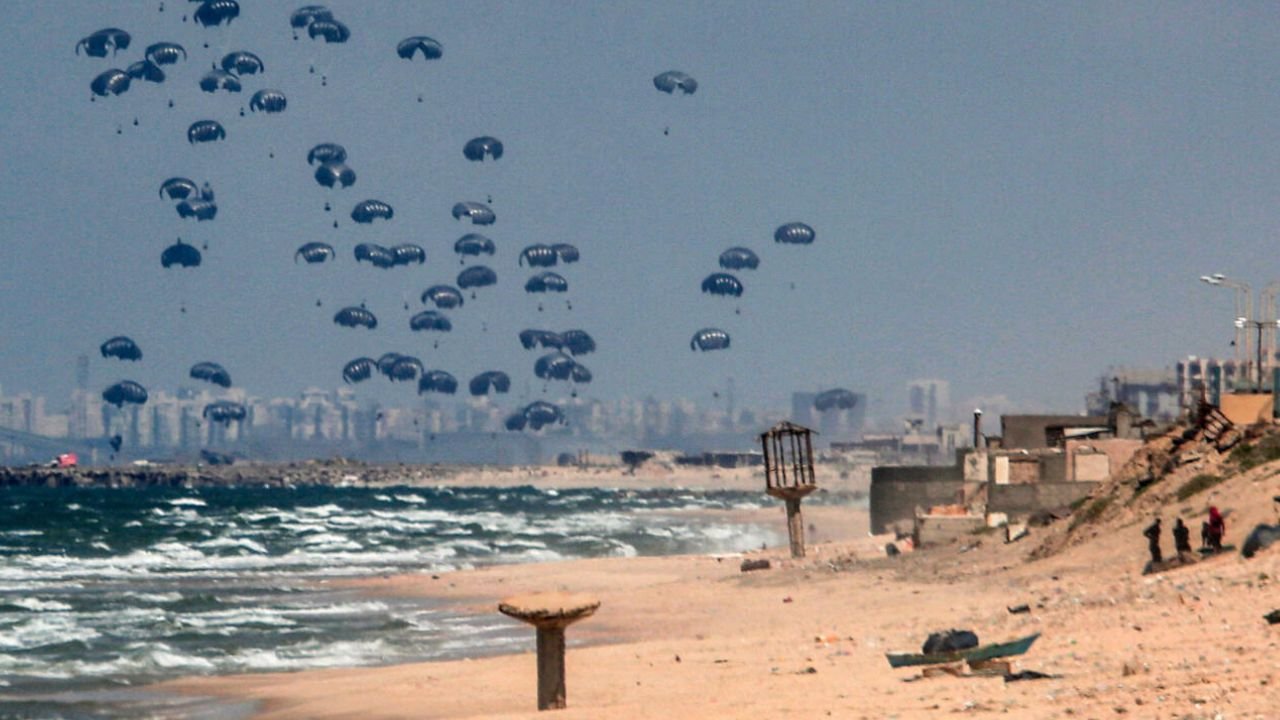
    In a bid to get round the logjam, several Arab and European governments, later joined by Washington, began carrying out aid airdrops over Gaza, particularly the north.

    But the airdrops have proved controversial, with multiple deaths among civilians on the ground who were crushed by aid crates when parachutes failed to open, or drowned trying to reach others accidentally dropped in the sea.

    There has also been an attempt to establish a maritime aid corridor from the Mediterranean island of Cyprus but it has largely fizzled out after seven aid workers were killed by Israeli fire on April 1 as they unloaded food from the second flotilla to make the crossing.

    Even though the Cypriot government insists it has not given up on the aid corridor, no further crossings are currently planned after the US and Spanish charities behind the first two suspended their operations in the region.

    UN agencies have in any case said repeatedly that road convoys are the only practical way of meeting Gaza’s needs.

  • Struggling for a can of food: starving Gazans scramble for aid drops

    Struggling for a can of food: starving Gazans scramble for aid drops

    A military plane banked over the war-ravaged ruins of Gaza City dropping dozens of black parachutes carrying food aid.

    On the ground, where almost no building within sight was still standing, hungry men and boys raced towards the beach where most of the aid seemed to have landed.

    Dozens of them jostled intensely to get to the food, with scrums forming up and down the rubble-strewn dunes.

    “People are dying just to get a can of tuna,” said Mohamad al-Sabaawi, carrying an almost empty bag on his shoulder, a young boy beside him.

    “The situation is tragic, as if we are in a famine. What can we do? They mock us by giving us a small can of tuna.”

    Aid groups say only a fraction of the supplies required to meet basic humanitarian needs have arrived in Gaza since October, while the UN has warned of famine in the north of the territory by May without urgent intervention.

    The aid entering the Gaza Strip by land is far below pre-war levels, at around 150 vehicles a day compared to at least 500 before the war, according to UNRWA, the UN agency for Palestinian refugees.

    With Gazans increasingly desperate, foreign governments have turned to airdrops, in particular in the hard-to-reach northern parts of the territory including Gaza City.

    The United States, France and Jordan are among several countries conducting airdrops to people living within the ruins of what was the besieged territory’s biggest city.

    But the aircrews themselves told AFP that the drops were insufficient.

    US Air Force Lieutenant Colonel Jeremy Anderson noted earlier this month that what they were able to deliver was only a “drop in the bucket” of what was needed.

    The air operation has also been marred by deaths. Five people on the ground were killed by one drop and 10 others injured after parachutes malfunctioned, according to a medic in Gaza.

    Calls have mounted for Israel to allow in more aid overland, while Israel has blamed the UN and UNRWA for not distributing aid in Gaza.

    “Palestinians in Gaza desperately need what has been promised — a flood of aid. Not trickles. Not drops,” UN chief Antonio Guterres said on Sunday after visiting Gaza’s southern border crossing with Egypt at Rafah.

    “Looking at Gaza, it almost appears that the four horsemen of war, famine, conquest and death are galloping across it,” he added.

    Israel has intensified its attacks in Gaza, killing at least 32,333 people, according to the health ministry in Gaza.

    Returning home in Gaza City with little to keep his family going, another Palestinian man said their situation was miserable.

    “We are the people of Gaza, waiting for aid drops, willing to die to get a can of beans — which we then share among 18 people,” he said.

  • Penelope Cruz, Angelina Jolie shed light on famine in Gaza

    Penelope Cruz, Angelina Jolie shed light on famine in Gaza

    Global superstars Penelope Cruz and Angelina Jolie are raising their voice for the starving people of Gaza.

    Cruz, the Spanish actress famous for Vanilla Sky, shared a United Nations Instagram post about the imminent famine in Gaza and how people in the besieged strip are starving to death.

    Cruz has been working with Unicef and she has been among the Spanish actors who have been vocal about demanding a ceasefire in Gaza since December.

    Angelina Jolie also shared a Washington Post article on her Instagram story, stressing that “Famine may already be there in Gaza”.

    Jolie has openly expressed her “disappointment” and called out Israel for deliberately “bombing a trapped population”.

  • Entire Gaza population at ‘severe levels of acute food insecurity’: Blinken

    Entire Gaza population at ‘severe levels of acute food insecurity’: Blinken

    The entire population of Gaza is experiencing “severe levels of acute food insecurity”, US Secretary of State Antony Blinken said Tuesday, underscoring the urgency for increasing the delivery of humanitarian aid into the Palestinian territory.

    “According to the most respected measure of these things, 100 percent of the population in Gaza is at severe levels of acute food insecurity. That’s the first time an entire population has been so classified,” Blinken told a press conference in the Philippines where he is on an official visit.

    Blinken’s remarks came on the eve of his return to the Middle East, this time to Saudi Arabia and Egypt, to discuss efforts to secure a ceasefire in Gaza and ramp up aid deliveries.

    A United Nations-backed food security assessment warned Monday that half of Gazans are experiencing “catastrophic” hunger, with famine projected to hit the north of the territory by May unless there is urgent intervention.

    Martin Griffiths, the UN’s humanitarian chief, has called for Israel to allow unfettered aid into the besieged Palestinian territory, saying there was “no time to lose”.

    With aid agencies reporting huge difficulties gaining access to Gaza, particularly the north, the UN has warned for weeks that a famine is looming.

    Donors have turned to deliveries by air or sea, but these are not viable alternatives to land deliveries, UN agencies say.

    The Integrated Food Security Phase Classification partnership said Monday that while the technical criteria for a famine had not yet been met, “all evidence points towards a major acceleration of deaths and malnutrition”.

    Citing UN data, Blinken said 100 percent of the population in Gaza needed humanitarian assistance, compared with 80 percent in Sudan and 70 percent in Afghanistan.

    “This only underscores both the urgency, the imperative, of making this the priority,” Blinken said of aid deliveries.

    “We need more, we need it to be sustained, and we need it to be a priority if we’re going to effectively address the needs of people.”

    Blinken is in Manila as part of a brief Asia tour aimed at reinforcing US support for regional allies against China.

    During a joint press conference with his Philippine counterpart, Blinken was asked about steps he was taking to address the lack of access to Gaza for foreign journalists.

    “There are obviously profound security considerations in an active war zone and those have to be taken into account,” Blinken said.

    “But the basic principle of access for journalists is something we stand strongly behind.”

  • Over 95 Percent Of Sudanese Cannot Afford A Meal A Day: WFP

    Over 95 Percent Of Sudanese Cannot Afford A Meal A Day: WFP

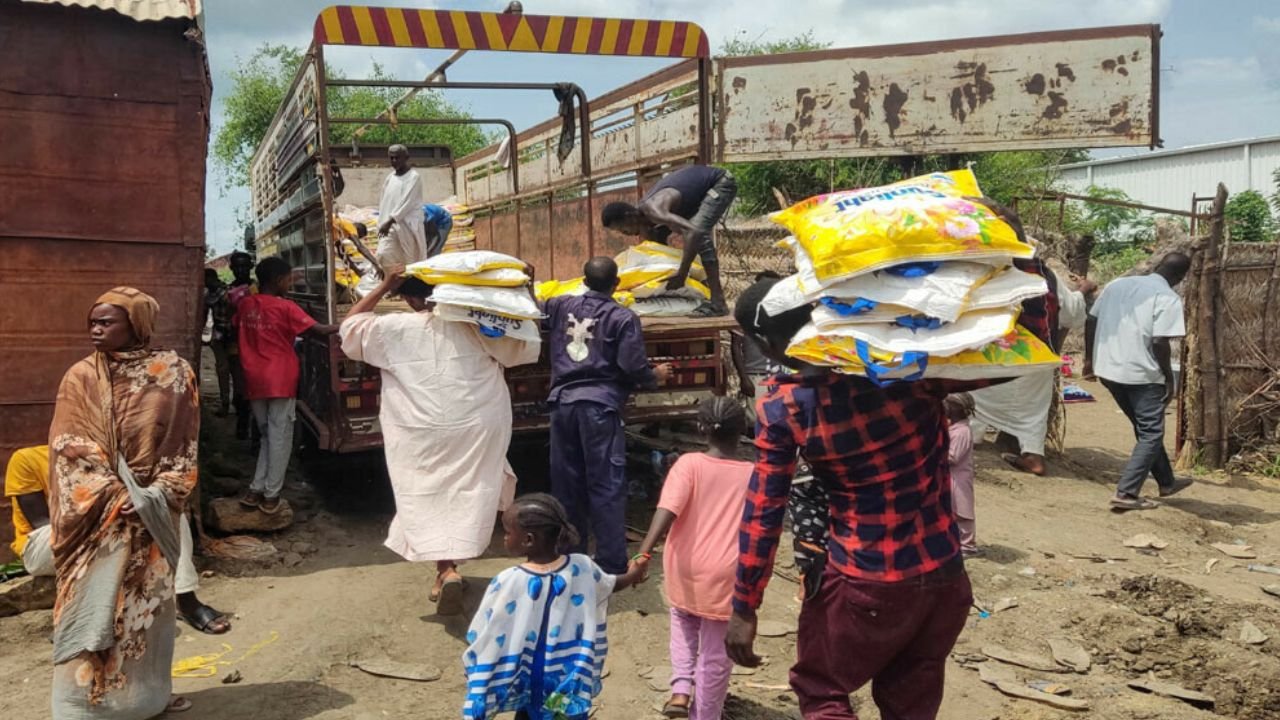
    Ten months into a war that has sent Sudan to the “verge of collapse”, the vast majority of its people are going hungry, the UN’s World Food Programme said Wednesday.

    “At this point, less than five percent of Sudanese can afford a square meal a day,” the WFP’s Sudan country director, Eddie Rowe, told reporters in Brussels.

    Since last April, Sudan has been gripped by fighting between the regular army and the paramilitary Rapid Support Forces, which has killed thousands and created what the United Nations calls “the world’s largest displacement crisis”.

    A combined 10.7 million people have been uprooted by the current war and previous conflicts, according to the UN.

    Nine million remain displaced within Sudan, where Rowe said a “lethal cocktail of continued conflict, stalled harvests and rampant and consistent displacement risks plunging millions more into a catastrophic humanitarian disaster.”

    Across Sudan, which the WFP says was already facing one of the world’s worst food crises before the war, 18 million people are facing acute food insecurity.

    Of those, Rowe said “close to five million are on the precipice of catastrophe” — enduring one of the worst emergency classifications the WFP uses, second only to famine.

    Aid groups have for months warned that as a result of hampered humanitarian access and severe underfunding, the spectre of famine looms over Sudan.

    But the same obstacles to aid delivery inhibit the ability to determine the extent of the catastrophe.

    According to Michael Dunford, WFP’s Eastern Africa regional director, there is a major issue in “the availability of the data to confirm one way or the other whether or not the thresholds (required to declare a famine) have been met”.

    With WFP only able to reach 10 percent of those in need, “there are large tracts of the country that we simply cannot access,” Dunford told reporters.

    Sudan’s most fertile regions could have helped ward off famine, if not for the fighting encroaching into the country’s agricultural heartlands.

    In December, a paramilitary advance brought the war to Al-Jazira state, just south of the capital Khartoum, which was set to produce the bulk of Sudan’s grains for the season.

    “Thousands of smallholder farms and even the large-scale schemes have been deserted, because people are on the move running away from the conflict,” Rowe said.

    “As we approach the hunger season,” he said, the crisis is only set to “further deteriorate”.

    The lean season, roughly from April to July, usually sees food prices run high as stocks dwindle ahead of the next harvest.

    With markets across the country already empty and an ongoing communications blackout hampering all transactions, Dunford says the future is bleak.

    “This is a country on the verge of collapse,” he said.

  • Rotten food and cat hunting as famine hits Gaza

    Rotten food and cat hunting as famine hits Gaza

    As the war on Gaza extends into its 90th day, impending famine and starvation are haunting the besieged strip.

    According to an assessment of the integrated food security phase classification initiative, a UN-backed body that sets the international standard that determines the severity of the food crisis, food shortage in Gaza is solely a consequence of war. Before it began, about 150 to 180 food lorries entered Gaza every day. Since, the end of the “humanitarian pause” a month ago, only about 30 do so. They are blocked by Israeli bombardment, fighting on the ground, and by restrictions and inspections on the border with Egypt, imposed by the Israeli and Egyptian authorities, cites The Times.

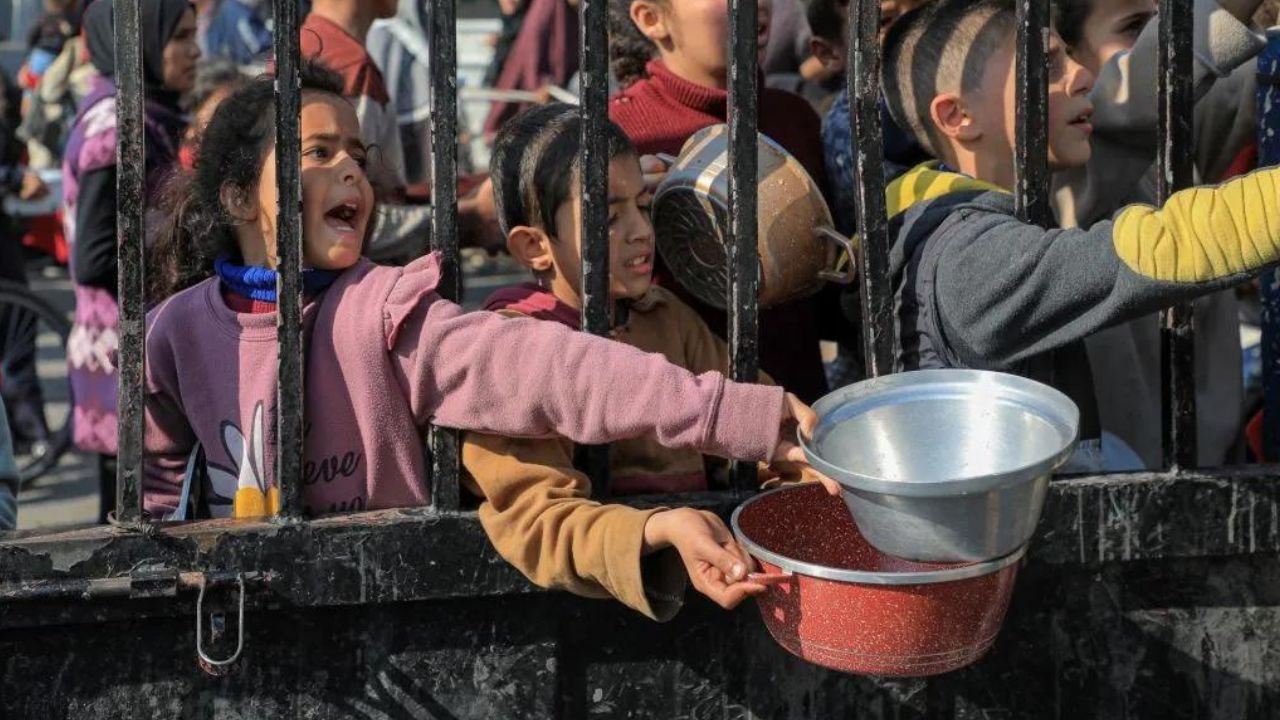
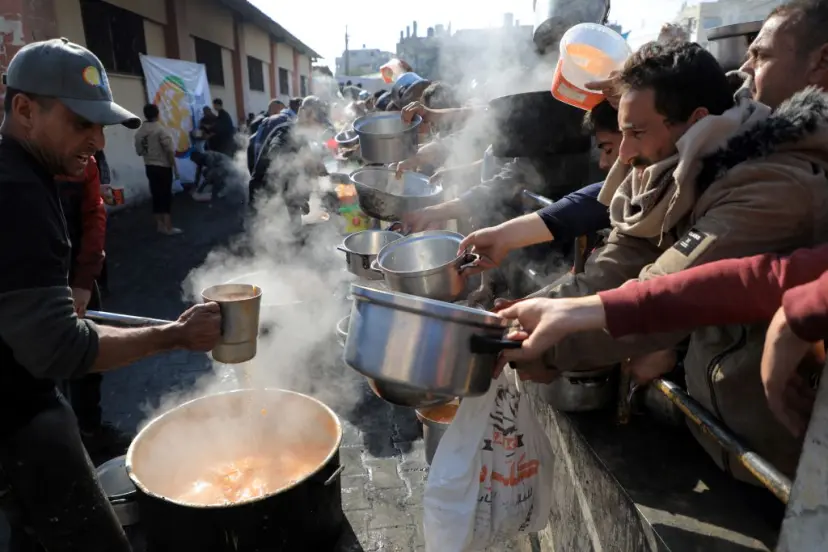
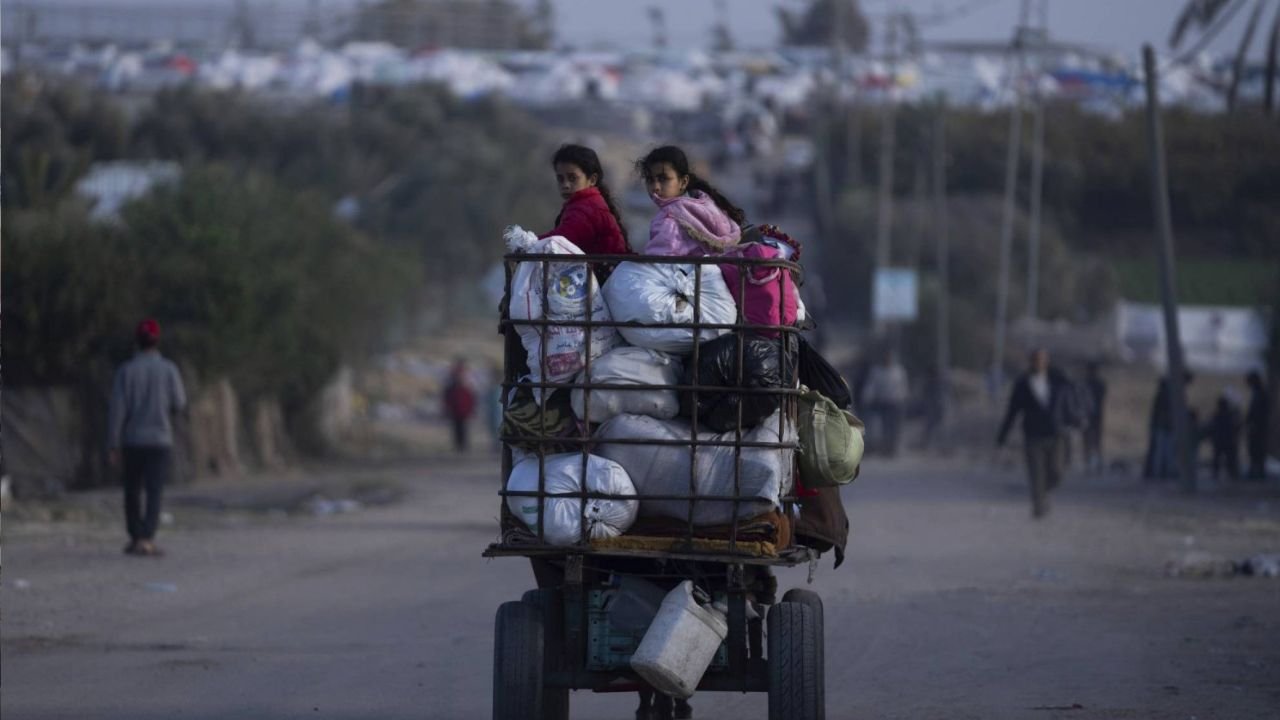
    More than a million people are displaced in Gaza but none is safe from hunger. It is rampant in Gaza, it is in the wasteland of al-Mawasi encampment in Gaza where handfuls of dirty flour are kneaded by mothers to make bread for their children. It is in the fires, stoked with plastic bottles, which produce nothing but choking black smoke. Children in Gaza no longer play but lie around, exhausted by hunger. It is in food that is rotten and makes you sick but is eaten just the same.

    Camellia Subeh talked to The Times who stated that her breasts no longer produce milk for her baby son.⁠ “My other sons keep saying, ‘Mum, I’m dizzy, I have a headache,” said the mother of five, sitting outside a shelter she built on the mud from scraps of plastic and wood. Subeh and her children left their home in northern Gaza weeks ago on the instructions of the Israel Defence Forces (IDF). They said this is a safe area. Perhaps it is safe from the bombs that have destroyed Gaza’s cities and towns but not from hunger, diseases, or thirst that will kill just the same as a bullet will. “This place is like a desert, all sand,” Subeh said. “We are so tired.” The Palestinian death toll in the Gaza Strip after nearly three months of war stands at 21,672, with more than 55,000 wounded, the territory’s health ministry said on Saturday.

    A 13-year-old, Muhammad al-Yaziji, told The Times, “I feel that this burden is very heavy for us. We became like beggars. We were not like that.”

    In an interview with the New Yorker, Arif Hussain, the chief economist at the United Nations World Food Program explains that according to a consensus-based analysis by Integrated Phase Classification, the entire population of 2.2 million people is in a food-security crisis or a worse situation implying a famine is coming because the conditions are “catastrophic”.

    Human Rights Watch drew from Israeli officials’ statements, interviews with people in the territory about the lack of food, and evidence of bombardment that has destroyed infrastructure and resources to accuse Israel in a December report of starvation as a war crime.

  • Risk of famine in Gaza: World Food Programme

    Warnings of a possible famine in Gaza have been issued by the UN World Food Program (WFP), underlining that supplies are starkly inadequate to tackle the hunger levels reported by WFP staff in UN shelters.

    “It is highly likely that the population of Gaza, especially women and children are at high risk of famine if WFP is not able to provide continued access to food,” the WFP said in a statement on Tuesday.

    “The WFP delivered desperately needed food to more than 120,000 people in Gaza during the initial pause,” the statement read.

    “Thanks to the pause, our teams have been in action on the ground, going into areas we haven’t reached for a long time. What we see is catastrophic,” said Corinne Fleischer, the WFP’s director for the MENA and Eastern Europe Region.

    “Six days is simply not enough to provide all the assistance needed. The people of Gaza have to eat every day, not just for six days,” she added.

    The Israel-Gaza four-day truce was to end yesterday, but it has now been successfully extended for two more days in agreement to exchange more Israeli hostages from Gaza with Palestinian prisoners from Israel.

    Samer Abdeljaber, the WFP representative and country director in Palestine, reports that the program’s teams have seen “hunger, despair, and destruction” among people who have not received any aid for weeks.

    He further stated that the humanitarian pause has only provided a momentary relief, “which we hope will pave the way for long-term calm.”

    The humanitarian aid must continue, uninterrupted and without any hindrances, he added.