Tag: farmers

  • Vegetable shortage crisis: Export surge could spell trouble for farmers

    Vegetable shortage crisis: Export surge could spell trouble for farmers

    Businessmen involved in the agricultural sector managed to boost vegetable exports by 11.5 per cent in the first quarter of the fiscal year.

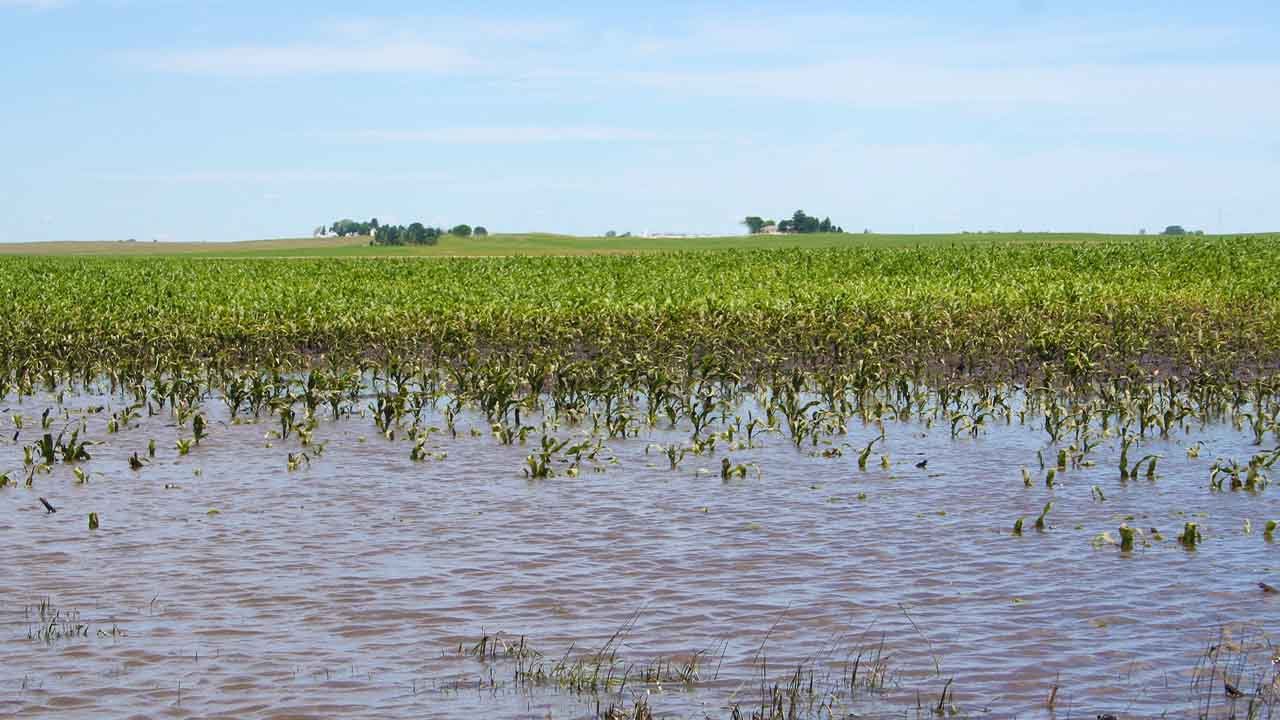
    This comes at a time when seasonal rains have left vegetable fields devastated nationwide – especially in Sindh.

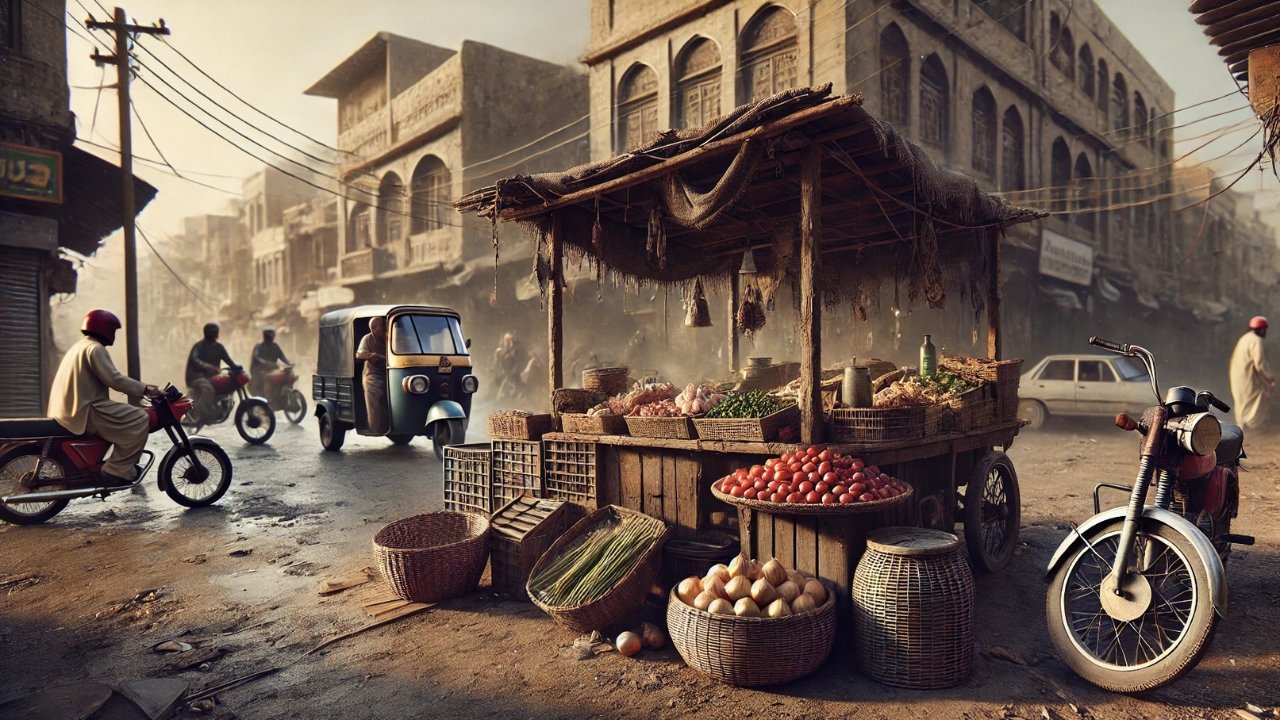
    The consequence of mass exports and heavy rainfalls has caused major shortages in the local economy. As a result, retail stores and street vendors have resorted to relying on Iranian and Afghani vegetables to keep customers from returning empty-handed.

    With the decrease in vegetable supply, the prices have risen, which is not just true for the local economy but also for international markets where a 26 per cent rise in price has been recorded. The result of this inflation, while beneficial to farmers, is likely to negatively impact retailers.

    The increase in prices will put retailers in a dilemma regarding their profit margins. They must either absorb these higher prices while decreasing their profit margins or protect them by increasing prices.

    Either way, retailers are expected to suffer.

    However, farmers will probably not be celebrating the extra exports worth $71 million for long. This is because Pakistani exporters have been exporting produce imported from across the border. The result could be loss in sales as international buyers purchase vegetables from Pakistan for their incredible taste.

    The same taste can’t be found in imported vegetables. Which might leave international buyers disappointed with the drop in quality. Moreover, it does not make sense for international buyers to purchase the same goods for a marked up price when they can get the same product directly from the source.

    Farmers are also growing worried over a potential loss in sales of their products in local markets. This is largely true because if prices of local produce continue to skyrocket, consumers may incline towards purchasing Iranian onions that come with attractive price tags. And with agricultural yields expected to take months to recover, farmers are losing our valuable market share to imported products.

    What’s most concerning for farmers is the influx of Afghani produce. This is largely because Afghanistan is facing numerous sanctions, and farmers there are willing to sell their produce at figuratively “dirt cheap” prices. If local markets get flooded by these products, Pakistani farmers may lose out.

    Farmers, especially those growing onions and tomatoes, will hope for an improvement in their yield levels. This will allow them to capitalize on the higher international and domestic prices.

    Will Pakistan farmers be able to achieve this feat? Only time can tell.
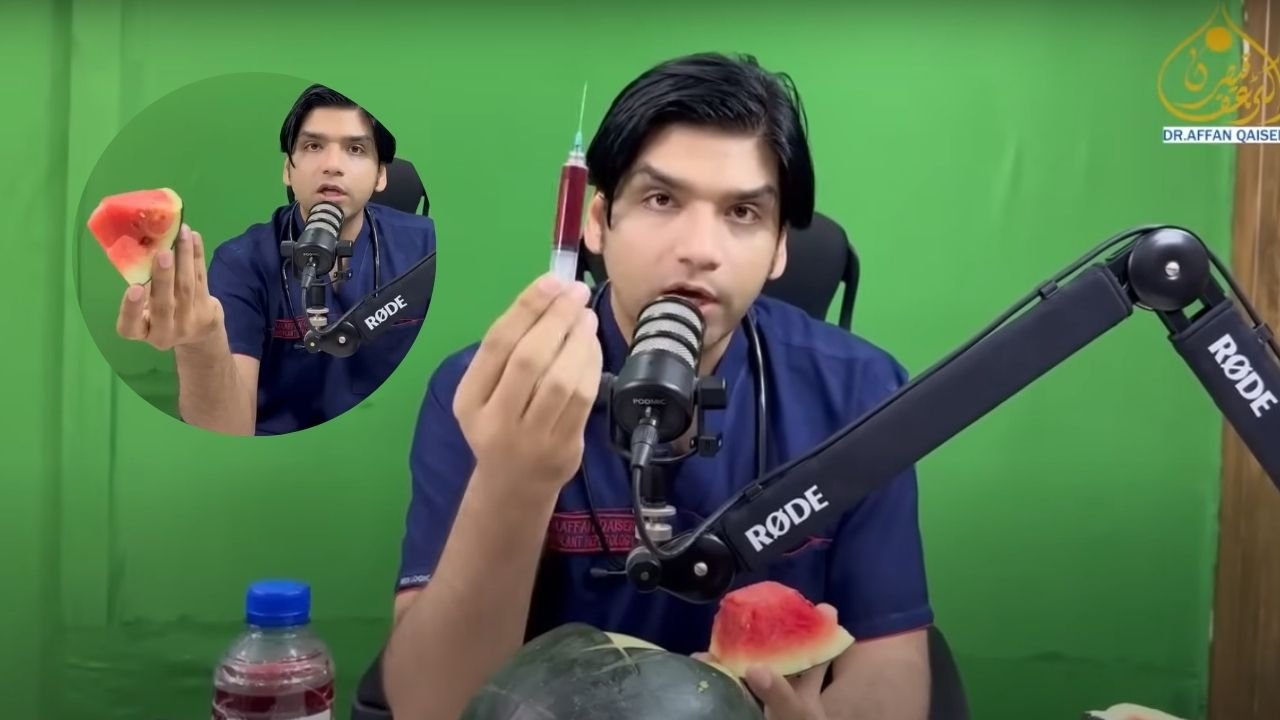
  • Farmer slams Dr. Qaiser for targeting watermelons

    Farmer slams Dr. Qaiser for targeting watermelons

    Dr. Affan Qaiser, a doctor from Multan is known on social media for videos that are usually part social commentary and many times, factually incorrect.

    In his latest video, he raised the issue of “adulterated watermelons” i.e. injecting watermelons with chemicals in order to give them the red colour that consumers accept as a sign of the fruit being sweet.

    The video was followed by criticism as people debunked the supposed myth — particularly farmers.

    One farmer pointed out that today, in the age of social media, everyone is a supposed expert in everything, adding that while Dr. Qaiser gives his two cents on everything, he doesn’t realise how his claims can be detrimental for certain people.

    He also said that Qaiser should instead focus on his profession i.e. doctor, and talk about the exploitation by medical labs and pharmaceutical companies instead of farmers.

    A couple days later, Dr. Qaiser released another video, justifying his claims with online articles while also pointing that he never put the blame on farmers.

    Who is Dr. Qaiser?

    Dr. Affan Qaiser and his partner-in-crime – his wife, Nazish Butt -are widely followed on social media.

    As internet personalities, apart from explainers, they also host podcasts and interviews.

    Time and again, people have criticised Dr. Qaiser for having a holier-than-thou attitude while being hypocritical all the same. For example, he persistently and strongly disapproves eating out in efforts to encourage a healthy diet yet simultaneously, he and his wife have often been seen at restaurants.

    But he is mostly known for his criticism of the widely loved Pakistani snack: samosa.

    According to Dr Qaiser, the samosa is an “atom bomb of 400 calories”, and that samosas are fried in poor quality oil.

  • World Bank approves $1.69 billion financing for flood-hit Sindh

    World Bank approves $1.69 billion financing for flood-hit Sindh

    The Board of Executive Directors of the World Bank approved funding for five projects totaling $1.692 billion on Tuesday in order to support those residing in Sindh, Pakistan’s flood-affected areas.

    According to Geo, out of the five initiatives, three support rehabilitation, home reconstruction, and the restoration of crop production for vulnerable populations, according to a statement released by the World Bank. Two of the three projects have a combined value of $500 million, while the third is worth $292 million.

    “Sindh was the province worst affected by the 2022 floods. There were huge damages to the housing, health, and agriculture sectors and people lost their livelihoods. Beyond the rehabilitation and reconstruction of damaged houses and infrastructure, our engagement in the flood response effort is an opportunity to strengthen resilience, and reform institutions and governance structures”, said Najy Benhassine, World Bank Country Director for Pakistan.

    The “Sindh Flood Emergency Rehabilitation Project,” which will cost $500 million, will prioritize creating short-term livelihood opportunities and enhancing the province’s ability to respond to emergencies.

    “The project will help restore and improve critical irrigation and flood protection infrastructure, water supply schemes, roads, and related infrastructure. At least 2 million people—approximately 50 per cent of whom are women—in the most flood-affected districts will benefit from the restoration and the resilient reconstruction of critical infrastructure”.

    About 100,000 households will get short-term financial support through a community-level cash-for-work program.

    “The $500 million Sindh Floods Emergency Housing Reconstruction Project will support owner-driven and multi-hazard resilient reconstruction of core housing units. A housing subsidy will provide reconstruction and restoration grants for 350,000 housing units (almost 20 per cent of the total housing rehabilitation needs for Sindh). Cash grants will be provided for houses with structural damage to partially finance reconstruction or restoration. “

    To increase access to water and sanitation, twin pit latrines and simple rainwater collection systems will also be provided.

    Furthermore, the $292 million approved for the “Sindh Water and Agriculture Transformation Project” will enhance integrated water resource management, boost agricultural water productivity, and enable farmers who were impacted by the flood to resume crop production.

    “More than 385,000 households (approximately 1.9 million people) are expected to benefit from the project. As an immediate response to the floods, the project will provide cash transfers to approximately 300,000 flood-affected farming households to help restore crop production through the purchase of seeds, fertilizer, and other critical inputs. In the medium term around 70,000 households will benefit from improved irrigation services and agricultural support that will help boost farming income. An estimated 14,000 households will receive direct financial benefits from the pilot smart subsidy schemes targeting small- and medium-sized farmers,” the WB said.

    By improving access to and use of mother and child health services, the Sindh Strengthening Social Protection Delivery System Project ($200 million) will also boost the province’s social protection delivery system. As part of the project, the Federal National Database Registration Authority will be aligned and connected, and conditional cash transfers (CCTs) will be given to 1.3 million mothers and their kids to support better maternal and child health outcomes, particularly in the wake of service disruption caused by the floods.

    The CCTs will be made available to Sindh’s bottom 15 districts, selected depending on the Multidimensional Poverty Index (MPI), and will cover 65 per cent of the province’s total flood-affected areas. They are intended to help lessen the effects of the floods, particularly food insecurity, and to maintain access to maternal and child health services open.

    The Sindh Integrated Health and Population Project have been granted $200 million by the lender. The project will assist in raising the standard and uptake of fundamental nutrition, and maternal, neonatal, child, and adolescent health care. Additionally, it will aid in the repair and reconstruction of health infrastructure that was harmed during the floods and impeded the provision of these services.

    The initiative would enhance the population’s access to high-quality healthcare services in Sindh’s flood-affected settlements as well as in distant and peri-urban areas, particularly for women, girls, and children.

    “The World Bank will continue to support the Government and people of Pakistan to recover from the recent flood emergency and strengthen long-term resilience to such climate-related shocks,” the statement concluded.

  • No food for chickens: Massive increase in chicken, egg prices expected

    No food for chickens: Massive increase in chicken, egg prices expected

    Due to the widespread shortage of poultry feed, poultry farmers and traders are worried that the supply of chicken and eggs may run out in a month.

    At an urgent press conference held at the Karachi Press Club, Chaudhry Ashraf, the central chairman of the Pakistan Poultry Association, former chairman Ghulam Khaliq, Sindh-Balochistan zone chairman Saleem Baloch, and others expressed their grave concerns regarding the non-clearance of soybean shipments that had been stopped at Karachi Port.

    According to Express Tribune, soybean and canola appear to be the two main ingredients in poultry feed, according to poultry owners. More than six lakh tonnes of soybeans that have not been authorised for export are currently at the port.

    Additionally, in conjunction with the purchase of soybeans, poultry owners have paid importers more than $44 million. In order to restart the feed supply to the nation’s poultry sector, the ministry of food security and other ministries should right away resolve their conflict with soybean importers and issue orders for the clearance of soybeans at the port.

    Presently, poultry owners in Pakistan generate 3.5 million eggs each day from 3.8 million chickens. If the problem of feed supply for the poultry industry is not immediately addressed, there is a potential that the supply of chicken and eggs may stop within a month.

    More than 50 per cent of the poultry business is currently closed. If this sector is entirely shut down, which would result in the loss of nearly 2.5 million jobs, there will be a greater risk of food insecurity in the country.

  • World Bank to provide Pakistan $22.2 million in financial support for flood-affected farmers

    World Bank to provide Pakistan $22.2 million in financial support for flood-affected farmers

    In an attempt to help Pakistan’s flood-affected farmers, the World Bank will provide financial support of $22.2 million.

    A delegation led by the World Bank’s South Asia Regional Director for Sustainable Development, John A Roome, met with the Federal Minister for National Food Security and Research, Tariq Bashir Cheema.

    The discussion at the meeting focused on the farmer community and food security, as well as the rehabilitation and relief operations in the flood-affected areas.

    According to the minister, rain and flooding have wreaked havoc on the agricultural industry and destroyed the farming community. In order to restore normalcy, he claimed that at this crucial moment, all attention is being paid to restoration efforts in the flood-affected districts.

    He mentioned the government’s intention to provide subsidies for fertiliser and seeds to help the impacted farmers. According to the idea, the federal government will cost-share with the provinces to give farmers discounted inputs for the upcoming Rabi season.

    “We plan to provide subsidized wheat and edible oil seeds, and one fertilizer bag per acre to farmers in the calamity-hit areas,” he said.

    Provincial governments and the National Disaster Management Authority will handle the disbursement. He believed that with this support, farmers will be able to stand up again.

    According to John A. Roome, the World Bank would assist Pakistan by funding initiatives aimed at rebuilding the devastated neighbourhood. He consented to assist the World Bank’s Locust Emergency and Food Security (LEAFS) initiative in rehabilitating the farming community in the afflicted districts and locust-stricken regions. He said that the World Bank is assisting the farming community by collaborating with provincial agriculture agencies.

    He stated that he would ask the World Bank Group Board to extend aid to Pakistan as it attempts to recover from the damage brought on by unheard-of floods. The minister also praised the World Bank Group’s support at a time when assistance was most needed for the country.

  • Gang caught running fake IPL to scam Russian gamblers

    Gang caught running fake IPL to scam Russian gamblers

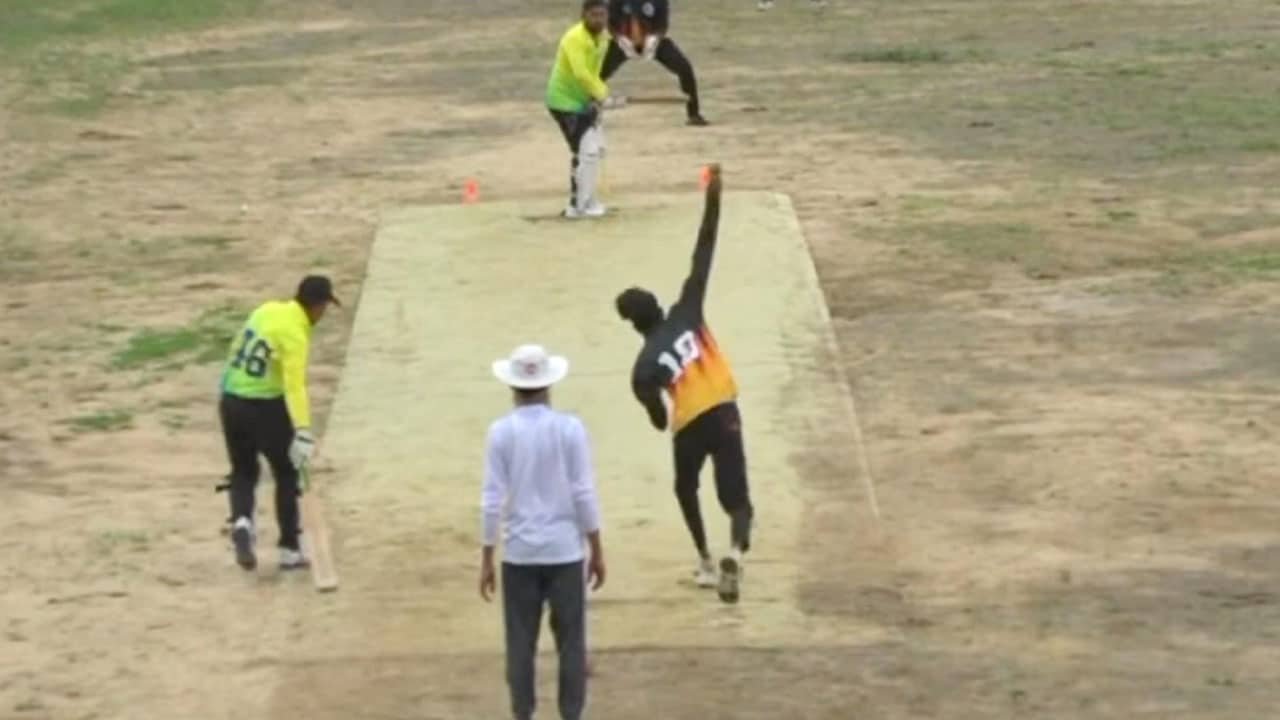
    In a betting fraud similar to the 1973 movie The Sting, a gang staged a phony “Indian Premier League” competition with farmers serving as the participants.

    Before Indian police broke the scheme, the so-called “Indian Premier Cricket League” advanced to the quarterfinal round.

    Police claim that the tournament started three weeks after the original IPL ended in May, but that did not stop the gang, which they claim rented a secluded farm in the western state of Gujarat.

    According to Insp. Bhavesh Rathod, they set up a cricket field replete with “boundary lines and halogen lamps.” In addition, the accused had mounted high-definition cameras to the ground and employed computer-generated graphics to show results on a live-streaming screen.

    The group allegedly paid unemployed youth and labourers Rs1,054 (£4.20) per game to broadcast the matches live on the “IPL” YouTube channel.

    According to the authorities, players followed the orders of the “Russia-based mastermind” and alternately wore the jerseys of the Gujarat Titans, Mumbai Indians, and Chennai Super Kings.

    To give the competition an authentic feel, crowd noise sound effects were downloaded from the internet and a speaker with a talent for impersonating an Indian commentator from the real IPL was employed, according to Fox Sports.

    The cameraman simultaneously made cautious not to show the full field, beaming close-ups of the players instead.

    Russian gamblers were duped into placing bets on a Telegram channel the gang had set up, and the group would then use walkie-talkies to warn the phony umpire on the field.

    According to Rathod, the fictitious official “would signal the bowler and batsman to strike a six, four, or get out.”

    The policeman said, “We got a tip-off and we busted the racket while a ‘quarter-final’ match was being played.

    In the first instalment, the Russian gamblers gave the accused more than 300,000 rupees, according to Rathod.

    A gangster is duped by a bunch of con artists who set up a fictitious betting enterprise in the movie The Sting with Paul Newman and Robert Redford.

  • ‘Mouse plague’ in Australia: Mice crawl into beds and bite residents

    ‘Mouse plague’ in Australia: Mice crawl into beds and bite residents

    Farmers in Australia are facing several problems due to a severe mice plague in the country. They allegedly have to put the legs of their beds in buckets of water to stop the mice from biting them while they are asleep.

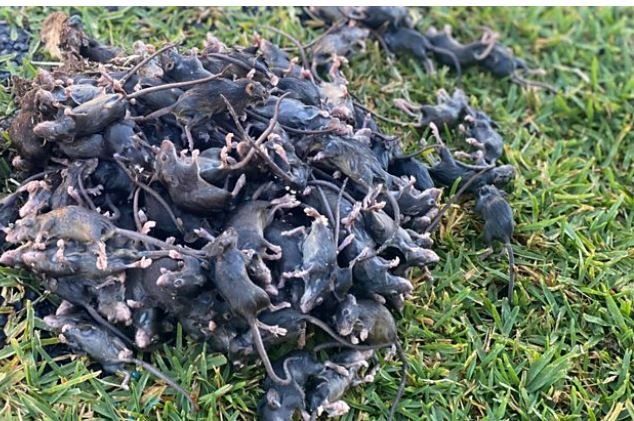
    Millions of mice are running riot in the eastern part of the country and are causing a serious destruction to farms by eating crops and attacking grain silos.

    As per reports, livestock farmers have to scoop hundreds of dead mice they have managed to either drown in buckets or poison.

    Kodi Brady, a farm owner said, “It does play massive impacts on your mental health. I don’t sleep because I’m paranoid, you know, you can hear them in your walls and your roof.”

    Read More – Indian woman takes lover on tour to Australia on husband’s passport

    Brady has been laying bait for mice for the last six months and despite efforts to seal his house, the rodents remain in large number.

    “Your social and emotional wellbeing is shot and you are absolutely buggered,” he said.

    The region has been fighting a mice plague for numerous months after heavy rains in recent years relieved the country’s worst drought in 50 years. The wet weather not only helped produce the country’s largest ever grain crop but also provided plenty food to mice.

    Mice – believed to have arrived in Australia along with the first European settlers – are well suited to the country’s often harsh climate.

    They can survive long periods of dry weather and when the weather turns, they thrive and rapidly reproduce as food and water gets available.

    BBC News interviewed three farmers who spoke about living through the worst mouse plague in memory.

    Warning: This video contains graphic content.

  • Republic Day: Thousands of protesting farmers converge on Indian capital in convoy of tractors

    In a high-profile protest against controversial agricultural reforms, tens of thousands of farmers drove a convoy of tractors festooned with brightly-coloured flags through the outskirts of India’s capital of New Delhi on the country’s Republic Day.

    Growers, angry at what they see as laws that help large, private buyers at the expense of producers, have been camped outside Delhi for almost two months.

    Thousands more, steering tractors bearing the flags of India and farm unions, had streamed in from neighbouring states for several days ahead of the rally, planned to coincide with celebrations of Republic Day.

    “Our word should travel around the world, that we are fighting for our living,” said Devinder Singh, a 36-year-old farmer from Punjab, seated on his tractor. “If we lose our farmland, how will we survive?” he asked.

    Some took to Twitter to dispel rumours of the Indian flag being removed from Delhi’s Red Fort.

    The protests have so far been peaceful, and farm leaders have urged rally participants to refrain from violence. 

    Authorities used trucks to barricade the main route to the site, where hundreds of police, some armed with assault rifles, tear gas, and a water cannon, stood guard.

    Although some protesters breached police barricades at Singh and Tikri, another site, early on Tuesday, there were no immediate reports of violence.

    https://twitter.com/swatijaihind/status/1353941486673379328?s=21

    Agriculture employs about half of India’s population of 1.3 billion, and unrest among an estimated 150 million landowning farmers presents one of the biggest challenges to the authority of Prime Minister Narendra Modi since he came to power in 2014.

    Nine rounds of talks between the government and the farmers’ unions have failed to end the protests, with farm leaders rejecting the government’s offer to delay the laws for 18 months, as they push for repeal.

    “The farm organisations have a very stronghold,” said Ambar Kumar Ghosh, an analyst at the New Delhi-based Observer Research Foundation think-tank.

    “They have the resources to mobilise support and to continue the protest for a long time. They have also been very successful in keeping the protest really focused.”

    Police have allowed farmers to rally along approved routes on the outskirts of Delhi. But the tractor march threatens to overshadow the annual Republic Day military parade in the centre of the capital on the anniversary of India’s 1950 adoption of its constitution.

    “They could have chosen any other day instead of January 26 but they have announced now,” Agriculture Minister Narendra Singh Tomar told media on Monday. “Conducting the rally peacefully without any accident would be the concern for farmers as well as police administration.”

  • Jawad Ahmad says Pakistan also needs a farmers’ movement

    Jawad Ahmad has expressed that Pakistan also needs a farmers’ movement like the one happening in India.

    Speaking to the Times of India about his new song Kisana, the singer-turned-politician compared the conditions of farmers in India and Pakistan saying: “The third-world economies are still largely based on primitive methods and tools of agriculture and we need a peasant’s rights movement all over the world, including Pakistan.”

    He added that he made the song after seeing how India’s farmer movement is being recognised by the farmer community across the world.

    Kisana, which was released in the last week of December has already gathered thousands of views and is making waves across the border. The music of the song has been composed by Sahar Ali Bagga.

    The song’s description states: “Kisana is a revolutionary song for peasants of the world, to inspire and motivate them to struggle for their rights. It is a dedication by Jawad Ahmad to all the global peasant movements.”

    Meanwhile, the song calls peasants the providers of the world, saying that the farmers are the ones who give food to judges and police officers, so they should be respected.

    Ahmad, who entered politics a few years ago with his ‘Barabri Party Pakistan’ is very vocal about the rights of marginalized groups. The vision of his party is “To establish a truly democratic state based on equitable distribution of wealth, equality of right over resources so that whatever is found, grown and produced in this country is equally accessible to all and equal access to opportunities regardless of race, religion, gender, and ethnicity.”

    Farmer’s Protest

    Thousands of farmers have gathered at Delhi’s gateways to demand a repeal of the Centre’s three new farm laws. The protesting farmers, mainly from Punjab and Haryana as well as Uttar Pradesh, are worried the new laws will eliminate the safety cushion of a Minimum Support Price and procurement system while rendering ineffective the mandi system that ensures earnings for various stakeholders in the farm sector.

    Read more – Diljit Dosanjh gave Kangana Ranaut a piece of mind over the farmers’ protests and we’re here for it

    70 people have reportedly died during the ongoing protests and though several rounds of talks have happened between farmer unions and the government, a solution has not yet been reached.

  • ‘Angry’ over a family dispute, farmer wills half his property to pet dog

    A 50-year-old farmer in India, Om Narayan Verma has named his second wife Champa Bai and pet dog Jacky as the heirs of the ancestral property after his death as he was troubled by a sustained family dispute.

    The farmer’s will states that he loves Champa Bai and Jacky as they are the only ones who take care of him.

     The will adds that whoever takes care of Jacky will be permitted to use the pet dog’s share in the property to ensure the dog’s well-being and the whoever takes care of Jacky will get the pet’s share of the property after his demise.

    According to details, Verma was angry over a family feud when he made the will but the problems were later resolved.

    “The notarised will not only includes my dog’s name but also my wife Champa Bai’s name. I gave a share of my inheritance to my dog’s to ensure my family takes Jacky’s care even after my death. But, the entire matter has been resolved now,” stated Mr Verma, a former chief of the village.

    Verma owns around 21 acres land and has two wives. While he has two daughters and a son from the first marriage, he has two daughters from the second wife – the one who takes care of him.