Tag: FATF

  • ‘Of course’: Bilawal confirms he shook hands with Indian FM but no bilateral engagement held

    ‘Of course’: Bilawal confirms he shook hands with Indian FM but no bilateral engagement held

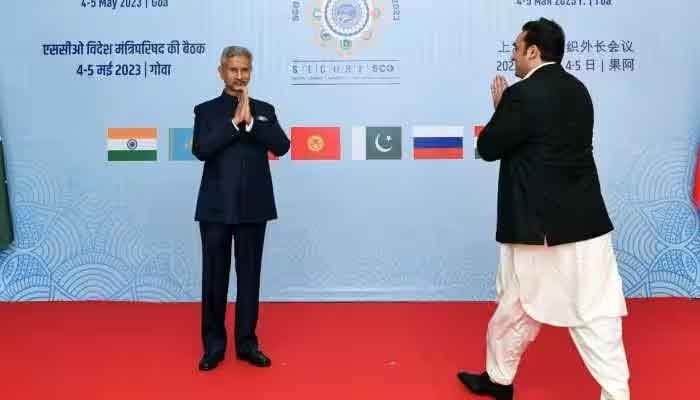
    Pakistani Foreign Minister (FM) Bilawal Bhutto-Zardari, who just wrapped up his visit to Goa, said that he did shake hands with his Indian counter partner S. Jaishankar at a dinner that was held in an unofficial capacity.

    During an interview with India Today, Bilawal said, “In all our unofficial engagements we always shake hands and we had dinner conversations amongst other foreign ministers but we did not hold a bilateral engagement.”

    Earlier, when both ministers greeted each other in front of the media they didn’t shake hands and this created headlines in India.

    Clearing up the confusion, Bilawal said that his aim to visit India was to attend Shanghai Cooperation Organisation (SCO). “Unless India reviews the action it took on August 5, 2019 (abrogation of Article 370), Pakistan is not in a position to engage bilaterally with India.”

    When pointed out by a journalist that “Pakistan can’t sponsor terror directed against India”, the minister, taking a jibe at Bharatiya Janata Party (BJP), said “This wolf whistling around the word terrorism which is ultimately an Islamophobic wolf whistle not only to whip up Hindu sentiment in India but also to brow beat Pakistan, that might be election strategy for some but not effective terrorism strategy”

    The Pakistani foreign minister said the country wishes to quell terrorism “not because India said it or the Indian government said so, but because we want to end this menace”. He said terrorism has caused the “largest number of casualties” in Pakistan among any of the other SCO countries.

    “India will have to explain what Kulbhushan Jadhav, a state actor, a navy commander, was doing in Pakistan carrying out terrorist attacks on Pakistani soil. Does that not come under cross-border terrorism?” he asked.

    Bilawal also reminded Indian Journalist Rajdeep Sardesai that Pakistan is the only country on Earth that has completed two Financial Action Task Force (FATF) objectives.

    He said that it is not productive for India to continue accusing Pakistan of sponsoring terror activities.

    Pointing out that India violated bilateral agreements and international agreements on Aug 5, 2019, by revoking the special status of Jammu Kashmir, Bilawal Bhutto also mentioned the 2007 Samjhauta Express bombing where around 70 people, mostly Pakistanis, were killed. “We are yet to see any justice,” he reminded Sardesai.

    He repeatedly said that both India and Pakistan have different perspectives on terrorism, adding that Pakistan is “willing to engage with any concerns that India might have but India will also have to address our concerns.”
  • EU removes Pakistan from its high-risk third countries list

    EU removes Pakistan from its high-risk third countries list

    The European Union (EU) has officially removed Pakistan from its “List of High-Risk Third Countries” due to the country’s successful implementation of measures to address the strategic deficiencies in their Anti Money Laundering/Countering the Financing of Terrorism (AML/CFT) regime. This means that Pakistani businesses and individuals will no longer be subjected to “Enhanced Customer Due Diligence” by the EU’s legal and economic operators.

    According to the delegated regulation, Pakistan has remedied the strategic deficiencies in its AML/CFT regime and no longer poses a significant AML/CFT threat to the international financial system. This decision has led to the removal of Pakistan from the list of nations with strategic deficiencies in their respective AML/CFT frameworks, and they do not pose a significant threat to the financial system of the European Union.

    As a result of this decision, the “Obligated Entities” in EU member states would no longer be required to apply “Enhanced Customer Due Diligence” while dealing with individuals and legal entities established in Pakistan. The “Obligated Entities” include credit institutions, financial institutions, natural or legal persons acting in the exercise of their professional activities, auditors, external accountants, tax advisors, notaries, and other independent legal professionals.

    Pakistan was initially included in the “List of High-Risk Countries” on October 22, 2018, by the EU. However, the decision to remove Pakistan from the list will add to the comfort level of European economic operators and is likely to ease the cost and time of legal and financial transactions by Pakistani entities and individuals in the region. The UK had previously removed Pakistan from its high-risk list in November 2022.

  • Farwell visits: General Bajwa meets PM, President one day before retirement

    Farwell visits: General Bajwa meets PM, President one day before retirement

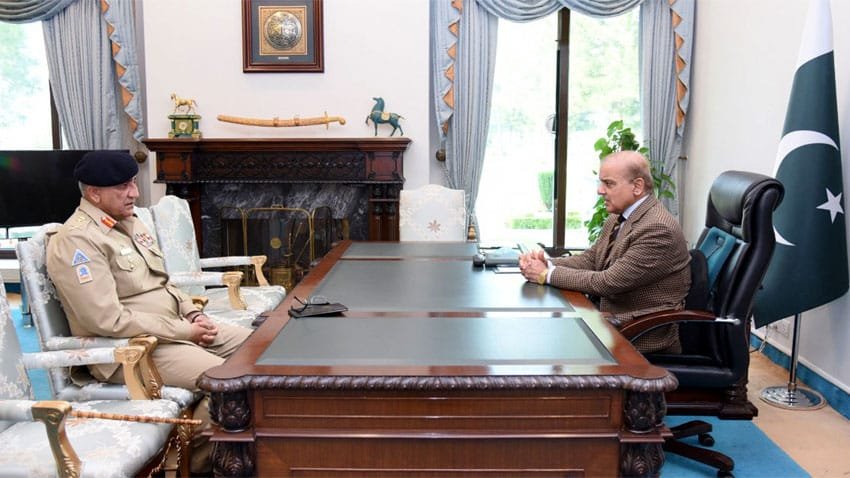
    Prime Minister (PM) Shehbaz Sharif met the outgoing Chief of Army Staff (COAS) General Qamar Javed Bajwa in Islamabad on Monday as a part of the army chief’s farewell visits.

    During the meeting between the two, the Premier commended General Bajwa’s services and said that he played an exemplary role in bringing Pakistan out of the Financial Action Task Force’s (FATF) grey list as well as during the COVID-19 pandemic and floods, reports Radio Pakistan.

    He said the Pakistan Army under the leadership of General Qamar Javed Bajwa played a valiant role in crushing terrorism in the country.

    “You got the honour of leading the world’s best army,” the prime minister told COAS Bajwa.

    In response, General Bajwa thanked PM Shehbaz for his support in handling matters of national importance.

    Before meeting the Premier, the army chief paid a farewell visit to President Dr Arif Alvi at the Aiwan-e-Sadar where the president also commended Gen Bajwa’s services in the field of defence and also appreciated his services to the country and the Pakistan Army.

    The president also expressed best wishes for Gen Bajwa in his future endeavours.

    Pakistan Army’s change of command ceremony will be held tomorrow (November 29).

    Gen Bajwa will hand over the “baton of command” to General Asim Munir, who was selected to become the new army chief by PM Shehbaz on November 24. General Asim will be the 17th army chief to assume the command of the Pakistan Army.

    General Bajwa is set to retire on November 29 after six years in office. He was appointed in 2016 by then-PM Nawaz Sharif and later granted an additional three-year extension in 2019 by former PM Imran Khan.

  • ‘Certified liar and a thief’: PM Shehbaz berates Khan after his disqualification

    ‘Certified liar and a thief’: PM Shehbaz berates Khan after his disqualification

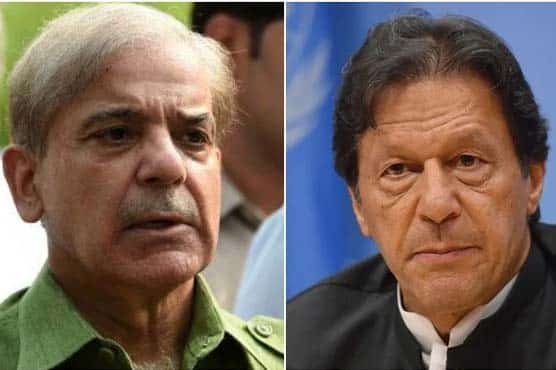
    Prime Minister (PM) Shehbaz Sharif has said that his predecessor, Chairman of Pakistan Tehreek-e-Insaf (PTI) Imran Khan, had been proven to be a “certified liar and a thief”. However, he cautioned that this was not a moment of happiness, but one of “reflection”.

    The Premier’s comments came after Khan’s disqualification in the Toshakhana reference for making “false statements and incorrect declaration”.

    Addressing a news conference in Lahore alongside Law Minister Azam Nazeer Tarar and adviser Attaullah Tarar, Shehbaz Sharif said that Friday was a “lucky day”, as the country received “great successes”.

    “This is not my success but Pakistan’s collective success,” he reiterated, thanking and congratulating those who worked day and night to achieve this result, as Pakistan exited from the Financial Action Task Force’s so-called grey list.

    He also specifically congratulated Foreign Minister Bilawal Bhutto-Zardari, Minister of State for Foreign Affairs Hina Rabbani Khar, and the officials of the Foreign Office who worked tirelessly to achieve their goal.

    “Imran Khan has been proven to be a certified liar. He has been disqualified due to corruption,” PM Shehbaz said, advising the PTI chairman that ongoing issues cannot be resolved through jalsas and rallies.

    “Imran Khan was made the prime minister through rigging. His conversation about the judiciary is in front of everyone,” the premier remarked.

    He alleged that Imran came into power after the “worst rigging”, adding that the PTI chief auctioned off state gifts after claiming the proceeds would go to the treasury.

    “The nation would have saluted you if you had deposited money from selling state gifts in the treasury. I, too, would have despite being your political opponent,” he said, adding that Imran had disrespected Pakistan.

    Comparing himself to Imran, PM Shehbaz said that he had once received a letter from the Cabinet Division about being able to buy a state gift after paying a certain amount.

    “I answered back to the letter saying, ‘No, thank you and deposited [the gift] in the Toshakhana.”

    He said state gifts were now being displayed at the Prime Minister’s House to dispel the impression that they go missing. “Now, I have them [displayed] in PM House so the people know who sold the gifts and pocketed the money.”

    “We were mocked saying we were seeking a NRO (National Reconciliation Ordinance) […] but we bore it and did not compromise on Pakistan’s interest.”

    “Imran Khan should fear God; this should be a lesson for him to [remember],” PM Shehbaz said.

  • Pakistan’s removal from FATF grey list to help with its reputation and IMF’s next review

    Pakistan’s removal from FATF grey list to help with its reputation and IMF’s next review

    Experts predict that the country’s reputation would recover and it would get a credit rating upgrade from international agencies as Pakistan was taken off the Financial Action Task Force (FATF) list of nations under increased monitoring.

    According to Geo, the removal will allow Pakistan to smoothly complete the forthcoming review of the IMF’s Extended Fund Facility since the International Monetary Fund (IMF) used the execution of FATF action plans as a structural benchmark.

    Pakistan has been removed off the FATF’s “grey list,” as was to be expected, but the nation will continue to cooperate with the organisation and the Asia Pacific Group to strengthen its anti-money laundering (AML) and counter-terrorist financing (CFT) framework. FATF made this announcement following the conclusion of its two-day meeting in Paris on Friday.

    Fitch downgrades Pakistan’s rating to CCC+

    Yet on the other side, Fitch Ratings lowered Pakistan’s Long-Term Foreign-Currency Issuer Default Rating (IDR) to “CCC+” from “B-” on Friday, which experts believe is bad news for the nation’s recovery from the mega floods. The reversal comes as the country’s fragile economy continues to face challenges from all directions.

    The company claims that sovereign states with a grade of “CCC+” or lower do not normally receive outlooks. The primary factors that contributed to a downgrading, according to the agency, were increasing liquidity and policy concerns.

    “The downgrade reflects further deterioration in Pakistan’s external liquidity and funding conditions, and the decline of foreign exchange reserves,” Fitch Ratings said. “This is partly a result of widespread floods, which will undermine Pakistan’s efforts to rein in twin fiscal and current account deficits.”

  • Pakistan likely to exit FATF grey list after 4 years

    Pakistan likely to exit FATF grey list after 4 years

    Pakistan is expected to leave the Financial Action Task Force (FATF) grey list on October 21 after topping the dreaded chart for over four years.

    According to Dawn, a 15-member team of the money-laundering watchdog concluded its onsite visit to Pakistan on September 2, with the final decision on the country’s grey list status now expected at its next meeting set to take place in Paris this week.

    According to an official statement, panellists from 206 Global Network members and observer organisations, including the International Monetary Fund, the United Nations, the World Bank, Interpol, and the Egmont Group of Financial Intelligence Units, will attend the Working Group and Plenary meetings in Paris.

    The outcome of the two-day deliberations on Pakistan’s status would be announced. The FATF Onsite team’s report on Pakistan is scheduled to be reviewed at the plenary meetings.

    Pakistani authorities believe that after four years of hard effort, the country has achieved not just a high level of technical compliance with FATF standards, but also a high degree of efficacy through the implementation of two comprehensive FATF action plans.

    It is worth noting that the FATF found Pakistan generally compliant on all 34 issues in June of this year and opted to send an onsite team to verify it on the ground before formally declaring the country’s removal from the grey list in August and September.

    Pakistan was rated “compliant or generally compliant” with FATF criteria in 38 of 40 recommendations, putting the country among the top FATF-compliant countries in the world.

    Pakistan was officially placed on the FATF grey list for the third time on June 28, 2018, and has been working to remove itself off the list ever since.

    The country was originally placed on the FATF grey list in 2008 after failing to meet international anti-money laundering (AML) and counter-terrorism financing (CFT) requirements. Pakistan was removed from the list in 2010 after upgrading its AML/CFT regime. However, Pakistan was placed on the grey list again in 2012 and remained there until 2015.

  • Who is responsible for getting Pakistan off the ‘terror watch list’?

    Who is responsible for getting Pakistan off the ‘terror watch list’?

    After years of relentless hard work, Pakistan finally received a positive response from the Financial Action Task Force (FATF). The country is finally close to its removal from the global money-laundering and terrorist financing watchdog’s ‘grey list’. This for sure is a huge win for the country. This was made possible after countless days and nights our officials worked to bring Pakistan one step closer to being removed from the grey list. But here’s the twist. Who should be crowned for the FATF success? Many people are declaring it as their own victory.

    Pakistan Tehreek-e-Insaf (PTI) Chairman Imran Khan credited his government for this achievement. Khan congratulated former Energy Minister Hammad Azhar who was the main man working on FATF. On the other hand, Prime Minister Shehbaz Sharif also congratulated the nation and appreciated the performance of Minister of State for Foreign Affairs Hina Rabbani Khar and the members of her team. According to Information Minister Marriyum Aurangzeb, the premier made a telephone call to the army chief and “lauded his decision to set up the core cell at the GHQ”. Director-General (DG) Inter-Services Public Relations (ISPR) Major-General Babar Iftikhar termed the development “a great achievement” and gave credit to the “civil-military team” and mainly to the core cell set up at the army’s General Headquarters (GHQ) in Rawalpindi for it.

    Though there is no doubt that the road to success in terms of FATF has been a long one for Pakistan, let us not forget that many have done a lot of hard work to bring the country to this point. But this recent episode of many claiming credit for our success at FATF has raised one question: Can we as a nation stand united and be able to celebrate the major wins together, keeping aside our political and personal differences? The answer, for now, seems, ‘no’. The recent political scenario has divided the nation so much that even conversing on a simple topic that involves politics ends up in a heated argument. Does one wonder where have the days of critical thinking and constructive debate gone? We can only hope that Pakistanis — be it politicians, think-tankers, policymakers or the common citizen — be able to celebrate Pakistan for its glory and wins.

  • ‘Never want to slip into this again’: Hina Rabbani Khar on FATF grey list

    ‘Never want to slip into this again’: Hina Rabbani Khar on FATF grey list

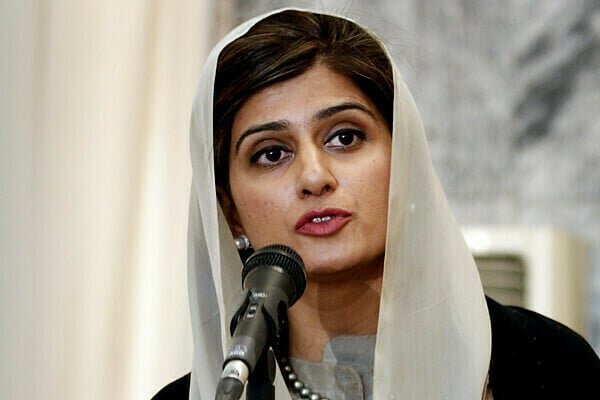
    Minister of State for Foreign Affairs Hina Rabbani Khar on Saturday addressed a press conference following the announcement by the Financial Action Task Force (FATF).

    “Pakistan’s positive and speedy progress was greatly appreciated and welcomed by FATF members,” she said. “All action plans items have been ticked off, largely addressed, and nothing is pending.”

    “It marks the beginning of the end process that will eventually culminate in the exit of Pakistan from FATF’s grey list, InshaAllah and hopefully forever,” added Khar.

    “Pakistan is one step away from exiting the grey list,” she added. “I also want to stress that Pakistan’s cooperation with FATF and the international community is grounded in our strategic objective of strengthening our economy and improving its integration in the international financial system.”

    Talking about the requirement of on-site visit Khar said, “When you authorise a country’s removal from the grey list, the first step is to authorise an on-site technical evaluation, which has been done in this plenary.”

    “Never again will we want to be part of any list that will require us to divert our attention from our national requirements to [international] reporting requirements. We never want to slip into this again. This is the biggest lesson,” she said while talking about lessons Pakistan had learned during meetings with FATF.

    The Financial Action Task Force (FATF) announced on Friday (June 17) that it has begun the process of removing Pakistan from the grey list. FATF monitored Pakistan for four years and now the financial watchdog has expressed its satisfaction with Pakistan’s performance. The announcement comes after FATF’s four-day plenary session in Berlin.

    “Pakistan has substantially completed its two action plans, covering 34 items, and warrants an on-site visit to verify that the implementation of Pakistan’s AML/CFT reforms has begun and is being sustained,” said a statement by FATF.

    However, Pakistan will be placed out of the grey list once the FATF team would conduct an on-site visit of Pakistan.

    Director-General Inter Services Public Relations (DG ISPR) in a tweet termed the development as a “great achievement”.

    The tweet further added: “Core cell @ GHQ which steered the national effort & civil – military team which synergised implementation of the action plan made it possible, making Pak proud, COAS.”

    Hina Rabbani Khar tweeted: “Congrats Pak! FATF declares both Action Plans complete. Intl community has unanimously ack our efforts. Our success is the result of 4 yrs of challenging journey. Pak reaffirms resolve to continue the momentum and give our economy a boost. Well done Pak Team FATF. Pak Zindabad!”

    Pakistan was placed on FATF’s grey list in 2018.

  • 90 per cent institutions, including PM Khan’s office, decline RTI requests

    The majority of government institutions and departments have declined to respond to hundreds of queries by Geo News, which were sent to them under the Right To Information (RTI) laws, Investigative Reporter Zahid Gishkori reports for The News.

    According to the Punjab Information Commission, RTI is the right that you have, as a citizen, to access information from your government and private bodies that receive public funds. It is based on the principle that information belongs to the people. Under Article 19-A of the Constitution, RTI is a fundamental right in Pakistan.

    The media outlet reportedly sent approximately 400 different queries to 36 key institutions in the last nine months but 90 per cent of them didn’t respond or simply declined. Only 10 per cent of queries were partially responded to by the institutions, providing either very little or patchy information.

    According to the report, a few of the institutions provided factually incorrect and cooked-up information.

    Over 100 queries were sent to the governments of Khyber Pakhtunkhwa (KPK) and Punjab, both have not responded. Similarly, Sindh and Balochistan did not receive the correspondent’s queries.

    The departments that simply refused to share any information includes the offices of the Prime Minister, President, Chief Ministers, Cabinet Members, Supreme and High Courts, Federal Board of Revenue (FBR), China–Pakistan Economic Corridor (CPEC) Authority, National Accountability Bureau (NAB), Assets Recovery Unit (ARU), Parliament, Pakistan International Airlines (PIA) and Financial Action Task Force (FATF), the report states.

    The Cabinet Division (CD) refused to share any information regarding gifts and the use of helicopters by PM Khan. The ARU and NAB refused to share information on the Broadsheet scandal, as per the report.

    Furthermore, it says that the Ministry of Interior even shared false information by saying no official is facing inquiry in issuing bogus visas to Chinese nationals. despite the fact that the interior ministry itself referred an inquiry against its own officials allegedly involved in a visa scam to the FIA for probe.

    During the process, Gishkori was approached by four cabinet members and half a dozen senior civil servants to withdraw the requests.

  • US says it recognises and supports Pakistan’s continued efforts to satisfy FATF

    US says it recognises and supports Pakistan’s continued efforts to satisfy FATF

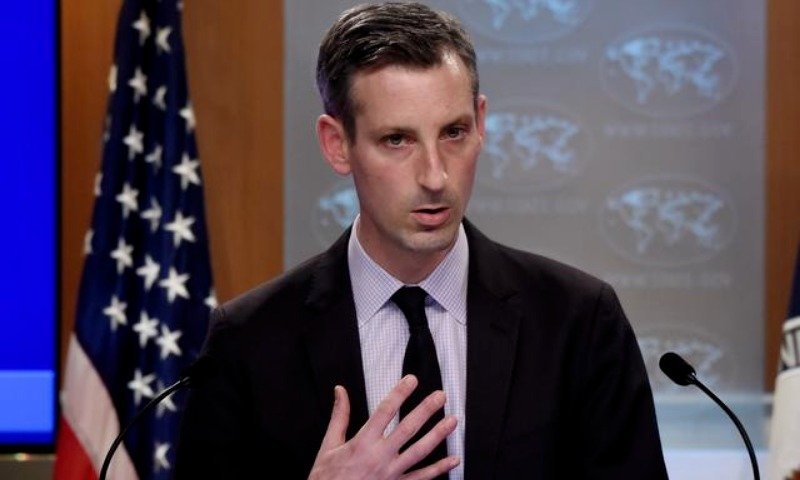
    During a regular press briefing, the United States (US) State Department’s spokesperson Ned Price said, “We do recognise, and we support Pakistan’s continued efforts to satisfy the Financial Action Task Force (FATF) obligations,” reported Geo News.

    This statement comes after Indian External Affairs Minister S Jaishankar admitted that Pakistan is on the grey list of the Financial Action Task Force (FATF) because of the “efforts of Narendra Modi’s government”.

    When asked to comment over Jaishankar’s admission, Price said that the US encourages Pakistan to continue working with FATF and the international community to swiftly complete the remaining action item.

    “We do further encourage Pakistan to expeditiously implement its new second action plan,” said Price.

    The spokesperson also commented on the alleged abduction of the Afghan ambassador’s daughter. “Afghanistan’s neighbours do have a role to play.”

    Price added, “I would add that tangible and material support for the Afghanistan peace process is vital for its ultimate success, as are the longer-term relations between Afghanistan and Pakistan.”

    “We understand the crucial role that Pakistan has the potential to play in this regard as well,” said the US State Department’s spokesperson.