Tag: FATF

  • Pakistan on FATF grey list because of ‘Narendra Modi’s govt’, Pak to take action

    Pakistan on FATF grey list because of ‘Narendra Modi’s govt’, Pak to take action

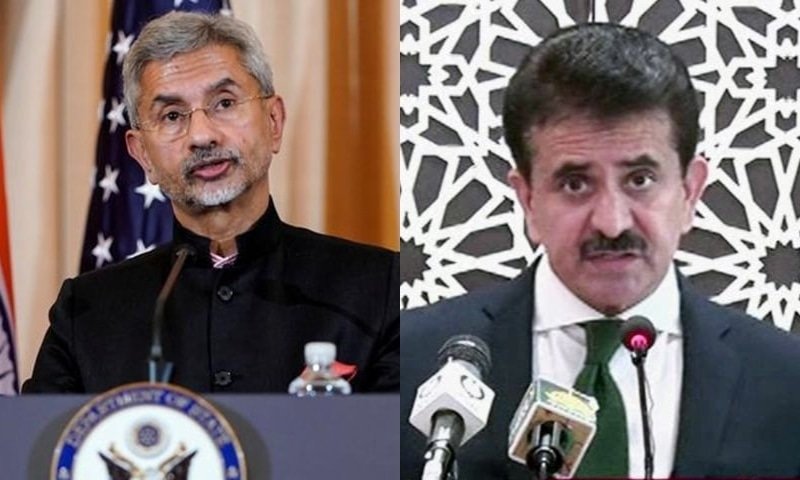
    Indian External Affairs Minister S Jaishankar admitted that Pakistan is on the grey list of the Financial Action Task Force (FATF) because of the “efforts of Narendra Modi’s government”.

    Jaishankar, while addressing the Bharatiya Janata Party (BJP) leaders, said, “Prime Minister Narendra Modi’s personal efforts made on forums like G20 or G7 made nations realise that terrorism is everyone’s problem.”

    “FATF, as all of you know, keep a check on fundings for terrorism and deals with black money supporting terrorism. Due to us, Pakistan is under the lens of FATF and it was kept [on] the grey list. We have been successful in pressurising Pakistan and the fact that Pakistan’s behaviour has changed is because of pressure put by India by various measures. Also terrorists from LeT and Jaish, India’s efforts through UN, have come under sanctions,” Jaishankar reportedly told the BJP leaders, according to The Print.

    The Foreign Office (FO) responded by saying that the Indian foreign minister’s statement that the Modi government had ensured Pakistan remained on the FATF grey list had vindicated Pakistan’s longstanding stance on “India’s negative role” in the global financial watchdog.

    “Pakistan has always been highlighting to the international community the politicisation of FATF and undermining of its processes by India. The recent Indian statement is just further corroboration of its continued efforts to use an important technical forum for its narrow political designs against Pakistan,” read the FO statement.

    “While Pakistan has been sincerely and constructively engaged with FATF during the implementation of the action plan, India has left no stone unturned in casting doubts on Pakistan’s progress through disgraceful means,” said the FO statement.

    “Following the recent confession by [the] Indian government, India’s credentials for assessing Pakistan in FATF as co-chair of the Joint Group or for that matter any other country are subject to questions, which we urge FATF to look into,” the statement said.

    On June 25, FATF President Dr Marcus Pleyer said Pakistan would remain on the grey list till it addresses the single remaining item on the original action plan agreed to in June 2018 as well as all items on a parallel action plan handed out by the watchdog’s regional partner — the Asia Pacific Group (APG) — in 2019.

  • Reporters Without Borders calls PM Khan a predator, Marriyum Aurangzeb agrees

    Reporters Without Borders calls PM Khan a predator, Marriyum Aurangzeb agrees

    Pakistan Muslim League-Nawaz (PML-N) information secretary Marriyum Aurangzeb has claimed that the latest report of the Reporters Without Borders also known as Reporters Sans Frontiers (RSF), is a charge-sheet against the Pakistan Tehreek-e-Insaf (PTI) government, reports Dawn.

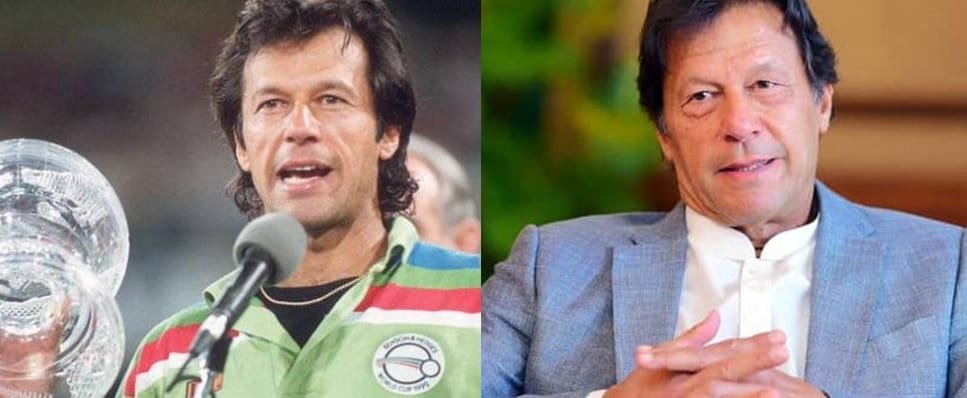
    Reporters Without Borders categorically calls Prime Minister Imran Khan a ‘predator since taking oath’. The report has been published under the caption “RSF’s 2021: Press freedom predators gallery – old tyrants, two women and a European.”

    In a statement on Monday, Marriyum Aurangzeb said Imran Khan’s alleged “authoritarian attitude” and character was destroying Pakistan’s image abroad.

    “The report says that the PTI government is worse than military dictatorships in Pakistan when it comes to press freedom. The Human Rights Watch, Pakistan Press Freedom Report, and Freedom Network Report had already declared the Imran government as the worst media gagging administration in the history of the country,” said Aurangzeb.

    Aurangzeb said the latest report of the Reporters Without Borders had exposed the “predatory behaviour” of the government. She said the actions by the PTI government had not only reflected negatively on Pakistan’s journalism but also adversely affected the country’s position when it came to Financial Action Task Force and the GSP Plus status by the European Union.

    “It mentions that journalists are harassed, abducted, and assaulted for crossing the red lines defined by the state. The report also pointed out that freedom of expression on social media is also being curbed through new dark and draconian laws,” she said while quoting from the report.

    Meanwhile, Focal Person to the Prime Minister on Digital Media Dr Arslan Khalid took to Twitter and called the RSF report a “typical propaganda”.

    Arslan further added that it was comical that the RSF was talking about free speech and yet calling people trolls who “dare to disagree with journalists”.

    Reporters Without Borders has published a gallery of grim portraits on its official website. It includes 37 heads of state or government who crack down massively on press freedom. Some of these “predators of press freedom” have been operating for more than two decades while others have just joined the blacklist, which for the first time includes two women and a European predator.

    19 of these predators rule countries that are coloured red on the RSF’s press freedom map, meaning their situation is classified as “bad” for journalism, and 16 rule countries coloured black, meaning the situation is “very bad.” The average age of the predators is 66. More than a third (13) of these tyrants come from the Asia-Pacific region, says the report.

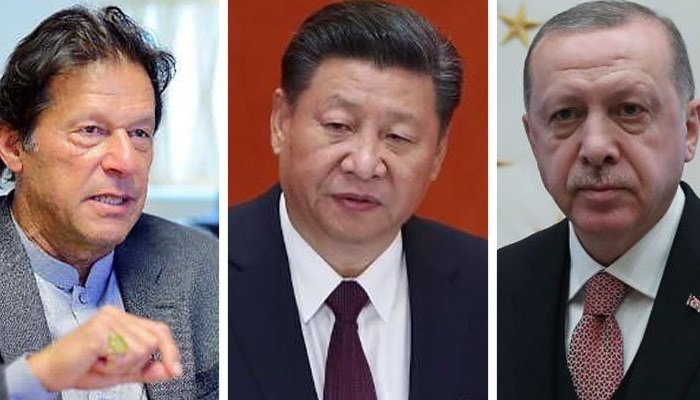
    Besides Prime Minister Imran Khan, the RSF list includes Indian Prime Minister Narendra Modi, Saudi Arabian Crown Prince Mohammed bin Salman, Turkish President Recep Tayyip Erdogan, Chinese President Xi Jingping, Brazilian President Jair Bolsonaro, Hungarian Prime Minister Viktor Orbán, Bangladesh Prime Minister Sheikh Hasina, Syria’s President Bashar al-Assad, Russian President Vladimir Putin, Tajik President Emamoli Rakhmon, Sri Lanka’s President Gotabaya Rajapaksa, King of Bahrain Hamed bin Isa Al Khalifa and Supreme Leader of North Korea Kim Jong-un.

  • Pakistan should not issue rhetorical statements against FATF: European diplomat

    Pakistan should not issue rhetorical statements against FATF: European diplomat

    Daniel Ferrie, a spokesperson for the European Commission, says financing terrorism and preventing money laundering are European Union’s (EU) top priorities, reports Geo News.

    The EU spokesperson was asked why Pakistan has been placed on the Finance Action Task Force (FATF) grey list despite implementing 26 out of 27 points.

    “You may have noticed that many of the steps we have taken in recent years are important not only for the European Union but also for the world,” he said.

    A diplomat based in Europe told Geo News that such a statement is not serving Pakistan and was rather received negatively by European capitals.

    Pakistan recently raised a question about whether FATF is a technical or political body.

    He said such statements are “not only counterproductive but also harmful to Pakistan’s interest”.

    Foreign Minister Shah Mahmood Qureshi recently said it needed to be looked into whether FATF was “being used for political purposes”, adding that “some powers desire to keep the sword of FATF hanging over Pakistan”.

  • ‘Some powers desire to keep the sword of FATF hanging over Pakistan’: Shah Mahmood Qureshi

    Foreign Minister Shah Mahmood Qureshi questioned the decision of the Financial Action Task Force (FATF) of keeping Pakistan on its “increased monitoring list”, also known as the grey list, after the country completed 26 out of the 27 points under the action plan given by the financial watchdog.

    Qureshi said there was “no room” to keep Pakistan on the grey list after it had implemented nearly the entire action plan, according to a report by Radio Pakistan.

    The foreign minister said it needed to be looked into whether FATF was “being used for political purposes”, adding that “some powers desire to keep the sword of FATF hanging over Pakistan.”

    Qureshi made it clear that whatever steps Pakistan took were in its own interests. He said it is in our interest to stop money laundering and terror financing.

    A day earlier, FATF President Dr Marcus Pleyer said Pakistan would remain on the grey list till it addresses the single remaining item on the original action plan agreed to in June 2018 as well as all items on a parallel action plan handed out by the watchdog’s regional partner — the Asia Pacific Group (APG) — in 2019.
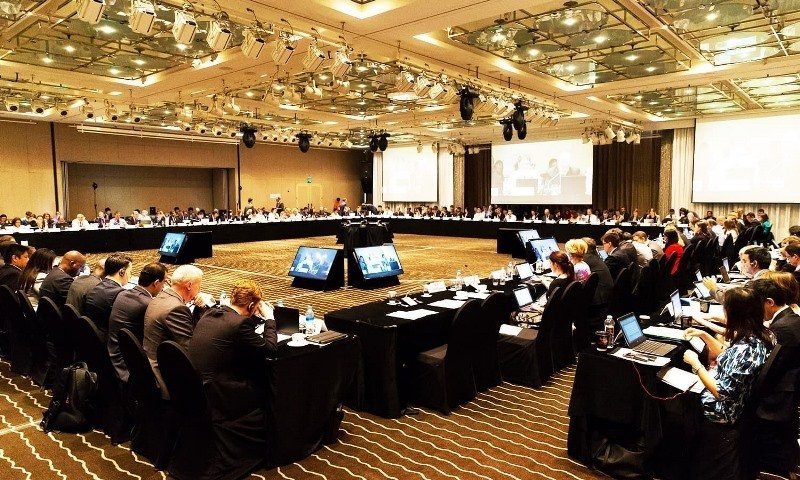
    “Pakistan has made significant progress and it has largely addressed 26 out of 27 items on the action plan it first committed to in June 2018,” he said at a virtual press conference after the financial watchdog’s five-day plenary meeting.

  • FATF grey-listing has cost Pakistan $38bn since 2008: report

    FATF grey-listing has cost Pakistan $38bn since 2008: report

    The Financial Action Task Force’s (FATF) decision to place Pakistan on the grey list three times since 2008 has cost Islamabad $38 billion, reported Express Tribune.

    The newspaper quoted a report published by an independent think-thank, Tabadlab, stated that grey-listing events spanning from 2008 to 2019, may have resulted in cumulative GDP losses worth $38 billion.

    According to the report, the losses are worked out on the basis of reduction in consumption expenditures, exports, and foreign direct investment (FDI). The report has attributed most of these losses to the reduction in household and government consumption expenditures.

    “The author of the research paper argued that the data suggested that Pakistan’s removal from the grey list has at times led to the revival of the economy, as evident from an increase in the level of GDP for the years 2017 and 2018 when Pakistan was not on the grey-list,” Tribune reported.

    Pakistan was first placed on the list in 2008 for one year. In 2012, Islamabad was penalised by the FATF again and this time it was removed from the list after three years. In 2018, the country found itself on the FATF list again and has been trying to get off it ever since.

    France and some other European countries have recommended the Financial Action Task Force (FATF) to continue to keep Pakistan on the grey list, saying Islamabad has allegedly failed to comply with the conditions set by the global watchdog, according to a report in Dawn newspaper.

    The decision on whether Pakistan will remain or remove from the list will be announced on Feb 25 (today) after a three-day-long plenary meeting of the global watchdog.

  • ‘Only Turkey, not even China, supported Pakistan at FATF,’ Indian media reports claim

    ‘Only Turkey, not even China, supported Pakistan at FATF,’ Indian media reports claim

    After the Financial Action Task Force (FATF) decided to keep Pakistan in the grey-list till February, Indian media reports have claimed that Recep Tayyip Erdogan’s Turkey was the only country to back Pakistan at the plenary meeting of the global anti-money laundering watchdog while China bailed out.

    The FATF, also known by its French name, Groupe d’action financière, is an intergovernmental organisation that combats money laundering. In 2001, its mandate was expanded to include terrorism financing.

    Pakistan was placed on the FATF’s grey list in 2018 whereas in February 2019, the country had secured an extra four months to complete the plan after missing 13 of the 27 targets set by the global watchdog.

    According to reports, Turkey, during October 23’s plenary, proposed a special visit to Islamabad to make an onsite assessment of the Imran Khan government’s implementation to plug holes in its legal framework to curb terror financing.

    READ: ‘Successful implementation’: Hammad Azhar says FATF blacklisting off the table

    The suggestion was seen as an effort to let Pakistan off the hook for now and immediately place it on the white list but was not supported by any other country, including allied China and Malaysia.

    “Out of 27 points, we have implemented 21 points given by the authorities concerned regarding FATF, ” Minister for Revenue Hammad Azhar said while talking to a private television channel after the watchdog decided to retain Pakistan on its grey list.

    Except India, every country had appreciated the efforts of Pakistan for satisfying the people dealing FATF, he added.

    BLACKLISTING OFF THE TABLE:

    In a statement, FATF urged Pakistan to complete an internationally agreed action plan by February 2021. FATF said Pakistan had now reached 21 targets out of 27 set for it in 2018 when Pakistan was placed on FATF’s “grey list” of countries with inadequate controls over terrorism financing.

    But Pakistan still needs to demonstrate that law enforcement agencies are identifying and investigating the widest range of terrorism financing activity, FATF said.

    The watchdog also asked Islamabad to demonstrate that terrorism financing probes resulted in effective, proportionate and dissuasive sanctions.

    “FATF acknowledged that any blacklisting is off the table now,” Pakistani federal minister Hammad Azhar tweeted.

    Azhar, who leads Pakistan’s delegation at FATF plenary meetings, said the forum’s discussions were focused on how Pakistan could be supported in meeting its targets before a formal review in the middle of next year.

  • ‘Successful implementation’: Hammad Azhar says FATF blacklisting off the table

    ‘Successful implementation’: Hammad Azhar says FATF blacklisting off the table

    After the Financial Action Task Force (FATF) decided to keep Pakistan in the grey-list till February, Minister for Revenue Hammad Azhar congratulated the nation for successfully implementing the major points of the FATF.

    “Out of 27 points, we have implemented 21 points given by the authorities concerned regarding FATF, ” he stated while talking to a private television channel. Except India, every country had appreciated the efforts of Pakistan for satisfying the people dealing FATF, he added.

    Pakistan was placed on the grey list during the period of Pakistan Muslim League-Nawaz last government, he said. In reply to a question, he said the remaining six points had partially implemented. He also termed the decision that was taken without voting a “diplomatic victory”.

    BLACKLISTING OFF THE TABLE:

    In a statement, FATF urged Pakistan to complete an internationally agreed action plan by February 2021. FATF said Pakistan had now reached 21 targets out of 27 set for it in 2018 when Pakistan was placed on FATF’s “grey list” of countries with inadequate controls over terrorism financing.

    But Pakistan still needs to demonstrate that law enforcement agencies are identifying and investigating the widest range of terrorism financing activity, FATF said.

    The watchdog also asked Islamabad to demonstrate that terrorism financing probes resulted in effective, proportionate and dissuasive sanctions.

    “FATF acknowledged that any blacklisting is off the table now,” Pakistani federal minister Hammad Azhar tweeted.

    Azhar, who leads Pakistan’s delegation at FATF plenary meetings, said the forum’s discussions were focused on how Pakistan could be supported in meeting its targets before a formal review in the middle of next year.

    Last February, Pakistan secured an extra four months to complete the plan after missing 13 of the 27 targets that FATF had set for it in 2018 when it put Pakistan on its “grey list”.

  • Saudi Arabia backstabbing Pakistan at FATF?

    Saudi Arabia backstabbing Pakistan at FATF?

    Foreign Office (FO) spokesperson Zahid Hafeez Chaudhri has rejected “false media reports” regarding Saudi Arabia’s role in the assessment of Pakistan’s Financial Action Task Force (FATF) action plan.

    According to a press release, FO categorically rejected the story circulating on a segment of the media as false and baseless.

    Earlier in the day, Azhar Mashwani, Punjab chief minister’s focal person for digital media, tweeted that reports of Saudi Arabia voting against Pakistan at FATF were fake and that the Ministry of Foreign Affairs would issue a statement on this.

    “Pakistan and Saudi Arabia enjoy strong fraternal ties and the two countries have always cooperated with each other on all matters of bilateral, regional and international importance,” said the statement by the FO spokesperson.

    “Pakistan greatly values its relations with the brotherly Saudi Arabia and firmly rejects such malicious propaganda.”

    The statements come after renowned journalist, Sabir Shakir, claimed that Saudi Arabia had voted against Pakistan in the virtual plenary of the FATF.

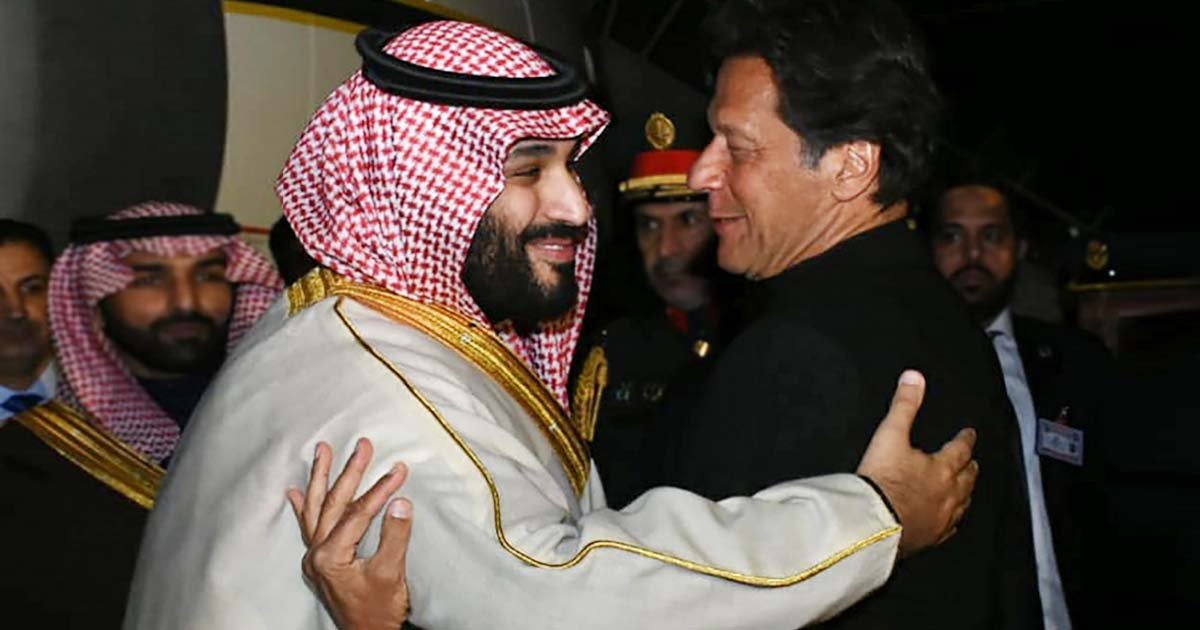
    He had asserted that Saudi Arabia lobbied to woo the support of other Muslim countries including Turkey to move Pakistan into the blacklist of the global financial watchdog.

    FATF:

    According to Dawn, a virtual meeting of the FATF, from October 21-23, will decide if Pakistan should be excluded from its ‘grey list’, based on a review of Islamabad’s performance to meet global commitments and standards on fight against money laundering and terror financing (ML&TF).

    The FATF plenary was earlier scheduled in June but Islamabad got an unexpected breather after the global watchdog against financial crimes temporarily postponed all mutual evaluations and follow-up deadlines in the wake of grave health risk following COVID-19 pandemic. The Paris-based agency also put a general pause in the review process, thus giving additional four months to Pakistan to meet the requirements.

    The plenary had formally placed Pakistan in the grey list in June 2018 due to “strategic deficiencies” in anti-money laundering/combating the financing of terrorism (AML/CFT) after a push from India supported by the United States (US), the United Kingdom (UK) and some European countries.

    The FATF will examine if the country had demonstrated remedial actions and sanctions applied in cases of AML/CFT violations, relating to terrorist financing (TF) risk management and TFS (terror financing sanctions) obligations.

    The FATF will also judge if competent authorities were cooperating and taking action to identify and taking enforcement action against illegal money or value transfer services (MVTS) and had proven implementation of cross-border currency and bearer negotiable instruments (BNI) controls at all ports of entry, including applying effective, proportionate and dissuasive sanctions.

  • How govt outnumbered opposition for passage of FATF-related bills during joint session

    How govt outnumbered opposition for passage of FATF-related bills during joint session

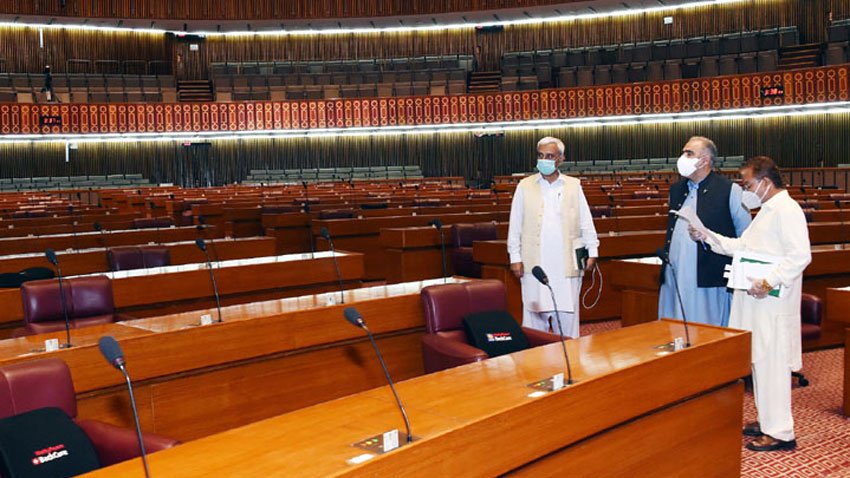
    Opposition absentees outnumbered their counterparts on the treasury benches during the joint sitting of parliament on Wednesday, which passed three bills related to the Financial Action Task Force (FATF), official records revealed Thursday.

    According to The Express Tribune, the attendance record released by the National Assembly Secretariat showed that more than two dozen opposition lawmakers did not turn up for the joint sitting, including 13 from Pakistan Muslim League-Nawaz (PML-N) and 11 from the Pakistan People’s Party (PPP).

    From the treasury side, those conspicuous for their absence were Asim Nazir, Amir Liaquat Hussain, Ahmed Hussain Dehar and Abdul Majeed Khan of the ruling Pakistan Tehreek-e-Insaf (PTI), and Chaudhry Moonis Elahi of the Pakistan Muslim League.

    In the parliamentary session, 317 members of National Assembly, out of the Lower House’s current strength of 340, were present. From the Upper House of parliament, which currently has 103 members, around 14 opposition senators were absent.

    The prominent absentees included former president Asif Zardari, who did not attend because of illness and Syed Khurshid Shah, who is in the custody of the National Accountability Bureau. Besides these two top PPP lawmakers, Sardar Akhtar Mengal of the Balochistan National Party (BNP), was also absent.

    The list also includes Amir Haider Hoti of the Awami National Party (ANP), Ali Wazir, a lawmaker from the former tribal areas, Afrin Khan of the Muttahida Majlis-e-Amal (MMA), PML-N’s Afzal Khokhar, Ahmad Raza Maneka, Ehsanul Haq Bajwa and Riaz Pirzada and the PPP’s Makhdoom Jamiluz Zaman, Amir Magsi, Khalid Loond, Roshan Junejo and Ghulam Ali Talpur.

    According to the attendance record, the senators who skipped Wednesday’s joint sitting were PML-N senators Kulsoom Parveen, Chaudhry Tanveer, Shamim Afridi, Raheela Magsi, Saleem Zia, Dilawar Khan, Yaqub Nasir and Najma Hameed.

    Other absentee senators were Talha Mahmood and Ataur Rehman of the Jamiat Ulema-e-Islam, Rubina Khalid of the PPP, Sitara Ayaz of the ANP, Ashok Kumar of the National Party (NP) and Tahir Bizenjo and Shafiq Tareen of the Pakhtunkhwa Milli Awami Party (PkMAP).

    PASSAGE OF FATF BILLS:

    Earlier, the government on Wednesday managed to pass three crucial FATF-related laws in a joint session of the parliament that was marred by the opposition’s protests.

    Prime Minister (PM) Imran Khan also attended the joint session which was chaired by National Assembly Speaker Asad Qaiser. Leader of the Opposition in the National Assembly Shehbaz Sharif, PPP chief Bilawal Bhutto-Zardari, former premier Shahid Khaqan Abbasi and others, including senators Sirajul Haq, Mushtaq Ghani and Raza Rabbani among others were also in attendance.

    After walking out in protest, opposition leaders held a joint press conference and criticised the government over the passage of FATF-related bills.

    Opposition leader Shehbaz termed today as a “black day in the history of democracy”. He said that the government “crossed red lines” today and added that “until now, the opposition cooperated with the government for the sake of Pakistan”.

    The PML-N president also said that the NA speaker had “disappointed everyone”.

    PPP chief Bilawal also lashed out at the government, saying that the vote count could have been conducted again but the treasury members were “scared of being exposed”.

    “The opposition only has one option remaining and that is [to move] a no-confidence [motion],” said Bilawal.

    Both Shehbaz and Bilawal told reporters that the opposition will come up with a strategy in the multi-party conference.

  • FBR to regulate real estate, jewellers trade to comply with FATF agenda

    FBR to regulate real estate, jewellers trade to comply with FATF agenda

    The investigation against money laundering now extends to real estate, gold, gems, and jewellery, as the federal board of revenue is making new rules to stop the financing of terrorism and money laundering in these areas, DAWN reported

    What does this mean?

    Jewellers will have to document and record the value of their sales and the information will be shared with the FBR. Any suspicious transactions such as buying of selling of gold and precious stones will also have to be reported. Jewellers will also submit a ‘special return form’ with their data. 30,000 jewellers will be recorded by the FBR.

    READ MORE: Study reveals: Excessive smartphone usage affects brain like drugs

    Law division and Securities and Exchange Commission of Pakistan (SECP) will also monitor services provided by lawyers and chartered accountants.

    “We have sent these rules to the law division for vetting,” FBR spokesperson and Member Policy Dr Hamid Ateeq confirmed. After vetting, he said, the rules would be notified for implementation.

    These rules will also apply to housing authorities and sub-registrar offices for real estate. Property agents will not be covered under these rules.

    The reason for these new regulations is because Pakistan needs to implement new Financial Action Task Force (FATF) rules.The implementations of these rules will help Pakistan get off the FATF grey list.

    FATF strongly urges Pakistan to swiftly complete its full action plan by June 2020.

    READ MORE: As Delhi burns, Gurdwaras open doors to Muslims fleeing violence