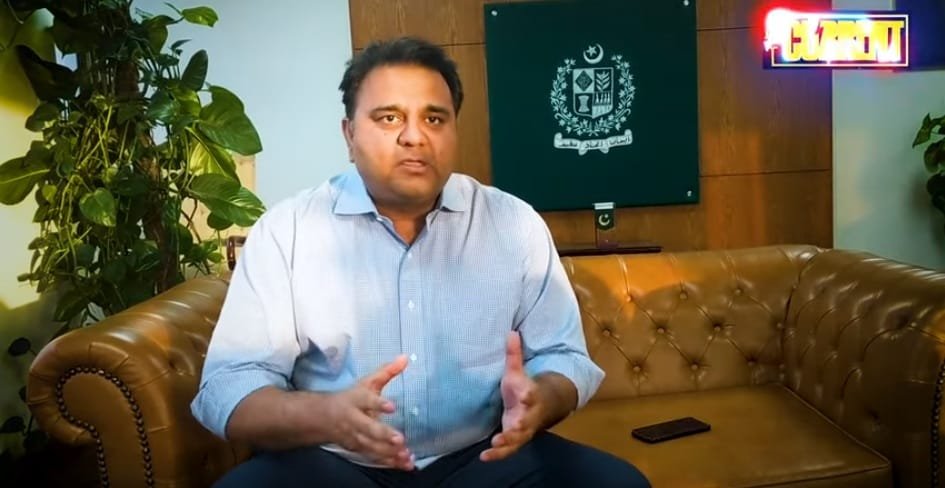
Fawad said, “The people who could not fulfill their pledge of allegiance to Pakistan want to return to fulfill this pledge.”
According to the minister, those people who wish to follow the constitution should be given a chance, adding that the government seeks to move forward with the conditions laid down by Prime Minister (PM) Imran Khan.
The information minister added that in Balochistan more than 3000 people have come back to a normal life, the ones who had ‘fallen prey to India’s conspiracies.’
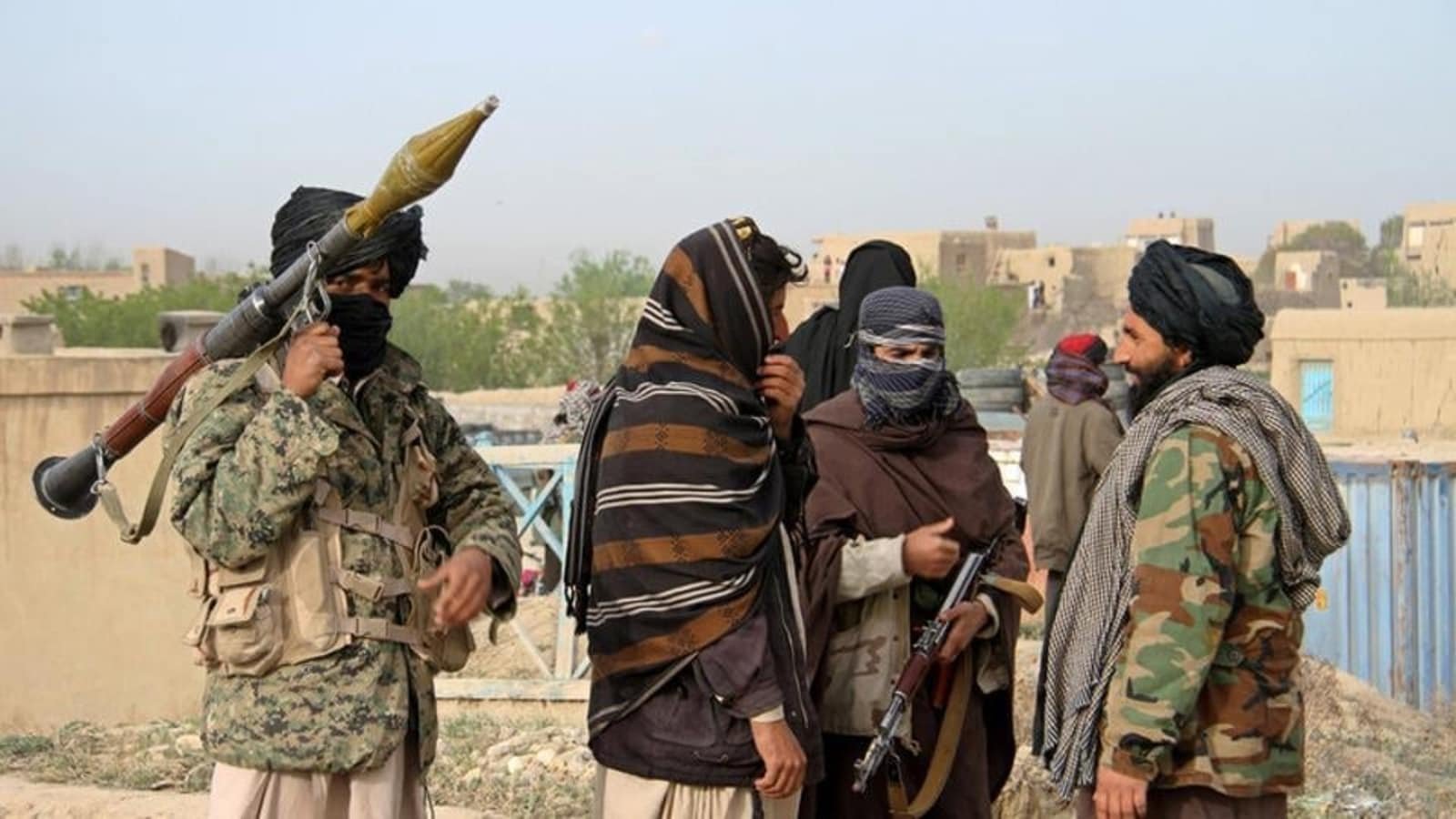
The TTP said that their leaders are engaged in “secret talks” and have asked all fighters to observe a ceasefire till October 20.
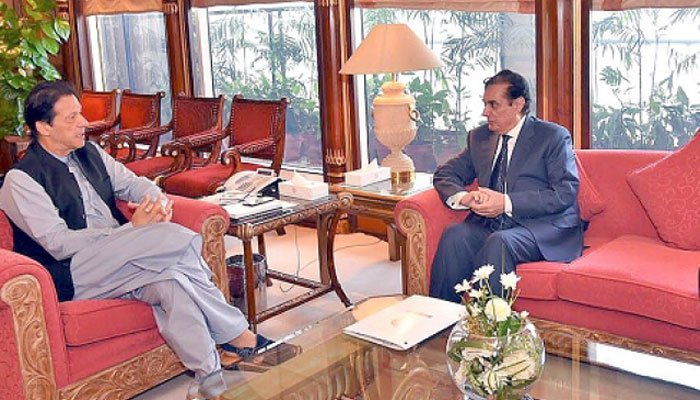
The Ministry of Law and Justice has reportedly been preparing a summary to send to the Prime Minister (PM) Imran Khan regarding the extension of sitting Chairman of the National Accountability Bureau (NAB) Justice (redtd) Javed Iqbal, reported Malik Asad for Dawn.
The four-year term of Justice Iqbal as NAB chairman will expire this month. A senior official of the ministry has confirmed that they will send the proposal to the PM soon.
However, the government hasn’t taken a final decision yet. According to an official, in the proposal, the declaration of an ordinance for giving extension has been suggested.
“In case the PM decides to grant an extension to the chairman, the law ministry will draft an ordinance to amend the National Accountability Ordinance (NAO) and forward it to the president,” the sources said.
If PM agrees, an amendment will be made in sub-section b of Section 6, which states, “There shall be a Chairman NAB to be appointed by the President in consultation with the [Leader of the House and the Leader of the Opposition in the National Assembly] for a [non-extendable] period of [four] years on such terms and conditions as may be determined by the President and shall not be removed except on the grounds of removal of Judge of Supreme Court of Pakistan.”
Earlier, Information Minister Fawad Chaudhry said, “The government has decided not to consult Opposition Leader Shehbaz Sharif for the appointment of NAB chairman since he (Sharif) is accused in several corruption references filed by the bureau.”
Later, Pakistan People’s Party (PPP) chairman Bilawal Bhutto Zardari tweeted that PPP will forcefully oppose the illegal extension in the tenure of chairman NAB.
Minister for Information and Broadcasting Fawad Chaudhry has said that the announcement by the English Cricket Board (ECB) to visit Pakistan next year is a welcome step.
Taking to Twitter, Fawad said that he would like to thank stars of the cricketing world, diplomatic community, media and cricket lovers around the world for their support for Pakistan Cricket. Fawad Chaudhry has taken the opportunity to claim it a victory for the nation as he tweeted, “Yet again Pakistan has emerged as a strong and resilient nation.”
Announcement of ECB to visit Pakistan next year is a welcome step,I would like to thank stars of cricket world, diplomatic community, Media And Cricket lovers around the world on their support for pakistan Cricket, yet again Pak has emerged as strong and resilient nation
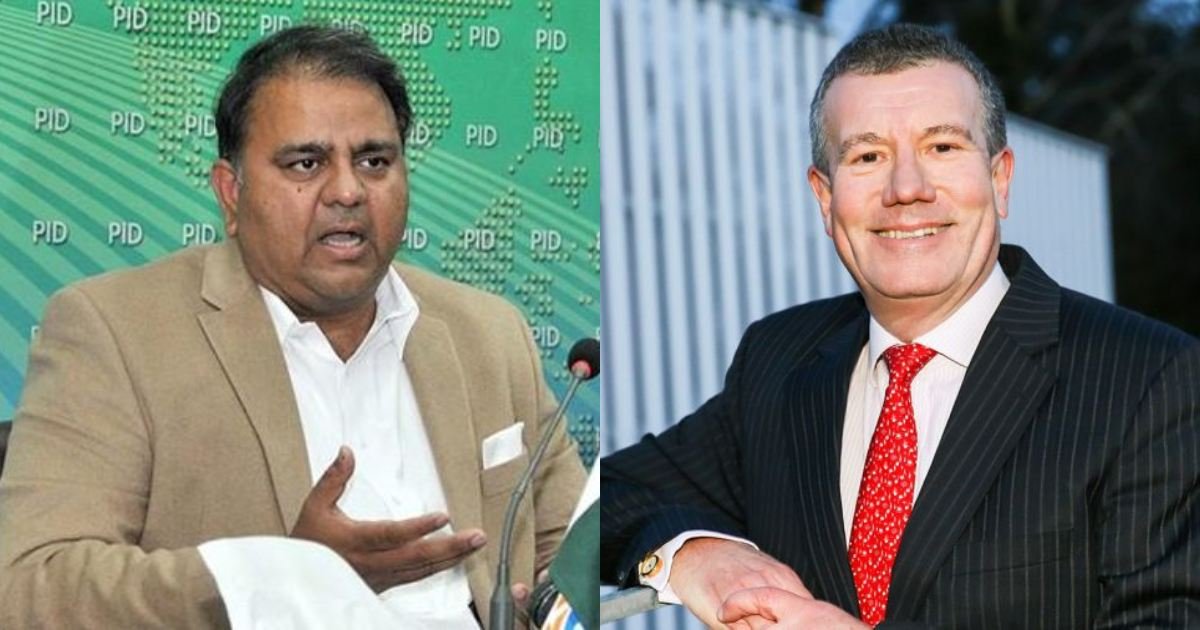
ECB Chairman Ian Watmore, in his first public comments since the ECB pulled out its scheduled tour to Pakistan, offered an apology for last week’s late withdrawal.
According to a sports journalist Alison Mitchell, Ian has said that the Board took advice on security and player welfare (British High Commissioner confirmed security advice hadn’t changed, despite NZ incident). “The board took the decision based on its own judgments & it didn’t go out to wider consultation.”
She shared that he said: “We need to rebuild our relationship with Pakistan. This was not the right time, we will do whatever we can regarding Pakistan’s scheduled tour next year.”
Says “We need to rebuild our relationship with Pakistan” … Not sure how much help the above will be. And PCB say Wasim Khan has just handed in his resignation as PCB CEO.
Watmore also confirmed that the decision was not made by the players and said no wider consultations were held. “The board took the decision based on its own judgments and it didn’t go out to wider consultation. Had we decided to go forward with the tour, we’d have had to put the proposals to TEPP (the body that represents England players) and the PCA, but it didn’t reach that point.”
Information Minister Fawad Chaudhry has announced that cinema halls and multiplexes will reopen in eight cities of Pakistan from October 1st.
The decision was taken in the meeting chaired by Federal Minister for Planning, Development and Special initiatives Asad Umar. It was decided in the meeting that that Covid related restrictions will be eased in the cities that have achieved the targeted vaccination rate. The cities who have targeted vaccination rate includeds, Gilgit, Skardu, Muzaffarabad, Mirpur, Rawalpindi, Islamabad, Quetta, and Peshawar.
“We are relaxing restrictions in these eight cities from October 1,” Asad Umar said in a press conference. “The rest of the cities and districts will have to implement on the same restrictions that are currently in place, till October 15,” he added.
راولپنڈی اسلام آباد سمیت آٹھ شہروں میں سینیما کھولنے کی اجازت دے دی گئ ہے، امید ہے لاہور اور کراچی کی انتظامیہ ویکسینیشن ڈرائیو کو بڑھائیں گے تاکہ اگلے دس دنوں میں ان شہروں کے سینیما بھی کھل سکیں، ،،۔۔ pic.twitter.com/DprwrYgdLz
Federal Minister for Information and Broadcasting Fawad Chaudhry recently revealed that Arab rulers who presented gifts to the Prime Minister (PM) of Pakistan “did not want their names to be made public”.
While speaking on Geo News programme ‘Jirga’with senior journalist Saleem Safi on Sunday, Fawad stated, “Previously, the heads of the government were allowed to take gifts after paying 15 per cent of the actual price.”
“Vehicles were considered personal gifts, but former president Asif Ali Zardari changed the law for personal interest,” he added while criticising the past governments.
Talking about the local elections in the country, the minister admitted that the Pakistan Tehreek-e-Insaf (PTI) government’s biggest failure was “not holding local body elections” in Pakistan. Moreover, he said that the local bodies, formed by former Chief Minister (CM) Shehbaz Sharif, were not effective and could not be restored on a technical basis.
He added that PM insisted on having elections but members within the party, including Chief Minister Punjab Usman Buzdar, didn’t agree to it.
He further said that a review petition against the restoration of the local bodies is being heard in the Supreme Court (SC).
Chaudhry said that the government has no personal rivalry with the Election Commission of Pakistan (ECP) but the election body directly attacked the PM during the Senate polls.
Furthermore, he revealed a total of 0.6 million Election Voting Machines (EVM) will be required for the upcoming general elections of 2023.
Previously, the federal government denied giving out information about the exchange of gifts between the premier and other heads of state. They mentioned in a notice that the matter is reflective of inter-state relations and the disclosure of such information potentially damages the interest of Pakistan in the context of international relations.
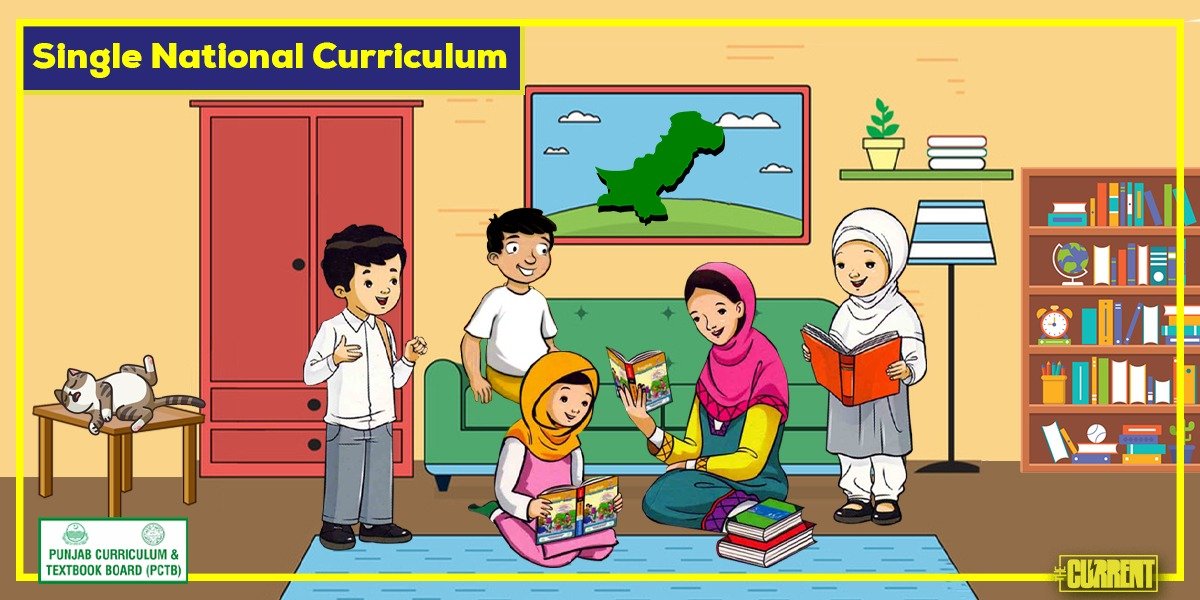
On August 16, 2021, Prime Minister Imran Khan officially launched the Single National Curriculum (SNC). The newly launched curriculum was prepared by the National Curriculum Council (NCC) and the Ministry of Federal Education, in consultation with the provinces. According to PM Khan, “SNC would transform the nation into a unified one.”
What is SNC?
According to the Ministry of Federal Education and Professional Training, the SNC is a ‘uniform’ system of education, which means the same curriculum for everyone. All public schools, private schools, and madrassas were meant to have the same curriculum so that the learning outcomes are similar and without any discrimination in teaching standards. This is not the first time SNC was imposed in Pakistan. It was previously introduced in 2006 by Former President Musharraf. Whereas the previous SNC was a curriculum-based initiative, the one introduced by the PTI government is imposing the use of the textbooks produced by the provincial boards.
Is it being implemented across the country?
No. Sindh has decided not to implement the curriculum since education is a provincial issue. Only Punjab and Khyber Pakhtunkhwa have enforced it so far. However, many schools in both provinces — including the prestigious Aitchison College, Lahore — expressed their concerns over the books in the curriculum. The Director of the National Curriculum Council (NCC), Dr Mariam Chughtai, has also said that madrassas will implement the SNC syllabus in five to six years, which undermines the reason why the government had wanted to introduce the SNC in Pakistan – to bring madrassas into the mainstream so students would be able to get jobs in other professions after they graduated.
Controversies surrounding the SNC
After the SNC syllabus was imposed on schools across Punjab, many controversies surrounding the books and the curriculum came forward. From the disparity in gender representation, the reinforcement of patriarchal gender roles, the lack of female heroes, and religious texts in the non-religious books.
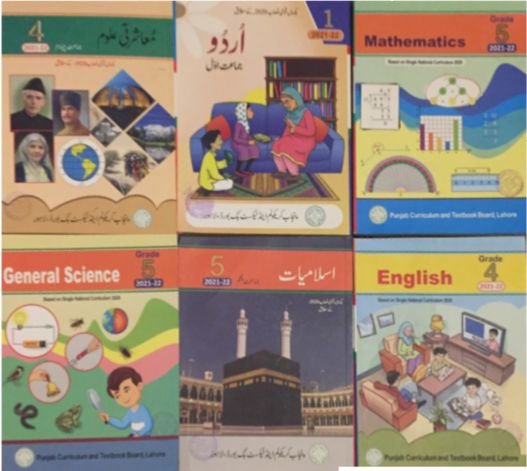
To see if the criticism is valid, The Current analysed the following books published under the Punjab Textbook Board (PTB):
Urdu books from grades 1 to 5, English books from grades 1-5, Mathematics books grades 1, 2, 4, and 5, General Science grades 4-5, Waqfiyat Aama grade 1 and 3, Social Studies 4-5, and Islamiat grade 1- 5.
Two books were not available at the time of research. Grade 3 Math and Waqfiyat Aama grade 2, which have not been included in the study.
The analysis here has been divided into two parts.
Part one comprises the data analysis of all the books included in the SNC by the Punjab Text Book board.
Part two comprises the data analysis of individual subjects being taught to the students.
We studied the total number of male and female representations in the books, a comparison of the eastern and western wear of both genders, the presence of religious (Islam and others) content in non-religious books, and studying the distribution of power roles assigned to both men and women.
Here is the list of most common criticism against the curriculum and the evidence we found:
SUMMARY OF CONTENT IN ALL SNC BOOKS
1- Disparity in Gender Representation:
One of the most debatable points in the entire SNC is the representation of men and women.
After a thorough evaluation, we found that the concerns about the disparity in gender representation are TRUE.
The study reveals that a total of 60.2 percent of the books have images of men, including boys and only 39.4 percent of the books have images of women, including girls.
2-Women represented in hijab vs non-hijab, and women in western clothes:
What the women are wearing became a source of contention in the discussion about the SNC, with critics suggesting that the women should equally represent the country in terms of the hijab, eastern clothes, and the choice to wear western wear.
It is TRUE that there is no equal representation of women’s appearance in the books.
Women’s appearance was divided into three categories.
A) Number of women wearing eastern clothes with hijab.
B) Number of women wearing eastern clothes without hijab.
C) Number of women wearing western clothes.
Our research shows that 41.6% of all women and girls in the SNC books are wearing a hijab, 28.9% are wearing eastern clothes without a hijab, and 29.4% of the images show girls wearing western wear. It is important to note that in the western wear percentage, almost all of the images are of young girls. Older women are not shown wearing western wear.
3-Men represented in eastern vs western clothes:
Since the appearance of women in eastern wear and hijab became controversial, we also studied how many times men appeared in western or eastern wear.
A massive 79.9 percent of men were seen wearing western clothes, in comparison to 20 percent dressed in eastern clothes.
4- More men in ‘power roles’ compared to women:
Another controversy suggested that the books did not show women in positions of ‘power’, and they were mostly listed as helpers or homemakers. While there were many images that showed women in ‘inferior roles’ to men, there were women that were shown in roles of power.
This controversy is TRUE.
We defined power roles shown in the books as doctor, pilot, lawyer, police officer, traffic warden, army sports personality, etc and after analysing all the books, we found that a men are given power roles three times more than women. The results in the graphic below are based on the total number of images shown of men and women in all the SNC Punjab books.
I
5. Religious content in non-religious books
In almost all the books which were studied, we saw the presence of religious references or mentions in non-religious books. Minorities felt their rights were being compromised since books that are not for religious studies should not have references to a specific religion, which may come under the context of ‘preaching’.
In our analysis, we saw a total of 7.77 percent of religious text in all SNC non-religious books, which lends TRUTH to the fact that there is religious content in non-religious books.
Religious content is present in 7.7 percent of English, Math, Social Studies, Urdu, Science, and General Knowledge books.
7.47 percent of books have references to Islam while 0.27 percent mention other religions in all non-religious books.
Dr Mariam Chughtai, while answering a question for The Current about the religious references in non-religious books, did not provide a clear answer but stated that these are model books that require changes.
SNC BOOKS ANALYSIS – SUBJECT ANALYSIS
This section of the report comprises an analysis of individual subjects being taught to students. The subjects under study were, Urdu books from grades 1-5, English books from grades 1-5, Mathematics books grades 1, 2,4, and 5, General Science grades 4- 5, Waqfiyat Aama (General Knowledge) grades 1-3, Muashrati Uloom (Social Studies) grades 4-5.
The graphical representation of the subject-wise evaluation is as follows:
English:
In 668 pages of English books, 58.1 percent have male representation while females have 41.8 percent.
29.7 percent of women are seen with Hijab and 70.2 percent are without Hijab.
There is a total of 9.8 percent presence of religious text in English books. This is based on the total number of pages in English books.
Mathematics:
In 672 pages of the Math books, when gender representation was analysed, 51.1 percent of the books have male representation and 48.8 percent have female representation.
A total of 53.9 percent of females are seen without hijab and 46 percent are seen wearing hijab.
The Math books have a 4.1 percent presence of religious text. This is based on the total number of pages in Math books.
Urdu:
The five Urdu books comprising 791 pages. A total of 59.7 percent presence of males are seen as compared to 40.4 percent of females.
58.5 percent of women/girls are seen wearing hijab and 41.4 percent are seen without hijab.
12.8 percent of religious text is present in Urdu books. This is based on the total number of pages in Urdu books.
General Science:
Out of 310 pages, 76.8 percent have male representation as compared to 23.1 percent female representation.
64 percent of women/girls are seen without hijab and 36 percent of women/girls are seen with hijab.
The General Science books have a 0.96 percent presence of religious content. This is based on the total number of pages in Science books.
Waqfiyat Aama (General Knowledge):
49.5 percent of male images are seen in comparison to 50.15 percent of females.
23.1 percent of females are seen with hijab and 76.8 percent without hijab.
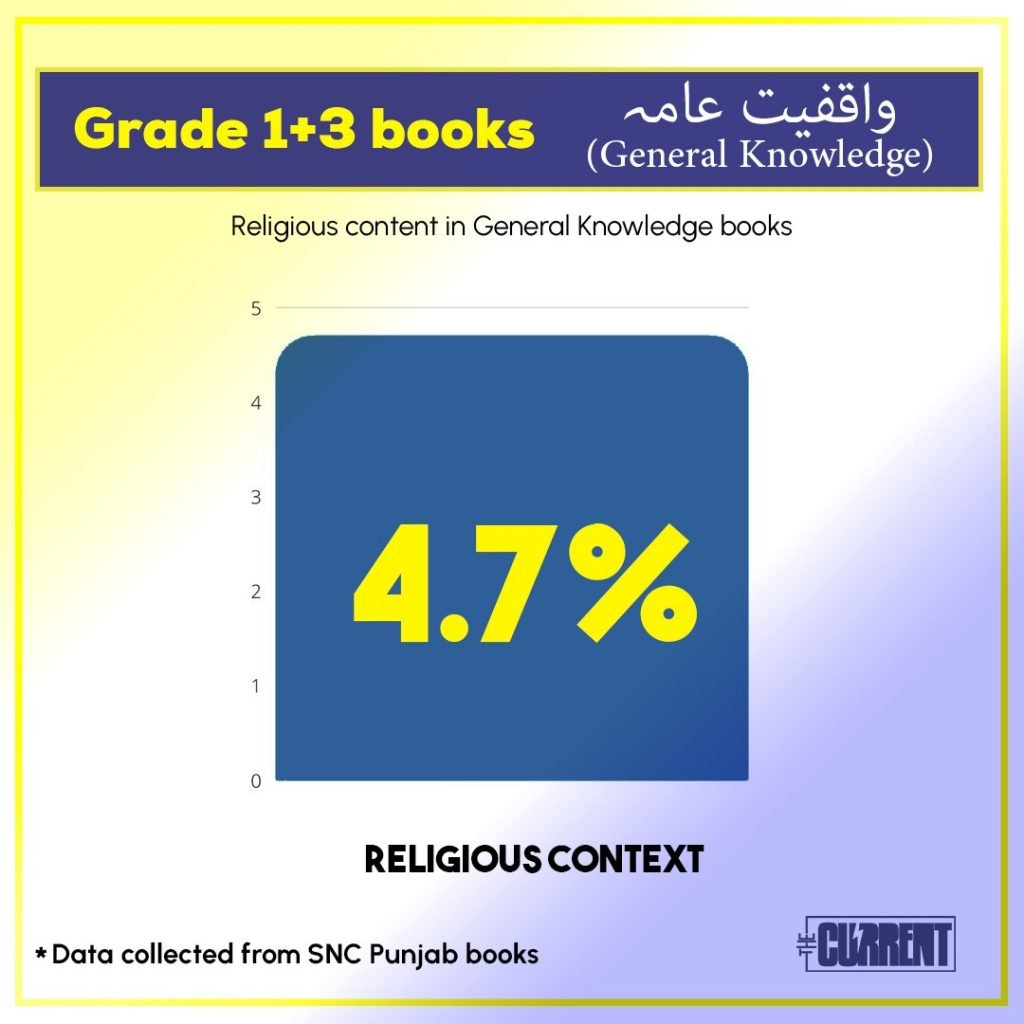
There is a 4.7 percent presence of religious text in the books studied. This is based on the total number of pages in General Knowledge books.
Muasharti Uloom (Social Studies):
From 234 pages analysed, 65.1 percent of men/boys are represented in the books and 34.8 percent of females are shown.
36.8 percent of females are seen without hijab and 63.1 percent are seen with hijab.
10.2 percent of religious content is present in the books. This is based on the total number of pages in Social Studies books.
The last portion of the report highlights the pros and cons, which we have observed in almost all the books. We have provided both positive and negative outcomes deduced from the books after careful analysis.
The positive outcome deduced from the books:
1. The books are locally published and designed. The books are affordable, with a total set for one grade set at Rs. 800 per child according to Dr Chughtai.
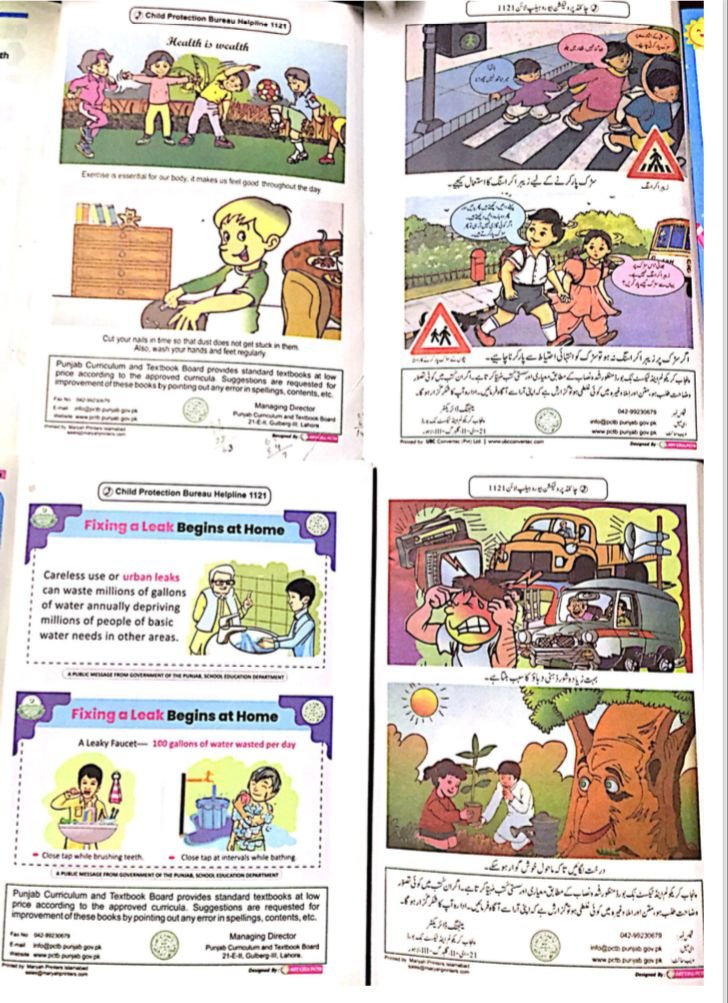
2. There is a public service message printed at the end of each book to raise awareness against talking to strangers, crossing the road, exercising, and even information about fighting dengue.
The possible negative impact of the books
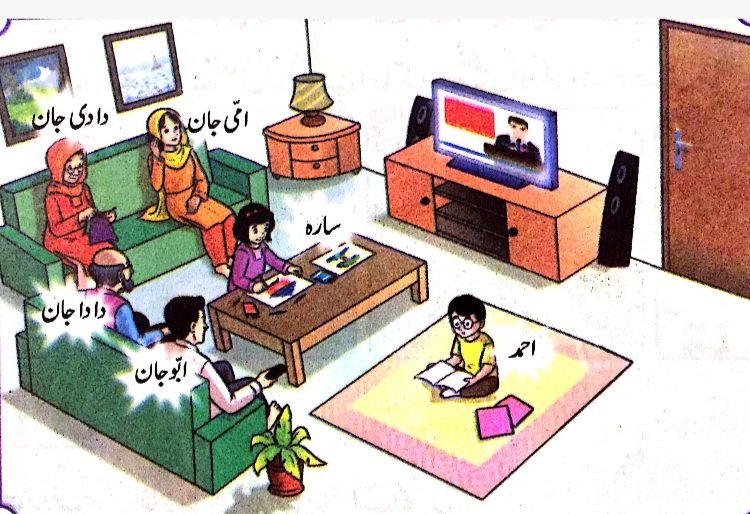
1. After analysing the books, we deduced that mostly nuclear families have been shown in the books. No representation of single parents or children being raised by guardians is seen. Moreover, the presence of both parents is seen as almost essential in all stories in the books.
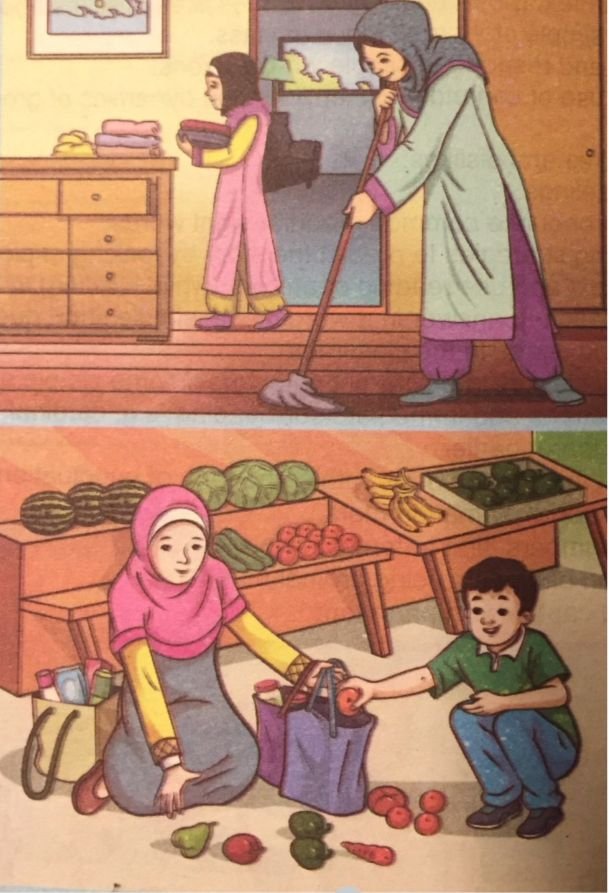
2. Women are mostly shown doing domestic work, taking care of the family, and looking after their children. In stories as well, they seem to come second to their male counterparts.
3. As discussed in detail above, there is the presence of religious text in non-religious books.
4. The stylisation of the books are difficult to understand, fonts and texts are way too clustered. The quality of the pages is not refined, making them unattractive and confusing for students.
CONCLUSION:
According to NCC director, Dr Chughtai, the curriculum is an evolving process and the books can be changed in future publications, based on the response by schools and parents. The biggest hurdle to the books is that the teachers have not been trained in teaching these new books and according to Dr Chughtai, it is up to the school to teach and implement the books. There are no worksheets given with the books and from initial student reactions, students are confused and wary of books that are laid out in a clustered fashion. There is also the subject of a language change. Where students study general knowledge, a precursor to Science, in Urdu, they switch to difficult English in grades 4-5.
While the government should be commended in trying to create a national syllabus, the forced enforcement of the books along with the lack of supplemental information and training will make this very difficult for teachers and students. Moreover, parents should be given a choice as to what they want their children to study. This implementation should be a free choice rather than that of enforcement. What would have been a practical approach is that the government should have improved the structure of the government/public schools, provided better teacher training, spent more on financially improving the conditions rather than lowering the standard for all.
*Graphics credits: Asma Ahmad (Graphic Designer)
How did we collect the data?
The percentage of male characters in the books: Divided the total number of male by the total number of characters. The percentage of female characters in the books: Divided the total number of female by the total number of characters.
The percentage of Islam: Divided the Islamic pictures or references given in the books by the number of total pages of all books. The percentage of other religion: Divided the other religions pictures or reference given in the books by the number of total pages of all books.
The percentage of female power roles: Divided the number of female by the total number of characters (female and male). The percentage of male power roles: Divided the total number of male by the total number of characters (female and male).
The same process/calculation/method was applied to the findings of each book.
The Foreign Office (FO) summoned the Indian Charge d’ Affaires on Friday and conveyed the government’s concern over the recent target killing of Muslims in the Indian state of Assam.
In the incident, two people were reported dead. It took place in the Sipajhar area of Assam’s Darrang district, where most of the residents are Muslims, reports Dawn.
In the video, several cops can be seen beating a man with sticks even as he lay motionless on the ground. It went viral on Twitter after which Indian Prime Minister (PM) Narendra Modi came under fire.
Earlier, Pakistan’s federal minister Fawad Chaudhry condemned the incident, and said, “Today, Prime Minister Imran Khan will once again draw the attention of the United Nations to the atrocities taking place in India. #ModiFascism.”
A visually impaired Pakistani female diplomat Saima Saleem raised her voice against India violating human rights in Indian occupied Kashmir during the 76th United Nations General Assembly (UNGA) session.
In her speech, Saima said that India’s violation of human rights in India occupied Jammu and Kashmir are well documented in the two reports of the high commissioner for human rights.
“Since 5th August 2019, the High Commissioner has urged India to unlock the situation and fully restore the rights that are currently being denied to the people of the occupied territory,” she added.
— Permanent Mission of Pakistan to the UN (@PakistanUN_NY) September 25, 2021
She further said that “major human rights organisations including the Human Rights Watch and Amnesty International have expressed similar serious concerns about India’s human rights violation including in the occupied territory.”
“Not surprisingly, Indian authorities have failed to respond to any of these communications.”
Federal minister for information and broadcasting, Fawad Chaudhry, lauded Saima for highlighting the Kashmir issue.
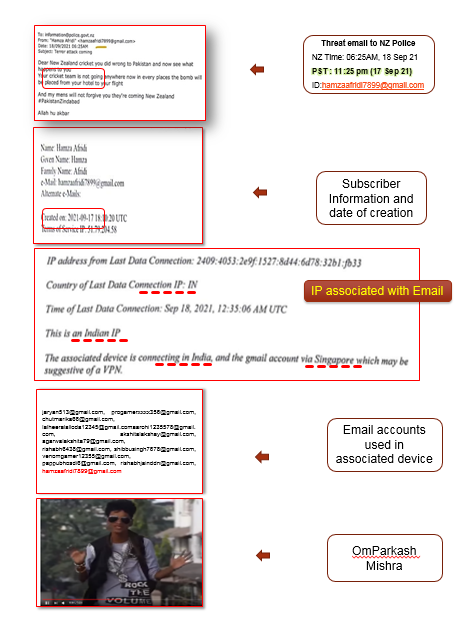
Federal Minister for Information Fawad Chaudhry held an important press conference on New Zealand’s withdrawal from the recent cricket series in Pakistan, revealing that a threatening e-mail was sent to New Zealand from India.
Accompanied by Interior Minister Sheikh Rasheed, the Minister of Information talked about the strict security measures for New Zealand squad.
The information minister said Pakistan was facing a hybrid and fifth-generation war.
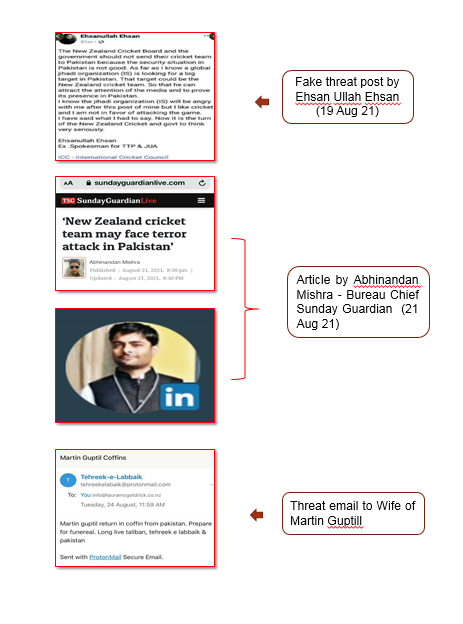
Fawad spoke about a fake social media post that was shared with former Tehreek-e-Taliban Pakistan (TTP) commander Ehsanullah Ehsan’s name in August, adding that the post had warned the New Zealand cricket team against touring Pakistan.
“The post stated that New Zealand cricket team should not go to Pakistan as Daesh would attack it,” revealed the information minister.
Chaudhry said that an article was published in The Sunday Guardian two days later, on August 21, by the paper’s bureau chief Abhinandan Mishra, who wrote the same thing: that the New Zealand cricket team could get attacked in Pakistan.
“The article published in The Sunday Guardian centred around Ehsanullah Ehsan’s post,” he said. “Indian journalist Abhinandan Mishra has close relations with former Afghan vice-president Amrullah Saleh,” he added.
The information minister revealed that five days later, on August 24, a threatening e-mail was sent to New Zealand batsman Martin Guptill’s wife from an ID using the Tehreek-e-Labbaik alias. In the e-mail, Fawad Chaudhry revealed that a death threat was issued to – New Zealand batsman.
“The e-mail said that Guptill will be killed while on tour in Pakistan,” he said. “After we investigated the ID, it was found that it was created on August 24, 2021 at 01:05am while the e-mail was sent at 11:59am on August 25,” he disclosed.
He said the e-mail was sent using ProtonMail, adding that those who knew about the service were aware that it is a secure e-mail service. He said Pakistan had asked Interpol to assist it further in probing the e-mail and the perpetrator behind it.
He said that despite “all these threats”, the Black Caps did not cancel their tour and arrived in Pakistan.
Chaudhry said that a chartered flight had brought the New Zealand team on September 11.
“A detailed programme containing their protocols and security was issued by the interior ministry, which included the squad being accompanied by two helicopters,” shared the information minister.
Chaudhry said that the New Zealand squad, on September 13, travelled from their hotel to the Rawalpindi cricket stadium along with the Pakistani players, where they held a “full practice session”.
“I would just like to remind you that both Pakistan and New Zealand’s security agencies had probed and arrived at the conclusion that the threats issued on August 19, 21 and 24 were all fake,” he noted.
He said the team again travelled to the same stadium on September 14 and held another training session there, with the same security protocols in place.
Meanwhile, Governor Punjab Chaudhry Sarwar was asked how he feels about England and New Zealand’s tour abandonment, he said that it is not abig deal. Many businessman cry when everything is closed because of matches. So, there is no need to cry over it.
Governor Punjab Chaudhary Sarwar on English team cancelling tour of Pakistan – several members of the current set up were given posts in the hope they will bring investment of tent of billions and glory to Pakistan. pic.twitter.com/mrD0PzxFo4
Information Minister Fawad Chaudhry took to Twitter and said that the government will consult lawyers regarding legal action that can be taken against the New Zealand and England cricket boards for abandoning Pakistan cricket series.
“PTV has incurred huge financial loss due to the cancellation of New Zealand and England cricket series. [We] will consult lawyers about legal action against the two boards. A specific foreign lobby is busy [in activities] against Pakistan but those wishing to make us bend will never be successful,” tweeted Fawad.
نیوزی لینڈ اور انگلینڈ کےدوروں کی منسوخی سے PTV کو کروڑوں روپے کا نقصان ہوا دونوں بورڈز کے خلاف قانونی کاروائ کیلئے وکلاء سےمشورہ کریںنگے، پاکستان کیخلاف ایک مخصوص بین القوامی لابی مصروف عمل ہے لیکن ہمیں جھکانے کی خواہش رکھنےوالے کبھی کامیاب نہیں ہوں گے یہ غلط فہمی جلد دور کر لیں
The England and Wales Cricket Board (ECB) on Monday announced that it has reluctantly decided to withdraw both men’s and women’s teams from their tour to Pakistan. Chairman Pakistan Cricket Board (PCB) Ramiz Raja tweeted that he was “disappointed with England, pulling out of their commitment & failing a member of their Cricket fraternity when it needed it most”.
“The ECB Board convened this weekend to discuss these extra England Women’s and Men’s games in Pakistan and we can confirm that the Board has reluctantly decided to withdraw both teams from the October trip,” an ECB statement read.