Tag: FBR

  • FBR exceeds revenue target by Rs63 billion for first three months of current fiscal year 

    FBR exceeds revenue target by Rs63 billion for first three months of current fiscal year 

    In the initial quarter of the ongoing fiscal year, the Federal Board of Revenue (FBR) successfully amassed a total of Rs2,041 billion, significantly surpassing the stipulated target of Rs1,978 billion by an impressive margin of Rs63 billion. 

    Furthermore, the FBR exhibited commendable dedication and diligence in pursuit of its revenue goals for the month of September 2023. Despite setting a target of Rs794 billion, the FBR managed to accumulate a noteworthy sum of Rs834 billion, as opposed to the Rs688 billion collected during the corresponding period in 2022. 

    Additionally, the FBR issued refunds totaling Rs37 billion, a notable increase compared to the Rs18 billion issued in September 2022. 

    Nonetheless, it is important to note a considerable reduction in import activities during September 2023, with taxes collected at the import stage amounting to Rs254 billion, down from the previous month’s figure of Rs299 billion. According to ARY News, this deficit of Rs45 billion was effectively compensated for through the collection of domestic taxes, particularly direct taxes. 

  • No extension for tax return deadline, only commissioner-requested extensions accepted

    The Federal Board of Revenue (FBR) has officially announced that the deadline for income tax return submissions remains unchanged, concluding on September 30.

    However, individuals may request an extension of up to 15 days by submitting an application to their respective commissioner.

    FBR officials report that over 1.7 million tax returns have already been filed, with expectations of the total reaching over Rs2 million by the September 30 deadline.

    More to follow..

  • FBR misses July 2023 revenue target by Rs2 billion, collecting Rs532 billion in taxes

    FBR misses July 2023 revenue target by Rs2 billion, collecting Rs532 billion in taxes

    The Federal Board of Revenue (FBR) has announced that the tax revenues collected for the month of July 2023 amounted to Rs532 billion, slightly falling short by Rs2 billion of the target set for this period.

    This figure reflects a noteworthy increase of 15 per cent year-on-year, compared to the Rs462 billion collected in July 2022.

    However, when examining the data on a monthly basis, there was a significant decline of 43.52 per cent as the tax revenue for July 2023 dropped compared to the Rs942 billion collected in the previous month.

    Looking ahead, the government has set a revenue collection target of Rs9.415 trillion for the fiscal year 2023-2024.

     It is worth recalling that in the previous fiscal year 2022-2023, the FBR failed to meet its annual budgetary collection target by approximately Rs522 billion, as it collected Rs7.118 trillion by June 27, 2023, in contrast to the projected amount of Rs7.64 trillion for the entire fiscal year.

  • FBR imposes 400% tax increase on payments to non-residents via debit and credit cards

    The Federal Board of Revenue (FBR) has taken a significant step to discourage the outflow of foreign exchange reserves by raising the withholding tax (WHT) on payments to non-resident individuals through debit and credit cards. The move aims to curtail the substantial impact of such payments on the country’s foreign exchange reserves.

    The FBR recently issued Circular Number 2 of 2023, which outlines the amendments to the Finance Act 2023. As per the circular, the Finance Act 2022 had introduced section 236Y, subjecting payments to non-residents through debit/credit cards to a 1 per cent withholding tax rate for Active Taxpayer List (ATL) persons and 2 per cent for Non-ATL persons.

    However, considering the considerable foreign exchange outflows resulting from these transactions, the FBR has implemented a drastic increase in withholding tax rates through the Finance Act 2023. According to The News, for ATL persons, the withholding tax rate has been elevated from 1 per cent to 5 per cent, and for Non-ATL persons, it has been raised from 2 per cent to 10 per cent. This means a fourfold increase in tax rates for both categories of taxpayers as well as non-filers.

    According to estimates shared by the State Bank of Pakistan (SBP) with parliamentarians before the 2023-24 budget, monthly payments made through credit cards or debit cards amounted to approximately $70 to $100 million, resulting in an annual outflow of around $1 billion.

    In line with the Finance Bill, the FBR has been granted powers under Section 236Y to levy advance tax on individuals remitting amounts abroad through credit, debit, or prepaid cards. As per the Finance Bill 2022, the proposed advance tax rate on such remittances was set at 1 per cent of the gross amount remitted abroad.

    The implementation of the increased withholding tax is expected to have a considerable impact on curbing unnecessary foreign exchange outflows and strengthening the country’s forex reserves. It also serves as a measure to encourage individuals to transact responsibly and ensure the stability of the country’s economic landscape.

    As the FBR takes these steps to address forex challenges, stakeholders and taxpayers await the outcomes and potential adjustments in the overall economic landscape. The move also highlights the government’s efforts to strike a balance between promoting foreign investments and managing capital outflows to ensure sustainable economic growth in the country.

  • FBR freezes PIA’s bank accounts for not paying Rs2.8 billion in taxes

    FBR freezes PIA’s bank accounts for not paying Rs2.8 billion in taxes

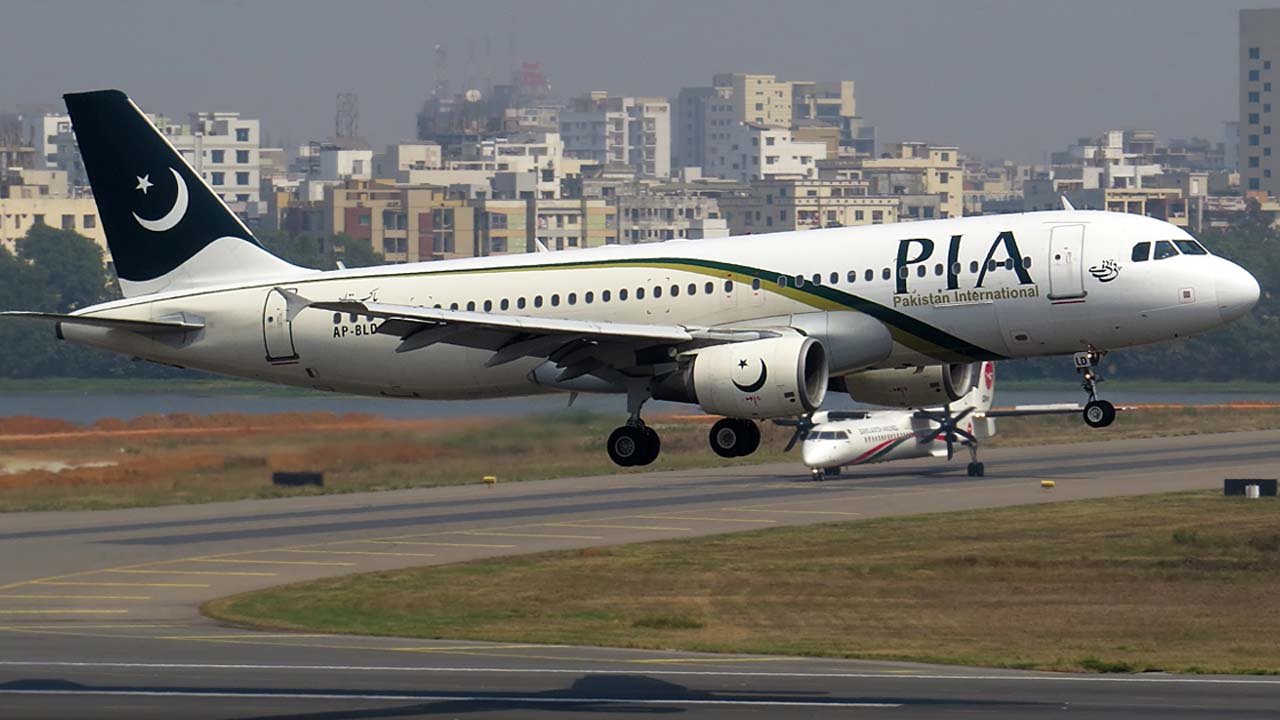
    Pakistan International Airlines (PIA), the national flag carrier, has found itself embroiled in a tax dispute as the Federal Board of Revenue (FBR) took the drastic step of freezing the airline’s bank accounts. This move comes at a critical time when the government has shifted the burden of revenue generation onto the general public, leading to growing concerns about the fairness of the taxation system.

    According to the FBR, PIA owes approximately Rs2.8 billion in taxes. However, the airline disputes this figure, claiming that the amount owed stands around Rs1.3 billion. A PIA spokesperson confirmed the ongoing communication between the airline’s management and the FBR, expressing hope that the bank accounts would be unblocked in the near future.

    Despite the harsh measure taken by the FBR, the PIA spokesperson reassured the public that the airline’s flight operations and other activities were continuing to function smoothly.

    The situation with PIA not paying taxes raises questions about the government’s tax collection policies. A recent report from the Finance Division revealed that government expenditure was on the rise in FY23, largely due to increased revenue collection through non-tax measures and indirect taxes. This indicates a failure to effectively broaden the tax base and implement direct taxation for various sectors.

    Critics argue that the government’s approach seems to focus on imposing indirect taxes on the masses, while offering some protection to the wealthier classes, even amid the current financial crunch. The freezing of PIA’s bank accounts further reinforces this perception, leaving the public questioning the fairness of the taxation system.

    Meanwhile, the report also highlighted that the government’s interest rate hikes policy is facing opposition, particularly from the business community. The State Bank of Pakistan has been unwilling to reverse the rate hikes, despite continuous protests and grave consequences faced by the public.

    As the PIA tax dispute continues, the government is under pressure to address the broader issues surrounding taxation and revenue generation to create a more equitable and sustainable financial framework.

  • FBR hikes motor vehicle tax by 200% for non-filers

    FBR hikes motor vehicle tax by 200% for non-filers

    The Federal Board of Revenue (FBR) has implemented significant changes to the tax structure for motor vehicles in an effort to boost government revenue and encourage tax compliance. The new regulations apply to both Active Taxpayers List (ATL) filers and non-filers.

    For individuals not on the ATL, the tax rates on motor vehicles have been increased by a substantial 200 per cent. This means that non-filers will now be subject to fixed tax rates of 18 per cent, 24 per cent, and 30 per cent, based on the engine capacity of their vehicles, specifically 2001cc to 2500cc, 2501cc to 3000cc, and above 3000cc, respectively.

    On the other hand, ATL filers will experience a different taxation structure. Instead of fixed tax amounts, they will be required to pay tax at a rate of 6 per cent, 8 per cent, and 10 per cent, depending on the engine capacity of their motor vehicles, namely 2001cc to 2500cc, 2501cc to 3000cc, and above 3000cc, respectively.

    In cases where the engine capacity is not applicable, and the value of the vehicle exceeds Rs5,000,000, the tax rate will be 3 per cent of the import value (including customs duty, sales tax, and federal excise duty for imported vehicles, and invoice value for locally manufactured or assembled vehicles).

    It is worth noting that certain exemptions have been made. Pakistan’s government agencies and foreign diplomats will not be subject to these revised tax rates.

    Furthermore, the circular introduced tax implications for bank withdrawals based on the withdrawn amount. Non-ATL filers will be taxed Rs303 for withdrawals of Rs50,500 and taxed Rs450 for withdrawals ranging from Rs55,000 to Rs75,000.

    Additionally, to curb unnecessary foreign exchange outflows via credit/debit card transactions, the withholding tax rates for ATL persons have been increased from 1 per cent to 5 per cent, while non-ATL persons will face a higher rate of 10 per cent, up from the previous 2 per cent.

    These adjustments in the tax policy aim to strengthen the country’s revenue generation while encouraging citizens to become active taxpayers.

  • FBR to increase property valuation rates by 13-15% in accordance with World Bank loan conditions

    FBR to increase property valuation rates by 13-15% in accordance with World Bank loan conditions

    In accordance with the loan conditions set by the World Bank, the Federal Board of Revenue (FBR) has made the decision to increase property valuation rates in various urban centers across the country. This increase will range from 13 per cent to 15 per cent on average.

    As part of this ongoing exercise, the FBR has also expanded the number of cities covered from 42 to 51. The revised property valuation rates will be officially announced for these cities.

    High-ranking sources within the FBR have confirmed that consultations with provincial authorities are underway to determine the adjusted property valuation rates, which are scheduled to take effect from August 1, 2023.

    Presently, the FBR’s property valuation rates are applicable in over 40 cities and towns, including Abbottabad, Attock, Bahawalnagar, Bahawalpur, Chakwal, Dera Ismail Khan, Dera Ghazi Khan, Faisalabad, Ghotki, Gujranwala, Gujrat, Gwadar, Hafizabad, Haripur, Hyderabad, Islamabad, Jhang, Jhelum, Karachi, Kasur, Khushab, Lahore, Larkana, Lasbela, Lodhran, Mandi Bahauddin, Mansehra, Mardan, Mirpurkhas, Multan, Nankana Sahib, Narowal, Peshawar, Quetta, Rahimyar Khan, Rawalpindi, Sahiwal, Sargodha, Sheikhupura, Sialkot, Sukkur, and Toba Tek Singh.

    Under the revised valuation tables, all of these cities will experience an increase of 13 per cent to 15 per cent. Additionally, starting from August 1, 2023, nine more cities and towns will be added to the list of covered areas.

    The Punjab Board of Revenue recently communicated to all deputy commissioners and district collectors, informing them of a meeting held under the chairmanship of a senior member of the Board of Revenue, Punjab. The purpose of the meeting was to discuss the progress in preparing the DC Valuation Tables in consultation with FBR representatives.

    During the meeting, the senior member requested that instructions be issued to all Punjab district collectors regarding the preparation of valuation tables for the fiscal year 2023-24.

    To ensure consistency and alignment between the DC valuation tables and the FBR valuation tables, district collectors have been advised to include FBR representatives as members of the committee, as previously stipulated in the Punjab Stamp (Valuation Tables in respect of Immovable Property) Rules of 1999.

    It is recommended that the specified timelines for completing the valuation tables be adhered to. Furthermore, the valuation tables should include the name of the housing society or scheme, as well as the Khasra numbers corresponding to the developed housing society or scheme.

    In determining the rates, consideration should also be given to the brochure value advertised by the housing societies or schemes. This task should be given top priority, as per the order.

    The FBR’s higher authorities are currently reviewing the work conducted by field formations in consultation with the respective provincial authorities.

    According to Geo, the upcoming exercise will result in an average increase of 15 per cent in the valuation tables, effective from August 1, 2023. The aim is to establish the updating of valuation tables as an annual practice, as there is still a disparity between the FBR’s notified rates and the current market rates.

    The revision of property valuation tables is a condition attached to the $400 million World Bank loan known as the ‘Pakistan Raises Revenues (PRR) and RISE-II program’. The adjusted valuation rates will contribute to increased tax collection from immovable properties. However, it is important to note that the FBR’s notified rates still remain lower than the prevailing fair market value.

  • FBR faces Rs75 billion shortfall in annual tax collection target

    FBR faces Rs75 billion shortfall in annual tax collection target

    The Federal Board of Revenue (FBR) is currently confronted with a shortfall of Rs75 billion in attaining the revised annual tax collection target of Rs7,200 billion for the fiscal year.

    Despite collecting Rs7,125 billion, which falls short of the revised target, the FBR faces a net revenue shortfall of Rs75 billion for the fiscal year 2022-2023.

    Originally, the FBR’s annual tax collection target was established at Rs7,640 billion for the outgoing fiscal year, subsequent to the unveiling of the mini-budget in February 2023.

    To generate additional revenue, the government implemented various measures, including an increase in the Goods and Services Tax (GST) rate from 17 per cent to 18 per cent, the application of a higher GST rate of 25 per cent on luxury goods, and a 154 per cent rise in the Federal Excise Duty (FED) on cigarettes.

    However, over the past four months, the FBR failed to generate the anticipated additional revenue, leading to a downward revision of the revenue collection target from Rs7,640 billion to Rs7,200 billion by the end of June 2023.

    Notably, Minister for Finance and Revenues, Ishaq Dar, took to Twitter to highlight the achievement of the highest-ever tax collection for the outgoing fiscal year.

    He stated, FBR has collected Rs7,000 billion in taxes for the first time in the country’s history as of June 26, 2023, and expressed optimism that the revenue collection would further increase by June 30, 2023.

    It is expected that the FBR will issue a formal statement regarding the revenue collection in due course.

  • Budget 2023-24: FBR considers decreasing duty on mobile phones

    Budget 2023-24: FBR considers decreasing duty on mobile phones

    The Federal Board of Revenue (FBR) is considering options to decrease the duty on mobile phones in the forthcoming federal budget for the fiscal year 2023-24. The budget is expected to be disclosed on June 9. The FBR is taking into account the suggestions put forward by mobile phone traders.

    Previously, the government was obligated to raise the duty on mobile phones by 100 per cent to 150 per cent, resulting in a deposit of only Rs5 billion to Rs10 billion in the national exchequer, instead of the anticipated Rs85 billion.

    According to The News, the number of mobile phone users in Pakistan has surpassed 186.9 million. To address the financial crisis of the current fiscal year, the new budget is contemplating a significant reduction in the rates of duties on cellular phones. Currently, the duties on small and big mobile phones stand at approximately 100 per cent to 150 per cent.

    The mobile industry is teetering on the verge of collapse due to the increased taxes. This not only affects traders but also poses difficulties for millions of people who rely on earning a livelihood through this sector.

    It has been reported that a delegation from the Mobile Phones Traders Association has submitted recommendations to Finance Minister Ishaq Dar and other senior officials. The delegation has assured that efforts will be made to incorporate these recommendations into the budget. The proposals and recommendations are currently under review for potential inclusion in the new budget.

    It has come to light that a 75 per cent duty is imposed on cellular phones in Pakistan, in contrast to other countries in the region such as Singapore, Bangladesh, and Turkey, where the duty is not as high. Consequently, people have been using smartphones without paying duties in collusion with the FBR.

    The additional 100 per cent to 150 per cent duty on cell phones has made them unaffordable for the poor, laborers, daily wage earners, students, professionals, the legal community, and civil society.

    Munir Beg Mirza, the General Secretary of the All Pakistan Mobile Phones Traders Association, stated that the ban on importing used mobile phones has led to an increase in smuggling to favor a few companies. Additionally, people are illegally using smartphones without paying substantial taxes, thus causing a loss to the national treasury.

    He further noted that if an appropriate duty is imposed in the new financial year, not only will every consumer pay tax, but the government will also receive Rs100 billion instead of Rs5 billion in revenue from phones.