Tag: FBR

  • Shaukat Tarin presents the Pakistan Economic Survey 2020-21

    Shaukat Tarin presents the Pakistan Economic Survey 2020-21

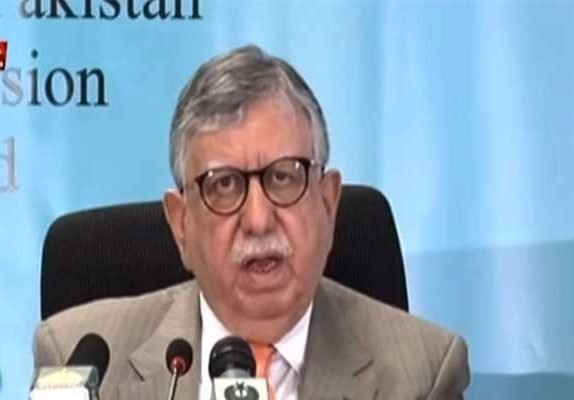
    Finance Minister Shaukat Tarin presented the Pakistan Economic Survey 2020-21 at a press conference in Islamabad on Thursday. However, the document did not have the latest figures on poverty and unemployment.

    Tarin revealed that the industrial and services sectors had helped the country post-Gross Domestic Product growth of 3.94 per cent in the first nine months of the fiscal year [FY](July to March), significantly higher than the target of 2.1 per cent.

    “The agriculture and manufacturing sectors helped the economy grow to 4.4%, laying stress on the need for sustainable growth in Pakistan in the years to come,” added Tarin.

    Coronavirus Pandemic

    The minister opened his press briefing by speaking highly of Prime Minister Imran Khan’s policies in combating the coronavirus pandemic.

    “The government itself had set [GDP] growth will be 2.1pc and the IMF predicted even lower. But the decisions by this government such as incentivising manufacturing and textiles, construction, and interventions in agriculture have helped the economy recover,” said Tarin.

    He said many people lost their jobs when the pandemic hit Pakistan, however, due to PM’s visionary policy of not imposing a complete lockdown across the country, millions of people who were unemployed were hired again. 

    “The economy is recovering,” he said. 

    Remittances

    Tarin said Pakistan’s remittances had broken records, adding that they had crossed $26bn. He said that lately imports, especially food in the form of wheat and sugar, were increasing as Pakistan’s economy was growing at the same time. 

    “We were net exporter of food but now, we have become a net importer,” he said. “Our exports registered a growth but our remittances increased manifold,” he added. 

    Ehsaas Programme

    Tarin spoke highly of the Ehsaas programme, adding that the World Bank had described it as “one of the best and the largest” poverty alleviation initiatives across the globe. 

    “Full credit goes to Sania Nishtar,” he said, adding that handing out cash to 15 million people was not a small achievement.

    Growth rate

    Tarin said he had told the prime minister it was time to focus on sustainable growth “until we go to 5-8pc GDP growth”.

    “We will do interventions and take care of the poor. The poor man has been crushed in this stabilisation phase because the dreams we have shown them have been of a trickledown economy. And this can only happen when growth is sustainable and continuous for 20-30 years,” he said.

    “Countries which had sustainable growth, they grew continuously for 20-30 years. What have we done? Every time we grow by borrowing money, which is credit-based growth.”

    Current Account

    According to the survey, during FY 2021, while the world was reeling from the economic impact of the pandemic, Pakistan’s “external sector appeared as a key buffer for resilience.”

     “The main driver of improvement in current account balance was the robust growth in remittances,” it stated.

    Trade Deficit

    “During July-March FY 2021, export of goods grew by 2.3 percent to $18.7 bn as compared to US$ 18.3 bn the same period last year. Import of goods grew by 9.4pc to $37.4 bn as compared to US$ 34.2 bn last year. Consequently, the trade deficit increased by 17.7per cent to $18.7bn as compared to $15.9bn last year,” the survey said.

    Inflation

    The finance minister said the government wanted to control inflation “but prices are still high and affecting the common man”.

    “So the way to solve this is by increasing production and that is why we have focused on agriculture in this budget,” Tarin said.

    Federal Board of Revenue (FBR)

    Speaking about the FBR, Tarin said he would end the practice of people being harassed by the bureau. “FBR will not audit [businesses or persons] but a third-party audit will be conducted,” he said. 

    International Monetary Fund (IMF)

    Tarin said Pakistan’s negotiations with the IMF were ongoing, adding that the international money lender had asked the government to hike tariffs and increase taxes. 

    The finance minister said Pakistan and the IMF want the same thing; sustainable growth, adding that the country cannot afford to increase taxes or hike tariffs so that the poor and the salaried class do not feel additional burden of inflation. 

    “This is a red line for the prime minister,” he said. “We will not further burden the poor,” he added. 

    Energy Sector

    Tarin said Pakistan’s economy was burdened due to the overcapacity in the power sector, saying that “it was a very big challenge and a black hole” for Pakistan. 

    Privitisation

     Tarin said it was fair to ask how he can privatise state-owned enterprises when all others, before him, promised to do the same but failed to. 

    “Nawaz Sharif used to shout the same slogan during the first time [when he was prime minister] and then for a second time [when he again became the prime minister] and then a third, but nothing happened,” he said. 
  • 12 luxury vehicles registered under the name of labourer, gatekeeper

    12 luxury vehicles registered under the name of labourer, gatekeeper

    The Anti-Benami Zone of the Federal Board of Revenue (FBR) caught 12 luxury vehicles in Karachi worth millions of rupees under the name of a gatekeeper and a labourer.

    Reportedly, a Land Rover and a BMW are registered under the name of Zahid Iqbal from Faisalabad. Moreover, around ten vehicles are registered under the name of a gatekeeper.

    The officials of the Anti-Benami Zone revealed that the name of a car dealer had also been used for the Benami vehicles, and the purchase of the vehicles had been conducted under the Benami Transaction Act.

    Zahid Iqbal was clueless about ownership of the cars when he was asked by the authorities to provide necessary documents to the revenue board.

    Meanwhile, the Anti-Benami Zone has initiated an investigation of the matter, and notices have been issued to the suspected labourer, gatekeeper, and car dealer.

    What is benami transaction?

    1) When a property is transferred to, or is held by, a person but it has been paid for by another person – a trustee and wife, child, brother or sister

    2) A transaction or arrangement of a property made in a fictitious name, or a transaction or arrangement of a property where the owner is not aware of, or denies knowledge of, such ownership

    3) A transaction or arrangement of a property where the person providing the consideration is not traceable or is fictitious.

    Types of benami properties

    Such properties can be plots, houses, shopping plazas, shops, housing schemes, bank accounts, vehicles, business shares, jewellery, foreign currency, legal documents and intangible properties, having financial value.

  • Atif Aslam is on FBR’s radar again

    Atif Aslam has been issued a notice by the Federal Board of Revenue (FBR) yet again for non-payment of advance tax worth 0.60 million.

    According to reports, the deadline for filing the advance tax for the third quarter was March 15 and the singer failed to clear his dues by then.

    Earlier in January 2021, the FBR had reportedly sent Aslam a tax notice worth 58 million after the audit of his income for the year 2018. The award-winning singer was given one month’s notice to pay the tax.

    This is not the first time a member of the entertainment industry has come on FBR’s radar, few months ago the FBR had sent a notice to Rahat Fateh Ali Khan, seeking an explanation for his alleged bank accounts.

    In 2019, the FBR also launched an initiative to collect tax from the citizens and requested showbiz and media personalities to declare their assets, warning them that if they don’t they will also face disciplinary action.

    Meanwhile, Atif has not yet commented on the matter.

    Aslam is one of Pakistan’s biggest stars. Besides having millions of fans and followers across the globe, the singer also made it to the inaugural Forbes Asia’s 100 Digital Stars list, which highlights celebrities from across the Asia Pacific region who have taken the digital world by storm.

  • Rs1,000 surcharges for late tax filers

    Rs1,000 surcharges for late tax filers

    The spokesperson of the Federal Board of Revenue (FBR) has clarified that a fine of Rs 1,000 will be charged for late tax filers, not Rs 10,000. The clarification came due to the rumours about high fine charges imposed by FBR on filing late income tax returns.

    This mistake occurred because of an error in a press release issued on February 24th. According to the clarification, Rs 1,000 will be charged from individuals (salaried and non-salaried) on late filing of income tax returns for the tax year 2020 for inclusion in the Active Taxpayers List (ATL).

    Companies will pay a surcharge of Rs 20,000 and an association of person Rs 10,000 for inclusion in ATL. Association of persons is the relation between persons, who have agreed to share the profits of a business carried amongst all stakeholders.

    It is noteworthy that the FBR surpassed its collection target by Rs 13 billion to Rs 2.911 trillion in the first eight months of the current fiscal year, as shown in the provisional data released by the tax authorities on Friday.

    It was the second consecutive month that the tax collection surpassed its projection. The revenue collection increased by nine per cent during July-February when compared with Rs 2.681 trillion collected in the same period last year.

    An official of FBR said that the revenue collection was achieved two days ahead of the end of the current month.

  • Pakistan’s e-commerce market size increases to Rs96bn

    Pakistan’s e-commerce market size increases to Rs96bn

    Pakistan’s e-commerce marketing size has increased to Rs96 billion in the first quarter of the financial year 2021 as compared to Rs71 billion in the first quarter of the financial year 2020.

    This was informed during the fourth meeting of the National e-Commerce Council (NeCC), chaired by Abdul Razak Dawood, advisor to Prime Minister (PM) on commerce.

    NeCC is a body of representatives from the public and private sector, established under the National e-Commerce Policy approved by the cabinet in October 2019.

    According to officials, the NeCC discussed operationalisation of cross border e-commerce procedures, incentives to promote e-commerce, ways to introduce international payment services.

    Furthermore, deliberations on the mercantile stock exchange, digital on-boarding services, reports of the consultative committee on Women Economic Empowerment (WEE), e-commerce business facilitation portal, consumer protection councils, availability of broadband to remote areas, Trade Development Authority of Pakistan (TDAP) a digital transformation process, and collaboration with Small and Medium Enterprises Development Authority (SMEDA) on e-commerce related matters were also discussed.

    The Federal Board of Revenue (FBR) informed the meeting on the legal framework updates, including e-commerce rules regarding the mechanism of imports goods clearance, and return of goods policy.

    The State Bank of Pakistan (SBP) also gave a detailed presentation on efforts to promote cross-border e-commerce.

    The National Institutional Facilitation Technologies (NIFT) informed the meeting that they are developing a payment solution for cross border/international payments in collaboration with the SBP through which people outside of Pakistan will be able to pay through Paypal, Google Pay and Apple Pay. Payments within Pakistan will be processed through the help.

    NIFT said that the payment system was to become functional by the end of 2020 but the diversion of efforts towards COVID affected the plan badly.

    Meanwhile, the sub-committee on financial inclusion and digitization shared its progress of conducting three webinars for freelancers, mobile wallets, account-based solutions and card-based payments.

  • FBR goes after NAB for not paying Rs69 crores in taxes

    FBR goes after NAB for not paying Rs69 crores in taxes

    The Federal Board of Revenue (FBR) has served a notice to the National Accountability Bureau (NAB) for costing the country a whopping Rs690 million (Rs69 crores).

    As per the details, NAB did not deduct 15% withholding tax while paying damages worth over Rs4 billion (Rs4 Arab) in the Broadsheet case.

    The News quoted sources as saying that a notice on behalf of the International Tax Department of FBR under Section 152 of FBR Ordinance was sent to NAB to pay the said amount.

    The notice said it had come to the knowledge of tax department that NAB had paid damages to Broadsheet LLC — the United Kingdom (UK) based company roped in during military ruler Pervez Musharraf’s regime to track down foreign assets purchased by Pakistani politicians “through looted money”.

    “NAB had to deduct 15% withholding tax and deposit it to the national exchequer at the time of payment under the Income Tax Ordinance, but it was not followed,” it said.

    The fine was paid to the UK-based firm after NAB ended with it the asset recovery agreement in 2003, pushing Broadsheet as a third party to move the London High Court for damages.

    The UK-based companies claimed that Pakistan owed them money according to the terms agreed upon since the government was taking action to seize assets identified by the firm, including the Avenfiled Apartments of the Sharif family.

    After much drama, an arbitration court of London had imposed a $20 million fine on NAB in the Broadsheet case. However, NAB had to pay an extra $9 million under the head of mark-up due to non-payment on time.

    The court in London had withdrawn over $28 million partially in this regard by freezing accounts of the Pakistan High Commission.

  • FBR seeks explanation from RFAK over alleged bank accounts

    The Federal Board of Revenue (FBR) has sent another notice to Rahat Fateh Ali Khan (RFAK), seeking an explanation for his alleged bank accounts.

    According to reports, the FBR has asked RFAK to submit a reply by January 15. The singer reportedly failed to satisfy the FBR about his alleged bank accounts, after he was served with the initial notice in December 2020.

    The FBR started investigating RFAK’s finances in October last year. Later, in December, the FBR traced the alleged bank accounts and the singer was asked to submit a reply by December 23.

    Meanwhile, the FBR recently also sent a tax notice worth 58 million to Atif Aslam after the audit of his income for the year 2018. According to details, Aslam has been given one month’s notice to pay the tax. If the singer fails to pay the due amount, the revenue board will make the recovery by freezing his bank accounts.

  • FBR reportedly gives Atif Aslam one month to pay Rs 58 million tax

    The Federal Board of Revenue (FBR) has reportedly sent Atif Aslam a tax notice worth 58 million after the audit of his income for the year 2018.

    According to reports, Aslam has been given one month’s notice to pay the tax. If the singer fails to pay the due amount, the revenue board will make the recovery by freezing his bank accounts.

    This is not the first time a member of the entertainment industry has come on FBR’s radar. In October 2020, the FBR launched an inquiry to investigate Rahat Fateh Ali Khan’s sources of income.

    Earlier in 2019, the FBR also launched an initiative to collect tax from the citizens and requested showbiz and media personalities to declare their assets, warning them that if they don’t they will also face disciplinary action.

    Meanwhile, Atif is one of Pakistan’s biggest stars. Earlier, the singer made it to the inaugural Forbes Asia’s 100 Digital Stars list. The list highlights celebrities from across the Asia Pacific region who have taken the digital world by storm, according to a press release.

  • Top economist wants govt to make Maulana Tariq Jamil chief of FBR

    Top economist wants govt to make Maulana Tariq Jamil chief of FBR

    If honesty is the sole criterion for the appointment of the Federal Board of Revenue (FBR) head then the government should request cleric Maulana Tariq Jamil to head the tax watchdog, said top economist Dr Ikramul Haq while criticising the government’s tax policies.

    In an Express News show, the economist said the use of technology and enforcement of laws were important to achieve tax targets.

    “If tax collection can be increased through honesty alone, we should request Maulana Tariq Jamil to head the FBR,” the economist said, alluding to the remarks made by Imran Khan before the 2018 elections that an “honest leadership” could convince people to pay taxes and become a tax-compliant nation.

    He also urged the government to relax the definition of non-resident person to one year to facilitate those who were stuck in the country due to Covid-19.

    Haq was of the view that the government should make a general rule to facilitate the people instead of waiting for them to individually plead their cases regarding overstay due to the pandemic as scores of non-resident persons have accidentally become Pakistani residents.

    According to the economist, the FBR should send tax returns to the people to measure the response. According to the TV show, at least 72 per cent of people didn’t file tax returns: 4.7million out of the total 6.5m.

  • FBR sees rise in income tax collection

    FBR sees rise in income tax collection

    The Federal Board of Revenue (FBR) has received a record number of returns this year, along with the highest ever amount of income tax at the time of filing.

    According to a statement issued by the FBR on Wednesday, “A total of nearly 1.8 million returns have been filed together with an amount of about Rs22 billion. Last year, around this time, 1.73 million returns were filed while about Rs13.5 billion were deposited as income tax.”

    FBR said it had opted not to extend the last date to file income tax returns beyond December 8, 2020 to restore the credibility and predictability of the final date and promote tax discipline, which worked. However, to ensure that no hardship was faced by taxpayers, a number of special measures were adopted.

    These included liberal acceptance of requests for extension in filing date as available under the law; provision to file requests manually besides the online facility; enabling tax practitioners/advisors to file a single request for multiple clients; and enabling the chief commissioners to set up special desks for collection of manual request and sorting their jurisdiction at their level.

    The above measures have encouraged a large number of taxpayers to file extension requests, the statement read. It is estimated that at least 300,000 taxpayers have made use of this facility, thus taking the number of potential returns to 2.1 million, which is 21pc higher compared to last year until this date.

    It is further clarified that the process of filing is continuing unabated. A comparison with the returns of last year at the close of the deadline, which was 30 June 2020, would be meaningful when the number of additional returns to be filed until 30 June 2021 is available.

    The FBR commended the determination of taxpayers, and the support it received from members of tax bars from all over the country, who have made such record setting returns and income tax payments possible. The results establish that the decision not to allow general extension in the last date, would go a long way toward re-establishing much needed trust and credibility of the tax system.