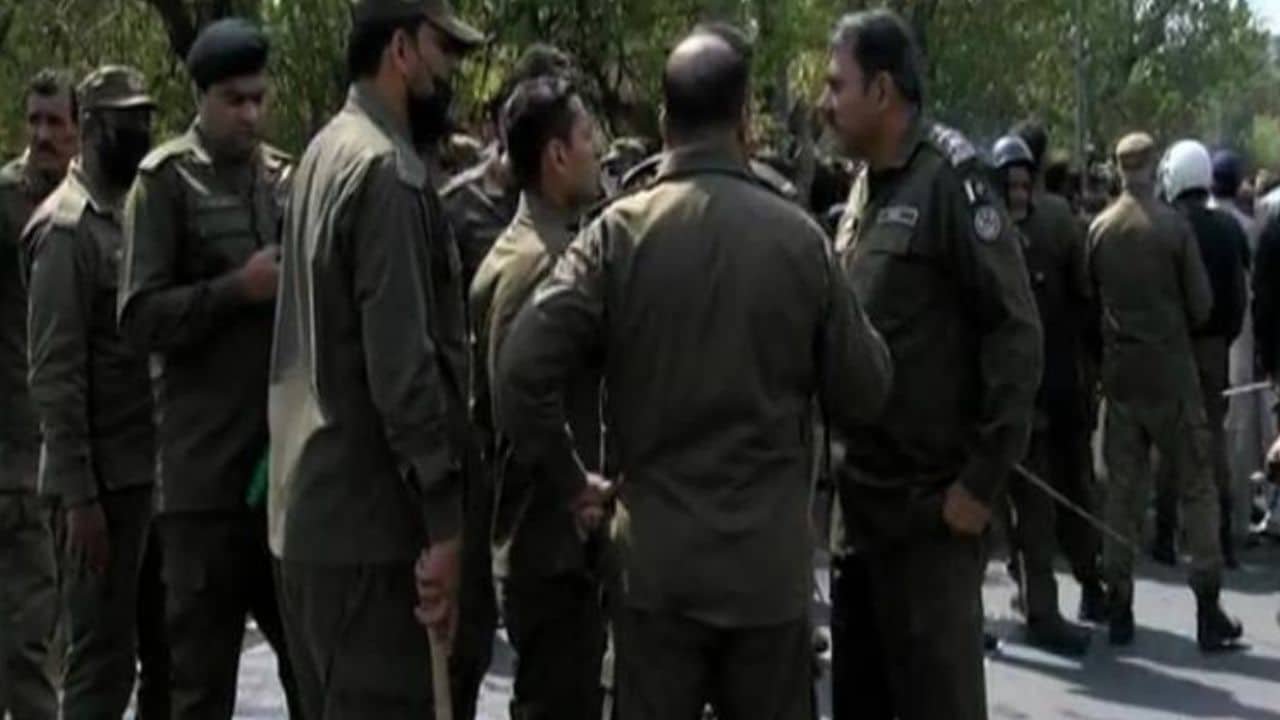
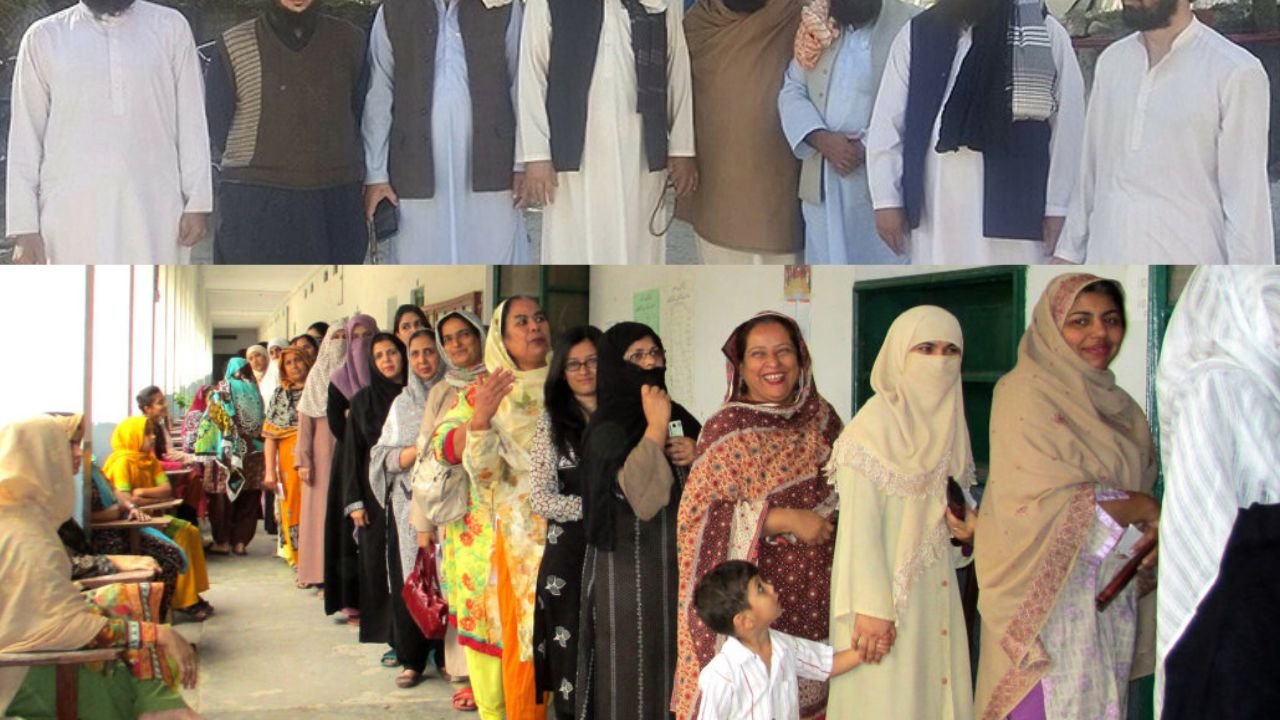
In a controversial move, the Interior Ministry of Pakistan has shut down mobile internet and phones across the country. The move was made minutes before polling stations opened Thursday morning at 8 am.
To find out what voters could do to find out what their polling information is, since they can no longer send a text message to 8300, The Current contacted Caretaker Information Minister Murtaza Solangi.
“A serious voter will know all the details already,” he told us on the phone, using WiFi for the call. “Serious voters find out a day before what their polling information is like I did. I messaged 8300 the night before and wrote all my information.”
When we asked if a voter wasn’t able to before, or wasn’t a ‘serious voter’ but was still a ‘voter’ what can they do? “Well, a voter should know his constituency number. They can go to any polling station in their area and might be able to find it,” he said.
When asked that some people can’t find their polling stations easily, and now that the internet is down, what can they do? He recommended that “for those who want to get to their polling station via Google maps, they should print the map at home and then take it and follow it. I used to do this when I was in America, and it’s very easy to do.”
Solangi also said that people used to vote before mobiles existed and can now as well.
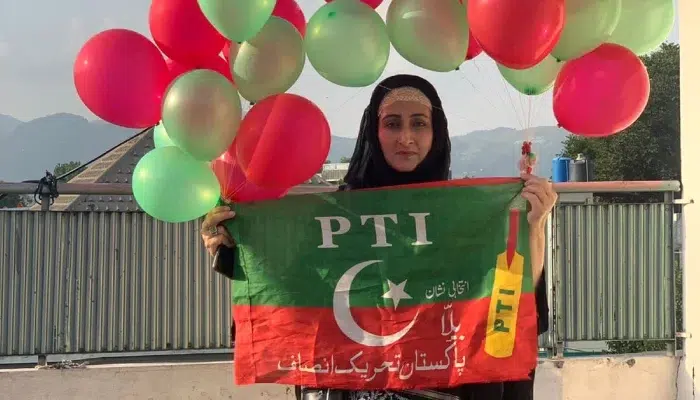
But if a voter has issues finding their information, PTI is offering an alternative. You can send your ID card number to Imran Khan’s Facebook page and they will reply, with your block number, polling station. Even if you are not a PTI voter, you will still be able to get your relevant information.
A review report of a government organization has revealed that in the general elections to be held on February 8, Pakistan Muslim League-Nawaz (PML-N) will emerge as the largest party, followed by the Pakistan Peoples Party (PPP). The third in line is Pakistan Tehreek-e-Insaf (PTI) while other parties will follow.
Geo’s Umar Cheema reported an official who spoke to The News on the condition of anonymity and said that the government body came up with the analysis based on information gathered through interviews with police sources, revenue department, labor unions and professionals in various sectors.
He explained that the review has been carried out at the police station and union council level. The survey has been done scientifically to remove the possibility of wrong estimates, although the popularity rate of PML-N has been lower in the surveys conducted so far. An optimistic estimate has been made as the party has recorded an increase in popularity since the return of Nawaz Sharif, but no one has so far given an estimate of how many seats the party can win.
International media has also presented Nawaz Sharif as the future prime minister, but whether he will be able to get a simple majority or not is not clear. According to this official assessment, the PML-N will bag between 115 and 132 seats in the National Assembly.
The inclusion of reserved seats for women and minorities would mean that the party would have a chance to form a government alone with a simple majority. It can get close seats, which means PML-N can get a complete majority in the provincial assembly.
PML-N can make a clean sweep in Punjab except for a few districts, says the survey.
According to the estimate, PML-N will form a government with a possible two-thirds majority in Punjab, PML-N will succeed in forming coalition governments in Khyber Pakhtunkhwa and Balochistan, while the PPP has the possibility of forming a government only in Sindh.
The review report says that PPP can get 35 to 40 seats at the center while the independent candidates of PTI can get between 23 to 29 seats. MQM may get 12 to 14 seats, JUI six to eight seats, Q-League and Satwat Pakistan Party are expected to get two to three seats in the National Assembly.
After a hectic election campaign, prominent leaders of the Pakistan Muslim League-Nawaz (PML-N) find themselves in an a quandary, as they gear up for the upcoming general elections.
Despite urging voters to support the party’s ‘sher’ electoral symbol, key figures within the PML-N will be unable to cast their votes for the animal on the National Assembly seat. Instead, they might vote for another animal.
Nawaz Sharif, Shehbaz Sharif and Hamza Shehbaz, all integral figures within the PML-N, are registered to vote in NA-128, where the party has entered into a seat adjustment agreement with the Istehkam-e-Pakistan (IPP) party.
Interestingly, in NA-128, the PML-N has decided not to field a candidate for the National Assembly seat, instead throwing their support behind IPP leader Aun Chaudhry, whose symbol is an eagle.
However, despite this alliance, the three PML-N leaders will still exercise their voting rights for PML-N candidate,Umar Sohail in PP-161.
The PML-N’s election strategy spans across the country, with the party contesting 212 NA constituencies on February 8, while leaving 51 NA seats open for rivals or allies.
Notable among their candidates are Nawaz Sharif, who will be contesting in NA-15 (Mansehra) and NA-130 (Lahore), Maryam Nawaz in NA-119 (Lahore), and Hamza Shehbaz in NA-118 (Lahore). Shehbaz Sharif is set to participate in the elections from NA-123 (Lahore) and NA-132(Kasur).
However, there are several constituencies where the PML-N has chosen not to field candidates, including NA-4 (Swat-III), NA-19 (Swabi-I), and NA-117 (Lahore-I), among others, as part of their strategic alliances and considerations for bolstering their position in the province.
The constituencies where the PML-N has not fielded its candidates are: NA-4 (Swat-III), NA-19 (Swabi-I), NA-20 (Swabi-II), NA-21 (Mardan-I), NA-22 (Mardan-III), NA-44 (Dera Ismail Khan-I), NA-45 (Dera Ismail Khan-II), NA-48 (Islamabad-III), NA-54 (Islamabad-III), NA-64 (Gujrat-III), NA-88 (Khushab-II), NA-92 (Bhakkar-II), NA-117 (Lahore-I), NA-128 (Lahore-XII), NA-143 (Sahiwal-III), NA-149 (Multan-II).
Moreover, the candidates are also not contesting on NA-165, NA-185, NA-190 to NA-204, NA-206 to NA-210, NA-212, NA-214, NA-215, NA-217, NA-218, NA-221, NA-223, NA-224, NA-228, NA-239, NA-245, NA-264 and NA-266.
The former ruling party, in its bid to strengthen its position in the province ahead of the upcoming elections, had entered a seat adjustment agreement with Jahangir Tareen’s IPP.
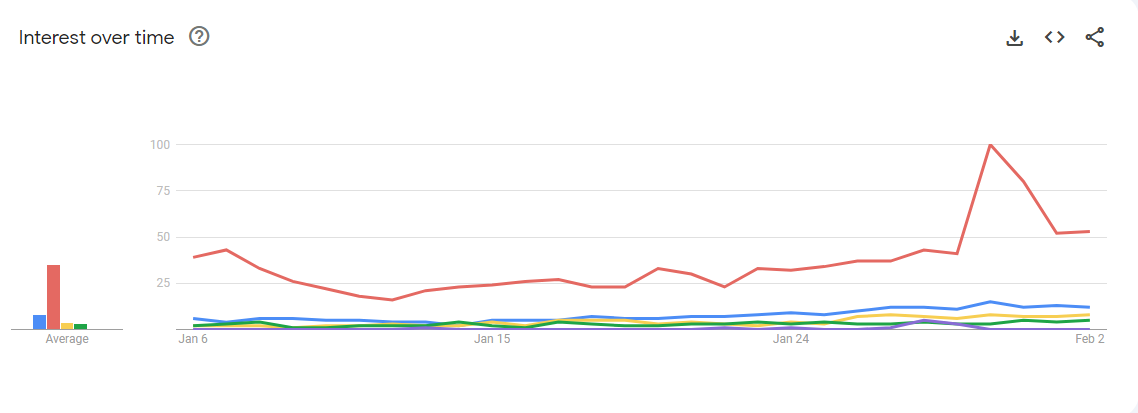
Google Trends offer an insight into the popularity and curiosity political leaders enjoy among the masses. As the elections are drawing near, we took a peak into the data Google Trends have recorded over the last 30 days.
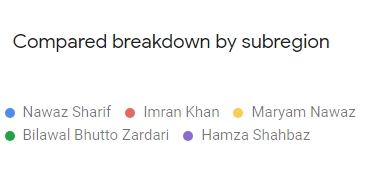
The highest and ever-increasing line graph is Imran Khan’s. The highest peak was shown on January 30 with Khan hitting the record 100 score whereas his contemporaries, Nawaz stood on 15, Maryam Nawaz at eight, Bilawal-Bhutto Zardari at three, and Hamza Shehbaz being the lowest: less than one.
However, it is important to note that Imran’s progressively increasing arc starts dropping successively in the days after Jan 30.
On the other hand, except for Hamza Shehbaz, the other three is slowly on an upward trend.
Breakdown of regions
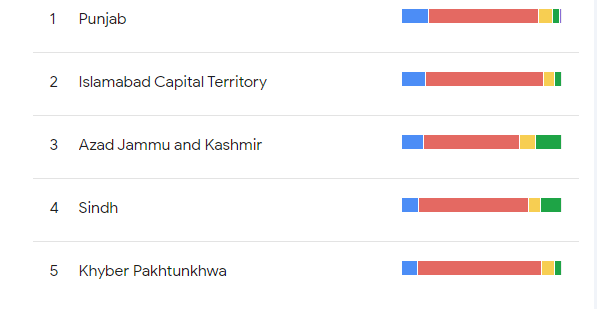
PTI founder and jailed leader Imran Khan is most popular all over Pakistan according to Google Trends.
Punjab
In Punjab, the most popular choices for Chief Ministership, Hamza Shehbaz, and Maryam Nawaz contrary to popular perception, are not being searched so much. After Khan winning with more than 69 percent of searches, Nawaz Sharif is at 17 percent while Maryam is at nine percent. It appears that people in Punjab are comparatively more interested in Bilawal than Hamza who has 1 percent searches from all over the province.
However, it is important to note that out of all the provinces, Punjab has shown more interest in PML-N leader Nawaz Sharif. Sindh has shown the most interest after Punjab, which is 11 percent, 10 percent in Khyber Pakhtunkhwa, nine percent in Balochistan, and seven percent in former FATA.
Sindh
After Imran Khan (69 percent) former Foreign Minister and Chairman of Pakistan People’s Party, Bilawal Bhutto Zardari is unsurprisingly most popular in Sindh with 13 percent of Google searches. Second in line is Punjab and third is Balochistan. After him is Nawaz (11 percent) followed by Maryam (7 percent).
Balochistan
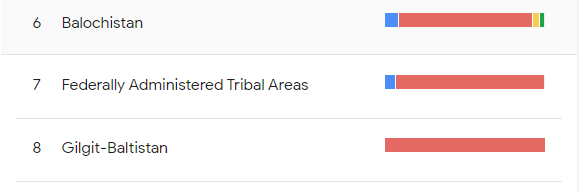
Imran Khan leading the slot here with 84 percent followed by Nawaz (9 percent), Maryam (4 percent), and Biawal Bhutto (3 percent). Hamza does not invoke public curiosity even the slightest.
Gilgit Baltistan
Imran Khan has a 100 percent popularity rate in Gilgit Baltistan, where it seems no other party leader stands a chance, implying that there were minor searches of them in GB.
Former FATA
Interestingly, in the former federally administered tribal areas, only Imran Khan and Nawaz Sharif were searched for, Khan at 93 per cent of searches and Nawaz at seven percent.
Though Google search and Google trends are not the ultimate parameter of a party leader’s popularity, they certainly are proof of what netizens are most interested in and the social media footing of a politician.
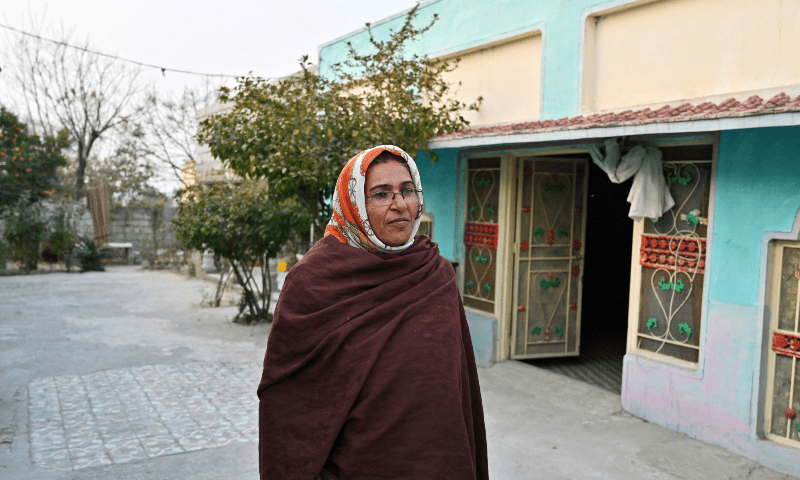
Perched on her traditional charpai bed, Naeem Kausir says she would like to vote in Pakistan’s upcoming election — if only the men in her family would let her.
Like all the women in her town, the 60-year-old former headmistress and her seven daughters — six already university-educated — are forbidden from voting by their male elders.
“Whether by her husband, father, son or brother, a woman is forced. She lacks the autonomy to make decisions independently,” said Kausir, covered in a veil in the courtyard of her home.
“These men lack the courage to grant women their rights,” the widow told AFP.
Although voting is a constitutional right for all adults in Pakistan, some rural areas in the socially conservative country are still ruled by a patriarchal system of male village elders who wield significant influence in their communities.
In the village of Dhurnal in Punjab, spread across crop fields and home to several thousand people, men profess myriad reasons for the ban of more than 50 years.
“Several years ago, during a period of low literacy rates, a council chairman decreed that if men went out to vote, and women followed suit, who would manage the household and childcare responsibilities?” said Malik Muhammad, a member of the village council.
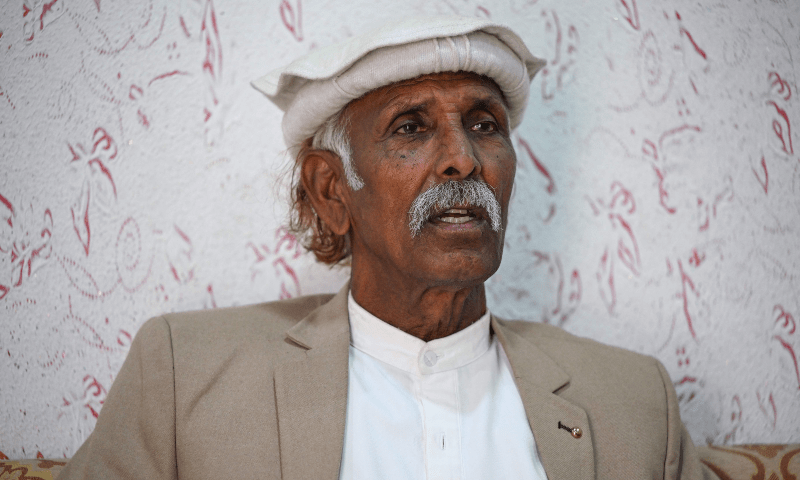
In this photograph taken on January 29, 2024, Malik Muhammad, a member of the village council, speaks during an interview with AFP in Dhurnal of Punjab. — AFP
In this photograph taken on January 29, 2024, Malik Muhammad, a member of the village council, speaks during an interview with AFP in Dhurnal of Punjab. — AFP
“This disruption, just for one vote, was deemed unnecessary,” he concluded.
Muhammad Aslam, a shopkeeper, claims it is to protect women from “local hostilities” about politics, including a distant occasion that few seem to remember in the village when an argument broke out at a polling station.
Others told AFP it was simply down to “tradition”.
The Election Commission of Pakistan (ECP) has stressed that it has the authority to declare the process null and void in any constituency where women are barred from participating.
In reality, progress has been slow outside of cities and in areas that operate under tribal norms, with millions of women still missing from the electoral rolls.
The elders in Dhurnal rely on neighbouring villages to fill a government-imposed quota which maintains that 10 percent of votes cast in every constituency must be by women.
Those who are allowed to vote are often pressured to pick a candidate of a male relative’s choice.
In the mountainous region of Kohistan in Khyber Pakhtunkhwa province home to almost 800,000 people, religious clerics last month decreed it un-Islamic for women to take part in electoral campaigns.
Fatima Butt, a legal expert and a women’s rights activist, said women are allowed to vote in Islam, but that religion is often exploited or misunderstood in Pakistan.
“Regardless of their level of education or financial stability, women in Pakistan can only make decisions with the ‘support’ of the men around them,” she said.
Pakistan famously elected the world’s first Muslim woman leader in 1988 — Benazir Bhutto, who introduced policies that boosted education and access to money for women, and fought against religious extremism after military dictator Zia ul-Haq had introduced a new era of Islamisation that rolled back women’s rights.
However, more than 30 years later, only 355 women are competing for national assembly seats in Thursday’s election, compared to 6,094 men, the election commission has said.
Pakistan reserves 60 of the 342 National Assembly seats for women and 10 for religious minorities in the Muslim-majority country, but political parties rarely allow women to contest outside of this quota.
Those who do stand often do so only with the backing of male relatives who are already established in local politics.
“I have never seen any independent candidates contesting elections on their own,” Zara Butt added.
Forty-year-old Robina Kausir, a healthcare worker, said a growing number of women in Dhurnal want to exercise their right to vote but they fear backlash from the community if they do — particularly the looming threat of divorce, a matter of great shame in Pakistani culture.
In this photograph taken on Jan 29, 2024, Robina Kausir, a healthcare worker, looks on during an interview with AFP in Dhurnal of Punjab. — AFP
She credits part of the shift to access to information as a result of the rising use of smartphones and social media.
“These men instil fear in their women — many threaten their wives,” she told AFP.
Robina, backed by her husband, is one of the few prepared to take the risk.
When cricketing legend Imran Khan swept to power in the 2018 election, Robina arranged for a minibus to take women to the local polling station.
Only a handful joined her, but she still marked it as a success and will do the same on Thursday’s election.
“I was abused but I do not care, I will keep fighting for everyone’s right to vote,” Robina said.
Elections are around the corner and ECP has upgraded its helpline number with details of polling stations one can go to cast his or her vote.
Voters are required to send their CNIC number on 8300. Details of the constituencies, both provincial and central, along with the address of the polling station for the polls on Feburary 8 will be revealed.
Previously, sending CNIC only showed the constituencies and registration numbers but now it shows the assigned polling stations too.
In an unfortunate turn of events, one person was killed and another injured in a clash between the workers of Pakistan Peoples Party (PPP) and Muttahida Qaumi Movement-Pakistan (MQM-P) in Karachi’s Nazimabad area, MQM-P has claimed.
The incident took place in the Nazimabad No 2 area late Sunday as political parties are busy campaigning, holding public gatherings and corner meetings to mobilise their supporters ahead of the February 8 elections, according to police, Geo has reported.
Police said clashes erupted between the workers of the two political parties and unidentified persons also lit two vehicles on fire during the violence. They said the deceased person was identified as 48-year-old Faraz.
A video of the incident also emerged online wherein the political activists can be seen hurling chairs at each other.
Abbasi Shaheed Hospital administration said the deceased man was brought to the hospital already dead and added that he died of a bullet in his head. MQM-Pakistan Rabita Committee member Taha Siddiqui claimed that PPP workers opened fire at their office which resulted in the death of UC-incharge. “The Peoples Party [PPP] cannot occupy the city through terrorism,” he alleged while speaking to the media outside the hospital.
In a statement issued following the incident, a MQM-Pakistan spokesperson claimed that PPP workers tried to remove their party’s flag which led to the fight between the workers of the two parties. However, the spokesperson said the dispute between them was settled after some time.
PPP workers returned after two hours with armed guards and resorted to firing which left their worker dead, the statement added.
The MQM-P said a first information report (FIR) of the incident will be lodged following the funeral prayer of the deceased worker.
Addressing a press conference, MQM-P senior leader Mustafa Kamal claimed that the PPP workers carrying Kalashnikovs opened fire at their members following an altercation over flag removal. He claimed that MQM-P workers were unarmed and did not “even throw stones” at them in retaliation. Moreover, he accused PPP leader Asim Hussain of orchestrating the attack on the MQM-P workers. “I am warning for the last time that I will not let my workers even suffer a single scratch,” the MQM-P leader added.
Election campaigns in the past have witnessed episodes of violence, with scores of candidates and voters targeted by bombings and gun attacks.
Parties competing for elections in Kohistan will not be allowed to send female members for door-to-door campaigning to mobilise voters in different constituencies after a 30-member group of clerics — mostly from the Jamiat Ulema-e-Islam-Fazl (JUI-F) — unanimously issued a verdict against it, declaring it un-Islamic.
In their decree, the clerics have strictly banned canvassing by women for the upcoming February 8 general elections.
In a gathering at the JUI-F central office in Kohistan’s Kamila town, Mufti Gul Shahzada of Kandia said: “Taking women door-to-door for seeking votes is against the Islamic injunctions and Shariah.”
At least 400 clerics from different parts of the district attended the gathering and endorsed Mufti Shahzada, as he spelled out six decrees, all related to upcoming elections, in front of them.
It is important to note that two women aspirants backed by the Pakistan Tehreek-e-Insaf (PTI), including Tehmina Faheem from PK-31 Kohistan-I and former lawmaker Momina Basit, and an independent Sanaya Sabeel from PK-33 Kolai-Palas are campaigning to win seats in the February 8 general elections for the first time in the district’s history.
Tehmina FaheemMomina Basit
Mufti Shahzada told the gathering that all decrees had been issued in light of the current situation. He said these were based on Islamic jurisprudence with references taken from different religious books.
“If anybody votes against Islamic ideology, it means he is testifying to an untrue and biased statement, which is a grave sin and also against Islamic Shariah,” he added.
The clerics warned that taking the Holy Quran to compel people to vote was a sacrilegious act and should never be exercised.
“Those casting votes on the linguistic, regional and clan grounds are also negating Islamic teachings and no such exercise should be carried out in this district,” the mufti added.
When approached, the women contestants in Kohistan in the February 8 general elections said they would give their point of view after consulting their parties, The News reported.
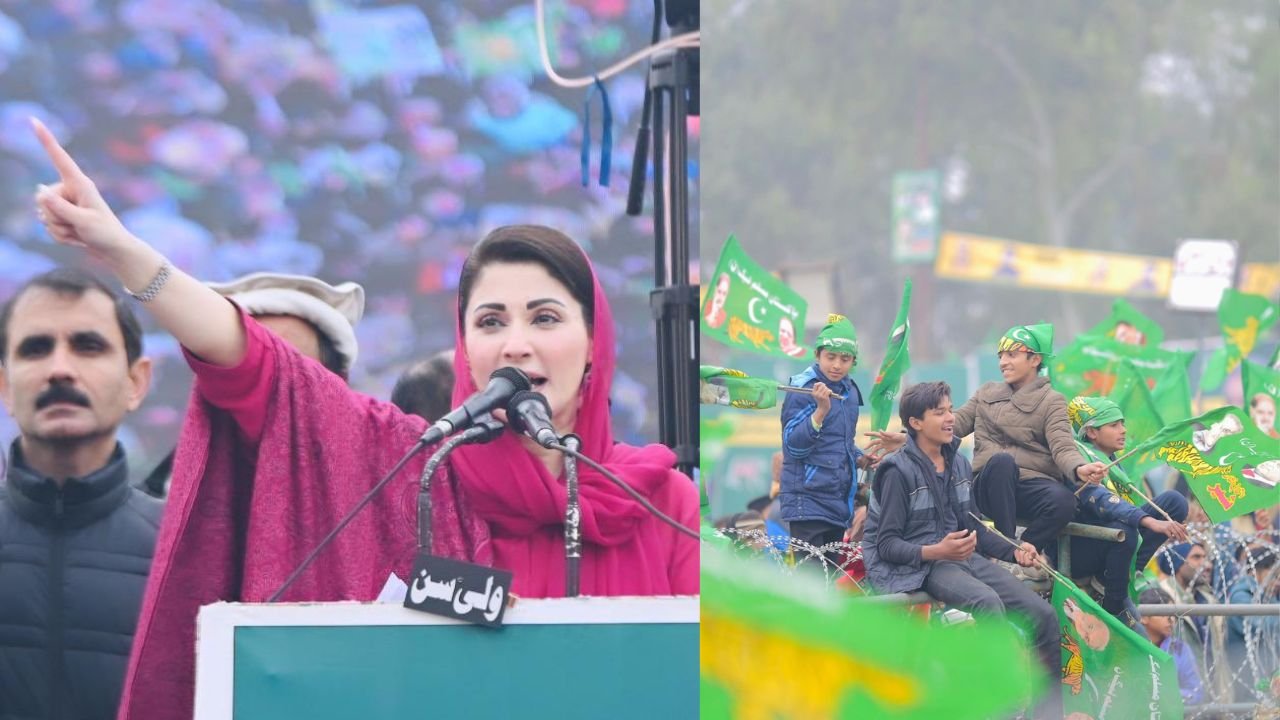
In the Pakistan Muslim League-Nawaz (PML-N) inaugural rally for the upcoming general elections in Okara, the party’s Chief Organiser Maryam Nawaz strongly criticized political rivals Pakistan Tehreek-e-Insaf (PTI) without naming it, calling it a “terrorist party” and questioning the allocation of an electoral symbol to such an entity.
The PML-N, which had faced delays in launching its campaign, is now gearing up for the February 8 polls and is set to reveal its manifesto.
The delay in the campaign kick-off was attributed to the PML-N’s extensive deliberations on ticket distribution and seat adjustments with the Istehkam-i-Pakistan Party (IPP) and Pakistan Muslim League-Quaid (PML-Q).
Party leader Nawaz Sharif, concerned about his party being labeled the ‘favorite’ of the establishment, aims to dispel the impression during the election campaign, according to insider sources.
During her address to party supporters, Maryam Nawaz, without explicitly naming the PTI, asserted that a “terrorist party” should not be assigned an election symbol like other political entities.
She hurled an array of criticism at Imran Khan during the address and blamed him for orchestrating and carrying out the May 9 violent attacks.
She mocked Khan for snatching of his electoral symbol, saying that his election symbol should not be a bat but a “baton”.
The PML-N chief organizer also dubbed Imran Khan’s party a group of terrorists. “A terrorist group could not be given a political party’s electoral symbol,” she said.
“Your electoral symbol should be the watch that you stole or the petrol bomb that you hurled on police officials,” she said, adding “what goes around comes around”.
لوگوں کو چور چور کہنے والے کی اپنی باری آئی تو گھڑی بھی نہیں چھوڑی , خانہ کعبہ کی تصویر والی گھڑی بیچ کے پیسے کھا گیا۔ لوگوں کی ماؤں بہنوں بیٹیوں کو جیلوں میں ڈالا , باپ کے سامنے گرفتار کیا سزائے موت کی چکیوں میں پھینکا۔ اپنی باری آئی تو بزدلی کی داستانیں رقم کرکے ذلت سے فرار… pic.twitter.com/cDzqHXsgQH
“Your electoral symbol was not bat but baton with which you attacked military installments. The baton has been snatched from your hand,” she maintained.
Maryam Nawaz emphasized that the PTI’s current situation is a consequence of its own actions and warned that the nation would not tolerate a political party manipulating its internal elections without consequences.
Referring to Imran Khan without explicitly mentioning his name, Maryam stated, “He was used to getting bails […] he was used to facilitation. But neither the facilitation nor the facilitators remain.”
اوکاڑہ والو! سنا تھا نہ کہ اللہ تعالیٰ کی لاٹھی بے آواز ہوتی ہے اب دیکھو آواز بھی نہیں آرہی اور قدرت کی لاٹھی چاروں طرف اپنا اثر دکھا رہی ہے۔جو جتنا بڑا ظالم ہوتا ہے وہ اتنا بڑا بزدل بھی ہوتا ہے۔چیف آرگنائزر مسلم لیگ (ن) مریم نوازشریف#پاکستان_کے_لئے#اوکاڑہ_میں_امید_سحرpic.twitter.com/M2k0B958s7
She asserted that now only the law and the nation would determine the outcomes.
Maryam assured supporters that if the PML-N emerged victorious in the upcoming polls, it would prioritize issues such as good education, cheap electricity, women empowerment, and an improved living standard. She stressed that the PML-N did not seek revenge and believed in facing challenges truthfully and honestly.
The PML-N leader also highlighted that Nawaz Sharif’s “real umpire” was the public, expressing confidence that the people would bring him back to power.
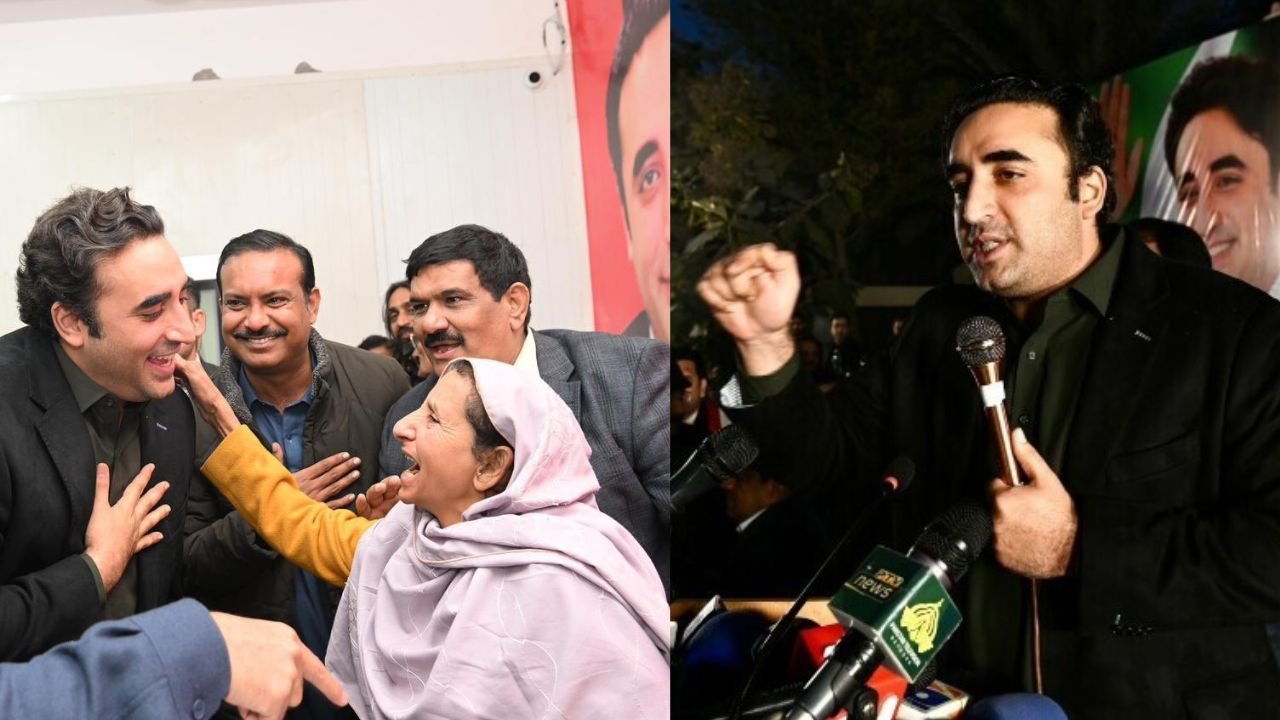
Pakistan Peoples Party (PPP) Chairman Bilawal Bhutto Zardari formally initiated his election campaign from NA-127 Lahore on Thursday.
The party aims to leverage the perceived political vacuum created by the establishment in Pakistan.
With the main rival, Pakistan Muslim League-Nawaz (PML-N), still deliberating on ticket allocations for Punjab and Khyber Pakhtunkhwa (K-P), PPP leaders have been actively canvassing for votes in their respective constituencies.
لاہور: پاکستان پیپلزپارٹی کے چیئرمین بلاول بھٹو زرداری این اے 127 کے صوبائی حلقے پی پی 162 کے الیکشن آفس میں عوام اور کارکنان سے ملاقات کررہے ہیں۔@BBhuttoZardaripic.twitter.com/hHj1vYr7o4
According to the party’s central Punjab chief, a majority of aspiring candidates have already received confirmation regarding ticket allocations, making the official announcement a mere formality.
PPP has unveiled its 10-point agenda as part of its manifesto, with the official manifesto set to be revealed in the coming days, as announced by the party’s information secretary.
In contrast, PML-N, despite forming a manifesto committee over a month ago, has not made any public announcements regarding its plans.
The recent introduction of an online portal by PML-N to gather public input on its manifesto suggests that the process is not in its advanced stages.
بہتر کل، بنائیں مل کر
Contribute to the PML-N manifesto and have a voice in shaping a brighter future! Share your ideas, make an impact, let’s shape the future together! pic.twitter.com/EL6imM8QYg
Bilawal, who will contest elections from three constituencies, including NA-127 Lahore and the party stronghold Larkana, visited his election office at Green Town in Lahore to formally launch the campaign.
شکریہ جاتی امراء آئیں ایک ایسا پاکستان کی بنانے میں پاکستان پیپلز پارٹی کا ساتھ دیں، جہاں حکومت نوجوانوں، مزدوروں، کسانوں، طالب علموں اور محنت کشوں کی ہو۔@BBhuttoZardaripic.twitter.com/PsdYHgCylv
During his election campaign trail, he would address rallies in Faisalabad (Jan 11), Layah (Jan 12), Bahawalpur (Jan 13), Balochistan’s Naseerabad (Jan 14), Sindh’s Larkana (Jan 15), Qambar Shahdadkot (Jan 16) Badin and Sanghar (Jan 17), Nowshero Feroz and Dadu (Jan 18), Rahim Yar Khan (Jan 19) Kot Daud (Jan 20), Lahore (Jan 21), Chiniot (Jan 23), Sarghoda (Jan 24), Lala Musa (Jan 25) Multan (Jan 26), Peshawar (Jan 27) , Rawalpindi (Jan 28), Kurram (Jan 29), DI Khan (Jan 30), Malakand (Jan 31), Khuzdar (Feb 1), Kashmor and Shikarpur (Feb 2) Mirpurkhas (Feb 3), Hyderabad (Jan 4) and his second last rally as per schedule would be in Karachi (Jan 5).
The decision to contest from Lahore is seen as a strategic move, countering PML-N President Shehbaz Sharif’s decision to contest from Karachi NA-242.
The PPP aims to secure NA-127 Lahore, building on the momentum gained from the December 2021 by-election results, where the party’s candidate secured significant votes. The move is also seen as an effort to mitigate the risk of a complete loss for the party in Punjab.
The party sees the absence of PTI from the political arena as a golden opportunity to capitalize on anti-PML-N votes. The PML-N is expected to issue the NA-127 ticket to its Deputy General Secretary Ata Tarar.
Meanwhile, Mayor Murtaza Wahab asserted that the people of Karachi demonstrated their support for the Pakistan Peoples Party (PPP) in the local government elections held on January 15, 2023, citing the party’s perceived capability to address the city’s issues.
The mayor expressed these sentiments during the ‘Meeting the Editors’ program organized by the Council of Newspaper Editors (CPNE) on Thursday.
“We worked for the resolution of the issues of the people of Karachi with sincerity. The development work will continue. People think that the next government will be of the PPP as they see Bilawal Bhutto Zardari as a viable leader,” the mayor said.
Wahab attributed the success of the Jamaat-e-Islami in the local government elections to the boycott by the Muttahida Qaumi Movement (MQM).