Tag: Federal Board of Revenue (FBR)

  • Imported mobiles priced above $500 to become more expensive under proposed GST of 25%

    Imported mobiles priced above $500 to become more expensive under proposed GST of 25%

    The Federal Board of Revenue (FBR) has put forward a proposal to significantly augment the sales tax on imported mobile phones.

    This proposal is part of the Finance (Supplementary) Bill, 2023, which incorporates amendments to the Ninth Schedule of the Sales Tax Act 1990, specifically focusing on mobile phones.

    As per the proposed bill, a sales tax of 25 per cent would be applicable on premium mobile phones that are imported and have a value of more than Rs132,000 ($500).

    The proposed amendment entails an increase in sales tax from 17 per cent to 18 per cent for imported mobile phones with an import value ranging from Rs53,000 ($200) to Rs132,000 ($500).

    It is noteworthy that this range includes two distinct categories within the Ninth Schedule, namely $200-$350 and $350-$500.

    It has been announced that the sales tax rate for imported mobile phones with a value up to $200 will remain unchanged. No proposed changes have been put forward for this import value category.

  • FBR must collect Rs120 billion in two days to meet monthly target of Rs684 billion

    To reach its monthly goal of Rs684 billion by the end of the current month, the Federal Board of Revenue (FBR) must collect approximately Rs120 billion in the final two days of September.

    The FBR’s preliminary revenue collection as of September 2022 was over Rs565 billion compared to the target of Rs684 billion, representing a shortfall of over Rs119 billion.

    To reach the monthly goal of Rs684 billion, the FBR needed to collect about Rs60 billion every day during the final two days of September 2022, according to Brecorder.

    The government would be forced to implement emergency collection measures, such as imposing a sales tax on petroleum items, if the FBR is unable to meet the monthly target of Rs684 billion. To avoid taking emergency revenue measures, the FBR has increased efforts to reach the desired revenue collection objective.

    The tax collecting system currently has a difficult task ahead of it: achieving the assigned revenue collection target of Rs684 billion in September 2022.

    In order to maximise revenue collection, tax authorities have developed a plan in conjunction with the chief commissioners of the LTOs and heads of MTUs.

    The final day to pay advance tax instalments was September 25, and the majority of the corporate sector had already paid their owed advance tax instalment by that date.

    The FBR examined the big tax offices’ and medium tax offices’ revenue results via the video link. The meeting also covered the potential reduction in income collection under a few heads as a result of the severe floods.

    In comparison to the target of Rs483 billion, the FBR had tentatively collected net revenue of Rs489 billion for August 2022, representing an increase of Rs6 billion.

    In comparison to the set revenue collection target of Rs926 billion during the first two months of July and August in 2022–2023, the FBR has collected Rs948 billion. The Board has so far surpassed the specified target in the current fiscal year 2022–2023 by Rs22 billion.

    The FBR collected net revenue of Rs489 billion during August 2022, exceeding the objective of Rs483 billion compared to Rs448 billion collected during the same period last year, according to provisional figures.

  • Pakistan aa rahe ho tou $10,000, ja rahe ho tou $5,000: FBR issues new regulations

    Pakistan aa rahe ho tou $10,000, ja rahe ho tou $5,000: FBR issues new regulations

    A new rule implemented by the Federal Board of Revenue (FBR) requires incoming international travellers to disclose foreign cash worth $10,000 or more when they arrive at the airports.

    In this regard, the FBR has released the draught of a new “Customs Declaration form” for the declaration of foreign cash valued at $10,000 or more by incoming overseas travellers.

    On Tuesday, the FBR published an SRO.1751(I)/2022 to modify the Baggage Rules, 2006.

    The outbound passenger who owns foreign currency exceeding $5,000 or equivalent, any other prohibited or restricted item, or any other item requiring declaration before Customs, shall file a declaration in the form before or on departure electronically in the WeBOC or manually at the airport, as per the new customs declaration for passengers.

    The inbound passenger must also fill out the form with a declaration if they have any foreign cash worth more than $10,000 or its equivalent, any other items that are prohibited or restricted, or any other items that need to be declared to customs.

    The passenger will mention in the declaration form if they are carrying any of the following items: prohibited or restricted items such as weapons and ammunition, narcotics, psychoactive substances, or satellite phones; gold and precious metals; jewellery made of precious or semi-precious stones; foreign currency in US Dollars (USD) or equivalent; and outbound passengers carrying an amount exceeding $5,000 or equivalent; and incoming passengers carrying an amount more than $10,000.

    The State Bank of Pakistan (SBP) announced the need for travellers entering Pakistan who are bringing cash and/or negotiable instruments more than ten years ago via notice number. F.E.1/2012-SB dated June 16, 2012. The FBR already explained this. This requirement became effective on July 1st, 2012.

    Then, Pakistan Customs launched a thorough “Customs Declaration Form for Passengers,” which was announced by SRO 689(I)/2019 dated June 29, 2019, to expand the scope of declaration to include gold jewellery, precious stones, and other prohibited/restricted products. These guidelines apply to both departing and arriving travellers.

    These declaration requirements are in line with global best practices and standards that the majority of nations have embraced.

    The declaration can be made physically at the Customs desk or electronically using the Customs system. Pakistan Customs has been working with the Civil Aviation Authority, Airlines, and Immigration Authorities to strengthen its outreach to both departing and arriving passengers in order to raise awareness among foreign travellers. Because of this, compliance has been gradually rising.

    The currency declaration procedure for all foreign passengers has been in place for more than ten years, according to FBR, and was not recently implemented as a result of any new FATF review criteria.

  • FBR surpasses revenue collection target by Rs15 billion for July

    FBR surpasses revenue collection target by Rs15 billion for July

    The Federal Board of Revenue (FBR) revealed the provisional revenue collection data for July 2022, which came to Rs458 billion.

    The FBR generated net revenues of Rs458 billion in July, which was Rs15 billion more than its goal of Rs443 billion.

    These collections—which represent an increase of roughly 10 per cent over the Rs417 billion collected during the same time last year—are the biggest ever for the month of July.

    The gross revenue increased from Rs438 billion in July of the previous year to Rs486 billion, a rise of 11 per cent. Similarly, the amount of refunds given out in July increased by 32 per cent to Rs28 billion from Rs21 billion paid in the previous year.

    Domestic taxes made up 55 per cent of the total collection while import taxes kept their 40 per cent share.

    Previously, 52–53 per cent of the total revenue was collected via taxes at the import stage. Similarly, the increase in domestic income tax is close to 31 per cent, which the FBR described as a dramatic move toward direct taxation.

    The Advance Tax collected in July has increased significantly. Due to the implementation of a withholding provision that is applicable regardless of the holding term, there is also a 118 per cent rise in the advance tax on the sale of properties under Section 236-C.

    Similarly, a change in the tax rate has led to a 40 per cent increase in Advance Tax under Section 147, particularly from financial companies.

    Raising the FED rate on tobacco and cigarettes has also paid off. Sales tax from the tobacco sector increased by a record-breaking 67 per cent, while the FED from tobacco saw a record-high growth of over 47 per cent, or Rs2.6 billion.

    Additionally, the FED for international flight travel has climbed by more than 200 per cent. Additionally, Pakistan Customs saw a modest 2.58 per cent increase in revenue under the heading of customs duty during July 2022 compared to Rs65 billion collected during the same time last year.

    However, it fell short of the Rs77 billion target set for July as a result of the government’s import compression policy, which aims to limit the outflow of US dollars.

    In addition, the FBR lost around Rs11 billion in sales tax due to the zero-rating of petroleum goods.

    It is important to note that the number of income tax returns for the tax year 2021 has increased by 13 per cent to 3.4 million from 3.0 million for the tax year 2020.

  • Punjab’s ePay system collects over Rs90 billion tax revenue through 17 million transactions

    Punjab’s ePay system collects over Rs90 billion tax revenue through 17 million transactions

    Since its launch in October 2019, e-Pay Punjab, an online payment solution developed by the Punjab Information Technology Board (PITB) and the Punjab Finance Department, has collected over Rs90 billion in tax revenue through 17 million transactions.

    As per details released by the PITB on Friday, e-Pay Punjab has collected a total of Rs57 billion in sales tax, Rs11.5 billion in token tax, Rs9 billion in property tax, Rs4 billion in traffic challans, and Rs440 million in vehicle transfers.

    It’s worth noting that e-Pay Punjab now accepts online payments for 23 taxes and levies from ten different departments. Its 1-Link network integration with the State Bank of Pakistan (SBP) and all scheduled banks makes it a secure and dependable payment channel.

    The e-Pay Punjab application, which has over 1 million downloads, generates a unique PSID number that is accepted by banks across Pakistan through their various channels, including Internet and Mobile Banking, ATMs, and physical branch visits.

    It is also a secure, smart, and fast online payment option for the annual Token Tax. Vehicle owners can use e-Pay Punjab to pay their Token Tax from the comfort of their own homes.

    The app’s primary objective is to make it convenient for the government to gather revenue in the form of taxes through a simple solution. With Pakistan’s first digital tax aggregator, the app demonstrates how Pakistan and its government are rapidly integrating financial technology (fintech) into their processes.

  • IMF rejects proposed tax relief for the salaried class

    IMF rejects proposed tax relief for the salaried class

    The International Monetary Fund (IMF) has rejected the government’s proposed tax cut in the Personal Income Tax (PIT) to the tune of Rs47 billion, leaving the government with no choice but to reconsider amendments in order to revive the remaining funds.

    According to The News, the Federal Board of Revenue (FBR) granted relaxation to salaried workers earning up to Rs1.2 million annually, top official sources claim that the IMF has expressed strong misgivings about the planned PIT rate.

    To assist the urban middle class, the International lender recommends that the assistance be limited to persons earning up to Rs0.2 million per month, and that tax rates in other slabs be raised afterward.

    Compensation in PTI’s tenure

    During the sixth review under the PTI-led government, the FBR offered compensation to those making up to one million rupees per month in salary in the budget for 2022-23 through Finance Bill 2022 in Parliament, which was set as a structural benchmark under the Fund agreement. If the proposed PIT rates are not adjusted, it could become a major roadblock to reaching an agreement with the IMF at the staff level.

    The international lender intended to improve tax collection by Rs125 billion by putting PIT in a progressive manner, but the government went the other way, making it impossible for both parties to get a staff-level agreement under the $6 billion Extended Fund Facility (EFF) with the current PIT proposal.

    Proposed tax for salaried class in Finance Bill 2022

    According to the Finance Bill 2022, those earning up to Rs1.2 million will pay only Rs100 in tax. Previously, those earning up to Rs800,000 per year had to pay Rs10,000, those earning up to Rs1.2 million Rs30,000, and those earning up to Rs2 million Rs120,000. According to the suggested rate, a salary employee earning Rs2 million per year will only have to pay Rs56,000.

    The tax burden for salary earners up to Rs3 million was formerly Rs282,000 per year, but now it is projected to be Rs159,000. Up to Rs4 million in salary, a salary earner had to pay Rs470,000 in income tax, but under the proposed rate, the tax payment is reduced to Rs304,000. The tax due for a salary earner earning up to Rs5 million was Rs670,000, but it was cut to Rs479,000 under the proposed rate.

    The Finance Bill 2022 recommends providing relief up to Rs one million in salary earner who had to pay Rs1.845 million in tax, but now the tax burden has been lowered to Rs1.554 million for salary income up to Rs one million per month under the proposed Finance Bill 2022. The planned tax rates were amended upward in the remaining slabs up to Rs20 million, Rs40 million, Rs60 million, and Rs80 million.

    Increased taxable limit

    The FBR increased the taxable ceiling limit from Rs600,000 to Rs1,200,000 in the Finance Bill 2022, and the number of slabs in the PIT regime was decreased from 12 to 7.

    Where the taxable income does not exceed Rs600,000, there would be no tax, according to new slabs imposed for the salaried class. A tax of Rs100 would be levied on taxable income exceeding Rs600,000 but not exceeding Rs1,200,000.

    There would be a 7 per cent tax on the amount beyond Rs1,200,000 if the taxable income exceeds Rs1,20,000 but not Rs2,400,000.

    If an individual’s taxable income is over Rs2,400,000 but not over Rs3,600,000, you would be charged Rs84,000 plus 12.5 per cent of the amount over Rs2,400,000 per year. The FBR will levy a tax of Rs234,000 plus 17.5 per cent of the amount over Rs3,600,000.

    If the taxable income is more than Rs6,000,000 but not more than Rs12,000,000, the FBR will deduct Rs654,000 plus 22.5 per cent of the amount over Rs6,000,000.

    When taxable income reaches Rs12,000,000, the FBR will assess a tax of Rs2,004,000 plus 32.5 per cent of the amount over Rs12,000,000 every year.

  • Elimination, reduction of withholding taxes in budget 22-23

    On June 10, 2022, Pakistan will present its federal budget for 2022-2023. A number of new taxes measures are expected to be announced in the budget to raise additional income.

    It has been learned that a number of withholding taxes would be removed or lowered in the coming budget.

    The Federal Board of Revenue (FBR) will choose those withholding taxes that have lower revenue implications without jeopardising the goal of documenting as part of the budget planning process.

    According to Brecorder, to document future withholding transactions, a new Directorate-General for Synchronized Withholding Agents System would be developed.

    Withholding taxes cause inconsistencies will be reduced by the FBR, as all withholding taxes will be examined to see whether there are any distortions produced by income tax withholding, and adjustments will be made to correct them.

    This will be accomplished by making modifications to guarantee that all withholding tax received is either claimed or reimbursed in the return filed in response to the tax demand.

    Elimination of Taxes in budget 21-22

    The government had eliminated multiple withholding taxes, including the tax on royalty payments to residents during budget 21-22 such as cash withdrawals, banking tools, money transfers other than cash, tax collection from persons remitting funds abroad via credit, debit, or prepaid cards, tax collection on domestic and international air travel, mineral extraction, tax collection by a stock exchange registered in Pakistan, tax collection on marginal financing by NCCPL, CNG stations, and tax collection on certain petroleum products.

    Income Tax Ordinance

    The Income Tax Ordinance of 2001 contained 38 withholding tax measures. This large number of requirements adds to the complexity and places an excessive strain on different withholding agents to comply. It also has an impact on a country’s ease of doing business rating. In the last budget, 12 withholding taxes were eliminated in an effort to improve company ease and simplify tax rules.

    The Overseas Investors Chamber of Commerce and Industry (OICCI) advocated that the withholding tax (WHT) structure be overhauled and reduced from its current twenty-six rates to just five for filers.

    Only inactive taxpayers should be subject to this tax. Alternatively, the 8% WHT rate on services is a minimum tax that applies regardless of the service provider’s actual taxable revenue. This tax effectively becomes an indirect tax, raising the cost of doing business for service providers; as a result, service tax should be flexible.

    Withholding Tax Regime

    The Withholding Tax Regime (WHT) is a worldwide phenomena, and it is the primary source of federal revenue received at the national level in Pakistan. The collection of withholding taxes, as well as the reliance on them, has increased throughout time. Various Withholding Taxes, which are distinguished by their adjustable and presumptive nature, collected Rs422(b) out of total Direct Taxes collection of Rs740(b) for the financial year 2012, accounting for 57 per cent of total Direct Taxes collection.

    Since the imposition of direct taxes by governments and taxpayers on two counts, the withholding tax regime has been a feature of the tax system in some form or another:

    1. The government receives revenue on a consistent basis throughout the year to fund its expenditures and operations.
    2. Provides taxpayers with the opportunity to pay down their debts in affordable installments.

    Many countries have been obliged to change their economies in recent years as a result of globalisation, in order to unify tax laws and align them with new trade and investment policies represented in free trade agreements. “Hang Together” is more relevant today than it has ever been. Neither countries’ borders nor their economies can be closed. Tax policies are also inextricably linked to foreign economies.

    Due to the requirement for an entity to oversee and manage the Withholding Tax Regime in such a competitive climate, the Directorate General of Withholding Taxes was established by the Finance Act of 2008 under section 230A of the Income Tax Ordinance 2001.

  • Direct taxes target predicted at Rs2,560 billion for FY 22-23

    In an attempt to meet the Federal Board of Revenue’s (FBR) revenue collection target of Rs7,255 billion for the upcoming fiscal year, the direct taxes target has been predicted at Rs2,560 billion, up from Rs2,182 billion in 2021-22.

    According to Brecorder, the indirect taxes (net) estimates were predicted at Rs4,695 billion in the macroeconomic framework for 2022-23. Direct taxes forecasts included income tax and withholding taxes, whereas indirect taxes projections included sales tax, customs duty, and Federal Excise Duty (FED).

    The indirect tax goal for 2022-23 has been set at Rs4,695 billion, up from Rs3,647 billion in 2021-22, representing a Rs1,048 billion rise. The indirect tax revenue for the fiscal year 2021-22 was Rs3,440 billion.

    The entire collection of indirect taxes in 2020-21 was Rs3,008.2 billion. Direct taxes are expected to reach Rs2,560 billion in the next fiscal year, up from Rs2,182 billion in 2021-22, a Rs378 billion increase.

    Read more: PM Shehbaz directs to eliminate taxes on raw materials used by export industries

    During the first 11 months of the current fiscal, the FBR collected roughly Rs1.9 trillion in direct taxes. In the fiscal year 2020-21, direct tax collections totalled Rs1,726.0 billion. Withholding taxes account for 72 per cent of the total direct tax collection.

  • CNG prices pushed to Rs140 per kg for sales tax collection

    CNG prices pushed to Rs140 per kg for sales tax collection

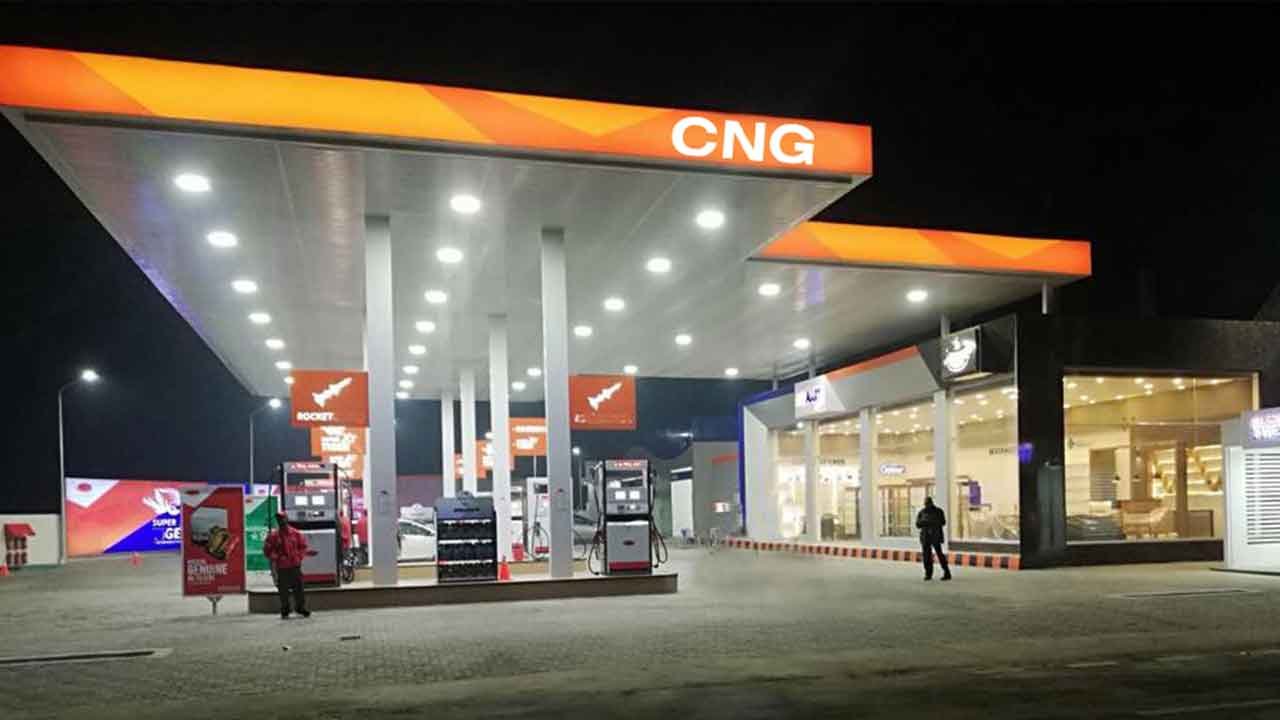
    The Federal Board of Revenue (FBR) has raised the sales tax rate on compressed natural gas (CNG) supplies to customers.

    On Tuesday, the FBR published S.R.O. 587(I)/2022 to replace S.R.O. 39(I)/2022, which was issued on January 8, 2022. It has amended the value of compressed natural gas (CNG) supply to consumers in order to charge sales tax from CNG stations.

    It has set the value of supply to CNG customers in order for gas generation and distribution businesses to charge sales tax from CNG stations.

    CNG rates

    The price of CNG in Region-I, which includes Khyber Pakhtunkhwa, Balochistan, and Potohar, has been raised from Rs134.57 per kg to Rs140 per kg (Rawalpindi, Islamabad, and Gujar Khan).

    Read more: Pakistani Rupee crashes to a record low against US dollar 

    Moreover, the cost of CNG has been raised from Rs128.11 per kg to Rs135 per kg in Region-II, which covers Sindh and Punjab except for the Potohar region.

  • FBR records 29.1% growth during July 2021 to March 2022, despite providing ‘massive tax relief’

    The provisional revenue collection data for the months of July 2021 to March 2022 of the current financial year 2021-22 have been announced by the Federal Board of Revenue (FBR).

    The net collection was Rs575 billion for the month of March 2022, up 20.5 per cent from Rs477 billion in March 2021.

    Conversely, the gross revenues, rose by 28.9 per cent in the current financial year, from Rs3,577 billion in July 2020 to March 2021 to Rs4,611 billion in July 2021 to March 2022. Furthermore, the amount of reimbursements granted in March 2022 was Rs31.9 billion, compared to Rs26.3 billion in March 2021, showing a 21.3 per cent upsurge.

    Then again, refunds of Rs229 billion were paid from July 2021 to March 2022, a 25 per cent increase over the Rs183 billion paid the previous year.

    Read more: Petrol, Diesel prices to remain unchanged till April 15

    It is worth noting that the continuous remarkable growth in revenue collection has been achieved despite the government providing ‘massive tax relief’ to the general public on a variety of vital commodities.

    For the first time in Pakistan’s history, the sales tax on all petroleum products was abolished, costing the FBR Rs45 billion in the past month.