Tag: Federal Board of Revenue

  • FBR report exposes $7.19 million illegal smartphone imports

    FBR report exposes $7.19 million illegal smartphone imports

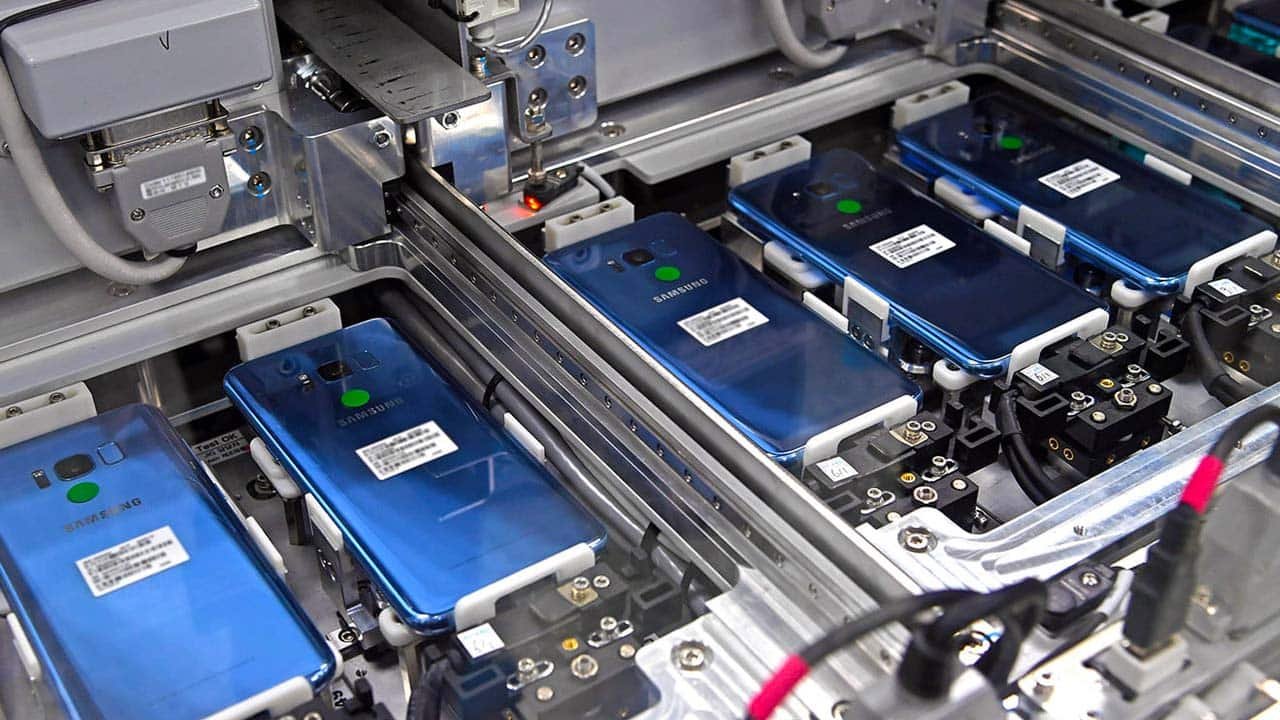
    According to an official report from the Federal Board of Revenue (FBR), mobile phones worth $7.19 million have been imported into Pakistan illegally without opening letters of credit (LCs) or using the banking channel.

    The report also states that despite an unannounced ban by the State Bank of Pakistan (SBP) on the import of mobile phones and their accessories, 52 Goods Declarations (GDs) worth $8.65m were cleared between December 2022 and February 2023.

    The mobile phones were imported in Completely Build Up (CBU) condition and only $1.46m was paid legally out of Pakistan through the banking channel. The remaining $7.19m was illegally transferred out of Pakistan. The FBR report does not provide details about the mode of payment made to suppliers in Dubai for the import of these mobile phones.

    The Pakistan Telecommunication Authority (PTA) has stated that manufacturers imported over 190,000 mobile phones in CBU condition under a facility allowed to them. However, despite restrictions set by the banking sector on imports, some companies are still reportedly importing mobile phones under their manufacturing license.

    The import of smartphones has increased, especially after at least 30 manufacturing units in Pakistan halted production due to import restrictions.

  • Real estate in Pakistan is ‘parking lot’ for untaxed money with support of DHAs and Army, says former FBR chairman

    Real estate in Pakistan is ‘parking lot’ for untaxed money with support of DHAs and Army, says former FBR chairman

    Shabbar Zaidi, the former Chairman of the Federal Board of Revenue in Pakistan, stated that only 300 companies out of the entire business sector in the country pay 70 per cent of the total taxes collected.

    According to Dawn, Zaidi dismissed the claims of some businesses that there were too many taxes in Pakistan and no dividends. He pointed out that the real estate was the “parking lot” of untaxed money, and that with the support of the DHAs and army, a system had been developed to officially launder money through real estate, which had perpetual amnesty in the country.

    He called for removing DHAs from the real estate business as there could not be fair competition between a state institution and private businesses in real estate, and also suggested that plots of land should be confiscated if construction was not done on them.

    Kashif Anwar, the president of the Lahore Chamber of Commerce and Industry, argued in favor of amnesty on undeclared foreign reserves to bring money back to the country.

    In another session, Tassaduq Hussain Jillani, the former Chief Justice of Pakistan, acknowledged that criticism of the Supreme Court for messing up big corporate cases was justified as the judges were not expert at finance and economics.

    Jillani suggested the formation of commercial benches in the SC and high court for such cases. In a session on local governments, Ammar Ali Jan, the general secretary of Haqooq-i-Khalq Party, criticized the absence of local government in the country, citing examples of polluted water and waste management issues.

  • Another IMF condition met as Pakistan imposes 25% sales tax on luxury items

    On Tuesday, the federal cabinet led by Prime Minister Shehbaz Sharif approved the imposition of a 25 per cent sales tax on luxury items, fulfilling a condition set by the International Monetary Fund (IMF) for the revival of the $7 billion Extended Fund Facility (EFF) that had been stalled for months.

    The cabinet approved the 25 per cent general sales tax (GST) on luxury items through a circulation summary. The Federal Board of Revenue will issue a formal notification in the coming days, and the new rate will be applicable from March 1.

    The list of items subject to the 25 per cent GST includes aerated water and juices, imported cars, mobile phones, pet food, sanitary and bathroom wares, carpets (excluding Afghanistan), chandeliers and lighting devices or equipment, chocolates, cigarettes, confectionery items, corn flakes, cosmetics, shaving items, tissue papers, crockery, decorative devices, doors and window frames, fish, footwear, fruits and dry fruits, furniture, home appliances (CBU), luxury leather jackets and apparel, mattress and sleeping bags, frozen or processed meat, musical instruments, arms and ammunition, shampoos, sunglasses, tomato ketchup and sauces, and travel bags and suitcases.

    The federal government also imposed a 25 per cent GST rate on locally manufactured luxury vehicles of 1,400cc and above. The FBR has estimated that it will collect an additional Rs15 billion in taxes through the enhanced GST rate of 25 per cent in the four-month period.

    According to sources, Pakistan and IMF held virtual negotiations on Monday to revive the loan program that had been stalled for months. During the meeting, the lender expressed satisfaction with the country’s measures, while Pakistan insisted on early finalization of the staff-level agreement.

    The negotiations were moving positively as the Fund did not place any new demands during the virtual session. The State Bank of Pakistan (SBP) informed IMF representatives about the estimated collection of foreign exchange reserves of $10 billion until June, and sources claimed that Pakistan had achieved future targets before the staff-level agreement.

    It is worth mentioning that the government has expedited the implementation of IMF demands to unlock the loan tranche for the country’s economic recovery.

  • Supreme Court directs FBR to collect 50% super tax from big companies within seven days

    The Supreme Court of Pakistan has ordered organisations earning more than Rs150 million to submit 50 per cent of the super tax imposed on them to the Federal Board of Revenue (FBR) within seven days.

    A two-member bench consisting of Chief Justice of Pakistan Umar Ata Bandial and Justice Athar Minallah heard the plea filed by the FBR against an interim order issued by the Lahore High Court (LHC). The FBR’s counsel, Salman Akram Raja, informed the bench that the LHC had temporarily prohibited the FBR from collecting the tax pending a final decision.

    However, counsel for the respondents argued that the government’s super tax on corporations was unconstitutional. The Supreme Court suspended the interim order of the high court and allowed the FBR to collect 50 per cent of the super tax from these industries within seven days.

    Last year, Prime Minister Shehbaz Sharif announced the implementation of a 10 per cent super tax, also referred to as the “poverty alleviation tax,” on 13 key industries to increase tax collection. The government stated that the “tough decisions” were made to safeguard the economy.

    According to Geo, the sectors subject to the tax included cement, steel, banking, airlines, textile, automobile assembly, sugar mills, beverages, oil and gas, fertilizer, cigarettes, chemicals, and LNG terminals.

  • FBR increases WHT rates for non-filers to raise additional revenue

    FBR increases WHT rates for non-filers to raise additional revenue

    In order to enhance the cost of non-filers and generate additional income in the second quarter (October-December) 2022–2023, the Federal Board of Revenue (FBR) has decided to carefully monitor budgetary measures established under the Finance Act 2022.

    The higher cost to non-filers was one of the budget’s driving concepts (for the years 2022-23), sources told Business Recorder. For those who don’t submit income tax returns, the withholding tax rates have increased significantly.

    The last budget included new steps in this regard (2022-23). The remainder of the current fiscal year must see some measures completely implemented, though. All procedures put in place for individuals who do not appear on the FBR’s list of active taxpayers are tightly under the FBR’s vigilance.

    For instance, the government raised the tax rate for people who don’t pay taxes regularly from 100 per cent to 250 per cent when they buy property. Similar to this, the tax rate on the acquisition of a motor vehicle by a person who is not an active taxpayer has increased from 100 per cent to 200 per cent. The financial impact of raising the advance tax rate for non-ATL individuals who purchase real estate from the current 2 per cent to 5 per cent is Rs20 billion.

    The Excise and Taxation authorities currently collect advance tax on passenger transport vehicles operating for hire based on the vehicle’s seating capacity. By substituting the Table in the manner described below, the rates of adjustable advance tax on such vehicles stipulated in Division III of Part IV of the First Schedule of the Ordinance have been increased. According to rule 1 of the Tenth Schedule to the Income Tax Ordinance, the tax rate has been increased by 100 per cent in cases where a person’s name does not appear on the Active Taxpayers List.

    The rate of tax to be collected under section 236K will rise by 250 per cent of the rate indicated in Division XVIII of Part IV of the First Schedule in the case of a purchaser of immovable property who is not listed on the Active Taxpayers List. Rule 1 of the Income Tax Ordinance’s Tenth Schedule has been updated as necessary.

    The provision 236Y has been reinserted by Finance Act 2022. When sending money outside of Pakistan on behalf of a person who has completed a credit card, debit card, or prepaid card transaction with a person outside of Pakistan, every banking company will collect this adjustable advance tax. In the case of individuals who are not on the Active Taxpayers List, the rate will increase by 100 per cent.

    The advance tax on motor vehicles that is collectible under this section will increase by 200 per cent in the event that a person does not appear in ATL. Rule 1 of the Income Tax Ordinance’s Tenth Schedule has been updated as necessary.

  • FBR establishes new section to investigate corrupt tax officials

    In order to ensure the prompt resolution of all disciplinary cases and inquiries against tax employees engaged in corruption and dishonest activities in field formations, the Federal Board of Revenue (FBR) established a new Section on Friday called “Discipline/Inquiries.”

    A new Section with the nomenclature “Discipline/Inquiries” is hereby created in the Admn/HR Wing, FBR (HQ), Islamabad with immediate effect in order to ensure proper follow-up of all disciplinary cases/inquiries of officers (BS-16 and above) of FBR (HQ) and IR field formations with a view to ensuring timely disposal of such cases, according to an office order issued by the FBR on Friday.

    According to Brecoder, a secretary or second secretary who works for the specified Section will be in charge and reporting to the Chief (HRM-IR), FBR.

    The FBR has also been ordered by Prime Minister Shehbaz Sharif to fully abide by the guidelines of the Civil Servants (Efficiency and Discipline) Rules, 2020 when taking disciplinary action and conducting investigations against dishonest tax officers.

    The FBR chairman has directed the Revenue Division/FBR to rigorously adhere to the following instructions in all disciplinary processes and inquiries launched against the officers, in accordance with the directives of the prime minister:

    The Civil Servants (Efficiency & Discipline) Rules, 2020, Rule 10 read with Rule 12 shall govern how the chosen inquiry officer would conduct the inquiry processes. The same must be finished within sixty (60) days of the date the inquiry order was issued, or within any further time the authority may provide.

    All Directors General, Chief Commissioners, Chief Collectors, Commissioners, and Collectors of FBR shall keep the relevant case record in safe custody while forwarding the recommendation to begin disciplinary proceedings against any officer(s) or official in order to ensure safe custody of the record in an inquiry.

    In accordance with the guidelines outlined in Rule 8 of the Civil Servants (Efficiency and Discipline) Rules, 2020, all heads of field offices shall also see to it that pertinent records of the case and other related documents are timely provided to the inquiry officer or the inquiry committee, as the case may be, through the designated departmental representative (DR). This must be done within seven days of the date of the inquiry order.

  • Zardari corruption case: NAB references busted, not in accordance with law

    The Islamabad High Court (IHC) on Tuesday declared the National Accountability Bureau (NAB) reference against former president Asif Ali Zardari ‘ultra vires and not according to the law’, reports The News.

    IHC Chief Justice (CJ) Athar Minallah condemned NAB authorities and said that all its references got busted for not being prepared as per law. He said that the Bureau was just wasting its time by making pointless references, adding that NAB was not above the law.

    “How the bureau could declare null and void the Income Tax Order by itself,” the CJ observed, adding that NAB did not have any jurisdiction to nullify the Federal Board of Revenue (FBR) Assessment Order.

    Earlier, IHC had noticed that NAB challenged the acquittal request of Zardari, without obtaining the original record of the case.

    The court noted that it took NAB seven years to realise that the appeals were filed without possessing the original record.

    CJ Minallah said NAB should now admit it had made a mistake by filing these references since it did not have proof against the former president.

    “And if indeed, there were no proofs, then the court will also take action against the former bureau chairman in whose tenure these cases had been filed,” said the IHC CJ.

  • High-powered cell to investigate 700 Pakistanis in Pandora Papers: PM Khan

    High-powered cell to investigate 700 Pakistanis in Pandora Papers: PM Khan

    Prime Minis­ter (PM) Imran Khan on Monday formed a high-powered cell to investigate the 700 Pakistanis named in the Pandora Papers, including federal cabinet members, politicians, retired generals, owners of media houses, and others in establishing offshore companies.

    PM Khan categorically stated that the prominent leaders and federal ministers of Pakistan Tehreek-e-Insaf (PTI) will have to clear themselves.

    Information Minister Fawad Chaudhry, while speaking to Dawn said: “The prime minister was adamant that those who have been accused in Pandora Papers of having offshore firms will have to clear themselves.”

    The minister took to Twitter and informed about the formulation of the high-powered investigation cell. “The prime minister has set up a high-level cell under the Prime Minister’s Inspection Commission to investigate the Pandora leaks, which will present the facts before the nation,” tweeted Fawad.

    Law Minister Farogh Naseem would head the investigation cell that would also comprise the National Accountability Bureau (NAB), Federal Board of Revenue (FBR), and Federal Investigation Agency (FIA) officials. The cases of the cabinet members would be sent to NAB for investigation. A separate probe will be launched by the Ministry of Information and Broadcasting and the Pakistan Electronic Media Regulatory Authority (Pemra) to investigate the media owners whose names are included in the Pandora Papers, reports Dawn.

    Those who had evaded tax or made offshore firms through ill-gotten money would be taken to task, otherwise, no action would be taken against others because establishing offshore firms was not a crime, the source tells Dawn.

    Under the law, setting up an offshore company is not an offence or crime if the company is not involved in any illegal activity. However, those who have not declared these companies in their returns as assets may face legal action.

    After the International Consortium of Investigative Journalists (ICIJ) released a detailed list of public figures with offshore companies called the ‘Pandora Papers’ as part of their new investigation, PM Khan vowed to investigate all those Pakistanis mentioned in the Pandora Papers, and tweeted: “If any wrongdoing is established we will take appropriate action.”

  • British court orders unfreezing of Shehbaz Sharif, son’s UK bank accounts

    British court orders unfreezing of Shehbaz Sharif, son’s UK bank accounts

    A United Kingdom (UK) court has ordered to unfreeze Pakistan Muslim League-Nawaz (PML-N) President Shehbaz Sharif and his family’s bank accounts for lack of evidence of corruption and money laundering, reported Geo News.

    The UK’s National Crime Agency (NCA) unfroze the bank accounts of former Punjab chief minister Shehbaz Sharif and those of his son, Suleman Shehbaz, on Monday.

    The NCA had conducted a 17-month long probe in which it examined Shehbaz Sharif’s financial transactions over the past 20 years. It said that no evidence of money laundering or criminal activities against the PML-N president or his family was found.

    The UK’s top anti-corruption agency filed a unilateral application before Judge Rimmer to declare that its two-year high-profile investigation in the jurisdictions of Pakistan, UK, and Dubai found no evidence of money laundering and criminal conduct on part of the two Sharifs who were investigated. 

    The NCA had initiated the probe after Pakistan’s Asset Recovery Unit (ARU) had shared evidence with the UK crime agency.

    After the Westminster Magistrates Court allowed the accounts to be frozen and issued a probe consent to the NCA on December 19, 2019, Suleman Shehbaz’s declared Barclays account, Shehbaz Sharif’s HBL UK and Barclays account were immediately probed, seized and monies were frozen.

    Usually, anti-money laundering investigations go back only six years, but in this case, the NCA used its excessive powers and investigated Shehbaz Sharif and his son’s transactions dating back to around 20 years.

    NCA’s investigators started the probe from the first flat that Shehbaz Sharif bought in 2004 on Edgware Road when he was in exile and asked him to produce evidence of the clean origin of the money, including mortgage payments, sources of proceeds in his accounts, salaries and dividends, and full proceeds of the property purchase in the UK bought during exile.

    The NCA investigated Suleman Shehbaz’s Barclays account declared in Pakistan with the Federal Board of Revenue (FBR) and looked into all transfers that were made from Pakistan after the State Bank of Pakistan’s approval. The NCA went through each receipt of transfers from the official money exchangers.

    The court documents obtained by this correspondent from credible sources show that the NCA received a letter from the ARU on December 11, 2019, in which it levelled allegations of criminal conduct against Shehbaz Sharif and Suleman Shehbaz.

    The government of Pakistan had requested the UK government to seize all assets and funds of Shehbaz Sharif and his family and asked them to return the same to Pakistan and extradite Suleman Shehbaz with his family.

    Advisor to the Prime Minister on Accountability Shahzad Akbar said that reports of Shehbaz Sharif being acquitted by the British court were incorrect, clarifying that neither had the ARU nor NAB requested the UK government to initiate a probe against the PML-N leader.

    “[These transactions] were declared as a suspicious transaction by the UK authorities and the NCA secured an asset freezing order(AFO) from the court against these funds,” he tweeted.

    “The news about the alleged acquittal of Shehbaz Sharif or his son Suleman run by one news channel is incorrect and misreporting. It was a result of a suspicious transaction reported by a bank to NCA. The investigation by the NCA against Suleman Shehbaz and some of his family members was not initiated at the request of Asset Recovery Unit (ARU) or National Accountability Bureau (NAB),” tweeted Akbar, who had been keeping a low profile for the last couple of months.

    PML-N spokesperson Marriyum Aurangzeb said: “The UK court’s decision has unequivocally exonerated Shehbaz Sharif and his family of all malicious and vexatious claims of corruption and money laundering by Imran Khan. The NCA conducted a 21-month global investigation spanning across a 20-year timeframe whilst overcoming unprecedented jurisdictional challenges.”

    “Never in the history of Pakistan has such a public office-holder been subjected to global scrutiny and multi-jurisdictional probing. Imran Khan has been exposed as a charlatan, willing to malign and assassinate characters of honest public office-holders. False corruption narrative exposed as nothing more than a smokescreen and Imran Khan to be an unscrupulous ringmaster of a circus built on incompetence, deceit and stained by the indignation of the innocent and the poor,” she said.
  • FBR suggests Rs10 health tax on pack of cigarettes

    The Federal Board of Revenue (FBR) has proposed a Rs10 health levy on each packet of cigarettes. The proposal has the potential to encourage current smokers to quit, FBR believes.

    Before devising policy formulation, FBR has sent its proposal to the Law Ministry seeking legal advice if the suggestion falls into the jurisdiction of the federal government or not in the aftermath of the 18th Amendment.

    FBR officials say they are awaiting the response of the ministry and after receiving the advice, they would move forward accordingly.

    Read more – Over 1,200 children start smoking every day in Pakistan

    Last year, an approval was granted for the same tax by the cabinet. The anti-tobacco lobby has been advocating imposition of the levy as the price increase would discourage consumption, especially among children and youth.

    Tobacco companies, on the other hand, say this could cause a revenue loss worth Rs20 to Rs24 billion to the national exchequer per year.