Tag: federal government

  • President approves Practice and Procedure Amendments Ordinance

    President approves Practice and Procedure Amendments Ordinance

    President of Pakistan Asif Ali Zardari has signed the Practice and Procedure Amendment Ordinance after the federal cabinet approved the bill.

    According to the ordinance, in the absence of a committee member, the Chief Justice of Pakistan (CJP) will be able to nominate a judge as a committee member, The News has reported.

    The ordinance reads, “Each case and appeal will be recorded, and its transcript will be prepared, which will be available to the public, and each case will be heard on its turn; otherwise, reason will be given if the court hears case out of turn.”

    The ordinance also says that court benches will look into cases in light of fundamental human rights and public importance.

    The Pakistan Democratic Movement (PDM) had passed the Supreme Court Practice and Procedure Act 2023 in a bid to ensure transparent proceedings within the apex court and to safeguard the right to appeal.

    However, Supreme Court’s eight member bench, which was chaired by the then Chief Justice of Pakistan (CJP) Umar Ata Bandial, stayed the bill due to several petitions challenging it.

  • Federal govt decides to shut down utility stores

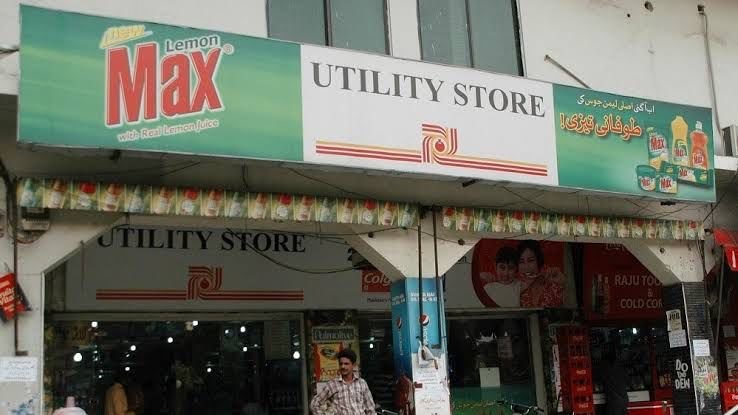
    Federal govt decides to shut down utility stores

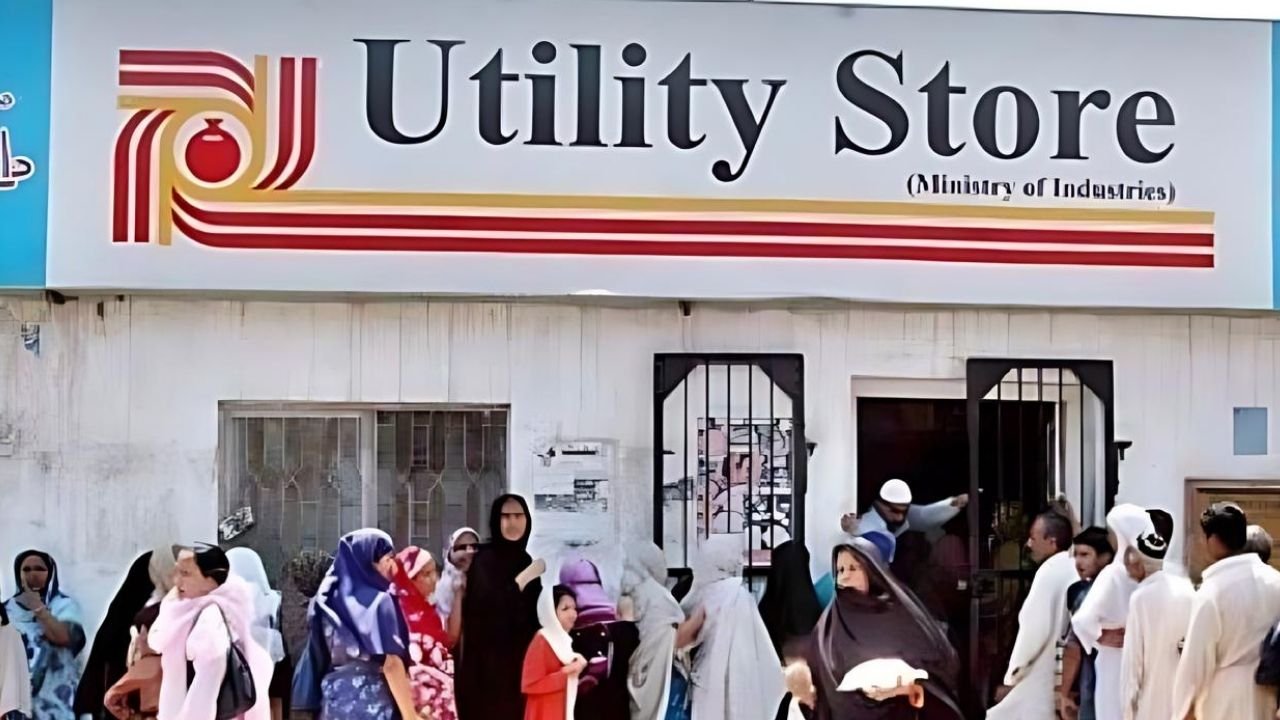
    Geo News has reported that the federal government has decided to shut down utility stores.

    According to the administration, the federal government has given two weeks to solve transaction matters with other companies.

    They pointed out that the federal government has already lifted subsidies.

    The administration stated that out of 11,000 employees, 6,000 are permanent, while the other 5,000 are contract-based employees, all of whom will likely be significantly affected by this decision.

    Utility stores are the largest chain stores in Pakistan. They sell commodities at lower prices than the market, and the government often provides subsidies to these chain stores.

  • Petroleum minister confirms gas prices will remain unchanged, highlights falling inflation

    Petroleum minister confirms gas prices will remain unchanged, highlights falling inflation

    In a recent press conference, Minister for Petroleum Musadik Malik announced that the federal government has decided to keep gas tariffs unchanged. He confirmed that consumers will not experience any increase in gas prices.

    Malik highlighted that the government’s economic policies are beginning to yield positive results. He reported a substantial reduction in food inflation, which has decreased from 48 per cent to just 2 per cent.

    Overall inflation has also dropped significantly, falling from 38 per cent to 12 per cent, with a continued downward trend anticipated. Malik stated that all economic indicators suggest the country is moving towards greater stability.

    The minister emphasised that the government’s primary objectives are to alleviate poverty, control inflation, and create job opportunities for the youth. He revealed that Prime Minister allocated Rs600 billion in the current federal budget to support the underprivileged.

    Development projects are being prioritised, particularly in underserved areas, to generate local employment. Additionally, Rs50 billion has been earmarked to protect 86 per cent of electricity consumers for the upcoming three months.

    Malik reiterated the government’s commitment to providing further relief to the public by enhancing healthcare facilities, digitising the Federal Board of Revenue (FBR), and pursuing the privatisation of state-owned enterprises.

    Criticising the previous Pakistan Tehreek-e-Insaf (PTI) administration, Malik accused them of distributing $4 billion to the wealthiest individuals during their tenure. He also addressed the issue of terrorism, asserting that while the government is working to combat it, opposition parties are criticising these efforts.

    The minister expressed disappointment with the opposition’s approach, which he described as destructive and confrontational. He specifically criticised the Sunni Ittehad Council (SIC) for its negative campaign against state institutions and its focus on sit-ins without offering viable solutions.

    Furthermore, Malik accused PTI leaders of inconsistency, recalling that they previously claimed their government was overthrown by the US, yet they are now seeking assistance from the same country.

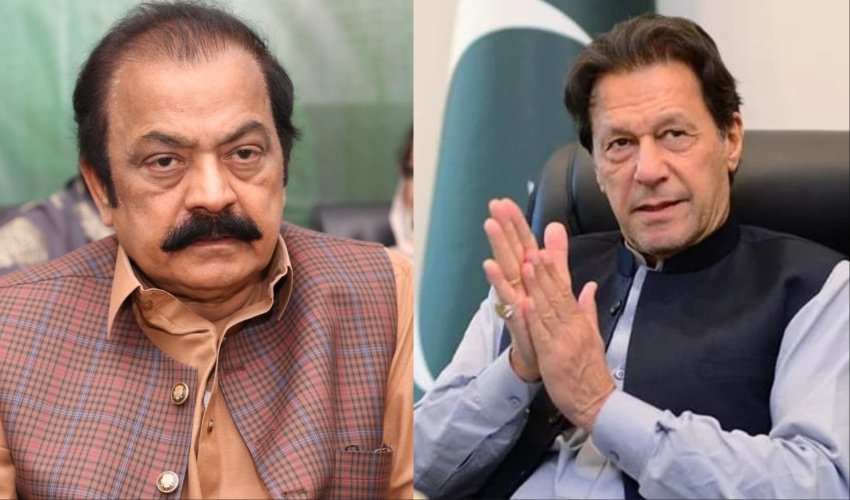
  • Government will file new cases against Khan to keep him in jail, says Rana Sanaullah

    Government will file new cases against Khan to keep him in jail, says Rana Sanaullah

    Pakistan Muslim League-Nawaz (PML-N) leader Rana Sanaullah has said on Tuesday that the federal government has a plan to file new cases against incarcerated former Prime Minister Imran Khan to delay his release from Adiala jail.

    Imran Khan was ousted from his office in April 2022 through the opposition’s no-confidence motion and is currently in Adiala jail facing multiple cases.

    Former Prime Minister Imran Khan will stay behind bars in the iddat case even after getting relief in £190 million reference and Toshakhana.

    “Imran Khan’s main agenda is to destabilise the country and spread chaos and anarchy in the country that’s why the government will certainly try to keep him behind bars as long as possible,” Rana Sanaullah said while talking on Geo News programme’ Aaj Shahzeb Khanzada Kay Sath’.

    He also stated that the government will file new cases against Khan to keep him in jail for a long time as courts have granted relief to the Pakistan Tehreek-e-Insaf (PTI) founder in several cases.

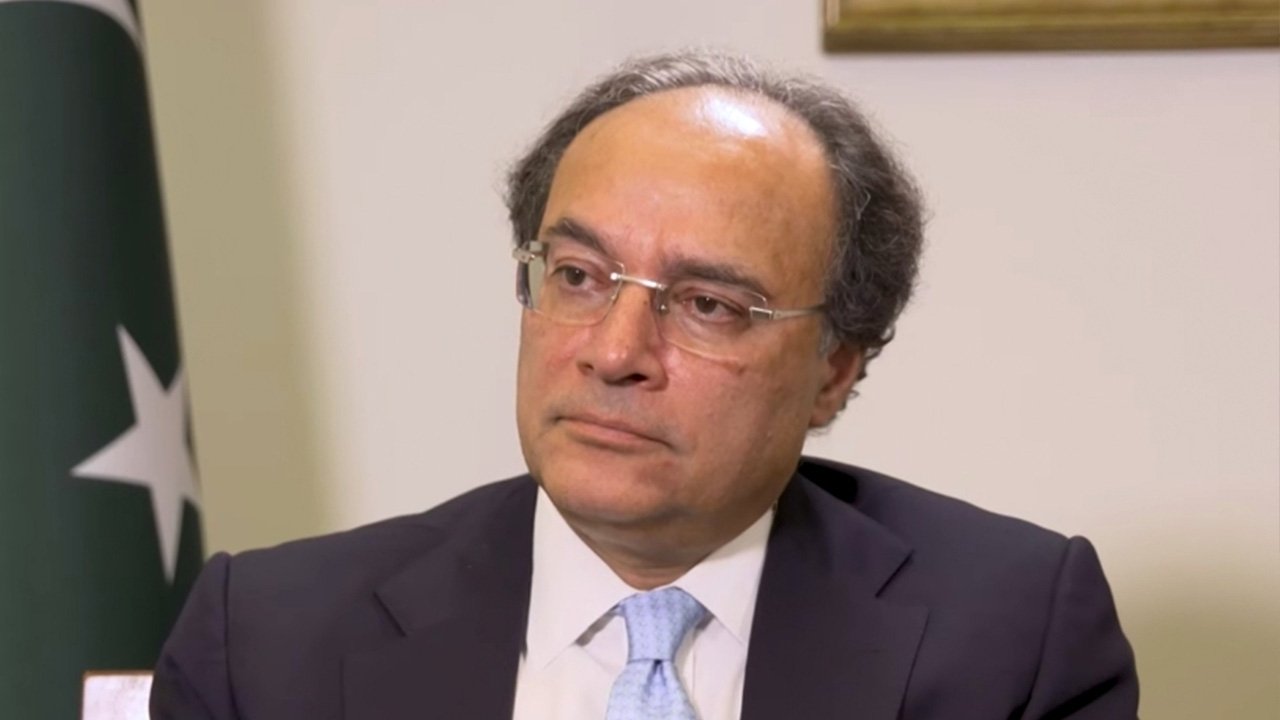
  • Finance Minister unveils economic plan to slash expenditures and boost revenues

    Finance Minister unveils economic plan to slash expenditures and boost revenues

    Federal Finance Minister Senator Muhammad Aurangzeb reiterated the government’s dedication to reducing expenditures and boosting revenues in a bid to fortify Pakistan’s economy sustainably.

    The announcement came during a press conference in his hometown, Kamalia, as reported by the state-run APP.

    Aurangzeb highlighted that the federal government plans to shut down parallel ministries or departments that have been devolved to provinces. This strategic move is anticipated to significantly cut down on expenditures and enhance operational efficiency.

    As an example, the minister noted that the Prime Minister has already announced the closure of the Pakistan Public Works Department, a decision expected to alleviate the financial burden on the government.

    Furthermore, the government is set on privatising state-owned enterprises (SOEs), which have been a considerable strain on the national exchequer. Aurangzeb cited Pakistan International Airlines (PIA) as a prime example, mentioning its liabilities amounting to billions of rupees now transferred to the government. The privatisation of these SOEs is projected to reduce financial burdens and enhance efficiency.

    In a related development, the minister revealed that the government is working on outsourcing airport management, starting with Karachi airport, which is expected to be handed over to the private sector by July or August this year, followed by Lahore airport.

    On the revenue side, Aurangzeb stressed the need to elevate the tax-to-GDP ratio from the current 9.5 per cent to 13 per cent over the next three years, underscoring the essential role of taxes in national administration.

    To achieve this, the government has introduced various revenue measures, including broadening the tax base to include non-taxable sectors, phasing out tax exemptions worth Rs3.9 trillion, and revising policies in sectors like health and agriculture.

    The minister announced that 32,000 retailers had already been registered for taxation starting from July 2024. He emphasised the government’s commitment to incorporating other sectors into the tax net, enhancing compliance, plugging systemic leakages, and implementing end-to-end digitisation to reduce human intervention, increase transparency, and curb corruption. Automation of sales tax collection is a top priority, Aurangzeb noted.

    Addressing the agricultural sector, Aurangzeb affirmed the government’s commitment by allocating Rs41 billion in the federal Public Sector Development Program (PSDP) to promote agriculture. Initiatives include the solarisation of tube wells, provision of loans to small farmers, and the development of warehouses to support small-scale farmers.

    Subsidies on fertilisers, seeds, and other agricultural inputs will continue, with efforts to involve banks, including Islamic banks, in providing loans to farmers.

    In the IT sector, the government aims to support freelancers and double exports from $3.5 billion to $7 billion. Aurangzeb mentioned a substantial budget allocation to facilitate the IT sector. He also assured that the Prime Minister’s recent visit to China focused on technology transfer, industrial development, and enhancing exports, rather than seeking aid.

    This comprehensive strategy, combining expenditure reduction and revenue enhancement, reflects the government’s robust commitment to placing the country’s economy on a sustainable growth trajectory.

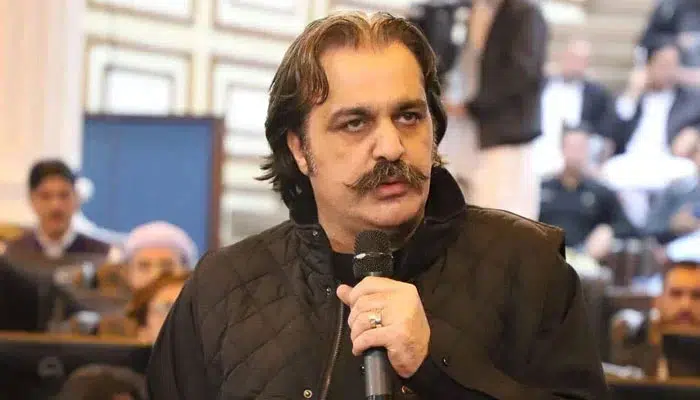
  • ‘Ghar police bhaij doon ga’; Ali Amin Gandapur warns Maryam Nawaz, Zardari

    ‘Ghar police bhaij doon ga’; Ali Amin Gandapur warns Maryam Nawaz, Zardari

    Khyber Pakhtunkhwa (KP) Chief Minister Ali Amin Gandapur has warned the Punjab government as well as the federal government to change their behaviours or he will “send police” to their homes, The News reported on Thursday.

    “Stop threatening me, or else we would send police to your homes,” Gandapur said while referring to Punjab Chief Minister Maryam Nawaz and President Asif Ali Zardari, after Anti-Terrorism Court Judge Malik Ijaz Asif issued non-bailable warrants against him in the alleged May 9 riots case on Tuesday.

    Non-bailable arrest warrants are also issued against multiple Pakistan Tehreek-e-Insaf (PTI) leaders, including Murad Saeed, Shibli Faraz, Shahbaz Gill, and retired Lieutenant Colonel Shabbir Awan.

    Warrants were also issued for former PTI leaders Shireen Mazari, Musarrat Jamshed Cheema, and Saad Jamil Abbasi.

    Ali Amin Gandapur also said that the first information reports (FIRs) against him are “fake,” adding that it would be difficult for Punjab and the federal government to operate if they do not change their behaviours.

  • Utility Stores to implement Rs7.492 billion relief package ahead of Ramzan

    Utility Stores to implement Rs7.492 billion relief package ahead of Ramzan

    The federal government is set to implement the Ramzan Relief Package, totaling Rs7.492 billion, through the Utility Stores Corporation (USC) starting March 4, 2024. This initiative aims to provide relief to targeted beneficiaries by offering subsidies on 19 essential items.

    The Economic Coordination Committee (ECC) of the Cabinet approved this decision based on a proposal from the Ministry of Industries and Production. The proposal sought approval for providing subsidies to targeted beneficiaries registered under the Benazir Income Support Programme (BISP) with a net amount of Rs7.492 billion.

    Of this, Rs 5 billion was allocated in the current fiscal year 2023–24 for the Ramzan Relief Package 2024, with the remaining Rs 2.492 billion to be re-appropriated from the current fiscal year budget allocations for the Prime Minister Relief Package (PMRP).

    The ECC directed the Finance Division to release the full subsidy amount of Rs7.492 billion to ensure timely purchases and necessary arrangements for the availability of these items at USC outlets.

    With Ramzan expected to commence on March 11, 2024, the implementation date for the Ramzan Relief Package-2024 was proposed from March 4, 2024, until the last day of Ramzan.

    Since 1991, the government has been providing relief during Ramzan by selling 19 items at subsidised rates through USC outlets. For the fiscal year 2023–24, the federal government allocated Rs35 billion for subsidies on essential items, including Rs30 billion for PMRP and Rs5 billion for the Ramzan Relief Package 2024.

    The Ramzan Relief Package aims to provide maximum relief to the masses. Due to restrictions imposed by the International Monetary Fund (IMF) on untargeted subsidies, subsidies are provided to targeted beneficiaries registered under PMT-40 of BISP for the fiscal year 2023–24.

    The USC is currently serving 26.92 million households registered under PMT-40. To extend assistance to more beneficiaries during Ramzan-2024, it is proposed to provide subsidies on 19 items to targeted beneficiaries registered under PMT-60, reaching an additional 12.73 million households.

  • PPP likely to join federal government

    PPP likely to join federal government

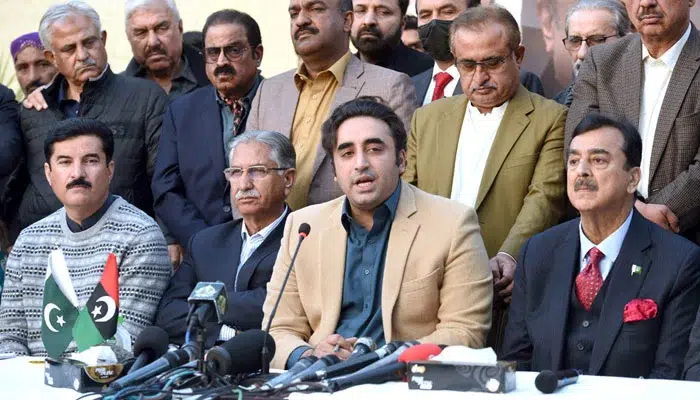
    The Pakistan Peoples Party (PPP) is likely to join the federal cabinet despite publically stating on Tuesday that the party will only support Pakistan Muslim League-Nawaz (PML-N) candidate for prime minister, Geo has reported on Wednesday.

    A day earlier, PPP chairman Bilawal Bhutto said that his party will only support PML-N in government formation and will not take ministries.

    In a press conference following the two-day Central Executive Committee meeting of the PPP, Bilawal stated that the party is open to offering support on specific issues and crucial votes for the Prime Minister candidate of Pakistan, aiming to facilitate government formation and restore political stability.

    “The PPP has decided that while we are not in a position to join the federal government ourselves, nor will we be interested in taking ministries in such a set-up, we also do not want to see political chaos in the country. We do not want to see perpetual crisis in the country,” he said.

    Asif Ali Zardari, the co-chairman of PPP, announced in a press conference later the same night, the formation of a six-party alliance for the next coalition government. He stated that they had decided to form the government together.

  • ‘Baloch protestors can stay in Islamabad, protest, or go back home. The choice is theirs’: IHC Chief Justice

    ‘Baloch protestors can stay in Islamabad, protest, or go back home. The choice is theirs’: IHC Chief Justice

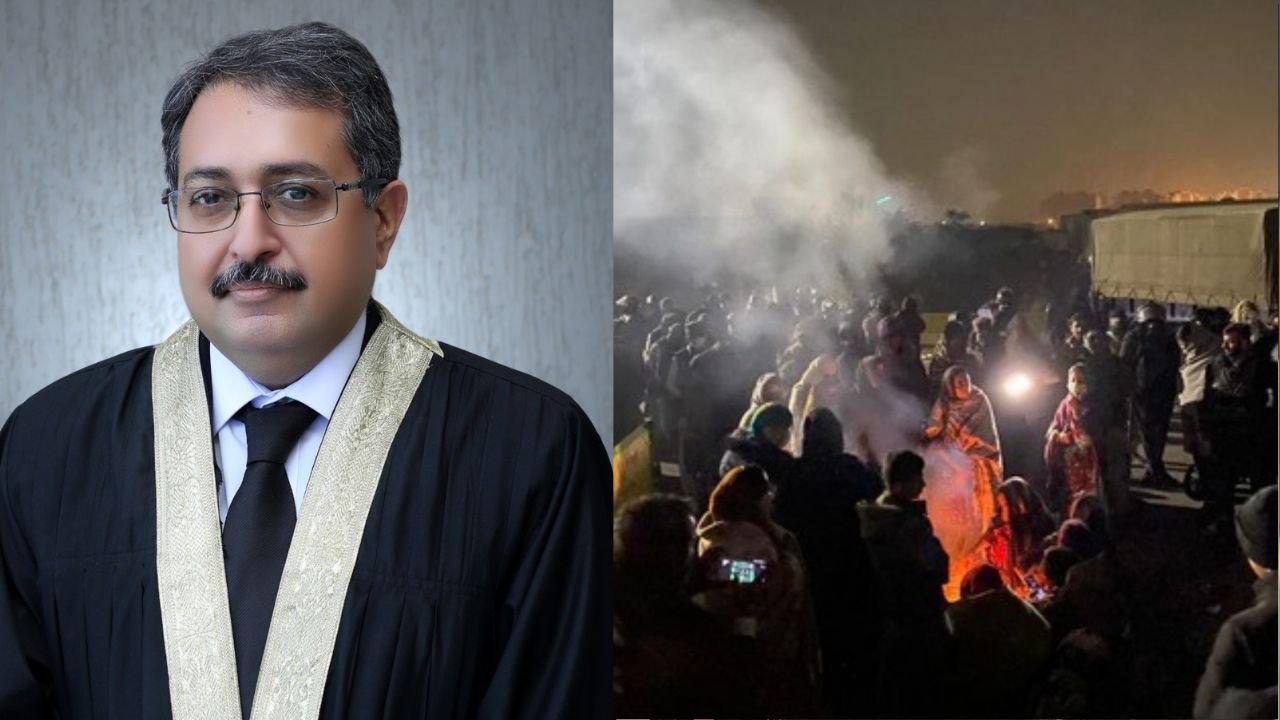
    The Islamabad High Court (IHC) raised concerns on Friday about the forced repatriation of Baloch protesters, who had experienced harsh police action the day before, back to their province.

    Chief Justice Aamer Farooq heard a petition filed by Baloch protesters against unlawful detention, questioning why they were being “forcefully” sent back to Balochistan.

    “They can stay in Islamabad, protest, or go back home. The choice is theirs,” remarked Justice Aamer Farooq

    The police used brutal force on Wednesday night to disperse and detain Baloch demonstrators in Islamabad, who were protesting against enforced disappearances and extra-judicial killings in their province.

    Over 200 protesters were taken into custody after encountering tear gas, water cannons, and police batons.

    The government later claimed that more than 90 per cent of the Baloch men and women in custody had been released, except for men “who could not be identified” by the police.

    However, during the IHC hearing on a petition seeking the release of detained Baloch protesters, it was revealed that over 50 Baloch women protesters had gone missing after police took action.

    The court instructed representatives of the protesters and their counsel to approach the Islamabad SSP (Investigation) to record their version and sought a report from the police.

    Petitioners’ counsel Attaullah Kundi and Imaan Mazari appeared before the court, explaining that the police had informed them that buses were waiting to take protesters back home.

    Kundi stated that the police chief had mentioned orders from the prime minister for the repatriation of protesters, and Baloch women were forcefully filled into buses. He further revealed that some Baloch students studying in Islamabad were also coerced into the buses.

    The court expressed displeasure and summoned IG Akbar Nasir in response. The police chief claimed to have arranged transport for the protesters, to which the court questioned why they were sent back forcefully. Chief Justice Farooq emphasized that the protesters had the choice to stay in Islamabad, protest, or go home.

    When asked how many protesters were in police custody, the IG replied that 216 Baloch men and women were at the Kohsar police station of which some had been sent on judicial remand. Out of these, 19 women were released, he added.

    Protesters at the Tarnol police station were released by the local magistrate while 162 detainees were sent on judicial remand, said IG Nasir.

    The court also asked about the number of women who were sent home, those released, and the ones staying at the hostel. It also directed the police chief to arrange a meeting of the women with their counsels.

    “You have to convince them that not one person is missing,” Justice Farooq emphasised.

    Journalist Hamid Mir and Ahmed Butt of the Human Rights Commission of Pakistan also provided insights during the hearing. Mir highlighted discrepancies in government statements, and Butt emphasized the constitutional right to protest in a democracy.

    The court directed the police chief to arrange a meeting between the detained women and their counsels and ensure transparency in the process.

    The IHC CJ further expressed displeasure over Wednesday night’s events, regretting the police action on protesters. “What kind of a society are we living in? Even if a common person is being unjust, public officeholders should always be careful,” he remarked.

    The court then instructed Kundi to oversee the entire matter and contact the IHC registrar’s office if there was a problem. It further said that all the women staying at the I-10 hostel be released.

    “I will issue a detailed order of today’s proceedings,” Justice Farooq said, adding that the next hearing would be conducted by Justice Miangul Hasan Aurangzeb.

  • ‘Fine line between enforced disappearances and self-disappearance’, says Sarfraz Bugti

    ‘Fine line between enforced disappearances and self-disappearance’, says Sarfraz Bugti

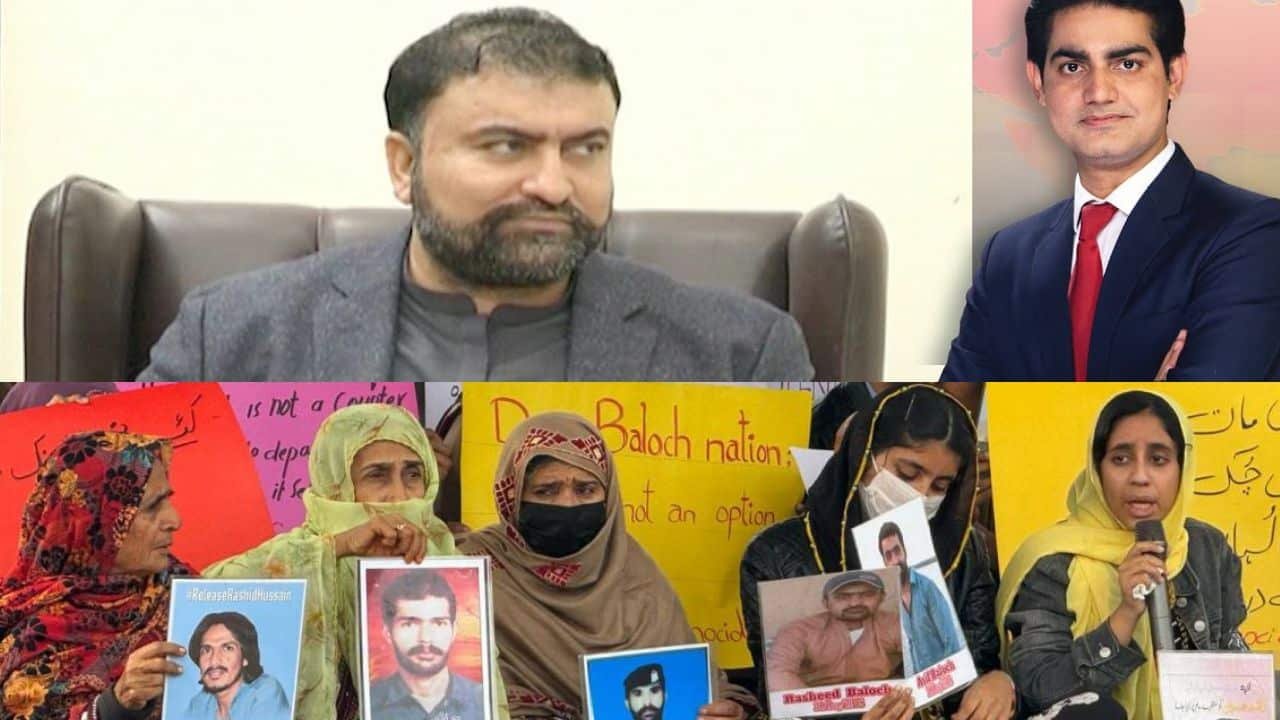
    Caretaker Interior Minister Sarfraz Bugti, while addressing the issue of missing persons in Pakistan, stated that the assemblies in the country represent “legitimate voices” for separatists expressing their perspectives.

    During an interview with DawnNewsTV program Doosra Rukh, Bugti delved into the complexities of missing persons cases, shedding light on the challenges faced in resolving them.

    Bugti’s comments come against the backdrop of an ongoing missing persons case being heard by the Islamabad High Court.

    On November 29, the court issued a warning that a case might be filed against the caretaker prime minister and others if they did not facilitate the reunion of missing Baloch students with their families.

    He also emphasized the delicate nature of the missing person issue, stating, “We have a commission on this matter, and it has resolved around 85 per cent of cases.”

    The commission was established in 2011 to trace missing persons and fix responsibility on the individuals or organizations responsible for it.

    In the interview aired on Friday, Minister Bugti pointed out the fine line between “enforced disappearances and self-disappearance”, highlighting that the commission had encountered cases with surprising details.

    “There were cases wherein people left their homes after a domestic dispute, and it transpired weeks later that they had left home themselves.”

    He also noted instances where individuals lost their lives in “encounters” with security forces.

    Minister added, “Then there are cases in which suspects are absconders required by a court, and their families submit pleas claiming their family member as missing to avoid court [action].”

    He remarked that such cases had been reported and documented.