Tag: federal government

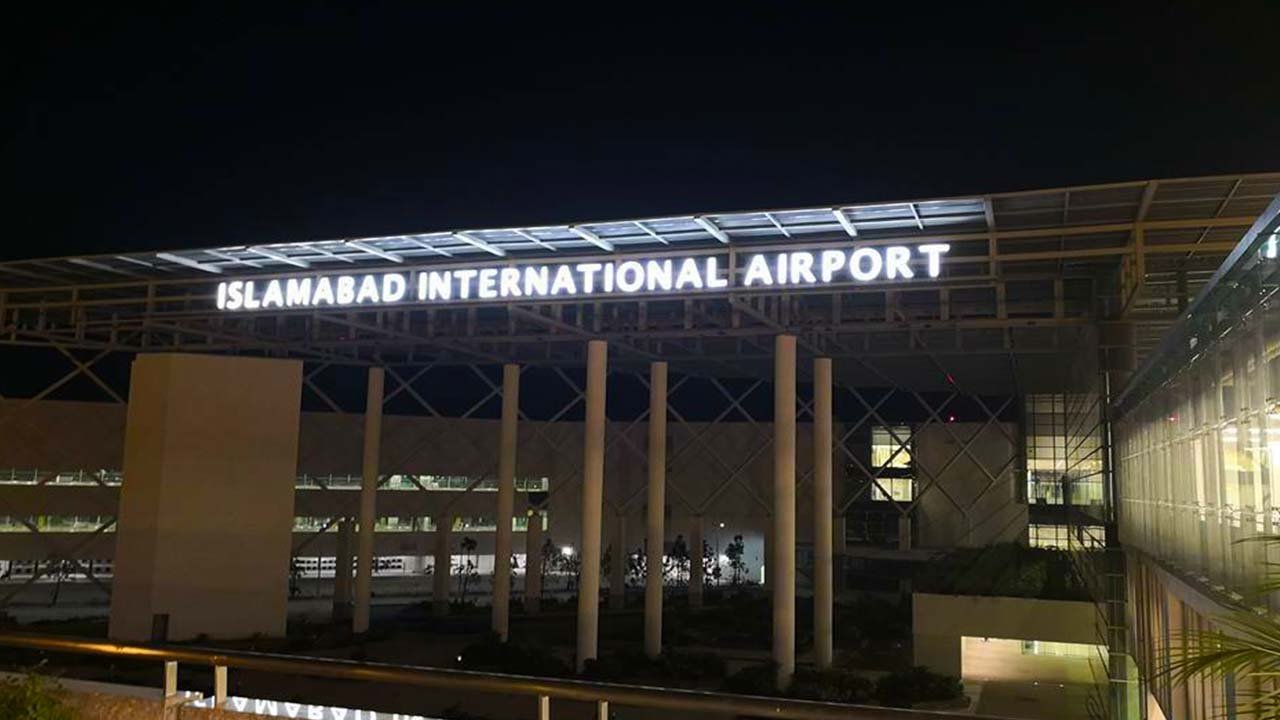
  • Govt set to outsource Islamabad International Airport operations for 15-20 years

    Govt set to outsource Islamabad International Airport operations for 15-20 years

    The government has taken the decision to outsource the operations of Islamabad International Airport before the conclusion of its current tenure. The decision comes as part of the government’s strategy to enhance efficiency and service quality at the airport.

    According to details, the concerned authorities are set to issue a tender for the outsourcing of Islamabad International Airport for a duration of 15 years, with the possibility of extending the contract to 20 years to accommodate the interests of interested companies.

    As per the outlined plan for airport outsourcing, the responsibility for passengers’ facilitation services will be transferred from the Civil Aviation Authority (CAA) to the selected private company. This company will be entrusted with the management of the airport, with a primary focus on improving passenger facilities. Furthermore, the company will be responsible for the renovation and management of the duty-free shops within the airport premises.

    A noteworthy aspect of this outsourcing plan is that the current CAA employees associated with Islamabad International Airport will be reassigned to other departments within the airport network. Additionally, several other essential services, including airport terminal services, parking, storage, cargo, and handling, will also be included in the outsourcing process.

    It is crucial to mention that the Civil Aviation Authority (CAA) will retain control over critical functions such as airport security and air traffic control departments. This measure is taken to ensure that crucial aspects of airport operations remain under the direct supervision of the government.

    To safeguard the interests of passengers and ensure accountability, the agreement with the selected company will include provisions that allow the federal government to terminate the contract in case of failure to provide satisfactory facilities and services to travelers.

    Following the initiative at Islamabad International Airport, the federal government also plans to undertake similar outsourcing measures for the airports in Lahore, Karachi, and Skardu, aiming to streamline operations and enhance overall service delivery standards.

    In a related development, Finance Minister Ishaq Dar presided over a meeting of the Steering Committee in Islamabad yesterday, where the progress of work pertaining to the outsourcing of airport operations was thoroughly reviewed. The committee unanimously granted approval to the Ministry of Aviation to proceed with the tendering process for outsourcing Islamabad International Airport. The move is intended to align airport services with the best industry practices and improve the overall travel experience for passengers.

    According to ARY, this strategic decision by the federal government reflects a proactive approach to leverage private sector expertise in managing critical aspects of airport operations, with the ultimate goal of providing enhanced services and facilities to travelers using Islamabad International Airport.

  • Federal govt contemplating strict law to counter social media ‘propaganda’

    Federal govt contemplating strict law to counter social media ‘propaganda’

    The outgoing federal government is contemplating strict laws to counter social media disinformation and propaganda, geo.tv had reported.

    The government is mulling amending the 2016 Prevention of Electronic Crimes Act (PECA) so that “fake news targeting the reputation and image of a particular person or group of people, organisation, or other entity will be checked by all available means,” a source told Saleh Zafar.

    The authority of Pakistan Telecommunications Authority (PTA) and Federal Investigation Agency (FIA) will be increased to keep a check on social media, while an ‘e-safety’ law will be introduced to protect official portals.

    The report also claims that a new section will be added to PECA to ensure “stringent” action against culprits. Officials say that FIA is powerless even in instances of fake news.

  • 17.5% increase in pension announced for federal govt retirees

    17.5% increase in pension announced for federal govt retirees

    The government has issued a notification announcing a 17.5 per cent increase in the pension for federal government pensioners. The increase, sanctioned by the President, will be effective from 18th July 2023 until further orders. It applies to all civil pensioners of the federal government, including civilians paid from Defence Estimates, as well as retired armed forces personnel and civil armed forces personnel.

    The 17.5 per cent increase in pension will also be applicable to pensioners who retire on or after 1st July 2023. To determine the eligibility for the increase in pension as sanctioned in this notification, “Net Pension” refers to the pension being drawn minus the Medical Allowance.

    In addition, the increase will be granted to family pensioners under the Pension-cum-Gratuity Scheme of 1954, the Liberalized Pension Rules of 1977, pensions sanctioned under the Central Civil Services (Extra Ordinary Pension) Rules, as well as the Compassionate Allowance under CSR-353.

    If the gross pension sanctioned by the federal government is shared with another government in accordance with the rules stated in Part-IV of Appendix-III to the Accounts Code, Volume-I, the increase in pension will be divided proportionately between the federal government and the other government concerned.

    However, the increase in pension as sanctioned in this notification will not be applicable to the special additional pension granted in place of pre-retirement orderly allowance and the monetized value of a driver or an orderly.

  • Govt increases excise duty on registration of cars over 2000cc

    Govt increases excise duty on registration of cars over 2000cc

    The federal government has implemented a considerable increase in excise duty on vehicle registration for vehicles with engine capacities exceeding 2000cc in the Finance Bill for the fiscal year 2023-2024.

    Under the new regulations, a fixed tax rate of six per cent has been imposed on vehicles ranging from 2001cc to 2500cc. Individuals who file their taxes will be subject to a tax payment of Rs0.25 million for vehicles falling within this range.

    For vehicles with engine capacities between 2501cc and 3000cc, the government has introduced an eight per cent fixed tax rate. Previously, filers were required to pay Rs0.2 million, while non-filers were subjected to a higher tax amount of Rs 0.4 million. Furthermore, a substantial ten per cent fixed tax has been imposed on the registration of vehicles with a capacity of 3000cc.

    The National Assembly has already approved the Finance Bill for the upcoming fiscal year, incorporating vital budgetary proposals. Finance Minister Ishaq Dar presented the bill to the House, outlining a total outlay of Rs14,480 billion.

    The passage of the federal budget in the House was a crucial step taken to address the concerns of the International Monetary Fund (IMF) and secure the revival of a suspended loan program. In light of these developments, revisions were made to the tax collection target, raising it from Rs9,200 billion to Rs9,415 billion.

    To accommodate increased pension payments, an allocation of Rs801 billion has been designated, reflecting a significant rise from the previously allocated amount of Rs761 billion. These measures demonstrate the government’s commitment to addressing pressing fiscal matters and ensuring financial stability.

  • Pakistan lifts import restrictions to satisfy IMF demand

    Pakistan lifts import restrictions to satisfy IMF demand

    In a recent development, the State Bank of Pakistan (SBP) has taken the decision to lift all import restrictions as part of fulfilling a condition set by the International Monetary Fund (IMF).

    The central bank issued a circular to officially end these restrictions, thereby satisfying another requirement put forth by the IMF.

    To facilitate the release of over 6,000 containers, the federal government has granted permission to banks for remittance provision. The circular issued by the SBP states that remittances will be provided for all imports following the implementation of this latest order. The central bank has instructed authorised dealers to process remittances based on the recommendations of stakeholders.

    It came to light yesterday that Pakistan and the IMF are facing challenges in reviving a loan program, leading to disagreements between the Ministry of Finance and the IMF. Sources revealed that the plan to bridge the external financing gap relied on funds received from a donor conference held in Geneva.

    The primary objective of the conference was to garner support and contributions for Pakistan’s financial requirements. As part of this plan, the IMF was tasked with securing $500 million by June through the Geneva Donor Conference. However, efforts to obtain funds for the Ministry of Planning and Treasury have encountered obstacles. Delays in finalising contracts and agreements under the Donor Conference have further impeded the financing process.

    Sources within the Ministry of Finance report that the amount received through the Geneva Donor Conference currently stands at $150 million, falling short of the expected sum. This has raised concerns from the IMF, which has expressed dissatisfaction with the level of financial support obtained through the conference.

    According to ARY News, the funds acquired from the Donor Conference will be allocated to crucial recovery and rehabilitation projects in regions affected by floods. The aim is to address the needs of these communities and provide support for their restoration efforts.

  • Federal govt considering premature dissolution of National Assembly

    Federal govt considering premature dissolution of National Assembly

    The federal collation government is considering a premature dissolution of the National Assembly, Samaa has reported.

    According to Samaa’s sources, the federal government has considered dissolving the National Assembly a week before the end of the constitutional term.

    According to the report, Prime Minister Shehbaz Sharif will also take advice from his elder brother, Pakistan Muslim League-Nawaz (PML-N) Nawaz Sharif in this matter.

    The first week of November 2023 is the suggested time for general elections, but the date will be finally decided after a summit of government and its allies

  • Govt increases defence budget by 16% to Rs1.8 trillion

    Govt increases defence budget by 16% to Rs1.8 trillion

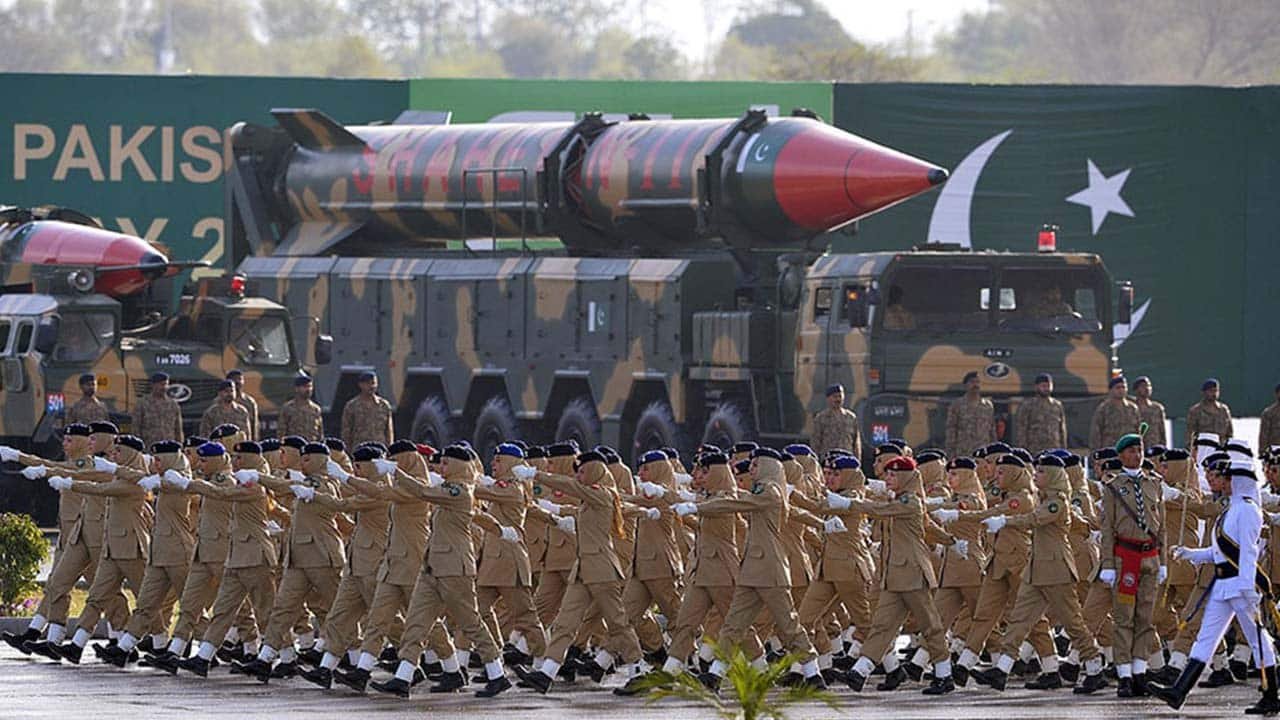
    In response to the prevailing internal and external security challenges faced by Pakistan, the federal government has put forward a proposal for a substantial 16 per cent rise in the defence budget. According to the budget document, the allocation for defence in the fiscal year 2023-24 is projected to be Rs1,804 billion, signifying an increase from the revised defence spending of Rs1,591 billion assigned for the outgoing fiscal year.

    Experts opine that the justification for a 15.7 per cent surge in the defence budget stems from the record inflation and devaluation of the rupee against the dollar witnessed over the past year. A detailed examination of the budget reveals that the figure of Rs1,804 billion excludes Rs563 billion designated for retired military personnel pensions, Rs280 billion for the armed forces development program and other crucial expenses, and Rs58 billion for UN peacekeeping missions.

    According to the 2023-24 budget document, out of the total defence allocation, Rs705 billion has been set aside for employee-related expenses, Rs442 billion for operational costs, Rs461 billion for local purchases and import of arms and ammunition, and Rs195 billion for civil works. Interestingly, all three branches of the military—the army, navy, and air force—have received equal budget increments, albeit with the army receiving the largest share due to its size and role.

    Pakistan’s defence spending currently accounts for 1.7 per cent of its GDP, representing a decline compared to the previous year. In the 2022-23 fiscal year, defence spending constituted around 2 per cent of the country’s GDP, which expanded due to the reevaluation of the economy.

    When comparing the average spending per soldier, Pakistan allocates $13,400, while India dedicates $42,000, Saudi Arabia $371,000, Iran $23,000, and the United States allots a substantial $392,000 annually. It is important to note, however, that the disparity lies in the significant disparity in the sizes of their respective economies compared to Pakistan’s.

    Defence expenditure has consistently been a topic of discussion, with some advocating for greater transparency and open debate regarding the military budget. In recent years, the government has provided more detailed information about the defence budget. Nevertheless, there has been no open parliamentary debate on the subject. Observers argue that the increase in the defence budget is warranted, considering the imminent external and internal security challenges faced by the country.

    Despite the withdrawal of US troops from neighbouring Afghanistan, Pakistan continues to deploy a substantial number of troops along its western border and erstwhile tribal areas to combat the threat of terrorism. Similarly, tensions persist between Pakistan and India, although the restoration of a ceasefire has provided some respite.

  • Life-saving medicines in Pakistan to become 14% more expensive

    Life-saving medicines in Pakistan to become 14% more expensive

    The Drug Regulatory Authority of Pakistan (DRAP) has announced an increase of up to 14 per cent in the prices of life-saving medicines, following approval from the federal government.

    According to ARY News, DRAP stated that life-saving drugs will experience a 14 per cent hike, while all other medicines will see a 20 per cent increase.

    The regulatory authority clarified that these price adjustments are considered a one-time dispensation, in line with the 70 per cent rise in the consumer price index (CPI). This increase will be regarded as the annual raise for the fiscal year 2023-24, with no further increments in the upcoming financial year.

    The DRAP’s Policy Board will evaluate the situation after three months, specifically in July 2023, and submit recommendations to the federal government for potential price reductions, should the Rupee appreciate in value.

    The Economic Advisory Committee had already endorsed the price hike, taking into account the escalating fuel prices and the devaluation of the Rupee, which have contributed to record-high inflation in recent months, impacting various sectors of the economy.

    Earlier reports indicated a 0.16 per cent year-on-year decrease in weekly inflation, as measured by the Sensitive Price Indicator (SPI), for the week ending on May 18. However, short-term inflation surged to an unprecedented 48.35 per cent for the period ending on May 4.

    The Pakistan Bureau of Statistics (PBS) released data indicating a combined index of 255.12, compared to 255.53 on May 11, 2023. In contrast, the index stood at 175.08 a year ago, on May 19, 2022.

  • US could default by next month unless debt ceiling is raised

    US could default by next month unless debt ceiling is raised

    Janet Yellen, the United States Treasury Secretary, has written to Republican House Speaker Kevin McCarthy, warning that the federal government may exceed its spending limit by June 1 if Congress does not raise the debt ceiling. Yellen’s letter, which was published on Monday, noted that available data suggests that the government will no longer be able to cover its expenses in early June if Congress does not raise the limit before then.

    Yellen emphasised the importance of Congress taking action to increase or suspend the debt limit as soon as possible, to ensure that the government can continue to make its payments. While Yellen’s letter indicates the US could enter default as early as June 1, she also noted that it is impossible to predict the exact date when Treasury will be unable to pay the government’s bills.

    The potential for a default has raised concerns among experts about its possible impact on the US economy. It could lead to a fall in the US credit rating, resulting in higher interest rates and a possible recession. The process of raising the US spending limits is typically routine, but it has become increasingly contentious in recent years. Republicans in Congress are pushing for steep cuts to social programs in exchange for their support to raise the debt ceiling this year. In contrast, the Biden administration has called for an increase to the debt ceiling without conditions, stating that debates over various programs can be hashed out during negotiations on the yearly budget.

    Last week, the Republican-led House of Representatives passed a bill that agreed to raise the debt ceiling by $1.5 trillion in exchange for $4.5 trillion in spending cuts for programs like healthcare for low-income communities, renewable energy and transportation. The bill is considered dead on arrival in the Democrat-controlled US Senate, and Biden has stated that he would veto it. However, its passage in the House is considered a victory for McCarthy, who has since called for Democrats to approve the bill and avoid a default.

    Democrats have called for a “clean” debt limit increase without haggling or addendums. Virginia Senator Mark Warner tweeted on Monday that the US has about a month until it defaults on paying its debt and emphasised that this is not new spending, but about paying bills already incurred. On May 9, US President Joe Biden reportedly called for a meeting with Democratic and Republican leaders to discuss spending and the debt limit. The Congressional Budget Office has also stated that it sees an increased risk of the government running out of funds by early June due to tax receipts that were lower than expected.

  • Itni chuttiyan? KP announces six-day long Eid holiday

    Itni chuttiyan? KP announces six-day long Eid holiday

    The Khyber Pakhtunkhwa (KP) government has announced on Friday that official holidays on the occasion of Eid ul Fitr will be six days long.

    According to the notification issued by KP government, Eid holidays will start from April 21 and will conclude on April 26.

    The Federal and Punjab governments have announced a five-day holiday for Eid.

    The Central Ruet-e-Hilal Committee is set to meet on April 20 for sighting of the Eid ul Fitr crescent moon, a statement from the religious affairs ministry said on Tuesday.

    This year, the holy month of Ramazan started on March 23.