Tag: female judge

  • Justice Ayesha Malik is part of this year’s BBC 100 inspiring women

    Justice Ayesha Malik is part of this year’s BBC 100 inspiring women

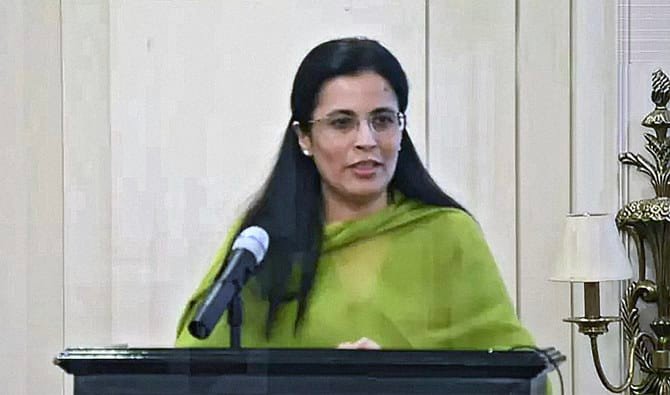
    The first female judge of the Supreme Court of Pakistan, (SCP) Justice Ayesha A. Malik, has been listed as one of the 100 most influential and inspiring women of 2022 by the British Broadcasting Corporation (BBC ).

    On Wednesday, BBC revealed the names of 100 influential and inspiring women from around the world who made it to the privileged list for this year. Among the honourees is Justice Malik, the only Pakistani woman to have been featured on the list.

    The BBC highlighted that Justice Ayesha has authored judgments protecting the rights of women, including her “landmark judgment which banned the so-called two-finger test of rape victims” which was performed during the examination of sexual assault cases.

    “Alongside her role on the Supreme Court, Malik also conducts training for judges around the world and has inaugurated conferences for women judges in Pakistan, encouraging debate around and including the gender perspective in the justice system”.

    Earlier this year, the 56-year-old judge made history after being sworn in as the top court’s first female judge. She will become the first woman Chief Justice of Pakistan after Justice Yahya’s retirement in January 2030.

    Her elevation to the apex court was hailed by human rights activists and civil society across the country.

  • Khan pleads innocence: ‘Threats to female judge don’t fall under terrorism’

    Khan pleads innocence: ‘Threats to female judge don’t fall under terrorism’

    Pakistan Tehreek-e-Insaf (PTI) Chairman Imran Khan said on Friday that the threats he issued to a female judge in a rally do not fall under “terrorism” and the case should be dismissed as he is “innocent”.

    “I am the chairman of Tehreek-e-Insaf, I have been the prime minister of Pakistan. This government tortured [my aide] Shahbaz Gill due to political opposition. The report filed in the Islamabad High Court (IHC) proved that Gill had been tortured,” Khan told the Joint Investigation Team (JIT), calling for the dismissal of his case in the written reply submitted.

    Khan was asked to appear before the JIT at the Margalla Police Station on Friday but he did not show up.

    Last week, an Anti-Terrorism Court (ATC) in Islamabad extended the interim bail of the PTI chairman till September 12 in the terrorism case related to his controversial remarks about the female sessions court judge Zeba Chaudhry and the capital city police.

    The court directed the ex-prime minister to submit Rs100,000 as surety against the bail.

    A case was registered against the former prime minister under the Anti-Terrorism Act for threatening the additional sessions judge and senior police officers of the Islamabad Police during a public rally.

  • Justice Ayesha Malik makes history, first woman judge elevated to the Supreme Court

    Chief Justice of Pakistan Gulzar Ahmed has nominated Justice Ayesha A. Malik for the elevation to the Supreme Court, tweeted senior journalist Hasnaat Malik.

    Justice Ayesha will be the first woman judge in the history of Pakistan to be elevated to the Supreme Court.

    She will become the first woman Chief Justice of Pakistan after Justice Yahya’s retirement in January 2030.

    Justice Ayesha A. Malik is one of the only two women judges in the 40 esteemed judges of the Lahore High Court. According to Women in Law, a group working for equal opportunities for women lawyers in Pakistan, only 15 per cent of women judges are part of the Pakistani judiciary.

    Justice Ayesha Malik’s name came to fame after her landmark judgment against the ‘two-finger test’ or two-finger virginity test of sexual assault survivors.

    Justice Ayesha Malik, 54, received her early education from Karachi Grammar School and her LLM degree from Harvard Law School in the United States, after which she returned to Karachi to practice law.

  • British-Pakistani woman becomes Britain’s first hijab-wearing  judge

    British-Pakistani woman becomes Britain’s first hijab-wearing judge

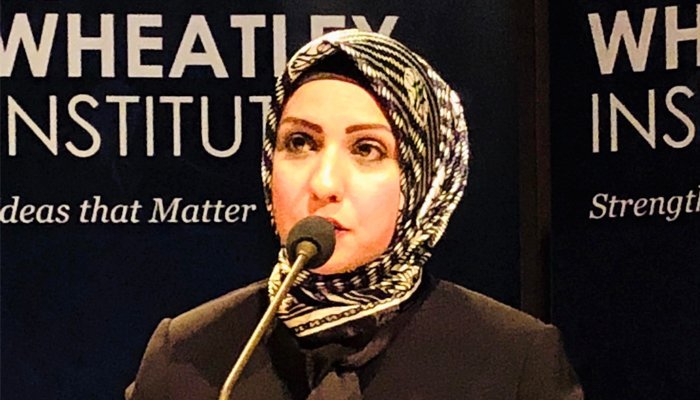
    British-Pakistani Raffia Arshad has become the first-ever, hijab-wearing deputy district judge in the United Kingdom.

    After completing her law degree from Oxford Brookes University, Arshad worked as a barrister at a firm specializing in family law. She has also written a book titled Islamic Family Law.

    As per reports, she is the first in her family to go to university. 

    Speaking to a private media outlet the newly-appointed judge said: “My appointment is a celebration for all Muslim women. I am delighted that I have broken the glass ceiling for many more capable Muslim women.

    “At a time when everyone is facing uncertainty and unprecedented challenges, I urge everyone to rekindle their dreams and pursue them.”

    Arshad credited her parents and mentioned how their prayers have helped her in her success. She said she felt proud of being counted as an outstanding Pakistani in the west.

    Read more – Tunisian woman bicycles to Makkah in 53 days

    Arshad’s husband is a doctor and a religious scholar, who completed a diploma in Islamic jurisprudence and coaching while working as a barrister.

    The further said: “I am a court-appointed expert on matters of Islamic family law and have authored many publications, including a textbook that is used by other judges worldwide. I have been invited to Germany and America to speak on Islamic family law.”

    Breaking stereotypes, she highlighted how women could follow their religion and also succeed in their careers at the same time. 

  • Islamabad High Court gets its first female judge

    Islamabad High Court gets its first female judge

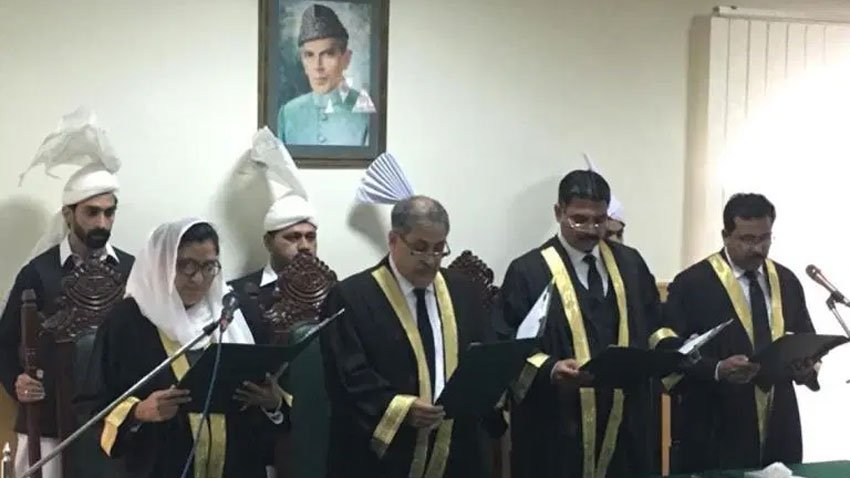
    The Islamabad High Court on Friday got its first female judge.

    According to reports, Justice Lubna Saleem Pervaiz was administered the oath by Chief Justice Athar Minallah at the high court.

    Two other judges, Fiaz Anjum Jadran and Ghulam Azam Qambrani, were also sworn in.

    Meanwhile, Justices Aamer Farooq, Mohsin Akhtar Kayani, and Miangul Hassan Aurangzeb attended the ceremony.

    Earlier in December, Chief Justice Pakistan Asif Saeed Khosa had revealed that the judiciary is working towards inducting female judges in the Supreme Court.

    Addressing the concluding session of Women Judges Conference in Lahore, Justice Khosa had said that more than 300 female judges are working in the district courts of Pakistan and that they were doing a brilliant job.

    “Our women judges have proven their abilities through their verdicts and by the way they have handled complex cases,” Justice Khosa had said, adding, “We have as many as 300 women judges in district courts and we hope to soon have at least one or two in the Supreme Court. I had the opportunity to propose two names and they are being actively considered.”