Tag: fiction

  • Palestinian prisoner in Israel wins top fiction prize

    Palestinian prisoner in Israel wins top fiction prize

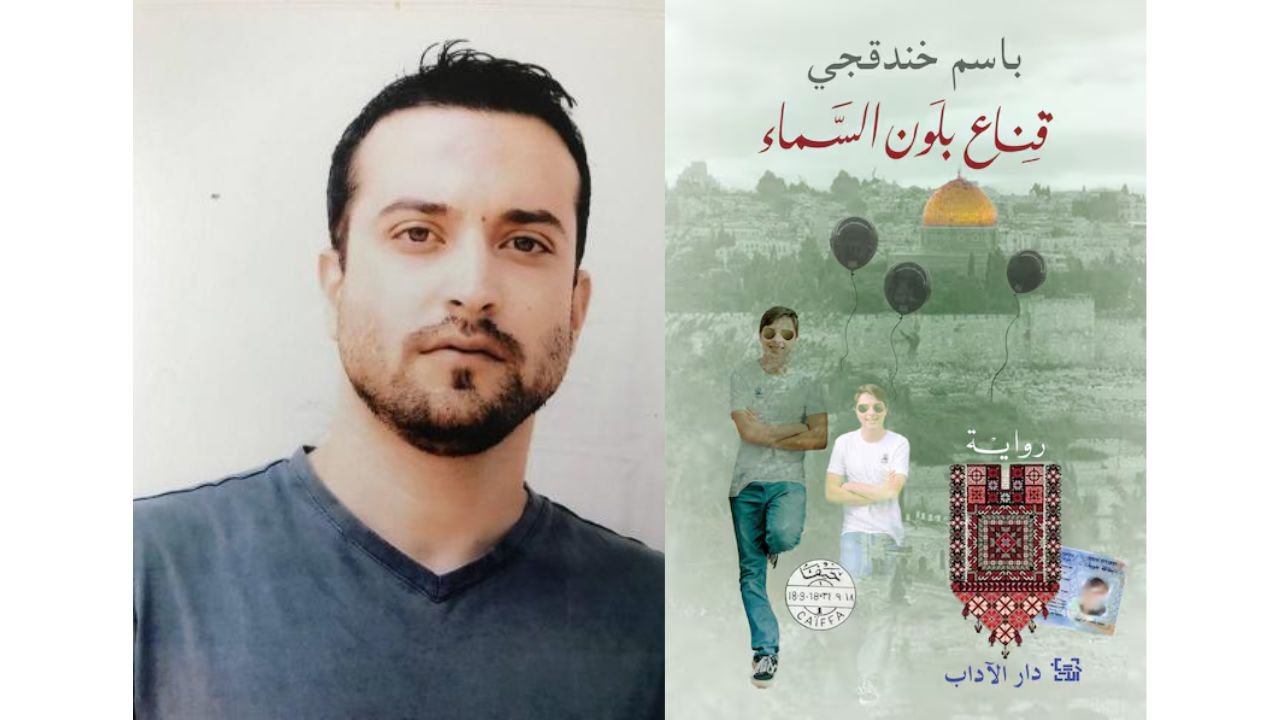
    Palestinian writer Basim Khandaqji, jailed 20 years ago in Israel, won a prestigious prize for Arabic fiction on Sunday for his novel “A Mask, the Colour of the Sky”.

    The award of the 2024 International Prize for Arabic Fiction was announced at a ceremony in Abu Dhabi.

    The prize was accepted on Khandaqji’s behalf by Rana Idriss, owner of Dar al-Adab, the book’s Lebanon-based publisher.

    Khandaqji was born in the Israeli-occupied West Bank city of Nablus in 1983, and wrote short stories until his arrest in 2004 at the age of 21.

    He was convicted and jailed on charges relating to a bombing in Tel Aviv, and completed his university education from inside jail via the internet.

    The mask in the novel’s title refers to the blue identity card that Nur, an archaeologist living in a refugee camp in Ramallah, finds in the pocket of an old coat belonging to an Israeli.

    Khandaqji’s book was chosen from 133 works submitted to the competition.

    Nabil Suleiman, who chaired the jury, said the novel “dissects a complex, bitter reality of family fragmentation, displacement, genocide, and racism”.

    Since being jailed Khandaqji has written poetry collections including “Rituals of the First Time” and “The Breath of a Nocturnal Poem”.

    He has also written three earlier novels.

    bur-srk/srm

    © Agence France-Presse

  • What will Imran Khan be reading in jail?

    What will Imran Khan be reading in jail?

    What will Imran Khan be reading in jail?

    On Wednesday, in a clip posted on X (formerly Twitter) Aleema Khan could be seen talking to the media, stating that her brother , former Prime Minister Imran Khan is doing well in Attock jail. Aleema Khan said that her brother told her that he has gotten time for himself after years. “He has started finishing the Quran for the second time and has also read Islamic history,” she said, adding that Imran Khan will adjust to any environment, no matter the conditions.

    Later in the day, Intazar Hissain Panjutha, Imran Khan’s lawyer, took to X, asking for book recommendations on the history of Pakistan, history of the region and current affairs.

    Today he posted a picture of the books being sent to Imran Khan for reading.

    So what is Khan reading?

    How Democracies Die by Daniel Ziblatt and Steven Levitsky
    Published in 2018, this book is on comparative politics about how elected leaders can gradually destabilise the democratic process to increase their power.

    Monsoon By Robert D. Kaplan
    It reflects upon the vitality of India, Pakistan, China, Indonesia, Burma, Oman, Sri Lanka, Bangladesh, and Tanzania for American power. Kaplan uncovers the effects of population growth, climate change, and extremist politics on the unstable region.

    People’s History of the United States by Howard Zinn
    Zinn presents a different side of history from the more conventional “fundamental nationalist glorification of country”, exposing the exploitation and manipulation of the majority by rigged systems that cater to a few elite rulers from across the orthodox political parties.

    Guns, Germs, and Steel by Jared Diamond
    Diamond dismantles racially based theories of human history while discussing the way that the modern world came to be.

    World Order by Henry Kissinger
    The book escorts the reader through to the complex mechanisms that have governed international relations throughout history.

    Secrets of Divine Love: A Spiritual Journey into the Heart of Islam by A. Helwa
    Helwa uses references from the Quran, ancient mystical poetry, and stories of prophets and spiritual masters to help one grow spiritually and strengthen connection with God.

    The Narrow Corridor by Daron Acemoglu and James A. Robinson
    The writers contend that a country’s rise and fall is dependent on culture, geography, or chance, but on the power of their institutions.

    Active Measures: The Secret History of Disinformation and Political Warfare by Thomas Rid
    A history of disinformation which tracks the increase in secret organized deception operations from the interwar period to contemporary internet trolls.

    The Revenge of Geography by Robert D. Kaplan
    Another book by Kaplan in the list. This one explores the role geography and the national borders play in world conflicts.

    Indus Divided by Daniel Haines
    Indus Divided talks about the significance of the Indus Basin river system for Indian and Pakistan and the dispute between the two countries after the partition in 1947.

    Empires of the Indus: The Story of a River by Alice Albinia
    It is part-memoir, part-essay in which the writer reiterates her journey through Central and Southern Asia.

    The China-Pakistan Axis: Asia’s New Geopolitics by Andrew Small
    The book explores the outcome of Sino-Pakistani ties for the West, India, Afghanistan, and for Asia, overall. It highlights the sensitive facets of their relationship including Beijing’s support for Pakistan’s nuclear program, China’s dealings with the Taliban, and the Chinese military’s planning for crises in Pakistan.

    Balthasar’s Odyssey by Amin Maalouf
    It is a novel revolving around a quest to find a book supposedly published during the days of the Ottoman Empire.

    The Next 100 Years: A Forecast for the 21st Century by George Friedman
    The writer predicts the future wars — why and where will they happen and how they will be fought; who will acquire economic and political power and who will lose; and how new technologies and cultural trends will change the way we live in the new century.

    As Through a Veil: Mystical Poetry in Islam by Annemarie Schimmel
    It is a story of Islamic poetry that covers the ambit of traditions and cultures, from Arabic religious verse to the Persian Sufis and the popular folk poetry of India and Pakistan.

    Adrift: How Our World Lost Its Way by Amin Maalouf
    The book traces how civilizations have divided throughout the 20th century, combining personal narrative and historical analysis to caution in regard to the future.
  • Popular Fiction: Don’t feel like you’re Normal?

    Popular Fiction: Don’t feel like you’re Normal?

    It’s a trend now. To talk about the non-conformists, the ones who don’t fit in and the ones who don’t want to.

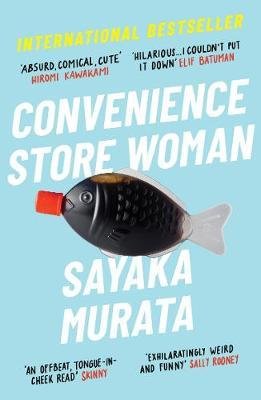
    In her 10th novel, Japanese fiction author Sayaka Murata doesn’t make up a story. She calmly and incredibly coolly takes us into the world of the straight face life of a “convenience store woman” in her internationally best-selling book of the same name.

    Stores of Convenience

    It’s a weird book and it’s so much fun. We enter the world of a convenience store worker, Keiko, who is 36 years old and single, has never dated anyone and has worked part-time at the same store for the past 18 years.

    No one seems to understand why she has worked in the Smile Mart for so long, why she yearns to be there and how it literally becomes her day and her night. But then she isn’t one to do things normally.

    The first blow that Keiko gives us is a memory of her childhood, when, to break up a fight, she hits one of the boys on the head with a spade and doesn’t understand when everyone is shocked by what she does. They did say they wanted the fight to stop.

    Deadpan and almost robotic, Keiko is the person we would tend to avoid — lacks emotion, copies emotion, and doesn’t get angry. You can’t trust Keiko but you can’t help but like her. Murata has so beautifully carved out Keiko’s character that you somehow don’t feel bad for her at all. Perhaps because you know that she already has everything; a job she lives for, a convenience store she loves and that’s enough for her.

    Murata, through Keiko, takes us through the experience of milestones that are part of every single society in the world. Work, life-partner, marriage, children and how we tend to isolate and judge people who don’t fit in society’s norms.

    Keiko’s counter, the young, lanky, and smelly Shiraha, is full of disdain. He joins the store and soon gets fired from the Smile Mart for not doing his duties. Figures that his only reason for taking the job was to find a woman, stalk her and marry her.

    The utter stench his words produce when we meet him is more effective than repellent. He is a loathsome character and as we move through the book, and discover that he might be important, we try to like him when there is nothing at all to like.

    But to be fair, Murata rushes through the existence of Shiraha. Maybe because she doesn’t want to marry the crazy beauty she has created with Keiko and perhaps she realises that the reader might relate more to Shiraha; whether they like him or not.

    It’s a short read, ends in 162 pages, bound to finish in a few hours because of how perfectly normal it is. It’s not at all a judgey book but it takes us into such a quirky and strange journey through Keiko that we can’t help but reflect on how judgemental we can be. How she, without question, anger, regret, tries to adapt to her society, where she doesn’t fit in. She cleverly and poignantly highlights what we all do: mirror others, judge others for not fitting in molds and feel happy for them when they do.

    At one point of the book, Keiko is told off by Shiraha who says, “You’re not human” to which Keiko thinks, “That’s what I’ve been trying to tell you!” a thought which will leave you with a smile and simple reflection on life’s ambitious rat race and the simplicity of the convenience store worker. For a moment you’ll want her contentment, her creepy thoughts (inertly thinking that you might have had one or two of those yourself) until you conveniently forget and go back to ignoring the simple, convenient things.