Tag: Finance Minister

  • How do you beg with a smile? Man confronts Finance Minister in the US

    How do you beg with a smile? Man confronts Finance Minister in the US

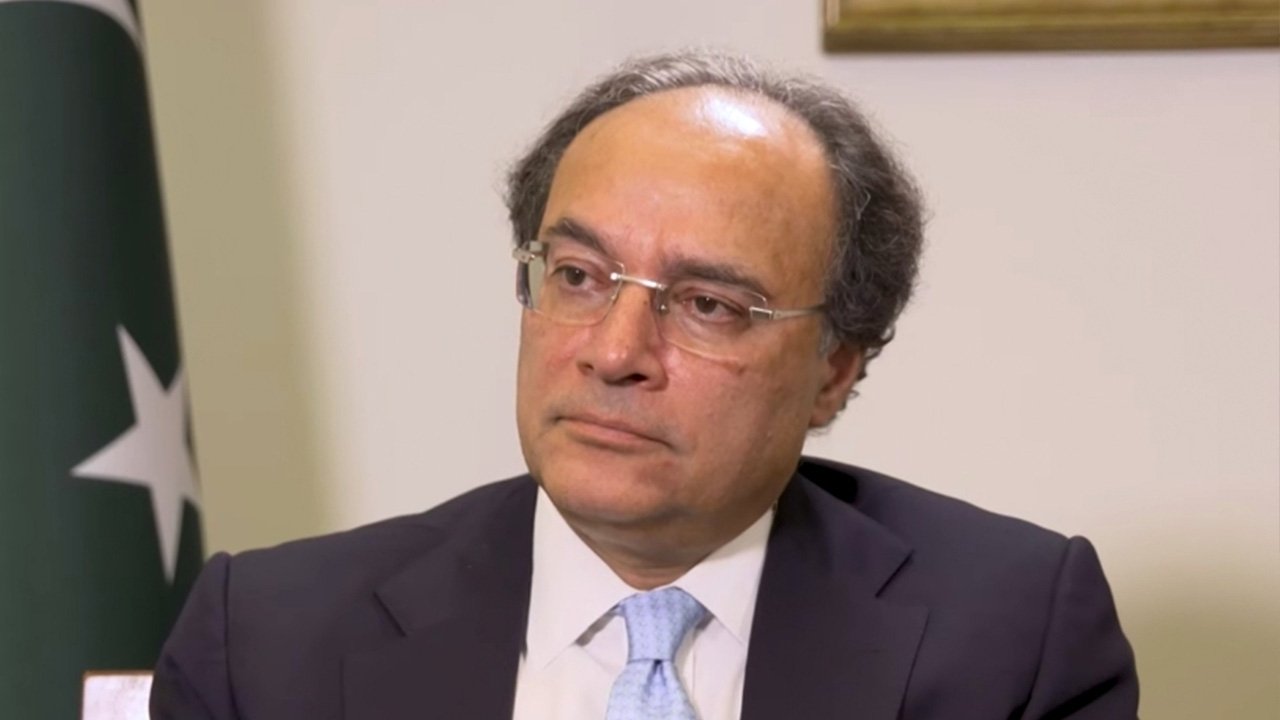
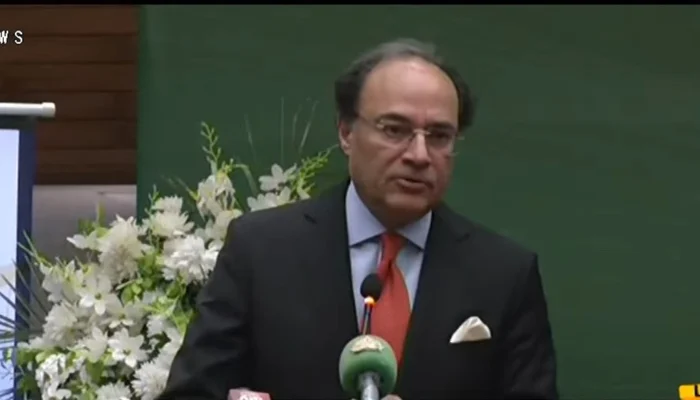
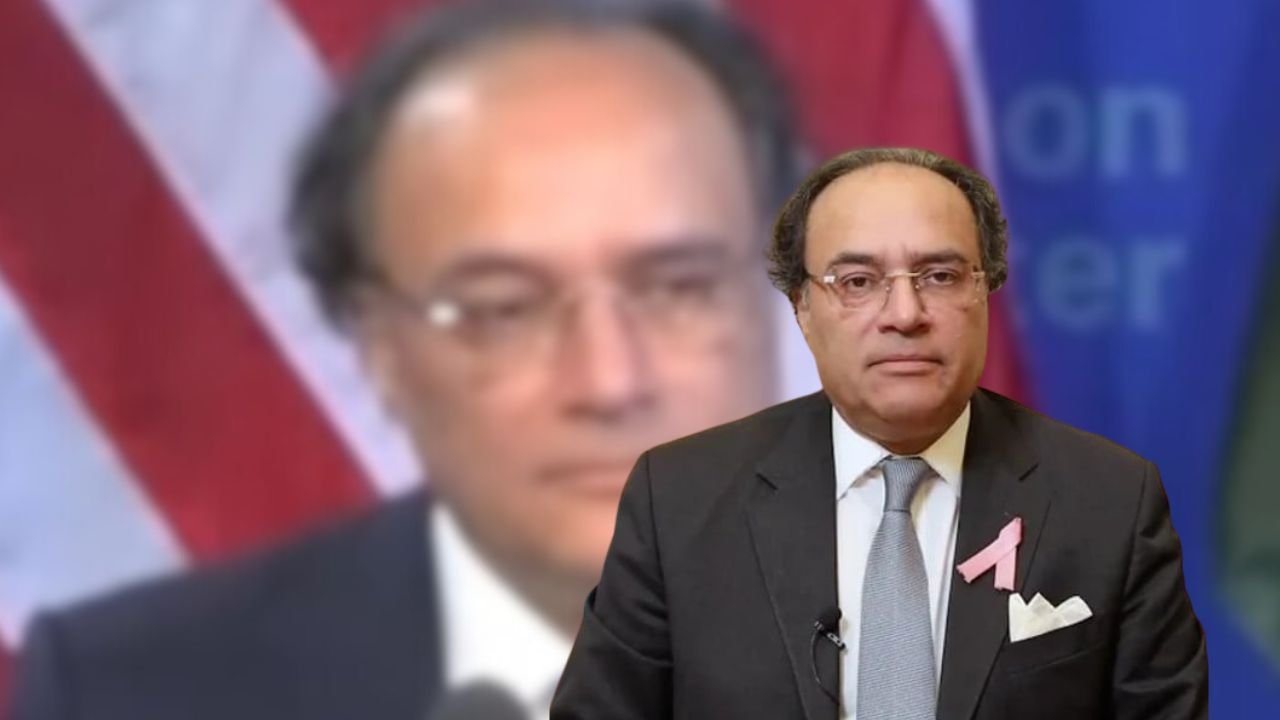
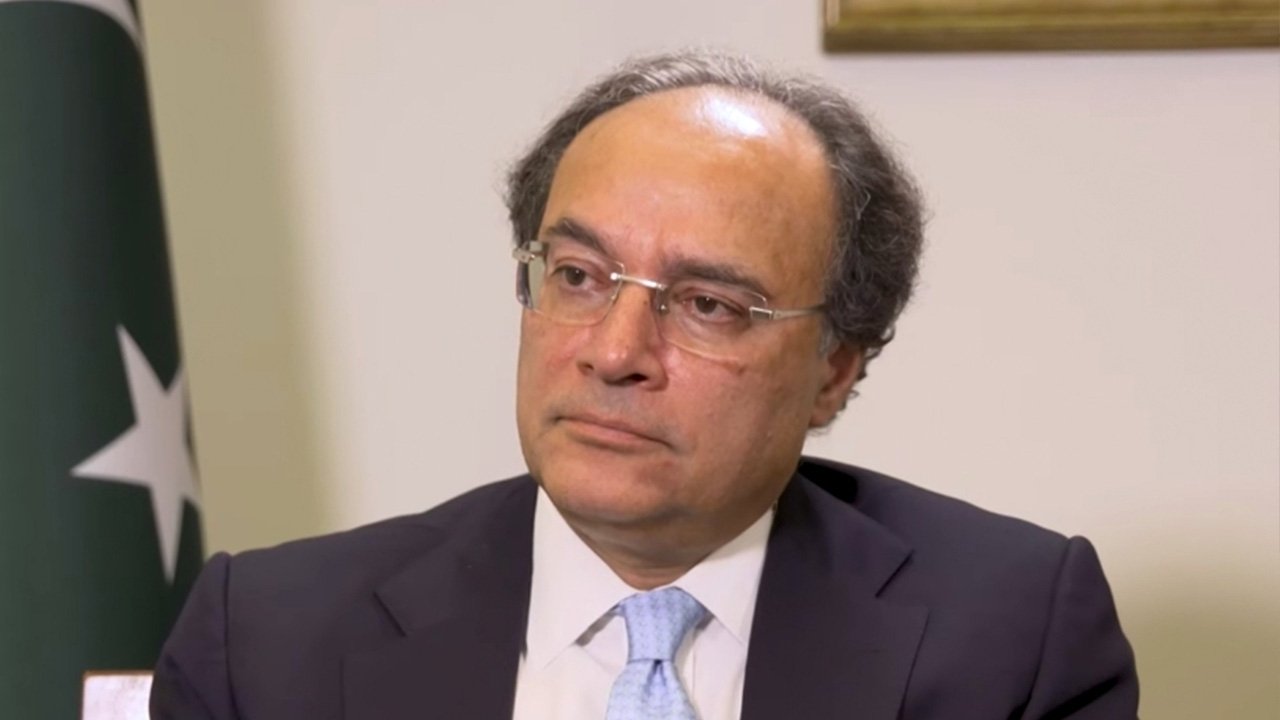
    Finance Minister Muhammad Aurangzeb has been leading a Pakistani delegation to the annual meetings of the World Bank and the International Monetary Fund (IMF), being held in Washington DC from October 21-26, when he was confronted by Jalil Afridi, infamous for asking irrelevant questions from US State Department official briefing.

    At the Wilson Center, Afridi questioned the finance minister: “When you come to Washington to ask for money, how do you beg with such expensive hotels and big delegations and with such a smile?”

    Afridi further claimed: “Ever since Afghanistan became free [2021], its economy is performing better than Pakistan, especially the rates of dollars are better there than in Pakistan. Why is that?”

    However, his question did not stop there. He also stated: “The justice system in Pakistan is also bad, and just a few days ago, it was the second death anniversary of the killed journalist. [Arshad Sharif]”

    The Finance Minister did not get startled by this line of questioning. Rather, he calmly replied: “I’m not sure if I’m the right person to answer your questions because I certainly do not agree with you that Afghanistan’s economy is doing better than Pakistan’s. So we have a fundamental disagreement, but you’ll have to call the Finance Minister of Afghanistan to ask him what is happening there.”

    Two days ago, Reuters reported that Pakistan is targeting around $1 billion in a formal request for funding from the IMF facility that helps low and middle-income countries mitigate climate risk.
  • Finance Minister Aurangzeb promises economic reforms in meeting with ADB

    Finance Minister Aurangzeb promises economic reforms in meeting with ADB

    Federal Minister for Finance and Revenue Senator Muhammad Aurangzeb has reaffirmed the government’s commitment to implementing its reform agenda and meeting structural benchmarks to lend permanence to macroeconomic stability, promote inclusive, sustainable growth and end Pakistan’s reliance on external borrowing.

    He made it clear that the only way this goal could be successfully achieved was by changing the “DNA of the economy” by moving it from away its usual boom-and-bust cycles and leading it to a sustained export-led growth encouraging investment and FDI flows into export-oriented sectors and getting access back to the international capital market.

    He made this observation during a meeting with a high-level delegation from the Asian Development Bank that called on the Minister at Finance Division today.

    The visiting delegation was led by Donald Bobiash, Executive Director of Asian Development Bank and Mr Shigeo Shimizu, Executive Director Asian Development Bank while Yong Ye, Country Director Asian Development Bank and other senior officers from the ADB and Finance Division were also present.

    Senator Muhammad Auragzeb welcomed the delegation and shared with them a roundup of ongoing structural reforms and the resultant growth trajectory and improvement in key economic indicators.

    He particularly highlighted an efficient management of twin deficits backed by buoyant remittances and healthy exports, a steep fall in inflation from a 38 per cent high of last year to a 44-month low of 6.9 per cent in September last, and reduction in the policy rate by 450 bps with expectations of more cuts in coming months.

  • Reducing financial burden on low-income groups remains top priority for govt: Aurangzeb

    Reducing financial burden on low-income groups remains top priority for govt: Aurangzeb

    Finance Minister Muhammad Aurangzeb said Sunday that the government is taking robust measures to improve the country’s economy.

    Addressing a press conference in Islamabad, he said reforms are being done in the Federal Board of Revenue (FBR) to increase revenue collection.

    He said weekly meetings are being held under the chair of Prime Minister Shehbaz Sharif. He said that putting less burden on the lower-income class is the government’s top priority.

    Expressing gratitude to the Chief Ministers of all four provinces for supporting the government’s tax reforms agenda, he expressed hope that they will introduce tax legislation for the inclusion of the Agricultural sector in the taxation regime.

    He said without including the untaxed and under-taxed community in the tax regime, we cannot achieve certainty and ease of collection which is vital for economic stability.

    Regarding facilitation to the business community, Aurangzeb said claims worth 68 billion rupees have so far been now refunded.

    The Minister said notices will be sent through a centralized system, while field formations will be authorized to collect taxes accordingly.

    Mentioning the details of tax evasions and frauds, he said we have identified a tax potential worth 600 billion rupees that was not collected, out of which one billion rupees has been recovered so far.

    In customs, through misclassification, tax worth around 50 to 200 billion rupees has been identified.

    He urged the media to start a campaign against the under-tax and un-taxed community.

    The Minister said the government is also working on the simplification of the tax processes to facilitate the business and salaried persons.

    Through this simplified process, they will be able to respond to our system in a very simple and easy manner without the involvement of any tax consultant.

    Stressing the importance of rightsizing, the Minister said five ministries, including Kashmir and Gilgit Baltistan, SAFRON, Industries and Production, IT and Telecom, and Health have been short-listed in this regard.

    He said Prime Minister Shehbaz Sharif will take the final decision to this effect, he said.

  • Govt made significant efforts to protect salaried class from taxes: Finance Minister

    Govt made significant efforts to protect salaried class from taxes: Finance Minister

    Federal Minister for Finance and Revenue Muhammad Aurangzeb has stated that the government will review measures to protect the salaried class following the increased tax burden introduced in the Budget 2024-25.

    Aurangzeb said that the government tried to “ring-fence the salaried class as much as it could.” He acknowledged the impact of the new tax measures on this group, highlighting his six years of experience in understanding the nuances of tax brackets, super tax, and capital value tax (CVT).

    “We made significant efforts to protect them,” Aurangzeb said, emphasising that individuals earning less than Rs600,000 annually remain exempt from income tax.

    He added that the highest tax bracket of 35 per cent was also shielded from additional taxes to prevent talent from leaving the country.

    Aurangzeb mentioned ongoing reviews to assess potential relief for the tax slabs, aiming to balance the need to increase tax revenue from Rs9.4 trillion to Rs12.9 trillion with the burden on the salaried class.

    “We will generate Rs1.5 trillion through additional revenue measures by removing exemptions and imposing more taxes,” he noted, revealing that the overall impact of these measures on the salaried class is approximately Rs70 billion out of the Rs1.5-1.6 trillion in new taxes.

    The Finance Minister’s comments come after the government’s decision to increase tax liability for individuals earning more than Rs50,000 monthly in the Budget 2024-25.

    The Finance Bill 2024 indicates that the highest impact will be on those earning Rs6 million annually (Rs500,000 monthly), with a tax liability increase of Rs22,500. Interestingly, those earning Rs12 million annually (Rs1 million monthly) will face the same increase.

    On Friday, lawmakers, including those from allied political parties, criticised the government for imposing additional taxes on the salaried class while providing subsidies and exemptions to the real estate and agriculture sectors.

    During the budget debate in the National Assembly, they argued that the heavy taxation on the salaried class is irrational and could exacerbate brain drain. They called for substantial revisions to the federal budget to offer more relief to the masses and extend the tax net to previously exempt sectors.

    The salaried class in Pakistan has seen a significant increase in tax burden over recent years as the government targets what many consider “soft targets” in its efforts to boost the tax-to-GDP ratio.

    The government has faced criticism for focusing on formal sectors and not adequately addressing the informal economy.

  • Govt plans to increase retirement age to reduce pension spending

    Govt plans to increase retirement age to reduce pension spending

    Finance Minister Muhammad Aurangzeb has announced that the government is set to introduce pension reforms as part of a broader strategy to implement structural changes ahead of signing a new agreement with the International Monetary Fund (IMF).

    The proposed reforms aim to bring pension expenses under control and extend the retirement age, reflecting a shift in societal perceptions about aging.

    Speaking at a joint press conference alongside Federal Law Minister Azam Nazir Tarar and Information Minister Atta Tarar, Aurangzeb highlighted the need to manage growing pension costs.

    He suggested that raising the retirement age is a key component of the reforms.

    “Age is now just a number. 60 is the new 40,” Aurangzeb remarked, pointing out that many individuals remain productive well into their 60s.

    He cited his previous role as CEO of Habib Bank Limited (HBL), where the retirement age was increased from 60 to 65, illustrating the benefits of extended career longevity.

    To address the rising pension expenditures, Aurangzeb stated that changes to the civil service structure are needed.

    In the fiscal year 2023-24, Pakistan allocated Rs801 billion for superannuation allowances and pensions, representing a 31 per cent increase from the previous fiscal year’s allocation of Rs609 billion.

    Federal Law Minister Azam Nazir Tarar noted that implementing pension reforms would require legislation, as it impacts a wide range of sectors, including civil servants, armed forces, judicial organs, and executive branches.

    Tarar added that a committee has been established under the chairmanship of the finance minister to propose recommendations for pension reforms. “The recommendations, when finalised, will be shared with the public,” he assured.

    In other news, Aurangzeb discussed the recent visit by a Saudi delegation to Pakistan, which he described as a “confidence booster.”

    The discussions with the Saudi delegation were positive, reinforcing the country’s commitment to moving in the right direction.

    Looking ahead, Aurangzeb announced that the IMF mission would arrive in Pakistan this month for key talks on structural reforms.

    These discussions will focus on several crucial areas, including increasing the tax-to-GDP ratio from the current 9 per cent to a more sustainable 13-14 per cent, reforming the energy sector, and privatising State-Owned Enterprises (SOEs).

    The finance minister also highlighted the need to reduce non-development expenditure and commended the Sindh government’s Public-Private-Partnership model as a successful strategy that could be replicated at the federal level.

  • Pakistan’s forex reserves expected to reach $9-10 billion by year-end

    Pakistan’s forex reserves expected to reach $9-10 billion by year-end

    The Federal Minister for Finance and Revenue, Muhammad Aurangzeb, said on Tuesday that Pakistan’s foreign exchange reserves held by the State Bank of Pakistan (SBP) are expected to close the fiscal year at around $9-10 billion mark.

    This news comes amid growing optimism about the country’s financial stability and the potential for a new agreement with the International Monetary Fund (IMF).

    Speaking at the 7th Leaders In Islamabad Business Summit, themed “Collaborating for Growth,” Minister Aurangzeb outlined several positive developments in Pakistan’s economic landscape.

    The country’s central bank currently holds just over $8 billion in reserves, despite a recent $1-billion bond payment.

    Aurangzeb highlighted the dramatic increase from last year’s reserves of $3.4 billion, which covered just 15 days of imports, to over $8 billion.

    The finance minister indicated that once the IMF disburses its final tranche by the end of this week, the foreign exchange reserves would exceed $9 billion.

    He projected that by the end of June, the reserves could reach between $9-10 billion, offering about two months’ worth of import coverage.

    In his address, Minister Aurangzeb also addressed concerns about the IMF’s involvement in Pakistan’s economic recovery.

    He said that the current IMF programme is not solely driven by the international body, but is also a reflection of Pakistan’s own strategies for overcoming economic challenges.

    “This is our requirement as a country if we want to get out of the trap we are in,” he said, adding that the government had productive discussions with the IMF in Washington, D.C., to establish a broader and longer-term programme.

    The IMF mission is set to visit Pakistan in mid-May, with staff-level agreements expected by June or early July, contingent on progress with the country’s privatisation plans.

    Aurangzeb stressed that the IMF should be seen as a means to an end, rather than the end itself, emphasising that Pakistan’s long-term economic stability requires a commitment to market-driven reforms and sustainable growth opportunities.

    The summit’s inaugural session provided a platform for the finance minister to discuss the government’s efforts to stabilise the economy, promote growth, and attract international investment.

    The anticipated agreement with the IMF and a more robust foreign exchange reserve position signal a hopeful outlook for Pakistan’s economic recovery.

  • PIA by June, then all major airports, privatisation will mark 2024

    PIA by June, then all major airports, privatisation will mark 2024

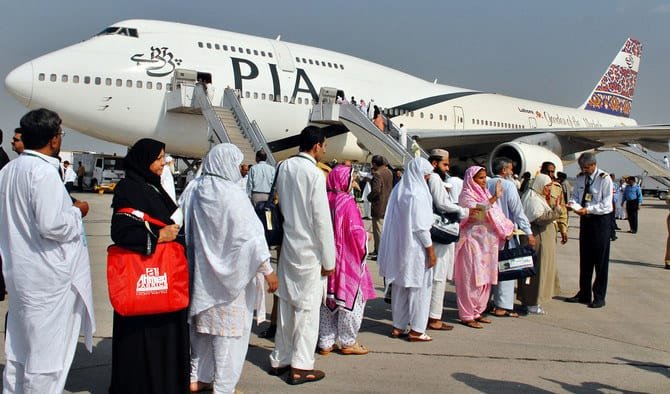
    Finance Minister Muhammad Aurangzeb announced on Saturday that the process of privatization of Pakistan International Airlines (PIA) will be completed by June this year. Islamabad airport might also be privatized shortly after.

    “The government has no business being in business,” the minister declared at a Saturday afternoon news briefing, explaining the government’s plan to divest from state-owned enterprises (SOEs).

    “We expect the bids for PIA to come in the next two to three weeks, and by the end of June or early July, we can move it to the investors,” he said. “The Islamabad airport would be the next,” he added, “followed by the airports in Karachi and Lahore.”

    The finance minister didn’t respond on a question when asked if Pakistan is selling its skies to prospective buyers.

    Mr Aurangzeb didn’t give an explanation when a journalist asked if the government will keep some shares in PIA after privatisation or sell all its shares.

    The minister wrapped up his visit to Washington DC on Sunday with 62 meetings in a week. During these meetings, he explained decisions, made pledges, and sought understanding from both multilateral and bilateral donors.

  • Pakistan anticipates final IMF tranche approval in late April

    Pakistan anticipates final IMF tranche approval in late April

    The International Monetary Fund (IMF) announced that its Executive Board meeting, anticipated for late April, is crucial for approving Pakistan’s final tranche of approximately $1.1 billion (SDR 828 million). 

    This sum represents the last portion of the $3-billion Stand-By Arrangement (SBA) initiated in June of the previous year.

    Julie Kozack, IMF Communication Director, revealed this information during a media briefing, highlighting the significance of the staff-level agreement reached on March 19 between IMF staff and Pakistani authorities. 

    This agreement, subject to approval by the IMF’s Executive Board, acknowledges Pakistan’s strong program implementation by the State Bank of Pakistan (SBP) and the interim government, as well as the new government’s commitment to ongoing policy and reform endeavors aimed at transitioning Pakistan from stabilisation to robust, sustainable recovery.

    Kozack emphasised the improvement in Pakistan’s economic and financial position since the completion of the first review, with growth and confidence steadily rebounding. 

    Looking ahead, she mentioned the possibility of a successor IMF-supported program to address Pakistan’s fiscal and external stability challenges and foster inclusive growth, indicating the IMF’s readiness to engage in discussions with Pakistani authorities.

    Meanwhile, Pakistan’s foreign exchange reserves witnessed a modest increase, reaching $8.04 billion as of March 29, although still considered low for an import-dependent economy, raising concerns about potential future pressure. 

    Finance Minister Muhammad Aurganzeb has acknowledged the need for another IMF bailout, with discussions slated for the upcoming Spring meetings of the Board of Governors of the World Bank Group and IMF scheduled for April 15-20, 2024, in Washington DC, where Aurangzeb is expected to lead Pakistan’s delegation.

  • PM includes Dar in CCI instead of Aurangzeb

    PM includes Dar in CCI instead of Aurangzeb

    Prime Minister Shehbaz Sharif reconstituted the Council of Common Interests (CCI) on Friday, notably replacing Finance Minister Muhammad Aurangzeb with Foreign Minister Ishaq Dar.

    The PM is heading the CCI which constitutes the chief ministers of all four provinces. Interestingly, this is the first time in the history of the council that a Foreign Minister of Pakistan has been included in the CCI.

    Business Recorder article reported that it would be normal if a Finance Minister isn’t included in the CCI because historically it has happened. However, energy and planning ministers were mostly included because they deal with provincial matters.

    The presence of the Finance Minister and the Law Minister in the CCI is very important as these two portfolios are required to respond to numerous queries raised by the provinces during the meeting.

    A similar pattern could be observed as PM Shehbaz gave Ishaq Dar the control of Cabinet Committee on Privatisation (CCoP) as well instead of including Aurangzeb earlier this month.

  • Finance Minister Muhammad Aurangzeb will meet with IMF on April 14–15

    Finance Minister Muhammad Aurangzeb will meet with IMF on April 14–15

    Minister for Finance and Revenue Muhammad Aurangzeb announced on Friday that a government delegation will meet with the International Monetary Fund (IMF) in Washington DC on April 14 and 15.

    Talking to the media during his visit to the Pakistan Stock Exchange (PSX), the Minister said that the features of a new programme will be discussed in a Washington DC meeting. However, detailed talks will be held in Pakistan.

    He also said that the government plans to join a longer programme with the IMF, adding that the country’s economy will stay stable with the fund.

    Prime Minister Shehbaz Sharif also hinted on March 21 that the new IMF programme will last for three years.

    “New tranche of loan is likely to be received from the IMF in a few days, however, we would need another programme,” he had said while addressing a session of the Special Investment Facilitation Council’s (SIFC) apex committee attended by civil-military leadership.

    Aurangzeb responded to a question regarding the IMF, saying that the size of the new programme has not been discussed yet.