Tag: Finance Minister Ishaq Dar

  • Ishaq Dar: Wazir-e-Kharja Se Deputy Wazir-e-Azam Tak Ka Safar

    Ishaq Dar: Wazir-e-Kharja Se Deputy Wazir-e-Azam Tak Ka Safar

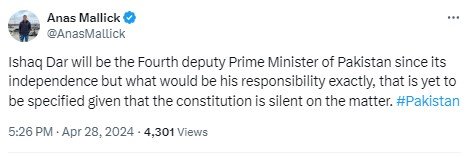
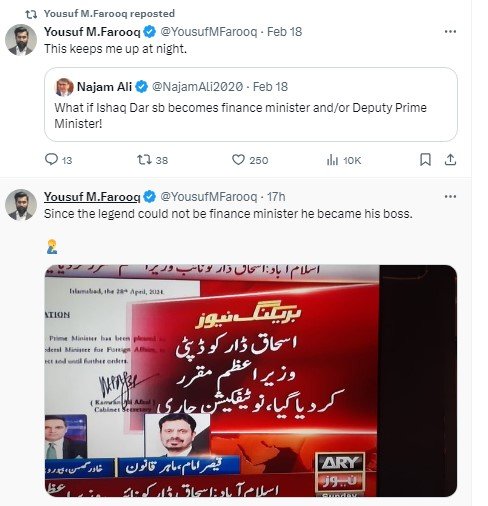
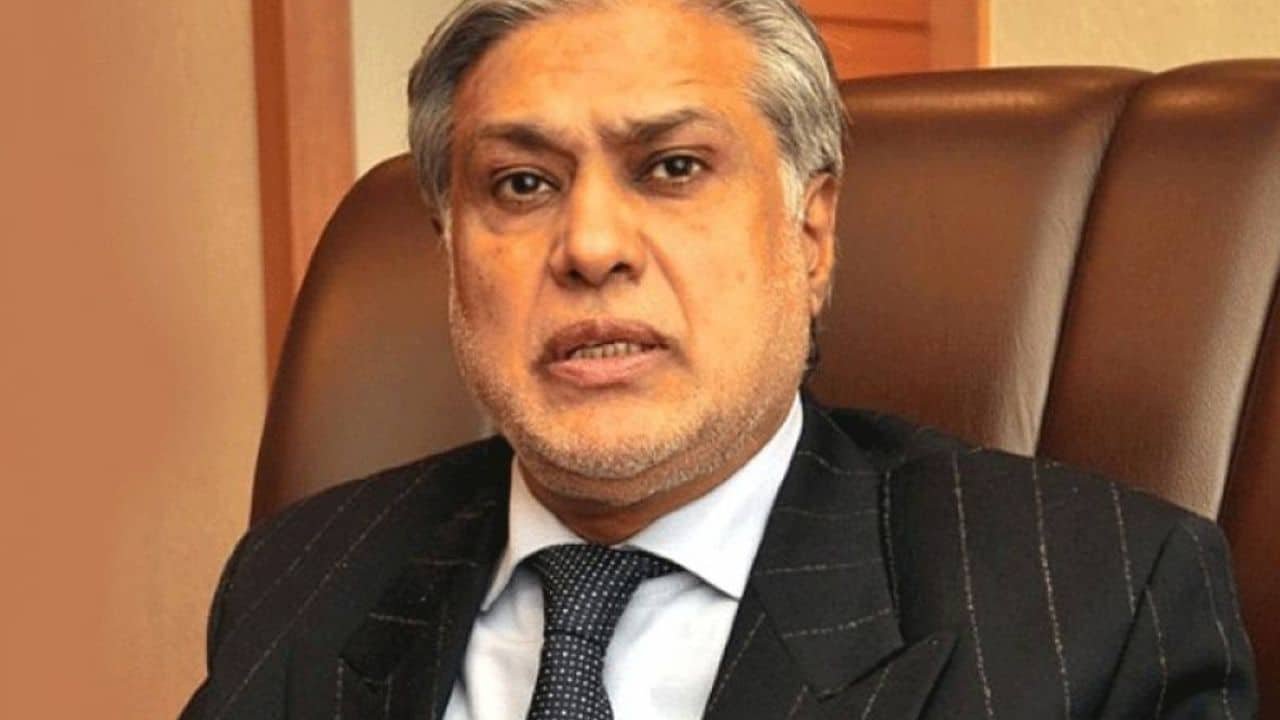
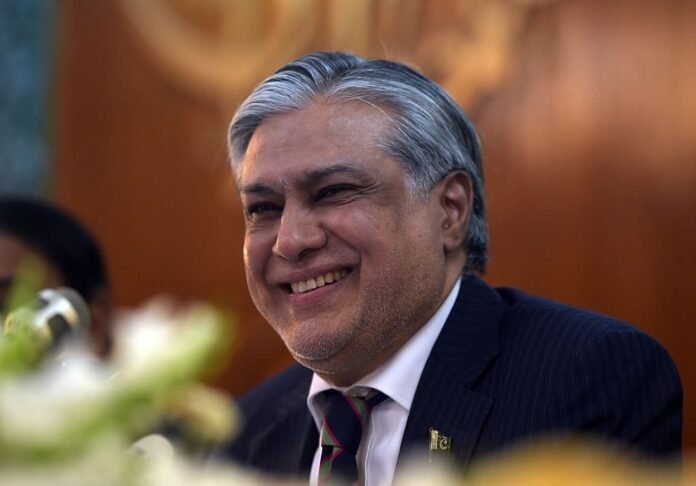
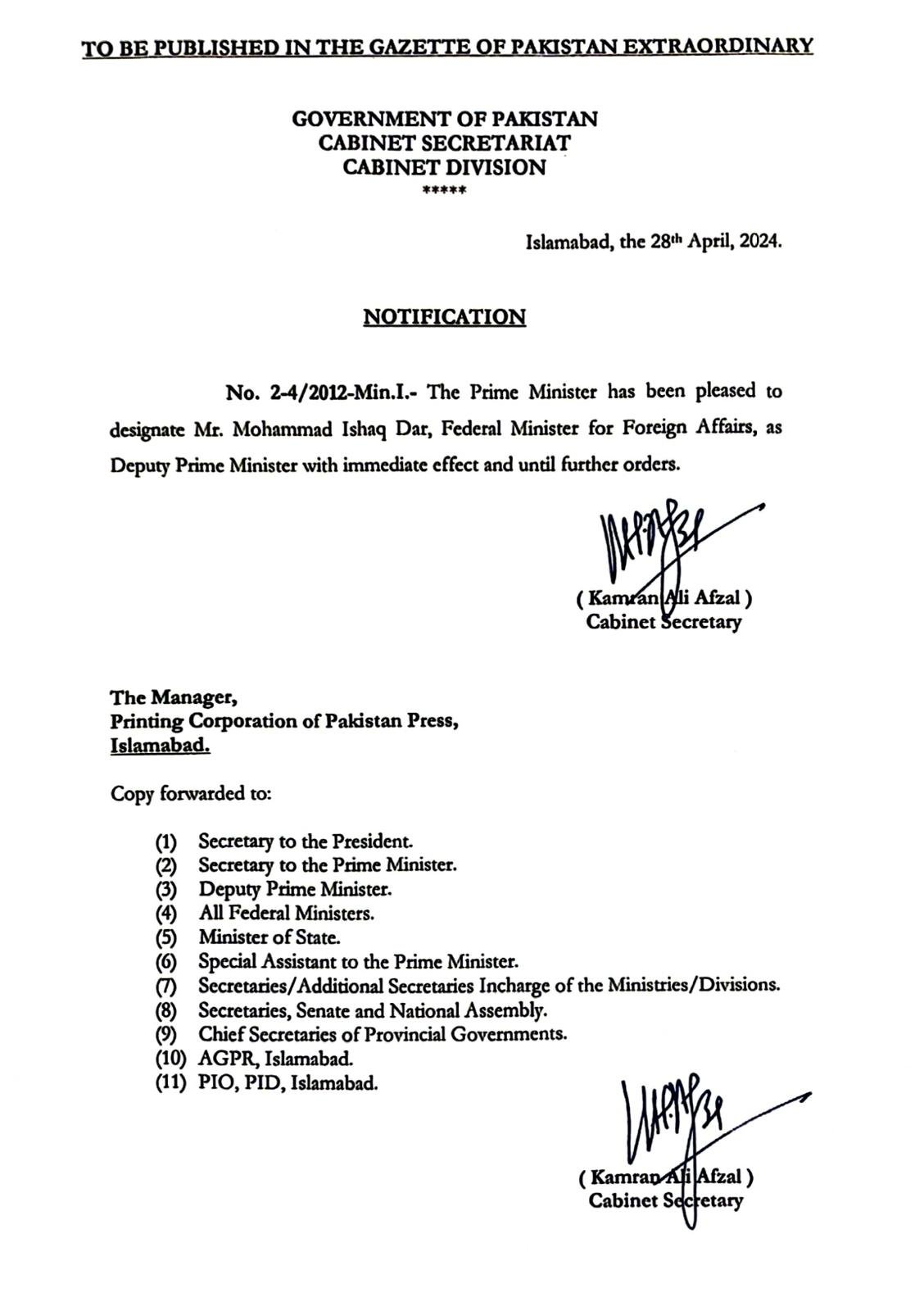
    According to a surprising notification issued by the Cabinet Division on April 28, Foreign Minister Ishaq Dar has been appointed as the Deputy Prime Minister of the country, a position not recognised in the Constitution.

    Dar was appointed as the country’s foreign minister after the Pakistan Muslim League-Nawaz (PML-N) formed a coalition government after the general elections this year.

    Historically, there is only one person who held the same position as Dar does now – Pervaiz Elahi in 2012 after Pakistan Muslim League-Quaid (PML-Q) allied with the then-ruling Pakistan People’s Party (PPP).

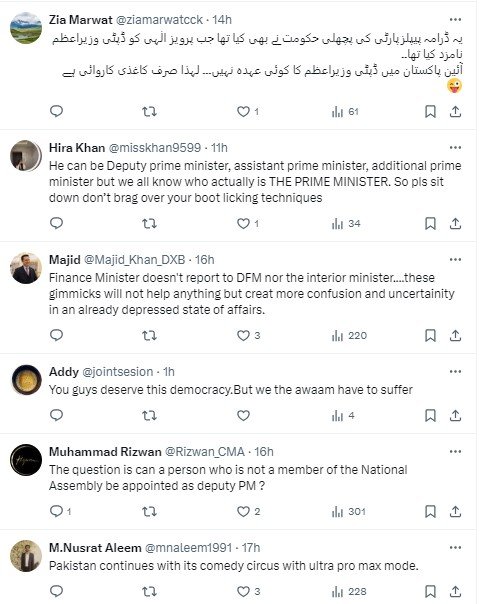
    Interestingly, X (formerly Twitter) users pointed out that the constitution of Pakistan makes no mention or reference to “deputy prime minister” at all.

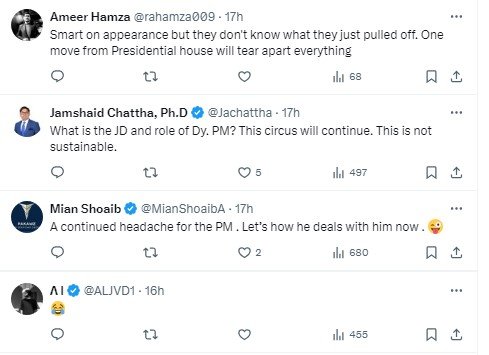
    Predictably, people on social media had some things to say about Dar’s new appointment.

  • Nawaz Sharif believes in divine justice: Ishaq Dar

    Nawaz Sharif believes in divine justice: Ishaq Dar

    Former finance minister Ishaq Dar has said in a major policy statement on the Pakistan Muslim League-Nawaz (PML-N) narrative that Nawaz Sharif has left his matters to Allah to punish his tormentors and those who threw him out of power using illegal, vindictive, and unethical means, as reported by Geo News.

    It is pertinent to remember that on September 22, Pakistan Muslim League-Nawaz (PML-N) supremo Nawaz Sharif conveyed that former army chief Gen Qamar Javed Bajwa, Gen Faiz Hameed, Saqib Nisar, and Asif Saeed Khosa should be brought to justice.

    When asked about Sharif’s stance on individuals such as former army chief Gen (retd) Qamar Javed Bajwa, Inter-Services Intelligence (ISI) ex-director general Lt Gen (retd) Faiz Hameed, and the Panama judges, Dar reiterated Sharif’s commitment to leaving his fate in the hands of Allah. Dar mentioned how various individuals who were perceived as unjustly targeting Sharif have faced exposure and accountability, highlighting Judge Arshed Malik’s video confession and Justice Shaukat Siddiqui’s revelations.

    Dar said: “There are two choices: take revenge and personal scores settlement or fix the country and the economy. Nawaz Sharif has left his matter to Allah the Almighty. I have never seen in history that nature has exposed culprits in such a short time. Look how Judge Arshed Malik made his video confession of unfairly convicting Nawaz Sharif, how Justice Shaukat Siddiqui exposed injustice to Nawaz Sharif and informed the nation. This has happened in the fastest manner because Nawaz Sharif had left his matter with Allah and Allah is the best of judges.”

    Dar said that Sharif’s focus, upon his return to Pakistan, will be on nation-building, to help the country come out of the crisis, to bring economic progress and reforms, to bring prosperity to the nation and to reduce the difficulties of the masses, to put Pakistan on the path of progress.

    Dar said: “Allah has exposed them and Allah will hold them accountable too. Some are hiding, some are on the run and some are unable to show their faces. This is happening thanks to Allah’s justice and today the whole world knows that these were fraudulent and false cases against Nawaz Sharif; that he was victimised and the nation of Pakistan paid a price for this. The biggest victim in all this is Pakistan, the progress of Pakistan has been pushed back many decades as Pakistan has become the 4th economy of the world today and under Nawaz Sharif, it was the 24th economy of the world. This is the sum total of the destruction of Pakistan.”

    He further said: “The formation of the Special Investment Facilitation Council (SIFC) is a step in the right direction. All stakeholders are part of it. The vehicle needed for it is already formed in the shape of the Pakistan sovereign wealth fund. Lots of sub-funds will be formed under it. These are revolutionary steps. If we win elections, I have no doubt that Pakistan will take off again.”

    Speaking to journalists after meeting Sharif and Maryam Nawaz at Thornhope House, both Shehbaz Sharif and Dar said that the narrative of PML-N will be defined by the fact that Pakistan progressed under Nawaz from 2013 till 2017 and then his govt was dislodged and the journey of Pakistan’s economic progress was halted.

    “The programme is final for October 21 and Mian Nawaz Sharif is returning to Pakistan,” Dar told the media.
    Dar will be returning to Pakistan on Saturday. He said he would appear before the National Accountability Bureau (NAB) in the re-opened assets beyond means case.

    He said: “This is a false case, based on falsehood and lies. I have not missed my tax returns for a second in my life but lies as big as mountains were told about me to victimise me by the Saqib Nisar-led system in order to bring in Imran Khan projects which have failed badly. I will prove before the courts that I am an innocent man who has been victimised on political grounds.”

  • Painful IMF compliance, but no new taxes on agriculture and real estate, clarifies Dar

    Painful IMF compliance, but no new taxes on agriculture and real estate, clarifies Dar

    Finance Minister Ishaq Dar made a resolute declaration on Thursday, assuring the public that the coalition government, despite having taken stern measures that burdened the masses, has no intentions of imposing additional taxes on the agriculture and real estate sectors.

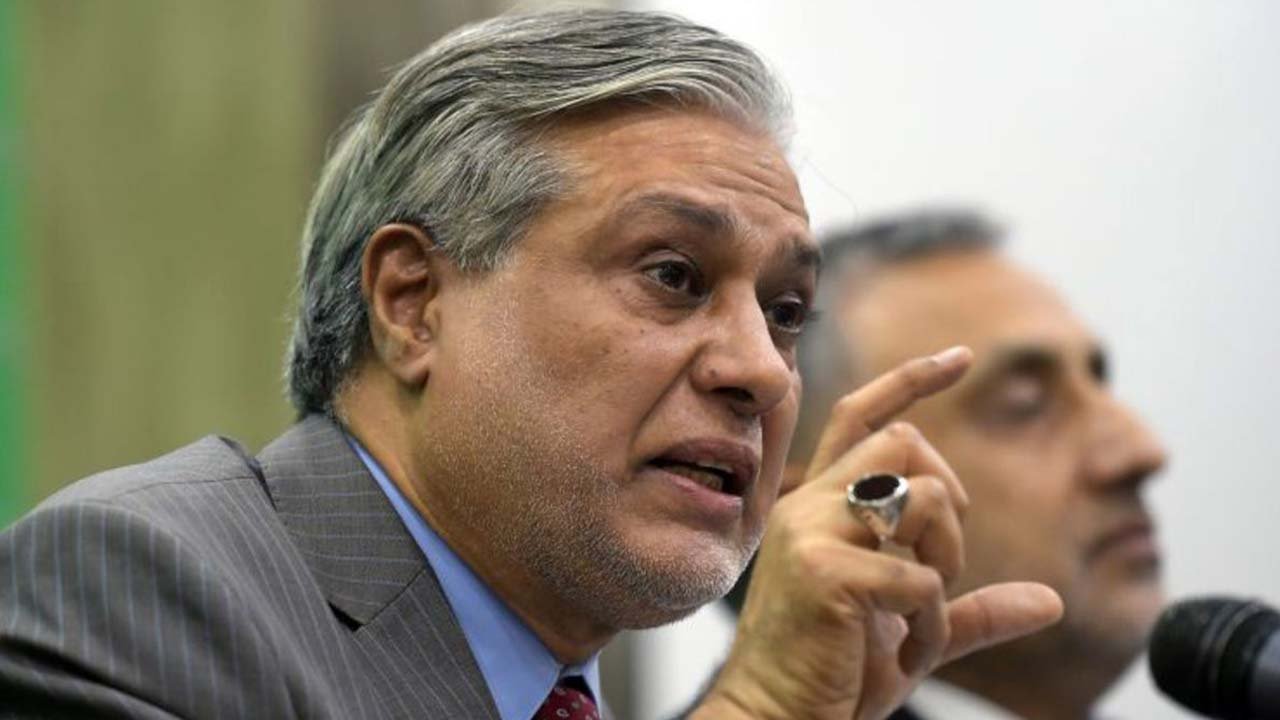
    Speaking passionately on the floor of the National Assembly, Dar firmly stated, “I want to state categorically […] that no new tax will be imposed on agriculture or real estate. We have endured much pain in meeting the IMF’s conditions.”

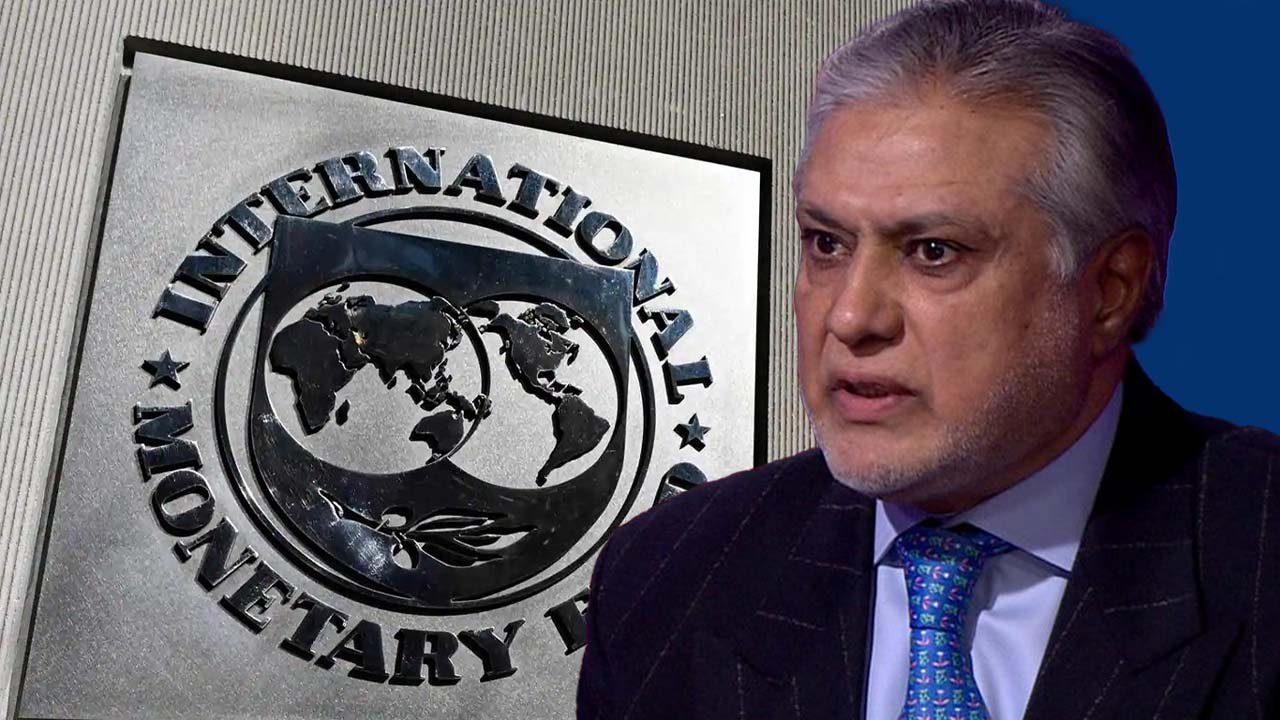
    This assurance comes in the wake of the International Monetary Fund (IMF) approving a $3 billion bailout program for Pakistan, with $1.2 billion already disbursed to help stabilise the nation’s struggling economy.

    Media reports had indicated that the IMF requested a plan from the government to impose taxes on the real estate and agricultural sectors as a condition to release the remaining funds. The news caused concern among those associated with the agriculture sector, especially since the government had expanded the loan volume to support it in the budget.

    Dar emphasised that all prior actions demanded by the lender had been successfully completed, and the agreement with the IMF was carried out in a transparent manner. He reassured the public, “No further burden will be passed on to the people. All the commitments made with the IMF are available on the finance ministry’s website.”

    The positive effects of the deal are already evident, with investors in the country experiencing relief in the stocks, exchange rate, and bonds markets. Additionally, longstanding allies Saudi Arabia and the United Arab Emirates have recently deposited $3 billion in Pakistan’s central bank, while China rolled over $5 billion in loans over the past three months to prevent the country from defaulting.

    In light of the IMF’s observation that both agriculture and construction sectors are under-taxed in Pakistan, economist Khaqan Hassan Najeeb stressed their significance in broadening the tax base and promoting progressivism.

    Regarding the real estate sector, Najeeb advocated for a genuine capital gains tax, levied at the marginal income tax rate of the individual making the capital gains over the years, to encourage investment from unproductive real estate to more productive sectors like manufacturing.

    Read more: Pakistan’s petroleum dealers temporarily postpone nationwide petrol pump shutdown

    However, Najeeb acknowledged that such reforms would be better suited for implementation by a long-term new government after the upcoming elections. Moreover, he highlighted that provincial governments hold authority over agriculture income tax, which presently contributes only insignificantly. He urged provinces to contemplate a progressive income tax on agriculture, considering the size of farm holdings.

    With Minister Dar’s assurance and the IMF’s support, Pakistan’s economic prospects seem brighter, but the road ahead calls for careful consideration and judicious decision-making to ensure a sustainable and progressive financial future.

  • Budget 2023-24: Finance Minister announces tax relief measures for IT sector and freelancers

    Budget 2023-24: Finance Minister announces tax relief measures for IT sector and freelancers

    In a recent announcement, the federal government has unveiled a series of measures aimed at fostering growth and investment in the freelancing and information technology (IT) sectors. The government has decided to implement a reduction in tax rates for investments in the IT sector, provide tax breaks to freelancers, and establish a favorable environment for investment by normalizing duty-free equipment provisions.

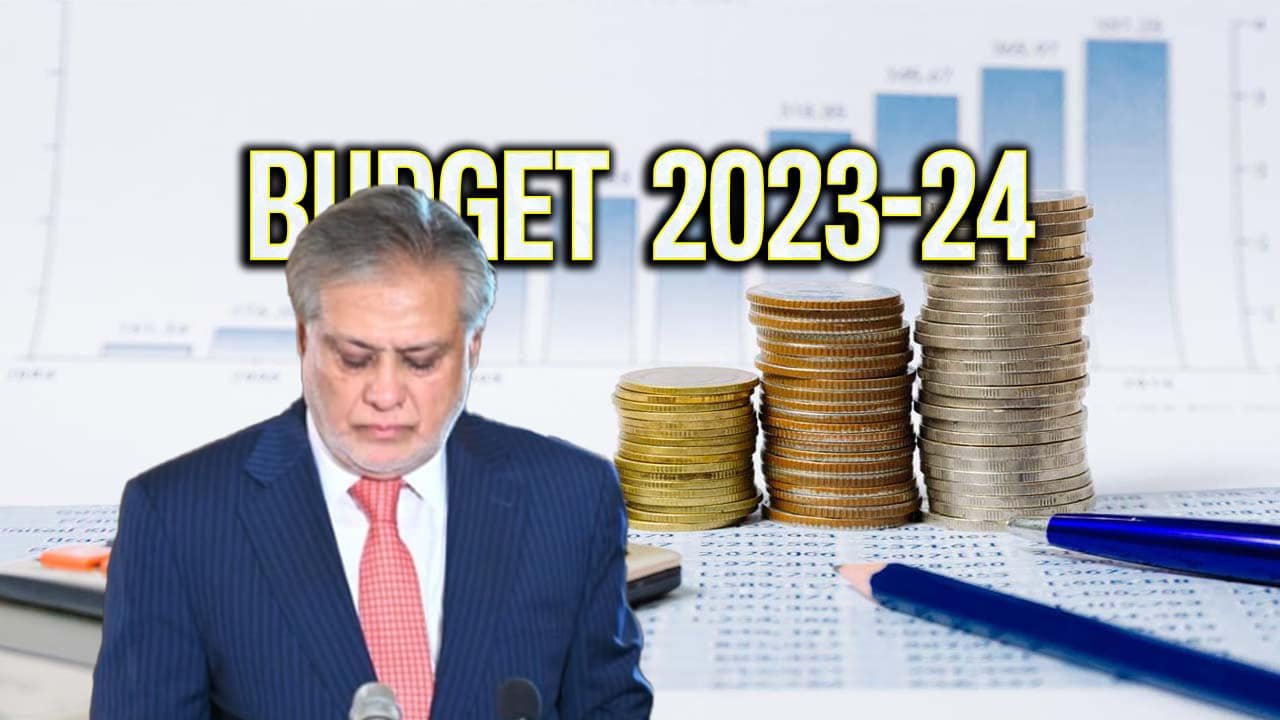
    During the budget presentation for the fiscal year 2023-24, Finance Minister Ishaq Dar highlighted the importance of the IT sector and its immense talent pool within the country. To support the growth of IT exports, the government plans to extend the current 0.25 per cent discounted income tax rate for the next three years.

    Recognizing the significance of banks in facilitating investment in the IT sector, the finance minister proposed a reduced tax rate of 20 per cent for banks involved in lending to this sector. This reduction aims to alleviate the burden on banks, as the existing tax rate for investments stands at 39 per cent.

    Additionally, the government has recommended providing Duty-Free Equipment privileges to incentivize investment in the IT sector. Moreover, the minister has suggested granting the industry the status of Small and Medium Enterprises (SMEs), enabling individuals to avail themselves of special and exclusive discounted income tax rates applicable to this sector.

    In a move to streamline processes for IT and IT-related services exporters, Minister Dar proposed the issuance of Automated Exemption Certificates to non-residents within 30 days. Furthermore, the government plans to reduce the Goods and Services Tax (GST) from 15 per cent to 5 per cent specifically for IT and ITeS services in the Islamabad Capital Territory (ICT).

    To support the freelancing community, Minister Dar recommended exempting individuals from the obligation of filing a sales tax return in order to benefit from the concessional rate of 0.25 per cent. Emphasizing the vital contribution of freelancers to the country’s foreign exchange earnings, the minister suggested that those whose IT and IT-enabled services exports were less than $24,000 in the previous fiscal year should be exempted from sales tax registration and allowed to file a simplified single-page income tax return.

    These measures underscore the government’s commitment to fostering a conducive business environment and encouraging investment in the freelancing and IT sectors, thereby facilitating economic growth and job creation.

  • Ishaq Dar to present Rs14.7 trillion budget for FY2023-24 today

    Ishaq Dar to present Rs14.7 trillion budget for FY2023-24 today

    Finance Minister Ishaq Dar is set to reveal the federal budget for the fiscal year 2023-24 today, with a proposed outlay of Rs14.7 trillion. The budget carries a higher consolidated budget deficit, exceeding 6 per cent of the GDP, and includes allocations for various targeted schemes aimed at attracting voters in the upcoming general elections.

    The government has established targets for tax collection by the Federal Board of Revenue (FBR) at Rs9.2 trillion, along with a non-tax revenue target of Rs2.7 trillion. To achieve the non-tax revenue target, the government plans to amend the finance bill, raising the petroleum development levy (PDL) from Rs50 per litre to Rs55-60 per litre. This adjustment aims to collect Rs870 billion in the next budget, as opposed to the revised estimate of Rs550 billion for the outgoing fiscal year.

    The credibility of the budgetary figures remains a concern as they are subject to change throughout the financial year. If a new government assumes power after the general elections, it will likely need to introduce a mini-budget to align economic realities with the International Monetary Fund (IMF) and secure a fresh bailout package.

    The government’s ability to satisfy the IMF on the revival of the stalled programme is yet to be seen. The continuing stalemate may endanger the diminishing foreign exchange reserves, with the State Bank of Pakistan’s reserves falling below $3.9 billion.

    Without establishing a comprehensive budgetary framework with the IMF, signing the staff-level agreement will be impossible. Fulfilling three conditions becomes crucial: securing external financing of $6 billion, presenting the next budget in accordance with IMF guidelines, and ensuring a market-based exchange rate.

    The IMF programme is scheduled to conclude on June 30, making any further extension unlikely, as stated by the finance minister during the launch of the Economic Survey for 2022-23. The need for a realistic budget for the next financial year is evident due to the lack of credibility surrounding the budgetary figures, which frequently undergo changes.

    The tenure of the Pakistan Democratic Movement (PDM)-led government is set to expire on August 12. However, the government has approved an allocation of Rs90 billion for the implementation of the SDGs Achievement Programme (SAP) in the next budget, compared to the revised allocation of Rs116 billion for the current financial year.

    Ensuring external debt servicing, which requires $25 billion, is the primary priority of the government in the next budget. How the government plans to generate such a substantial amount, considering it obtained just under $8.1 billion in the first ten months of the current fiscal year out of the total budgeted figure of $22.8 billion for external loans and grants, remains to be seen.

    The fiscal constraints present significant challenges, as the total net revenue receipts of the federal government are insufficient to meet debt servicing requirements. After transferring resources to provinces and accounting for non-tax revenue, the total net receipts of the federal government are expected to amount to Rs6.5 trillion.

    Meanwhile, total debt servicing will consume Rs7.5 trillion, resulting in a deficit of Rs1,000 billion for the federal government. Therefore, other expenditure categories, such as defense, salaries, pensions, civil government operations, subsidies, and grants to public sector enterprises, will have to be funded through borrowing.

    During the survey launch, the finance minister pledged the government’s commitment to increase salaries, pensions, and minimum wages for workers in the FY24 budget. To finance the substantial budget deficit in the next financial year, Pakistan will need to acquire domestic and foreign loans amounting to Rs7,000 to Rs7,500 billion.

    The challenges ahead do not have easy solutions, and addressing them will require profound structural reforms to navigate the economy out of its crisis mode.
  • Pakistan will not default, reforms underway for economic recovery: Finance Minister

    Pakistan will not default, reforms underway for economic recovery: Finance Minister

    Pakistan’s Finance Minister Ishaq Dar has assured the nation that the government is committed to implementing long-term reforms aimed at improving the country’s economic situation.

    Speaking to the Karachi Chamber of Commerce and Industry, Dar emphasised the need for collective efforts to overcome the current economic challenges. He outlined key areas of focus, including the agricultural sector, the establishment of a sovereign wealth fund, and the development of the IT industry.

    Additionally, he addressed concerns about the delay in the International Monetary Fund (IMF) program, expressing confidence in Pakistan’s assets and downplaying the possibility of default.

    Reforms for Long-Term Improvement: In his address to the Karachi Chamber of Commerce and Industry, Finance Minister Ishaq Dar reiterated the government’s commitment to implementing reforms that would pave the way for long-term improvement.

    He acknowledged the importance of the agricultural sector, emphasising the need for an agricultural revolution to enhance productivity and ensure food security.

    The establishment of a sovereign wealth fund was also highlighted as a means to generate additional revenue and support sustainable economic growth. Furthermore, Dar expressed determination to prioritise the neglected IT sector and capitalise on its potential for job creation and technological advancements.

    No technical reason behind delayed IMF program

     Addressing concerns regarding the delay in the IMF program, Dar reassured the delegation that there was no technical reason behind it. He emphasised that Pakistan, as a sovereign country, possesses valuable assets worth trillions of dollars, thereby implying that default is not a plausible scenario. While external liabilities stand at approximately $100 billion, the finance minister pointed out that Pakistan’s gas infrastructure alone is valued at around 40 to 45 billion dollars, underscoring the country’s significant assets.

    Recognising the vital role of the business community in Pakistan’s economic development, Finance Minister Ishaq Dar called upon them to present reasonable demands for the upcoming budget. He assured the delegation that the government would cooperate with the business community to address their concerns and promote a conducive environment for trade and investment. By fostering a constructive partnership, the government aims to create a business-friendly climate that supports entrepreneurship and economic growth.

    IMF loan requirement and government’s approach

    Amidst recent developments, it was revealed that the IMF rejected Pakistan’s request to lower the requirement of arranging $6 billion in new loans. Minister of State for Finance Dr Aisha Pasha highlighted that returning to the IMF was Pakistan’s only option, stressing the urgency of fulfilling the financing requirement. Pakistan had sought a reduction in the external financing requirement based on new current account deficit data. However, the IMF insisted on the full $6 billion to demonstrate Pakistan’s commitment to implementing necessary economic reforms.

    Finance Minister Ishaq Dar’s reassurances regarding the government’s commitment to long-term reforms and the denial of Pakistan’s possibility of default provide a glimmer of hope amid economic challenges.

    The focus on sectors such as agriculture and IT, the establishment of a sovereign wealth fund, and the emphasis on cooperation with the business community signal the government’s determination to foster economic growth and stability.

    While the IMF’s rejection of Pakistan’s request poses a hurdle, the government remains steadfast in its efforts to revive the deal and secure the necessary financing to support the country’s economic recovery.

  • Govt to unveil ‘business-friendly’ budget, prioritising masses and economic progress

    Govt to unveil ‘business-friendly’ budget, prioritising masses and economic progress

    In a bid to support the masses and drive economic progress and development, the government is expected to present a “business-friendly” budget for the upcoming financial year 2023-24, announced Finance Minister Ishaq Dar on Monday.

    Minister Dar shared these intentions during a meeting with a delegation from the Association of Builders and Developers of Pakistan, who sought to address the challenges faced by the construction industry and present their proposals for the forthcoming federal budget.

    The delegation, comprised of prominent members from the construction sector, engaged in a productive discussion with the finance minister, apprising him of the industry’s hurdles and sharing their ideas to contribute to the upcoming budget.

    Recognising the significance of the construction industry for economic growth, the association pledged its support to the government’s efforts in overcoming economic challenges and boosting business activities within the country.

    Finance Minister Ishaq Dar expressed his appreciation for the proposals put forth by the delegation, acknowledging their importance in formulating effective economic policies. He assured the group that the government is actively taking concrete steps to address the existing economic challenges and fortify the nation’s economy.

    Dar’s remarks underscored the government’s commitment to fostering a favourable business environment and promoting sustainable growth.

    The delegation extended their gratitude to the finance minister for considering their budget proposals, recognising the significance of collaboration between the private sector and the government in driving economic prosperity.

    As the government prepares to present the budget for the financial year 2023-24, expectations are high for the inclusion of measures that will support businesses, stimulate economic activity, and create opportunities for the masses.

  • Pakistani rupee bounces back after steep decline against dollar

    Pakistani rupee bounces back after steep decline against dollar

    During the early hours of trading on Friday, the Pakistani rupee (PKR) saw a significant recovery against the US dollar, with an increase of 4.51 per cent. The inter-bank market quoted the PKR at Rs272.78 by 11:50 am, representing an increase of Rs12.31 against the US dollar.

    This follows a steep decline of 6.66 per cent or nearly Rs19 to settle at an all-time low of Rs285.09 against the US dollar on Thursday.

    On Thursday, the State Bank of Pakistan’s Monetary Policy Committee (MPC) raised the key policy rate by 300 basis points (bps) to 20 per cent, aiming to curb inflation.

    The committee also emphasized the need for energy conservation measures to ease pressure on the external account and meet import requirements. The MPC expects this decision to stabilize inflation expectations and bring it to a medium-term target of 5 per cent-7 per cent by end-FY25.

    Globally, the US dollar eased back from a 2-1/2-month high against the yen on Friday, and weakened toward its first weekly loss since January against major peers. This comes as traders tried to gauge the path for Federal Reserve policy.

    According to Geo, the dollar index, which measures the currency against the yen, euro, and four other major peers, fell 0.11 per cent to 104.85, from its peak of 105.36 earlier this week. The index has decreased by 0.36 per cent since last Friday.

    Meanwhile, oil prices, a critical currency parity indicator, dropped on Friday, but remained poised for a weekly gain due to renewed optimism regarding China’s demand recovery, outweighing concerns over growing crude inventories in the US and tighter monetary policy in Europe.

    This is an intraday update.

  • President Alvi approves mini-budget amidst concerns of pushing Pakistanis into deeper poverty

    President Alvi approves mini-budget amidst concerns of pushing Pakistanis into deeper poverty

    President Dr Arif Alvi has given his approval for the Finance (Supplementary) Bill 2023, also known as the mini-budget, under Article 75 of the Constitution, which requires the president to assent to a bill presented to him within 10 days.

    National Assembly had passed the Rs170 billion mini-budget with some modifications, which will have an annual impact of about Rs550 billion.

    The budget’s approval has brought Pakistan closer to an agreement with the International Monetary Fund (IMF) but at the cost of pushing people deeper into the poverty trap.

    The majority of the taxation measures were implemented, although the president had not given his assent when the National Assembly passed the bill.

    Finance Minister Ishaq Dar admitted during his wind-up speech that inflation was unbearable for the people and blamed the maladministration of the previous government of former prime minister Imran Khan.

    Dar also admitted that the news stories about Rs675 billion to Rs700 billion taxes were not untrue and the IMF had demanded those measures, which the government did not accept. Dar added that almost all major issues with the IMF had been sorted out, and Pakistan is now very near to the staff-level agreement.