Tag: Finance Ministry

  • Pakistan ‘very close’ to signing staff-level agreement with IMF, says Finance Minister

    Pakistan ‘very close’ to signing staff-level agreement with IMF, says Finance Minister

    Finance Minister Ishaq Dar has reaffirmed his team’s commitment to completing Pakistan’s $7 billion Extended Fund Facility programme with the International Monetary Fund (IMF).

    Speaking at a seminar organised by the Finance Ministry in Islamabad, Dar acknowledged the need for swift implementation of measures to reach an agreement with the IMF as the country has reserves barely sufficient for three weeks of essential imports.

    He noted that the government had inherited an economy that was “in a shambles” and that it had decided to honour the commitments made by the previous administration, despite a serious trust deficit with the lender.

    According to Dawn, the minister also confirmed that Pakistan was “very close” to signing a staff-level agreement with the IMF, which would unlock inflows from friendly countries and lead to a disbursement of $1.2 billion. The prerequisites by the lender are aimed at ensuring Pakistan reduces its fiscal deficit before its annual budget around June. The country has already taken most of the other prior actions, including hikes in fuel and energy tariffs, the withdrawal of subsidies in export and power sectors, and generating more revenues through new taxation in a supplementary budget.

    Furthermore, Dar highlighted the need for all stakeholders to contribute to overcoming the challenges facing the country, including the implementation of austerity measures. These measures, which include cabinet members forgoing their salaries, paying their own bills, banning the purchase of luxury vehicles from 2024, and slashing current expenditure by 15 per cent, have already been implemented and notified to the Finance Ministry.

    Dar also noted that Pakistan’s economic difficulties were compounded by the devastating 2022 floods, which affected 33 billion people and caused physical and economic losses of nearly $30 billion.

    Despite fiscal constraints and limitations, Dar pledged that the federal and provincial governments had jointly allocated Rs452 billion for relief and rehabilitation work of flood affectees. International agencies have calculated that around $16 billion would be required for reconstruction and rehabilitation work in Pakistan in the next two years, half of which will be met by Pakistan from its own resources.
  • Pakistan’s finance ministry predicts high inflation to persist

    Pakistan’s finance ministry predicts high inflation to persist

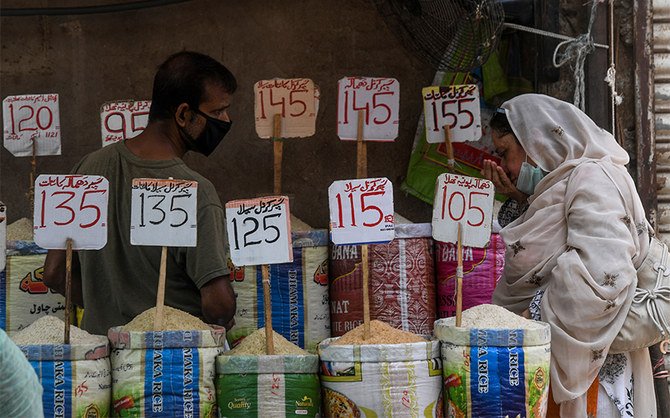
    As per the Finance Ministry’s monthly economic update and outlook for February, inflation is projected to range from 28 per cent to 30 per cent in the near future, before gradually subsiding. The report cites several reasons for this, including an uncertain political and economic environment, currency depreciation, a recent increase in energy prices, and higher administered prices.

    The report notes that interest payments will contribute to total expenditures, constraining the fiscal space available for normal operations, investments, and social and structural policies.

    While the State Bank of Pakistan (SBP) has been implementing a contractionary monetary policy, it is expected that inflationary pressures will take some time to ease. The federal government, in collaboration with provincial governments, is closely monitoring the demand-supply gap of essential commodities and taking necessary measures to stabilise prices.

    The resumption of an economic stabilization program will aid in achieving economic and exchange rate stability and provide an opportunity to benefit from falling international commodity prices. This will also help control cost-push inflation and allow the government to pass on lower commodity prices to domestic consumers.

    The report notes that favorable weather and the use of inputs by farmers should help meet the 28.4 million-ton wheat target, while disbursements under the Kissan package should positively impact agricultural productivity and overall economic activity. The cyclical pattern of large-scale manufacturing (LSM) in Pakistan is positively correlated with the cyclical position of the country’s main trading partners. In December 2022, LSM activity was as expected, with no unexpected shocks observed in that month.

    However, the international economic environment remains uncertain, as evidenced by the Composite Leading Indicators (CLI) in Pakistan’s main export areas, which were somewhat negative compared to historical standards.

    The ministry anticipates that LSM will increase in January compared to the previous month, partly due to seasonal factors. The ministry forecasts that LSM output may marginally decline on a YoY basis, mainly due to the high base effect in the reference period

  • China’s $700 million loan to boost Pakistan’s foreign exchange reserves

    China’s $700 million loan to boost Pakistan’s foreign exchange reserves

    Pakistan’s Finance Minister Ishaq Dar has announced that the Board of China Development Bank has approved a credit facility of $700 million for Pakistan, and all formalities have been completed.

    This announcement was made through a tweet, and the loan is expected to be received by the State Bank of Pakistan this week, which will help to boost the country’s forex reserves.

    According to Reuters, the credit facility, provided by the state-owned China Development Bank, will increase Pakistan’s forex reserves by about 20 per cent. This comes at a time when the country is in talks with the International Monetary Fund (IMF) to unlock funds from a $6.5 billion bailout. The loan is in addition to other facilities that China has already extended to Pakistan, and a finance ministry official has stated that the money could arrive as early as Thursday.

    China Development Bank did not respond to a faxed request for comment. Currently, China is Pakistan’s largest creditor, and its commercial banks hold approximately 30 per cent of the country’s external debt.

  • PTI’s Shaukat Tarin booked for allegedly sabotaging IMF deal

    Former Finance Minister Shaukat Tarin has been booked in a sedition case by Federal Investigation Agency (FIA) for allegedly sabotaging negotiations between Pakistan and International Monetary Fund (IMF).

    The Pakistan Tehreek-e-Insaf (PTI) leader landed in the center of controversy in August last year when telephonic conversations between him and two provincial finance ministers surfaced. A voice, allegedly Tarin’s, was heard telling Khyber Pakhtunkhwa’s (KP) finance minister Taimur Jhagra and Punjab finance minister Mohsin Leghari, both of the PTI, to tell the coalition government in the centre and the IMF that they would not be able to commit to a provincial budget surplus in light of the monsoon floods.

    The leaked audio came to light when the international lender’s executive board was scheduled to consider Pakistan’s request of releasing the $1.2 billion tranche under the Extended Fund Facility (EFF).

    On Monday, the coalition government also allowed the FIA to arrest the former finance minister after the agency sought the interior ministry’s nod to detain him.

    PTI lawmakers protested in Senate against the possible arrest of Tarin on the same day.

    Interestingly, senior leader of arch-rivals Pakistan Muslim League-Nawaz (PML-N), Shahid Khaqan Abbasi, lent support to Tarin, stating that there should be a trial and he shouldn’t be arrested.

    He pointed out that many arrests took place when Imran Khan was PM and that now the incumbent government shouldn’t follow in his footsteps.

  • GHQ excuses itself from deploying army and rangers’ personnel for upcoming elections

    GHQ excuses itself from deploying army and rangers’ personnel for upcoming elections

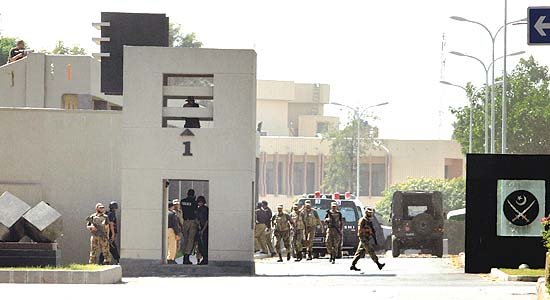
    The General Headquarters (GHQ) on Thursday excused from providing personnel from army, paramilitary Rangers and Frontier Constabulary (FC) for the upcoming elections in Punjab and Khyber-Pakhtunkhwa.
    

    The Election Commission of Pakistan (ECP) had requested the Defense Ministry to deploy army and rangers for the upcoming elections in the two provinces.

    Responding to the ministry, GHQ said that the forces are occupied with national security duties due to the recent wave of terrorism.

    However, Punjab Rangers will be available as the Quick Response Force during these elections.

    On the other hand, replying to the ECP’s letter, the Finance Ministry has asked the election-conducting authority to postpone its demand for an additional grant in the wider national interest.

    The finance ministry requested the election commission to delay its request for the grant until the economic situation of the country improves.

  • Pakistan receives $500 million from Asian Infrastructure Investment Bank

    Pakistan receives $500 million from Asian Infrastructure Investment Bank

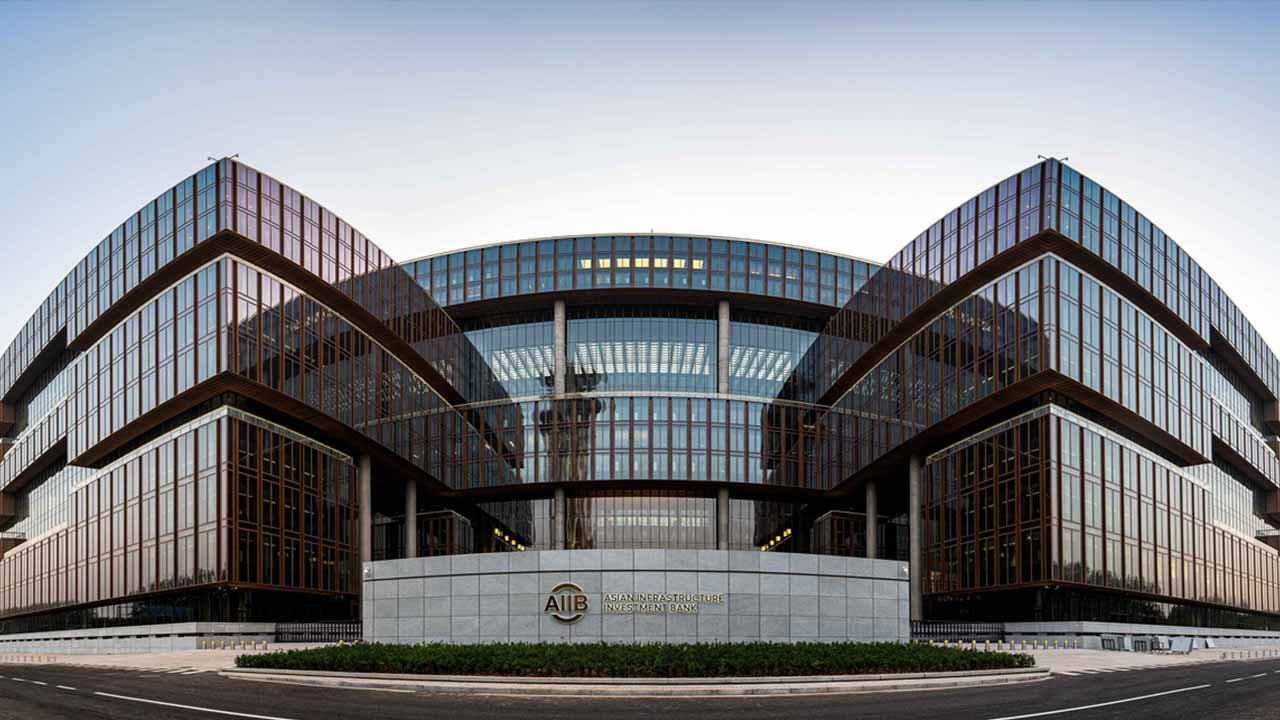
    The government of Pakistan on Tuesday received $500 million from Asian Infrastructure Investment Bank (AIIB), the Ministry of Finance announced on Tuesday.

    “Government of Pakistan has today received $500 million from AIIB. The funds are deposited with the State Bank of Pakistan (SBP) and will augment our reserves,” the ministry said.

    The funds by AIIB are crucial for the cash-strapped country, which has seen its foreign exchange reserves dwindle in recent months. The country’s reserves stood at $7.8 billion as of November 18.

    “During the week ended on November 18, 2022, SBP’s reserves decreased by $134 million to $7,825.7 million due to external debt repayment,” said the SBP on Friday.

    It is important to note that on October 26, 2022, the SBP got $1.5 billion from ADB as a loan disbursement for the government of Pakistan.

    An agreement between the ADB and Pakistan was inked last month to offer a $1.5 billion loan for budgetary support as well as assistance with flood-related repair and reconstruction efforts.

    The government’s $2.3 billion countercyclical development spending programme, created to lessen the effects of external shocks like the Russian invasion of Ukraine, was funded in part by a loan issued under the BRACE Program.

  • Dar aaraha hai: Ishaq Dar flying back with PM Shehbaz

    Dar aaraha hai: Ishaq Dar flying back with PM Shehbaz

    Pakistan Muslim League -Nawaz (PML-N) leader and Senator, Ishaq Dar, is coming back home to Pakistan after almost five years.

    According to media reports, he is flying back with Prime Minister Shehbaz Shairf. Following his return, Dar — who is slated to become Pakistan’s new finance minister — will take the oath of his ministership on Tuesday, September 27, 2022.

    On Sunday, Miftah Ismail resigned as Finance Minister of Pakistan.

    “I worked to the best of my ability for four months, and remained loyal to the party and the country,” the PML-N statement quoted Miftah as saying during the meeting between Nawaz Sharif and other party leaders in London.

    Earlier, it was reported that Dar would take over the finance ministry from Tuesday (September 27).

    It is pertinent to mention that Ismail is an unelected member and thus couldn’t continue in office for more than six months. He took charge of the ministry in April.

    The Sharif brothers and Dar had a four-hour long meeting in London following the prime minister’s arrival from New York after attending the United Nation’s 77th General Assembly.

    While speaking to Geo News Interior Minister Rana Sanaullah said that Dar, who has been Pakistan’s finance minister four times in the past, will “Facilitate PM Shehbaz on economic affairs.”

  • Govt appoints Jameel Ahmad as Governor SBP for 5 years

    Govt appoints Jameel Ahmad as Governor SBP for 5 years

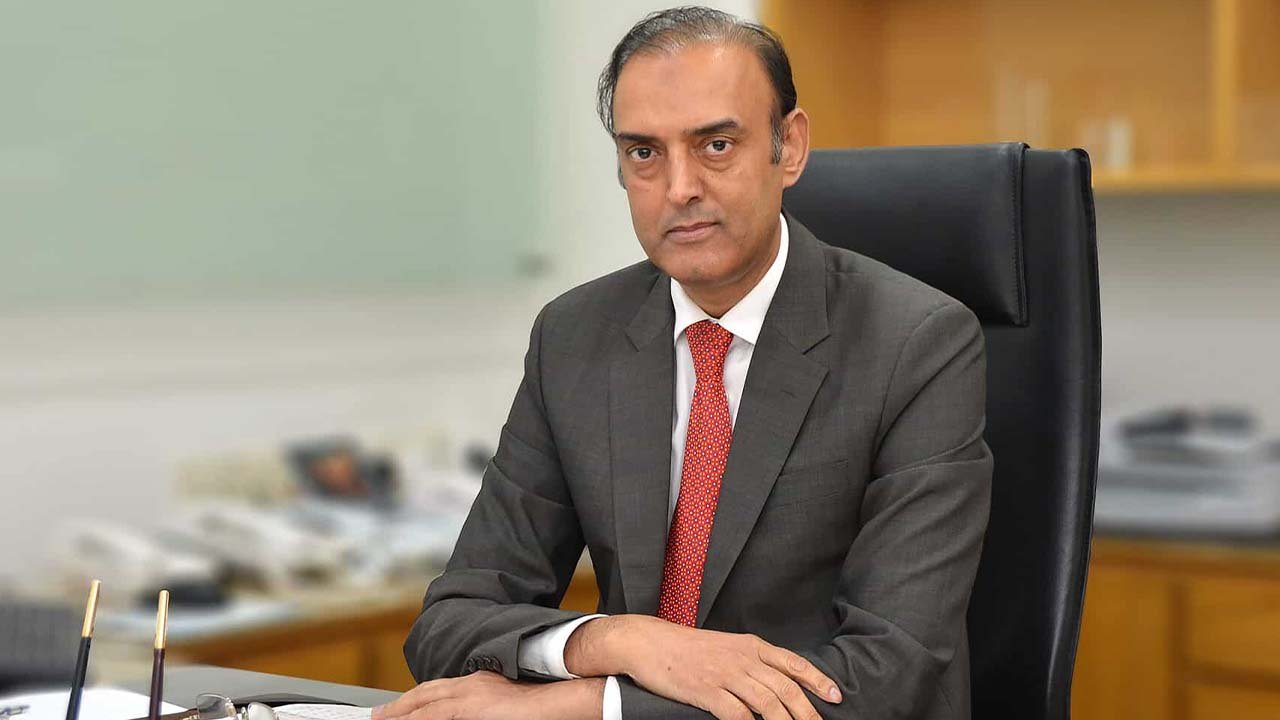
    According to a Finance Division announcement on Friday, the government has appointed Jameel Ahmad as Governor of the State Bank of Pakistan (SBP) for a tenure of five years, effective immediately.

    “In exercise of powers conferred under Section 11A (1) read with Section 14(1) of the State Bank of Pakistan (SBP) Act 1956 (Amended 2022), Jameel Ahmad is appointed as Governor State Bank of Pakistan for a term of five (5) years with the approval of the President of Pakistan, upon the recommendation of Federal Government, with immediate effect,” read the notification.

    Jameel Ahmad was the deputy governor of the central bank and was reappointed by the government on October 25, 2018, for a three-year term. From April 11, 2017, to October 15, 2018, he also held the position of Deputy Governor (Banking & FMRM).

    “Jameel Ahmad has an illustrious career as an accomplished central banker span over 30 years at various senior positions at the State Bank of Pakistan and the Saudi Central Bank (SAMA),” read information available on the SBP website.

    Mr Jameel Ahmad did his MBA from University of Punjab at Lahore and is a Fellow Member of the Institute of Cost & Management Accountants of Pakistan (FCMA), an Associate Member of the Institute of Bankers Pakistan and a Fellow Member of the Institute of Corporate Secretaries of Pakistan (FCIS).

  • Finance Ministry warns public of further increase in inflation

    Finance Ministry warns public of further increase in inflation

    The Finance Ministry of Pakistan has warned the public that the exchange rate, commodity supplies, and seasonality could increase the prices and transportation costs in the country, reports Dawn.

    The fiscal deficit in July-August was recorded at 0.9 per cent of the Gross Domestic Product (GDP), same as the previous year.

    Economic Adviser’s Wing of the Ministry of Finance in its monthly Economic Update & Outlook states, “The effect of these impulses — surge in international oil prices, exchange rate depreciation and adjustments in administered prices — may intensify the magnitude of prices and transportation cost.”

    The ministry said the country had seen some improvement in economic activities but an unprecedented increase in international commodity prices was putting pressure on domestic prices as well as on the local currency. However, the government’s pro-growth initiative along with efficient monitoring of prices is expected to provide relief to the general public.

    The ministry further explained that the country’s inflation rate was mainly driven by monetary and supply-side factors, including domestic and international commodity prices, dollar exchange rate, seasonal factors.

    As per a report, petrol prices in Pakistan may go up by Rs7 per litre from November 1.

    Earlier, it was reported that inflation in Pakistan has broken a 70-year record in the last three years, with food prices doubling, while the prices of ghee, oil, sugar, flour, and poultry have reached historic levels.

    A couple of weeks ago, Adviser to the Prime Minister on Finance and Revenue Shaukat Tarin said that things are becoming more expensive all over the world and the reasons are unknown.

  • Pakistan may send experts to replace Afghan brain drain

    Pakistan may send experts to replace Afghan brain drain

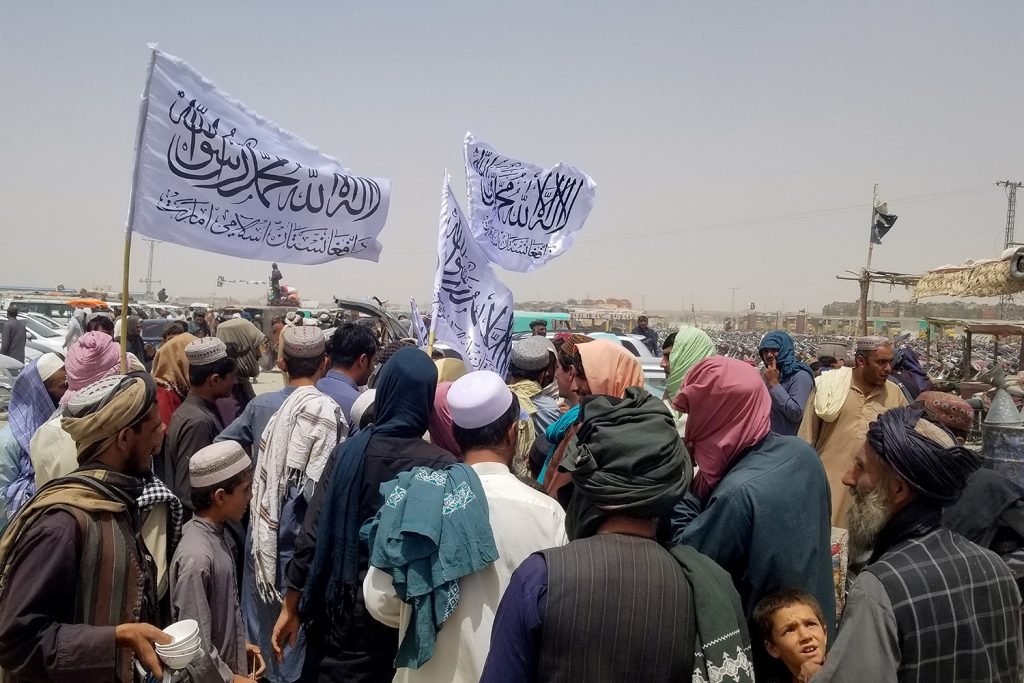
    Federal Minister for Finance and Revenue Pakistan, Shaukat Tarin has said that Pakistan may have to send experts to Afghanistan because of the country’s major experts have left the country which has complicated the Taliban’s administration, reports The News.

    While giving an extensive briefing to the Senate Standing Committee on Finance on Thursday, Mr Tarin said that the government was building up strategic reserves of essential food commodities to meet domestic as well as Afghanistan’s requirements.

    According to him, “they [Afghanistan} require assistance and we may have to dispatch experts because of the brain drain in Afghanistan. The situation is fluid and we are analysing it. The West has stopped foreign reserves of Afghanistan to the tune of $10 billion, as the IMF has stopped $400 million and many others so Kabul will be facing a scarcity of foreign exchange. Our bilateral trade will surge but we may have to undertake bilateral trade in the Pak rupee.”

    Talking about Pakistan’s economic situation he stated, “Pakistan’s trade deficit stands at $4 billion and remittances are hovering around $2.5 billion.”

    “On tax revenue, FBR revenues are ahead of target by 23 percent. The track and trace system will be placed for five major sectors. The Point of Sale (POS) will integrate receipts and standardised and frivolous notices will be withdrawn,” he assured.

    More than 120,000 people evacuated from Afghanistan are qualified professionals from civil servants to lawyers.

    Michael Barry, a specialist on Afghanistan who taught at the American University in Kabul, said that many members of the Taliban are from rural areas and lack the knowledge to run the state bureaucracy, as per Agence France-Presse (AFP).