Tag: finance

  • Pakistan’s nuclear and missile programmes will not be compromised for IMF deal, says Finance Minister

    Pakistan’s nuclear and missile programmes will not be compromised for IMF deal, says Finance Minister

    During a session of the Senate on Thursday, Pakistan’s Finance Minister Ishaq Dar stated unequivocally that there would be no compromise on the country’s nuclear and missile programs. The assurance came in response to questions posed by PPP Senator Raza Rabbani, who had raised concerns about the delay in Pakistan’s agreement with the International Monetary Fund (IMF). Rabbani had suggested that the delay might be due to pressure being exerted on Pakistan’s nuclear program.

    In response to Rabbani’s questions, Dar stated that the delay was not due to any action by the current government, but rather to the fact that the IMF had requested that certain friendly countries fulfill commitments they had made to support Pakistan. According to Geo, Dar promised that once the staff-level agreement and the Extended Fund Facility program were finalized, the details would be posted on the finance ministry’s website.

    Dar also expressed his belief that Pakistan’s nuclear program was a matter of national security and emphasized that no one had the right to tell Pakistan what range of missiles or nuclear weapons it could have. He argued that the country’s nuclear and missile programs were essential for deterrence and for guarding Pakistan’s national interests.

    The delay in the IMF agreement has been a cause for concern, as it is seen as critical to taming a balance-of-payments crisis. The agreement, which was approved by the IMF in 2019 and is worth $6.5 billion, includes $1.1 billion that would be released once the agreement is signed. Dar had previously blamed the delay on the previous government, which he said had failed to meet commitments and created a trust deficit. Despite the delay, Dar stated that Pakistan was “very close” to signing the agreement.
  • Govt hikes petrol price by Rs5 to Rs272 per litre to match global market changes

    Govt hikes petrol price by Rs5 to Rs272 per litre to match global market changes

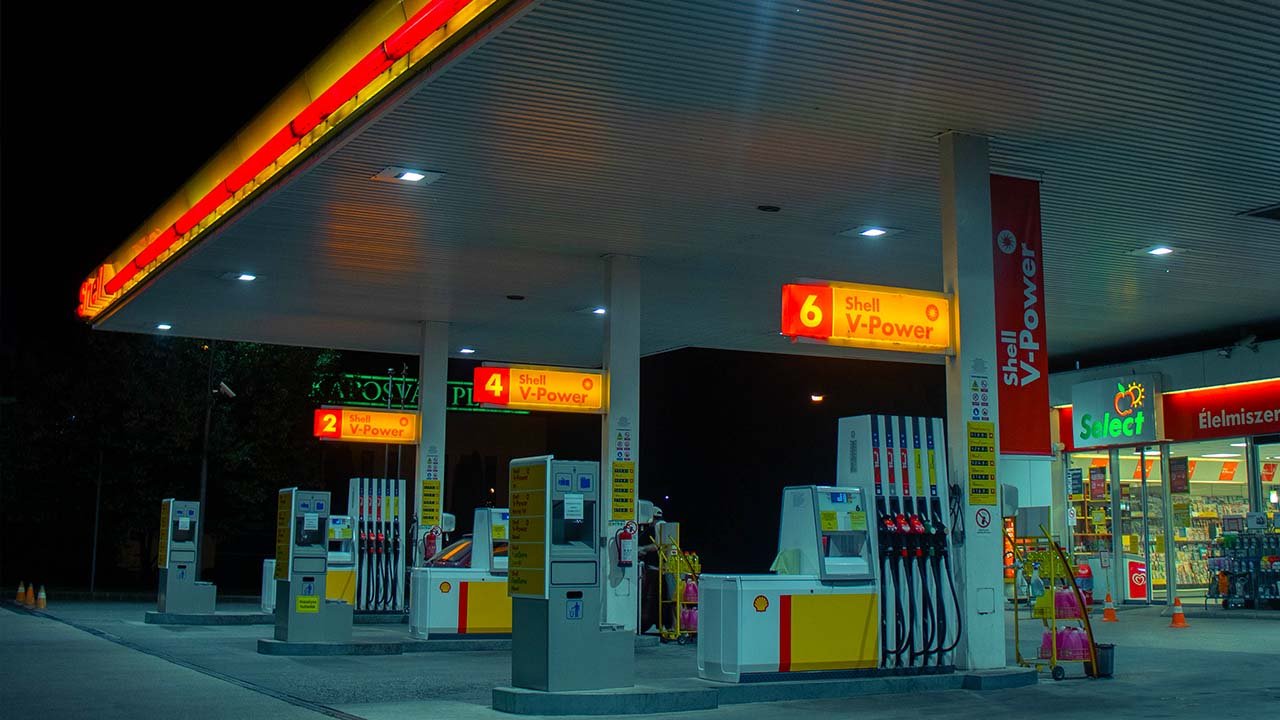
    As per a press release from the Finance Division, the government has decided to raise the price of petrol by Rs5 per litre to Rs272 per litre for the next two weeks, effective from March 16 (Thursday).

    The statement noted that the increase was due to the rise in Platts Singapore prices over the past two weeks and the depreciation of the Pak Rupee, resulting in a hike in petroleum, oil, and lubricant (POL) products in Pakistan.

    The notification further disclosed that the price of high-speed diesel has been increased by Rs13 per litre to Rs293 per litre, and kerosene has been raised by Rs2.56 per litre to Rs190.29 per litre by reducing government dues on them. However, the price of light diesel oil has been kept constant at Rs184.68 per litre by adjusting government dues.

    It’s worth mentioning that Finance Minister Ishaq Dar had previously announced a reduction in petrol prices by Rs5 per litre on February 28.

  • Real estate in Pakistan is ‘parking lot’ for untaxed money with support of DHAs and Army, says former FBR chairman

    Real estate in Pakistan is ‘parking lot’ for untaxed money with support of DHAs and Army, says former FBR chairman

    Shabbar Zaidi, the former Chairman of the Federal Board of Revenue in Pakistan, stated that only 300 companies out of the entire business sector in the country pay 70 per cent of the total taxes collected.

    According to Dawn, Zaidi dismissed the claims of some businesses that there were too many taxes in Pakistan and no dividends. He pointed out that the real estate was the “parking lot” of untaxed money, and that with the support of the DHAs and army, a system had been developed to officially launder money through real estate, which had perpetual amnesty in the country.

    He called for removing DHAs from the real estate business as there could not be fair competition between a state institution and private businesses in real estate, and also suggested that plots of land should be confiscated if construction was not done on them.

    Kashif Anwar, the president of the Lahore Chamber of Commerce and Industry, argued in favor of amnesty on undeclared foreign reserves to bring money back to the country.

    In another session, Tassaduq Hussain Jillani, the former Chief Justice of Pakistan, acknowledged that criticism of the Supreme Court for messing up big corporate cases was justified as the judges were not expert at finance and economics.

    Jillani suggested the formation of commercial benches in the SC and high court for such cases. In a session on local governments, Ammar Ali Jan, the general secretary of Haqooq-i-Khalq Party, criticized the absence of local government in the country, citing examples of polluted water and waste management issues.

  • Rupee depreciation may lead to an increase in petroleum prices, says Musadik Malik

    Rupee depreciation may lead to an increase in petroleum prices, says Musadik Malik

    Dr Musadik Malik, the State Minister for Petroleum, issued a warning on the potential increase of petroleum product prices due to the significant decline in the value of the Pakistani rupee against the US dollar.

    During an appearance on the Geo News program “Capital Talk” on Thursday, Dr Malik stated that the depreciation of the rupee could lead to an upsurge in the prices of petroleum products in the upcoming days. He also shared that the negotiations between Pakistan and Russia on oil imports were progressing well.

    According to Dr Malik, the sudden increase in the US dollar’s price was due to political instability, making it difficult to govern the country in such an uncertain environment. Notably, during the last fortnight’s review, Finance Minister Ishaq Dar announced a reduction in petroleum prices.

    As a result, the government cut the price of petrol by Rs5 per litre, setting it at Rs267 per litre, while the price of diesel remained steady at Rs280 per litre.

    In addition, the price of light diesel oil decreased by Rs12 per litre, bringing it down to Rs184.68 per litre. Furthermore, the cost of kerosene oil was reduced by Rs15 per litre, bringing its price to Rs187.73.

  • SBP hikes export financing markup rates from 11% to 13%

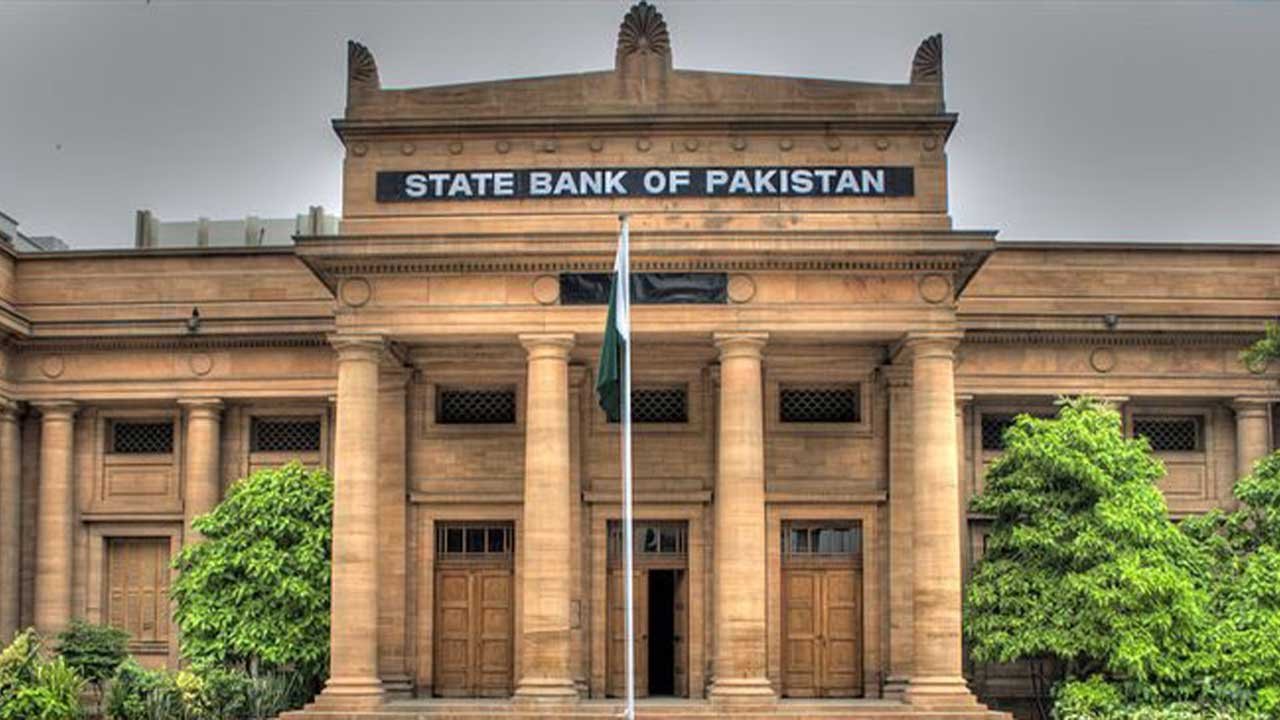
    The State Bank of Pakistan (SBP) has revised the rates of specialised lending schemes in accordance with its increased monetary policy rate of 16 per cent.

    SBP said it had decided to reduce the gap between its policy rate and the Export Finance Scheme (EFS) and Long-Term Financing Facility (LTFF) rates from the existing 5 per cent to 3 per cent, according to a circular released by the central bank.

    The notification stated that the revised tariffs will be effective from December 30, 2022.

    “Further, as mentioned in above referred circular, in [the] future with any change in the SBP policy rate, markup rates for EFS and LTFF will be revised automatically so that the gap between [the] policy rate and EFS & LTFF rates is maintained at 3 per cent,” the central bank added.

    Exporters and industrialists, who are already feeling the strain of strong inflationary pressures together with record increases in energy costs, are anticipated to see a rise in the cost of doing business as a result of higher financing rates.

  • Pakistan’s GDP growth expected to remain below 3–4% in FY23: SBP

    Pakistan’s GDP growth expected to remain below 3–4% in FY23: SBP

    In its annual economic health report released on Wednesday, the State Bank of Pakistan (SBP) slashed its predicted GDP growth from the previously disclosed range of 3–4 per cent for the current fiscal year, citing flood-induced destruction and the stabilisation policy as important contributors.

    However, the central bank stated that economic growth was stronger than anticipated in the 2021–22 fiscal year as real GDP increased by 6 per cent compared to 5.7 per cent a year earlier in its Annual Report on the State of Pakistan’s Economy, which mainly covered the previous fiscal year that ended on June 30.

    According to Geo, the GDP grew by 6 per cent in the previous fiscal year. In its monetary policy announcement from October, the SBP already reduced the economic growth to around 2 per cent.

    According to the research, increased agricultural output and a broad-based expansion of large-scale manufacturing (LSM) were the main forces behind this gain.

    Macroeconomic imbalances returned during FY22 as a result of a combination of unfavourable global and domestic circumstances.

    When widespread flooding struck a significant portion of the nation at the beginning of the current fiscal year, the SBP claimed that the economy was in the middle of a stabilisation phase.

    According to the report, the flooding was predicted to have an impact on the nation’s real economic activity through a number of channels. It was feared that losses in agriculture resulting from the destruction of crops and livestock would spread to the rest of the economy through a number of backward and forward links.

    According to the bank, the extensive devastation of infrastructure in the afflicted provinces might also harm the nation’s chances for growth this year.

    Due to the deteriorating economic climate, the SBP avoided stating a range for the growth rate of the current fiscal year. Due to the high rate of inflation and the scarcity of gas and electricity, industries have either stopped operating entirely or substantially reduced their production.

    The SBP’s restriction on the opening of letters of credit (LCs) for imports in an effort to save money is a significant contributing factor.

    In the event that the gas supply is not restored and no LCs are opened, the All-Pakistan Textile Mills Association has warned to declare layoffs within days.

    According to the textile industry, up to 500,000 people who were either directly or indirectly employed by the business have lost their jobs. However, there are no official statistics in this regard.

  • Pakistan to receive $13 billion in financial assistance from China and Saudi Arabia

    Pakistan to receive $13 billion in financial assistance from China and Saudi Arabia

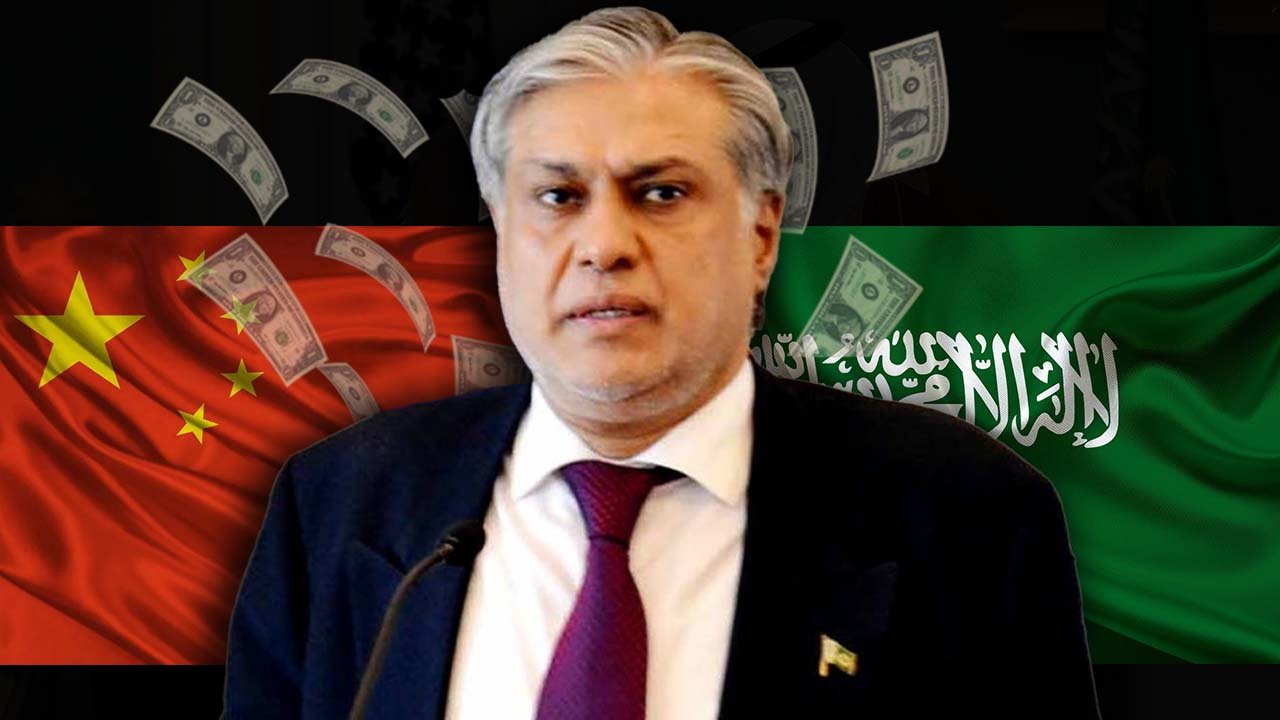
    Ishaq Dar, Federal Minister of Finance, has said that Pakistan’s two closest friends, China and Saudi Arabia, will contribute a multibillion-dollar financial package to assist Pakistan with its shaky economy.

    According to the Finance Minister, both countries will grant Pakistan a $13 billion package.

    According to The News, Dar went on to say that China intends to contribute $8.8 billion in assistance, including loan rollovers, during the current fiscal year, and that it will also roll over $4 billion in deposit returns.

    In addition, Ishaq Dar indicated that it will provide $3.3 billion in commercial loans and $1.45 billion in additional financing.

    Meanwhile, Saudi Arabia is expected to contribute an extra $4.2 billion in aid, including $3 billion in new reserves and a delayed payment oil facility, according to the Finance Minister. He declared that the Kingdom would construct a petrochemical facility in Gwadar.

    Furthermore, the Minister stated that both countries have guaranteed Pakistan’s Prime Minister (PM), Shehbaz Sharif, of their support and will continue to do so till June 2023.

    Furthermore, China has promised that construction on CPEC’s key railway projects, Main Line 1 (ML-1) and Karachi Circular Railway (KCR), will begin shortly.

  • Pakistan’s total liquid foreign reserves increases to $14.68 billion

    Pakistan’s total liquid foreign reserves increases to $14.68 billion

    The Asian Development Bank (ADB) contributed to an increase of $1.517 billion in Pakistan’s foreign exchange reserves during the week ending October 28 to bring them to $14.679 billion, the central bank reported on Thursday.

    The State Bank of Pakistan’s foreign exchange holdings increased by $1.473 billion to $8.912 billion.

    “This increase is attributed to the receipt of US$ 1,500 million from ADB,” the SBP said in a statement.

    The SBP has enough reserves to cover imports for 1.29 months. Additionally, commercial bank reserves increased by $44 million to $5.766 billion.

    When the government is dealing with a balance of payments issue, the increase in foreign reserves is encouraging for the nation’s finances. At least $30 billion has been lost as a result of the country’s devastating floods this summer.

    A $500 million deal between Pakistan and the World Bank has been signed. The $200 million investment will be used to support an agricultural transformation project in Punjab.

    According to The News, another project in Khyber Pakhtunkhwa for $300 million in climate change projects will be funded by the World Bank.

  • Pakistani rupee drops by 0.35% to close at Rs221.43 versus dollar

    Pakistani rupee drops by 0.35% to close at Rs221.43 versus dollar

    As investors await the US Federal Reserve’s decision on the policy rate, the Pakistani rupee (PKR) depreciated by 0.35 per cent against the greenback on Wednesday.

    According to the State Bank of Pakistan (SBP), the local unit appreciated by Rs0.78 and ended the day at Rs221.43.

    The Pakistani rupee enjoyed gains against the US dollar on Tuesday, and it ended the day at Rs220.65 after rising by Rs0.24 (or 0.11 per cent) in the interbank market.

    Gains were recorded when market confidence improved as a result of discussions held by Finance Minister Ishaq Dar with senior bank and exchange company executives.

    However, in a significant development, according to the most recent data released by the Pakistan Bureau of Statistics (PBS) on Tuesday, consumer price index (CPI)-based inflation increased to 26.6 per cent on an annual basis in October 2022 as opposed to an increase of 23.2 per cent in the previous month and 9.2 per cent in October 2021.

    Globally, the US dollar slipped on Wednesday as investors awaited the US Federal Reserve’s policy decision amid speculation it might indicate a slowdown in future rate hikes. The central bank will soon release its policy statement with investors widely expecting a 75 basis points (bps) rate hike, the fourth such increase in a row.

    The dollar index – which gauges the greenback against a basket of six counterparts that includes the yen, euro and sterling – eased 0.2 per cent to 111.28, but was not far below Tuesday’s high of 111.78, the strongest level since October 25. The index has fluctuated widely around the 112 level since its retreat from a two-decade high of 114.78 at the end of September.

    Oil prices, a crucial gauge of currency parity, increased on Wednesday after data from the sector revealed a surprising decline in US oil supplies, indicating that demand is still strong despite sharp interest rate increases that are slowing down global development.

  • ADB set to approve $1.5 billion loan for Pakistan today

    ADB set to approve $1.5 billion loan for Pakistan today

    A $1.5 billion programme loan for Pakistan is slated to be approved by the Asian Development Bank (ADB) on Friday (today) as part of the BRACE (Building Resilience with Active Countercyclical Expenditure) programme.

    According to Geo, the Board of the ADB will meet in Manila to discuss whether to approve a $1.5 billion programme loan for Pakistan. It is anticipated that this loan will be disbursed after receiving permission next week, assisting Islamabad in replenishing its depleting foreign exchange reserves.

    Additionally, it is anticipated that the Asian Infrastructure Investment Bank (AIIB) will approve $500 million in co-financing, bringing the total distribution to $2 billion for the current month.

    With a projected current account deficit of $10 to $12 billion and an external debt servicing obligation of $22.9 billion, Pakistan needs $34 billion for the current fiscal year. On the flip side, the terrible floods made the already bad situation with the economy even worse.

    Pakistan suffered losses of $32.4 billion, according to the group of international donors, which also included the World Bank, ADB, UNDP, and EU. Pakistan also needed $16.2 billion for building expenditures.

    An official document states that the $1.5 billion BRACE programme loan will assist Pakistan in responding to the deepening macroeconomic crisis exacerbated by the Russian invasion of Ukraine and the catastrophic floods that have affected close to 33 million people. Prior to the latest floods, Pakistani officials had already begun work on this programme loan.

    The amount of countercyclical actions taken by the government to lessen the negative effects of cumulative external shocks, particularly on the poor and vulnerable, comes to around $2.4 billion.