Tag: financial assistance

  • Pakistan secures over $228 million in loans from multiple foreign sources

    Pakistan secures over $228 million in loans from multiple foreign sources

    In April 2024, Pakistan secured $237.24 million in external financing from various sources, according to the Economic Affairs Division (EAD). This sum included $228.64 million in loans and $8.60 million in grants.

    Throughout the first ten months of the fiscal year 2024 (10MFY24), the country managed to obtain a total of $7.14 billion in external financing, significantly less than the annual budget estimate of $17.62 billion.

    In April, the government received a substantial loan of $117.39 million for non-project aid, aimed at providing program and budgetary support to help restructure the economy. Over 10MFY24, loans for non-project aid amounted to $4.84 billion.

    The Ministry of Economic Affairs noted Pakistan’s continued reliance on foreign commercial borrowing, which amounted to $107.95 million in April and $889.43 million in 10MFY24. This was primarily facilitated through the Naya Pakistan Certificate.

    Notably, no funds were secured from foreign commercial banks in 10MFY24, despite a budget estimate of $4.5 billion for the fiscal year.

    Disbursements from bilateral and multilateral development partners remained strong, totaling $129.29 million in April and $3.74 billion in 10MFY24. Although these inflows helped bolster foreign exchange reserves, they fell short of the government’s budget estimates.

    Multilateral sources provided nearly $121.61 million in April and $2.87 billion in 10MFY24. Among these, the International Development Association-World Bank (IDA) led with $61.73 million in April, followed by the Asian Development Bank (ADB) with $42.78 million.

    The International Bank for Reconstruction and Development (IBRD) contributed $8.52 million, and the Asian Infrastructure Investment Bank (AIIB) provided $6.33 million. Cumulatively, IDA’s disbursements totaled $1.35 billion, ADB’s $708.30 million, and AIIB’s $309.95 million.

    Bilateral development partners contributed $7.68 million in April and $877.76 million in 10MFY24. In April, Germany provided $3.10 million, Korea $1.80 million, France $1.77 million, and the USA $1.01 million. Over 10MFY24, Saudi Arabia’s Oil Facility dominated bilateral disbursements with $595.18 million.

    While foreign assistance has been crucial in maintaining financial stability, the shortfall compared to budget estimates highlights the need for improved fiscal strategies and diversified financing avenues to achieve Pakistan’s economic goals.
  • IMF team engages in talks with Pakistan for new $8 billion programme

    IMF team engages in talks with Pakistan for new $8 billion programme

    The International Monetary Fund (IMF) confirmed that it is in discussions with Pakistan regarding a 24th bailout programme under the Extended Fund Facility (EFF), signalling a significant development in the country’s ongoing economic negotiations.

    IMF Communication Director Julie Kozack, during a press briefing, refrained from commenting directly on the status of a staff-level agreement, suggesting that the talks are still in progress.

    She stated, “A mission team led by Nathan Porter is currently meeting with Pakistani authorities to discuss the next phase of our engagement.”

    Kozack elaborated on recent IMF activities in Pakistan, noting that on April 29th, the IMF Executive Board completed the second review of the stand-by arrangement for Pakistan, enabling a disbursement of approximately $1.1 billion.

    “The completion of this review reflects the authorities’ robust policy efforts during the stand-by arrangement, which contributed to stabilising the economy,” she explained.

    Addressing further queries, Kozack indicated that the mission is actively working on the ground and that their findings would be communicated upon the mission’s completion. 

    Pakistan is seeking a substantial $6 to $8 billion bailout package from the IMF over a three- to four-year period to address its financial difficulties.

    The IMF’s technical team arrived in Pakistan on May 10 to engage in discussions regarding the new loan programme and budget preparations.

    These talks come at a critical time for Pakistan, which is grappling with considerable economic challenges, including the failure of a tax amnesty scheme proposed by the IMF. The outcome of these negotiations will be pivotal in determining Pakistan’s economic stability and future financial policies.

  • Pakistan seeks global assistance to overhaul tax system amidst significant drop in active taxpayers

    Pakistan seeks global assistance to overhaul tax system amidst significant drop in active taxpayers

    In a significant development, the count of active taxpayers has dwindled to 3.4 million, marking a 41 per cent decrease from the previous year. The government is contemplating seeking financial support from the Bill and Melinda Gates Foundation to enhance digital services within the Federal Board of Revenue (FBR).

    According to Express Tribune, approximately 500,000 individuals were excluded from the Active Taxpayers List (ATL) for tax year 2023 due to delayed submission of annual income tax returns. These individuals will incur a nominal penalty for reinstatement. Newly appointed economic czar, Muhammad Aurangzeb, chaired his inaugural meeting to explore avenues for improving digital services and expanding the tax base.

    The gathering, which included representatives from Karandaaz Pakistan, a firm specializing in financial inclusion services, concluded with the decision for Karandaaz to approach the Bill and Melinda Gates Foundation for financial backing in establishing a digital platform within the FBR.

    The government aims to streamline interactions between tax authorities and taxpayers, fostering transparency and curbing corruption. This initiative arises as the number of active taxpayers further drops to a mere 3.4 million, compared to last year’s figure of over 5.7 million—an alarming 41 per cent reduction.

    The FBR, having received 3.9 million income tax returns, removed approximately 500,000 individuals from the active list due to delayed filings. Consequently, those not on the active taxpayers list will face a 0.6 per cent withholding tax on cash withdrawals.

    To encourage compliance, the government allows the reactivation of approximately 500,000 individuals by paying a nominal Rs1,000 fine for late filing of returns. The International Monetary Fund (IMF) is expected to exert pressure on the government to expand the tax base and simplify tax slabs for both salaried and business individuals.

    Recent data reveals a noteworthy contribution of Rs217 billion from the salaried class in the first eight months of the current fiscal year, surpassing the combined taxes paid by rich exporters and real estate players by Rs37 billion, or one-fifth.

  • Utility Stores to implement Rs7.492 billion relief package ahead of Ramzan

    Utility Stores to implement Rs7.492 billion relief package ahead of Ramzan

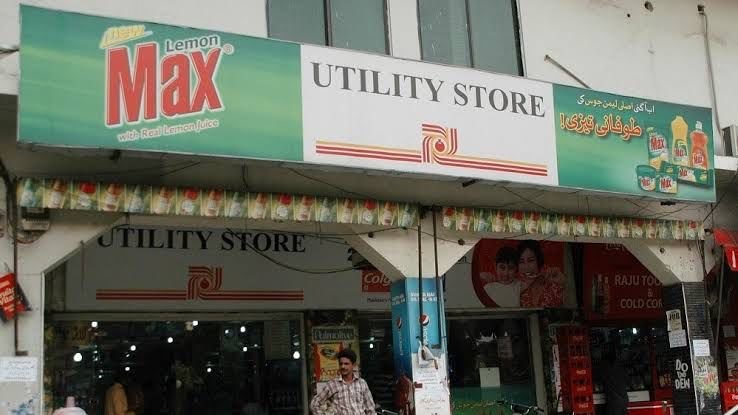
    The federal government is set to implement the Ramzan Relief Package, totaling Rs7.492 billion, through the Utility Stores Corporation (USC) starting March 4, 2024. This initiative aims to provide relief to targeted beneficiaries by offering subsidies on 19 essential items.

    The Economic Coordination Committee (ECC) of the Cabinet approved this decision based on a proposal from the Ministry of Industries and Production. The proposal sought approval for providing subsidies to targeted beneficiaries registered under the Benazir Income Support Programme (BISP) with a net amount of Rs7.492 billion.

    Of this, Rs 5 billion was allocated in the current fiscal year 2023–24 for the Ramzan Relief Package 2024, with the remaining Rs 2.492 billion to be re-appropriated from the current fiscal year budget allocations for the Prime Minister Relief Package (PMRP).

    The ECC directed the Finance Division to release the full subsidy amount of Rs7.492 billion to ensure timely purchases and necessary arrangements for the availability of these items at USC outlets.

    With Ramzan expected to commence on March 11, 2024, the implementation date for the Ramzan Relief Package-2024 was proposed from March 4, 2024, until the last day of Ramzan.

    Since 1991, the government has been providing relief during Ramzan by selling 19 items at subsidised rates through USC outlets. For the fiscal year 2023–24, the federal government allocated Rs35 billion for subsidies on essential items, including Rs30 billion for PMRP and Rs5 billion for the Ramzan Relief Package 2024.

    The Ramzan Relief Package aims to provide maximum relief to the masses. Due to restrictions imposed by the International Monetary Fund (IMF) on untargeted subsidies, subsidies are provided to targeted beneficiaries registered under PMT-40 of BISP for the fiscal year 2023–24.

    The USC is currently serving 26.92 million households registered under PMT-40. To extend assistance to more beneficiaries during Ramzan-2024, it is proposed to provide subsidies on 19 items to targeted beneficiaries registered under PMT-60, reaching an additional 12.73 million households.

  • Pakistan grapples with massive Rs63.4 trillion debt

    Pakistan grapples with massive Rs63.4 trillion debt

    In November 2023, Pakistan’s total debt soared to an alarming Rs63.399 trillion, marking a significant increase from Rs50.959 trillion in the same month of the previous year. 

    According to details, this surge comprises Rs40.956 trillion in domestic loans and Rs22.434 trillion in international loans.

    The recent development follows Pakistan’s commitment to the International Monetary Fund (IMF) for a new loan programme. 

    As outlined in the Memorandum of Economic and Financial Table, Pakistan has pledged to boost foreign reserves to $13.6 billion in FY2024–25, facilitating access to the IMF’s financial assistance.

    To support its financial strategy, Pakistan is planning to roll over a $6.34 billion loan in the upcoming fiscal year, coupled with a targeted increase of $1.31 billion in foreign investments, as highlighted by the MEFPT. 

    These measures aim to navigate the country through its evolving economic landscape.

  • Pakistan expected to increase petroleum levy to get IMF loan 

    Pakistan expected to increase petroleum levy to get IMF loan 

    Pakistan has reportedly provided assurances to the International Monetary Fund (IMF) regarding an augmentation of the petroleum levy in the fiscal year 2024–25, aligning with its intentions to embark on a new loan programme. 

    According to documentation cited by sources within the finance ministry, Pakistan has committed to elevating the petroleum levy to Rs1,065 billion in FY2024–25, anticipating a revision of the current levy target from Rs869 billion to Rs918 billion.  

    The attainment of the revised target is contingent upon an uptick in the consumption of petroleum products. 

    The sources additionally revealed that the caretaker government would have implemented a Presidential Ordinance if adjustments were to be made to the current petroleum levy target. 

    Earlier revelations indicate that Pakistan is poised to secure another financial assistance package from the International Monetary Fund (IMF) subsequent to the conclusion of the existing standby agreement. 

    The caretaker government has initiated consultations in preparation for the forthcoming IMF programme. 

    Sources have indicated that talks between the government and the IMF for the new loan programme are likely to commence this month.  

    Finance ministry officials underscored the commitment of the elected government to advance the measures established by the caretaker government. 

  • Pakistan expected to secure second IMF tranche despite missed deadlines

    Pakistan expected to secure second IMF tranche despite missed deadlines

    Pakistan is poised to secure the next installment of its $3 billion stand-by arrangement (SBA) with the International Monetary Fund (IMF), despite potential delays in meeting certain deadlines, as indicated in a recent brokerage report. 

    Topline Securities, in its analysis, acknowledged that Pakistan had achieved the prescribed targets for net international reserves, net domestic assets, and foreign currency swap/forward positions as of the close of June 2023.  

    However, it also pointed out that Islamabad had fallen short in meeting the targets for the primary deficit, which assesses the fiscal balance excluding interest payments as well as external public debt disbursements. 

    Furthermore, the report highlighted that Pakistan had yet to implement a gas price adjustment agreed upon with the IMF, which was a prerequisite for completing the second review of the program. 

    Pakistan initially received a $1.2 billion installment from the IMF’s stand-by arrangement in July after the IMF’s Executive Board approved the bailout package to stabilise the country’s economy.  

    Under the agreement, the remaining $1.8 billion is set to be disbursed in two tranches following reviews in November and February. 

    The current IMF programme outlines nine performance criteria, four indicative targets, and ten structural benchmarks for the upcoming review. 

    In a briefing for analysts on September 14, the Governor of the State Bank of Pakistan confirmed that all quantitative performance targets related to the central bank, including net domestic assets, swaps, and net international reserves, had been met.  

    Similarly, the Finance Ministry expressed its commitment to maintaining fiscal discipline and achieving primary balance targets. 

    Despite challenges and some unmet targets related to external funding, the primary deficit, gas price adjustments, etc., Topline Securities remains optimistic about Pakistan’s chances of receiving the next IMF tranche.  

    They believe that if the government can effectively manage the current account deficit to around $4 billion for FY2024, as opposed to the projected $6.5 billion, it can meet its financing requirements, particularly given the difficulty of commercial borrowing. 

    The Ministry has projected gross external financing requirements of $28.4 billion for the current fiscal year, including the current account deficit of $6.5 billion, aligning with IMF projections outlined in the latest country report. 

    Regarding funding sources, the government plans to secure a total of $11 billion, with $5 billion coming from China and $6 billion from Saudi Arabia, primarily in the form of rollovers and an oil facility with deferred payments, according to Topline’s report.  

    The government also anticipates around $6.3 billion from multilateral creditors, including the World Bank, Asian Development Bank, Islamic Development Bank, and Asian Infrastructure Investment Bank. 

  • IMF spokesperson urges fair taxation and protection for vulnerable in Pakistan

    IMF spokesperson urges fair taxation and protection for vulnerable in Pakistan

    The International Monetary Fund (IMF) has emphasised that its $3 billion Standby Arrangement (SBA) programme with Pakistan serves as a critical policy framework. This framework addresses both domestic and international economic imbalances while also facilitating financial support from various donors, including the refinancing of outstanding debts.

    According to Geo, during a recent press conference held at the IMF headquarters in Washington, DC, Julie Kozack, the spokesperson for the global lender, fielded questions regarding the IMF’s engagement with Pakistan. These inquiries encompassed Pakistan’s request for relief and permissions within the existing agreement, specifically in relation to rising energy costs, notably electricity bills.

    In response to concerns about potential human rights implications, particularly for minority populations and the vast number of people living below the poverty line (an estimated 92 to 95 million), the IMF spokesperson emphasised that the programme received approval on July 12. It is a nine-month standby arrangement amounting to $3 billion, designed to support the economic stabilisation programme of the Pakistani government.

    The core objectives of this programme revolve around providing a policy framework to address both domestic and external economic imbalances, along with establishing a structure to secure financial support from various donors, both multilateral and bilateral. This includes securing fresh financing and addressing upcoming debt obligations.

    The IMF outlined that policy efforts are focused on implementing the fiscal year 2024 budget, formulating appropriate monetary policies to combat inflation, and continuing reforms to enhance the sustainability of the energy sector.

    These reforms are ultimately geared towards fostering higher, more inclusive, and more resilient economic growth. They also aim to bolster social development and climate resilience by strengthening public financial management, improving tax administration, and enhancing the prioritisation of public investments.

    Furthermore, these efforts are conducted in collaboration with partner institutions, not only the IMF but also the World Bank and the Asian Development Bank, underscoring a collective commitment to Pakistan’s economic stability and development.

    Kozack also highlighted IMF Managing Director Kristalina Georgieva’s strong stance on poverty and inequality. She emphasised the importance of wealthier segments of society bearing a fair tax burden, particularly in a context where Pakistan’s tax-to-GDP ratio is notably low.

    The IMF’s commitment extends to safeguarding the interests of the poor and vulnerable members of society within the programme’s framework, aligning with the goal of achieving a more equitable and inclusive society.

  • IMF urges Pakistan to increase taxation on the rich and ‘protect the poor’

    IMF urges Pakistan to increase taxation on the rich and ‘protect the poor’

    International Monetary Fund (IMF) Managing Director (MD) Kristalina Georgieva has urged Pakistan to increase taxation for the rich and safeguard the well-being of the less privileged. She said that these actions align with the desires of the people in Pakistan. 

    According to Geo News, speaking on the sidelines of the 78th United Nations General Assembly (UNGA) session in New York, she stated, “What we are asking in our programme is that you please collect more taxes from the wealthy and please protect the poor people of Pakistan. I do believe this is in line with what people in Pakistan would like to see for the country.”

    In a separate social media post after a meeting with Pakistan’s caretaker prime minister, Anwaar ul Haq Kakar, Georgieva stated, “Very good meeting with Pakistan’s PM today on Pakistan’s economic prospects. We agreed on the vital need for strong policies to ensure stability, foster sustainable and inclusive growth, prioritise revenue collection, and provide protection for the most vulnerable in Pakistan.”

    Furthermore, the Prime Minister’s Office (PMO) released a statement expressing gratitude for the IMF’s approval of a $3 billion stand-by agreement (SBA) to support Pakistan’s economy. The arrangement, approved by the IMF’s Executive Board in July, is set for its second review in November.

    The statement mentioned that Kakar briefed the MD IMF on various measures taken by the Government of Pakistan to stabilise and revive the country’s economy, with a focus on creating a stable environment for sustainable economic growth and investment, particularly for vulnerable segments of society.

    Kristalina Georgieva commended Pakistan’s concerted efforts in implementing policies and reforms to revive the economy and assured continued engagement with Pakistan.

    Read more: UAE bans fresh meat imports from Pakistan 

    In July, Pakistan secured a last-minute SBA with the IMF, providing relief to its economy, which had long grappled with a boom-and-bust cycle due to the absence of meaningful structural reforms. High inflation and a balance-of-payments crisis have led to economic distress, prompting the Asian Development Bank (ADB) to revise its growth outlook for the country.

    Low foreign exchange reserves have resulted in import restrictions as debt payments remained high and avenues for dollar inflows were limited.

    Anwaar-ul-Haq Kakar also called upon the international community to find a lasting solution to the debt issues faced by 59 countries in debt distress, emphasising the need for global and regional cooperation to achieve sustainable development goals. 

    He highlighted the importance of resources for developing countries and reiterated Pakistan’s commitment to supporting the Global Development Initiative. Kakar also noted the significance of China’s Belt and Road Initiative (BRI) and China-Pakistan Economic Corridor (CPEC) in achieving sustainable development goals.

  • IMF delegation to evaluate Pakistan’s economic performance during November visit

    IMF delegation to evaluate Pakistan’s economic performance during November visit

    The International Monetary Fund (IMF) is gearing up for a vital visit to Pakistan, scheduled for November. The purpose of this visit is to assess Pakistan’s economic performance, particularly focusing on the period from July to September.

    Reliable sources in financial circles have shared that this visit is part of an ongoing review following the extension of the loan programme. Representatives from the IMF and the caretaker administration will engage in important discussions to gauge Pakistan’s progress and its adherence to the outlined economic targets.

    Reports from ARY News indicate that Pakistan is on track to receive the next portion of financial assistance, which amounts to $700 million from the $3 billion loan programme. This development underscores Pakistan’s dedication to meeting the IMF’s conditions aimed at boosting economic stability and growth.

    Forecasts suggest that the IMF is set to disburse around $1.8 billion in funds to Pakistan by March 2024. This positive outlook reflects the gradual restoration of investor confidence and the promising trajectory of Pakistan’s economy.

    However, the release of these funds hinges on Pakistan’s successful completion of two critical economic reviews. This underscores Pakistan’s commitment to implementing structural reforms and achieving sustainable economic development.