
Tag: Financial Inflows

  • Pakistan’s stock market surges to record high following IMF deal

    Pakistan’s stock market surges to record high following IMF deal

    On Monday, Pakistan’s stock market experienced a significant boost after the country secured a $7 billion loan agreement with the International Monetary Fund (IMF) over the weekend.

    The benchmark KSE-100 Index soared by 1,211.51 points, or 1.52 per cent, closing at an all-time high of 81,155.60. This surge reflects investor confidence in the economic stability promised by the new IMF programme.

    According to the IMF, the programme aims to build on the macroeconomic stability achieved over the past year. The successful staff-level agreement is expected to create a conducive environment for financial inflows from other multilateral institutions, bilateral partners, and friendly countries. These inflows are anticipated to bolster Pakistan’s foreign exchange reserves and alleviate external pressures.

    Additionally, the programme will provide much-needed clarity and certainty regarding the economic roadmap, alongside structural reforms over the next three years.

    During the trading session, the index fluctuated within a range of 684.97 points, hitting an intraday high of 81,428.43 points and a low of 80,743.46 points. The total trading volume for the KSE-100 Index was 219.58 million shares.

    Of the 100 companies listed on the index, 65 closed higher, 30 fell, and 5 remained unchanged. The sectors driving the index upwards included Commercial Banks (+295.96 points), Fertilizer (+203.92 points), Oil & Gas Exploration Companies (+193.68 points), Technology & Communication (+165.01 points), and Cement (+124.38 points).

    Conversely, sectors that negatively impacted the index included Tobacco (-20.20 points), Refinery (-4.40 points), Paper, Board & Packaging (-2.88 points), Transport (-2.30 points), and Textile Spinning (-1.42 points).
  • State Bank of Pakistan maintains policy rate at 22% despite inflation concerns 

    State Bank of Pakistan maintains policy rate at 22% despite inflation concerns 

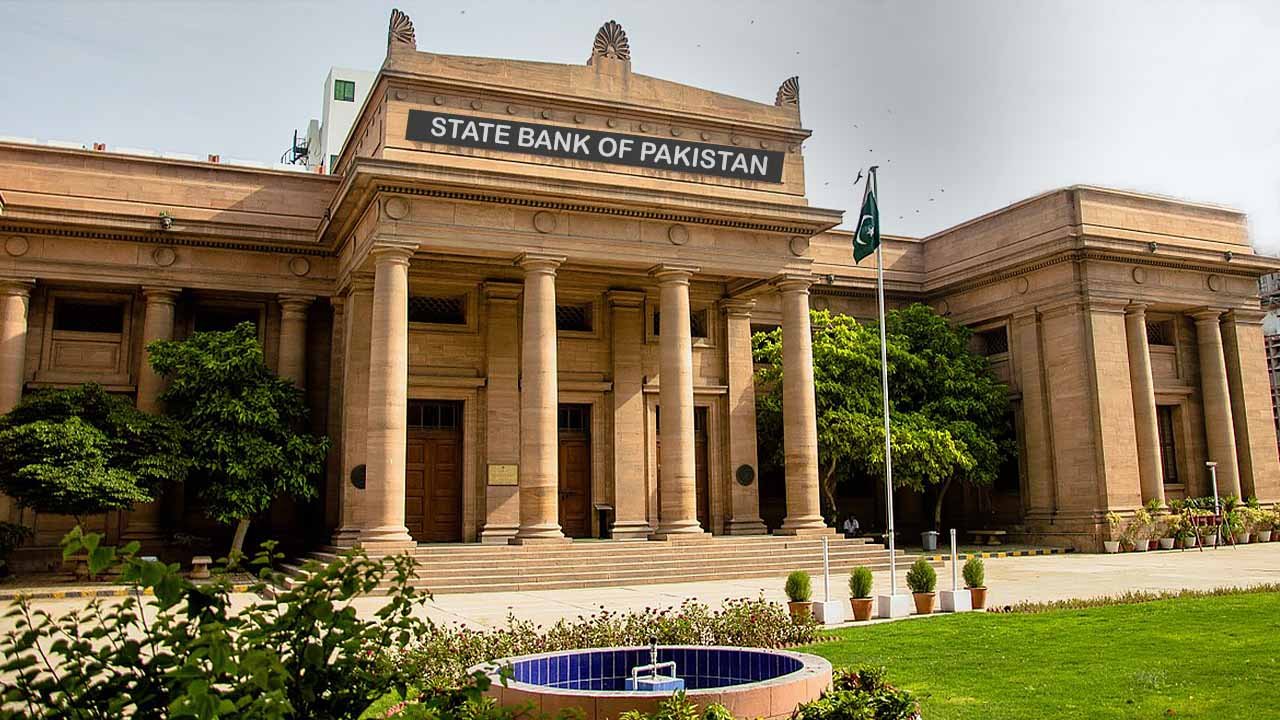
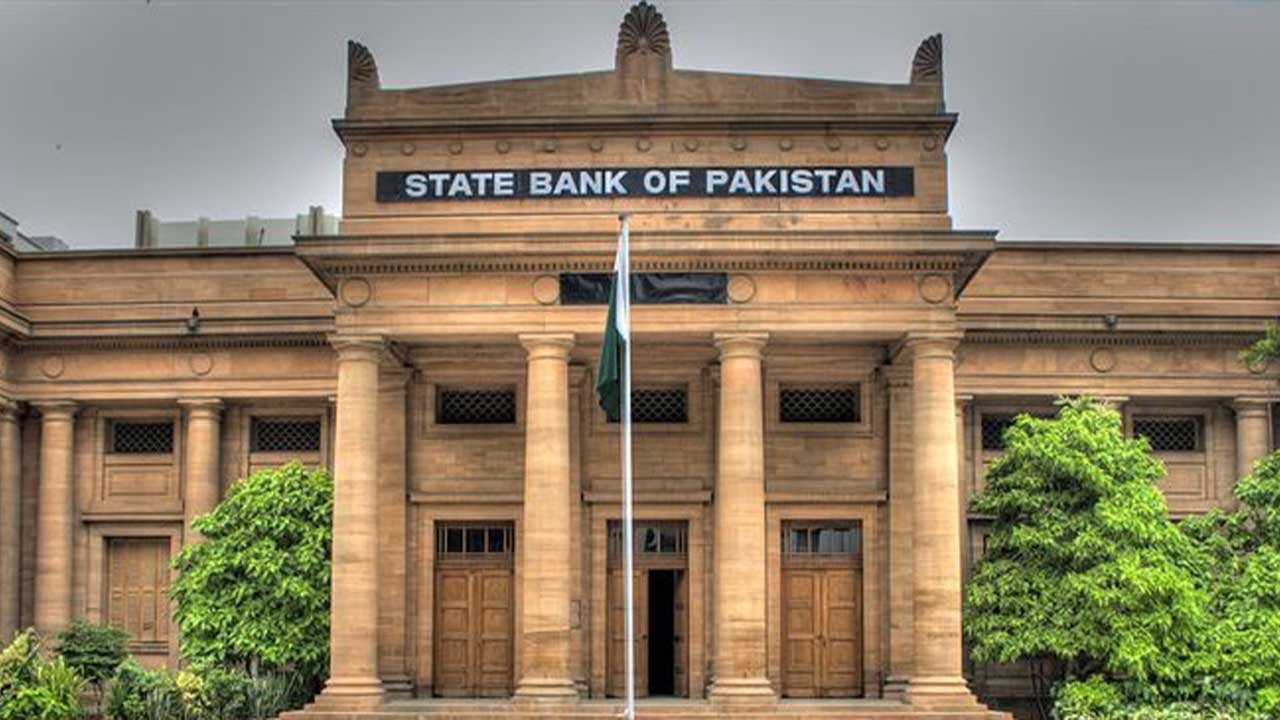
    The Monetary Policy Committee (MPC) of the State Bank of Pakistan (SBP) convened today to deliberate on the prevailing economic conditions and has resolved to maintain the policy rate at 22 per cent for the fourth consecutive meeting. 

    This decision aligns with market expectations, as a majority of market participants were in agreement regarding the rate remaining unchanged. 

    The Monetary Policy Statement issued by the central bank indicates that the decision takes into consideration the impact of the recent increase in gas prices on November’s inflation, which exceeded the MPC’s earlier projections.  

    The Committee acknowledged the potential implications of this on the inflation outlook while also noting offsetting factors such as the recent decline in international oil prices and the improved availability of agricultural produce. 

    Additionally, the Committee conducted an assessment indicating that the real interest rate remains positive over a 12-month forward-looking horizon and anticipates a downward trajectory for inflation. 

    Key developments since the October meeting were considered by the MPC. Firstly, the successful completion of the staff-level agreement for the first review under the IMF SBA programme, which is expected to unlock financial inflows and enhance the SBP’s foreign exchange serves, 

    Secondly, the quarterly GDP growth for Q1–FY24 met the MPC’s expectations for a moderate economic recovery. 

    Lastly, consumer and business confidence surveys reflected positive sentiment improvements. Lastly, core inflation persists at elevated levels, showing a gradual reduction. 

    Considering these developments, the Committee determined that the existing monetary policy stance is conducive to achieving the inflation target of 5-7 per cent by the end of FY25. 

    The Committee emphasised that this assessment is contingent on the sustained implementation of targeted fiscal consolidation and the timely realisation of planned external inflows. 

  • State Bank of Pakistan’s forex reserves decline to $7.02 billion amidst debt repayments 

    State Bank of Pakistan’s forex reserves decline to $7.02 billion amidst debt repayments 

    During the week ending December 1, 2023, the State Bank of Pakistan (SBP) witnessed a decline of $237 million in its foreign exchange reserves, bringing the total to $7,020.2 million. This reduction is attributed to debt repayments.  

    As of the same date, the country’s overall liquid foreign reserves amounted to $12.1 billion. Commercial banks held net foreign reserves totaling $5.08 billion. 

    Notably, the central bank’s reserves received a boost in July of the current year when Pakistan secured the initial tranche of approximately $1.2 billion from the International Monetary Fund (IMF).  

    This was part of a newly approved $3 billion stand-by arrangement (SBA). Additionally, inflows were received from Saudi Arabia and the UAE. 

    Despite these positive developments, the SBP’s reserves have been under pressure due to ongoing debt repayments, increased import payments following eased restrictions, and a lack of new inflows. 

    In a significant development, the IMF announced last month that a staff-level agreement (SLA) had been reached between its team and Pakistani authorities regarding the first review of the SBA.  

    However, the approval of the IMF Executive Board is required for this agreement to take effect. 

    Upon approval, approximately $700 million (SDR 528 million) will become available, bringing the total disbursements under the programme to almost $1.9 billion. 

    Addressing the media after the SLA with the IMF, Caretaker Finance Minister Dr Shamshad Akhtar expressed confidence that external financing would not be a concern.  

    The government anticipates inflows in December 2023, which are expected to contribute to an increase in foreign exchange reserves.