Tag: financial news

  • Inflation in Pakistan stays above 27% despite IMF reforms

    Inflation in Pakistan stays above 27% despite IMF reforms

    Pakistan continues to grapple with soaring inflation, with the rate holding steady at 27.4 per cent in August, according to data released on Friday. This persistent inflationary pressure is partially attributed to the reforms mandated as part of the IMF loan agreement, which have complicated efforts to stabilise prices and curb declines in the national currency, the rupee.

    The South Asian nation is treading cautiously on its path to economic recovery, with a caretaker government at the helm following the approval of a $3 billion loan programme by the International Monetary Fund (IMF) in July, averting a potential sovereign debt default.

    However, the conditions tied to this bailout, including the relaxation of import restrictions and the removal of subsidies, have contributed to a surge in annual inflation. In May, inflation reached a staggering 38.0 per cent, setting a new record. Concurrently, interest rates have risen, and the rupee has experienced historic lows, with a 6.2 per cent decline in the currency’s value last month.

    While the August data from Pakistan’s statistics bureau indicates a slight easing from July’s 28.3 per cent inflation rate, food inflation remains alarmingly high at 38.5 per cent. Authorities have further exacerbated the situation by raising gasoline and diesel prices to record highs on Friday.

    These worsening economic conditions, coupled with escalating political tensions ahead of a national election scheduled for November, have triggered sporadic protests. Jamaat-e-Islami has announced a nationwide strike in response to the increased power tariffs.

    Every day, Pakistanis are feeling the pinch and struggling to make ends meet. Waseem Ahmed, a bank employee in Islamabad, lamented the plight of the middle class, stating, “More than 60 to 70 per cent of my salary is spent on bills and petrol. Where will we get basic staples from? This is why people are contemplating suicide,” he told Reuters.

    According to ARY News, Mohammed Sohail, CEO of Topline Securities, a Karachi-based brokerage firm, acknowledged that August’s inflation reading aligns with expectations. However, he cautioned that the depreciating rupee and rising energy prices may prevent a significant year-on-year decline in inflation, contrary to earlier government projections that had anticipated a drop to 22 per cent by the end of the fiscal year running until June 31.

    Pakistan’s central bank, in its last monetary policy statement in July, held benchmark interest rates steady at 22 per cent and expressed optimism that inflation would follow a downward trajectory over the ensuing 12 months. However, the current economic challenges present formidable hurdles to achieving that goal.
  • Dramatic drop: Pakistan Stock Exchange crashes over 1,700 points amid economic concerns

    Dramatic drop: Pakistan Stock Exchange crashes over 1,700 points amid economic concerns

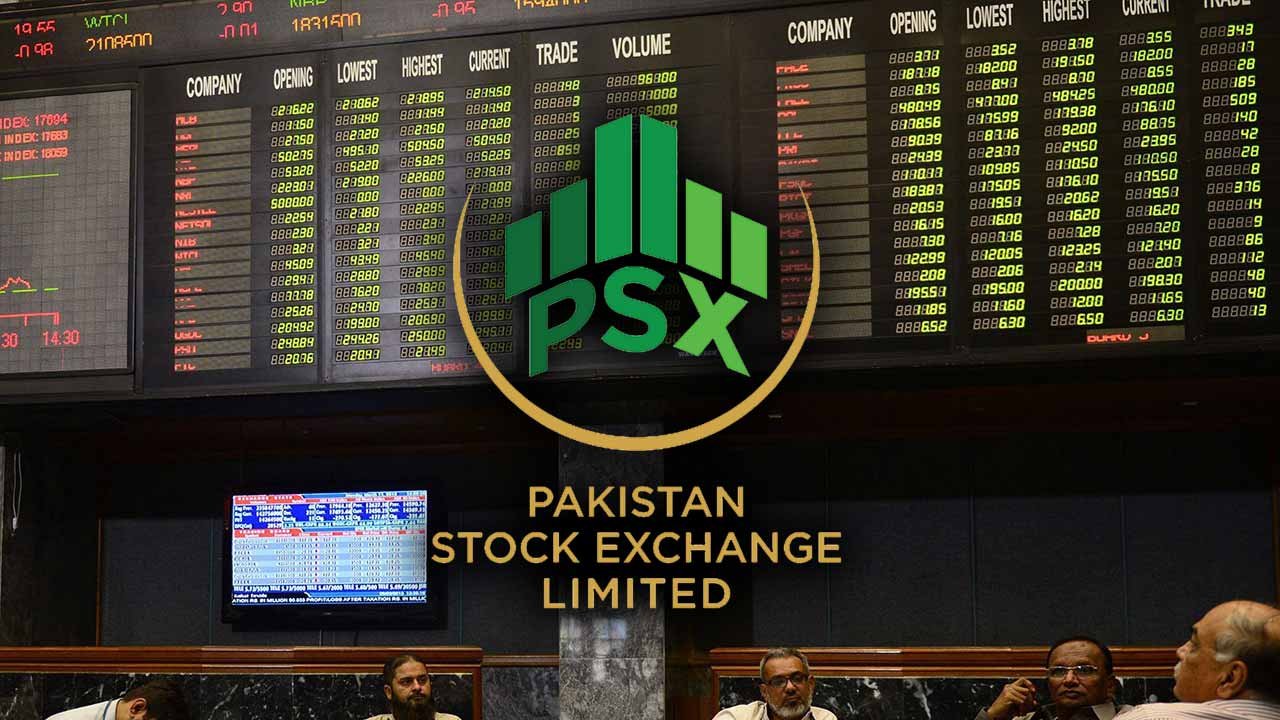
    On Thursday, the Pakistan Stock Exchange (PSX) encountered a challenging session as the primary index witnessed a substantial decline of 3.86 per cent, reflecting a loss of 1,784 points by 2:53 pm. This notable downturn was attributed to growing concerns pertaining to the nation’s economic landscape.

    Investors were worried about the rupee losing value against the dollar. This concern led them to sell off their shares, fearing that the economy could face trouble ahead.

    Right from the start of the trading day, the KSE-100 index saw a big fall of over 1,100 points, taking it below the 46,000 mark. Unfortunately, the index couldn’t bounce back due to low investor confidence.

    By 2:14 PM, the PSX had fallen to 45,139.34 points, a drop of 1,105.21 points compared to the previous day’s close of 46,244.55 points.

    Investors are also keeping an eye on the rupee’s decline, especially since the International Monetary Fund (IMF) won’t review the situation for a few more months. Additionally, there’s uncertainty about investments from the Gulf Cooperation Council (GCC).

    If the market keeps falling, some buyers might return, as the index is currently down 8 per cent from its recent high. But a real recovery would need clear information about politics and the economy.

    According to experts, the PSX is under pressure due to the rupee’s continuous slide.

    This could cause inflation to rise, which could affect the next Monetary Policy Committee (MPC) meeting in September. During that meeting, the central bank might consider raising interest rates again.

    The financial market is worried about public protests against higher power tariffs. If the government tries to please the public with short-term measures, it could complicate talks with the IMF.

    This report serves as an intraday update on the developments in the Pakistan Stock Exchange as of 2:53 pm.

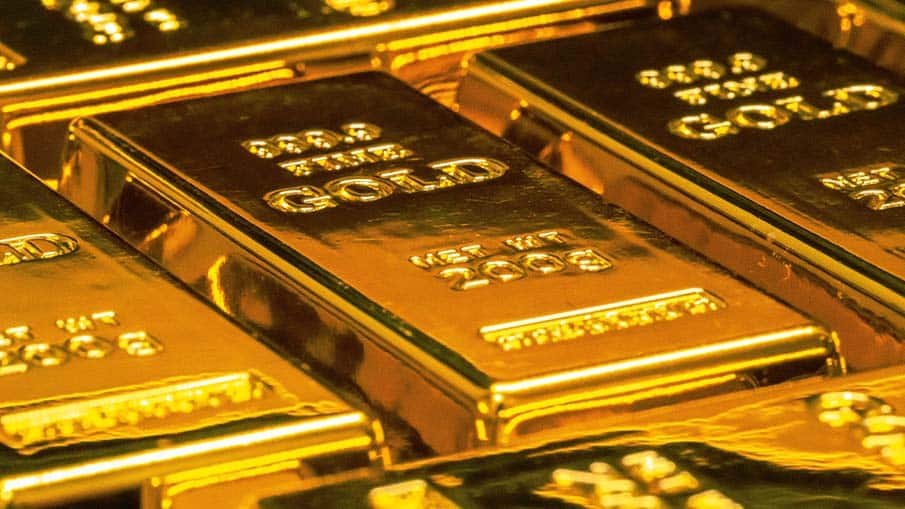
  • Gold price reaches Rs234,000 per tola, nearing new record high

    Gold price reaches Rs234,000 per tola, nearing new record high

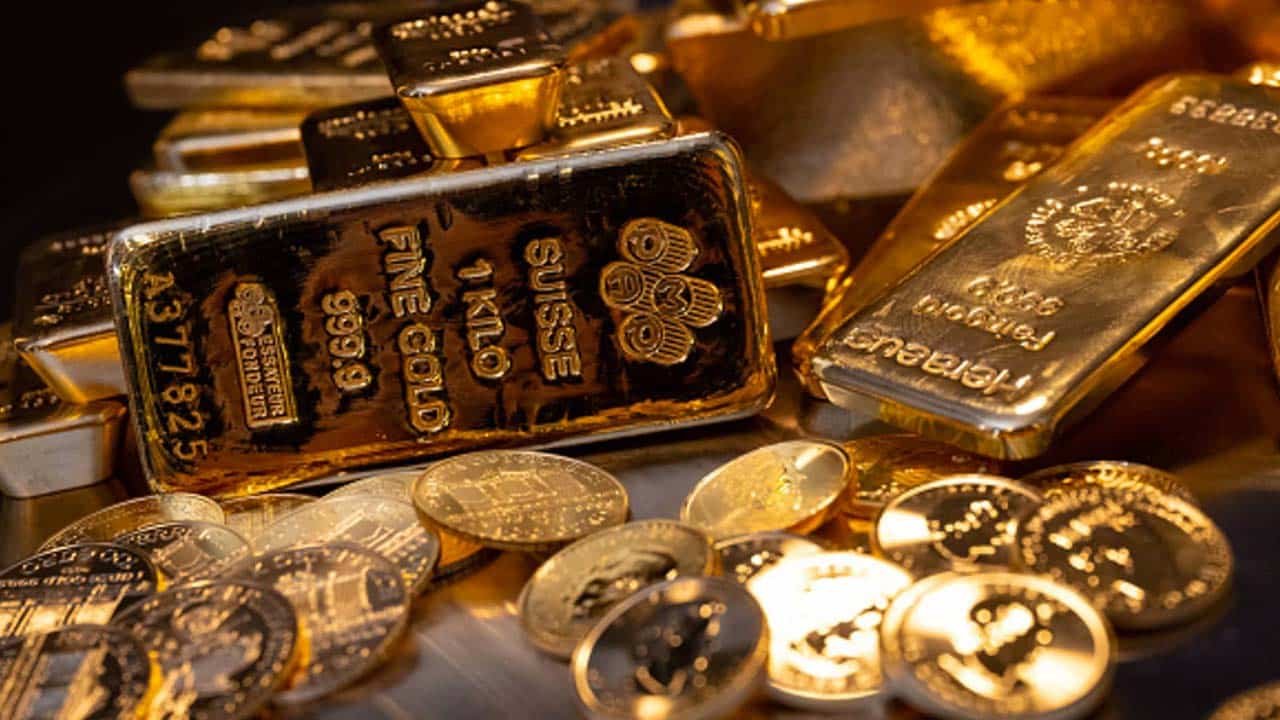
    Gold prices in Pakistan continued to rise on Tuesday, influenced by the Pakistani rupee’s decline against the US dollar and an uptick in global prices. 

    According to the All Pakistan Gems and Jewellers Sarafa Association, the cost of 24-carat gold settled at Rs234,500 per tola, marking a substantial increase of Rs4,600. Similarly, the price of 10 grammes of gold rose by Rs3,944 to reach Rs201,046.

    It is expected that the price of gold might reach unprecedented levels due to the relentless and rapid decline of local currency against the greenback.

    The movement of gold prices in Pakistan closely follows the path of the US dollar due to the country’s reliance on gold imports. 

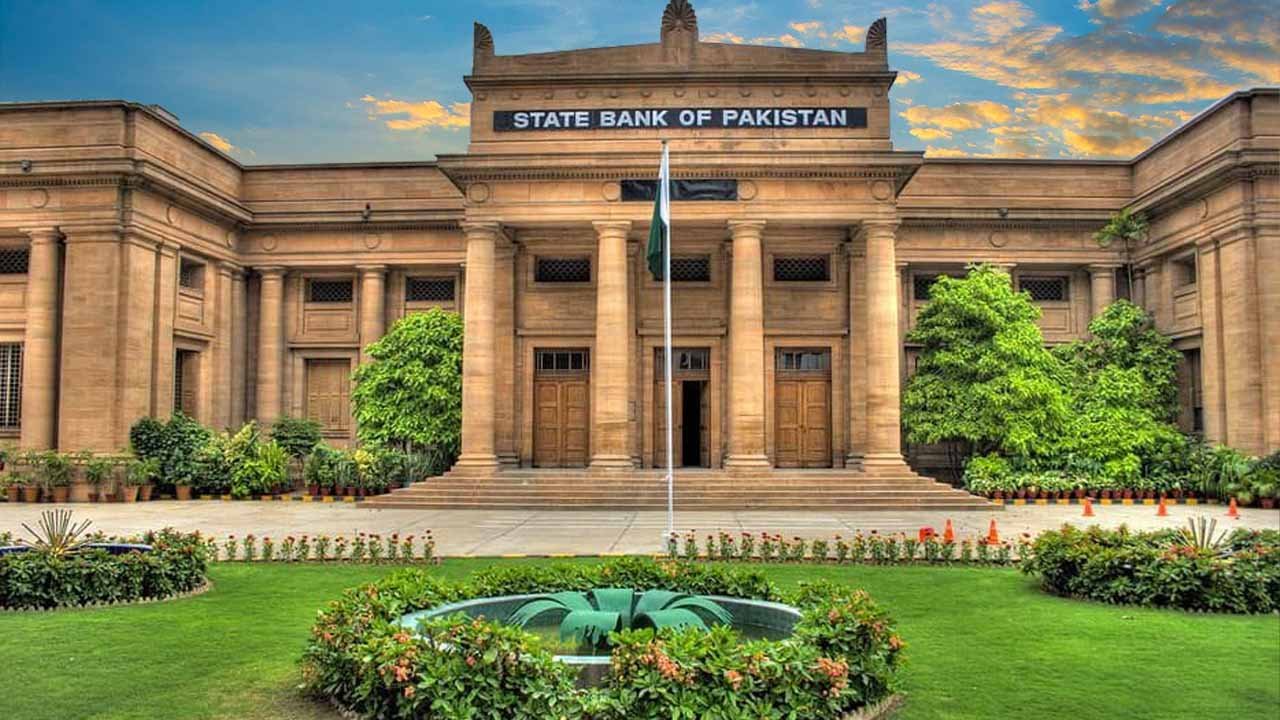
    The Pakistani rupee saw a notable decrease, falling to a new all-time low against the US dollar. It ended at Rs299.01 rupees per dollar, reflecting a decline of Rs1.88, as reported by the State Bank of Pakistan.

    Currency experts attribute the surge in gold prices to the recent depreciation of the rupee. 

    With growing concerns about the country’s economic situation, investors are turning to gold as a safe-haven asset. This shift has resulted in a significant increase of Rs12,700 per tola in just one week.

    Read more: PKR to USD rate

    Notably, the hike in gold prices coincided with political turmoil and a decrease in the local currency’s value, leading to an all-time high valuation of Rs240,000 per tola on May 10, 2023. On the international front, the price of gold saw a $10 increase, reaching $1,901 per ounce on Tuesday.

  • Pakistani rupee slides to Rs297.13 against US dollar on first day of the week, losing Rs1.35

    Pakistani rupee slides to Rs297.13 against US dollar on first day of the week, losing Rs1.35

    The Pakistani rupee (PKR) continued its decline against the US dollar on the first working day of the week. PKR went down by 0.45 per cent, which is about Rs1.35, and closed the day at Rs297.13 in the interbank market, as reported by the State Bank of Pakistan.

    This shows that over the past five trading sessions, the Pakistani rupee has lost a total of Rs8.64. It’s important to note that on the previous Friday, the rupee had closed at Rs295.78 after losing 0.86 paisas, which is about 0.29 per cent.

    Looking at last week, from Tuesday to Friday, the Pakistani rupee experienced a significant loss of Rs7.29. This indicates a period of notable fluctuation for the rupee in the foreign exchange market.

  • Weekly inflation increases to 27.5%, impacting household expenses

    Weekly inflation increases to 27.5%, impacting household expenses

    According to official data from the Pakistan Bureau of Statistics (PBS), the Sensitive Price Indicator (SPI) shows that inflation for the week ending on August 17 increased by 27.57 per cent compared to the same period last year. In simpler terms, things are getting more expensive.

    Looking at shorter periods, within a week, inflation went up by 0.78 per cent. This means prices are rising quickly and there’s no sign of them slowing down, which is worrying for both economists and consumers.

    Comparing some numbers, the overall price index was 275.57 on August 17, up from 273.43 on August 10 this year, and a significant increase from 216.02 on August 18 last year.

    Out of the things people buy, 32 items got pricier, 7 got cheaper, and 12 stayed the same. Among the things that became more expensive this week compared to a year ago were things like chillies powder (up 7.58 per cent), rice irri-6/9 (up 7.48 per cent), garlic (up 5.06 per cent), sugar (up 4.02 per cent), gur (up 3.23 per cent), and chicken (up 2.83 per cent). non-food items like diesel (up 7.29 per cent) and petrol (up 6.40 per cent) also got more expensive.

    On the flip side, the price of some things dropped. Tomatoes got 13.60 per cent cheaper, cooking oil (5 liters) became 1.65 per cent cheaper, and there were smaller drops in prices for things like vegetable ghee and wheat flour.

  • PDM govt adds Rs18.5 trillion to Pakistan’s debt in just 15 months

    PDM govt adds Rs18.5 trillion to Pakistan’s debt in just 15 months

    In a span of just 15 months, the Pakistan Democratic Movement (PDM) government has significantly added Rs18.5 trillion to the country’s public debt, a striking amount surpassing the debt accumulation of its rival, the Pakistan Tehreek-e-Insaf (PTI), during its three-and-a-half-year tenure.

    Between March 2022 and the close of the 2022–23 fiscal year, the gross public debt surged from Rs44.4 trillion to Rs62.9 trillion. This rapid increase of 41.7 per cent in just 15 months occurred without a well-defined strategy to curb it. As a result, the federal government’s debt, for which the finance ministry bears direct responsibility, escalated to Rs60.8 trillion by June 2023. The debt bulletin, published on a recent Wednesday, indicates an addition of Rs18 trillion during the PDM government’s one year and three months in power.

    As per a report in the Express Tribune by Shehbaz Rana, this unsustainable surge in public debt is mainly ascribed to unregulated spending, insufficient revenue collection from areas such as real estate, services, and agriculture, alongside the diminishing value of the Pakistani rupee in comparison to the US dollar.

    It’s worth noting that the government under Imran Khan added Rs18.1 trillion to the public debt over a span of 44 months, a threshold that the current administration led by Shehbaz Sharif managed to surpass in just 15 months. However, it’s important to mention that the debt figure for July has yet to be compiled by the State Bank of Pakistan.

    This trend becomes even more significant when we consider that the combined debt addition by the Pakistan Peoples Party (PPP) and the Pakistan Muslim League-Nawaz (PML-N) from 2008 to 2018 was Rs18 trillion. Another Rs18 trillion was added from August 2018 to March 2022 during Imran Khan’s government, and now the PDM government has contributed an additional Rs18.5 trillion in a remarkably brief period of 15 months.

    Comparatively, from September 1, 2018, to the end of March 2022, the PTI government, on average, increased the public debt by Rs14.5 billion per day, more than double the average daily increase of Rs5.6 billion during the PML-N period. The PDM government has further escalated this daily addition to an average of Rs41 billion.

    By the time the PTI government’s term concluded, the total public debt amounted to Rs44.4 trillion, equivalent to 83.5 per cent of the gross domestic product (GDP) before the economy’s rebasing. Following the rebasing process, there was a 15 per cent reduction in public debt relative to GDP but no reduction in absolute terms.

    At present, the public debt constitutes 74.3 per cent of the GDP. Steep currency depreciation has also contributed to the federal government’s debt. Over the past 15 months, the total domestic debt of the federal government surged to Rs38.8 trillion, an addition of Rs10.8 trillion (or 38 per cent). When Imran Khan left office, the domestic debt stood at Rs28 trillion.

    Alarmingly, the external debt of the federal government surged by 48 per cent to Rs22 trillion within just 15 months, with a net increase of Rs7.1 trillion attributed largely to currency depreciation. By the end of March 2022, the external debt, excluding IMF liabilities, was Rs14.9 trillion.

    External debt constitutes roughly 36 per cent of the total debt, and fluctuations in the exchange rate have a significant impact on debt even without borrowing additional funds. In a span of 15 months, the rupee-dollar parity plummeted from Rs183.5 to Rs286.4, a decline of Rs103 or 56 per cent. This substantial and rapid depreciation has also contributed to inflation.

    On a recent Wednesday, the rupee slid further to Rs295. An immediate outcome of this mounting debt is a considerable rise in the cost of debt servicing. It is projected that debt servicing will exceed Rs5.8 trillion by the end of the last fiscal year. 

    As a result of reckless borrowing, Pakistan’s total debt and liabilities have surged to Rs77.1 trillion, equivalent to 91.1 per cent of the national economy’s size. This ratio is deemed unsustainable for a developing nation like Pakistan.

    During the past four years of the IMF programme, Pakistan struggled to enhance the Federal Board of Revenue’s (FBR) tax-to-GDP ratio, despite it being a priority for both the IMF and the World Bank.

    This raises concerns about the effectiveness of obtaining foreign loans for the sake of tax reform. Moreover, there has been a lack of serious efforts to control expenditures. The Shehbaz Sharif government, like its predecessors, continued to allocate funds to projects and initiatives that fall under provincial jurisdiction as per the constitution.

  • Pakistan’s stock market crosses 48,000 mark after two years

    Pakistan’s stock market crosses 48,000 mark after two years

    The Pakistan Stock Exchange’s (PSX) benchmark KSE-100 index soared past the 48,000 mark, reaching a 24-month high, on Monday, as investors responded to recent positive economic developments in the country. Analysts predict that the prevailing positive sentiment is likely to continue in the coming days.

    The bullish trend in the market gained momentum after Pakistan reached a deal with the International Monetary Fund (IMF). The agreement with the IMF has provided investors with renewed confidence in the country’s economic prospects, leading to a surge in market activity.

    Additionally, news on Pakistan’s mineral sector contributed significantly to the market’s gains. The announcement of favorable developments in the country’s mineral sector further boosted investor optimism and drove the benchmark index to reach new heights.

    During intra-day trade, the KSE-100 index saw a significant increase of 1,010.72 points or 2.15 per cent, culminating at 48,062.56 points. This remarkable rise marks a notable increase from the previous close of 47,076.9 points, which itself was a 21-month high.

    The impressive growth of the market has been sustained over time, as evidenced by a remarkable overall gain of more than 6,600 points (+15.9 per cent) since the staff-level agreement was reached with the IMF. The deal, which amounted to a $3 billion Standby Agreement, has been instrumental in driving investor confidence and attracting more capital to the market.

    Financial experts and market observers are optimistic about the future trajectory of the Pakistan Stock Exchange, given the positive economic indicators and recent developments in the country.

    The confidence in the market has sparked interest from both local and international investors, resulting in increased trading volumes and a positive impact on the overall economy.

  • Gold price in Pakistan increases by Rs4,000 to Rs208,000 per tola ahead of Muharram

    Gold price in Pakistan increases by Rs4,000 to Rs208,000 per tola ahead of Muharram

    In anticipation of the upcoming month of Muharram, which signifies the start of the new Islamic year, gold prices in Pakistan experienced significant gains on Thursday.

    Data provided by the All-Pakistan Sarafa Gems and Jewellers Association (APSGJA) reveals that the price of 24-carat gold rose by Rs4,000 per tola and Rs3,429 per 10 grammes, settling at Rs208,000 and Rs178,326, respectively.

    Simultaneously, the international market witnessed a surge in the price of gold, with a $13 increase, reaching $1,959 per ounce. This rise in gold rates can be attributed to prevailing political and economic uncertainties, as well as high inflation in Pakistan. During such periods, individuals often turn to gold as a safe investment and hedge against market volatility.

    As the month of Muharram approaches, there is typically an upswing in the buying and selling of this precious commodity, leading to increased demand. Supporting this trend, APSGJA data reveals that the price of silver rose by Rs50 per tola and Rs42.87 per 10 grammes, settling at Rs2,600 and Rs2,229.08, respectively. Notably, the previous day witnessed a decline in the bullion price by Rs500 per tola and Rs429 per 10 grammes.

    Furthermore, the local currency demonstrated minimal gains of 0.37 per cent against the US dollar in the interbank market today, as reported by the State Bank of Pakistan (SBP). The rupee closed at Rs276.46 against the dollar.

  • State Bank of Pakistan’s foreign exchange reserves surge to $4.46 billion with $393 million increase

    State Bank of Pakistan’s foreign exchange reserves surge to $4.46 billion with $393 million increase

    The State Bank of Pakistan (SBP) has announced an increase of $393 million in its foreign exchange reserves, bringing the total to $4.46 billion. In an official statement, the central bank stated that this rise occurred on June 30, 2023. The boost in reserves is seen as a positive development for the country’s economy.

    At the same time, the overall liquid foreign reserves held by Pakistan now stand at $9.74 billion, with commercial banks accounting for $5.28 billion of that amount. These figures reflect the country’s efforts to stabilise its foreign reserves and strengthen its financial position.

    This increase in foreign exchange reserves is largely attributed to Pakistan’s recent agreement with the International Monetary Fund (IMF). The country signed a staff-level agreement with the IMF, amounting to $3 billion, for a duration of 9 months. The IMF’s “Stand-By Arrangement” with Pakistan has been successfully concluded, signaling a positive outlook for the nation’s economic stability.

    Nathan Porter, the IMF Mission Chief, commended Pakistan for its commitment to achieving its economic goals and acknowledged the parliament’s crucial role in this accomplishment. He emphasised that the staff-level agreement under the Stand-By Arrangement is a significant milestone.

    The agreement is now awaiting final approval from the IMF’s executive board, which is anticipated to occur in mid-July. Once approved, Pakistan will be eligible to receive the $3 billion loan from the IMF.

    In his remarks, Porter highlighted the parliament’s efforts to enhance tax revenues, an essential component of Pakistan’s economic growth. The parliament has taken noteworthy steps to increase funds allocated to the Benazir Income Support Programme and has also limited tax exemptions.

    These measures are expected to lead to an increase in tax revenues, which, in turn, could result in a primary surplus of 0.4 per cent for Pakistan’s economy. The additional funds generated through these increased tax revenues can then be directed towards crucial social sectors.

    Overall, the increase in foreign exchange reserves for the State Bank of Pakistan is an encouraging sign for the country’s economic stability. With the IMF agreement on the horizon and the parliament’s dedication to boosting tax revenues, Pakistan is poised to make significant strides in its economic development.

    The final approval of the agreement by the IMF’s executive board will mark a crucial milestone in Pakistan’s journey towards a more prosperous future.