Tag: financial news

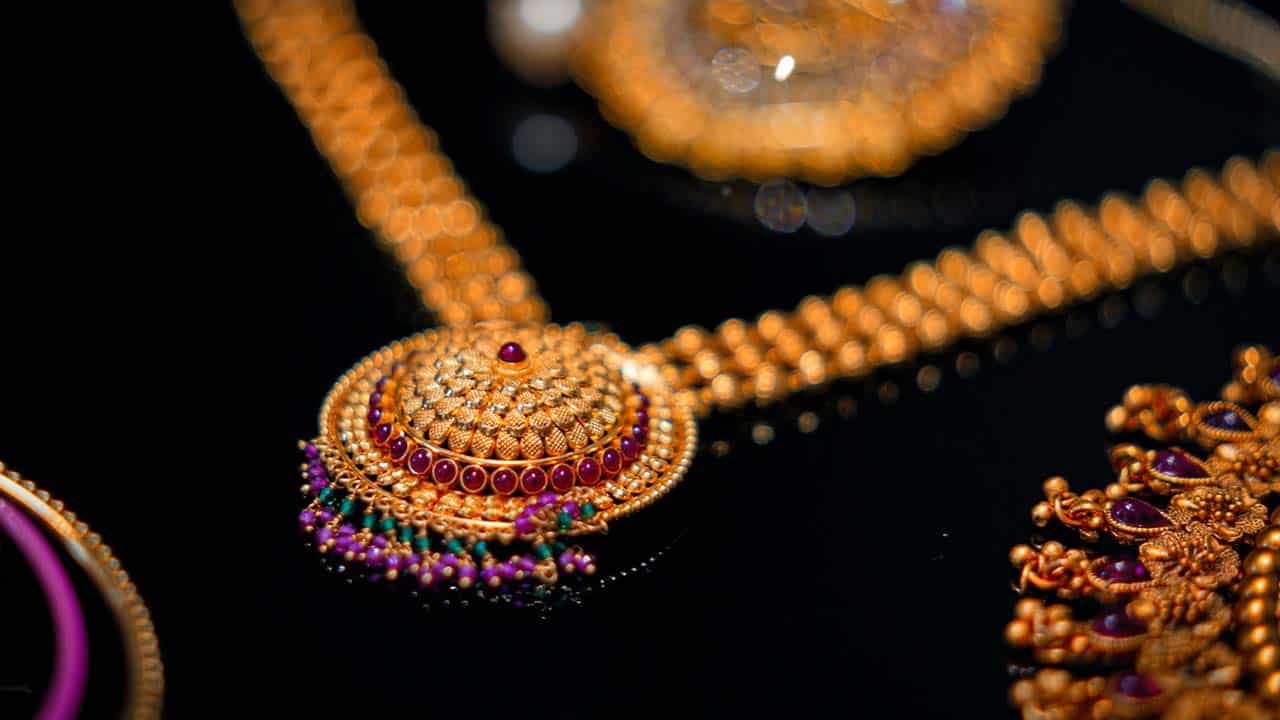
  • Gold prices in Pakistan kick off 2024 with decline, hitting Rs219,700 per tola

    Gold prices in Pakistan kick off 2024 with decline, hitting Rs219,700 per tola

    On the inaugural day of 2024, gold prices experienced a downturn in Pakistan.

    The precious metal, colloquially referred to as the yellow metal, was valued at Rs219,700 per tola following a decline of Rs300 in Pakistani gold market on Monday. 

    In terms of 10 grammes, gold was traded at Rs188,357, reflecting a decrease of Rs258, as reported by the All Pakistan Gems and Jewellers Sarafa Association (APGJSA). 

    Notably, this came after a Rs900 per tola decrease in gold prices on the preceding Saturday.

    Concurrently, the global gold rate exhibited stability at $2,082 per ounce on Monday, with an additional $20 premium per ounce, according to APGJSA. 

    In the realm of silver, rates held steady at Rs2,680 per tola in Pakistan.

  • Second consecutive decline: Gold price drops by Rs900 per tola in Pakistani markets

    Second consecutive decline: Gold price drops by Rs900 per tola in Pakistani markets

    Gold sustained its downward trend for the second consecutive session on Saturday, experiencing a decline of Rs900 per tola in the Pakistani gold market.

    The price of one tola gold was established at Rs220,000, and the 10-gramme gold recorded a sale at Rs188,615, reflecting a decrease of Rs771.

    These figures were provided by the All Pakistan Gems and Jewellers Sarafa Association (APGJSA).

    In comparison, Friday witnessed a decrease of Rs1,900 per tola in gold rates in Pakistan. This local downturn aligns with the global moderation observed in the price of gold.

    The international rate of gold, marked by a $20 premium, was set at $2,082 per ounce on Saturday, following an $8 dip in the international market, according to APGJSA.

    In contrast, silver rates in Pakistan remained stable at Rs2,680 per tola.

    Reflecting on the broader trend, the year 2023 saw a noteworthy 20 per cent increase in gold prices in Pakistan, with the price per tola reaching around Rs184,000 by the end of 2022.

    The pinnacle of gold rates in 2023 occurred on September 2, recording Rs242,700 per tola, while the lowest point in the year was noted on October 4 at Rs188,400 per tola, based on APGJSA data.

  • SBP-held forex reserves surge to $7.76 billion in December

    SBP-held forex reserves surge to $7.76 billion in December

    In the week concluding on December 22, 2023, Pakistan witnessed a substantial increase in its total liquid foreign reserves, reaching a noteworthy $12,855.7 million.

    This surge was reported by the State Bank of Pakistan (SBP), which highlighted that the central bank’s reserves saw a remarkable uptick to $7,757.1 million during the same period.

    The SBP revealed that the surge in reserves, amounting to $852 million, was primarily attributed to official inflows from the Government of Pakistan received during the week under review.

    Simultaneously, commercial banks in the country reported net foreign reserves amounting to $5,098.6 million, further contributing to the overall resilience of Pakistan’s financial position.

    This positive development follows the previous week’s figures, ending on December 15, 2023, where the total liquid foreign reserves were recorded at $12,068.4 million.

    During this period, the central bank held reserves worth $6,904.8 million, with commercial banks reporting net foreign reserves of $5,163.6 million.

    In contrast to the positive financial indicators, Pakistan’s auto industry faced significant challenges in 2023, marked by a sharp decline in car sales of up to 55 per cent. Factories involved in manufacturing car parts also experienced a substantial production cut of 70 per cent.

    The persistent challenges in the auto sector were attributed to the exchange rate crisis, causing a decline in income until the previous year.

    The repercussions of reduced car sales were not limited to impacting the national Treasury; they also resulted in a noticeable decrease in revenue from products.

    An essential factor in this context is the adjustment made by automobile companies following a decrease in the value of the US dollar against the Pakistani rupee.

    In the closing months of 2023, these companies responded by slashing the prices of their units, reflecting the dynamic interplay between economic forces and market conditions.

  • Gold price in Pakistan registers Rs2,200 per tola single-day surge

    Gold price in Pakistan registers Rs2,200 per tola single-day surge

    On Thursday, the price of gold in Pakistan once again saw an upward trend, mirroring the global surge in rates. 

    The valued yellow metal reached Rs222,800 per tola in the domestic market, marking a noteworthy single-day gain of Rs2,200. 

    The 10-gramme gold, as reported by the All Pakistan Gems and Jewellers Sarafa Association (APGJSA), was traded at Rs191,015 following an increase of Rs1,886.

    This escalation follows a Rs1,000 per tola rise in gold prices in Pakistan on the preceding Wednesday. 

    Internationally, gold prices experienced a $20 increment, reaching $2,105 per ounce (with a premium of $20), as highlighted by APGJSA. 

    Concurrently, silver rates remained constant at Rs2,680 per tola in the local market.

  • Pakistani rupee extends winning streak against US dollar for 12th straight session

    Pakistani rupee extends winning streak against US dollar for 12th straight session

    The Pakistani rupee continued its upward trend against the US dollar for the 12th consecutive session, appreciating by 0.1 per cent in the inter-bank market on Thursday. 

    The State Bank of Pakistan reported that the rupee settled at Rs281.93, marking an increase of Re0.27. A day earlier, the rupee had experienced a slight gain, closing at Rs282.20 against the US dollar.

    In a related development, the Ministry of Finance acknowledged the persistent challenge of higher markup payments. The ministry stressed the importance of both revenue enhancement and prudent expenditure control.

    Internationally, the US dollar faced substantial losses on Thursday, poised for a yearly decline after two years of robust gains. 

    Anticipation of interest rate cuts from the Federal Reserve in the coming year influenced market sentiments. As the year concludes, limited market activity is expected until the New Year due to thin liquidity.

    The dollar index, measuring the US currency against six rivals, reached a five-month low of 100.81. It declined by 0.5 per cent on Wednesday and is on track for a 2.6 per cent decrease this year, breaking a two-year trend of strong gains. I

    Investors are closely monitoring the timing of potential interest rate cuts from the Fed, with markets indicating an 89 per cent chance of a cut in March 2024, according to the CME FedWatch tool. Futures suggest up to 158 basis points of Fed easing in the coming year.

    Oil prices, a significant indicator of currency parity, stabilised on Thursday following a previous sharp decline. 

    Concerns about shipping disruptions along the Red Sea route eased, despite escalating tensions in the Middle East. 

    Brent crude futures rose by 2 cents to $79.75 a barrel, while US WTI crude futures traded 3 cents lower at $74.08 a barrel, rebounding from a nearly 2 per cent drop on Wednesday as major shipping firms resumed operations in the Red Sea.

  • 24-karat gold price in Pakistan increases by Rs1,000 per tola

    24-karat gold price in Pakistan increases by Rs1,000 per tola

    On Wednesday, the gold price in Pakistan experienced notable gains, with the 24-karat gold increasing by Rs1,000 per tola, reaching Rs220,600. 

    The Karachi Sarafa Association reported a gain of Rs857 for the 10-gramme 24-karat gold, priced at Rs189,129, while the 10-gramme 22-karat gold stood at Rs173,369.

    It’s worth mentioning that 24-karat gold had risen by Rs2,500 per tola the previous week. 

    Additionally, silver prices saw an uptick today, with 24-karat silver and 10-gramme 24-karat silver gaining Rs30 and Rs25.72, respectively, being sold at Rs2,680 and Rs2,297.66.

    Internationally, spot gold is currently trading at $2,066.85, marking a 0.04 per cent increase, while spot silver is at $24.13, reflecting a -0.25 per cent change.

    Notably, fluctuations in global prices, coupled with shifts in the interbank exchange rate of the Pakistani rupee, impact the domestic gold market. 

    The PKR is maintaining its winning streak against the US dollar, trading at PKR 281.98/282.37 per USD in its 11th consecutive session.

  • December inflation may surpass 30% due to gas price hike

    December inflation may surpass 30% due to gas price hike

    In December, inflation is expected to surpass the 30 per cent threshold, driven by the recent increase in gas prices and the persisting adverse base effect, which continues to impact the consumer price index (CPI).

    The headline inflation for December is projected to settle at approximately 30.11 per cent year-on-year (YoY) and 1.18 per cent month-on-month (MoM), in contrast to the previous month’s figures of 29.2 per cent YoY and 2.7 per cent MoM.

    This monthly inflation rate is significantly lower than the 12-month average of 2.17 per cent MoM.

    Consequently, the average yearly inflation for the first six months of FY24 is estimated to be 28.87 per cent YoY, compared to 25.05 per cent YoY in the same period of FY23.

    The surge in inflation can be attributed to the adverse base effect and the notable increase in gas prices, which were not fully realised in the previous month.

    Conversely, food inflation is expected to exhibit a marginal decrease of 0.29 per cent MoM, driven primarily by the decline in prices of tomatoes, potatoes, chicken, and oil.

    Additionally, the transport index is forecast to undergo a 4 per cent MoM decrease, mainly due to the relief in petrol and high-speed diesel (HSD) prices.

    Post-December, inflation is anticipated to decline at a relatively faster pace, supported by the favorable base effect, the delayed impact of monetary tightening, and other administrative measures.

    The December spike is attributed to the lingering effects of the overdue gas price hike. Notably, unforeseen climate events, volatility in global commodity prices, especially oil, and external account pressures pose significant upside risks to the inflation outlook.

    Global oil prices are on the rise amid challenges in Red Sea shipping, potentially threatening the inflation outlook.

    Moreover, the successful completion of the International Monetary Fund (IMF) review, coupled with additional loan programmes, remains crucial.

    The outstanding amount of $1.8 billion under the stand-by arrangement (SBA) is yet to be released.

    The accompanying chart illustrates the yearly inflation trajectory based on different MoM CPI scenarios. At 0.5 per cent and 1 per cent MoM CPI, yearly inflation is projected to fall below the 22 per cent policy rate by February–March 2024.

    By the end of FY24, with 0.5 per cent and 1 per cent MoM CPI, it is expected to decrease to 15.29 per cent and 19.37 per cent, respectively, a significant change from the previous month’s forecasts of 12.9 per cent and 17.5 per cent.

    Considering the last 12-month average of 2.17 per cent MoM, the real interest rate is anticipated to remain in negative territory by the end of FY24.

  • Gold soars in Pakistani markets: Local rates surge despite stable global prices

    Gold soars in Pakistani markets: Local rates surge despite stable global prices

    On Tuesday, gold rates in Pakistan experienced an ascent, reaching Rs219,600 per tola in the domestic market, reflecting a gain of Rs300 throughout the day. 

    The 10-gramme gold price in Pakistan rose to Rs188,272, marking a Rs258 increase, as reported by the All Pakistan Gems and Jewellers Sarafa Association (APGJSA). 

    In contrast, international gold prices maintained stability at $2,072 (with a premium of $20), as noted by the APGJSA. 

    Notably, silver retained its position at Rs2,650 per tola in the local market.

  • Weekly inflation in Pakistan remains above 40% for sixth consecutive week

    Weekly inflation in Pakistan remains above 40% for sixth consecutive week

    In the week concluding on December 21, weekly inflation exhibited a marginal easing but persisted above 40 per cent for the sixth consecutive week. 

    Official data released for this week highlighted heightened consumer costs for eggs, firewood, and pulses. 

    The Pakistan Bureau of Statistics (PBS) revealed a 0.51 per cent decline in the Sensitive Price Indicator (SPI) from the previous week, attributed to lower prices of potatoes, petrol, diesel, tomatoes, and sugar.

    Despite this reduction, the SPI inflation rate remained notably high at 43.16 per cent, surpassing last year’s figure of 42.68 per cent for the same week. 

    This elevated inflation has adversely impacted the purchasing power of consumers, particularly those in lower and middle-income brackets. 

    The decline in SPI was driven by significant drops in the prices of potatoes (13.17 per cent), petrol (4.97 per cent), diesel (4.68 per cent), tomatoes (3.45 per cent), sugar (1.16 per cent), and other essential items.

    Conversely, considerable increases were observed in the prices of eggs (10.4 per cent), firewood (1.23 per cent), onions (1.19 per cent), and various pulses. 

    Out of the 51 essential items in the SPI, 35.29 per cent experienced price increases, 17.65 per cent saw decreases, and 47.06 per cent remained stable during the week.

    ConsumeRsin the lowest income bracket, earning up to Rs17,732 per month, faced a substantial SPI inflation rate of 35.13 per cent. 

    Meanwhile, the higher-income group, spending more than Rs44,175 per month, encountered an even higher SPI inflation rate of 40.93 per cent. 

    The middle quintile, ranging from Rs22,889 to Rs29,517, experienced a weekly inflation rate of 46.46 per cent.

    Various consumer goods displayed a mix of price increases, decreases, and stability, as indicated by the latest PBS data. 

    Notably, the price of a dozen eggs rose by 10.42 per cent, reaching Rs388.7, while firewood’s 40kg bundle increased by 1.23 per cent, totaling Rs1146. 

    Onion prices rose by 1.2 per cent, and various pulses witnessed increases.

    In contrast, potato prices per kilogramme dropped significantly by 13.17 per cent, reaching Rs76.8/kg, and petrol recorded a decrease of 4.97 per cent per litre, settling at Rs268.41. Hi-Speed Diesel also saw a decline of 4.68 per cent, reaching Rs277.29 per litre. 

    Tomatoes and refined sugar experienced decreases of 3.45 per cent and 1.16 per cent, respectively.

    Several essential commodities, including bread, beef, mutton, and various household items, maintained stable prices during the week with no significant fluctuations.