Tag: financial news

  • Gold price surpasses Rs213,000 per tola in Pakistan

    Gold price surpasses Rs213,000 per tola in Pakistan

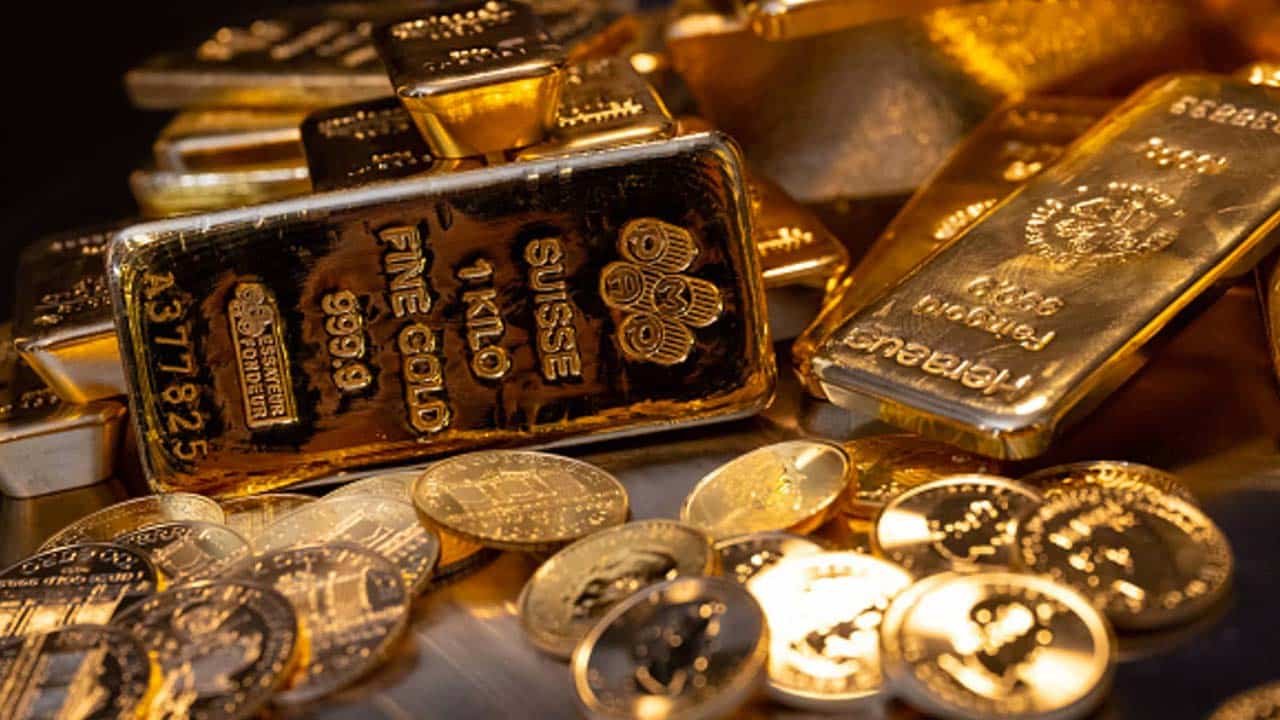
    The price of gold in Pakistan has experienced an upward trend, marked by a noteworthy increase of Rs2,000 per tola within the domestic market on Saturday.

    This surge brings the price of one tola of gold to Rs213,300, as reported by Muhammad Arshad, the chairman of the All Pakistan Jewellers Manufacturers Association.

    Similarly, the price of 10 grammes of gold also saw a significant increase, rising by Rs1,714 to reach Rs182,870.

    On the international front, gold prices are also experiencing an upward trend, currently standing at $1,987 per ounce. 

    However, in the spot market, gold fell by 0.3 per cent to $1,976.19 per ounce by 1:42 pm ET (1741 GMT), and  US gold futures settled 0.3 per cent lower at $1,987.80.

    Other precious metals displayed mixed performance, with silver slipping by 1.3 per cent to $23.05 per ounce, platinum rising by 0.3 per cent to $897.58, and palladium gaining 3 per cent to reach $1,131.03.

  • Pakistani rupee declines by 48 paisa, closing at Rs280.57 against US dollar

    Pakistani rupee declines by 48 paisa, closing at Rs280.57 against US dollar

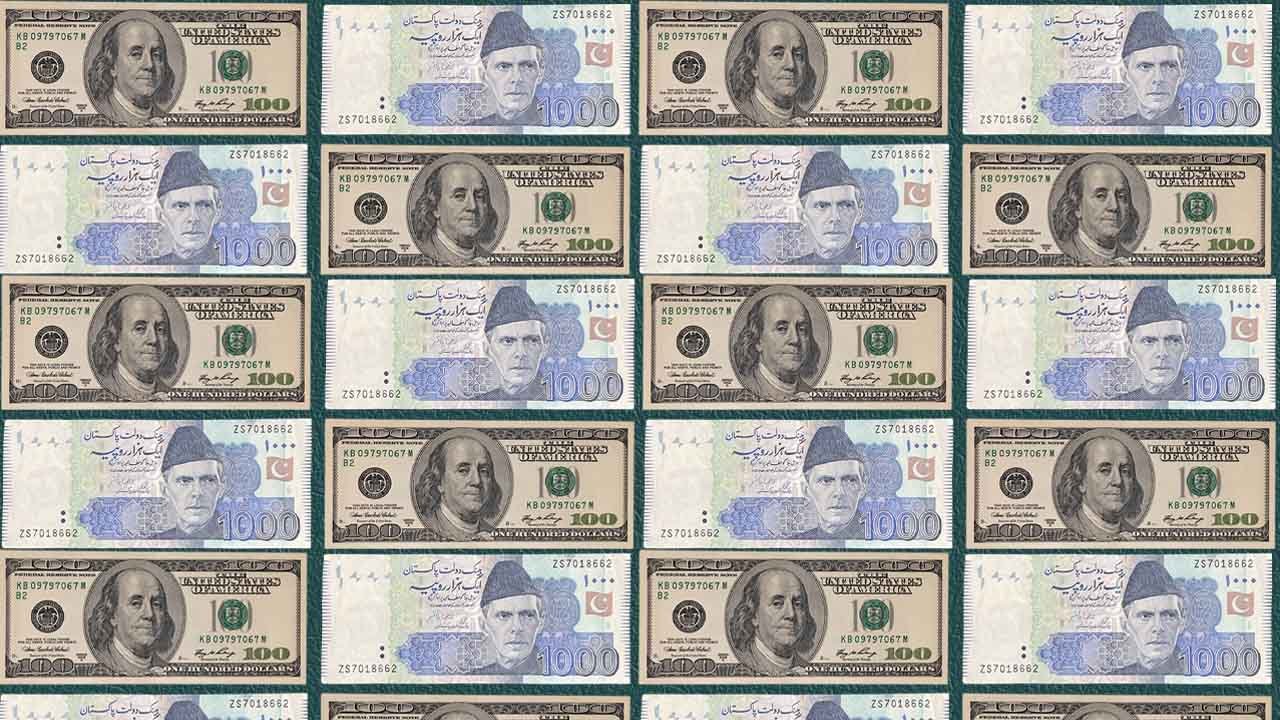
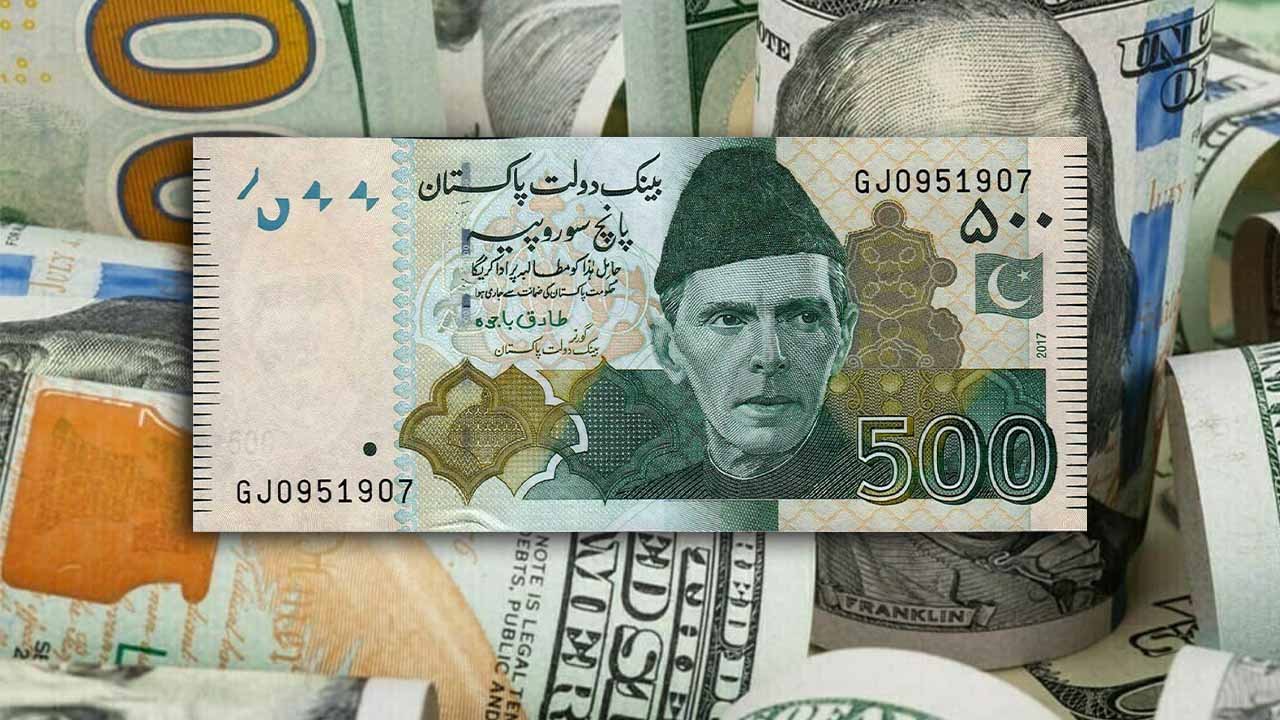
    In the financial markets this week, the Pakistani rupee (PKR) experienced a depreciation of 1.78 rupees against the US dollar (USD), closing the week’s trade at PKR 280.57.

    This marks a significant shift from the previous week’s closing rate of PKR 278.8 per USD.

    During today’s trading session, the local currency saw a decline of 48.1 paisa. The intraday high (bid) was recorded at Rs280.5, while the low (ask) reached Rs280.15 against the US dollar.

    In the open market, exchange companies quoted the US dollar at Rs279.5 for buying and Rs292.8 for selling, indicating a loss of 50 paisa compared to the previous closing rates of Rs279 for buying and Rs282 for selling.

    This decline against the US dollar signifies the second consecutive weekly decrease for the Pakistani rupee. In comparison to other major currencies, the PKR experienced fluctuations as well.

    Against the Euro, the PKR depreciated by 64.78 paisa, closing at Rs296.17 compared to the previous value of Rs295.53.

    The British Pound became more expensive by 1.21 rupees, closing at Rs339.94 in contrast to Rs338.73 from the previous day.

    PKR lost 0.69 paisa against the Japanese yen, closing at Rs1.869 versus Rs1.862 the previous day.

    The UAE dirham also increased in value by 12.89 paisa from Rs76.257 to Rs76.386.

    It’s noteworthy that during the current financial year, the PKR has appreciated against the dollar by Rs5.42, or 1.93 per cent.

    However, in the current calendar year, PKR has depreciated by 54.14 rupees, or 19.3 per cent.

    This dynamic market movement reflects the ongoing economic fluctuations in the country.

  • IMF-backed gas price hike in Pakistan aims to tackle rising circular debt

    IMF-backed gas price hike in Pakistan aims to tackle rising circular debt

    The Economic Coordination Committee (ECC) recently made a decision to raise gas prices, a move that financial experts at Topline Securities, a brokerage firm, believe is a crucial step in Pakistan’s efforts to reach an agreement with the International Monetary Fund (IMF). This agreement is set for review in November.

    The decision to increase gas prices is seen as a necessity due to the alarming escalation of gas circular debt, which has now reached a staggering Rs2.1 trillion.

    Unfortunately, this debt is increasing at a rate of Rs350–400 billion annually, as stated by the Energy Minister.

    The IMF has consistently advocated for reducing circular debt by raising gas tariffs, as it places a substantial burden on Pakistan’s fiscal accounts. We anticipate that this, in conjunction with the rationalisation of power tariffs, will pave the way for Pakistan to secure a staff-level agreement during the November review.

    Notably, the ECC approved the proposed tariff schedule submitted by the Ministry of Energy, which will come into effect on November 1, 2023, instead of the initially proposed date of October 1, 2023.

    According to the approved schedule, there will be an increase of up to 173 per cent for non-protected domestic consumers, 136 per cent for commercial consumers, 86 per cent for export, and 117 per cent for non-export industries.

    Looking ahead, Pakistani authorities are gearing up for discussions with the IMF during the upcoming review of the $3 billion loan programme scheduled for November.

    Analysts predict that the rise in gas tariffs will help to minimise the disparity in gas tariffs for Sui Southern Gas Company (SSGC) and Sui Northern Gas Company Limited (SNGPL), resulting in a positive impact on their cash flow.

    The combined revenues of both Sui companies, which totaled around Rs1.6 trillion, are expected to experience significant improvement following this gas price hike as the tariff differential narrows.

    Furthermore, the increase in gas prices will have a positive impact on exploration companies like the Oil & Gas Development Company (OGDC) and Pakistan Petroleum (PPL) as it aids in reducing gas circular debt.
  • Pakistan Stock Exchange surpasses 50,500 points after more than six years

    Pakistan Stock Exchange surpasses 50,500 points after more than six years

    On Friday, the KSE-100 benchmark index of the Pakistan Stock Exchange surpassed the 50,500-point mark, a level last witnessed in May 2017 when it reached 50,592 points. 

    The Karachi Stock Exchange (KSE-100) index has advanced by 207 points and is presently at 50,572 points.

    Yesterday marked a significant milestone for the Pakistan Stock Exchange as its benchmark KSE-100 index crossed the 50,000-point threshold, an achievement that experts have noted took six years to accomplish. 

    During intraday trading, the benchmark Karachi Stock Exchange (KSE) 100 Index surged by 600 points, settling at 50,025 points, a level not seen since June 7, 2017.

    Concurrently, the Pakistani rupee exhibited a recovery against the US dollar in the interbank market on Thursday. After experiencing a Rs1 gain against the PKR in interbank trading on Wednesday, the US dollar depreciated by Rs1.96 in early Thursday afternoon trading. 

    As of the latest data, the Pakistani rupee has gained Rs1.96 against the US dollar, now trading at Rs278.30 in the interbank market, according to forex dealers. 

    In the open market, banks are selling the greenback to importers at Rs278.80, while the US currency has also experienced a Rs1 loss against the local currency.

  • Pakistan’s forex reserves surge by $67 million to reach $7.7 billion

    Pakistan’s forex reserves surge by $67 million to reach $7.7 billion

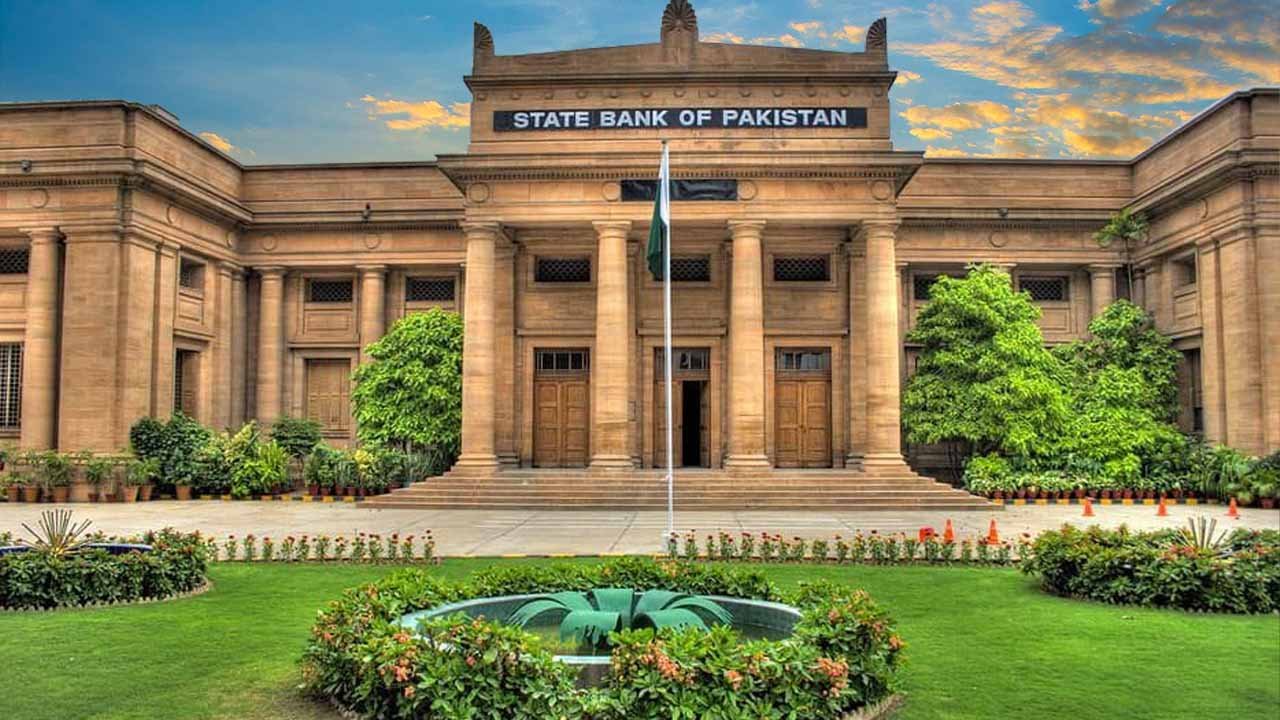
    The State Bank of Pakistan (SBP) reported a notable weekly surge in foreign exchange reserves, with an increase of $67 million, reaching $7.7 billion as of October 13, as per the latest data release on Thursday.

    In total, the nation’s readily available foreign reserves amounted to $12.9 billion, with commercial banks holding $5.2 billion in net foreign reserves. The central bank did not provide a specific explanation for this increase.

    During the week concluding on October 13, 2023, the SBP’s reserves climbed by $67 million, reaching a total of $7,714.0 million, according to the SBP’s statement. This follows a previous week’s increase of $31 million.

    Notably, in July of this year, the central bank’s reserves received a significant boost when Pakistan received an initial disbursement of approximately $1.2 billion from the International Monetary Fund (IMF), following the approval of a new $3-billion stand-by arrangement. Additionally, inflows from Saudi Arabia and the UAE contributed to this increase.

    Nevertheless, the central bank’s reserves have faced pressure due to ongoing debt repayments, increased import expenditures following the easing of restrictions, and a lack of fresh inflows.

  • Pakistani rupee appreciates by Rs5.07 against US dollar in five days 

    Pakistani rupee appreciates by Rs5.07 against US dollar in five days 

    The Pakistani rupee (PKR) showed a notable increase in value against the US dollar (USD), appreciating by 5.07 PKR in five days to reach a closing rate of 277.62 PKR per USD on Friday. This stands in contrast to the previous week’s closing rate of 282.69 PKR per USD.

    In today’s interbank trading session, the local currency exhibited a gain of 96 paisa. It reached an intraday high (bid) of 278.5 PKR and a low (ask) of 287.55 PKR.

    In the open market, exchange companies adjusted their rates, with the rupee strengthening by 1 PKR. These companies quoted the dollar at 274 PKR for buying and 277 PKR for selling, as opposed to the prior rates of 275 PKR for buying and 278 PKR for selling.

    This increase in the value of the rupee can be attributed to several factors. Notably, there has been a concerted effort, backed by the military, to curtail illegal outflows of US dollars from the country.

    Additionally, the government has implemented various measures aimed at bolstering the local currency.

    Addressing concerns related to Afghan transit trade, Pakistan’s Ministry of Commerce recently took a significant step by imposing a ban on 212 items that were previously imported into Afghanistan through Pakistan under the Afghan transit trade agreement.

    This move, enacted through a Statutory Regulatory Order (SRO) issued on October 3, was executed in accordance with the authority granted by the Imports and Exports (Control) Act of 1950.

    Furthermore, the Federal Board of Revenue (FBR) has imposed a 10% processing fee on five key categories of Afghan transit commercial goods imported into Afghanistan via Pakistan.

    In parallel, the State Bank of Pakistan has introduced recent reforms aimed at consolidating and redefining various types of exchange companies into a single category. These changes come with well-defined mandates and higher capital requirements, ultimately contributing to a more transparent financial landscape.

  • Pakistan’s foreign exchange reserves increase by $31 million, reaching $7.64 billion

    Pakistan’s foreign exchange reserves increase by $31 million, reaching $7.64 billion

    The State Bank of Pakistan (SBP) reported an increase of $31 million in its foreign exchange reserves on a weekly basis, reaching a total of $7.64 billion as of October 6, according to data released on Thursday.

    The overall liquid foreign reserves of the country amounted to $13.03 billion, with commercial banks holding net foreign reserves of $5.39 billion.

    The central bank did not provide a specific explanation for the increase in reserves.

    In its report, the SBP stated, “During the week ending on October 6, 2023, the SBP’s reserves rose by $31 million, reaching $7,646.7 million.”

    Notably, the previous week witnessed a decrease of $21 million in Pakistan’s central bank reserves.

    In July of this year, the SBP’s reserves received a significant boost when Pakistan received the first tranche of approximately $1.2 billion from the International Monetary Fund (IMF) after the approval of a new $3-billion stand-by arrangement. Additionally, inflows from Saudi Arabia and the UAE contributed to the growth of reserves.

    However, it’s worth mentioning that the central bank’s reserves have been under pressure due to ongoing debt repayments, an increase in import expenditures following the relaxation of restrictions, and a lack of fresh inflows.

  • Gold price drops by Rs15,500 to Rs199,500 per tola

    Gold price drops by Rs15,500 to Rs199,500 per tola

    The All-Pakistan Sarafa Gems and Jewellers Association (APSGJA) resumed its bullion rate updates after an approximate month-long hiatus, revealing a substantial decline in the value of precious metals.

    According to APSGJA’s data, the price of 24-carat gold plummeted by Rs15,500 per tola and Rs13,546 per 10 grammes, reaching new levels of Rs199,500 and Rs171,039, respectively.

    The last bullion rate report was issued on September 12, when the per-tola price of gold stood at Rs215,000.

    However, escalating uncertainties in the economic landscape led to increased speculation. Consequently, the government intervened with a crackdown on speculators, resulting in the temporary suspension of bullion rate updates.

    During this 28-day period of rate suspension, gold traders resorted to arbitrary pricing as no standardised rates were available. Simultaneously, in the international market, the price of gold experienced a notable decline, dropping by $55 to reach $1,891 per ounce.

    Furthermore, APSGJA’s data also revealed a decrease in silver prices, with a Rs50 per tola and Rs42.87 per 10 grammes reduction, bringing silver’s rates to Rs2,500 and Rs2,143.34, respectively.

  • World Bank reverses suggestion to tax Pakistanis earning below Rs50,000 

    World Bank reverses suggestion to tax Pakistanis earning below Rs50,000 

    The World Bank has retracted its previous recommendation to include individuals earning less than Rs50,000 in the tax system. This reversal comes as the Federal Board of Revenue (FBR) reports that the salaried class has outperformed exporters and the real estate sector in tax contributions over the last three months. 

    The World Bank clarified its stance, stating that it does not endorse reducing the existing nominal tax threshold. The initial suggestion may have been misleading, according to their spokesperson. The organisation now acknowledges that their recommendation was based on 2019 data and should be updated to account for the recent surge in inflation rates and changes in the labour market to safeguard the interests of low-income groups. 

    The World Bank’s previous analysis, which used 2019 data, indicated the potential for a lower tax exemption threshold for salaried individuals within a reformed income tax structure. However, this analysis needs to be revised to reflect current economic conditions. The goal is to ensure that low-income earners are not adversely affected. 

    The World Bank also noted that their recommendation in the Pakistan Development Update (PDU) should have been more explicit about the necessity for new analysis using up-to-date data to inform tax reform decisions. 

    In addition to these points, the Washington-based lender reiterated its suggestion for comprehensive tax reforms aimed at creating a more progressive tax system and placing a greater tax burden on higher-income individuals.

    According to The News, these reforms would involve reducing subsidies, eliminating regressive tax exemptions, and increasing taxation for individuals with higher incomes. The World Bank also recommended improvements in the taxation of agriculture, property, and retail sectors. 

    The statement from the World Bank emphasised that any adjustments to tax thresholds should be based on recent survey data and designed to protect the income levels of those with lower earnings. 

    The initial World Bank suggestion had raised concerns among individuals earning Rs50,000 or less, who are currently exempt from direct taxes. These concerns were driven by the backdrop of soaring inflation and an increased cost of living that has placed significant strain on this income group.