Tag: financial relief

  • ECC approves Rs7.49 billion Ramzan Relief Package

    ECC approves Rs7.49 billion Ramzan Relief Package

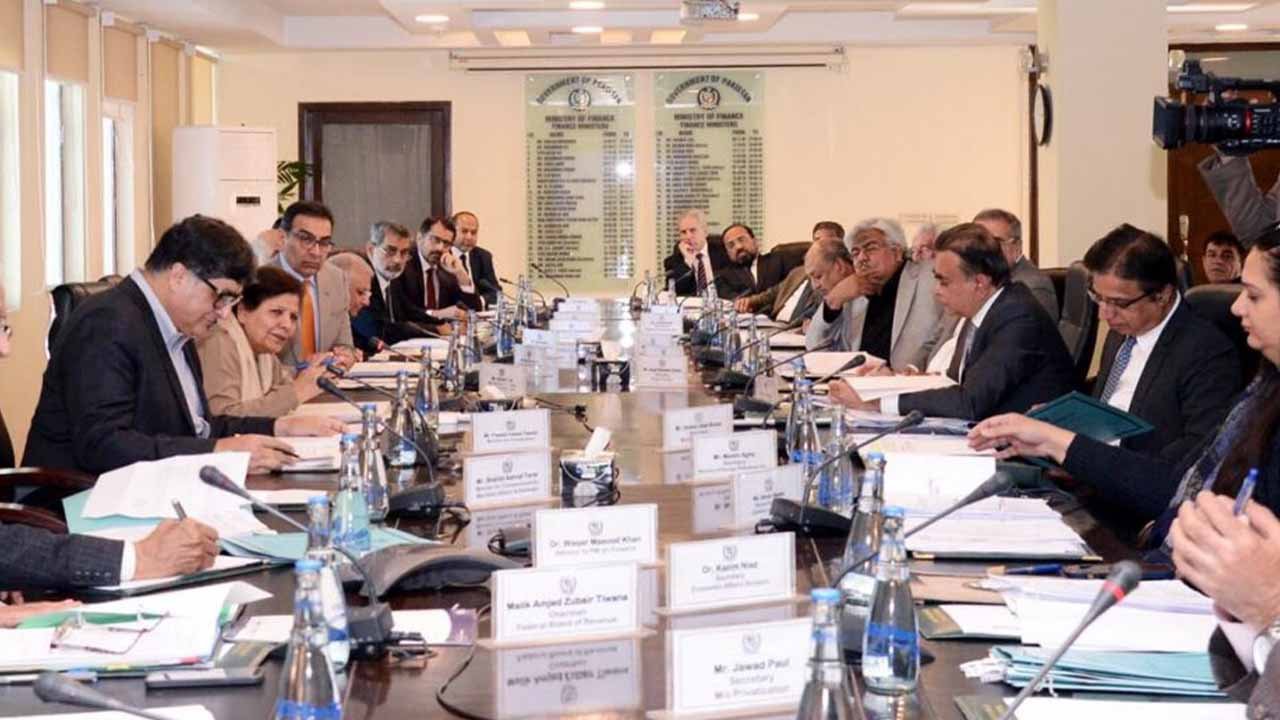
    In a significant move to provide relief to the general public during the upcoming Ramazan, the Economic Coordination Committee (ECC), in its latest meeting chaired by the Federal Minister for Finance, Revenue, and Economic Affairs, Dr Shamshad Akhtar, approved the Ramzan Relief Package-2024.

    The approved package, with a net amount of Rs7.49 billion, is specifically designed to benefit targeted beneficiaries of the Benazir Income Support Programme (BISP). This allocation is part of the budget for the fiscal year 2023-24.

    During the meeting, the committee also discussed and gave the green light to a summary from the Ministry of Commerce’s Tariff Policy Wing.

    The summary pertained to “Individual Tariff Rationalization Proposals from Different Sectors for Review of Custom Duties.” Following thorough deliberations, the committee advised that tariff rationalization should be coordinated with the overall trade policy.

    Furthermore, a proposal related to the “Permission to Import Wheat and Export of Wheat Flour under Export Facilitation Scheme 2021” was presented by the Ministry of Commerce.

    The ECC not only approved this proposal but also directed the relevant ministries to prepare comprehensive plans aimed at enhancing opportunities for value-added exports.

  • Toyota car prices reduced by up to Rs1.3 million in Pakistan

    Toyota car prices reduced by up to Rs1.3 million in Pakistan

    Indus Motor Company, the leading assembler of Toyota-brand vehicles in Pakistan, has made a significant move to benefit its customers. 

    In a recent announcement sent to its dealers on Tuesday, the company revealed a substantial reduction in car prices, effective October 24. This decision was prompted by the recent strengthening of the Pakistani rupee against the US dollar.

    Following this development, the basic Yaris model 1.3MT LO is now more affordable, with a price decrease of Rs100,000, or 2.2 per cent, bringing its new price to Rs4.399 million. 

    Similarly, the top variant, 1.5 CVT Aero, will now be available at Rs5.849 million after a reduction of Rs120,000. 

    The Toyota Corolla’s variant prices have been reduced between Rs200,000 and Rs250,000. Furthermore, Toyota’s pickup Revotrucks are now more budget-friendly, with price reductions ranging from Rs450,000 to Rs790,000.

    One of the most notable changes is seen in the Fortuner G4x2 Petrol STD, which will now be priced at Rs14.499 million after a substantial reduction of Rs1.31 million, or 8.3 per cent.

    This price adjustment follows the footsteps of other major players in the industry, including MG Motors and Lucky Motor Corporation (LMC), both of which have also announced price reductions for their vehicles.

    The automobile sector in Pakistan has faced challenges recently, mainly due to fluctuating exchange rates and restrictions on imports. 

    The rupee experienced a significant depreciation against the dollar, reaching a record low of Rs307.1 on September 5. 

    However, it has since recovered, stabilising around the Rs279–280 level. This positive trend aligns with the efforts of the caretaker government, which took measures against smugglers and hoarders, contributing to the currency’s recovery.

    Apart from currency fluctuations, the auto sector was affected by previous government policies, including import restrictions aimed at preserving foreign exchange reserves. 

    Additionally, higher finance costs and a considerable rise in car prices led to a decrease in consumer demand. In the first quarter of FY24, car sales in Pakistan plummeted to 20,983 units, marking a 40 per cent decline compared to the same period the previous year.

    Here are the latest prices of all Toyota cars in Pakistan:

    Car Model Variant Old Price (Rs.) New Price (Rs.) Price Reduction (Rs.)
    Yaris 1.3 MT LO 4,499,000 4,399,000 100,000
      1.3 CVT LO 4,789,000 4,689,000 100,000
      1.3 MT Hi 4,759,000 4,659,000 100,000
      1.3 CVT Hi 4,999,000 4,899,000 100,000
      1.3 CVT Aero 5,199,000 5,099,000 100,000
      1.5 MT 5,429,000 5,309,000 120,000
      1.5 CVT 5,769,000 5,649,000 120,000
      1.5 CVT Aero 5,969,000 5,849,000 120,000
    Corolla 1.6 MT 6,169,000 5,969,000 200,000
      1.6 CVT 6,769,000 6,559,000 210,000
      1.6 CVT SR 7,429,000 7,189,000 240,000
      1.8 CVT 7,119,000 6,889,000 230,000
      1.8 CVT SR 7,759,000 7,509,000 250,000
      1.8 CVT SR BLK 7,799,000 7,549,000 250,000
    Hilux Revo E 11,439,000 11,039,000 400,000
      G 12,409,000 11,959,000 450,000
      G 13,019,000 12,549,000 470,000
      V AT 2.8 14,389,000 13,849,000 540,000
      V AT Rocco 15,179,000 14,419,000 760,000
      GR S 16,149,000 15,359,000 790,000
    Fortuner 2.7 G Petrol 15,809,000 14,499,000 1,310,000
      2.7 V Petrol 18,099,000 16,999,000 1,100,000
      2.8 Sigma 5 Diesel 19,079,000 17,999,000 1,080,000
      Legender Diesel 20,129,000 18,999,000 1,130,000
      GRS 21,089,000 19,899,000 1,190,000
  • IMF declines request for tariff adjustment and subsidy on high electricity bills 

    IMF declines request for tariff adjustment and subsidy on high electricity bills 

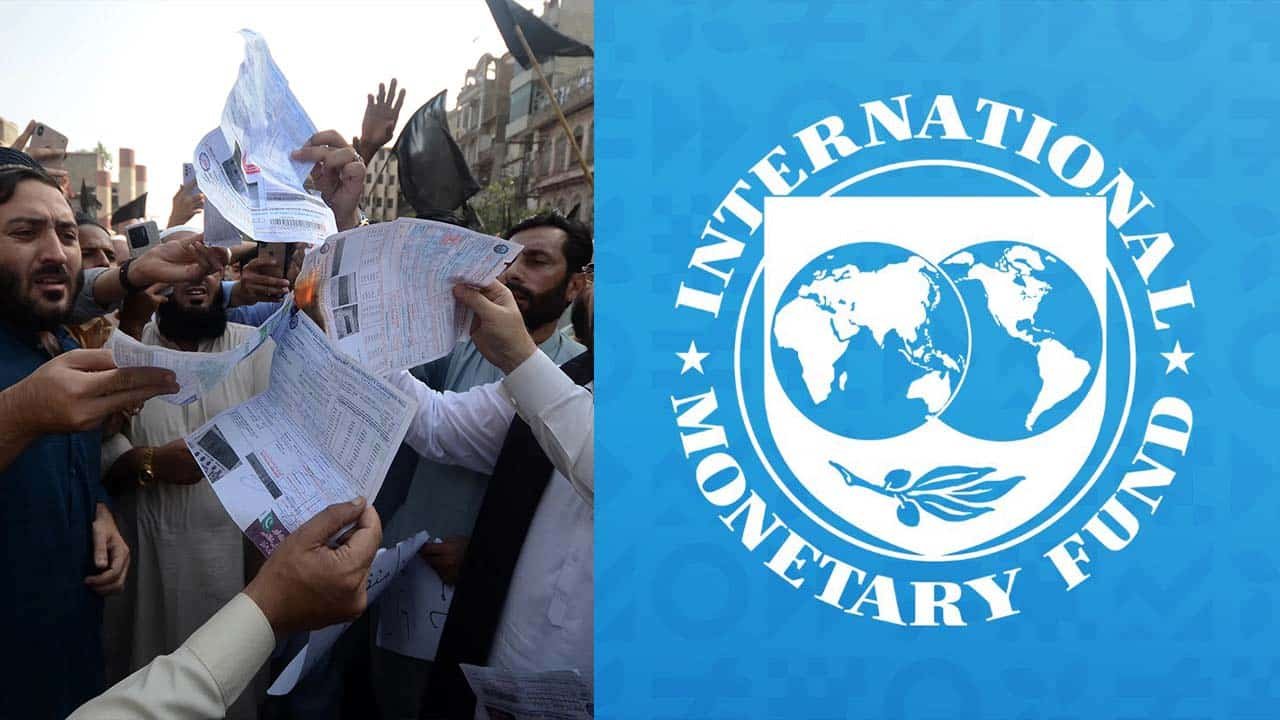
    In light of the government’s comprehensive deliberation on strategies to alleviate the burden of electricity bills, the International Monetary Fund (IMF) has declined the proposal for tariff adjustments or additional subsidies. This decision was made despite the government’s assertion that its bill collections for August had nearly met expectations, as reported by The News on Tuesday. 

    The IMF has expressed strong reservations regarding the government’s initiative to provide relief to economically disadvantaged individuals facing high power bills. Pakistan has consequently approached the global lender, requesting permission to phase in upcoming quarterly tariff adjustments (QTAs) and Fuel Price Adjustments (FPAs) amounting to Rs7.50 per unit over the next four to six months. 

    An authoritative source confirmed this request, stating, “Pakistan has sought the IMF’s approval for a gradual implementation of QTAs and FPAs over a four to six-month period, potentially incurring additional costs that will require mutual agreement.” 

    According to sources, the power sector continues to grapple with challenges, given the necessity of increasing tariffs by approximately Rs5 per unit in the current month and incorporating FPAs amounting to Rs2.72 per unit. Consequently, a cumulative tariff increase exceeding Rs7 per unit is anticipated.  

    The computation of QTAs will be based on losses incurred during the April-June period, reflecting reduced unit usage, increased interest payments, and fluctuations in exchange rates. Meanwhile, the FPA is calculated to address the rising prices of imported fuel, resulting in a potential hike of Rs7.50 per unit in September bills, subject to regulatory approval.  

    Simultaneously, the Ministry of Power asserts that its bill collection performance for August 2023 has improved and is nearing expectations. They contend that to mitigate the impact of inflated bills, they must seek the IMF’s approval for the staggered implementation of QTAs and FPAs.  

    According to calculations by the Ministry of Power for various consumer categories, those utilising 400 units can anticipate a reduction in power charges from Rs21,000 in August 2023 to Rs16,963 in September and further to Rs11,356 in October, factoring in QTAs and FPAs. Similarly, charges for consumers using 300 units are projected to decrease from Rs13,000 in August to Rs10,000 in September and Rs8,000 in October 2023. 

    With the onset of winter in October, it is anticipated that the issue of escalated bills will gradually subside. Additionally, officials are planning to approach the National Electric Power Regulatory Authority (Nepra) to determine the next tariff adjustments, considering seasonal usage trends. Given the peak usage during the summer months followed by a decline in winter, tariff adjustments will be tailored to accommodate these seasonal fluctuations. 

    The Prime Minister has instructed the Ministry of Finance to develop a strategy for economic stability in Pakistan. During a meeting with Interim Finance Minister Shamshad Akhtar, the current economic situation was discussed. 

    The government aims to find innovative solutions to ease the burden on electricity consumers, addressing issues like circular debt, power theft, and taxes with short-term measures. 

    The caretaker government’s primary goal is to facilitate early general elections while upholding constitutional obligations such as constituency delimitation following the population census. The focus is on restructuring fiscal and monetary policies for economic revitalization. 
  • Registration fee for 1501-2000cc vehicles reduced to 2% by excise department

    Registration fee for 1501-2000cc vehicles reduced to 2% by excise department

    The Excise and Taxation Department of Punjab has recently introduced adjustments to the fees associated with vehicle registration and transfers, in accordance with the budget proposed by the caretaker government. One notable change is the reduction of the registration fee for vehicles with engine capacities ranging from 1501cc to 2000cc, from 3 per cent to 2 per cent.

    Furthermore, the government has extended a significant 95 per cent discount on motor vehicle tax for electric vehicles until June 2025. In addition, a new withholding tax has been introduced specifically targeting the registration of vehicles exceeding 2001cc.

    Another modification in the system pertains to private vehicles, which were previously subjected to a flat token tax of Rs2,500 per seat. Under the new regulations, these vehicles will now be taxed based on their respective engine capacities, providing a more accurate and equitable taxation structure.

    In addition to the changes in registration fees, the Excise department has also revised the transfer fees for motorcycles, cars, rickshaws, and commercial vehicles. The fee for motorcycles has been raised from Rs150 to Rs500, while vehicles with engine capacities up to 1000cc will now incur a transfer fee of Rs2,500, increased from the previous Rs1,200.

    For vehicles falling within the range of 1000cc to 1800cc, the transfer fee has been elevated by Rs3,000, now amounting to Rs5,000. Similarly, for vehicles surpassing 1800cc, the excise department will collect a transfer fee of Rs10,000, compared to the earlier fee of Rs3,000.

    Commercial vehicles also witness a revision in their transfer fee, experiencing an increase of Rs1,000, now totaling Rs5,000.

    These revisions to the vehicle registration and transfer fees aim to establish a more efficient and equitable system, aligned with the government’s budgetary objectives, while considering factors such as vehicle engine capacity and promoting the adoption of electric vehicles.