Tag: financial situation

  • China to continue supporting Pakistan’s financial situation

    China to continue supporting Pakistan’s financial situation

    President Xi Jinping has said on Wednesday that China will continue to support Pakistan in stabilising its financial situation, the country’s state media has reported.

    The report also said that China and Pakistan should move forward more effectively with the construction of their economic corridor, as well as accelerate the construction of infrastructure for the Gwadar Sea Port.

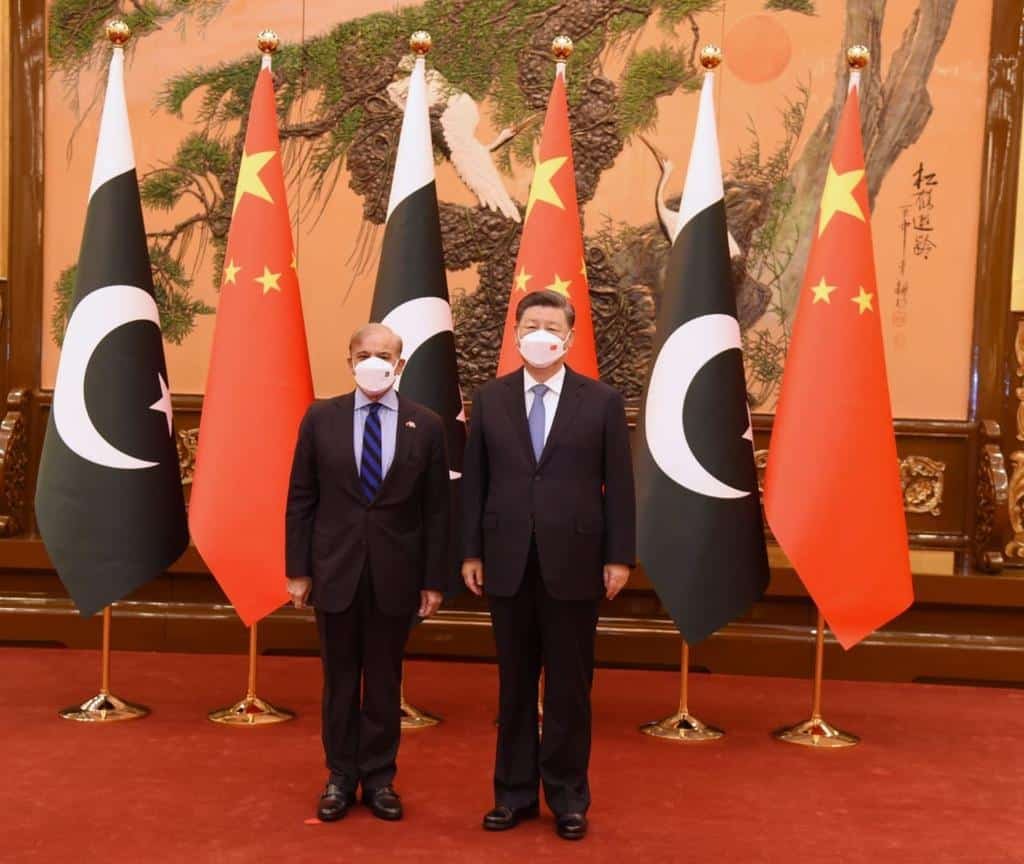
    The statement was also reported by Reuters after Prime Minister (PM) Shehbaz Sharif held a meeting with China’s President Xi Jinping which focused on increasing multilateral cooperation between both countries especially the China-Pakistan Economic Corridor (CPEC).

    The bilateral consensus between the two leaders was reached as PM Shehbaz called on Xi at the People’s Great Hall of China.

    During the meeting, the Chinese president and PM Shehbaz discussed “broad-based cooperation in economy and investment and exchanged views on regional and global developments”.

    Xi said that the countries should work together to create suitable conditions for the early implementation of the Mainline-1 railway upgrading project and the Karachi Circular Railway project.

    China welcomes Pakistan to expand high-quality agricultural exports to the country, and is willing to deepen cooperation in areas including the digital economy, e-commerce, photovoltaic and other new energy sources, Xi said.

    China will also export technology for a 160 km/h high-speed railway train to Pakistan, state broadcaster CCTV said.

    Separately, the People’s Bank of China (PBOC) said it has signed a memorandum of cooperation with the National Bank of Pakistan recently for the establishment of RMB clearing arrangement in Pakistan, in a bid to facilitate the use of RMB for cross-border transactions by enterprises and financial institutions in both countries.

    The prime minister also met Chinese Premier Li Keqiang wherein the two sides agreed to expand CPEC besides ensuring the early completion of its already initiated projects.

    PM Shehbaz is on a two-day official visit with a high-level delegation at the invitation of Premier Li Keqiang. The meeting was primarily aimed at revitalising the CPEC project.
  • Pak Embassy in Washington ran out of funds to pay salaries for four months: report

    Pak Embassy in Washington ran out of funds to pay salaries for four months: report

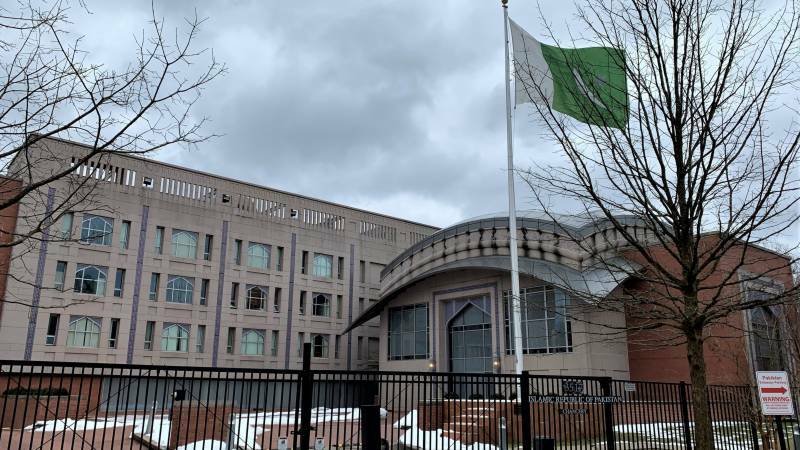
    The Embassy of Pakistan in the United States (US) had reportedly run out of funds and was unable to pay salaries of four months to the embassy’s locally recruited contractual staffers, reveals The News’ sources in a report by Journalist Wajid Ali Syed.

    It was reported that a total of five staffers faced delays and non-payment of their monthly wages from August onwards. One staffer, who had been working there for the past ten years, resigned in September because of the on-going pay crisis.

    Several sources disclosed that the Pakistan Community Welfare (PCW) fund, from which these unpaid staffers were paid out collapsed last year because the money was diverted to purchase ventilators and other medical equipment last year, after the pandemic. The embassy had to borrow money from other account-heads to keep up with the monthly salaries for the staffers hired locally.

    As a result of this, the staffers wrote to the Pakistani ambassador in October. The ambassador repeatedly raised the issue with the Foreign Office (FO) in Islamabad and managed to secure all salaries just last week. The embassy’s spokesperson confirmed that “currently there is no salary-related issue being faced by the Embassy staff.”

    These local staffers’ salaries range from 2,000 to 2,500 dollars per month. They do not get the perks and privileges that FO employees enjoy. The domestic staffers are usually hired to help with the ‘Consular section’ that provides visa, passport, notarization and other consular services.

  • 77% Pakistanis believe country is heading in wrong direction: survey

    At least 77 per cent Pakistanis believe that the country is heading in the wrong direction, whereas 23 per cent think there’s nothing wrong with Pakistan, said a survey by research company IPSOS.

    According to The News, the survey was conducted in the first week of December and over 1,000 people participated in it. “The findings were released on Tuesday for the last quarter (Q4) of 2020 and compared with people’s responses from the same period a year ago,” it added.

    Last year, 21 per cent people believed that Pakistan was on the right track, while 79 per cent contested this view.

    This year, 36 per cent said that their current personal financial situation was weak, while 51 per cent said it was neither strong nor weak, and 13 per cent said they were in a strong financial position.

    In comparison with the results of the last year, the people are in a better financial position: the data showed that 38 per cent believed that their financial situation was weak, 5 per cent viewed it as strong, and 57 per cent said it was okayish.

    Meanwhile, on province-wise assessment, the report found that a “poor financial situation” featured in almost all the provinces and inflation ranked number 1 among the list of top four contributors.

    “In Sindh, the second-highest contributor was viewed to be unemployment (20 per cent), followed by COVID-19 (17per cent) and poverty (16 per cent). In Punjab, 23 per cent people felt the province’s poor financial situation was due to unemployment, 8 per cent thought it was due to COVID-19 and 14 per cent believed poverty played a key role,” the newspaper stated.

    Meanwhile, in Khyber Pakhtunkhwa about 18 per cent believed the poor financial situation was the result of unemployment, 12 per cent viewed coronavirus and 8 per cent felt it was poverty that was behind the province’s financial situation.

    Similarly, in Balochistan about 25 per cent responded by blaming unemployment, a mere 2 per cent felt COVID-19 played a role, and 25 per cent felt it was poverty that has led to the province’s dismal state of financial affairs, said reports.