Tag: Financial Stability

  • Pakistan faces ‘one of the deadliest debt traps in the world,’ warns Ex-SBP governor

    Pakistan faces ‘one of the deadliest debt traps in the world,’ warns Ex-SBP governor

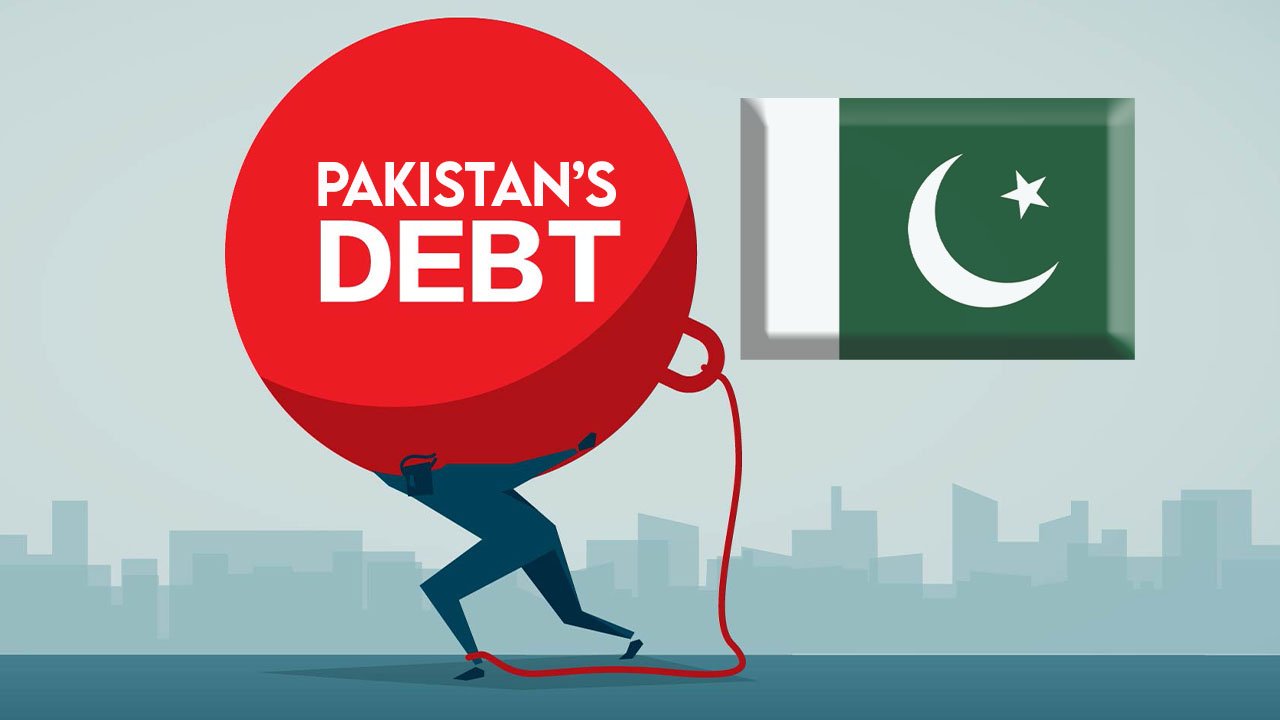
    Dr Murtaza Syed, former Governor of the State Bank of Pakistan, has raised significant concerns about Pakistan’s alarming debt situation, describing it as one of the most severe debt traps globally.

    In a series of tweets, he highlighted the country’s excessive borrowing and criticized the misuse of funds on non-productive expenses, leading to a situation where servicing the debt takes precedence over crucial developmental and climate-related investments.

    According to Dr Syed, Pakistan currently spends more on servicing its debt than any other country globally, a burden that is expected to persist for years. This high debt servicing obligation has necessitated heavy taxation and severely limited resources for essential social expenditures, such as education and health.

    He pointed out that Pakistan’s spending on interest payments vastly exceeds allocations for education and health, indicating a prioritization that hampers human capital development and public health.

    Citing data from the UNCTAD, Dr Syed highlighted that Pakistan’s government spends a disproportionate amount of its revenue on interest payments, second only to Sri Lanka. This financial strain not only constrains immediate social spending but also impedes long-term economic growth by limiting investments in infrastructure and other critical sectors.

    Despite fluctuations in global interest rates, Dr Syed emphasized that Pakistan’s debt burden remains among the highest globally, indicating a systemic issue rather than a temporary financial challenge.

    He cautioned that even with potential increases in government revenue, a significant portion would still be consumed by interest payments, further squeezing resources available for developmental initiatives.

    In conclusion, Dr Syed proposed a strategic restructuring of Pakistan’s debt to alleviate the fiscal pressure and redirect funds towards sustainable development and climate resilience.

    This, he argued, would require a balanced approach, avoiding over-reliance on taxation and instead focusing on optimizing debt management strategies to foster economic stability and social progress in Pakistan.
  • US Federal Reserve holds interest rates steady for sixth consecutive meeting

    US Federal Reserve holds interest rates steady for sixth consecutive meeting

    The US Federal Reserve has once again left interest rates unchanged, maintaining its current rate at 5.25 per cent to 5.5 per cent.

    This marks the sixth consecutive meeting where the central bank has opted to hold steady, reflecting a cautious approach amid persistent inflation concerns.

    In a statement released by the Federal Open Market Committee (FOMC) on Wednesday, the central bank acknowledged that while inflation has eased over the past year, it remains elevated.

    “In recent months, there has been a lack of further progress towards the Committee’s 2 per cent inflation objective,” the FOMC noted.

    The Committee indicated that it does not plan to reduce the target range until it has greater confidence that inflation is consistently trending towards the 2 per cent goal.

    This stance has kept interest rates at a 23-year high since July last year, suggesting the Federal Reserve’s focus on managing inflation risks.

    The decision to leave rates unchanged aligned with market expectations, which had largely anticipated a rate pause.

    In a related development, the Federal Reserve announced that it would slow its pace of quantitative tightening starting June 1.

    The Fed will reduce the cap on Treasury securities rolling off its balance sheet to $25 billion per month, down from the previous cap of $60 billion. However, the pace of runoff for mortgage-backed securities will remain at $35 billion per month.

    The FOMC’s decision did not significantly alter market expectations for the trajectory of interest rates in 2024.

    The market remains divided on whether a rate cut will occur by September, with about 50/50 odds. As of now, only one rate cut is fully priced in for the entire year.

    It’s worth noting that at the beginning of 2024, the market had priced in an 80 per cent chance of a rate cut starting in March, with a total of six cuts projected throughout the year.

    This shift in expectations underscores the uncertainty surrounding the Federal Reserve’s future policy decisions as it navigates the ongoing challenges of inflation and economic stability.

  • Pakistan anticipates final IMF tranche approval in late April

    Pakistan anticipates final IMF tranche approval in late April

    The International Monetary Fund (IMF) announced that its Executive Board meeting, anticipated for late April, is crucial for approving Pakistan’s final tranche of approximately $1.1 billion (SDR 828 million). 

    This sum represents the last portion of the $3-billion Stand-By Arrangement (SBA) initiated in June of the previous year.

    Julie Kozack, IMF Communication Director, revealed this information during a media briefing, highlighting the significance of the staff-level agreement reached on March 19 between IMF staff and Pakistani authorities. 

    This agreement, subject to approval by the IMF’s Executive Board, acknowledges Pakistan’s strong program implementation by the State Bank of Pakistan (SBP) and the interim government, as well as the new government’s commitment to ongoing policy and reform endeavors aimed at transitioning Pakistan from stabilisation to robust, sustainable recovery.

    Kozack emphasised the improvement in Pakistan’s economic and financial position since the completion of the first review, with growth and confidence steadily rebounding. 

    Looking ahead, she mentioned the possibility of a successor IMF-supported program to address Pakistan’s fiscal and external stability challenges and foster inclusive growth, indicating the IMF’s readiness to engage in discussions with Pakistani authorities.

    Meanwhile, Pakistan’s foreign exchange reserves witnessed a modest increase, reaching $8.04 billion as of March 29, although still considered low for an import-dependent economy, raising concerns about potential future pressure. 

    Finance Minister Muhammad Aurganzeb has acknowledged the need for another IMF bailout, with discussions slated for the upcoming Spring meetings of the Board of Governors of the World Bank Group and IMF scheduled for April 15-20, 2024, in Washington DC, where Aurangzeb is expected to lead Pakistan’s delegation.

  • PM Shehbaz foresees three-year IMF programme continuation

    PM Shehbaz foresees three-year IMF programme continuation

    Prime Minister (PM) Shehbaz Sharif has indicated that the new International Monetary Fund (IMF) programme is expected to extend for three years.

    Addressing the session of the Special Investment Facilitation Council’s (SIFC) apex committee, attended by both civil and military leadership on Thursday, the PM mentioned that a new installment of the loan from the IMF is anticipated in a few days. However, he underscored the necessity for another programme.

    He highlighted the unity displayed by the civil-military leadership and elected lawmakers from various political parties in today’s session, emphasising their collective commitment to the country’s development and prosperity.

    Regarding the economic challenges, the Prime Minister stressed the importance of the SIFC in facilitating foreign investments and acknowledged its significant role over the past eight months. He credited Chief of Army Staff (COAS) General Syed Asim Munir for his pivotal role in establishing the SIFC.

    Prime Minister Shehbaz emphasised the imperative of implementing reforms under the IMF programme to attain macroeconomic stability. He noted the shortfall in revenues, highlighting the need to increase them to Rs13 to 14 trillion from the current Rs9 trillion.

    Furthermore, he outlined the government’s plans to digitise the Federal Board of Revenue (FBR) to address issues such as electricity theft, which annually costs the national exchequer Rs400 billion. During the caretaker government’s tenure, measures were taken to save Rs87 billion in electricity expenses.

    PM Shehbaz also highlighted the pressing issue of circular debt in electricity and gas, which has surged to Rs5 trillion.

    He underscored the importance of unity among the federal and provincial governments to address these challenges collectively.

    Shehbaz Sharif urged the expedited privatisation of loss-making state-owned entities, citing Pakistan International Airlines (PIA), burdened with a debt of Rs825 billion, as an example.

    Acknowledging the need for tough decisions, the Prime Minister admitted that subsidies had been disproportionately allocated to the elite segments of society, emphasising the importance of redistributing the financial burden to those capable of bearing it.

  • Pakistan’s forex reserves surge to $8.02 billion, SBP data shows

    Pakistan’s forex reserves surge to $8.02 billion, SBP data shows

    The latest data released on Thursday revealed a noteworthy surge in the foreign exchange reserves held by the State Bank of Pakistan (SBP), marking an increase of $105 million over the course of a week, reaching a total of $8.02 billion as of March 15.

    In addition to the SBP’s reserves, the total liquid foreign reserves for the country now stand at $13.4 billion, with commercial banks accounting for $5.38 billion of this amount.

    Despite the significant boost, the central bank did not provide specific details regarding the reason behind this increase.

    However, it did report that during the week ending on March 15, SBP’s reserves climbed by $105 million to reach $8,017.9 million, indicating a positive trend.

    The previous week had also witnessed an increase in Pakistan’s central bank reserves, albeit a smaller one, amounting to $17 million.

    In a pivotal development, Pakistani authorities successfully concluded negotiations with the International Monetary Fund (IMF) on the second and final review of the $3 billion Stand-By Arrangement (SBA).

    As per the agreement reached, pending approval by the IMF’s Executive Board, an additional access of $1.1 billion under the SBA will become available.

    This anticipated inflow from the IMF is expected to further bolster the country’s reserves and serve as a promising sign for its struggling economy.

  • SBP sees surge of over $17 million in forex reserves

    SBP sees surge of over $17 million in forex reserves

    The latest data released by the State Bank of Pakistan (SBP) revealed a notable rise in the country’s foreign exchange reserves. During the week ending March 8, 2024, SBP’s reserves increased by $17.2 million, marking a 0.22 per cent growth, reaching a total of $7.91 billion.

    Additionally, Pakistan’s overall reserves experienced a surge, ascending by $131.3 million, or 1.01 per cent, week-on-week (WoW), to a sum of $13.15 billion. This increase was further complemented by a rise in reserves held by commercial banks, which climbed by $114.1 million, or 2.23 per cent, to reach $5.24 billion.

    In a significant development, the second review of the stand-by arrangement (SBA) with the International Monetary Fund (IMF) is slated to take place from March 14 to 18, 2024. This review holds particular importance as it marks the final assessment under the SBA. Upon reaching a staff-level agreement, the final tranche of $1.1 billion will be disbursed, subject to approval by the Executive Board of the IMF.

    It is noteworthy that in the current fiscal year, Pakistan has witnessed a substantial increase in its total liquid foreign reserves, amounting to $3.99 billion, or 43.57 per cent. Similarly, the ongoing calendar year has seen a rise of $0.48 billion, or 3.77 per cent.

  • Pakistan clears hurdles for IMF review, final agreement expected

    Pakistan clears hurdles for IMF review, final agreement expected

    The newly elected government of Pakistan has indicated its intention to secure a new loan from the International Monetary Fund (IMF).

    In line with this, representatives from the IMF are scheduled to visit Pakistan for the second review of the ongoing Stand-By Arrangement (SBA). The review is set to take place from March 14 to 18 in Islamabad.

    According to a statement released by the finance ministry, Pakistan has successfully met all structural benchmarks, qualitative performance criteria, and indicative targets required for the IMF review.

    This upcoming review marks the final evaluation of the SBA, with a staff-level agreement anticipated upon its completion.

    Once this agreement is reached, the final tranche of $1.1 billion under the SBA will be disbursed, subject to approval from the IMF’s Executive Board.

    Last summer, Islamabad secured a vital rescue package from the IMF, preventing a potential sovereign debt default.

    The successful completion of the final review is expected to unlock approximately $1.1 billion.

    Prime Minister Shehbaz Sharif has instructed his finance team, led by newly appointed Finance Minister Muhammad Aurangzeb, to begin preparations for seeking an Extended Fund Facility (EFF) once the standby arrangement concludes on April 11.

    The IMF has expressed readiness to develop a medium-term programme if Pakistan submits an application for one.

    Notably, the government has not officially disclosed the amount of additional funding it intends to seek through a successor programme from the IMF.

  • IMF mission to arrive tomorrow for final review discussions on Pakistan’s SBA

    IMF mission to arrive tomorrow for final review discussions on Pakistan’s SBA

    The International Monetary Fund (IMF) mission is poised to commence vital economic review discussions from March 14 to 18, 2024, marking the conclusive evaluation of Pakistan’s Standby Arrangement (SBA).

    Sources within the Finance Ministry have confirmed that the IMF mission is scheduled to touch down in Pakistan tomorrow night, kickstarting a series of pivotal discussions set to unfold over the next four days.

    During this intensive period, the IMF mission is slated to engage in comprehensive dialogue with Pakistan’s economic team. Key participants include representatives from the Finance Ministry, Energy Ministry, Federal Board of Revenue (FBR), State Bank of Pakistan (SBP), Planning Commission, and the Petroleum Division.

    Insiders suggest that the IMF mission will delve into discussions covering a spectrum of economic facets. Talks are expected to encompass various critical sectors, including finance, energy, taxation, and central banking.

    Furthermore, in parallel with these discussions, preliminary conversations are anticipated to unfold regarding the potential initiation of a new loan programme with the IMF mission. This prospect adds an extra layer of significance to the ongoing economic deliberations as Pakistan navigates its financial landscape in the pursuit of sustainable economic growth.

    Stay tuned for comprehensive coverage as the IMF mission engages in the final review of Pakistan’s Standby Arrangement, paving the way for crucial decisions that could shape the nation’s economic trajectory in the coming months.

  • Gold prices in Pakistan remain unaffected by political uncertainties

    Gold prices in Pakistan remain unaffected by political uncertainties

    Despite political uncertainties, the domestic bullion market exhibited stability, with 24-karat gold maintaining its price at Rs215,500 on Friday, showing no deviation from the previous session.

    This stability is indicative of the domestic gold market functioning normally, aligning with international gold rates and the exchange rate.

    The Karachi Sarafa Association reported that the prices of 10-gramme 24-karat gold and 10-gramme 22-karat gold also remained constant at Rs184,756 and Rs169,360, respectively.

    Similarly, silver prices showed resilience in the domestic market, with 24-karat silver being traded at Rs2,600 per tola and Rs2,229.08 per 10-gramme.

    On the global stage, the international spot gold exhibited minimal fluctuations, standing at $2,033.5 as of 12:40 pm.

    This stability in both domestic and international markets suggests a steady scenario despite the prevailing political uncertainties.

  • Monetary policy committee maintains status quo: SBP keeps policy rate at 22% to tackle elevated inflation

    Monetary policy committee maintains status quo: SBP keeps policy rate at 22% to tackle elevated inflation

    In a decision announced on Monday, the Monetary Policy Committee (MPC) of the State Bank of Pakistan (SBP) has opted to maintain the status quo, retaining the key policy rate of 22 per cent. 

    SBP Governor Jameel Ahmad highlighted the persistent elevation of inflation, disclosing a revised forecast for the fiscal year 2023–24 ranging from 23 per cent to 25 per cent.

    Market analysts, anticipating the decision, noted that the sustained high inflation rate was a contributing factor to the MPC’s decision to keep the key policy rate unchanged.