Tag: Financial Stability

  • IMF willing to work with prolonged caretaker setup for SBA programme success

    IMF willing to work with prolonged caretaker setup for SBA programme success

    The International Monetary Fund (IMF) is reportedly willing to collaborate with a prolonged caretaker government in Pakistan to wrap up the $3 billion Standby Arrangement (SBA) programme, offering relief for the country’s economic challenges. 

    The ongoing SBA programme, set to conclude around March–April 2024, has garnered support from the IMF for this approach.

    Pakistan has informed the IMF about the possibility of extending the caretaker government’s term after the approval of the 7th Population and Housing Census. This change pushes the next elections to the first quarter of 2024 instead of the anticipated 2023 date.

    Candidates for crucial ministries, like finance, include Sultana Allana, Dr Ashfaque Hassan Khan, and Tariq Bajwa. For other economic portfolios, Muhammad Mian Soomro and Ijaz Gohar are being considered.

    Former FBR chairman Shabbar Zaidi declined a role in the interim setup due to personal reasons.

    In scenarios where Jalil Abbas Jilani or Dr Abdul Hafeez Shaikh become caretaker premiers, potential finance minister candidates shift. 

    Outgoing finance minister Ishaq Dar aims for a team member to secure a significant role.

    Ultimately, the decision rests on the appointment of the PM’s top official.

  • IMF reaches $3 billion stand-by arrangement with Pakistan, averting impending default

    IMF reaches $3 billion stand-by arrangement with Pakistan, averting impending default

    The International Monetary Fund (IMF) and Pakistan have reached a staff-level agreement on a stand-by arrangement worth $3 billion, announced the lender. This decision has been eagerly anticipated by Pakistan, a South Asian nation that is on the verge of default.

    The approval of the IMF board, expected in July, is required to finalise the deal. After an eight-month delay, this agreement brings some relief to Pakistan, which is currently grappling with a severe balance of payments crisis and dwindling foreign exchange reserves.

    The funding of $3 billion, which will be disbursed over a period of nine months, surpasses initial expectations. Pakistan had been awaiting the release of the remaining $2.5 billion from a $6.5 billion bailout package that was initially agreed upon in 2019, and which expired on Friday. As a result, the country’s stock and currency markets remained closed on that day.

    According to IMF official Nathan Porter, the new stand-by arrangement builds upon the 2019 programme. Porter acknowledged the significant challenges faced by Pakistan’s economy in recent times, including devastating floods last year and rising commodity prices following the war in Ukraine.

    He stated, “Despite the authorities’ efforts to reduce imports and the trade deficit, reserves have declined to very low levels. Liquidity conditions in the power sector also remain acute.” Porter further emphasised that the new arrangement would serve as a policy anchor and a framework for financial assistance from both multilateral and bilateral partners in the foreseeable future.

    Porter also highlighted the acute liquidity conditions in the power sector, characterised by mounting arrears and frequent power outages. Reforming the energy sector, which has accumulated a debt of nearly 3.6 trillion Pakistani rupees ($12.58 billion), has been a pivotal aspect of the discussions between Pakistan and the IMF.

  • Will Pakistan secure IMF’s bailout? Decision expected within 48 hours

    Will Pakistan secure IMF’s bailout? Decision expected within 48 hours

    Prime Minister Shehbaz Sharif engaged in a telephonic conversation with Kristalina Georgieva, the Managing Director of the International Monetary Fund (IMF), on Tuesday.

    During the discussion, Prime Minister Shehbaz Sharif expressed his optimistic outlook, anticipating that a decision regarding the bailout programme would be reached within the next day or two.

    In an official statement issued by the Prime Minister’s Office (PMO), it was highlighted that the premier and IMF MD delved into various matters pertaining to the IMF programme. The statement further indicated that the efforts of the finance minister and his team were duly acknowledged by the IMF MD.

    The statement continued to convey the Prime Minister’s expectation that the coordination efforts on finer details would culminate in an IMF decision in the coming days. Additionally, Shehbaz reiterated his commitment to achieving the shared goal of improving the economic situation through collaborative endeavors.

    Last week, Prime Minister Shehbaz Sharif held a meeting with Georgieva during the Summit for a New Global Financial Pact in Paris, wherein he provided a comprehensive briefing on Pakistan’s economic outlook. The Prime Minister expressed hope that the critical funds would be disbursed as a result.

    Pakistan is currently engaged in a race against time to revive its halted bailout programme, which is set to conclude on June 30. Experts emphasise the significance of resuming the IMF bailout, which has been at a standstill since November of the previous year.

    The cash-strapped South Asian economy is grappling with a balance of payment crisis, making the expected funding of $1.1 billion from the international lender crucial. This funding would also pave the way for additional inflows from Pakistan’s multilateral and bilateral partners, effectively reducing the risks associated with a potential default, as per expert opinion.

  • IMF’s conditions for agreement: Pakistan must arrange foreign loans and restore foreign exchange market

    IMF’s conditions for agreement: Pakistan must arrange foreign loans and restore foreign exchange market

    In a recent development, the International Monetary Fund (IMF) has urged Pakistan to address its political disputes in accordance with the constitution. This statement came after Prime Minister Shehbaz Sharif reached out to IMF Managing Director Kristalina Georgieva in a last-ditch effort to revive the derailed $6.5 billion bailout package and avoid default.

    Following the conversation between Shehbaz and Georgieva, IMF Mission Chief to Pakistan Nathan Porter made an unusual statement, expanding the IMF’s focus to the political arena.

    While the IMF typically refrains from commenting on domestic politics, Porter emphasised the importance of finding a peaceful way forward in line with the constitution and the rule of law. This statement comes in the midst of an ongoing crackdown against PTI workers, abductions of individuals, and other political issues.

    Responding to questions from The Express Tribune, Porter outlined the conditions Pakistan must fulfill to reach an agreement with the IMF. These conditions include arranging foreign loans, approving a new budget in line with the IMF framework, and restoring proper functioning to the foreign exchange market.

    Prime Minister Shehbaz sees the IMF as the last resort to avoid default and thus decided to intervene. Following the conversation with the IMF chief, he instructed the finance ministry to share details of the next budget with the IMF.

    Meanwhile, Finance Minister Ishaq Dar criticised the IMF again, stating that it would be biased and shameful if the 9th review did not take place. However, a top finance ministry official confirmed that the prime minister had contacted the IMF managing director to break the deadlock.

    Time is running out for Pakistan, as there is only one month left before the program expires. Pakistani authorities still believe that the IMF can shorten the review completion period by calling a board meeting within two weeks of announcing the staff-level agreement.

    Porter emphasised that sustaining strong policies, obtaining sufficient financing from partners, and engaging in ongoing reforms are crucial for Pakistan to maintain macroeconomic stability. He also stressed the importance of strengthening domestic revenue mobilization, eliminating state-owned enterprise losses, reducing inefficiencies, and allowing for increased social and development spending.

    While Pakistan claims to have fulfilled all the conditions agreed upon in February, the sources indicate that Pakistan is currently not meeting all three conditions set by the IMF. The value of the rupee in the open market is significantly different from its value in the interbank market, and the new budget is not aligned with the IMF’s requirements.

    To bridge the financing gap until June this year, the IMF had asked Pakistan to arrange $6 billion in fresh loans. So far, Pakistan has obtained assurances for $3 billion from Saudi Arabia and the United Arab Emirates. The government is ready to share the details of the budget and the foreign exchange policy with the IMF.

    The $6.5 billion bailout package has been derailed since November last year and is set to expire on June 30. Of the total amount, the IMF has not disbursed $2.6 billion, including a $1.2 billion tranche linked to the completion of the 9th review. Pakistan’s foreign exchange reserves stand at $4.1 billion, which is not sufficient to cover the upcoming $25 billion in repayments.

    There are still differences of opinion regarding the current account deficit for this fiscal year. The government’s revised estimate of around $4 billion to $4.5 billion has not yet been accepted by the IMF.

    Initial reports suggest that the government intends to announce an expansionary budget of around Rs14.6 trillion with a deficit of around 7.4 per cent of the gross domestic product (GDP). However, this budget would need to be adjusted to align with the IMF’s requirements.

    The IMF’s Fiscal Monitor report projected a budget deficit as high as 8.3 per cent of the GDP for the next fiscal year, significantly higher than the government’s proposal. The finance ministry had initially proposed an overall budget deficit of around 6.9 per cent of the GDP or Rs7.3 trillion.
  • PIA’s Boeing 777 seized once again in Malaysia due to unpaid lease dues

    PIA’s Boeing 777 seized once again in Malaysia due to unpaid lease dues

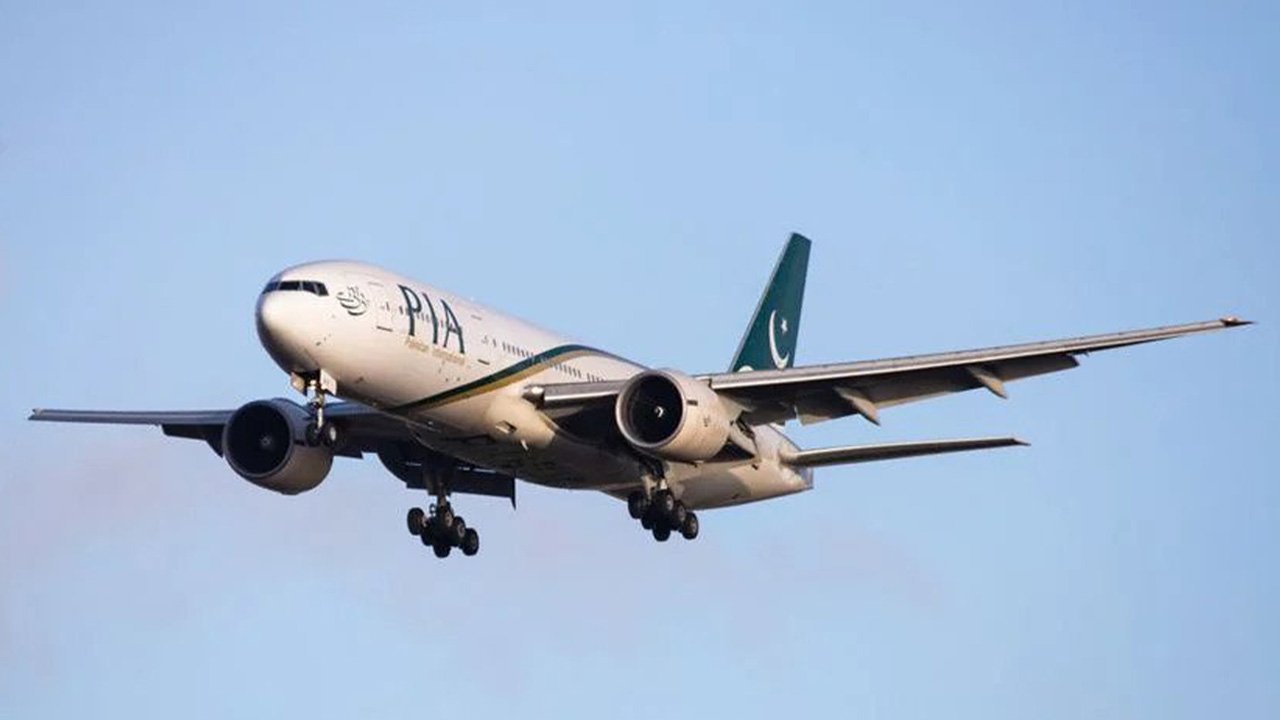
    Pakistan International Airlines (PIA) faced another setback as one of its Boeing 777 aircraft was once again seized at the Kuala Lumpur International Airport over an ongoing lease dispute. The incident marks the second time this specific aircraft has been halted in Malaysia due to payment issues.

    The aircraft, bearing the registration number BMH, was acquired by PIA on lease from Malaysia. However, the lease dispute resurfaced, and the airline was unable to settle outstanding dues amounting to $4 million. Subsequently, a local court ordered the seizure of the PIA plane upon receiving the company’s request.

    According to ARY News, this is not the first instance in which the national carrier of Pakistan has encountered such a predicament in Malaysia. In 2021, the same Boeing 777 was seized by authorities at the Kuala Lumpur airport due to non-payment of dues. The situation was resolved after diplomatic assurances were given, leading to the release of the aircraft.

    Following the recent seizure, the PIA plane was eventually released and safely returned to Pakistan on January 27, accompanied by 173 passengers and crew members. However, the lease dispute appears to have persisted, resulting in the aircraft being seized once again in Malaysia.

    The ongoing lease dispute poses significant challenges for Pakistan International Airlines, as it impacts their operations and raises concerns about the financial stability of the airline. PIA authorities have yet to comment on the recent seizure and the steps they plan to take to resolve the dispute.

    The incident highlights the importance of maintaining robust lease agreements and ensuring timely payment of dues to avoid disruptions in international aviation operations. Both PIA and Malaysia will likely engage in further negotiations to find a resolution to the long-standing lease dispute and prevent any future incidents that could tarnish the airline’s reputation.

    As of now, travelers and stakeholders eagerly await updates from Pakistan International Airlines regarding the situation and hope for a swift resolution to the lease dispute, allowing the airline to resume its operations smoothly.

  • Pakistan set to share budget details with IMF, aiming to unlock stalled programme

    Pakistan set to share budget details with IMF, aiming to unlock stalled programme

    Finance Minister Ishaq Dar announced on Sunday that Pakistan intends to provide the International Monetary Fund (IMF) with comprehensive details of its upcoming budget, with the aim of facilitating the release of delayed funds. During an interview, Dar confirmed that the IMF has requested further information regarding the budget, and Pakistan is prepared to comply with this requirement.

    Pakistan’s receipt of $1.1 billion in funding from the IMF, as part of a $6.5 billion rescue package established in 2019, has encountered delays since November. In February, both the IMF and Pakistan engaged in two weeks of discussions in Islamabad, aiming to conclude the 9th review. However, the funds have not yet been disbursed by the IMF, which is crucial for Pakistan to access additional bilateral and multilateral financing.

    Expressing his concerns, Dar emphasised his desire for the IMF to release the funds prior to the budget’s scheduled presentation in early June. He asserted that combining the 9th and 10th reviews would be unjust, and therefore advocated for a separate assessment of the current situation.

    In summary, Pakistan’s Finance Minister Ishaq Dar has underscored the country’s commitment to fulfilling the IMF’s request for detailed budget information. This step is intended to overcome the impasse in the release of funds, which are vital for Pakistan to access other forms of financial assistance. Minister Dar has further urged the IMF to release the funds prior to the budget presentation, highlighting the unfairness of merging two distinct reviews.

  • Pakistan commits to 4% annual profit on $2 billion deposit from Saudi Arabia

    Pakistan commits to 4% annual profit on $2 billion deposit from Saudi Arabia

    According to reliable sources, Pakistan has agreed to pay an annual profit of four per cent to Saudi Arabia on a deposit of $2 billion with the State Bank of Pakistan (SBP) for a duration of one year.

    This decision was made to fulfill one of the prerequisites set by the International Monetary Fund (IMF), which demanded that Pakistan secure external funding of approximately $6 billion, according to Brecorder.

    Additionally, the United Arab Emirates (UAE) has also confirmed to the IMF that it will deposit $1 billion with the State Bank of Pakistan.

    On May 10, 2023, the Finance Division presented an additional agenda item to the Federal Cabinet, informing them that the Kingdom of Saudi Arabia, through its Ministry of Finance, had agreed to deposit $2 billion with the State Bank of Pakistan for a one-year period. The proposed annual profit rate was set at 4 per cent.

    The draft Deposit Agreement, provided by the Saudi side, was sent to the Ministry of Law and Justice and the Office of the Attorney General for Pakistan for examination and clearance in accordance with the Cabinet’s decision on May 14, 2019.

    Upon approval by the Federal Cabinet, the Finance Division of the Government of Pakistan will authorize the State Bank of Pakistan to proceed with the Deposit Agreement. The Ministry of Law and Justice has given its clearance to the draft

    Agreement, subject to the completion of all necessary formalities, while the Federal Board of Revenue (FBR) has granted its approval for tax exemption.

  • Intraday update: Pakistani rupee plunges to historic low of Rs290 against dollar amid political turmoil

    Intraday update: Pakistani rupee plunges to historic low of Rs290 against dollar amid political turmoil

    On Wednesday, the Pakistani rupee (PKR) reached a historic low against the US dollar, falling to Rs290 during intraday trading at the interbank foreign exchange market. This decline is a major setback to Pakistan’s economy, as the rupee lost Rs5.16 in a single day compared to the previous day’s closing rate of Rs284.84.

    The previous record low of Rs288.43 was set in April. The sharp decline in the Pakistani rupee raises concerns about the country’s financial stability, and several factors have contributed to this depreciation.

    The arrest of former Prime Minister Imran Khan on corruption charges has led to increased uncertainty and added pressure on the Pakistani rupee. This political turmoil has negatively impacted investor confidence and the value of the local currency.

    Furthermore, the uncertain status of the International Monetary Fund (IMF) loan programme has further exacerbated the decline of the Pakistani rupee. Although the government had anticipated an installment of $1.2 billion under the Extended Fund Facility (EFF) program, delays in loan disbursement and recent developments in negotiations have raised concerns about Pakistan’s ability to meet its financial obligations. These doubts have put additional strain on the rupee’s value.

    Currency experts are closely monitoring these developments and expressing caution about the future outlook of the Pakistani rupee. The government must take decisive measures to stabilize the currency and restore investor confidence. This may involve implementing effective economic policies, addressing corruption concerns, and ensuring a more transparent and predictable investment environment.

    It is crucial for the Pakistani government to engage in constructive dialogue with the IMF to secure the much-needed loan program. Demonstrating a commitment to fiscal discipline, structural reforms, and good governance can potentially alleviate concerns surrounding the economy and enhance the rupee’s value in the international market.

    While the situation appears challenging, it is important to note that currency fluctuations are not unique to Pakistan. Several emerging economies have faced similar issues in recent years. The government’s response and its ability to address the underlying causes of the rupee’s depreciation will be critical.

  • China’s $700 million loan to boost Pakistan’s foreign exchange reserves

    China’s $700 million loan to boost Pakistan’s foreign exchange reserves

    Pakistan’s Finance Minister Ishaq Dar has announced that the Board of China Development Bank has approved a credit facility of $700 million for Pakistan, and all formalities have been completed.

    This announcement was made through a tweet, and the loan is expected to be received by the State Bank of Pakistan this week, which will help to boost the country’s forex reserves.

    According to Reuters, the credit facility, provided by the state-owned China Development Bank, will increase Pakistan’s forex reserves by about 20 per cent. This comes at a time when the country is in talks with the International Monetary Fund (IMF) to unlock funds from a $6.5 billion bailout. The loan is in addition to other facilities that China has already extended to Pakistan, and a finance ministry official has stated that the money could arrive as early as Thursday.

    China Development Bank did not respond to a faxed request for comment. Currently, China is Pakistan’s largest creditor, and its commercial banks hold approximately 30 per cent of the country’s external debt.