Tag: Financial Strain

  • Nepra approves Rs7.056 per unit hike for power consumers

    Nepra approves Rs7.056 per unit hike for power consumers

    In a setback for the already burdened public grappling with inflation, the National Electric Power Regulatory Authority (Nepra) has greenlit a fuel cost adjustment, paving the way for a Rs7.0562 per unit increase in tariffs for March 2024.

    This decision grants state-run power distribution companies the authority to impose additional charges, projecting a staggering financial burden of around Rs56 billion on consumers.

    This figure could potentially soar to nearly Rs66 billion, taking into account the 18 per cent general sales tax (GST).

    It’s important to note that this tariff adjustment is applicable across all consumer categories, except for electric vehicle charging stations (EVCS) and lifeline consumers.

    The Central Power Purchasing Agency (CPPA), representing the distribution companies, had initially sought Rs7.13 per unit in its petition.

    Earlier this month, The News highlighted the plea from ex-Wapda distribution companies (XWDiscos) seeking Nepra’s approval for the Rs7.13 per unit increase.

    This was attributed to a significant drop in hydropower production and systemic constraints, such as the incapacity of the high-voltage direct current (HVDC) transmission line to efficiently transport economically viable power from southern producers to the north.

    Amidst these developments, commentators express concern over the substantial surge in fuel costs, reaching Rs14.6206/kWh for January 2024.

    In response, Nepra has taken decisive action, initiating an investigation under Section 27-A of the NEPRA Act to uncover the reasons behind this significant fuel cost, as claimed by CPPA-G for January 2024.
  • Nepra allows passing Rs3.53 per unit burden on power consumers

    Nepra allows passing Rs3.53 per unit burden on power consumers

    National Electric Power Regulatory Authority (Nepra) has provisionally approved distribution companies (Discos) to recover Rs32.7 billion at Rs3.53 per unit from consumers for October 2023.

    Central power purchasing agency highlighted a negative impact of paisa 20 per unit for the Fuel Cost Adjustment (FCA), which rose to Rs3.53 per unit with Rs28.33 billion added in previous adjustments.

    China Power and Thar Coal Block-1 Power also had shares in the adjustments.

    Due to a potential negative impact on consumers, there’s a proposal to stagger the amount in the winter months. Electricity sales decreased by over 10 per cent, reaching 9.63 billion units in October 2023, and a 28 per cent reduction in demand occurred compared to September 2023.

    Concerns were raised about the decline in demand, with Nepra noting alarm if it’s due to reduced industrial consumption.

    In a public hearing, the National Transmission and Despatch Company (NTDC) representative urged a review of the “disallowed mechanism” due to financial difficulties, with Rs42 billion withheld, impacting salaries and pensions.

    In terms of electricity generation, various sources contributed differently in October 2023. Hydel generation was 32.54 per cent, local coal-fired plants were 13.94 per cent, and imported coal was 3.51 per cent.

    Gas-based plants generated 7.35 per cent, RLNG contributed 20.25 per cent, nuclear sources provided 19.08 per cent, and electricity imported from Iran constituted 0.24 per cent.

    Wind and solar energy made up 3.08 per cent and 0.79 per cent, respectively. The total energy generated was 9,572 GWh at Rs8.2605 per unit, with a cost of Rs79.066 billion.

    Discos received 9,253 GWh at Rs11.4277 per unit, totaling Rs105.737 billion in October 2023. The situation raises concerns about the financial viability of power entities and their potential impact on consumers.

  • OGRA notifies major gas price hike for November

    OGRA notifies major gas price hike for November

    The caretaker government’s decision to implement a gas price increase of over 172 per cent for non-protected domestic consumers has left many shocked and outraged.  

    Starting on November 1, the revised prices are set to impose a significant financial burden on households already grappling with financial difficulties. 

    According to the notification released by the Oil and Gas Regulatory Authority (OGRA), the new gas prices represent a substantial hike across various consumption levels.  

    For instance, customers consuming 100 cubic metres of gas per month will now be charged Rs1,000, up from the previous rate of Rs400. Those using 150 cubic metres will see their monthly costs rise from Rs600 to Rs1,200. 

    On the other hand, the price for a monthly consumption of 200 mmbtu has increased to Rs1,600 from the previous Rs800, and for users consuming 300 mmbtu monthly, the cost has risen to Rs3,000 from Rs1,100. 

    Moreover, the charge for consuming 400 mmbtu of gas per month has gone up from Rs2,000 to Rs3,500. For those using more than 400 mmbtu per month, the new rate is Rs4,000, up from the earlier Rs3,100. 

    This significant and unexpected price surge is anticipated to have a severe impact on household budgets, especially for low-income families who heavily depend on natural gas for cooking and heating. 

  • UK house prices drop at fastest rate in 12 years, more decline expected: Halifax

    UK house prices drop at fastest rate in 12 years, more decline expected: Halifax

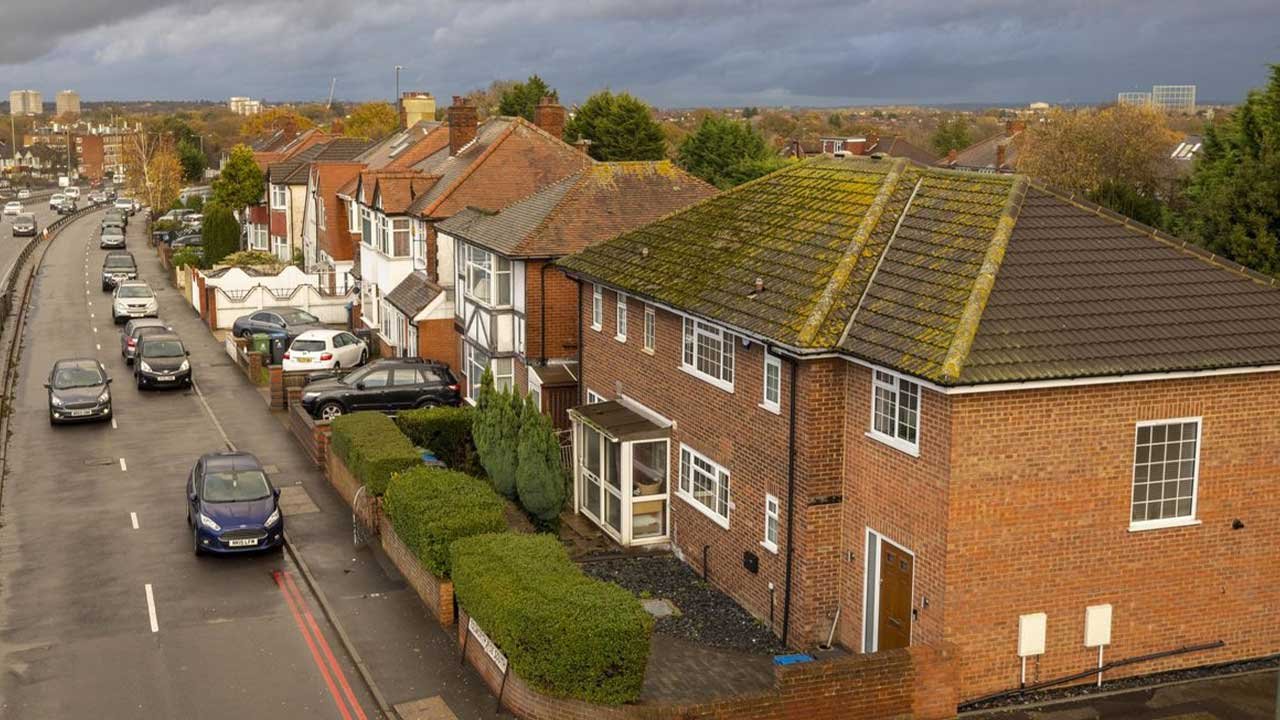
    According to mortgage lender Halifax, UK house prices witnessed a significant decline last month on an annual basis, marking the fastest rate of decrease in 12 years.

    The rising interest rates are expected to exacerbate the challenges faced by the housing market. Halifax reported a year-on-year drop of 2.6 per cent in house prices for June, following a 1.1 per cent decrease in May. This decline represents the largest fall since June 2011. On a monthly basis, prices dropped by 0.1 per cent in June, following a 0.2 per cent decrease in May.

    Kim Kinnaird, the director of Halifax Mortgages, explained that the substantial annual decline can be attributed to the comparison with the peak in house prices observed around a year ago, coupled with relatively minimal price movements in recent months.

    However, the surge in mortgage costs driven by mounting expectations for the Bank of England to combat inflation through increased interest rates suggests that the housing market will face further challenges in the coming months.

    Kinnaird stated that predicting the depth and duration of the downturn in house prices remains challenging, but the possibility of decreasing inflation may provide some support. Kinnaird also noted that the anticipation of a peak Bank Rate exceeding 6 per cent in the foreseeable future implies that mortgage rates will likely remain elevated for an extended period, contributing to ongoing financial strain for households.

    Investors have recently speculated that persistent inflation will prompt the Bank of England to raise interest rates to their highest level in 25 years, reaching 6.5 per cent by December. In response to soaring funding costs, various lenders, including Halifax, a subsidiary of Lloyds Bank, and other prominent institutions, have repeatedly adjusted their home loan offerings in a race to keep pace.

    Historical data indicates that significant increases in swap rates, which influence mortgage funding expenses, often foreshadow substantial declines in housing starts. This conclusion is supported by a Reuters analysis covering the past 35 years.

    Halifax highlighted that the largest decrease in house prices occurred in the southeast of England. London experienced a decline of 2.6 per cent in annual terms, marking the most substantial drop since October 2009.

  • Rising inflation forces over 80% of Pakistanis to reduce monthly expenses

    Rising inflation forces over 80% of Pakistanis to reduce monthly expenses

    A recent survey conducted by PulseConsultant in the month of May has shed light on the significant increase in downtrading among urban Pakistanis, attributed to the high inflation rate. The study surveyed more than 1,360 respondents across the top 12 cities of Pakistan.

    The findings of the study reveal a notable shift in consumer behavior and attitude towards purchasing and consumption patterns in light of the current inflation wave. As prices continue to soar, many respondents have altered their buying preferences to cope with the economic challenges.

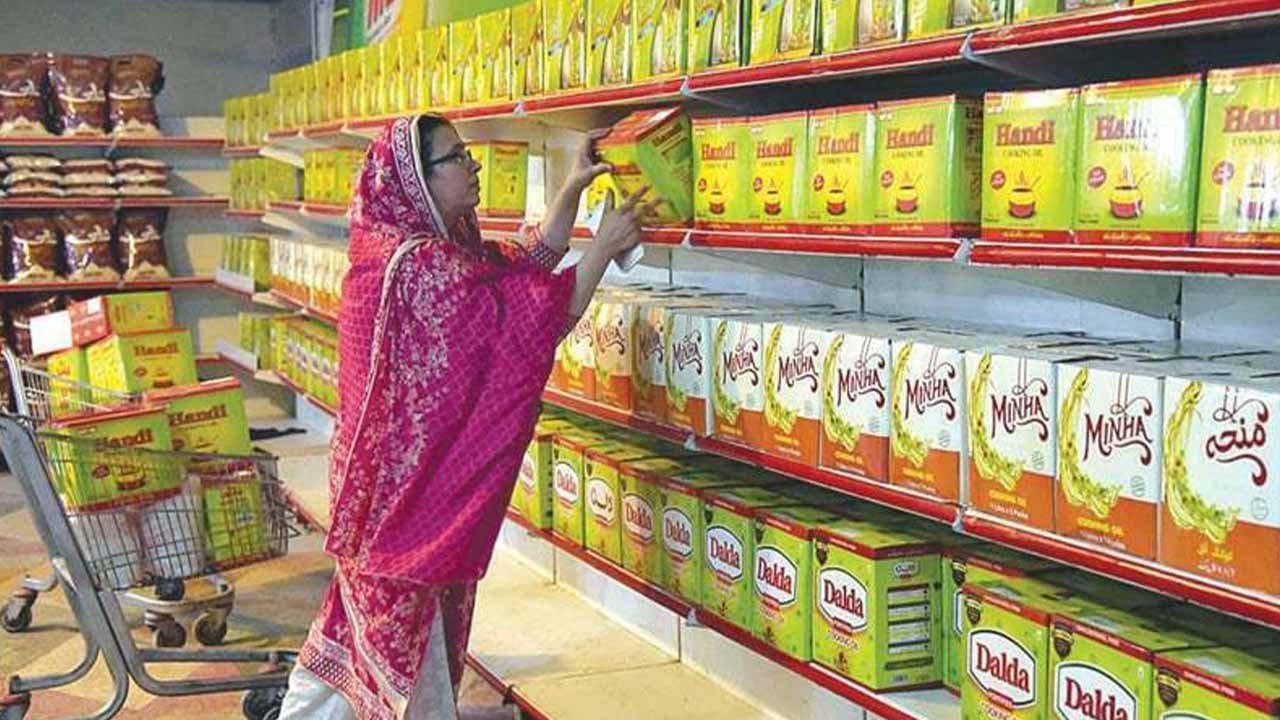
    According to the study, 55 per cent of respondents reported that they have switched from expensive brands to more affordable ones. This percentage represents a considerable increase from the previous month of April, where the trend stood at 45 per cent. This shift highlights the growing financial strain faced by consumers, prompting them to seek cost-effective alternatives.

    Moreover, the data indicates a decline in the phenomenon of purchasing the same brands but reducing the quantity. In April, 46 per cent of respondents claimed to be adopting this strategy, whereas in May, the number dropped significantly to 38 per cent, showing an 8 per cent decrease. This suggests that consumers are finding it increasingly difficult to maintain their previous consumption habits.

    In terms of monthly home purchases, the study reveals that 81 per cent of respondents reported a reduction in May, marking a 3 per cent increase compared to April when the figure was 78 per cent. This indicates that consumers are actively curtailing their household expenses in response to the inflationary pressures.

    To gain a deeper understanding of consumer behavior and attitudes towards the current inflation wave, PulseConsultant invites individuals to join their syndicated research initiative. The study aims to gauge the impact of inflation on purchasing and consumption behaviors across 40+ categories, focusing on five parameters: consumption increase/decrease, brand switching, quantity reduction while retaining the brand, changing the stock keeping unit (SKU) while retaining the brand, and category consumption drop.

    The research methodology involves face-to-face interviews with a sample size of 1,704 individuals across the top 17 cities in Pakistan. The gender distribution comprises 30 per cent males and 70 per cent females, while the age group considered is 22-55 years. The socioeconomic classes targeted range from SEC A-D. The research is scheduled to take place over a period of four weeks.

    As inflation continues to affect the purchasing power of consumers in urban Pakistan, the study by PulseConsultant aims to shed light on the evolving trends and behaviors within the market. The findings will help businesses and policymakers make informed decisions to navigate the challenging economic landscape and cater to the changing needs of consumers.