Tag: financing

  • World Bank approves $149.7 million financing for key projects in Pakistan

    World Bank approves $149.7 million financing for key projects in Pakistan

    The World Bank’s Board of Executive Directors has greenlit a significant sum of $149.7 million in financing for Pakistan, marking a milestone in bolstering the nation’s development efforts.

    The approval, granted on Friday, will allocate funds to support two vital projects aimed at enhancing the country’s infrastructure and digital landscape.

    According to a press statement released by the international financial institution, a substantial portion of the funding, totaling $78 million, has been earmarked for the Digital Economy Enhancement Project (DEEP).

    This initiative seeks to bolster digitally enabled public services delivery for both citizens and businesses, thereby fostering greater accessibility and efficiency.

    Simultaneously, an allocation of $71.7 million has been designated as second additional financing for the Sindh Barrages Improvement Project. This endeavor aims to fortify resilience against floods while enhancing the reliability, safety, and management of the Sindh barrages, crucial components of Pakistan’s water management infrastructure.

    Najy Benhassine, the World Bank Country Director for Pakistan, emphasised the imperative of fortifying infrastructure in the wake of catastrophic events such as the floods of 2022. He underscored the importance of bolstering barrages and their management to mitigate the impact of such disasters effectively.

    Additionally, Benhassine highlighted the significance of nurturing Pakistan’s burgeoning digital economy. He stressed that fostering connectivity and access to government and financial services is pivotal for economic and social development, particularly for marginalised groups like women and entrepreneurs.

    The Digital Economy Enhancement Project (DEEP) aims to develop robust digital authentication and data-sharing platforms.

    These platforms will enable Pakistan to respond more effectively to shocks, deliver enhanced e-government services, and facilitate regulatory reforms to promote private participation in the sector while strengthening personal data protection and online safety.

    Moreover, the project endeavors to promote financial inclusion, particularly among women, by facilitating access to banking services and credit through smartphone applications. It also seeks to address barriers such as limited mobility and digital literacy, ensuring inclusivity in the digital realm.

    Shan Rehman, Task Team Leader for the project, emphasised the comprehensive nature of the initiative, which adopts a holistic approach to digital transformation. He emphasised the importance of inclusivity and trust in digital platforms to meet the evolving needs of the populace.

    Meanwhile, the second additional financing for the Sindh Barrages Improvement Project (SBIP) aims to complete and commission rehabilitation works for barrages, including Guddu and Sukkur. Additionally, it seeks to enhance the management of three barrages in Sindh, namely Guddu, Sukkur, and Kotri.

    Francois Onimus, Task Team Leader for the SBIP, stressed the critical role of barrages in ensuring the livelihoods and climate-resilience of the Sindh Province. He highlighted the project’s focus on bolstering canal systems fed by these barrages, thereby mitigating the adverse impacts of extreme weather events.

    In essence, the approval of financing for these projects underscores the World Bank’s commitment to supporting Pakistan’s development agenda, spanning both infrastructure and digital innovation, in its journey towards sustainable growth and resilience.

  • World Bank greenlights $350 million for Pakistan’s fiscal reforms

    World Bank greenlights $350 million for Pakistan’s fiscal reforms

    The Board of Executive Directors of the World Bank gave its approval on Wednesday for a financing package of $350 million to support Pakistan’s fiscal and competitiveness reforms.

    This funding is allocated for the Second Resilient Institutions for Sustainable Economy (RISE-II) Operation, with the primary goal of strengthening fiscal management and promoting competitiveness for sustainable and inclusive economic growth, according to a statement from the World Bank.

    Najy Benhassine, the World Bank Country Director for Pakistan, stressed the urgent need for fiscal and structural reforms in Pakistan to restore macroeconomic balance and establish the groundwork for sustainable growth.

    He highlighted that RISE-II builds upon previous phases of tax, energy, and business climate reforms, aiming to generate additional revenues, improve expenditure targeting, and stimulate competition and investment.

    The RISE-II Operation is designed to enhance fiscal management by improving fiscal policy coordination, increasing debt transparency and management, strengthening property taxation, and enhancing the financial viability of the power sector.

    Additionally, the operation seeks to boost growth and competitiveness by reducing the cost of tax compliance, improving financial sector transparency, promoting digital payments, and facilitating exports through reduced import tariffs.

    Derek H. C. Chen, Task Team Leader of the operation, emphasised the crucial opportunity for Pakistan to address long-standing structural distortions in its economy after the upcoming general elections.

    Failing to seize this opportunity, he warned, could lead the country back into stop-and-go economic cycles.

    Recently, the World Bank projected a decrease in remittance flows to Pakistan, estimating a decline to $24 billion in 2023 and a further drop below $22 billion with a 10 per cent decline in 2024.

    The report attributed this trend to growing economic turmoil, a balance of payment crisis, and high debt, resulting in a loss of public confidence and a shift of remittances from formal to informal channels.

    Addressing Pakistan’s economic challenges, Martin Raiser, the World Bank’s Regional Vice President for South Asia, noted difficult situations, floods, and climate change.

    He highlighted that the country is trapped in a low-growth scenario with poor human development outcomes and increasing poverty. Raiser urged Pakistan to make crucial decisions for a brighter future, emphasising the need for difficult but necessary steps.

    In its October report, ‘South Asia Development Update Towards faster, cleaner growth,’ the World Bank projected positive growth for Pakistan in fiscal years 2023–24, albeit at a modest rate of 1.7 per cent.

    The report underscored the country’s dependence on capital inflows to finance substantial fiscal and current account deficits.

  • Fitch and Moody’s: IMF loan provides temporary relief for Pakistan, but risks remain

    Fitch and Moody’s: IMF loan provides temporary relief for Pakistan, but risks remain

    Fitch Ratings and Moody’s Investors Service issued warnings on Monday regarding Pakistan’s financial sustainability, despite the recent acquisition of a much-needed $3 billion lifeline from the International Monetary Fund (IMF).

    Last week, Pakistan signed a short-term (nine-month) loan programme worth $3 billion with the IMF, as the previous $7 billion programme was prematurely ending on the same day.

    The objective of the new loan programme is to provide the necessary foreign exchange to reopen imports, support listed companies in gradually resuming partially closed production, and stimulate economic activities within the country.

    Additionally, this programme serves as a signal to other donor agencies and friendly nations, which had pledged $9 billion at a Geneva meeting in January 2023, to extend new financing to Islamabad.

    However, the two global rating agencies caution that risks persist for Pakistan’s economy, particularly as the government faces a daunting $25 billion debt repayment challenge in the upcoming year starting in July.

    Krisjanis Krustins, Fitch’s Director of Sovereigns for APAC, emphasised that Pakistan will require significant additional financing beyond IMF disbursements to meet its debt obligations and support an economic recovery.

    While the IMF likely sought and received assurances for such financing, there remains a risk that it could prove insufficient, especially if current account deficits widen again.

    In order to secure the initial agreement with the IMF, Pakistan had to implement measures such as tax increases, spending cuts, and raising its primary interest rate to a historical peak.

    Although the markets responded positively to this initial agreement, leading to a significant surge in stocks and improved performance of dollar bonds, it still awaits approval from the IMF Executive Board.

    Moody’s analyst Grace Lim, based in Singapore, expressed doubts about Pakistan’s ability to secure the full $3 billion IMF financing during the stand-by period of the loan programme. Lim stated that it remains uncertain whether the Pakistani government will be able to secure the complete amount.

    Furthermore, she highlighted that the government’s commitment to implementing ongoing reforms will be tested as the country approaches elections scheduled for October 2023.

    It is worth noting that Pakistan had previously obtained a $1.1 billion loan in August, which was subsequently halted due to Islamabad’s failure to comply with certain stipulated conditions.

    According to Moody’s, the towering $25 billion debt repayment comprises both principal and interest, amounting to nearly seven times Pakistan’s foreign exchange reserves.

    Lim further added that only after the elections will it become clear whether the country will be able to enter into another IMF programme.

    Until a new programme is agreed upon, Pakistan’s ability to secure loans from other bilateral and multilateral partners in the long term will be severely limited, she cautioned.

  • Pakistan’s foreign exchange reserves get a boost as China rolls over $1 billion loan

    Pakistan’s foreign exchange reserves get a boost as China rolls over $1 billion loan

    In a significant development, China has rolled over a $1 billion loan to Pakistan, bolstering the country’s foreign exchange reserves held by the State Bank of Pakistan (SBP). This move comes as a much-needed relief for cash-strapped Pakistan, which has been grappling with a severe liquidity crunch and the looming expiration of its International Monetary Fund (IMF) programme.

    Pakistan’s Finance Minister Ishaq Dar said that the $1 billion loan from China would be received on Monday. Additionally, negotiations are underway with the Bank of China for a loan amounting to $300 million. Pakistan is also set to benefit from the dollars obtained through its swap agreement with China.

    Prior to this infusion of funds, the SBP and commercial banks jointly held foreign exchange reserves amounting to $9.4 billion as of June 9. With the $1 billion loan, the reserves will rise to $10.4 billion, providing some stability to Pakistan’s economic situation.

    The IMF has made external financing a prerequisite for Pakistan, emphasising the importance of securing additional funds. In an effort to address its financial challenges, Pakistan had approached China to refinance commercial loans worth $1.3 billion. However, without the revival of the IMF programme, the SBP’s foreign exchange reserves were at risk of plummeting to less than $3 billion.

    Despite these positive developments with China, Pakistan is still struggling to secure external financing in a timely manner, primarily due to ongoing political instability. The country’s fragile economy, valued at $350 billion, continues to be in turmoil, with financial woes exacerbating the situation. The delayed agreement with the IMF has further compounded the need for crucial funding to avoid the risk of default.

    Negotiations between the Pakistani government and the IMF have been ongoing since the end of January to resume the $1.1 billion loan tranche that has been on hold since November. This loan is part of a larger $6.5 billion Extended Fund Facility agreed upon in 2019. The impending challenge lies in repaying $900 million to multilateral creditors, which includes both principal and mark-up repayments, by the end of June 2023.

    Pakistan remains hopeful that these recent developments with China will provide some respite in the face of its economic challenges. However, the government must continue its efforts to secure external financing and navigate through the political instability to ensure long-term stability and growth for the country’s economy.

  • World Bank commits $213 million for Balochistan’s flood recovery and climate resilience

    World Bank commits $213 million for Balochistan’s flood recovery and climate resilience

    The Board of Executive Directors of the World Bank has granted $213 million in funding to Balochistan for the purpose of improving livelihoods, essential services, and risk protection in communities that were affected by the devastating floods in 2022.

    This financial assistance is part of a larger program established in collaboration with the government to address the aftermath of the floods and build a climate-resilient Pakistan.

    Najy Benhassine, the World Bank Country Director for Pakistan, expressed the organization’s commitment to closely cooperate with the Government of Balochistan in supporting the affected communities. The World Bank aims to provide livelihood support and rehabilitate irrigation and flood protection infrastructure.

    These efforts will not only restore the livelihoods of the affected population but also enhance their resilience to potential future climate-related disasters and natural hazards. The project aligns with the comprehensive package of post-flood rehabilitation and resilient reconstruction program agreed upon with the authorities.

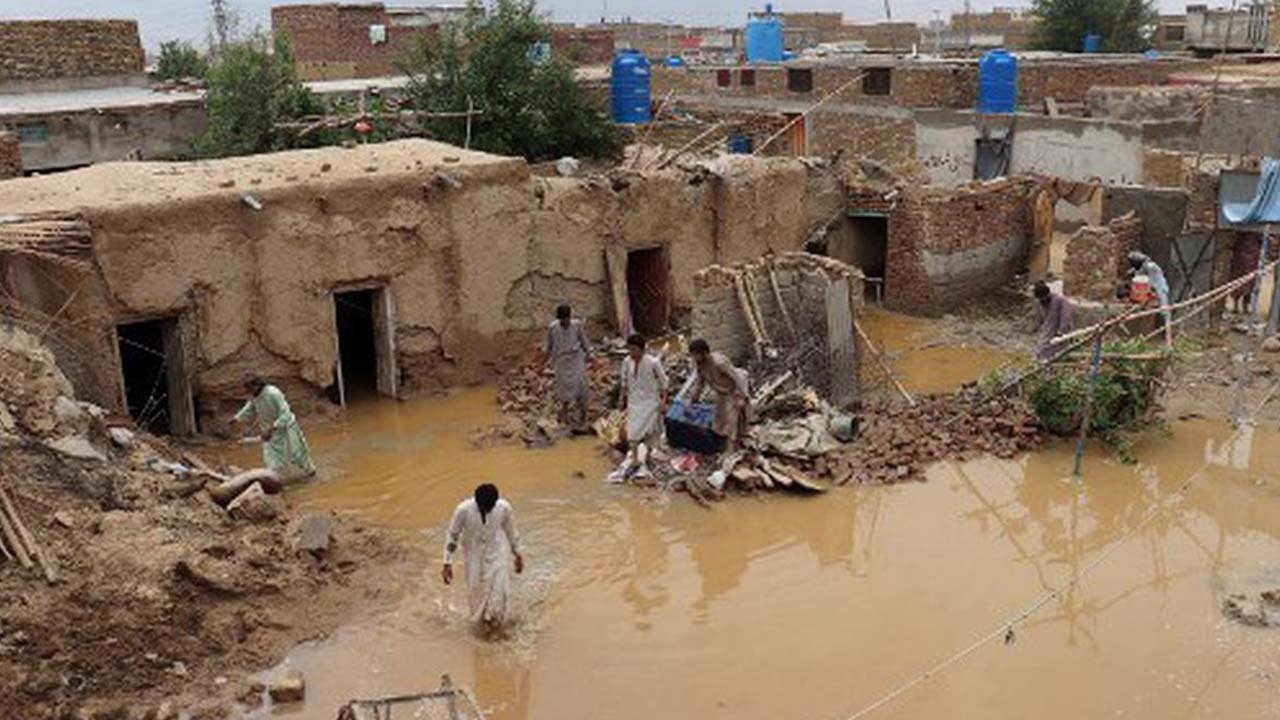
    The floods of the previous year were a result of record monsoon rains in the southern and southwestern regions of Pakistan, compounded by glacial melt in the northern areas. The calamity affected nearly 33 million people in the country, which has a population of 220 million. Tragically, the floods claimed over 1,700 lives and caused substantial damage to homes, crops, bridges, roads, and livestock.

    The Integrated Flood Resilience and Adaptation Project (IFRAP) outlined by the World Bank will provide housing reconstruction grants to approximately 35,100 homeowners. It will also focus on restoring essential services by rehabilitating damaged community infrastructure and facilities, such as water supply systems, irrigation networks, roads, and community facilities.

    Balochistan, with its geographical location, socioeconomic background, and vulnerability to climate change, faces significant risks from natural disasters. Yoro Sidibe, a Senior Water Specialist at the World Bank, emphasized that the project aims to provide economic opportunities to the affected communities while ensuring social inclusion and participation. Additionally, it will enhance institutional capacity for preparedness and response to future disasters.

    The World Bank expects that the Integrated Flood Resilience and Adaptation Project will benefit approximately 2.7 million people in selected communities across Balochistan’s calamity-declared districts. The project’s objectives include the restoration of degraded watersheds and the strengthening of institutional capacity at both the provincial and local levels.

  • Pakistani rupee sinks to record low of Rs308 against US dollar in open market

    Pakistani rupee sinks to record low of Rs308 against US dollar in open market

    On Tuesday, the Pakistani currency experienced a significant decline, reaching a new record low of Rs308 against the US dollar in the open market. This marked a 1 per cent decrease, or Rs3, from the previous day’s closing rate, as reported by the Exchange Companies Association of Pakistan.

    Consequently, the disparity between the exchange rates in the open market and the inter-bank market widened considerably, reaching a historic high of Rs21 to a dollar. Just a couple of months ago, this difference was in the range of Rs1-3.

    In inter-bank transactions, the central bank stated that the rupee continued its downward trend for the fifth consecutive working day, dropping by 0.21 per cent, or Rs0.59, to a 12-day low at Rs287.15 against the US dollar.

    There has been speculation in the market that the rupee is facing mounting pressure due to the expanding gap between the demand and supply of the US dollar in the currency market.

    In the meantime, Pakistan’s foreign exchange reserves have been consistently depleting and have now reached a critically low level of $4.3 billion. This is concerning because the country requires a comparatively large amount of foreign currency to cover import expenses and repay foreign debt.

    By the end of June 2023, Pakistan has to repay $3.7 billion in foreign debt. Additionally, it needs another $3.7 billion each month to ensure smooth importation of essential goods.

    Currency dealers in the open market have revealed that commercial banks are purchasing dollars in the informal market (kerb market) to settle international payments made through their clients’ credit cards. Furthermore, individuals are acquiring Saudi riyals and US dollars to cover expenses during the Hajj and Umrah pilgrimages.

    Experts strongly emphasize that the government must persuade the International Monetary Fund (IMF) to resume its $6.7 billion loan programme. Additionally, they urge friendly countries to provide fresh financing, which will help mitigate the risk of defaulting on external debt obligations.

    The resumption of the IMF programme will not only assist Pakistan in averting an imminent default but will also enable the country to attract financing from other global lenders and friendly nations. This new financing will bolster the foreign exchange reserves and aid in the reopening of the partially closed economy.

  • IMF denies seeking $8 billion fresh financing from Pakistan in bailout talks

    IMF denies seeking $8 billion fresh financing from Pakistan in bailout talks

    The International Monetary Fund (IMF) has denied recent reports that it is seeking fresh financing from Pakistan, stating that Pakistan’s external financing requirements have remained unchanged throughout talks with the Fund.

    The clarification comes after a report by the Express Tribune suggested that the IMF had increased its demand for additional financing to $8 billion, up from an unmet condition of $6 billion, in order to ensure debt repayments for the May-December 2023 period.

    According to Reuters, IMF Resident Representative Esther Pérez Ruiz confirmed that the country’s external funding requirements had not changed, and that discussions were centered around a review to unlock $1.1 billion in financing as part of a $6.5 billion IMF package.

    Despite ongoing talks, a staff-level agreement on the review has been delayed since November, and the IMF has reiterated that commitments on external financing from friendly countries will be necessary before it can release bailout funds.

    Pakistan’s central bank reserves currently stand at $4.38 billion, equivalent to barely a month’s worth of imports.

  • Pakistan commits to IMF bailout deal without fuel subsidy scheme

    Pakistan commits to IMF bailout deal without fuel subsidy scheme

    Pakistan has informed the International Monetary Fund (IMF) that it will not be implementing a fuel subsidy programme during ongoing negotiations for a $1.1 billion bailout for the country.

    The IMF has stated that it will continue to engage with the government on the loan, despite increasing political tensions.

    Prime Minister had previously proposed a fuel subsidy scheme in March, which would charge higher rates to affluent consumers to subsidise prices for the poor who have been hit hard by inflation.

    However, the government has now committed not to implement this programme in the current fiscal year or beyond. Instead, it will not introduce new tax exemptions and will allow a market-based exchange rate for the rupee currency.

    The IMF has said that Pakistan needs significant additional financing to complete the long-delayed ninth review of its bailout package.

    Obtaining commitments of significant additional financing is essential before the IMF approves the release of pending bailout funds that are crucial for Pakistan to resolve an acute balance of payments crisis.

    According to Dawn, the State Bank of Pakistan’s reserves fell to $4.38 billon on Thursday, which is barely a month’s worth of imports. The IMF has emphasised that Pakistan faces stagflation, large financing needs, and has been affected by several shocks, including severe floods.

  • IMF seeks further assurances from Pakistan despite Saudi Arabia and UAE confirmation

    IMF seeks further assurances from Pakistan despite Saudi Arabia and UAE confirmation

    The International Monetary Fund (IMF) is seeking further assurances from Pakistan, despite confirmation of financial assistance from Saudi Arabia and the United Arab Emirates (UAE), to ensure that Pakistan has met the condition of arranging $6 billion financing in order to reach a staff-level agreement.

    Nathan Porter, the IMF’s Mission Chief to Pakistan, welcomed the announcement of financial assistance from the two “key” friendly countries, stating that the IMF supports the efforts of the Pakistani authorities. A Pakistani delegation is currently in Washington attending the Spring meetings of the IMF to discuss the revival of the loan programme. Pakistan’s Finance Minister Ishaq Dar was unable to attend due to domestic issues.

    Pakistan had been asked to arrange $6 billion in external financing, which it needed from now until June to avoid default. Saudi Arabia has pledged $2 billion, while the UAE has committed $1 billion, thus reducing the now-required amount to $3 billion. Pakistan’s foreign exchange reserves have fallen to cover barely a month of imports after the IMF funding stalled in November, hit by snags over fiscal policy adjustments after officials of the lender visited Islamabad in February for talks. The IMF programme will disburse another tranche of over $1 billion to Pakistan before it concludes in June.

    IMF’s Director of the Middle East and Central Asia Department, Jihad Azour, during a press conference, briefed the media about the current status of the $6.5 billion programme with Pakistan, saying that Pakistan is at a critical juncture and decisive actions are required to stabilise the economy. Azour emphasized the need for Pakistan to address inflation, reduce the constraints on trade and export, and maintain macroeconomic stability. He also stated that financing is required, and the financing needs are about what is currently in the programme, and the IMF is working with the authorities and bilateral supporters of Pakistan to ensure that the financing needs for the programme and beyond are assured.

    Central bank governor Jameel Ahmad told investors in Washington at the spring meetings of the lender and the World Bank that programme loans from other multilateral agencies await completion of the IMF review. Pakistan is at a critical juncture, and decisive actions are required to stabilise the economy.

  • Pakistan to receive written guarantee from UAE for $1 billion loan

    Pakistan to receive written guarantee from UAE for $1 billion loan

    Pakistan is making progress towards securing a loan from the International Monetary Fund (IMF) with a $1 billion financing pledge from the United Arab Emirates (UAE) expected this week. Sources suggest that the UAE will provide written confirmation of the financing to the IMF through the Finance Secretary during the current annual meeting in Washington.

    To secure external financing for this fiscal year, the IMF has asked Pakistan to seek assurances from friendly countries and multilateral partners for funding its balance of payment gap. In addition to Saudi Arabia’s $2 billion pledge, the agreement with the IMF is also contingent on the UAE’s $1 billion commitment.

    According to sources within the Ministry of Finance, the UAE has finalised the agreement, and as soon as Pakistan receives a written guarantee from the Gulf state, the IMF will also be informed. This development follows requests from Pakistan’s Prime Minister and Finance Minister to UAE officials to complete the necessary prerequisites for the Fund.

    Pakistan is currently facing one of the most severe economic crises in its history, with consumer prices at a record high and interest rates raised to an all-time high. Due to a dollar shortage, the IMF has revised its growth forecast for Pakistan to 0.5% from the earlier estimate of 2%, causing supply chain disruptions and companies to halt production.

    The IMF is also assessing the coalition government’s proposed fuel discount for lower-income groups, which is planned to be financed by raising fuel prices for wealthier motorists. The finance minister has assured that the IMF has received all the required information.

    The finance minister had cancelled his scheduled in-person meetings with IMF officials in Washington but has repeatedly claimed that the staff-level agreement with the lender would be reached soon. Islamabad has been hosting an IMF mission since January to negotiate policy measures and secure $1.1 billion in funding for the cash-strapped economy, which is on the verge of collapse.

    The funds are part of a $6.5 billion bailout package approved by the IMF in 2019, which analysts argue is crucial for Pakistan to avoid defaulting on external payment obligations. The deal will also unlock other financing options to shore up Pakistan’s foreign exchange reserves, which have fallen to four weeks’ worth of import cover and help resolve the balance of payment crisis.