Since the beginning of 2024, there has been an increase in the targeted killing of journalists in Pakistan, where eight journalists have lost their lives so far. Four journalists were killed in May alone, which, according to the Committee to Protect Journalists (CPJ), is the highest number of journalists killed in a single month since 1992.
The topic of discussion in Pakistan is not how to protect those who convey information to the people, but restrictions are being imposed on the sources of information.
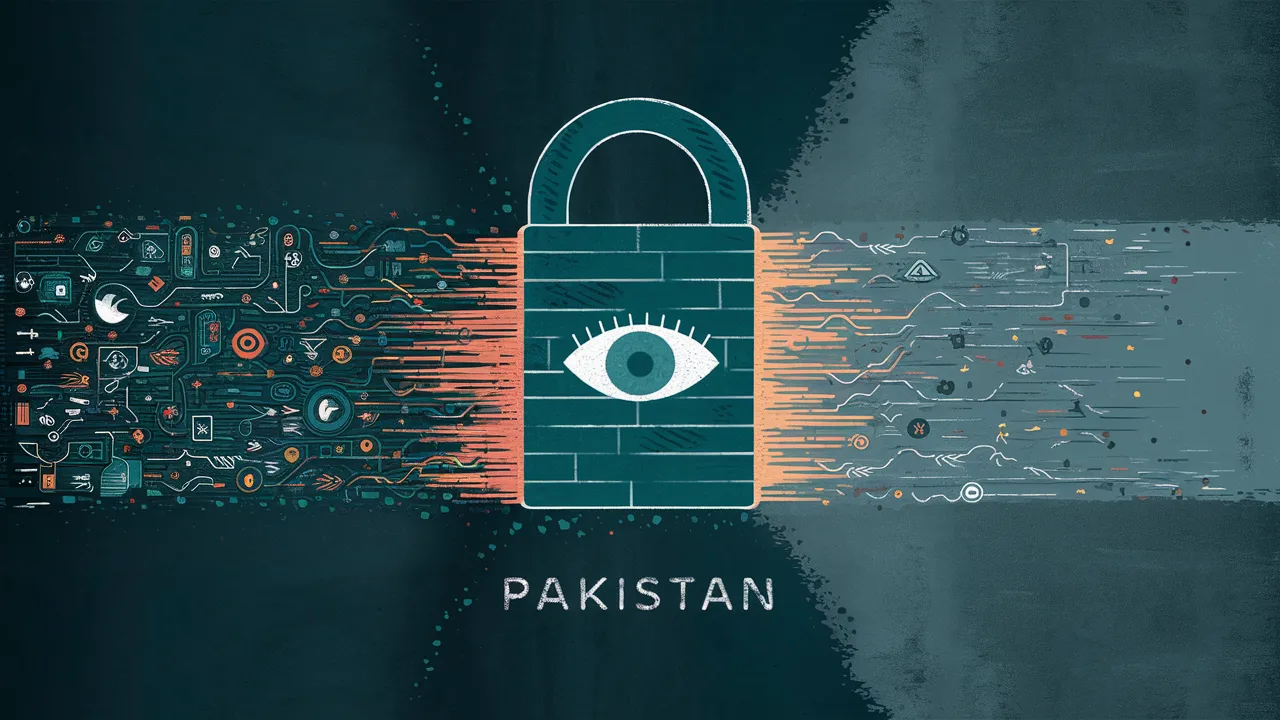
Here, we are talking about implementing a system similar to China’s ‘Firewall’ in Pakistan, which will monitor all online traffic.
Details regarding this firewall are kept secret, and authorities are refusing to comment on the matter. Limited data is being made available to the public, so the information regarding the functioning of this system is very limited.
Why is the government of Pakistan implementing the ‘Firewall’?
According to several news reports, the firewall will use Deep Packet Inspection (DPI) and block IP. DPI can monitor objectionable content through online data packets and track the sender’s IP address as soon as such content is found. This will help the authorities determine the location where the controversial content was created and disseminated.
In other countries, such technology is used to prevent serious crimes such as child pornography. In Pakistan, this technology is likely to be used to suppress ‘anti-state sentiments’.
Use of VPN (Virtual private network)
No one was surprised by this latest attack on human rights in Pakistan. After all, we belong to a country that has a long history of violating human rights in the name of ‘national security’.
However, it is surprising that our policymakers lack knowledge of the digital world. The recent ban on social media platform X is the best example.
Although access to X is restricted in the country, many ordinary citizens and almost all government officials access it through VPNs. This has failed the efforts to ban the social media platform.
The ban has significantly increased the business of VPN service providers internationally. According to a Forbes report, the use of VPN services in Pakistan has increased by more than 100 per cent since the ban, while some reports have seen a 400 per cent increase in the number of new VPN users in Pakistan.
According to a report by Technopedia, a leading digital technology platform, the number of VPN users in China has seen a sharp increase of more than 90 percent since 2022. The report said that VPNs have mainly been successful in “crossing the Great Firewall of China”, similar to the type of technology being speculated to be implemented in Pakistan.
How is this technology a threat to freedom of expression?
If we have evidence of how VPNs bypassed the Chinese firewall, why are Pakistani authorities still investing in such technology?
Freedom of expression has historically been a constant issue for the ruling forces in Pakistan, even though it is an integral part of any developing society. They believe the firewall plan is part of the government’s efforts to stifle dissenting voices.
Although it is too early to say how effective this firewall will be, users will crack it. Pakistan’s civil society has a long history of resisting restrictions on freedom of expression. However, such actions will further undermine public confidence in the government.
Now, the question is why the state is moving in a circle, where instead of devoting its energy to taking action for its people, it is creating conflicts with the subjects.
Ultimately, the current government will make the final decision, but these policies will lead to its downfall.