Tag: Fiscal Consolidation

  • IMF mission holds crucial talks with FinMin Aurangzeb on $3 billion SBA

    IMF mission holds crucial talks with FinMin Aurangzeb on $3 billion SBA

    In a pivotal meeting held on Thursday, Pakistan’s Finance Minister, Muhammad Aurangzeb, engaged in discussions regarding structural reforms and the viability of the energy sector with the visiting International Monetary Fund (IMF) mission.

    The mission’s visit is part of the second review process of the $3 billion Stand-By Arrangement (SBA) established between Pakistan and the international lender.

    Key points of deliberation encompassed various facets of Pakistan’s macroeconomic landscape, including fiscal consolidation efforts by the government, structural reforms, energy sector sustainability, and governance of state-owned enterprises (SOEs).

    Expressing a warm reception, the finance minister underscored the government’s steadfast commitment to collaborating with the IMF to drive forward the reform agenda, aimed at fostering economic growth and bolstering stability across Pakistan.

    During the meeting, Nathan Porter, head of the IMF mission, extended congratulations to Muhammad Aurangzeb on his appointment as the finance minister.

    Anticipations are high that the IMF mission’s visit could culminate in a staff-level agreement regarding the second review of the SBA.

    Since its inception in July 2023, Pakistan has received $1.9 billion out of the allocated $3 billion under the nine-month programme.

    Aurangzeb, articulating the government’s stance, outlined intentions to explore the possibility of acquiring a more extensive and prolonged Extended Fund Facility (EFF) within the IMF framework, with the overarching objective of attaining macroeconomic stability.

    Officials from Pakistan, including Finance Minister Muhammad Aurangzeb and Energy Minister Musadik Malik, apprised the IMF team of the concerted efforts undertaken to implement the prescribed reforms, including the adjustment of energy tariffs.

    An official from the Finance Division, speaking on anonymity, disclosed the IMF’s acknowledgment of Pakistan’s strides in meeting quarterly programmeme targets under the SBA.

    Simultaneously, discussions are underway to chart the trajectory of the subsequent programmeme, with deliberations leaning towards a more extensive endeavour valued at approximately $8 billion.

    Minister Malik elaborated on the government’s energy reform agenda, highlighting recent adjustments in electricity and gas prices aligned with the stipulated schedule.

    The recent levy hike on petrol and diesel, coupled with the augmentation of gas tariffs for domestic consumers, underscores Pakistan’s commitment to fulfilling key conditions outlined in the IMF’s final review.

    Economic analysts anticipate a seamless final review process, citing Pakistan’s commendable adherence to the IMF’s performance targets as a harbinger of success.
  • Pakistan informs IMF of preparedness to address near-term challenges

    Pakistan informs IMF of preparedness to address near-term challenges

    In a recent communication to the International Monetary Fund (IMF), the government has underscored its preparedness to address potential near-term challenges, signalling a commitment to maintaining economic stability.

    The disclosure comes as part of the IMF’s first review under the stand-by arrangement.

    The government, as revealed in the report, stands ready to respond decisively should near-term price pressures reemerge. This includes addressing stronger-than-expected second-round effects on core inflation and potential pressures on the exchange rate amid the normalisation of the current account.

    Amid signs of weaker demand, positive supply developments, and decreasing pressures on the exchange rate, the government anticipates a notable decline in inflation in the coming months.

    As a result, the policy rate was maintained at 22 per cent during the latest Monetary Policy Committee (MPC) meeting held on October 30. However, the government reiterated its readiness to respond promptly if there is a resurgence of near-term price pressures.

    The primary objective is to ensure a clear downward trajectory for inflation and inflation expectations. The pace of future adjustments will be contingent on various factors, including inflation data, exchange rate developments, external position strength, and the fiscal-monetary policy mix.

    The government aims to keep the real policy rate in positive territory on a forward-looking basis, signalling a commitment to bringing inflation within the target band by fiscal year 2026.

    To enhance monetary policy transmission, the interest rate on major refinancing schemes, specifically the EFS and LTFF, will continue to be linked to the policy rate, with a spread of no more than 3 per centage points, as per the announcement by Pakistani authorities.

    The report emphasised the importance of vigilance, highlighting that despite the return of the forward-looking real policy rate to positive territory, caution is necessary due to near-term risks.

    With inflation expectations not yet firmly anchored, the Monetary Policy Committee is urged to respond robustly and promptly should inflationary pressures resurface.

    Maintaining a positive real policy rate during a period of easing inflation and promptly addressing signs of new demand pressures or rising inflation expectations is seen as crucial.

    This strategy aims to re-anchor inflation expectations and guide down core inflation from the second half of fiscal year 2024 onwards, contingent on the absence of a resumption in administrative import compression.

    The report projects a significant decline in headline inflation through fiscal years 2025–26, aligning within the targeted 5–7 per cent range by fiscal year 2026. This outlook is supported by fiscal consolidation efforts and the normalization of global commodity prices.

    While the IMF staff views the current stance as broadly appropriate given weak domestic demand, the report suggests that the MPC should remain prepared to respond resolutely if near-term price pressures reemerge, including second-round effects.

  • Pakistan’s credit rating maintained by Fitch at ‘CCC’ amidst financing challenges

    Pakistan’s credit rating maintained by Fitch at ‘CCC’ amidst financing challenges

    Fitch Ratings, a US-based credit rating agency, has maintained Pakistan’s Long-Term Foreign-Currency Issuer Default Rating (IDR) at ‘CCC,’ according to a statement released on Wednesday.

    The ‘CCC’ rating indicates significant external funding risks due to elevated medium-term financing requirements, notwithstanding some stabilisation and Pakistan’s commendable performance on its current standby arrangement (SBA) with the International Monetary Fund (IMF), as explained by Fitch.

    While anticipating scheduled elections in February and prompt negotiation for a subsequent IMF programme after the SBA concludes in March 2024, Fitch cautioned about potential delays and uncertainties regarding Pakistan’s ability to achieve this.

    Fitch emphasised the potential vulnerability of recent reforms and the prospect of renewed political volatility in the wake of the upcoming elections. Regarding the ongoing IMF programme, Fitch expressed confidence in the unproblematic approval of the recent staff-level agreement (SLA) by the IMF board.

    Fitch’s assessment highlighted the positive outcomes of the programme review, including sustained fiscal consolidation, energy price reforms despite public backlash, and strides towards adopting a more market-driven exchange rate regime.

    However, Fitch also pointed out risks associated with policy implementation, citing a historical pattern of parties across the political spectrum in Pakistan failing to implement or reversing reforms agreed upon with the IMF.

  • State Bank of Pakistan maintains policy rate at 22% despite inflation concerns 

    State Bank of Pakistan maintains policy rate at 22% despite inflation concerns 

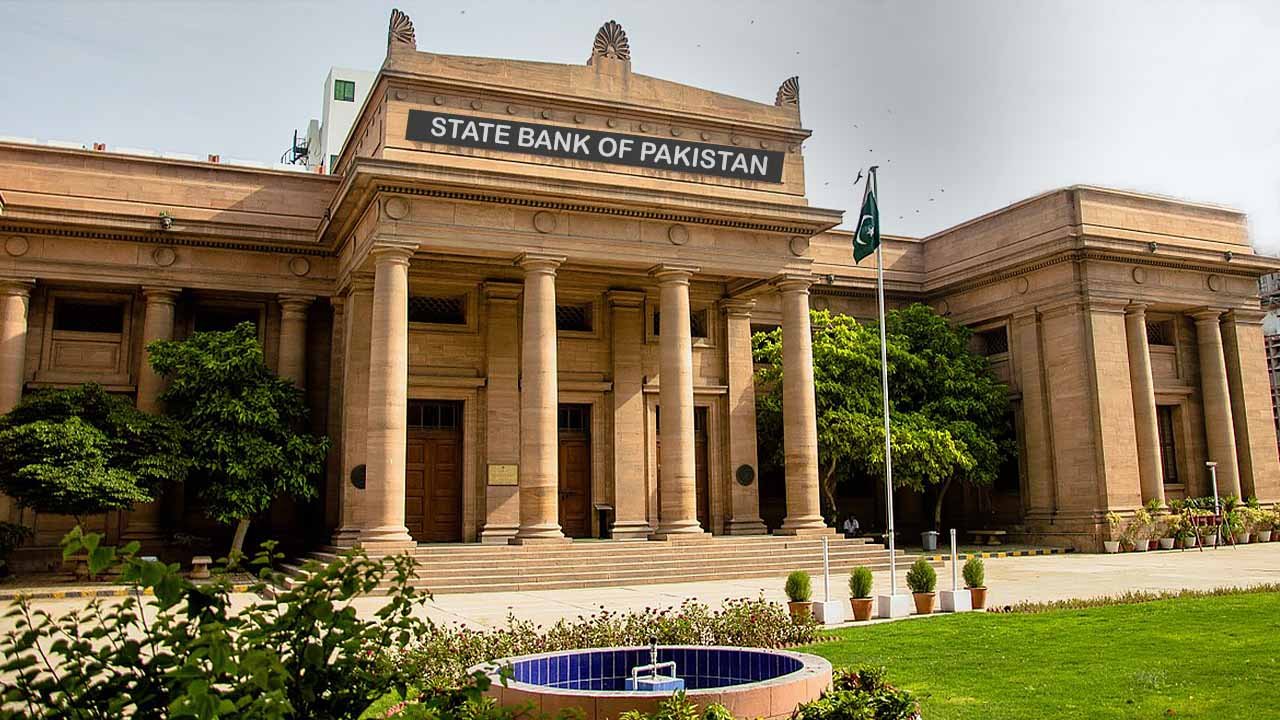
    The Monetary Policy Committee (MPC) of the State Bank of Pakistan (SBP) convened today to deliberate on the prevailing economic conditions and has resolved to maintain the policy rate at 22 per cent for the fourth consecutive meeting. 

    This decision aligns with market expectations, as a majority of market participants were in agreement regarding the rate remaining unchanged. 

    The Monetary Policy Statement issued by the central bank indicates that the decision takes into consideration the impact of the recent increase in gas prices on November’s inflation, which exceeded the MPC’s earlier projections.  

    The Committee acknowledged the potential implications of this on the inflation outlook while also noting offsetting factors such as the recent decline in international oil prices and the improved availability of agricultural produce. 

    Additionally, the Committee conducted an assessment indicating that the real interest rate remains positive over a 12-month forward-looking horizon and anticipates a downward trajectory for inflation. 

    Key developments since the October meeting were considered by the MPC. Firstly, the successful completion of the staff-level agreement for the first review under the IMF SBA programme, which is expected to unlock financial inflows and enhance the SBP’s foreign exchange serves, 

    Secondly, the quarterly GDP growth for Q1–FY24 met the MPC’s expectations for a moderate economic recovery. 

    Lastly, consumer and business confidence surveys reflected positive sentiment improvements. Lastly, core inflation persists at elevated levels, showing a gradual reduction. 

    Considering these developments, the Committee determined that the existing monetary policy stance is conducive to achieving the inflation target of 5-7 per cent by the end of FY25. 

    The Committee emphasised that this assessment is contingent on the sustained implementation of targeted fiscal consolidation and the timely realisation of planned external inflows. 

  • Pakistan to receive $1.5 billion from international lenders following IMF approval

    Pakistan to receive $1.5 billion from international lenders following IMF approval

    Pakistan is poised to secure funds amounting to $1.5 billion from global lenders, contingent on the approval of the loan tranche under the $3 billion Stand-By Arrangement (SBA) by the International Monetary Fund (IMF), as highlighted by Dr Shamshad Akhtar, the caretaker finance minister, in a recent interview with a local news channel.

    It’s noteworthy that the IMF granted preliminary approval on November 15, 2023, for the disbursement of the upcoming loan tranche within the programme.

    Upon receiving approval, Pakistan will gain access to SDR 528 million, equivalent to approximately $700 million. This will contribute to the cumulative disbursements under the program reaching almost $1.9 billion.

    The agreement underscores the authorities’ commitment to advancing planned fiscal consolidation, expediting cost-reducing reforms in the energy sector, completing the transition to a market-determined exchange rate, and pursuing reforms in state-owned enterprises and governance.

    These measures aim to attract investment, support job creation, and simultaneously enhance social assistance.

    Nathan Porter remarked, “Anchored by the stabilization policies under the SBA, a nascent recovery is underway, supported by international partners and indications of improved confidence.”

    He added that the steadfast execution of the FY24 budget, ongoing adjustments of energy prices, and renewed inflows into the foreign exchange (FX) market have alleviated fiscal and external pressures.

  • State Bank of Pakistan maintains 22% policy rate in line with market consensus

    State Bank of Pakistan maintains 22% policy rate in line with market consensus

    Following the consensus in the broader market, the Monetary Policy Committee (MPC) of the State Bank of Pakistan (SBP) announced on Monday that it would maintain the key policy rate at 22 per cent, as stated in their press release.

    The Committee recognised that headline inflation, as expected, increased in September 2023 but anticipates a decline in October, followed by a sustained decrease, particularly in the latter half of the fiscal year.

    While the MPC acknowledged potential risks to the FY24 inflation outlook and the current account due to recent global oil price volatility and forthcoming gas tariff increases in November 2023, they also identified mitigating factors.

    These factors include targeted fiscal consolidation in the first quarter, enhanced availability of crucial commodities in the market, and the alignment of interbank and open market exchange rates.

    The MPC emphasised that the real policy rate, looking forward over a 12-month horizon, remains significantly positive.

    This is deemed appropriate to achieve the medium-term inflation target of 5-7 per cent by the end of FY25, contingent upon the sustained fiscal consolidation and timely realisation of planned external inflows, as articulated in the MPC statement.