Tag: fiscal deficit

  • Pakistan’s fiscal deficit falls to 6.8% of GDP in FY24

    Pakistan’s fiscal deficit falls to 6.8% of GDP in FY24

    In the fiscal year 2023-2024, Pakistan’s fiscal deficit decreased to 6.8 per cent of GDP, down from 7.7 per cent the previous year, according to data from the Finance Ministry.

    In nominal terms, however, the fiscal deficit expanded to Rs7.21 trillion, up from Rs6.52 trillion the year before. Despite this, the country achieved a primary surplus of Rs952.92 billion, equivalent to 0.9 per cent of GDP, in contrast to a primary deficit of Rs825.53 billion, or 1.0 per cent of GDP, in FY23.

    To address the fiscal deficit, the government secured Rs6.89 trillion through domestic borrowing and an additional Rs320.7 billion through external loans. This compares to the previous year when the entire deficit was covered by Rs7.2 trillion in domestic borrowing, and Rs679.85 billion in external loans were repaid.

    On the revenue side, the government collected Rs13.27 trillion (12.5 per cent of GDP) in FY24, up from Rs9.63 trillion (11.4 per cent of GDP) in FY23. Tax revenue constituted approximately Rs10.1 trillion (9.5 per cent of total revenue), while non-tax revenue amounted to Rs3.18 trillion.

    Government expenditure totalled Rs20.48 trillion (19.3 per cent of GDP) in FY24, an increase from Rs16.15 trillion (19.1 per cent of GDP) the previous year.

    Nearly 90.7 per cent of this expenditure, or Rs18.57 trillion, was allocated to current expenditures, which included mark-up payments (Rs8.16 trillion), defence (Rs1.86 trillion), and pensions (Rs807.8 billion).

  • Pakistan’s central govt debt hits record Rs67.82 trillion in May 2024

    Pakistan’s central govt debt hits record Rs67.82 trillion in May 2024

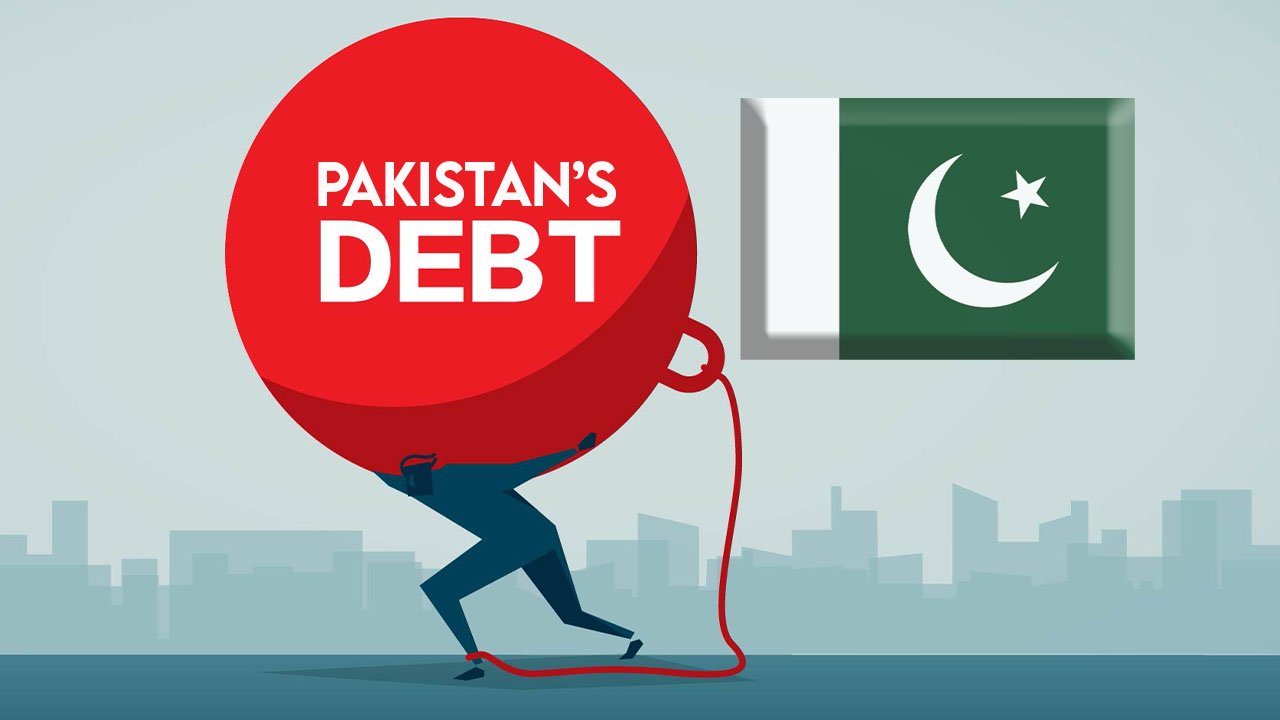
    In May 2024, the central government’s total debt reached a record high of Rs67.82 trillion, marking a 15.01 per cent increase compared to Rs58.96 trillion a year earlier, according to data released by the State Bank of Pakistan (SBP).

    Sequentially, the central government debt also rose by 2.62 per cent from April 2024, when it stood at Rs66.08 trillion.

    This significant year-on-year rise in debt is mainly attributed to increased borrowing from both domestic and foreign sources, aimed at managing the fiscal deficit.

    According to details provided by the SBP, the majority of the debt was domestic, amounting to Rs46.21 trillion. This includes Rs36.6 trillion in long-term debt, Rs9.52 trillion in short-term debt, and an additional Rs86.79 billion raised through Naya Pakistan Certificates.

    Comparing year-on-year figures, the domestic debt showed a substantial increase of 24.7 per cent, with sequential growth of 3.88 per cent.

    By the end of May 2024, the government’s long-term debt had risen by 24.14 per cent year-on-year to Rs36.6 trillion, up from Rs29.48 trillion recorded a year earlier, with a month-on-month increase of 3.91 per cent.

    Similarly, short-term debt saw a notable increase of 28.09 per cent year-on-year, reaching Rs9.52 trillion in the review period.

  • Pakistan’s ambitious FY25 Budget could secure IMF deal, says Fitch

    Pakistan’s ambitious FY25 Budget could secure IMF deal, says Fitch

    On Tuesday, Fitch Ratings characterised Pakistan’s budget for the fiscal year 2024-25 as “ambitious,” noting that it enhances the likelihood of securing a deal with the International Monetary Fund (IMF).

    While Fitch acknowledged the uncertainty in meeting the fiscal targets, it highlighted that even partial implementation of the budget would likely narrow the fiscal deficit, thereby reducing external pressures, albeit at a potential cost to economic growth.

    “The FY25 budget draft, released on June 13, is the first presented by Prime Minister Shehbaz Sharif’s coalition government. It projects a headline deficit of 5.9 per cent of GDP and a 2.0 per cent primary surplus, compared to the FY24 estimates of 7.4 per cent and 0.4 per cent respectively, through wide-ranging tax increases and significant fiscal efforts at the provincial level. The budget includes a notable increase in developmental spending and forecasts growth to accelerate to 3.6 per cent in FY25, up from 2.4 per cent in FY24,” Fitch stated in its commentary.

    Pakistan’s Finance Minister Muhammad Aurangzeb unveiled the budget last week, targeting a modest 3.6 per cent growth for the upcoming fiscal year. The budget, with a total outlay of Rs18.9 trillion, represents a 30 per cent increase compared to the FY24 budget. Gross revenue receipts are expected to be Rs17.8 trillion, with the Federal Board of Revenue (FBR) taxes projected at Rs12.97 trillion, nearly 38 per cent higher than the previous fiscal year.

    With this ambitious tax target, Islamabad aims to secure the IMF’s approval for a larger and longer-term bailout.

    Fitch Ratings warned that these plans could face significant resistance within parliament from both coalition partners and opposition parties, as well as from broader society. This follows the close outcome of the February elections, which resulted in a weaker-than-expected mandate for the Pakistan Muslim League-Nawaz (PML-N).

    “Our updated fiscal forecasts assume partial implementation and project a primary surplus of 0.8 per cent, factoring in shortfalls in revenue generation and an overshoot in current spending, partly offset by under-execution in development spending,” Fitch added.

    “We believe tight policy settings may depress growth more than the government expects, reducing our growth forecast to 3.0 per cent for FY25, from 3.5 per cent, despite some improvements in short-term economic indicators. Nonetheless, the FY24 primary deficit is in line with the target, and the authorities have implemented unpopular subsidy reforms over the past year, supporting fiscal credibility.”

    Fitch noted Pakistan’s historically poor track record in sustaining reforms, but acknowledged that the lack of viable alternatives has bolstered support for tough policy decisions in the near term.

    Pakistan completed its nine-month IMF Stand-By Arrangement in April, and in May, the IMF reported “significant progress” towards agreeing on a new Extended Fund Facility (EFF).

    “Government debt is expected to decline to 68 per cent of GDP by the end of FY24 due to high inflation and deflator effects, which offset soaring domestic interest costs. We anticipate inflation and interest costs to decline in tandem, with economic growth and primary surpluses gradually reducing the government debt-to-GDP ratio. The State Bank of Pakistan cut policy rates for the first time in five years on June 10 by 150 basis points to 20.5 per cent. We now forecast FY25 inflation at 12 per cent, and the end-of-year policy rate at 16 per cent,” Fitch detailed.

    Despite stable debt dynamics, Fitch identified external liquidity and funding as Pakistan’s primary credit challenges.

    “We believe a new IMF deal will be agreed upon, underpinning other external funding. However, maintaining the stringent policy settings necessary to keep external financing needs in check and comply with a new EFF could become increasingly challenging,” Fitch stated.

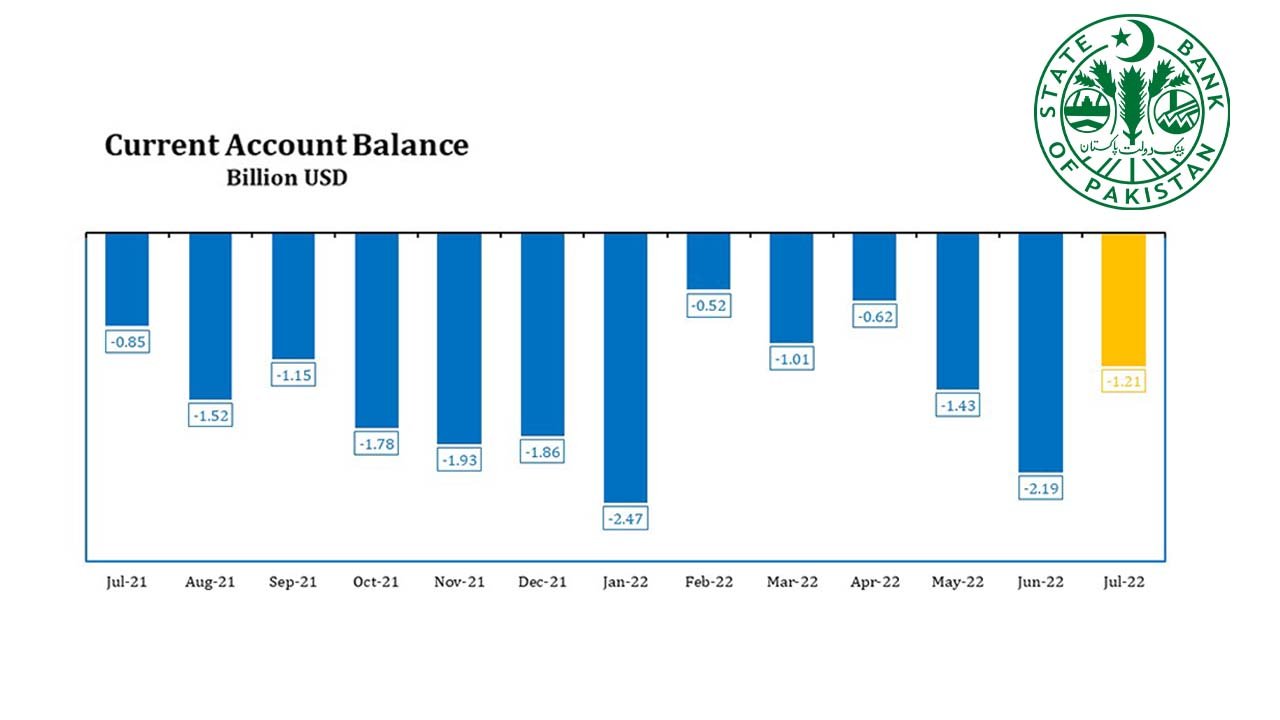
    Pakistan’s external position has improved since February’s election, with the current account deficit on track to narrow to 0.3 per cent of GDP (just USD1 billion) in FY24, down from 1.0 per cent in FY23. This improvement is attributed to subdued domestic demand compressing imports, exchange rate reforms attracting remittance inflows back to the official banking system, and strong agricultural exports.

    Gross reserves, including gold, now stand at USD15.1 billion, covering over two months of external payments, up from USD9.6 billion at the end of FY23.

    “However, Pakistan’s projected funding needs still exceed reserves, at approximately USD20 billion per year in FY24–FY25, including maturing bilateral debt that we expect will continue to be rolled over. This leaves Pakistan vulnerable to external funding conditions and policy missteps,” Fitch concluded.

    Pakistan’s ‘CCC’ rating, reaffirmed in December 2023, reflects the high external funding risks amid substantial medium-term financing requirements.
  • Court grants bail to journalist Asad Toor in anti-judiciary campaign

    Court grants bail to journalist Asad Toor in anti-judiciary campaign

    Special Judge Central Humayun Dilawar granted bail to vlogger Asad Toor on Saturday in a case pertaining to allegations of running a malicious campaign against the judiciary.

    Ishtiaq Hussain Shah, the special prosecutor for the Federal Investigation Agency (FIA), went to court and said the agency doesn’t oppose giving bail to the vlogger.

    The bail was granted against surety bonds worth Rs5,000.

    Separately, the Islamabad High Court (IHC) also declared call-up notices issued to Toor by the FIA against the law.

    IHC Chief Justice Aamer Farooq issued a seven-page written order regarding the vlogger’s plea against the FIA notices. He stated that the FIR was filed because notices were wrongly issued.

    The judge maintained that the relevant forum can be approached once the FIR is registered, adding that the court cannot order Toor’s release due to the bar on taking suo motu action.

  • Rising debt levels: Pakistan’s national debt surpasses Rs61 trillion

    Rising debt levels: Pakistan’s national debt surpasses Rs61 trillion

    The federal government has witnessed a substantial increase in its total debt, which has surged to nearly Rs62 trillion. This significant escalation is primarily attributed to the government’s strategic borrowing from both domestic and foreign sources, a measure aimed at covering the fiscal deficit.

    According to The News, data from the State Bank of Pakistan (SBP) reveals that as of July 2023, the total debt of the government stands at Rs61.75 trillion. This figure reflects a substantial year-on-year increase of 22.11 per cent, compared to Rs50.57 trillion recorded in July 2022. Furthermore, on a month-on-month basis, the government’s debt exhibited a 1.49 per cent increase from Rs60.84 trillion in June 2023.

    The surge in the debt burden can be predominantly attributed to the government’s reliance on domestic and foreign borrowing mechanisms to address fiscal deficits.

    Breaking down the composition of the debt, data from the central bank highlights that a significant portion of Rs39.02 trillion is domestically sourced, representing a notable year-on-year growth of 24.08 per cent. This domestic debt comprises Rs29.59 trillion in long-term debt and Rs9.29 trillion in short-term debt. The remaining Rs22.73 trillion is external in nature.

    By the close of July 2023, the government’s long-term debt had escalated by 24.44 per cent year-on-year to Rs29.59 trillion when compared to the figure of Rs23.78 trillion recorded in the same period a year earlier. In parallel, short-term debt exhibited a substantial year-on-year increase of 27.14 per cent as opposed to Rs7.31 trillion in July 2022.

  • Govt to implement Rs7 per unit power tariff hike, expecting over Rs3.2 trillion in revenue

    Govt to implement Rs7 per unit power tariff hike, expecting over Rs3.2 trillion in revenue

    The government is planning to raise the power base tariff by approximately Rs7 per unit. This move is expected to generate over Rs3.2 trillion in additional revenue from power consumers. The International Monetary Fund (IMF) Executive Board is set to discuss a stand-by arrangement, which is the final step in solidifying the IMF Staff Level Agreement. The government will then need to fulfill the program’s requirements.

    The increase in power tariff is a crucial condition set by the IMF for providing financial assistance to Pakistan. The Fund has been urging the government to raise the tariff and eliminate power subsidies to reduce the country’s fiscal deficit. The proposed increase, along with an 18 per cent GST on bills, could lead to a significant financial burden on power consumers.

    Nepra, the regulatory authority, has conducted hearings with distribution companies (Discos) on this matter. While the privatised company, K-Electric, will be insulated from the increase in base tariff, the price of electricity it draws from the national grid will become costlier.

    The increase in base tariff, estimated at nearly Rs7 per unit, is awaiting submission to the federal government for notification. If finalised, it would raise the base tariff to Rs31.80 per unit from the current Rs24.80. The increase is aimed at reducing the power sector’s circular debt accumulation, which currently stands at approximately Rs2.64 trillion due to inefficiencies in power generation, transmission, and distribution.

    The rise in power tariffs will impact consumers across residential, commercial, and industrial sectors, leading to inflation. Businesses will pass on the increased costs to consumers, while households will need to allocate more funds for power, straining their budgets. However, the government asserts that this step is necessary to revive the power sector and the economy. It has also promised targeted subsidies to alleviate the burden on the poor and vulnerable.

    In a positive development, the government has made a payment of Rs142 billion to Independent Power Producers (IPPs), reducing their outstanding dues and improving their cash flows. However, the power sector still faces a circular debt of Rs2.64 trillion. Additionally, the IMF has called for a 45-50 per cent increase in gas tariffs, affecting consumers of Sui Northern Gas Pipelines Limited (SNGPL) and Sui Southern Gas Company Limited (SSGCL).

    The government is likely to continue its policy of having high-end consumers subsidise low-end consumers. The circular debt in the energy sector amounts to over Rs4.30 trillion, including debts from the oil and gas sector.

    Finance ministry and Nepra officials have experienced confusion regarding the finalisation of the increase in base tariff, as the IMF board meeting approaches. The regulator is awaiting projections from the finance ministry to determine the final base tariff. The government aims to achieve a value of Rs240 for the US dollar, despite setting it at Rs290 billion in the federal budget.

    Overall, the government’s objective is to address the financial challenges in the power sector while providing support to those affected by the tariff increase. The proposed measures are crucial to stabilise the power sector and stimulate the economy.

  • Pakistan’s nuclear program not linked to loan negotiations, says IMF representative

    Pakistan’s nuclear program not linked to loan negotiations, says IMF representative

    The International Monetary Fund (IMF) has refuted allegations that it imposed any conditions on the revival of a loan program that had been suspended for several months despite ongoing discussions between the two parties.

    Pakistan has been in discussions with the IMF since early February to negotiate the terms of the deal, which includes the adoption of policies aimed at addressing its fiscal deficit ahead of the annual budget in June. The funds are part of a $6.5 billion bailout package that the IMF approved in 2019, and which experts believe is critical for Pakistan to avoid defaulting on its external debt obligations.

    The delay in reaching a staff-level agreement with the IMF had prompted veteran politicians, Senator Raza Rabbani and former foreign minister Shah Mahmood Qureshi, to express concerns about whether the delay was due to the country’s strategic assets, including its nuclear and missile programs. They have called on the government to clarify this issue.

    In response, IMF resident representative in Islamabad, Esther Perez Ruiz, released a statement on Sunday denying any involvement in Pakistan’s nuclear program, stating that there was “absolutely no truth” to the rumors that program discussions with the authorities may have covered the issue.

    Ruiz further clarified that the discussions had focused exclusively on economic policies aimed at resolving Pakistan’s economic and balance of payments problems, in line with the Fund’s mandate for promoting macroeconomic and financial stability.

  • Pakistan ‘very close’ to signing staff-level agreement with IMF, says Finance Minister

    Pakistan ‘very close’ to signing staff-level agreement with IMF, says Finance Minister

    Finance Minister Ishaq Dar has reaffirmed his team’s commitment to completing Pakistan’s $7 billion Extended Fund Facility programme with the International Monetary Fund (IMF).

    Speaking at a seminar organised by the Finance Ministry in Islamabad, Dar acknowledged the need for swift implementation of measures to reach an agreement with the IMF as the country has reserves barely sufficient for three weeks of essential imports.

    He noted that the government had inherited an economy that was “in a shambles” and that it had decided to honour the commitments made by the previous administration, despite a serious trust deficit with the lender.

    According to Dawn, the minister also confirmed that Pakistan was “very close” to signing a staff-level agreement with the IMF, which would unlock inflows from friendly countries and lead to a disbursement of $1.2 billion. The prerequisites by the lender are aimed at ensuring Pakistan reduces its fiscal deficit before its annual budget around June. The country has already taken most of the other prior actions, including hikes in fuel and energy tariffs, the withdrawal of subsidies in export and power sectors, and generating more revenues through new taxation in a supplementary budget.

    Furthermore, Dar highlighted the need for all stakeholders to contribute to overcoming the challenges facing the country, including the implementation of austerity measures. These measures, which include cabinet members forgoing their salaries, paying their own bills, banning the purchase of luxury vehicles from 2024, and slashing current expenditure by 15 per cent, have already been implemented and notified to the Finance Ministry.

    Dar also noted that Pakistan’s economic difficulties were compounded by the devastating 2022 floods, which affected 33 billion people and caused physical and economic losses of nearly $30 billion.

    Despite fiscal constraints and limitations, Dar pledged that the federal and provincial governments had jointly allocated Rs452 billion for relief and rehabilitation work of flood affectees. International agencies have calculated that around $16 billion would be required for reconstruction and rehabilitation work in Pakistan in the next two years, half of which will be met by Pakistan from its own resources.

  • Weekly inflation in Pakistan jumps to 41.07% due to edible oil, sugar prices

    Weekly inflation in Pakistan jumps to 41.07% due to edible oil, sugar prices

    According to data provided by the Pakistan Bureau of Statistics (PBS) on Friday, edible oil, sugar, and vegetables helped drive the weekly inflation up to 41.07 percent on an annual basis.

    Sensitive Price Index (SPI) measurements of short-term inflation were still on the high side and would go up much more once customers start to feel the full effects of increased electricity tariffs.

    The cost of bananas, chicken, sugar, cooking oil, gas, and cigarettes increased for the week ending March 2, despite a 0.30 percent weekly decline in inflation.

    Of the 51 items, 32 saw price increases, nine saw price decreases, and 10 witnessed no change in price.

    The items whose prices rose the greatest during the reviewed week in comparison to the same week last year were: onions (311.17 per cent), cigarettes (165.86 per cent), gas charges for Q1 (108.38 per cent), diesel (93.82 per cent), petrol (77.89 per cent), eggs (77.83 per cent), rice irri-6/9 (76.96 per cent), rice basmati broken (75.55 per cent), pulse moong (73.30 per cent), bananas (72.66 per cent), chicken (64.70 per cent) and tea Lipton (64.53 per cent).

    Moreover, the highest year-on-year fall was recorded in the prices of tomatoes (56.29 per cent), chillies powdered (7.42 per cent).

    The prices of bananas (7.34 per cent), long cloth (3.44 per cent), energy saver (3.33 per cent), 1Kg vegetable ghee (2.48 per cent), gur (2.03 per cent), cooked daal (1.87 per cent), Lipton tea (1.79 per cent), match box (1.66 per cent), lawn printed (1.52 per cent), 5-litre cooking oil (1.45 per cent), and sugar (1.07 per cent) experienced the biggest week-on-week increase.

    On the other hand, the prices of onions (13.24 per cent), eggs (6.11 per cent), garlic (4.24 per cent), chicken (2.00 per cent), tomatoes (0.59 per cent), gram pulse (0.38 per cent), and potatoes (0.33 per cent) decreased compared to the previous week. However, LPG (1.84 per cent) and petrol (1.80 per cent) saw an increase in prices.

    The government, under the IMF’s conditions, has been implementing strict measures to cool the economy and curb inflation. The policy rate increase and the general sales tax increase from 17 per cent to 18 per cent are expected to further increase the retail price of consumer goods.

    To generate revenue and bridge the fiscal deficit, the government has already taken several measures, including adopting a market-based exchange rate, increasing fuel and power tariffs, withdrawing subsidies, and imposing more taxes.

    As a result of these measures, the government has revised its annual inflation rate projection from 26 per cent to 31 per cent.