Tag: fiscal policy

  • Saudi Arabia and UAE pledge $3 billion to Pakistan as IMF agreement nears

    Saudi Arabia and UAE pledge $3 billion to Pakistan as IMF agreement nears

    On Monday, Finance Minister Ishaq Dar stated that Pakistan has fulfilled all conditions set by the International Monetary Fund (IMF). He expressed hope that the IMF would soon sign the staff-level agreement, which would allow for the release of the $1.1 billion tranche.

    Since February, the two parties have been negotiating various conditions and external financing from friendly nations before signing the agreement. Speaking to Geo News, Dar stated that Saudi Arabia and the United Arab Emirates (UAE) have informed the IMF of their commitments to provide $3 billion to Pakistan.

    Riyadh has pledged $2 billion, while Abu Dhabi has promised $1 billion. The IMF has also been notified of this, according to Dar. The finance minister emphasized that all conditions for the staff-level agreement have been met, and he expressed optimism that the IMF’s Executive Board would approve it soon.

    The country’s foreign exchange reserves have dwindled to cover barely a month of imports since the IMF funding stalled in November. Pakistan must resume the bailout package, which was agreed upon in 2019 and is worth $6.5 billion, to avoid risking default on external payment obligations.

    Pakistan had to take several steps demanded by the IMF, including reversing subsidies in its power, export, and farming sectors, raising energy and fuel prices, imposing a permanent power surcharge, among other measures.

    These moves have pushed Pakistan’s inflation to its highest level ever, rising to over 35 per cent YoY in March. The IMF programme will disburse another tranche of $1.4 billion to Pakistan before it ends in June, and it will unlock other bilateral and multilateral financing for the cash-strapped country.

    In recent weeks, neighbouring China has rolled over $2 billion and refinanced another $1.3 billion.
  • Dr Murtaza Syed assumes charge as the new Governor State Bank of Pakistan

    Dr Murtaza Syed assumes charge as the new Governor State Bank of Pakistan

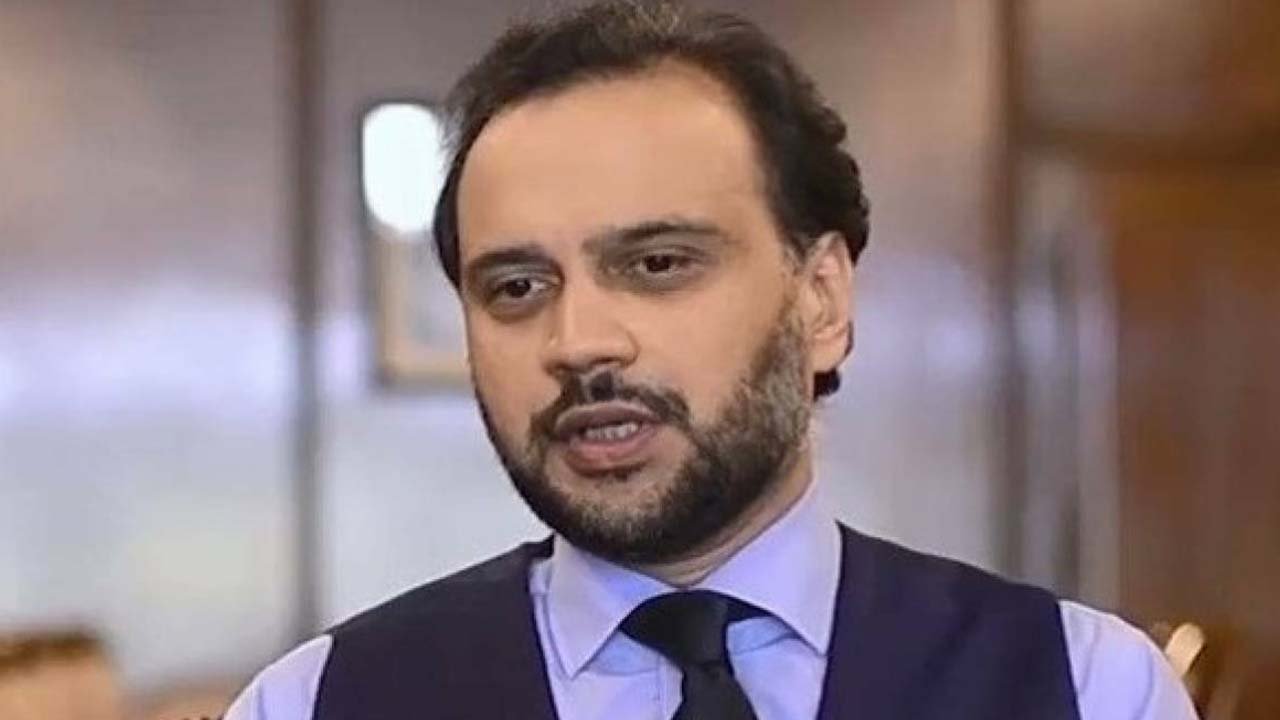
    With effect from May 5, Dr Murtaza Syed, the senior-most Deputy Governor and a former Deputy Resident Representative of the International Monetary Fund (IMF), became the new acting Governor of the State Bank of Pakistan (SBP).

    Prior to this, the federal government named Dr Syed as the Deputy Governor of the SBP for three years on January 27, 2020.

    Dr Syed has taken up the position in light of Section 10(2) of the State Bank of Pakistan (SBP) Act 1956 (amended), and has therefore succeeded Dr Reza Baqir, whose term ended on May 4, according to the notification.

    He holds a Ph.D. in Economics from the University of Oxford’s Nuffield College and has more than 20 years of experience in macroeconomic research and policymaking, including 16 years at the IMF. He worked on IMF initiatives and monitoring of emerging markets and advanced economies such as the Eurozone, Japan, and Korea. Dr Syed also handled IMF training and technical support projects around the world, and between 2010 and 2014, he was the IMF’s Deputy Resident Representative in China.

    Dr Syed started his career as a Senior Policy Analyst at the Human Development Center in Islamabad, where he worked under former Finance Minister D. Mahbub ul Haq. Afterward, he worked for the Institute for Fiscal Studies (IFS), a London-based public policy think tank, where he did research on company investment and employment behaviour, as well as evaluating Latin American anti-poverty programmes.

    Read more: Pakistan’s foreign currency reserves down by $328 million

    Dr Syed has produced papers on a multitude of macroeconomic topics, including fiscal and monetary policy, financial stability, economic crises, investment, demographics, poverty, and inequality, in addition to teaching public policy at the universities of Cambridge and Oxford.

  • First two years of PTI: Lowest development spending in decade, 46% increase in per capita debt

    First two years of PTI: Lowest development spending in decade, 46% increase in per capita debt

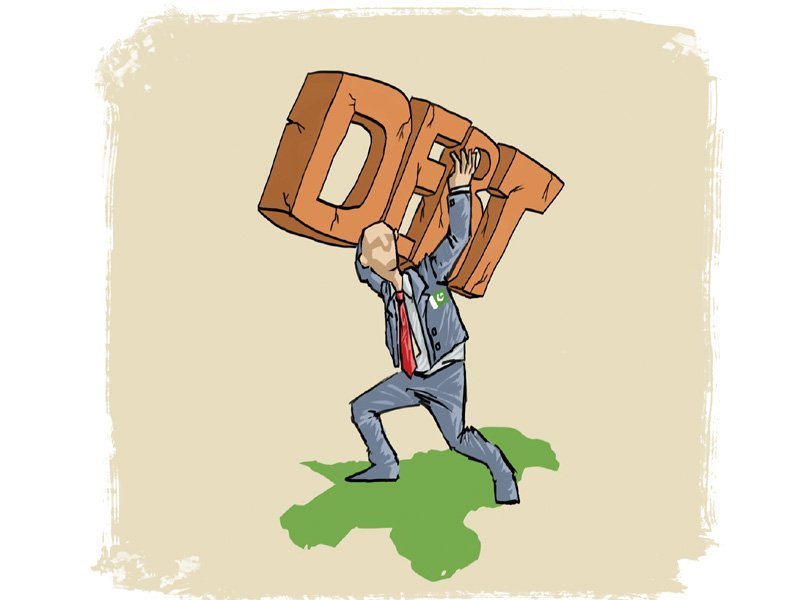
    The per capita debt of Pakistan has jumped to Rs175,000 at the end of last fiscal year — a 46 per cent increase within two years, the Ministry of Finance told the National Assembly.

    In the Fiscal Policy Statement of 2020-21, the finance ministry admitted that the government violated the Fiscal Responsibility and Debt Limitation (FRDL) Act of 2005 by failing to reduce the federal fiscal deficit to 4% of the size of national economy, reported Express Tribune.

    The federal deficit stood at 8.6% of GDP, the report said.

    According to the fiscal statement, the current expenditures were at 28-year high level in FY19-20, whereas the development spending was the lowest in a decade in terms of total size of the economy. “Total expenditures in terms of the size of economy were at the highest level in 21 years — at 23.1% of GDP,” it reported.

    The report mentioned that the public debt was recorded at Rs36.4 trillion at the end of June 2020 which means per person debt increased by Rs21,311 or 14% in the last one year. The debt ratio was formulated on the assumption of the total population of 208 million.

    In June 2018, the total public debt was Rs24.9 trillion and the finance ministry at that time worked out the per capita debt at Rs120,099. In the first year of the PTI government, there was a 28 per cent increase in the per capita debt, while in the second the debt rose by 14 per cent.