Tag: fiscal year 2023-24

  • Pakistan’s exports to China surge to $1223.5 million

    Pakistan’s exports to China surge to $1223.5 million

    In a noteworthy development, Pakistan’s export of goods and services to China experienced a substantial increase of 39.44 per cent during the initial five months of the current fiscal year (2023–24), as reported by the State Bank of Pakistan (SBP).

    According to the latest SBP data, the overall exports to China reached $1223.532 million from July to November (2023–24), marking a significant rise compared to the $877.444 million recorded during the same period last fiscal year.

    On a year-to-year basis, the exports to China showed a remarkable growth of 36.29 per cent, rising from $199.058 million in November 2022 to $271.316 million in November 2023.

    However, on a month-on-month basis, there was a slight decline in exports to China during November 2023, registering a decrease of 14.90 per cent compared to the exports of $318.842 million in October 2023, as per the SBP data.

    Meanwhile, Pakistan’s overall exports to other countries exhibited a commendable increase of 4.99 per cent in the first five months, surging from US $11.915 billion to US $12.510 billion, according to the SBP data.

    In contrast, the imports from China into Pakistan during the reviewed months amounted to US $4741.099 million, reflecting a decline of 6.03 per cent compared to the corresponding period last year (2022–23).

    On a year-on-year basis, imports from China saw a notable increase of 10.71 per cent, rising from US $906.128 million in November 2022 to US $1003.248 million in November 2023.

    On a month-on-month basis, the imports from China recorded a marginal uptick of 0.99 per cent in November 2023 compared to the imports of US $993.401 million in October 2023, according to the data.

    The overall imports into Pakistan witnessed a significant decrease of 16.02 per cent, declining from $25.341 billion to US $21.281 billion, as reported by the data.

  • Pakistan plans to secure $4.5 billion from diverse sources in current fiscal year

    Pakistan plans to secure $4.5 billion from diverse sources in current fiscal year

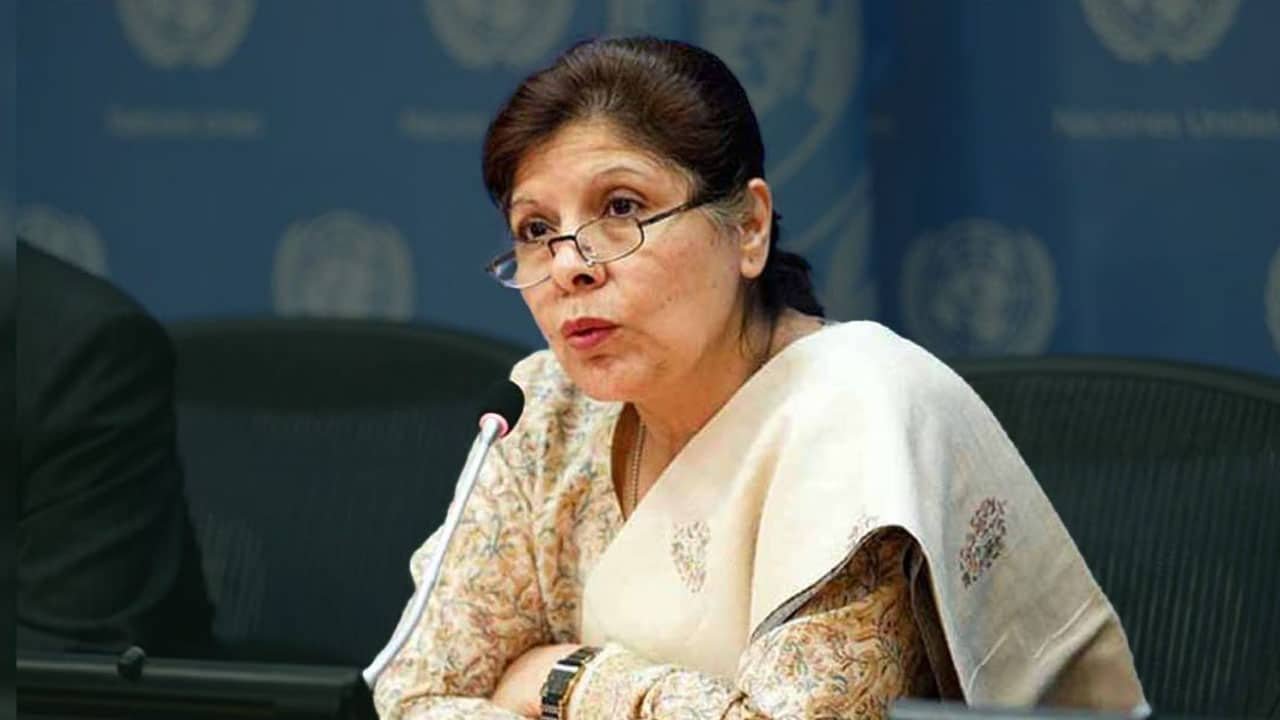
    Caretaker Minister for Finance, Dr Shamshad Akhtar, has outlined Pakistan’s financial projections for the current fiscal year (2023–24), highlighting an anticipated mobilisation of approximately $4.5 billion from both multilateral and bilateral sources, excluding the International Monetary Fund (IMF).

    Minister Akhtar disclosed that the government foresees receiving over $1.6 billion in the second quarter (Q2) from sources such as the Asian Development Bank (ADB), the World Bank, and the Asian Infrastructure Investment Bank (AIIB).

    She clarified that these inflows encompass funds allocated to both project-based and programme-based initiatives.

    Highlighting progress in negotiations, the minister revealed the completion of discussions for certain programme loans, with impending disbursements expected.

    She reassured that Pakistan remains committed to meeting its debt obligations promptly, both currently and in the future.

    Regarding the International Monetary Fund (IMF) programme, Minister Akhtar reported the successful conclusion of the first review of the Standby Agreement, resulting in the attainment of a Staff Level Agreement (SLA).

    Pending approval by the IMF’s Executive Board, this agreement will grant Pakistan access to $700 million.

    Commenting on the prevailing economic situation, Minister Akhtar acknowledged the challenges faced domestically and globally during FY2023.

    Despite these hurdles, she asserted that fiscal and external sector stability have been achieved through the implementation of various stabilisation measures and structural reforms.

  • Honda unveils its first electric bike in Pakistan 

    Honda unveils its first electric bike in Pakistan 

    Atlas Honda has revealed its first electric motorcycle, the Honda ‘BENLY e’, during a ceremony at the Sheikhupura plant to mark the company’s 60th year of operation in Pakistan. 

    Although the company did not specify the rollout date, Noriaki Abe, Chief Officer of Motorcycle and Power Products at Atlas Honda, announced that the Honda BENLY e will undergo test marketing. 

    The launch event emphasised the company’s commitment to delivering quality products based on market feedback. 

    Abe highlighted the integral role Honda products play in the daily lives of many Pakistanis, noting the significant contributions of the joint venture between Atlas Group and Honda Motor Company since 1963. 

    Meanwhile, Shinji Aoyama, Executive Vice President and COO of Honda Motor Company, expressed Honda’s readiness for the evolving mobility industry. 

    Saquib H. Shirazi, President and CEO of Atlas Honda, shared insights into the company’s achievements, including a 95 per cent localisation of its product line and the development of an extensive network of local auto parts manufacturers and dealers, generating employment for over 150,000 individuals. 

    Despite challenges in the motorcycle industry, such as a 5 per cent month-on-month and 11 per cent year-on-year decline in sales in October, Atlas Honda Limited reported a remarkable 152 per cent increase in net profit for the first quarter of the fiscal year 2023–24. 

    The growth was attributed to robust sales and additional income. Overall, motorcycle sales for the first four months of the fiscal year experienced a 10 per cent year-on-year decline to 371,000 units, influenced by higher bike prices and reduced consumer purchasing power. 

  • Govt plans to increase gas and electricity prices in January

    Govt plans to increase gas and electricity prices in January

    The interim Finance Minister, Dr Shamshad Akhtar, announced during a press conference that the caretaker government is planning to increase electricity and gas tariffs in January to address the circular debt issue, in line with the International Monetary Fund’s (IMF) Stand-By Arrangement (SBA). 

    The circular debt in the power and gas sectors, currently exceeding 4 per cent of the Gross Domestic Product, requires urgent action for reduction. 

    Dr Akhtar also discussed tariff revisions with the IMF and the potential imposition of additional taxes on sectors like real estate and retail, emphasizing that final decisions are pending. 

    She highlighted the necessity for a new short-term IMF program and anticipated a medium-term program under the Extended Fund Facility (EFF) after the SBA concludes. 

    Regarding the external financing gap, Finance Secretary Imdad Bosal expressed optimism that a successful IMF review would unlock programme and project loans from multilateral lenders. 

    He anticipated approvals in December for loans from the World Bank, Asian Development Bank, Asian Infrastructure Investment Bank, and Islamic Development Bank. 

    Bosal assured that there is no external financing gap, and the improved ratings post-review would attract foreign loans. 

    Dr Akhtar stated that the World Bank is expected to disburse $2 billion during the current fiscal year, contributing to foreign exchange reserves along with the $700 million tranche approval from the IMF, bringing the total disbursement under the SBA to $1.9 billion out of $3 billion. 

    The approval for the second tranche from the IMF’s Executive Board is anticipated within a month.

  • World Bank projects only 1.7% growth for Pakistan in FY 2023-24 amid economic challenges

    World Bank projects only 1.7% growth for Pakistan in FY 2023-24 amid economic challenges

    The World Bank has issued a cautious outlook for Pakistan’s economy in the fiscal year 2023–24, projecting a modest growth rate of 1.7 per cent.

    The report, titled “South Asia Development Update Towards faster, cleaner growth,” highlights the fragile economic situation in Pakistan.

    Several factors have contributed to this fragility. The US dollar value of imports decreased by 26 per cent in August 2023 due to low demand and import controls, resulting in input shortages and a 15 per cent decline in industrial production by June 2023.

    Additionally, the economy shrank by 0.6 per cent in the fiscal year 2022–23 due to the impact of 2022 floods, high inflation, and balance of payments challenges.

    Import controls, initially aimed at reducing the trade deficit, hindered the supply of industrial materials and stifled growth.

    While these controls have been removed as part of an IMF lending programme, Pakistan still faces inflationary pressures, tight fiscal policies, and extensive flood damage. Foreign exchange reserves remain low, leaving the country vulnerable to external shocks.

    Pakistan is not alone in its economic struggles. Bangladesh, Pakistan, and Sri Lanka are all facing acute crises with ongoing balance-of-payments issues. These countries have begun implementing IMF-supported policies to address capital outflows and debt sustainability.

    Global factors, such as rising prices due to the end of the pandemic and Russia’s invasion of Ukraine, have exacerbated the challenges faced by these nations, leading to increased current account deficits and currency depreciations. To combat this, import controls have been imposed.

    In Pakistan, consumer price inflation stood at 27 per cent in August, down from a peak of 38 per cent in May, thanks to a stabilised exchange rate and a decline in food prices caused by the previous year’s floods. To address high inflation, the central bank raised its benchmark interest rate to 22 per cent in June.

    Pakistan and Sri Lanka are experiencing severe financial stresses, with low foreign reserve coverage and weak asset quality in both banking and non-banking sectors. The report also highlights the need for investment reforms in several South Asian countries to encourage growth.

    Restrictive import measures in Bangladesh, Pakistan, and Sri Lanka, although aimed at stabilising the external sector, have led to import shortages and economic downturns. Lowering these barriers to trade and capital flows could help boost long-term productivity.

    Lastly, despite adopting debt ceilings and deficit targets, many South Asian countries have high government debt-to-GDP ratios, with Pakistan experiencing fluctuations in government spending during election years.

    In summary, the World Bank’s report paints a cautious picture of Pakistan’s economic prospects, emphasising the need for sustained reforms and addressing various challenges to achieve stable and sustainable growth.

  • Knitwear tops the list: Pakistan’s exports surge by 25.54%

    In the fiscal year 2023–24, Pakistan’s exports, denominated in rupees, experienced a notable 25.54 per cent increase during the first quarter (Q1) compared to the previous year, as per the Pakistan Bureau of Statistics (PBS).

    Between July and September 2023, exports amounted to Rs2,013,533 million, marking a 25.54 per cent boost from the same period in the previous year, according to PBS’s provisional data.

    Looking at year-on-year figures, September 2023’s exports surged by 31.27 per cent, totaling Rs737,295 million, compared to Rs561,643 million in September 2022.

    On a month-to-month basis, exports grew by 6.06 per cent, reaching Rs737,295 million in August 2023.

    Key export categories in August 2023 included knitwear (Rs103,029 million), readymade garments (Rs74,608 million), bed wear (Rs69,234 million), cotton cloth (Rs51,891 million), oil seeds, nuts, and kernels (Rs46,571 million), cotton yarn (Rs33,815 million), rice and others (Rs32,324 million), towels (Rs25,116 million), rice basmati (Rs19,008 million), and miscellaneous articles, excluding towels and bed wear (Rs16,922 million).

    On the other hand, imports during July to September 2023 (FY2023-24) totaled Rs3,560,763 million, showing a decrease of 2.45 per cent compared to the same period in the previous year.

    In a year-on-year comparison, imports into Pakistan during September 2023 amounted to Rs1,189,167 million, a 2.52 per cent decline from September 2022.

    Month-on-month data indicated a 10.62 per cent increase in imports in September 2023 compared to August 2023.

    Key imported commodities in September 2023 included petroleum products (Rs162,087 million), petroleum crude (Rs146,179 million), liquefied natural gas (Rs75,331 million), palm oil (Rs61,388 million), plastic materials (Rs49,628 million), electric machinery and apparatus (Rs44,699 million), iron and steel (Rs44,191 million), mobile phones (Rs37,093 million), iron and steel scrap (Rs27,299 million), and pulses/leguminous vegetables (Rs22,208 million).

  • Pakistan’s imports drop sharply, leading to 42% reduction in trade deficit

    Pakistan’s imports drop sharply, leading to 42% reduction in trade deficit

    Pakistan’s trade deficit for the first three months of the fiscal year 2023–24 has notably contracted by 42.25 per cent to reach $5.29 billion. This remarkable reduction is primarily attributed to a significant decrease in imports, a direct consequence of carefully administered measures.

    Data released by the Pakistan Bureau of Statistics (PBS) reveals that the trade balance, which represents the difference between exports and imports, stood at a deficit of $5.29 billion for the period spanning July to September 2023–24. This is in stark contrast to the $9.16 billion deficit recorded during the same period in the preceding year.

    Both exports and imports experienced declines in this timeframe, with imports showing a more substantial decrease compared to exports, effectively narrowing the trade deficit. During these three months of 2023–24, Pakistan’s exports contracted by 3.8 per cent to $6.9 billion, despite facing significant currency depreciation when compared to the corresponding period in the previous year.

    Conversely, imports registered a notable decline of 25.4 per cent, totaling $12.19 billion in the July–September period, down from the $16.33 billion recorded in the same period of the previous fiscal year.

    For a more granular view, the PBS reported that in September 2023, Pakistan’s trade deficit further shrank by nearly 48 per cent to $1.489 billion, compared to $2.856 billion during the same month in the previous year. 

    Exports experienced a slight improvement of 1.1 per cent, reaching $2.47 billion in September 2023 compared to $2.44 billion in the same month the previous year, while imports significantly decreased by 25.5 per cent to $3.95 billion from $5.29 billion in the corresponding month last year.

    From a monthly perspective, the trade deficit contracted by 31.5 per cent compared to August 2023, with exports increasing by 4.2 per cent to $2.47 billion in September from $2.37 billion in the preceding month of August. Simultaneously, imports decreased by 12.9 per cent, amounting to $3.95 billion from $4.53 billion in the last month.

  • Govt considers substantial gas tariff hike as energy concerns loom 

    Govt considers substantial gas tariff hike as energy concerns loom 

    Caretaker Minister for Energy, Muhammad Ali, addressed concerns about gas prices during a visit to the Lahore Chamber of Commerce and Industry (LCCI), accompanied by Caretaker Federal Minister for Commerce, Industries, and Production, Gohar Ejaz.

    He revealed that impending announcements would detail changes in gas prices, acknowledging that gas prices have consistently been a matter of concern. According to Dawn, the Oil and Gas Regulatory Authority (OGRA) had proposed a 45–50 per cent gas tariff increase earlier in the year to meet revenue requirements for gas utilities. However, the government has not yet made a formal decision. 

    Ali emphasised regional disparities in gas prices, with the North having higher prices than the South. He also discussed the challenges of inadequate long-term LNG contracts and efforts to combat electricity theft. He noted that while steps were being taken to reduce energy price disparities, an overnight reduction was impossible due to the country’s commitment to the IMF programme. 

    Commerce Minister Ejaz highlighted efforts to address issues related to Afghan Transit Trade (ATT) and its impact on the dollar rate. He pointed out that industry inputs, raw materials, and energy prices were vulnerable to international market fluctuations, affecting exports due to currency devaluation. However, recent measures have stabilised the exchange rate. 

    Read more: IMF urges Pakistan to increase taxation on the rich and ‘protect the poor’

    Ejaz also stressed that currency devaluation had hindered export growth and highlighted how disparities in gas supply and prices hampered development efforts nationwide. He called for unity and collaboration, emphasising that traders were vital assets for the country’s strength and prosperity. 

    Notably, the caretaker government had recently raised petrol and high-speed diesel prices, leading to widespread criticism and sporadic protests due to the significant price surge amid high inflation. 

  • Pakistan imports tea worth Rs31.64 billion in just two months 

    Pakistan imports tea worth Rs31.64 billion in just two months 

    According to data from the Pakistan Bureau of Statistics (PBS), Pakistan’s imports of food items in the first two months of the fiscal year 2023–24 amounted to Rs378.98 billion. 

    The PBS data reveals that during this two-month period, Pakistan imported tea worth Rs31.64 billion, a notable increase from Rs20.23 billion during the corresponding period in the previous year.  

    Additionally, Pakistan imported palm oil valued at Rs158.7 billion and soybean oil worth Rs13.56 billion. 

    Furthermore, Pakistan imported pulses worth Rs48.25 billion and dry fruits valued at over Rs2 billion during the same two-month period. 

    It is worth noting that in July, the State Bank of Pakistan (SBP) lifted all import restrictions as part of its efforts to meet the conditions set by the International Monetary Fund (IMF). 

    Read more: Pakistani rupee gains value, now at Rs292.78 per US dollar 

    The central bank issued a circular to abolish these import restrictions and authorised banks to facilitate remittances to clear more than 6,000 containers. 

    The SBP clarified in the circular that remittances would be made available for all imports following the implementation of the latest order. 

  • Pakistan’s exports surge by 22.45% in FY23-24’s first two months, crossing Rs1.27 trillion mark

    Pakistan’s export sector has demonstrated remarkable growth, achieving a substantial 22.45 per cent increase, reaching the noteworthy milestone of Rs1.27 trillion during the initial two months of the fiscal year 2023-24 (FY23-24).

    According to data released by the Pakistan Bureau of Statistics (PBS), exports from July to August 2023 stood at Rs1.27 trillion, marking a remarkable 22.45 per cent surge compared to the Rs1.04 trillion recorded during the corresponding period the previous year.

    In a year-on-year analysis, exports in August 2023 surged by an impressive 26.75 per cent, reaching Rs695.1 billion, as opposed to the Rs548.4 billion recorded in August 2022. Furthermore, on a month-to-month basis, exports surged by 19.62 per cent when juxtaposed with the Rs581.1 billion recorded in July 2023. The textile and knitwear sector emerged as the most substantial export contributor, accounting for an impressive Rs117.8 billion.

    In contrast, imports during July and August of the fiscal year 2023-24 experienced a modest decline of 2.42 per cent, totaling Rs2.3 trillion. This is in contrast to the imports recorded at Rs2.4 trillion during the corresponding period the previous year. Of note, Pakistan’s imports in August 2023 included Rs180.6 billion worth of petroleum products, followed by crude oil and liquefied natural gas (LNG) valued at Rs119.4 billion and Rs89.8 billion, respectively.

    When analyzed on a year-on-year basis, imports into Pakistan in August 2023 displayed a marginal 0.5 per cent decrease when compared to August 2022. On a month-on-month basis, imports into the country saw a significant uptick of 27.79 per cent in August 2023 when compared to the Rs1.04 trillion worth of imports in July 2023.

    According to Geo, this surge in exports is indeed promising as it holds the potential to bolster Pakistan’s diminishing foreign exchange reserves, a much-needed development in light of the challenging economic situation stemming from the depreciation of the Pakistani rupee