Tag: fiscal year 2024

  • Overseas remittances to Pakistan soar to $2.4 billion

    Overseas remittances to Pakistan soar to $2.4 billion

    The State Bank of Pakistan (SBP) revealed that the inflow of overseas workers’ remittances reached $2.4 billion in December 2023, marking a notable 5.4 per cent increase from the previous month’s $2.25 billion, according to data released on Wednesday.

    On a yearly basis, December’s remittances exhibited a robust growth of 13.4 per cent, totaling $2.1 billion compared to the same period in the previous year.

    These remittances continue to play a pivotal role in sustaining Pakistan’s external account, fostering economic activity, and supporting the disposable incomes of remittance-dependent households.

    Despite the December upswing, the cumulative workers’ remittances for July-December FY24 recorded a decline of 6.8 per cent Year-on-Year (YoY), amounting to $13.43 billion.

    This decrease amounted to $982.8 million compared to the $14.42 billion reported in the corresponding period of FY23.

    Saudi Arabia

    Overseas Pakistanis in Saudi Arabia led the remittance surge in December, contributing $577.6 million. This figure marked a 6 per cent increase from the previous month and over 9 per cent higher than the same month in the previous year.

    United Arab Emirates (UAE)

    Remittances from the UAE witnessed a marginal monthly increase of nearly 2 per cent, rising from $411.8 million in November to $419.2 million in December. Year-on-year, these remittances surged by almost 27 per cent.

    United Kingdom (UK)

    December saw an uptick in remittances from the United Kingdom, totaling $368 million—a 7.5 per cent increase compared to November 2023.

    European Union (EU)

    Remittances from the European Union demonstrated substantial growth, rising by 19 per cent YoY and 6 per cent on a monthly basis, reaching $284.9 million in December 2023.

    United States (US)

    Overseas Pakistanis in the United States sent $263.9 million in December 2023, reflecting an 8.5 per cent YoY increase.

    This breakdown underscores the significance of remittances from various regions, contributing to Pakistan’s economic resilience amid global challenges. 

    The upward trajectory in December bodes well for the nation’s economic prospects as it navigates through the fiscal year.
  • FBR surpasses Rs1 trillion tax collection milestone in December

    FBR surpasses Rs1 trillion tax collection milestone in December

    In a historic achievement, the Federal Board of Revenue (FBR) announced the unprecedented collection of over Rs1 trillion in December, marking the first instance of such a milestone, as per a press release issued today.

    Furthermore, the FBR has set a new record by collecting Rs4.468 trillion in the initial six months of Fiscal Year 2024, indicating a notable increase of over Rs1 trillion when compared to the Rs3.43 trillion collected during the same period in FY23.

    Remarkably, the FBR has surpassed its targeted collection for the first half of FY24, which was initially set at Rs4.425 trillion. The government’s ambitious projection for the entire fiscal year stands at Rs9.415 trillion.

    Despite challenges such as the issuance of Rs230 billion in refunds, up from Rs177 billion in the corresponding period of the previous year, and sustained import compression, the FBR continues to face obstacles in revenue collection at the import stage.

    Traditionally, the revenue mix at the import stage and domestic taxes had a 50:50 ratio. However, this balance has shifted to 36:64, with the FBR mitigating the impact of import compression by generating more revenue domestically.

    The ratio of direct to indirect taxes has also experienced a shift, with the share of direct taxes increasing to 49 per cent in the first six months.

    Notably, in December alone, direct taxes accounted for 59 per cent, marking a 41 per cent increase in the first six months compared to the previous year.

    Within the category of direct taxes, the FBR has reduced the share of withholding taxes from 70 per cent to 55-58 per cent over the past two years. Remarkably, the share of withholding taxes reached as low as 40 per cent in December 2023.

    It’s worth noting that the FBR had achieved a Rs1 trillion annual collection back in 2007-08, a milestone that took 50 years to accomplish.

    In contrast, the FBR has achieved a comparable feat within a single month after 15 years, underscoring the relentless efforts, unwavering dedication, and hard work demonstrated by the field formations and top leadership of the FBR.

  • Pakistani rupee ends 2023 with marginal gain versus US dollar

    Pakistani rupee ends 2023 with marginal gain versus US dollar

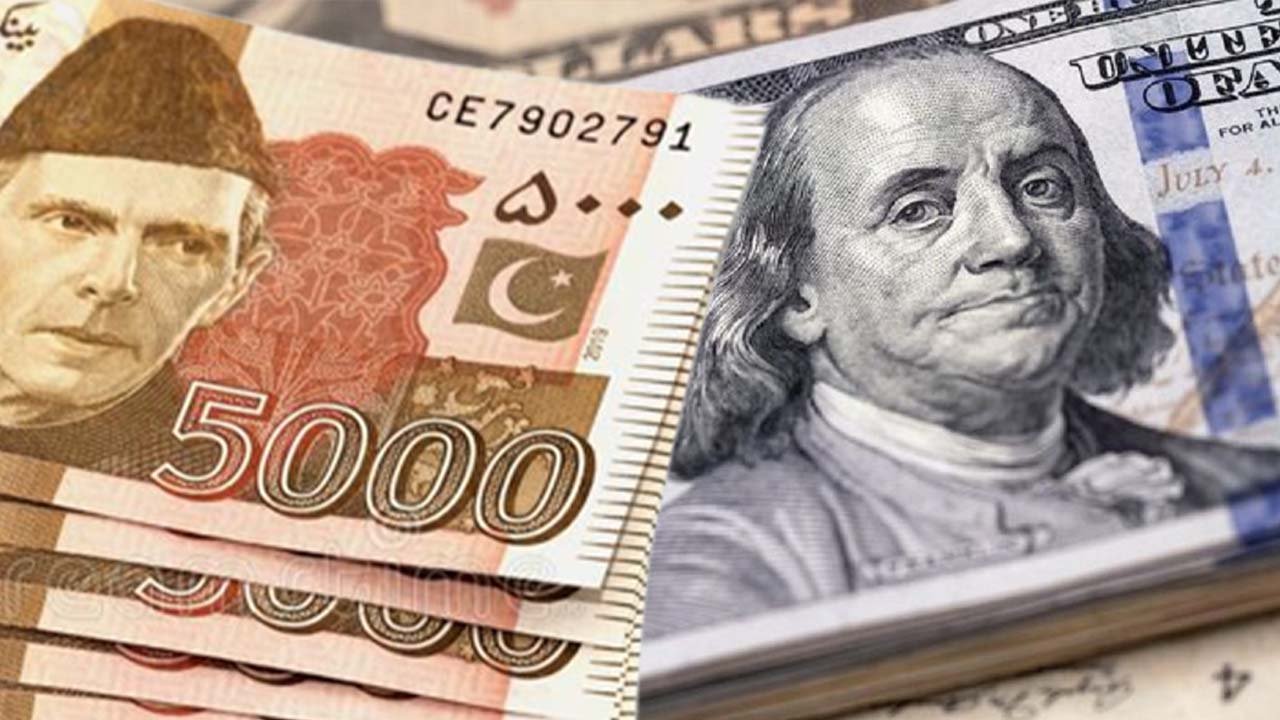
    Pakistani rupee demonstrated a slight appreciation against the US dollar for the 13th consecutive session, marking a gain of 0.02 per cent in the inter-bank market on Friday.

    According to the State Bank of Pakistan (SBP), the day concluded with the rupee settling at Rs281.86, reflecting an increase of Rs0.07.

    Remarkably, this signifies a closure of 2023 with the rupee undergoing a depreciation of 19.7 per cent, originating from its starting point at Rs226.43 against the US dollar in the inter-bank market at the beginning of the year. 

    Notably, on the preceding Thursday, the rupee experienced a marginal upturn, settling at Rs281.93 against the US dollar.

    A significant development unfolded as the foreign exchange reserves held by the State Bank of Pakistan observed a substantial weekly upswing, surging by $852 million to reach $7.75 billion as of December 22, according to data released on Thursday. 

    The overall liquid foreign reserves for the country tallied at $12.85 billion, with commercial banks holding net foreign reserves amounting to $5.1 billion. The SBP attributed this surge in reserves to official government inflows.

    On the global stage, the US dollar appeared poised to conclude 2023 with a loss, reversing a two-year trend of gains. This shift was influenced by market expectations that the US Federal Reserve might initiate rate easing as early as March of the following year. 

    The greenback remained generally subdued on the last trading day of the year, hovering near a five-month low against a basket of currencies, falling 0.02 per cent to 101.18, following a recent dip to 100.61. 

    This trend underscored the impact of the Federal Reserve’s aggressive rate-hike cycle initiated in early 2022 on the dollar’s trajectory over the past two years.

  • Pakistani rupee gains ground against US dollar for 11th consecutive session

    Pakistani rupee gains ground against US dollar for 11th consecutive session

    The Pakistani rupee sustained its upward trajectory against the US dollar for the 11th consecutive session, exhibiting a 0.06 per cent appreciation in the interbank market on Wednesday. 

    According to the State Bank of Pakistan (SBP), the rupee concluded at Rs282.20, reflecting an increment of Re0.17.

    In the preceding session on Tuesday, the rupee had achieved a marginal gain, settling at Rs282.37 in relation to the US dollar. 

    Concurrently, there has been a notable surge of 200 per cent in the cumulative borrowing by the federal and provincial governments for budgetary support from the domestic banking system in the current fiscal year (FY24).

    Internationally, the US dollar encountered continued pressure on Wednesday, while the euro flirted with a four-month pinnacle. 

    This trend emerged as market expectations of an imminent interest rate cut by the Federal Reserve gained traction. The restrained week, marked by global holiday absences until the New Year, is anticipated to witness subdued trading volumes.

    The dollar index, gauging the US currency against six counterparts, stood at 101.54, just below the five-month low of 101.42 recorded last week. 

    The index is poised for a 1.9 per cent decline in 2023, following two consecutive years of robust gains driven by the Fed’s rate hikes to combat inflation. 

    The recent weakening of the dollar is attributed to market anticipation of forthcoming rate cuts by the Fed in the coming year, diminishing the allure of the greenback.

  • Pakistan repays $5.4 billion of $24.6 billion external debt

    Pakistan repays $5.4 billion of $24.6 billion external debt

    The State Bank of Pakistan (SBP) governor revealed that Pakistan’s external debt obligations for Fiscal Year 2024 are $24.6 billion, as stated during the post-Monetary Policy Committee (MPC) meeting on Tuesday.

    Breaking down the figures, the principal amount is $20.7 billion, with an additional $3.9 billion accounting for interest.

    Notably, a total of $5.4 billion has already been repaid, encompassing a $4 billion principal payment and a $1.4 billion interest payment.

    As a result, the outstanding debt now stands at $19.2 billion, with plans to rollover $12.4 billion (with $9.3 billion already confirmed), according to the governor.

    This leaves a net remaining amount of $6.8 billion for the remaining seven months of the fiscal year. This comprises a $4.3 billion principal and a $2.5 billion interest payment.

    It’s crucial to note that the current foreign exchange reserves are relatively limited, standing at approximately $7 billion.

  • Overseas workers’ remittances to Pakistan dip to $2.3 billion

    Overseas workers’ remittances to Pakistan dip to $2.3 billion

    In November 2023, overseas workers sent a total of $2.3 billion in remittances to Pakistan, reflecting an 8.6 per cent decrease from the $2.5 billion recorded in October 2023, as per data released by the State Bank of Pakistan (SBP). 

    However, on a yearly basis, there was a 3.6 per cent increase in the monthly inflow compared to the same month in the previous year.

    Remittances are a crucial element in supporting Pakistan’s external accounts and play a vital role in boosting the country’s economic activity while also supplementing the disposable incomes of households dependent on remittances.

    The recent rise in remittances was attributed to an improved exchange rate following a crackdown against currency smugglers and hoarders. 

    This crackdown resulted in a reduction of the rate gap between the open and interbank markets. However, despite this positive trend, remittances have observed a decline on a monthly basis again this November.

    In the first five months of the fiscal year 2024, remittances amounting to $11 billion have been recorded, in contrast to $12.3 billion in the same period of the previous year.

    Breaking down the remittances, it was noted that overseas Pakistanis in Saudi Arabia sent the highest amount in November 2023, totaling $540.3 million. 

    This amount represented a 12.5 per cent monthly decline but was 5.5 per cent higher than the remittances in the same month of the previous year. 

    Remittances from the United Arab Emirates (UAE) also declined on a monthly basis by 13.6 per cent, from $473.9 million in October to $409.4 million in November. 

    However, there was a yearly improvement of 7.6 per cent. Remittances from the United Kingdom increased by 3.5 per cent to $341.7 million compared to October 2023.

    Conversely, remittances from the European Union declined by nearly 10 per cent on a monthly basis, amounting to $268.3 million in November 2023. Overseas Pakistanis in the US sent $261.5 million in November 2023, experiencing a month-on-month decrease of 7.7 per cent.

  • Pakistan’s trade deficit shrinks by over 30% in November

    Pakistan’s trade deficit shrinks by over 30% in November

    In the initial five months of the fiscal year 2024, Pakistan’s trade performance has witnessed notable enhancements, marking a positive stride towards economic stability, as articulated by Dr Gohar Ejaz, the Federal Minister for Commerce and Industries, in a communication on X (formerly Twitter).

    The minister conveyed his unwavering confidence in Pakistan’s trajectory towards economic recovery, emphasising the commitment to diligent efforts aimed at job creation, economic growth, and the overall betterment of citizens’ lives.

    It is noteworthy that Pakistan’s exports experienced a year-on-year increase of 1.93 per cent, reaching $12.17 billion in the aforementioned five-month period, while imports exhibited a substantial decrease of 17.32 per cent to $21.55 billion.

    Consequently, the trade deficit contracted to $9.38 billion, registering a noteworthy decline of 33.59 per cent compared to the corresponding period in the preceding year.

    Zooming in on November’s performance, Pakistan’s exports demonstrated a robust year-on-year growth of 7.66 per cent, totaling $2.57 billion, whereas imports saw a decline of 13.47 per cent to $4.46 billion.

    This translated into a trade deficit of $1.89 billion for November, marking a notable reduction of 31.72 per cent compared to November 2022.

  • Pakistan’s inflation soars to 29.2% in November, exceeding October figures

    Pakistan’s inflation soars to 29.2% in November, exceeding October figures

    In November, Pakistan’s headline inflation surged to 29.2 per cent year-on-year, as reported by the Pakistan Bureau of Statistics, surpassing the October figure of 26.9 per cent. 

    On a monthly basis, there was a 2.7 per cent increase. The average inflation for July-November reached 28.62 per cent, up from 25.14 per cent in the same period the previous year.

    CPI inflation in urban areas rose to 30.44 per cent in November 2023, compared to 25.5 per cent in the previous month and 21.6 per cent in November 2022. On a monthly basis, it increased to 4.34 per cent, reflecting a substantial jump from the previous month and November 2022.

    Conversely, rural CPI inflation stood at 27.53 per cent year-on-year in November 2023, showing a slight decrease from the previous month but an increase from November 2022.

    Anticipated by several brokerage houses, the November inflation spike, driven partly by a rise in gas tariffs, aligns with predictions. 

    JS Global and Arif Habib Limited had forecasted CPI-based inflation to be around 28.26 per cent and 28.2 per cent, respectively.

    Beyond inflation, Pakistan faces economic challenges. A recent staff-level agreement with the IMF, subject to board approval in December, will provide access to SDR 528 million. The International Monetary Fund (IMF) expects inflation to decrease in the coming months due to improved supply conditions.

    Despite maintaining a key policy rate of 22 per cent, the State Bank of Pakistan projects a downward trajectory for inflation, citing fiscal consolidation, commodity availability, and exchange rate alignment as offsetting factors against risks like global oil price volatility and increased gas tariffs.

    Caretaker Finance Minister Dr Shamshad Akhtar expressed optimism about gradual inflation reduction, attributing it to improved financial management. The government believes effective policies will contribute to an overall improvement in economic conditions.

  • Pakistan’s October inflation eases to 26.9%

    Pakistan’s October inflation eases to 26.9%

    In October, Pakistan witnessed a year-on-year headline inflation rate of 26.9 per cent, as reported by the Pakistan Bureau of Statistics (PBS) on Wednesday.  

    This figure represents a notable decrease from the previous month’s reading of 31.4 per cent in September. Additionally, the month-on-month inflation rate for October showed a 1.1 per cent increase. 

    When considering the average inflation from July to October, it amounted to 28.48 per cent, a contrast to the 25.48 per cent recorded during the same period the previous year. 

    In its most recent ‘Monthly Economic Update and Outlook’ report, the Ministry of Finance projected that consumer price index (CPI)-based inflation in Pakistan for October would fall within the range of 27 per cent to 29 per cent.  

    The ministry anticipated that inflation would exhibit a more contained trend compared to the elevated levels observed during the first quarter of fiscal year 2024. 

    The Pakistan Bureau of Statistics further distinguished between urban and rural inflation rates. In urban areas, the year-on-year CPI inflation increased to 25.5 per cent in October 2023, marking a decline from the 29.7 per cent observed in the previous month and the 24.6 per cent recorded in October 2022.  

    On a month-on-month basis, urban inflation experienced a 1.1 per cent increase in October 2023, compared to a 1.7 per cent increase in the previous month and a 4.5 per cent increase in October 2022. 

    Similarly, in rural areas, the year-on-year CPI inflation rose to 28.9 per cent in October 2023, which represented a decrease from the 33.9 per cent recorded in the previous month and the 29.5 per cent in October 2022.  

    On a month-on-month basis, rural inflation increased by 1.1 per cent in October 2023, in contrast to a 2.5 per cent increase in the previous month and a 5.0 per cent increase in October 2022.