Tag: fiscal year

  • Mobile phone imports in Pakistan drop by nearly 70%

    Mobile phone imports in Pakistan drop by nearly 70%

    According to the Pakistan Bureau of Statistics (PBS), Pakistan’s import of mobile phones has decreased by 68.29 per cent during the first eight months of the current fiscal year (2022-23) compared to the same period last year.

    The value of mobile phones imported from July to February (2022-23) was US $447.855 million, whereas it was US $1412.445 million in the corresponding period of the previous year.

    In February 2023, the import of mobile phones decreased by 76.73 per cent compared to February 2022. The imports for February 2023 were valued at US $33.054 million, whereas the exports for February 2022 were US $142.033 million.

    Furthermore, the data shows that the import of mobile phones witnessed a month-on-month decline of 36.39 per cent during February 2023, as compared to January 2023, with imports valued at US $51.960 million.

  • ‘IMF programme will be revived soon’: Miftah Ismail

    ‘IMF programme will be revived soon’: Miftah Ismail

    Pakistan and the International Monetary Fund (IMF) evolved a broader agreement on the budget 2022-23 to revise upward the Federal Board of Revenue (FBR) target and slash down the expenditures to achieve a revenue surplus in the next fiscal year.

    Federal Minister for Revenue and Finance Miftah Ismail had already indicated the revival of the agreement with IMF within a day or two.

    “I am very hopeful that the IMF programme will be revived soon,” said the finance minister. “Pakistan and the IMF locked the budget details and achieved substantial progress on finalising budgetary targets for 2022-23.”

    “Now the Memorandum of Economic and Financial Policies (MEFP) will be shared by the IMF soon,” the minister said.

    “Discussions between the IMF staff and the authorities on policies to strengthen macroeconomic stability in the coming year continue, and important progress has been made over the FY23 budget,” Esther Perez Ruiz, the IMF’s resident representative in Islamabad, told Reuters.

    Miftah said that the government would target raising 96 billion rupees from privatisation in 2022/23. In the current fiscal year, the government did not raise any funds from privatisation.

  • 3Qs of FY-2022: Food exports up by 18.92% to $3.961 bln: PBS

    3Qs of FY-2022: Food exports up by 18.92% to $3.961 bln: PBS

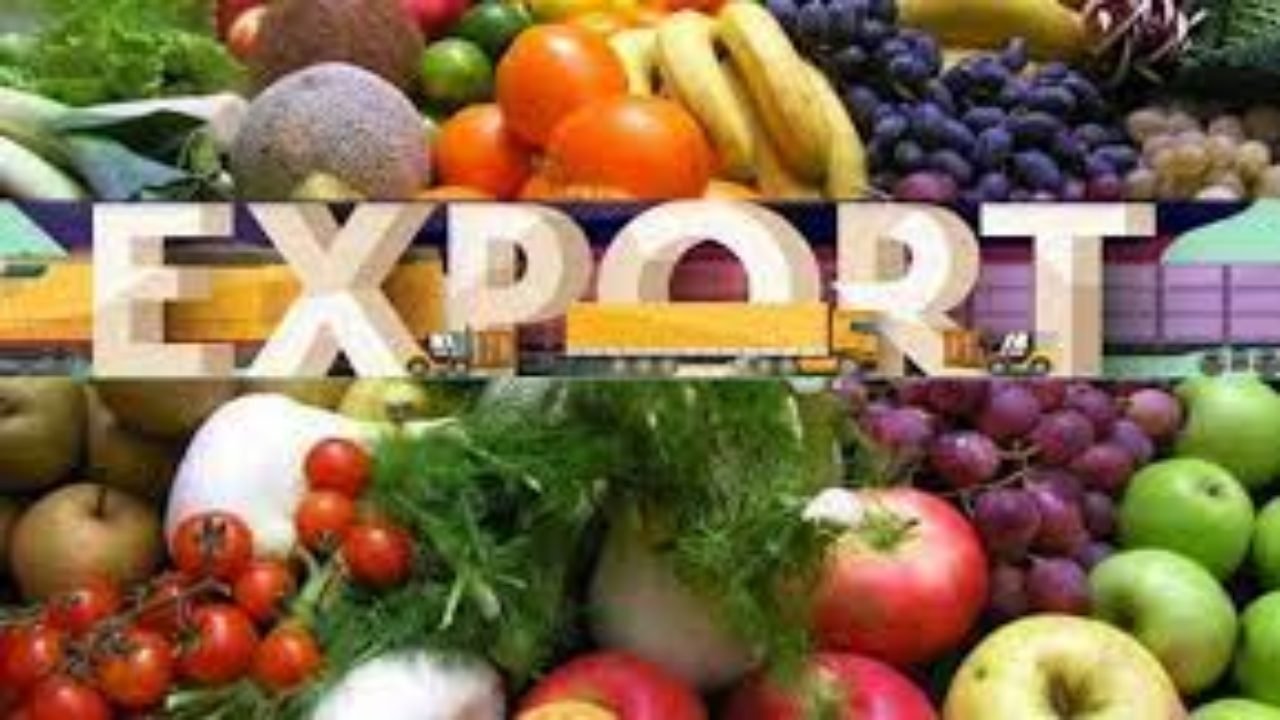
    The national food exports recorded a huge increase of 18.92 per cent during the first three quarters of the current fiscal year as compared to the corresponding period of last year, informed Pakistan Bureau of Statics (PBS).

    The PBS data showed the number increased to $3,961.469 million during July-March (2021-22) from $3,331.257 million in July-March (2020-21).

    Rice exports, with an increase of 14.96 percent, increased from $1,560.429 million to $1,793.909 million.

    The Basmati rice increased from $408.117 million to $496.389 million, which is a 21.63 percent increase. Moreover, an increase in other rice products were recorded from $1,152.312 million to $1,297.519 million, which is a 12.60 sharing growth increase.

    The fish and its related items exports increased from $303.782 million to $309.979 million which is 2.04 percent increase. About fruit exports, the PBS data revealed that the numbers increased from $378.575 million to $294.538 million, which is a 4.22 percent increase.

    The exports of vegetables increased by 1.09 percent, from $245.739 million to $248.413 million; leguminous vegetables (pulses) by 100 percent, from zero exports to $0.068 million; tobacco by 59.35 percent, from $24.736 million to $39.418 million; spices by 18.05 percent, from $70.524 million to $83.251 million; oil seeds, nuts and kernals by 131.41 percent, from $76.348 million to $176.678 million; meat and meat preparations by 1.18 percent, from $247.010 million to $249.934 million whereas the exports of all other food items increased by 56.86 percent, from $424.114 million to $665.282 million.

    Meanwhile, on a year-on-year basis, the exports of food commodities went up by 10.22 percent during March 2022 as compared to the same month last year. They were recorded at $526.466 million against the exports of $477.668 million.

  • FY22 Budget passes: Did the Opposition lie?

    FY22 Budget passes: Did the Opposition lie?

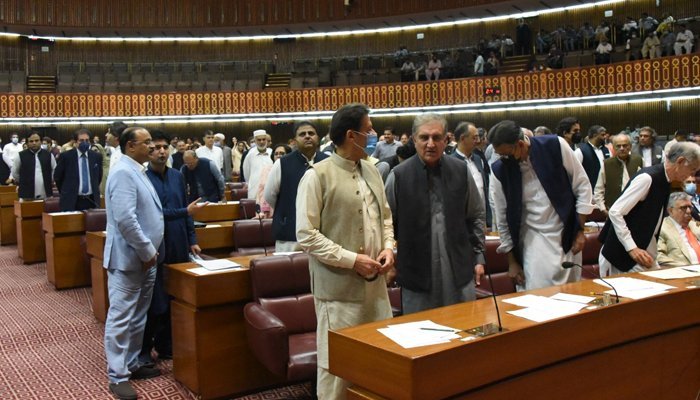
    The National Assembly (NA) on Tuesday passed the budget for the new fiscal year with majority vote amidst the Opposition’s hollow claims of giving the government a tough time.

    Prime Minister Imran Khan was present for today’s session, while former president Asif Ali Zardari and Pakistan People’s Party (PPP) Chairman Bilawal Bhutto-Zardari were also in attendance.

    The Finance Bill 2021-22 was discussed clause by clause in the House. Amendments proposed by treasury members were accepted while those proposed by the Opposition members were rejected.

    After the clause by clause reading was completed, a voice vote was conducted by the NA Speaker and the budget was passed.

    The Opposition did not challenge the voice vote since they did not have the required numbers.

    There were 172 votes in favour of the Finance Bill while 138 votes were against it. Meanwhile, senior Journalist, Hamid Mir claims that the total strength of the Opposition members in NA is 163 members. 25 opposition members were not present in the NA today,12 were from Pakistan Muslim League-Nawaz (PML-N) and13 from other opposition parties.

    Earlier this month, Leader of the Opposition in the National Assembly Shehbaz Sharif and Bilawal Bhutto had rejected the budget and vowed to give a tough time to the government inside the parliament.

  • Shaukat Tarin presents the Pakistan Economic Survey 2020-21

    Shaukat Tarin presents the Pakistan Economic Survey 2020-21

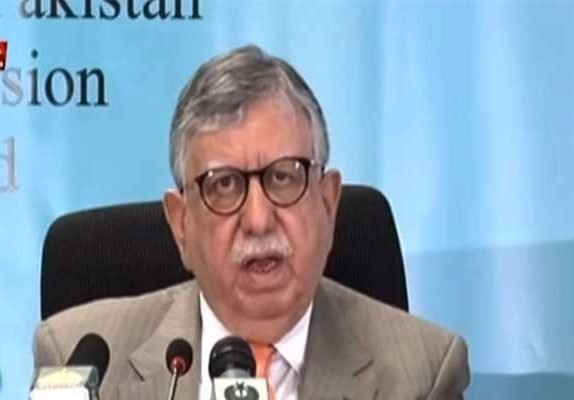
    Finance Minister Shaukat Tarin presented the Pakistan Economic Survey 2020-21 at a press conference in Islamabad on Thursday. However, the document did not have the latest figures on poverty and unemployment.

    Tarin revealed that the industrial and services sectors had helped the country post-Gross Domestic Product growth of 3.94 per cent in the first nine months of the fiscal year [FY](July to March), significantly higher than the target of 2.1 per cent.

    “The agriculture and manufacturing sectors helped the economy grow to 4.4%, laying stress on the need for sustainable growth in Pakistan in the years to come,” added Tarin.

    Coronavirus Pandemic

    The minister opened his press briefing by speaking highly of Prime Minister Imran Khan’s policies in combating the coronavirus pandemic.

    “The government itself had set [GDP] growth will be 2.1pc and the IMF predicted even lower. But the decisions by this government such as incentivising manufacturing and textiles, construction, and interventions in agriculture have helped the economy recover,” said Tarin.

    He said many people lost their jobs when the pandemic hit Pakistan, however, due to PM’s visionary policy of not imposing a complete lockdown across the country, millions of people who were unemployed were hired again. 

    “The economy is recovering,” he said. 

    Remittances

    Tarin said Pakistan’s remittances had broken records, adding that they had crossed $26bn. He said that lately imports, especially food in the form of wheat and sugar, were increasing as Pakistan’s economy was growing at the same time. 

    “We were net exporter of food but now, we have become a net importer,” he said. “Our exports registered a growth but our remittances increased manifold,” he added. 

    Ehsaas Programme

    Tarin spoke highly of the Ehsaas programme, adding that the World Bank had described it as “one of the best and the largest” poverty alleviation initiatives across the globe. 

    “Full credit goes to Sania Nishtar,” he said, adding that handing out cash to 15 million people was not a small achievement.

    Growth rate

    Tarin said he had told the prime minister it was time to focus on sustainable growth “until we go to 5-8pc GDP growth”.

    “We will do interventions and take care of the poor. The poor man has been crushed in this stabilisation phase because the dreams we have shown them have been of a trickledown economy. And this can only happen when growth is sustainable and continuous for 20-30 years,” he said.

    “Countries which had sustainable growth, they grew continuously for 20-30 years. What have we done? Every time we grow by borrowing money, which is credit-based growth.”

    Current Account

    According to the survey, during FY 2021, while the world was reeling from the economic impact of the pandemic, Pakistan’s “external sector appeared as a key buffer for resilience.”

     “The main driver of improvement in current account balance was the robust growth in remittances,” it stated.

    Trade Deficit

    “During July-March FY 2021, export of goods grew by 2.3 percent to $18.7 bn as compared to US$ 18.3 bn the same period last year. Import of goods grew by 9.4pc to $37.4 bn as compared to US$ 34.2 bn last year. Consequently, the trade deficit increased by 17.7per cent to $18.7bn as compared to $15.9bn last year,” the survey said.

    Inflation

    The finance minister said the government wanted to control inflation “but prices are still high and affecting the common man”.

    “So the way to solve this is by increasing production and that is why we have focused on agriculture in this budget,” Tarin said.

    Federal Board of Revenue (FBR)

    Speaking about the FBR, Tarin said he would end the practice of people being harassed by the bureau. “FBR will not audit [businesses or persons] but a third-party audit will be conducted,” he said. 

    International Monetary Fund (IMF)

    Tarin said Pakistan’s negotiations with the IMF were ongoing, adding that the international money lender had asked the government to hike tariffs and increase taxes. 

    The finance minister said Pakistan and the IMF want the same thing; sustainable growth, adding that the country cannot afford to increase taxes or hike tariffs so that the poor and the salaried class do not feel additional burden of inflation. 

    “This is a red line for the prime minister,” he said. “We will not further burden the poor,” he added. 

    Energy Sector

    Tarin said Pakistan’s economy was burdened due to the overcapacity in the power sector, saying that “it was a very big challenge and a black hole” for Pakistan. 

    Privitisation

     Tarin said it was fair to ask how he can privatise state-owned enterprises when all others, before him, promised to do the same but failed to. 

    “Nawaz Sharif used to shout the same slogan during the first time [when he was prime minister] and then for a second time [when he again became the prime minister] and then a third, but nothing happened,” he said.