Tag: flood

  • Heavy rains expected in Karachi, police on high alert

    Heavy rains expected in Karachi, police on high alert

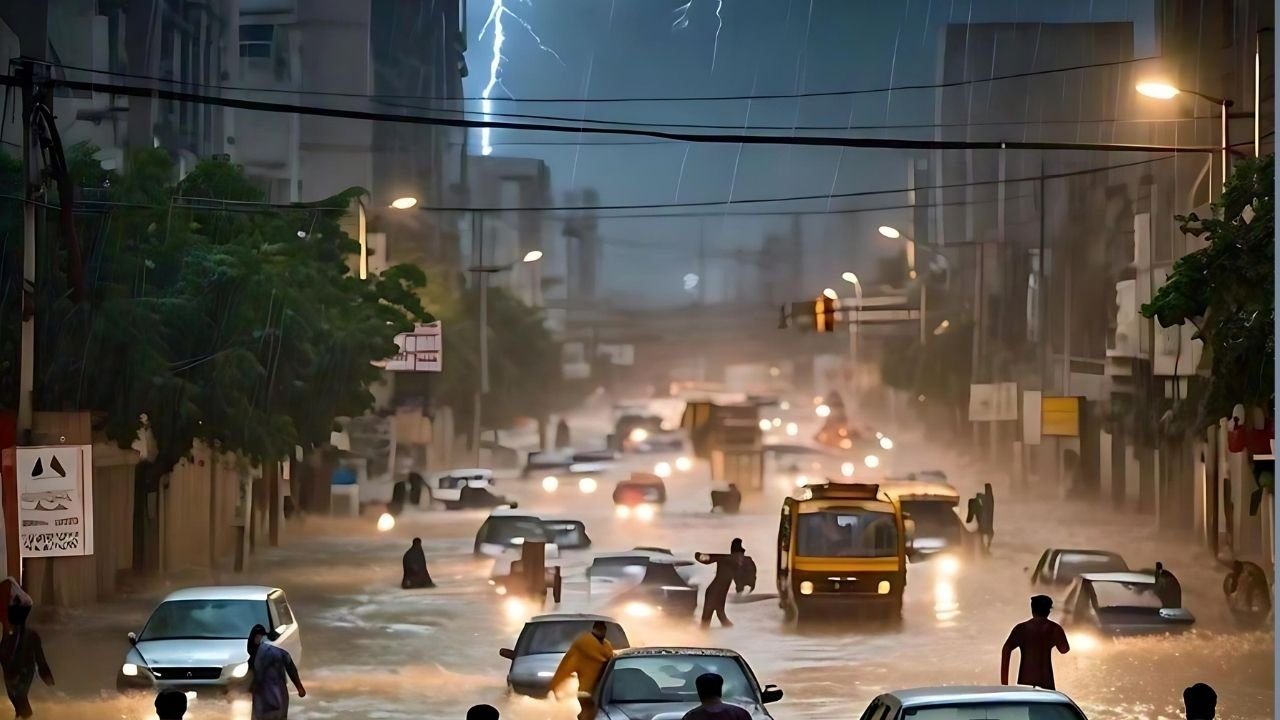
    The Pakistan Meteorological Department (PMD) has predicted heavy rainfall in Karachi, and city police have been alerted.

    Chief Meteorologist Sardar Sarfaraz said, “The system is intense, moving westward and southwestward. As of now, there is no indication that it’s going to lose its severity and is expected to bring about a very heavy to hefty fall in lower Sindh,”

    He said, “Karachi is also expected to receive heavy rains, though not of the same intensity,”

    Sarfraz said that the torrential rain in areas of Thatta, Sujawal, Badin, Tando Allah Yar, Tando Muhammad Khan, and Tharparker could increase from 400mm to 500mm.

    He added that Metropolice might record 150mm to 200mm of rain.

    Additional Inspector General of Police (AIG) Karachi Javed Alam Odho instructed police to provide alternate traffic routes in areas with more water accumulation.

  • Victims of 2022 floods to be rescued after two years

    Victims of 2022 floods to be rescued after two years

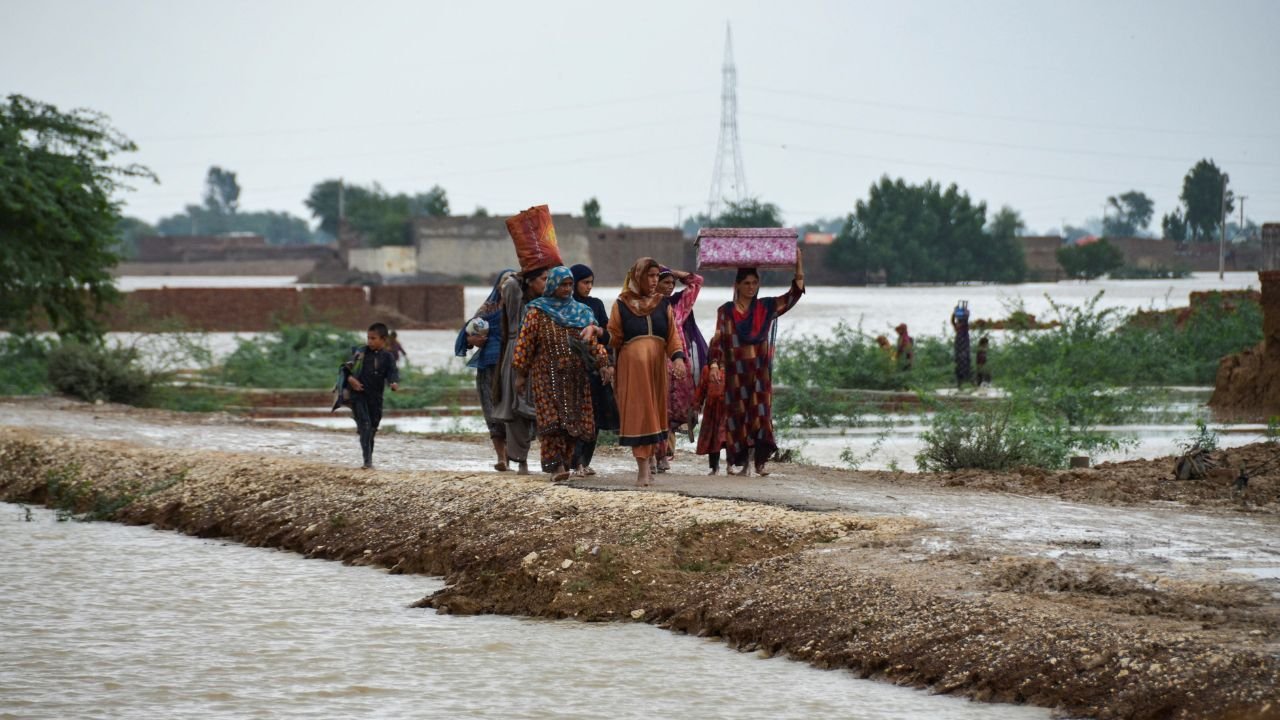
    The federal and Balochistan governments are planning to rehabilitate the victims of monsoon rains after two years.

    Both the governments have started a project worth 60 billion rupees with the support of the World Bank.

    Four project directors have been appointed for the project, which will be supervised by the Federal Department of Planning and Development.

    Asfandyar Kakar, the supervisor of flood victims’ rehabilitation project in Balochistan, told Geo News that more than 30 districts were affected by floods that came after the 2022 monsoon rains in the province.

    The floods destroyed 350,000 houses as well as damaged highways, bridges and agricultural crops.

    In a joint survey of the federal and provincial governments, the damage caused by the floods in the province was estimated at 900 billion rupees, but after two years, last month ECNEC approved the rehabilitation plan for the flood victims of Balochistan.

    The 60 billion rupees project focuses on four sectors including irrigation, housing, early hood and meteorology, while the project director of three sectors has been taken from Balochistan and the project director of meteorology sector has been taken from the federal department.

    3500 houses will be constructed and given to the victims under the project in the first phase, while work will be done to restore the roads and restore the damage caused to agriculture.

  • Deadly Bangladesh cyclone one of longest seen

    Deadly Bangladesh cyclone one of longest seen

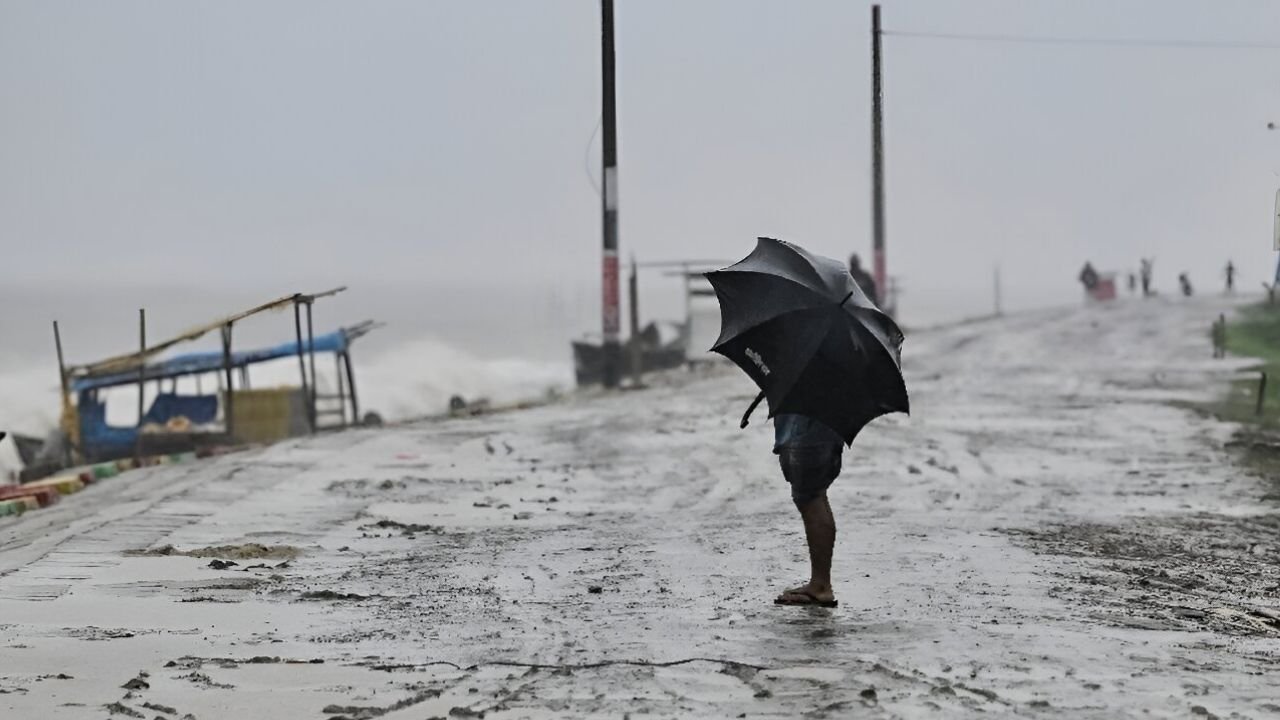
    Bangladeshi weather experts said Tuesday that a deadly cyclone that carved a swathe of destruction was one of the quickest-forming and longest-lasting they’d experienced, blaming climate change for the shift.

    Cyclone Remal, which made landfall in low-lying Bangladesh and neighbouring India on Sunday evening with fierce gales and crashing waves, left at least 23 people dead, destroyed thousands of homes, smashed seawalls and flooded cities across the two countries.

    “In terms of its land duration, it is one of the longest in the country’s history,” Azizur Rahman, director of the state-run Bangladesh Meteorological Department told AFP, adding it had battered the country for more than 36 hours.

    In contrast, Cyclone Aila, which hammered Bangladesh in 2009, lasted around 34 hours.

    Cyclones have killed hundreds of thousands of people in Bangladesh in recent decades, and the number of superstorms hitting its densely populated coast has increased sharply, from one a year to as many as three, due to the impact of climate change.

    Slow-moving — and therefore longer-lasting — storms bring greater destruction.

    “I’ve seen many storms in my life but nothing like this cyclone”, said Asma Khatun, an 80-year-old widow who lives with her son, a fisherman in Bangladesh’s hard-hit coastal town of Patuakhali.

    “Before, the storm came and went away… now it doesn’t seem to go away. The incessant pouring and heavy wind kept us stuck for days”.

    Rahman said the cyclone triggered massive rains, with some cities receiving at least 200 millimetres (7.9 inches).

    Storm surges breached multiple embankments, meaning seawater flooded into farmland, damaged freshwater fish farms common along the coast, or corrupted drinking water.

    Bangladesh’s state minister for disaster Mohibbur Rahman said 3.75 million people had been affected by the cyclone,  more than 35,000 homes were destroyed, and another 115,000 damaged.

    “We don’t know where to go,” said Setara Begum, 75, surveying the wreckage of her home after its tin roof was ripped off.

    Azizur Rahman said the cyclone formed more quickly than almost all the cyclones they have monitored in recent decades.

    “Of course, quick cyclone formation and the long duration of cyclones are due to the impact of climate change,” Rahman said.

    “It took three days for it to turn into a severe cyclone from low pressure in the Bay of Bengal… I’ve never seen a cyclone formed from a low pressure in such a quick time,” he said.

    “Usually, a cyclone is formed in the south and southwest of the Bay of Bengal, then takes seven to eight days to turn into a severe cyclone.”

    But while scientists say climate change is fuelling more storms, better forecasting and more effective evacuation planning have dramatically reduced death tolls.

    Around a million people in Bangladesh and neighbouring India fled inland seeking safety — but many people preferred to stay put to guard their homes.

    In Bangladesh, Cyclone Remal killed at least 17 people, according to the disaster management office and police, who reported Tuesday the additional deaths of a husband and wife, “crushed under stacks of bricks” when their house collapsed.

    Some drowned. Others were killed by debris, falling trees or electrocuted by falling power lines.

    Thousands of electricity poles were torn down, and power is out across large areas, said Biswanath Sikder, chief engineer of the Bangladesh Rural Electrification Board.

    “More than 20 million people are without electricity,” Sikder told AFP. “We are working hard to bring around 50 percent of these affected people by Tuesday evening.”

    In India, six people died, West Bengal state officials said.

    But the worst impact was stemmed by the expansive Sundarbans mangrove forest straddling Bangladesh and India — where the Ganges, Brahmaputra and Meghna rivers meet the sea, Bangladesh’s state weather department said.

    The crucial sea-water coastal forests help dissipate the violence of such storms.

    The International Union for Conservation of Nature (IUCN) warned this month that half of the world’s mangrove ecosystems are at risk of collapse due to climate change, deforestation and pollution.
  • Rains, mudslides kill 29 in southern Brazil’s ‘worst disaster’

    Rains, mudslides kill 29 in southern Brazil’s ‘worst disaster’

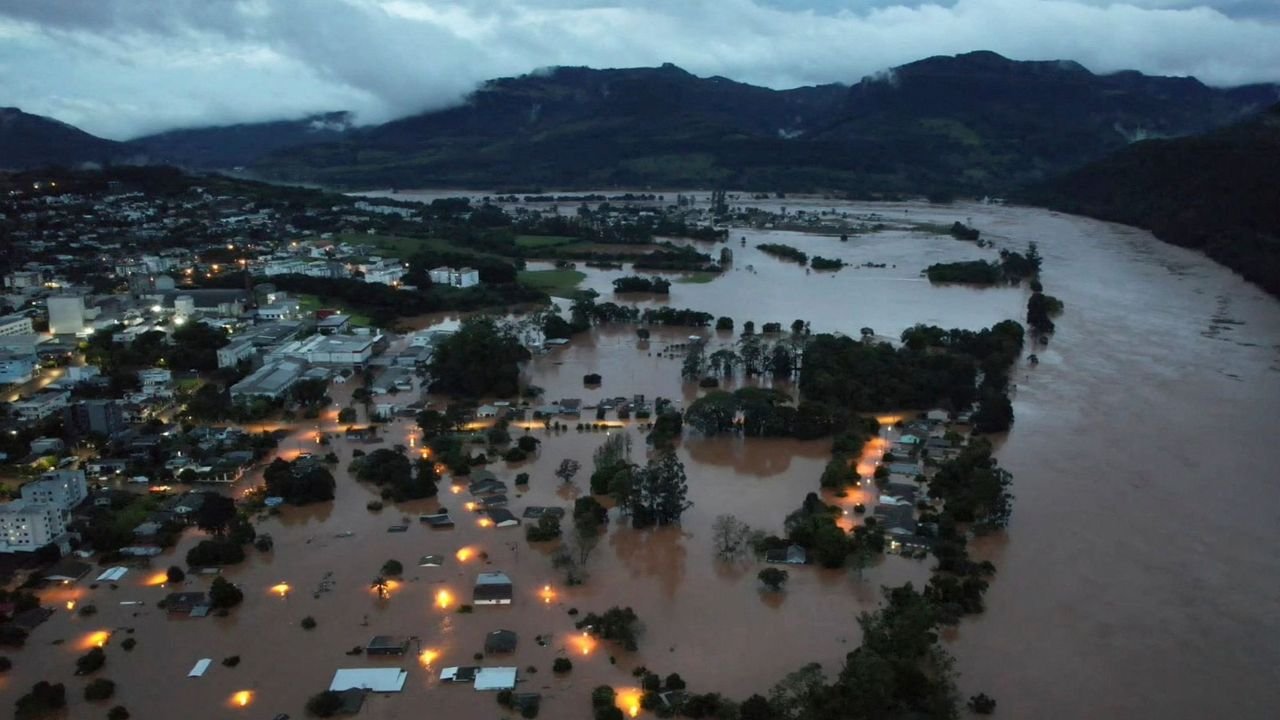
    Brazilian President Luiz Inacio Lula da Silva on Thursday visited the country’s south where floods and mudslides caused by torrential rains have killed 29 people, with the toll expected to rise.

    Authorities in Rio Grande do Sul have declared a state of emergency as rescuers continue to search for dozens of people reported missing among the ruins of collapsed homes, bridges and roads.

    Storm damage has affected nearly 150 municipalities in the state, also injuring 36 people and displacing more than 10,000.

    Governor Eduardo Leite said Rio Grande do Sul was dealing with “the worst disaster in (its) history.”

    “With the deepest pain in my heart, I know it will be even more,” the governor said of the death toll.

    Lula, who has blamed the torrent on climate change, arrived in the town of Santa Maria in the morning with a delegation of ministers and held a working meeting with Leite and other officials to coordinate rescue efforts, the government said.

    The president promised “there will be no lack of human or material resources” to “minimize the suffering this extreme event… is causing in the state.”

    The federal government, he added, “will be 100 percent at the disposition” of state officials.

    Central authorities has already made available 12 aircraft, 45 vehicles and 12 boats as well as 626 soldiers to help clear roads, distribute food, water and mattresses, and set up shelters, a press statement said.

    As the rains continued, forecasts warned the state’s main Guaiba River, which has already overflowed its banks in some areas, would reach an extraordinary level of three meters (9.8 feet) by Thursday and four meters the next day.

    Entire communities in Rio Grande do Sul state have been completely cut off as persistent rains have destroyed bridges and blocked roads, and left towns without even telephone or internet services.

    Rescuers and soldiers have been scrambling to free families trapped in their homes, many stuck on rooftops to escape rising waters.

    “I’ve never seen anything like this… it’s all under water,” said Raul Metzel, a 52-year-old machine operator in the municipality of Capela de Santana.

    A dam collapsed in the town of Cotipora, raising the level of water in the Taquari river.

    “I came here to help people, to get them out of the flooding because it is very dangerous. The current is very strong,” said fisherman Guilverto Luiz, who was helping rescue efforts in Sao Sebastiaio do Cai, about 70 km from Porto Alegre, the state capital.

    Authorities have urged people to avoid areas along state highways due to a risk of mudslides, and those who live near rivers or on hillsides to evacuate.

    Hundreds of thousands of people have been left without access to electricity and drinking water, while classes have been suspended state-wide.

    On Wednesday, the state’s deputy governor, Gabriel Souza, said damages have been estimated at $20 million.

    Mayor Sandra Backes of Sinimbu said the situation in her town was “a nightmare.”

    “Sinimbu is like a war zone, completely destroyed… All the stores, businesses, supermarkets — everything is devastated,” she said in a video posted on Instagram.

    Elsewhere, in Santa Cruz do Sul, lifeguards used boats to transport residents, many of them children, to safety.

    The region’s rivers had already been swollen from previous storms.

    Last September at least 31 people died as a cyclone hit the state.

    South America’s largest country has suffered a string of recent extreme weather events, which experts say are made more likely by climate change.

    The floods came amid a cold front battering the south and southeast, following a wave of extreme heat.

  • Flash floods wreak havoc in Gwadar

    Flash floods wreak havoc in Gwadar

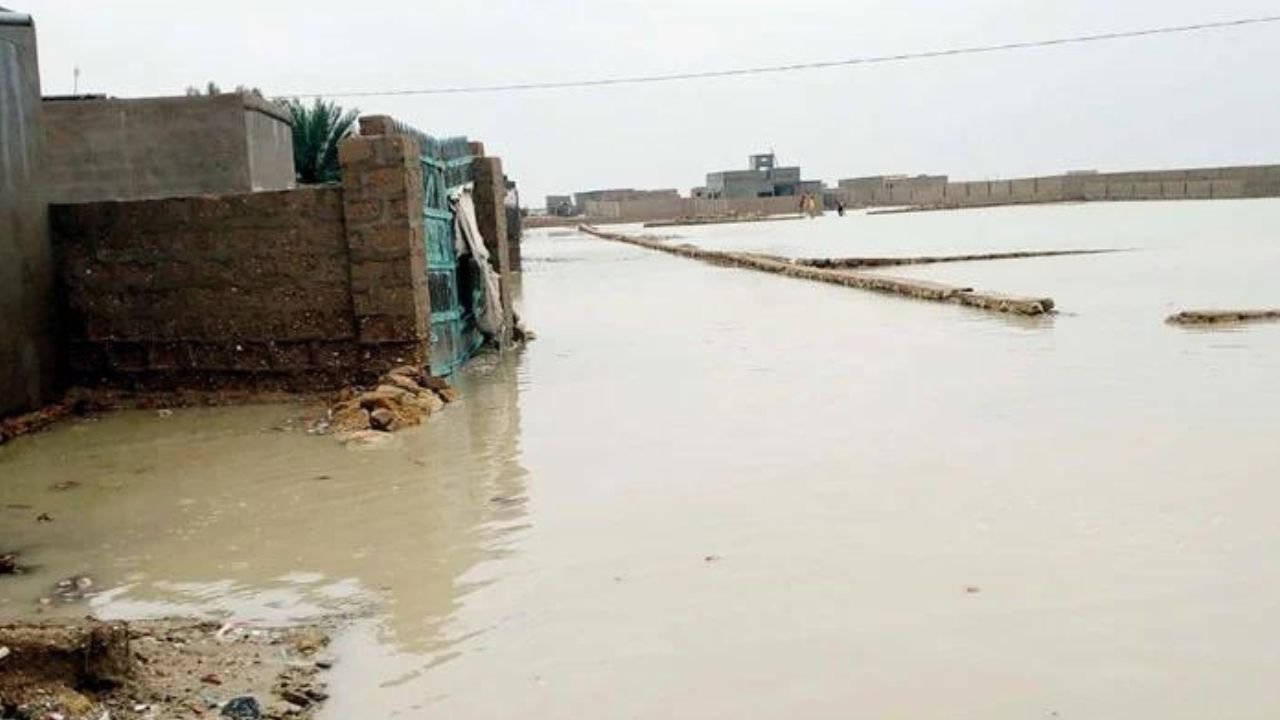
    Unexpected floods have hit Pakistan once more as Balochistan bears the brunt of sporadic rainfall just before spring. The flooded area includes the provincial capital of Quetta but this time, Gwadar has been severely affected.

    The flood was prompted by heavy rains on February 27 in Gwadar where the highest amount recorded was 58 millimetres.

    According to the Commissioner of Makran, the rain persisted for nine hours while in Gwadar, the duration was more than 16 hours which also impacted the electricity system.

    Some of the other areas experiencing rains were Dalbandin, Khuzdar, and Turbat.

    It has been forecast that heavy rains will continue across the province until March 2.

  • Mayor of Karachi lambasted on social media following Karachi rains

    Mayor of Karachi lambasted on social media following Karachi rains

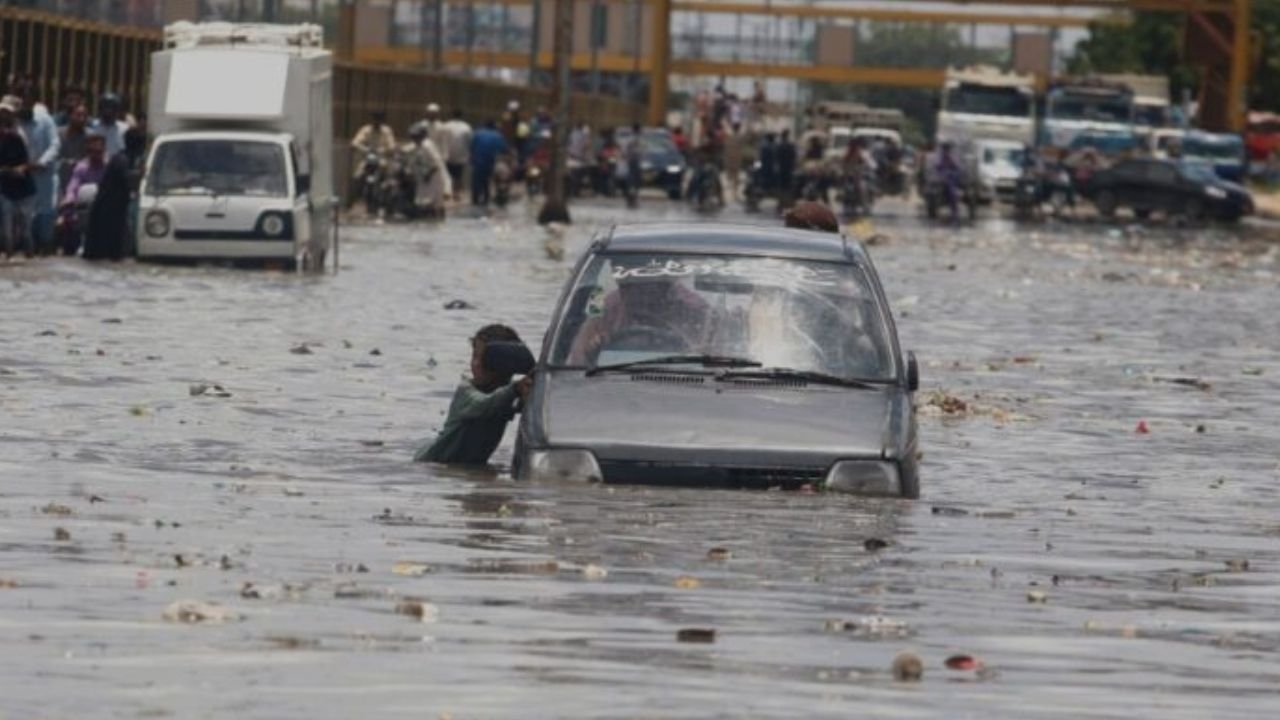
    The recent rains in Karachi have sparked heavy criticism of the city’s governance on social media.

    With the main arteries blocked following the rain on Saturday, the city has been flooded while movement has been disrupted.

    Karachi’s mayor Murtaza Wahab of the PPP is under fire on social media, especially now that the elections are around the corner.

  • 150 still missing after glacial burst in Kolkata

    At least 42 people have reportedly died after flash floods swamped following a glacial lake burst its banks in the Indian Himalayas in Kolkata this week.

    150 missing people are still missing.

    On Wednesday, a cloudburst led to severe rain, causing Lhonak Lake to overflow and a consequential avalanche resulting in the flooding of Teesta river.

    It is said to be one of the worst calamities in the region in more than 50 years.

    Accoeiding to authorities in Sikkim, 22,000 people have been affected.

    “We got calls from people that river levels could rise at 3am and we ran for our lives,” Reuters quotes Javed Ahmed Ansari, 44, a resident of Teesta valley, who owns a river rafting business.

    “We ran towards the hill in the jungle … We saw houses getting swept away. I can now only see the first floor of our house which is filled with sand, everything is submerged.”

    According to Reuters, officials involved in the project said that scientists and government authorities had beenbworking on an early warning system for glacial floods at Lhonak Lake which could have given people more time to evacuate if it was fully operational.

  • Another monsoon spell to hit Punjab from Sunday

    As many districts in Punjab deal with intense heat, the Provincial Disaster Management Authority (PDMA) has predicted rainfall in the coming days.

    As stated by the Provincial Disaster Management Authority (PDMA), the weather will remain hot and humid across the majority of Punjab. Nevertheless, the province is anticipated to experience monsoon rains from August 13 to 16.

    Substantial rainfall is forecasted for Sialkot, Narowal, Shakargarh, Lahore, Gujranwala, Gujrat, and Mandi Bahauddin. Additionally, there’s likelihood of rain accompanied by thunderstorms in Rawalpindi, Attock, Jhelum, Chakwal, Murree, and Galliat.

    The PDMA has affirmed that water levels in the Chenab, Ravi, Jhelum, and Sutlej rivers are within normal range, while Taunsa along the Indus River is experiencing minor floods. Tarbela and Mangala dams are currently at 95 percent of their capacity.

    Simultaneously, the Pakistan Meteorological Department (PMD) has predicted hot and humid conditions across most parts of the country in the next 24 hours. However, there’s an expectation of rain, wind, or thundershowers in northeastern Punjab, the Potohar region, Islamabad, upper Khyber Pakhtunkhwa, and Kashmir. In the central and southern parts of the country, there are chances of strong winds capable of raising dust.

  • Melting glacier causes Indus to stop flowing, locals and infrastructure at risk

    Melting glacier causes Indus to stop flowing, locals and infrastructure at risk

    The Indus River has stopped flowing due to the melting of a glacier, which has emerged as an eminent threat to the surrounding population in Diamer district of Gilgit-Baltistan.

    There is a fear of damage to the adjacent population due to the hold in water flow of the Indus River, reported Geo News. The rising water level has started touching the Labcher Bridge that could result in damaging the structure.

    Following the water blockage in Indus, the Raikot Mathath drain has also flooded and the drain water has entered the water channel of the Raikot Power House [Raikot is a village situated along the Indus River].

    Flooding in the drain has further caused a power outage in Gonar farm and Goharabad areas. Furthermore, a house and crops were also damaged.

  • Flood waters reach boundary wall of Taj Mahal, raising fears of damage to iconic building

    Flood waters reach boundary wall of Taj Mahal, raising fears of damage to iconic building

    Flood waters from Yamuna river have reached the boundary wall of the Taj Mahal, raising fears of damage to the most famous building in India.

    Water levels in Yamuna have risen steadily since June when unusually heavy rains hit north India including Uttar Pradesh, home to the iconic Taj. According to India’s Central Water Commission (CWC), the portion of the river flowing alongside the Taj Mahal rose to 152m on Tuesday evening, well above the warning level for potential danger of 151.4m. The level considered dangerous is 152.4 metres.

    The last time flood waters hit the boundary wall was in 1978, exactly 45 years ago.

    The mausoleum, where Mughal emperor Shah Jehan and his wife Mumtaz Mahal are buried, remains untouched by the water as of now.

    However, the red walls of the compound appear submerged in photographs shared by Indian news outlets.