Tag: flood affected areas

  • Flood-affected areas unlikely to produce good voter turnout in Balochistan and Sindh: Report

    Flood-affected areas unlikely to produce good voter turnout in Balochistan and Sindh: Report

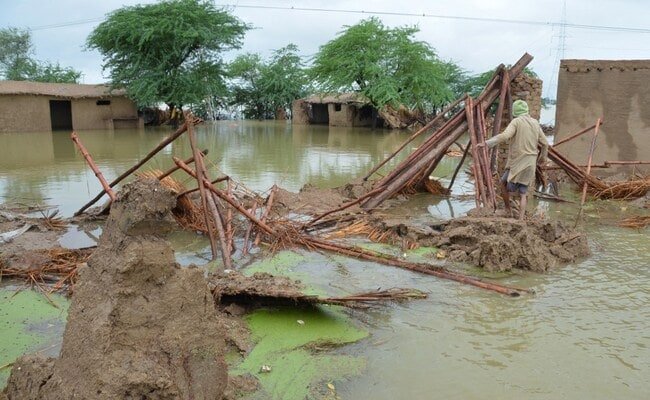
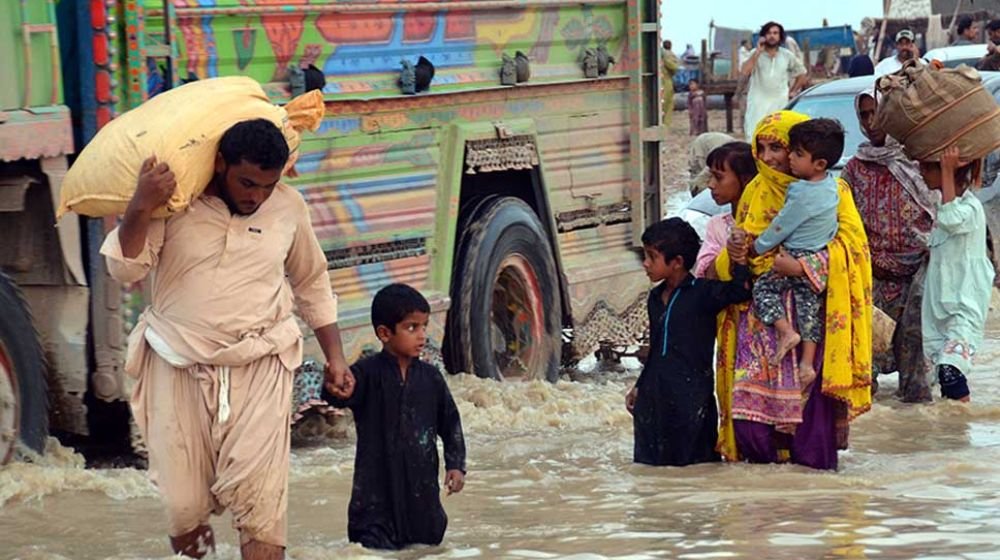
    The Centre for Peace and Development Initiatives (CPDI) has stated in a report that over 10 million individuals faced displacement while 2.1 million homes were damaged in Sindh and approximately 100,000 in Balochistan in the devastating floods that hit Pakistan in 2022. The findings of the report reveal that due to financial constraints, there is a possibility that low-income migrated families will not return to cast their votes in the upcoming general elections.

    The lack of Computerised National Identity Cards (CNICs) and damaged pathways to polling stations jeopardise participation of the flood-affected communities, reports Dawn.

    A study by CPDI, conducted in Sindh and Balochistan, identifies multiple problems faced by flood-affected communities which may adversely affect voter turnout. It shows key issues, notably the absence of CNICs and damaged pathways to potential polling stations or school buildings.

    While highlighting the issues, CPDI urged authorities to take immediate measures to facilitate voter turnout in the flood-affected areas specifically in Khairpur, Naushahro Feroz, Naseerabad and Jaffarabad.

    The qualitative assessment was undertaken in the severely affected provinces of Sindh and Balochistan, highlighting various critical issues, including the absence and delays in obtaining national identity cards, damaged infrastructure such as roads and designated polling stations/school buildings, waning interest in political leaders due to insufficient post-disaster rehabilitation efforts, and concerns about the displaced community’s return to exercise their voting rights.

    Additionally, individuals with lifelong injuries may be bedridden, posing a challenge for their participation in the general election (GE) 2024. These findings underscore the multifaceted challenges affecting the electoral landscape in flood-affected regions.

    A significant number of flood victims lost their CNICs (at least one in every household), delays in renewal of CNICs are primarily because of the crowded and limited number of Nadra centres established at village level, residents added that mobile registration vans of Nadra initially helped but were later discontinued.

    “Furthermore, daily wage earners also find it financially burdensome to visit Nadra centres. CPDI urges the authorities to take immediate action to ensure that eligible voters in flood-affected regions receive their CNICs before elections. Moreover, damaged roads and access tracks force voters to take longer alternative routes to reach polling stations, reported in all villages of selected districts in Sindh and Balochistan.

    “Increased distances, combined with high transportation costs, will likely discourage voters, particularly women, elderly, differently-abled and low-income individuals, from travelling to cast their votes. With over 40 per cent of school buildings damaged and incomplete recovery efforts, newly designated polling stations may be distant, posing accessibility challenges for flood-affected residents on polling day without adequate transportation,” the report stated.
  • Poverty-driven child marriages surge in flood-hit Balochistan

    Poverty-driven child marriages surge in flood-hit Balochistan

    Journalist and storyteller Shahar Baloch has recently reported for BBC about the aftermath of the devastating floods in Balochistan last year. The report reveals that families from lower income backgrounds, impacted by the aftereffects of the floods, are being compelled to sell their daughters due to mounting debts. The dire situation was uncovered in the Chowki Jamali area, one of the regions hit hardest by the 2022 floods.

    Chowki Jamali, a remote area on the border of Sindh and Balochistan, is home to approximately 50,000 people, primarily farmers and daily wage laborers. The 2023 floods displaced over 3.2 million families in 2022, with Sindh and Balochistan experiencing the worst of the brunt.

    As families struggled to recover, the economic downturn pushed many to sell their young daughters to older men, aged between 40 and 60 years, in exchange for money to pay off debts or cover medical expenses. Daily wage laborers, earning as little as 500 rupees a day, say that they are left with no other option.

    Residents of the area say that early marriages have been conducted here in the past as well.

    The Provincial Disaster Management Authority (PDMA) conducted a survey of 14 districts of Balochistan in August 2022. According to the survey, there has been a 13 per cent increase in the number of cases of selling female children.

    Most girls are sold for amounts ranging from three to five lakh rupees, providing relief for financially strained families, who often rely on the transaction to settle debts, access medical treatment, or invest in their son’s education.

    The situation is exacerbated by the fact that in some cases, girls are sold multiple times if they do not “adjust” to their new circumstances. Some girls even run away upon learning of their impending sale, leaving their younger sisters to be married off in their place.

    The term “climate brides” is used to describe these girls, and this alarming practice is not unique to Balochistan; it also occurs in countries like Africa and India where poverty and climate change intersect.

    Climate change and floods have made agriculture increasingly unprofitable in Balochistan, driving families to desperate measures. With little income and food scarcity, many in Chowki Jamali resort to selling their daughters to survive.

    Even though education has made a difference, parents continue to sell their daughters due to extreme poverty.

    Health workers report severe health consequences for young girls married off early, including complications during pregnancy and the development of conditions like fistulas. Despite being aware of this issue, authorities have struggled to curb these marriages.

    Lady health worker Shehzadi told the BBC that in some cases, girls cry in pain, and some die here. “We still make noise, we can say something, but the mothers of these girls cannot say anything in this matter because it is the men of the house who decide to sell the girls.”

    Madad Community, an organization working on climate change in Balochistan, recently said that as a result of climate change and floods, it has become very difficult to earn from the agriculture sector.

    Organizer Maryam Jamali said that most people were forced to migrate, including the middle class of Balochistan. Poor farmers still have nowhere to go. As a result of extreme heat, more droughts and floods have been predicted.

    Fauzia Shaheen, Chairperson of the Government Commission for Women, revealed that Balochistan lacks effective laws to prevent child marriages, and efforts to pass the Child Marriage Restraint Bill have faced obstacles.

    In Balochistan, it is clear that the true cost of flood damage is being borne by the region’s vulnerable young girls, who are forced into early marriages due to dire economic circumstances.

  • Schools to reopen soon in flood-affected areas of Sindh

    Schools to reopen soon in flood-affected areas of Sindh

    The Sindh government has decided to reopen educational institutions in flood-hit areas in the province.

    Addressing a press conference, Sindh’s Education Minister Sardar Shah said on Friday that continuing education in flood-prone areas is a challenge. He directed all the concerned officers to reopen the schools in all the flood-hit areas within 15 days.

    The Minister said that some of the schools will take around three years to resume their operations, and said that the government has devised a plan to recommence education in disaster-hit districts.

    He continued by saying that the Chief Minister (CM) of Sindh, Murad Ali Shah, had also been approached for help by the Education Ministry in the development of temporary tent schools.

    He further said that 15,000 tent classrooms are being built in areas impacted by the floods.

    Additionally, the minister announced the hiring of nearly 700 music educators across the province. Teachers of naat khwani, qawwali, and sana khwani will also be recruited in addition to those who teach music.
    Minister Shah also stated that 49,000 teachers have been hired by the government.

  • WHO assures assistance in essential healthcare in flood- affected areas

    WHO assures assistance in essential healthcare in flood- affected areas

    World Health Organization’s (WHO) Country Representative Dr Palitha Gunarathna Mahipala on Saturday said that essential healthcare services will be provided in flood-affected areas.

    During a media briefing on the WHO’s role in relief efforts in flood-hit areas, he said that WHO was working on a plan to aid in establishing effective healthcare systems.
    The WHO country director stated that his agency was fully aware of the destruction brought on by the recent floods in Pakistan, stressing that the flood seriously harmed the delivery of health-care services, leading to a variety of health hazards.

    He continued by saying that numerous diseases like cholera, malaria, dengue fever, skin infections, and typhoid were on the rise in the impacted areas.

    “In order to prevent mortality due to malaria, WHO is providing rapid diagnostic kits and anti-malarial medicines worth $2.5 million while technical support is also being provided to the federal and provincial governments to deal with malaria outbreaks. As larvicidal preventive measures are not possible in flood-affected areas, prophylactic treatment and post-exposure treatments are being arranged to treat malaria patients”, he added.
    WHO will hire an additional 107 technical specialists and staff to help manage the health emergency in Pakistan’s flood-affected regions.

  • World Bank to provide Pakistan $22.2 million in financial support for flood-affected farmers

    World Bank to provide Pakistan $22.2 million in financial support for flood-affected farmers

    In an attempt to help Pakistan’s flood-affected farmers, the World Bank will provide financial support of $22.2 million.

    A delegation led by the World Bank’s South Asia Regional Director for Sustainable Development, John A Roome, met with the Federal Minister for National Food Security and Research, Tariq Bashir Cheema.

    The discussion at the meeting focused on the farmer community and food security, as well as the rehabilitation and relief operations in the flood-affected areas.

    According to the minister, rain and flooding have wreaked havoc on the agricultural industry and destroyed the farming community. In order to restore normalcy, he claimed that at this crucial moment, all attention is being paid to restoration efforts in the flood-affected districts.

    He mentioned the government’s intention to provide subsidies for fertiliser and seeds to help the impacted farmers. According to the idea, the federal government will cost-share with the provinces to give farmers discounted inputs for the upcoming Rabi season.

    “We plan to provide subsidized wheat and edible oil seeds, and one fertilizer bag per acre to farmers in the calamity-hit areas,” he said.

    Provincial governments and the National Disaster Management Authority will handle the disbursement. He believed that with this support, farmers will be able to stand up again.

    According to John A. Roome, the World Bank would assist Pakistan by funding initiatives aimed at rebuilding the devastated neighbourhood. He consented to assist the World Bank’s Locust Emergency and Food Security (LEAFS) initiative in rehabilitating the farming community in the afflicted districts and locust-stricken regions. He said that the World Bank is assisting the farming community by collaborating with provincial agriculture agencies.

    He stated that he would ask the World Bank Group Board to extend aid to Pakistan as it attempts to recover from the damage brought on by unheard-of floods. The minister also praised the World Bank Group’s support at a time when assistance was most needed for the country.

  • Balochistan appoints its first female deputy commissioner

    Balochistan appoints its first female deputy commissioner

    Ayesha Zehri has been appointed Balochistan’s first female Deputy Commissioner (DC) of Nasirabad district.

    It is the first time in the administrative history of the province that a female officer was appointed as DC of any district.

    The appointment took place on Tuesday and she assumed her new responsibilities after a notification of the appointment was issued by the Services and General Administration.

    Chief Minister (CM) Balochistan Mir Abdul Qudoos Bizenjo said that Zehri’s appointment reflects confidence in the abilities of women from the province.

    “Women are an important part of society. Empowering women and making full use of their abilities is one of the priorities of our government. The appointment of the first female officer in the province as a deputy commissioner is an expression of confidence in the abilities of the women of the province. I pray for her success”, he added.

    Replying to the CM, Ayesha thanked him for acknowledging her efforts.

    Prior to this appointment, she had held the post of Assistant Commissioner (AC) of the Khichi district. In Nasirabad, Ayesha has replaced DC Mohammad Hussain.

    Earlier this month, Prime Minister (PM) Shehbaz Sharif visited Balochistan where he appreciated Ayesha for her work during floods.

    In a video, it can be seen that the PM along with CM Bizenjo clapped for Ayesha.

    Who is she?

    DC Ayesha Zehri did her BE in Electrical Engineering from Khuzdar Engineering University and Wapda. In 2017, she appeared in the Provincial Services Commission exam and joined the provincial services.

    As assistant commissioner of the Chagai district, Zehri conducted many raids against criminals and drug smugglers and arrested a number of suspects.

    During the rain emergency in Bolan, she helped the flood-stricken passengers stranded between Bibi Nani and Pinjra Bridge.

  • ‘It is water everywhere, just like a sea’: PM Shehbaz visits flood-affected areas

    ‘It is water everywhere, just like a sea’: PM Shehbaz visits flood-affected areas

    Prime Minister (PM) Shehbaz Sharif visited Dera Ismail Khan, KP to review ongoing restoration and rehabilitation work in flood-affected areas today (Wednesday).

    During the visit, while talking to the media, PM Shehbaz said, “You wouldn’t believe the scale of destruction there. There is water everywhere as far as you can see. It is just like a sea.”

    The premier emphasised the need for a “sustainable system” to cope with the challenges of climate change.

    He said trillions are needed for relief and rehabilitation activities post floods. “We will need trillions of rupees to cope with this calamity”, he observed.

    “The country is grappling with an unprecedented situation, witnessing floods that have resulted in the loss of lives, infrastructure and crops,” he said, adding that it was time to “rise above politics and demonstrate the spirit of service and welfare.”

    The Premier announced that a sum provided by a philanthropist for flood relief would be used for installing 100 prefabricated houses in DI Khan.

    Moreover, the premier announced that under the Benazir Income Support Programme (BISP), every flood-hit household would be given Rs25,000 and Rs1 million would be given in compensation to the relatives of the deceased.

    According to National Disaster Management Authority (NDMA),18 more people died from the flood in the past 24 hours, taking the death toll to 1,343. Eight children were among the dead in the last 24 hours.

    The government has said 33 million people have been affected. The floods were brought by record monsoon rains and glacier melt in Pakistan’s northern mountains. A total of 116 districts have been adversely affected.

    World Health Organisation (WHO) said more than 6.4 million people need humanitarian support in the flooded areas.

  • At least 73,000 pregnant women expected to deliver next month in flood-affected areas

    At least 73,000 pregnant women expected to deliver next month in flood-affected areas

    According to the United Nations Population Fund (UNFPA), at least 650,000 pregnant women in flood-affected areas are in desperate need of maternal healthcare. As per UNFPA, 73,000 pregnant women are expected to deliver next month.

    “Up to 73,000 women expected to deliver next month will need skilled birth attendants, newborn care, and support,” the agency said, adding that pregnancies and childbirth cannot wait for emergencies or natural disasters to be over as this is when a woman and baby are vulnerable and need the most care.
    “UNFPA is on the ground, working with partners, to ensure that pregnant women and new mothers continue re­­ceiving life-saving services even under the most challenging conditions,” ac­­ting UNFPA Pakistan Repre­sen­tative Dr Bakhtior Kadirov said.

    You can donate clean delivery kits to women in need in flood-affected areas.

  • KP to open govt buildings for flood victims: CM Mahmood Khan

    Chief Minister (CM) Khyber Pakhtunkhwa (KP) Mahmood Khan has announced to open all the government buildings for the flood victims.

    According to Provincial Minister for Higher Education Kamran Khan Bangash, colleges, libraries and all higher education offices located in the flood-affected areas have been opened for the flood affectees.

    CM Khan will also pay a visit to flood-hit areas of Swat and Lower Dir today, a tweet from PTI’s official handle said.

    He will assess the damage caused by the floods and overview the relief efforts underway.

    The province witnessed another day of deaths on Saturday as three casualties have been reported today. The authorities in Nowshera renewed their call for evacuations amid a “very high flood” in the Kabul River.

    In KP, many hotels are also offering their services to accommodate displaced people.

    According to the latest statistics, nearly 1,000 people, including 300 children, have lost their lives because of floods. The devastating crisis has also impacted nearly 33 million people – almost 15 per cent of the country’s population.

    The Pakistan Telecommunication Authority (PTA) tweeted that damages to optical fibre cables and power outages have been reported in some areas of KP.

    “PTA is monitoring the situation closely. Work is underway to fully restore services,” it said.

    More than 100 districts across four provinces have been hit by the floods. Balochistan’s capital Quetta isolated from the rest of the country as many highways and bridges have been swept away. Telephone and internet services were also disrupted in several parts of Balochistan due to damage caused by torrential rains.

    PM Shehbaz visits Sindh today

    Prime Minister (PM) Shehbaz Sharif visited Faqirani Jat, Oplano, and other flood-affected areas of district Sajawal in Sindh province today (Saturday) to review the situation. Sindh CM Murad Ali Shah also accompanied the PM.

    COAS to visit flood-hit areas of Balochistan and Sindh today

    Chief of Army Staff (COAS) General Qamar Javed Bajwa will visit flood-hit areas of Balochistan and Sindh today. The army chief will get the latest update on the ground and meet the troops busy in rescue and relief efforts.

  • No voice and data services in several flood-affected areas

    The Pakistan Telecommunication Authority (PTA) announced that voice and data services have been disrupted in several flood-affected areas.

    “Due to torrential rains & flash floods in Balochistan and damage to optical fibre cable, voice and data services have been impacted in Quetta, Ziarat, Khuzdar, Loralai, Pashin, Chaman, Panjgor, Zhob, Qila Saifullah and Qila Abdullah,” PTA said in a tweet on Friday (August 26).

    “Efforts are being made to resolve this unprecedented situation. PTA is monitoring the situation and further updates will be shared,” it added.

    Read more- Pakistan officially declares the flood situation a ‘national emergency’

    At least 937 people have died in floods caused by heavy rains in Sindh and Balochistan provinces. According to the data issued by the National Disaster Management Authority(NDMA), 234 people have lost their lives to rain and flood-related incidents in Balochistan and 306 people have lost their lives in Sindh. 165 people have lost their lives in Punjab and 185 have lost their lives in Khyber Pakhtunkhwa (KP).