Tag: flood

  • PM orders foolproof measures for possible flood conditions in eastern rivers

    PM orders foolproof measures for possible flood conditions in eastern rivers

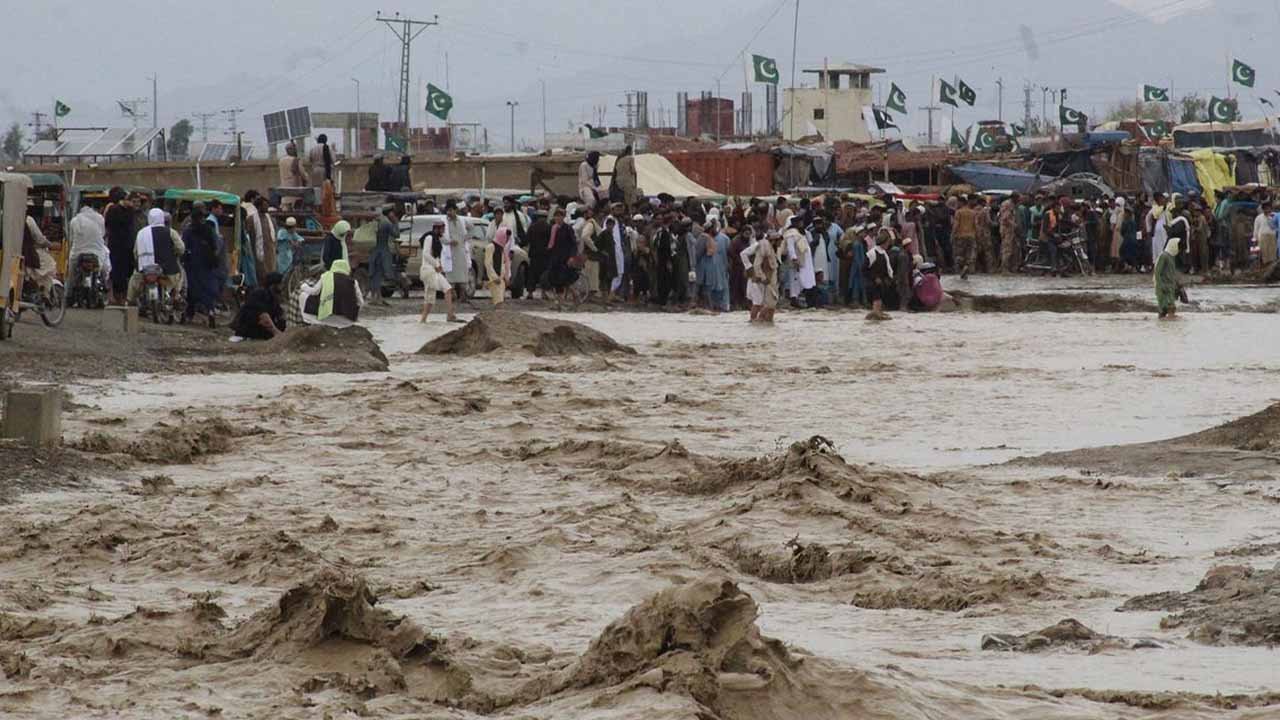
    Prime Minister Shehbaz Sharif gave orders to related authorities on Monday to make foolproof arrangements to tackle any possible flood in eastern rivers, including Ravi, Chenab and Sutlej.

    He has also gave orders to related departments to create awareness among the people about the possibility of flooding.

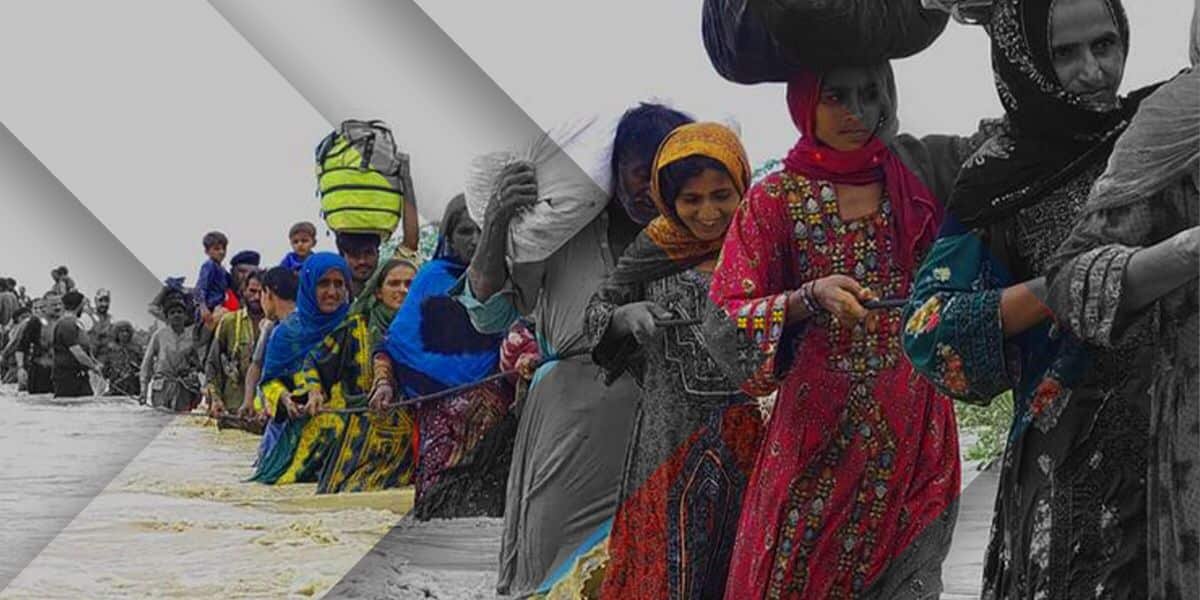
    Appreciating the personnel of Rangers and Rescue 1122 for immediate evacuation and assistance for the people trapped in flood waters in the Shakargarh area, the Prime Minister said that their actions helped save several people, including women and children.  

    “I along with the whole nation pay tribute to the country’s dutiful personnel”, he remarked.

    On Sunday, India released 185,000 cusecs of water in the river Ravi, the National Disaster Management Authority (NDMA) confirmed. According to a report in Dunya News, the released water will reach the Shadra area of Lahore in the next 24 hours.

  • ‘Dunya ne hum par aitemaad keeya’: PM Shehbaz promises to use $9.7 billion flood donations transparently

    Following substantial pledges from the international community for Pakistan’s flood rehabilitation and climate resilience building, Prime Minister (PM) Shehbaz Sharif accompanied by federal ministers, held a press conference in Islamabad to discuss the figures that the country received.

    On Wednesday, the premier announced that the Geneva conference proved to be successful as the world pledged a total of $9.7 billion.

    Giving a breakdown of the amount pledged at the conference, the prime minister said Saudi Arabia committed $1 billion, followed by China $100m, Qatar $25m, Canada $18.6m, Denmark $3.8m, European Union €87m, France €380m, Germany €84m, Italy €23m and Azerbaijan $2m.

    During the conference, he said that the world trusted this government, adding that, “It is now upon us to utilise the amount on infrastructural development and for the development of other important sectors.”

    “The ball is now in our court. We now have to transparently spend every single penny on the people’s prosperity”, he affirmed.

    He added that the incumbent regime would keep up their work until the flood-affected populace was repopulated into their homes.

    Answering a question about the sit-in in South Wazirabad against terrorism, and militancy, the prime minister said the National Security Committee (NSC) discussed the issue in detail.

    Foreign Minister (FM) Bilawal Bhutto Zardari termed the PM’s foreign policy “successful”, citing the amount raised for flood victims and simultaneously dispelled the “myth” that Pakistan was isolated.

    Bilawal said the requirement of $16bn [for flood recovery] in times of Covid, as well as the crisis triggered by the Ukraine-Russia conflict, was “no joke”.

    Earlier this week, an International Conference on Climate Resilient Pakistan was held in Geneva which was co-hosted by Pakistan and the United Nations (UN). PM Shehbaz addressed the platform and asked the world to pour in support for Pakistan.

  • Donors pledge more than $10 billion for Pakistan flood recovery at Geneva conference

    Donors pledge more than $10 billion for Pakistan flood recovery at Geneva conference

    Pakistan has secured over $10.5 billion in pledges from international creditors at the one-day International Conference on Climate Resilient Pakistan in Geneva, which will help the cash-strapped country recover from last year’s devastating floods.

    By the end of the first plenary session, Pakistan had received pledges totaling $8.57 billion, and in the second session, it had secured more than $2 billion.

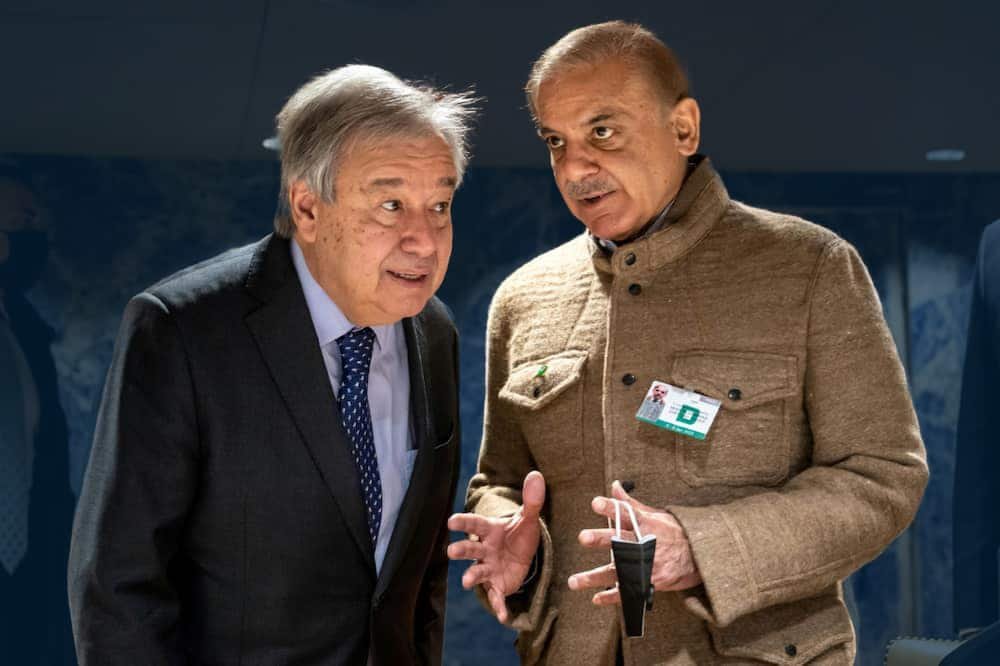
    UN Secretary-General Antonio Guterres urged the international community to help Pakistan build climate-resilient infrastructure and to grant access to the knowledge and resources needed to survive future catastrophes.

    The delegations recalled their support for the emergency relief operations during the conference and reaffirmed their commitment to Pakistan’s people in support of a strong recovery, rehabilitation, and reconstruction.

    All donations pledged at the Geneva conference

    • Islamic Development Bank: $4.2 billion
    • World Bank: $2 billion
    • Asian Development Bank: $1.5 billion
    • Asian Infrastructure Investment Bank: $1 billion
    • Saudi Arabia: $1 billion
    • France: $384 million
    • China: $100 million
    • United States: $100 million
    • EU: $93 million
    • Germany: $88 million
    • Japan: $77 million
    • United Kingdom: $10 million
    • Azerbaijan: $2 million

    The attendees voiced their solidarity and pledged financial support for the ongoing humanitarian activities as well as the achievement of the goals and key areas. The meeting was co-hosted by Pakistan and the UN.

    The World Bank has pledged $2 billion, the Asian Infrastructure Investment Bank has pledged $1 billion, and the Islamic Development Bank Group has pledged $4.2 billion over three years.

    Furthermore, Asian Development Bank has pledged $1.5 billion, while the European Union has offered $93 million, Germany has pledged $88 million, China has pledged $100 million, Japan has pledged $77 million, and so on. The French government has committed $345 million, and the United States Agency for International Development has offered $100 million.

    Saudi Arabia has also committed $1 billion to assist Pakistan in reconstruction efforts.

  • World Bank approves $1.69 billion financing for flood-hit Sindh

    World Bank approves $1.69 billion financing for flood-hit Sindh

    The Board of Executive Directors of the World Bank approved funding for five projects totaling $1.692 billion on Tuesday in order to support those residing in Sindh, Pakistan’s flood-affected areas.

    According to Geo, out of the five initiatives, three support rehabilitation, home reconstruction, and the restoration of crop production for vulnerable populations, according to a statement released by the World Bank. Two of the three projects have a combined value of $500 million, while the third is worth $292 million.

    “Sindh was the province worst affected by the 2022 floods. There were huge damages to the housing, health, and agriculture sectors and people lost their livelihoods. Beyond the rehabilitation and reconstruction of damaged houses and infrastructure, our engagement in the flood response effort is an opportunity to strengthen resilience, and reform institutions and governance structures”, said Najy Benhassine, World Bank Country Director for Pakistan.

    The “Sindh Flood Emergency Rehabilitation Project,” which will cost $500 million, will prioritize creating short-term livelihood opportunities and enhancing the province’s ability to respond to emergencies.

    “The project will help restore and improve critical irrigation and flood protection infrastructure, water supply schemes, roads, and related infrastructure. At least 2 million people—approximately 50 per cent of whom are women—in the most flood-affected districts will benefit from the restoration and the resilient reconstruction of critical infrastructure”.

    About 100,000 households will get short-term financial support through a community-level cash-for-work program.

    “The $500 million Sindh Floods Emergency Housing Reconstruction Project will support owner-driven and multi-hazard resilient reconstruction of core housing units. A housing subsidy will provide reconstruction and restoration grants for 350,000 housing units (almost 20 per cent of the total housing rehabilitation needs for Sindh). Cash grants will be provided for houses with structural damage to partially finance reconstruction or restoration. “

    To increase access to water and sanitation, twin pit latrines and simple rainwater collection systems will also be provided.

    Furthermore, the $292 million approved for the “Sindh Water and Agriculture Transformation Project” will enhance integrated water resource management, boost agricultural water productivity, and enable farmers who were impacted by the flood to resume crop production.

    “More than 385,000 households (approximately 1.9 million people) are expected to benefit from the project. As an immediate response to the floods, the project will provide cash transfers to approximately 300,000 flood-affected farming households to help restore crop production through the purchase of seeds, fertilizer, and other critical inputs. In the medium term around 70,000 households will benefit from improved irrigation services and agricultural support that will help boost farming income. An estimated 14,000 households will receive direct financial benefits from the pilot smart subsidy schemes targeting small- and medium-sized farmers,” the WB said.

    By improving access to and use of mother and child health services, the Sindh Strengthening Social Protection Delivery System Project ($200 million) will also boost the province’s social protection delivery system. As part of the project, the Federal National Database Registration Authority will be aligned and connected, and conditional cash transfers (CCTs) will be given to 1.3 million mothers and their kids to support better maternal and child health outcomes, particularly in the wake of service disruption caused by the floods.

    The CCTs will be made available to Sindh’s bottom 15 districts, selected depending on the Multidimensional Poverty Index (MPI), and will cover 65 per cent of the province’s total flood-affected areas. They are intended to help lessen the effects of the floods, particularly food insecurity, and to maintain access to maternal and child health services open.

    The Sindh Integrated Health and Population Project have been granted $200 million by the lender. The project will assist in raising the standard and uptake of fundamental nutrition, and maternal, neonatal, child, and adolescent health care. Additionally, it will aid in the repair and reconstruction of health infrastructure that was harmed during the floods and impeded the provision of these services.

    The initiative would enhance the population’s access to high-quality healthcare services in Sindh’s flood-affected settlements as well as in distant and peri-urban areas, particularly for women, girls, and children.

    “The World Bank will continue to support the Government and people of Pakistan to recover from the recent flood emergency and strengthen long-term resilience to such climate-related shocks,” the statement concluded.
  • ADB approves $554 million for Pakistan flood victims

    ADB approves $554 million for Pakistan flood victims

    The Asian Development Bank (ADB) has approved a $554 million financing package for Pakistan flood victims.

    The financing, which includes a $475 million loan and a $3 million technical assistance grant from the Asian Development Bank (ADB), and a $5 million grant from the Government of Japan, will support the restoration of irrigation, drainage, flood risk management, on-farm water management, and transport infrastructure in the flood-affected provinces of Balochistan, Khyber Pakhtunkhwa, and Sindh.

    “ADB’s Emergency Flood Assistance Project will also incorporate climate and disaster resilience measures into the design of the infrastructure. ADB has repurposed an additional $71 million from existing loans to support the government’s flood-response efforts,” the statement issued by the bank has stated.

    “This year’s floods, which affected 33 million people and brought enormous damage to infrastructure and agriculture, are a devastating reminder of Pakistan’s acute vulnerability to climate change,” said ADB Director General for Central and West Asia Yevgeniy Zhukov.
    “This project will help to rebuild critical infrastructure in affected areas and restore rural livelihoods,” he emphasized.
    Torrential monsoon rains triggered the most severe flooding in Pakistan’s recent history. Hundreds of thousands of homes have been damaged or destroyed, while many public health facilities, water systems and schools have been destroyed or damaged. More than 33 million people have been affected by floods and flash floods in 94 districts.

  • ADB to provide up to $2.5 billion under flood relief support to Pakistan

    ADB to provide up to $2.5 billion under flood relief support to Pakistan

    The Asian Development Bank (ADB) announced on Wednesday that it would provide support of $2.3–2.5 billion for relief efforts in the wake of disastrous floods that have left Pakistan severely damaged.

    The declaration was made during a meeting between Pakistan’s ADB Country Director Yong Ye and Finance Minister Ishaq Dar, as per a press release from the Finance Division.

    Ye offered his condolences for the loss of life and property as a result of the floods during the meeting and congratulated Dar on taking office.

    According to Dawn, the Balochistan Rural Development and Community Empowerment Programme would receive $1.5 billion of the promised aid, according to the ADB country director, and the request will be presented to the bank’s board this month.

    According to a press release, it was discussed that the Country Partnership Strategy for Pakistan 2021–25 is in accordance with the government of Pakistan’s vision.

    The finance minister was quoted as saying that he welcomed the delegation and valued ADB’s assistance in advancing sustainable development in the nation. Dar also informed the delegation of the flood’s damages and financial consequences.

    The administration had stopped the economy’s slide and put it on the correct course with its “pragmatic policy initiatives,” he continued while acknowledging that the economy still faced enormous obstacles.

    The finance minister also gave the ADB team an overview of the government’s priorities.

    Dar hailed the ADB delegation for their steadfast support and assured them of full government cooperation for the expeditious implementation of the current and new programmes.

  • World Bank proposes $2 billion for flood-ravaged Pakistan

    World Bank proposes $2 billion for flood-ravaged Pakistan

    The World Bank has proposed $2 billion in finance to jump-start infrastructure restoration and rebuilding following severe flooding.

    Martin Raiser, the new Vice President of the World Bank for the South Asia Region, revealed that he had just returned from his first official trip to the country that had been devastated by floods and reaffirmed his commitment to helping the Pakistani people as the floods wreaked havoc all over the nation.

    The international lender expressed regret for the loss of lives and livelihoods and stated that they were collaborating with the federal and provincial governments to offer prompt relief.

    A World Bank official also disclosed that monies from ongoing World Bank-financed programmes are being repurposed to address immediate needs in the areas of health, food, shelter, rehabilitation, and cash transfers.

    The Prime Minister, Shehbaz Sharif, has been requesting a freeze on loan repayment from the Paris Club and others, claiming that there is a huge discrepancy between what is being requested and what is actually available. He also asked the head of the UN and the leaders of Europe to help.

    Recently, the PM of Pakistan visited New York City for the UNGA. In his speech, the PM emphasised Islamabad’s predicament following the flooding disaster and pleaded with world leaders to band together and take action before it’s too late.

  • Pakistan is out of danger, there is no risk of the country going bankrupt: Miftah Ismail

    Pakistan is out of danger, there is no risk of the country going bankrupt: Miftah Ismail

    The present coalition government has lifted Pakistan out of danger, according to Federal Finance Minister Miftah Ismail, as there is no chance of the nation becoming bankrupt.

    In an interview during Geo News show “Aaj Shahzeb Khanzada Kay Sath” on Monday, the minister stated that Pakistan Tehreek-e-Insaf (PTI) leader Imran Khan had put the country at risk of default. However, he said, Pakistan is not currently in danger of going bankrupt.

    The economic crisis were made worse by flash floods. But we’ll run the economy effectively. The country’s economy won’t be in danger, he continued.

    The finance minister added that the government would implement measures to stabilise the currency market within the following four to five days.

    He claimed that certain banks offered overpriced dollars as a result of the circumstance. The minister stated that the Prime Minister has taken strict notice of these banks and has requested a report from the Governor State Bank within two days.

    Eight banks have also received letters regarding this and will also face penalties.

  • Weekly inflation decreases only 0.58 per cent from record high

    Weekly inflation decreases only 0.58 per cent from record high

    According to Pakistan Bureau of Statistics (PBS), the Sensitive Price Index (SPI) for the week ending September 8, 2022, decreased by 0.58 per cent as a result of falling food prices.

    In comparison to the previous week’s record high of 45.50 per cent, the yearly trend shows an increase of 42.70 per cent.

    The year-on-year increase was driven by an increase in prices of tomatoes (144.25 per cent), diesel (114.08 per cent), petrol (98.73 per cent), pulse masoor (76.34 per cent), cooking oil-5 liter (67.99 per cent), mustard oil (66.53 per cent), LPG (64.98 per cent), washing soap (64.50 per cent), electricity for Q1 (63.03 per cent), vegetable ghee-2.5 kg (62.53 per cent), pulse gram (61.02 per cent), onions (59.97 per cent) and vegetable ghee-1 kg (58.19 per cent), while a decrease was observed in the prices of chilies powder (43.42 per cent), sugar (18.07 per cent) and gur (2.08 per cent).

    As per the latest data, the SPI went down from 222.85 per cent during the week ended September 1st 2022 to 221.55 per cent during this week.

    During the week, out of 51 items, prices of 26 items (50.98 per cent) increased, nine items (17.65 per cent) decreased and 16 (31.37 per cent) items remained stable.

    The items which got more expensive include LPG (10.66 per cent), wheat flour (4.15 per cent), eggs (3.96 per cent), bread (3.27 per cent), pulse moong (2.74 per cent), curd (2.72 per cent), tea-lipton (2.50 per cent), pulse gram (1.65 per cent), chicken (1.58 per cent), milk fresh (1.57 per cent), fire wood (1.54 per cent), potatoes (1.02 per cent), and others

    A reduction was observed in the prices of onions (41.99 per cent), tomatoes (8.11 per cent), bananas (2.51 per cent), pulse masoor (1.37 per cent), vegetable ghee-1 kg (0.55 per cent), cooking oil-5 liter (0.33 per cent), mustard oil (0.16 per cent) and vegetable ghee-2.5 kg and sugar (0.11 per cent) each.

    Highest week-on-week decrease

    Onions: 41.99 per cent

    Tomatoes: 8.11 per cent

    Bananas: 2.51 per cent

    Pulse Masoor: 1.37 per cent

    Vegetable ghee (1kg): 0.55 per cent

    Highest week-on-week increase

    LPG: 10.66 per cent

    Flour: 4.15 per cent

    Eggs: 3.96 per cent

    Bread: 3.27 per cent

    Pulse Moong: 2.74 per cent

    Highest year-on-year increase

    Tomatoes: 144.25 per cent

    Diesel: 114.08 per cent

    Petrol: 98.73 per cent

    Pulse Masoor: 76.34 per cent

    Cooking oil (5 litre): 67.99 per cent

  • Intraday trade: PKR resumes downward spiral against US dollar, falls to Rs223

    Intraday trade: PKR resumes downward spiral against US dollar, falls to Rs223

    The Pakistani rupee was trading between Rs222-223 on Wednesday as losses against the US dollar persisted in the early hours of trading.

    During intra-day trading, the rupee was quoted at Rs222.49 at roughly 10:30 am, depreciating by Rs1.07 or 0.48 per cent against the US dollar.

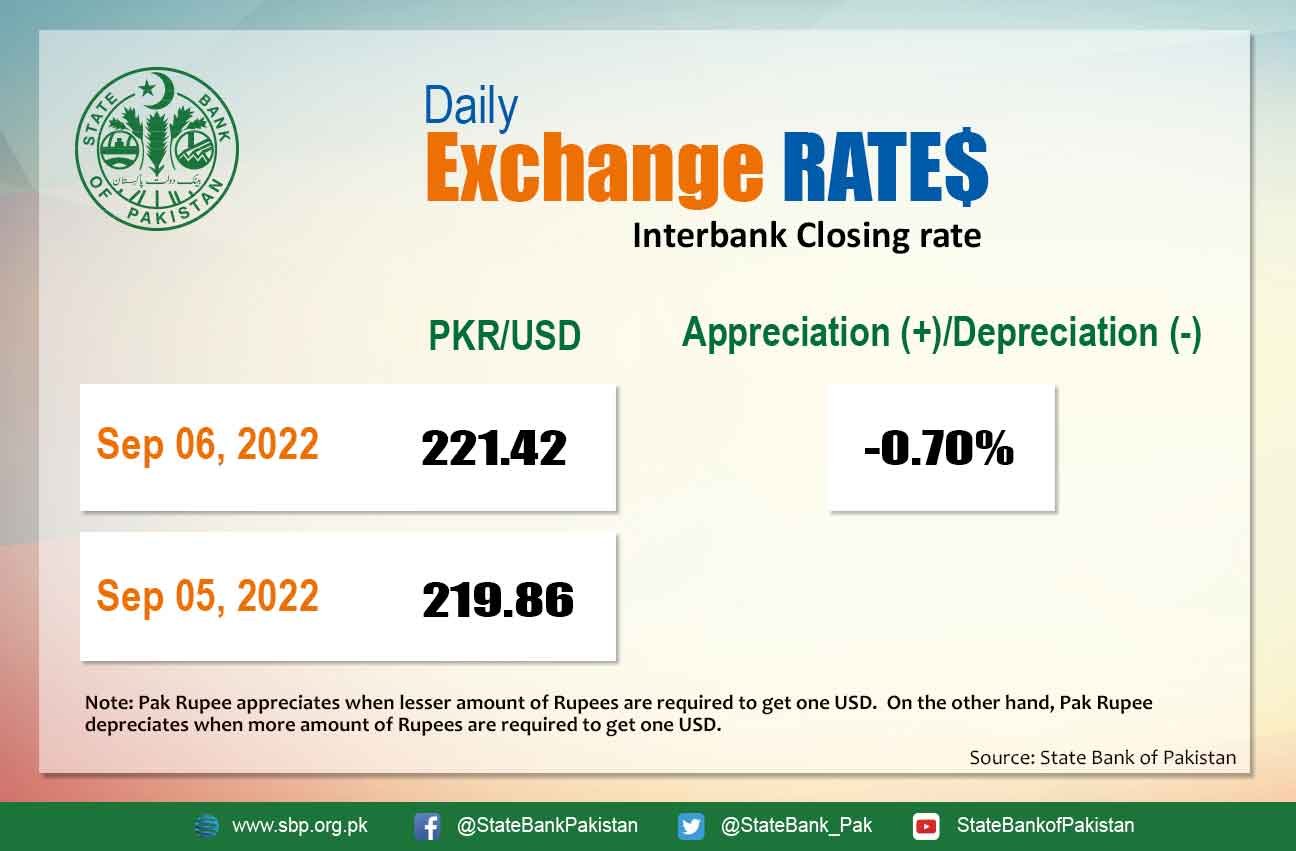
    The local unit lost for the third session in a row on Tuesday, falling down Rs1.56 or 0.7 per cent against the dollar to close at Rs221.42.

    According to analysts, the government’s decision to let the duty-free import of edible commodities to promote food security after floods severely damaged the nation’s agriculture sector has led to a spike in demand for dollars on the local market.

    However, the dollar is also strengthening globally. On Wednesday, after U.S. economic data supported the notion that the Federal Reserve will continue with policy tightening, it reached fresh highs against the yen and the Australian and New Zealand dollars.

    The US dollar index, which compares the value of the dollar to six important rival currencies, increased 0.08 per cent to Rs110.43, remaining close to the 20-year high set on Tuesday of Rs110.57.

    On Wednesday, oil prices, a major factor in determining currency parity, fell more than $1 to their lowest level since before Russia invaded Ukraine as COVID-19 restrictions in the world’s top crude importer China and anticipation of further interest rate increases stoked concerns about a global economic slowdown and a decline in fuel demand.