Tag: floods

  • ‘We can’t wait another year’: disaster-hit nations call for climate aid

    ‘We can’t wait another year’: disaster-hit nations call for climate aid

    Countries on the frontlines of climate change have warned they cannot wait another year for long-sought aid to recover from disasters as floods and hurricanes wreak havoc across the globe.

    The appeal came during a meeting of the “loss and damage” fund that will conclude Friday amid concerns it is unlikely to be able to approve climate aid until 2025.

    “We cannot wait until the end of 2025 for the first funds to get out the door,” Adao Soares Barbosa, a board member from East Timor and a long-standing negotiator for the world’s poorest nations, told AFP.

    “Loss and damage isn’t waiting for us.”

    Nearly 200 nations agreed at the UN COP28 summit last November to launch a fund to distribute aid to developing countries to rebuild after climate disasters.

    That historic moment has given way to complex negotiations to finalise the fund’s design, which some countries worry will not move at a pace or scale that matches the tempo of extreme weather disasters afflicting their people.

    “The urgency of needs of vulnerable countries and communities cannot be left until we have every hair in place for this fund,” said Barbosa.

    Experts say damage bills from climate disasters can run into the billions, and there is barely enough cash set aside for loss and damage at present to cover just one such event.
    ‘Immense pressure’

    This year has witnessed a string of catastrophes on multiple continents, from floods and landslides to heatwaves and wildfires.

    Delegates met in South Korea for the second meeting of the loss and damage fund this week as Hurricane Beryl left a trail of destruction across the Caribbean and North America.

    The “massive” destruction witnessed in recent weeks “puts immense pressure on us to deliver on our work”, Richard Sherman, the South African co-chair of the board steering the negotiations, told the meeting.

    The fund said it wanted money approved “as soon as possible, but realistically by mid-2025”, according to an official document seen by AFP.

    In an appeal for faster action, Elizabeth Thompson, a board member from Barbados, said Hurricane Beryl alone had caused “apocalyptic” damage worth “multiple billion dollars”.

    “In five islands of the Grenadines… 90 percent of the housing is gone… Houses look like packs of cards and strips of wood, roofs are gone, trees are gone, there is no food, there is no water, there is no power,” she said.

    “We cannot keep talking while people live and die in a crisis that they do not cause.”

    Thompson said the fund needed to reflect “the urgency and the scale required to respond to… the risk, the damage and the devastation faced by people across the world who need this fund”.

    – No money, no fund –

    Wealthy nations have so far pledged around $661 million to the loss and damage fund. South Korea contributed an additional $7 million at the start of this week’s meeting.

    “That would hardly cover the likely losses from one major climate-related disaster,” Camilla More, of the International Institute for Environment and Development, told AFP.

    Some estimates suggest developing countries need over $400 billion annually to rebuild after climate-related disasters. One study put the global bill at between $290 billion and $580 billion a year by 2030, and rising after that.

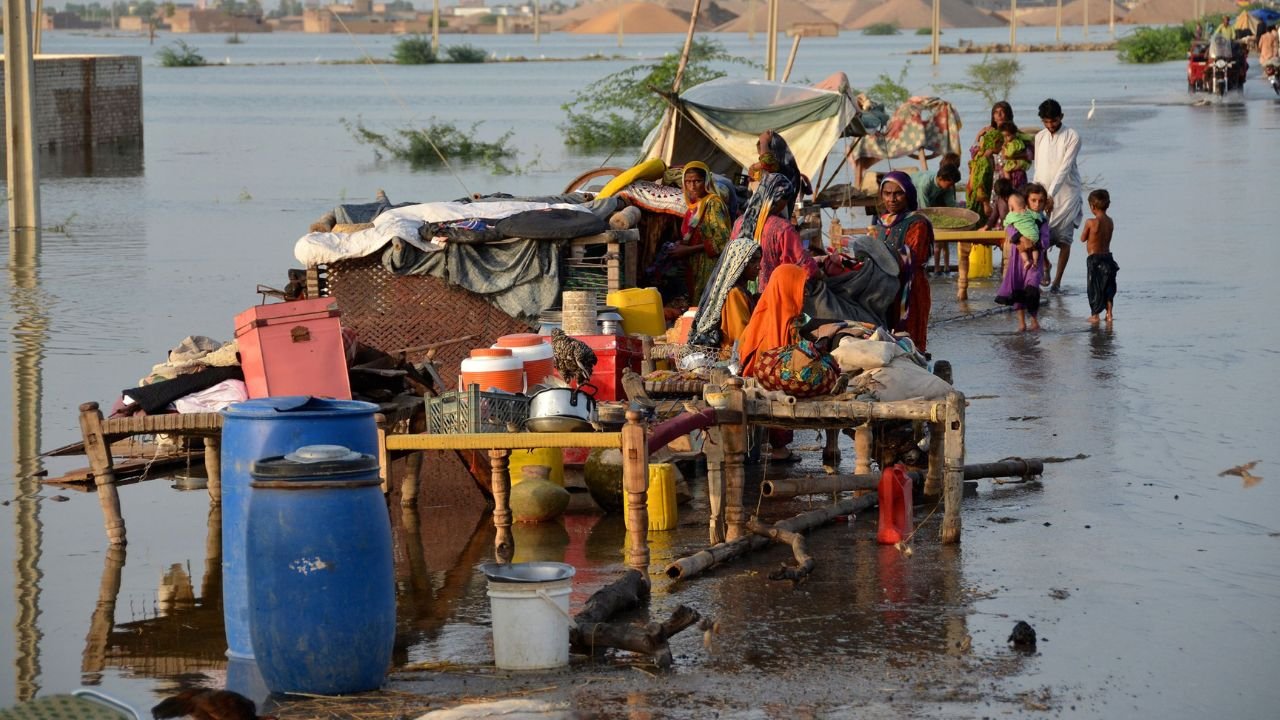
    In one example in 2022, unprecedented flooding in Pakistan caused more than $30 billion in damages and economic losses, according to a UN-backed assessment.

    Developing nations had been pushing for a specific fund to distribute aid to recover from climate impacts for 30 years, and the agreement struck in November was hailed a major diplomatic breakthrough.

    “(But) we can’t have a fund without money,” said Brandon Wu from ActionAid.

    Technical discussions are taking place this year over the details of the loss and damage fund, including with the World Bank which will house the fund on an interim basis.

    The Philippines was chosen this week to host the fund’s board.

    Contentious discussions remain to decide how the money is allocated and in what form it should be made available to countries.

    On Tuesday, more than 350 nongovernmental organisations sent a letter to the fund’s board demanding that a substantial share of the money be made directly available as small grants to local communities and indigenous groups.

  • Flash floods kill 50 in western Afghanistan

    Flash floods kill 50 in western Afghanistan

    Flash flooding has killed at least 50 people in western Afghanistan, provincial police said Saturday, a week after hundreds were washed away in the north of the country.

    The floods on Friday also destroyed about 2,000 houses, and damaged thousands more homes and businesses, Ghor police spokesman Abdul Rahman Badri said in a statement.

    The fresh flooding in the country — which is highly vulnerable to climate change — comes as survivors of the May 10 flash floods in northern Baghlan province continue to search for missing relatives.

    “Fifty residents of Ghor province were killed by the floods on Friday and a number of others are missing,” Badri said.

    “These terrible floods have also killed thousands of cattle… They have destroyed hundreds of hectares of agricultural land, hundreds of bridges and culverts, and destroyed thousands of trees,” he added.

    Major roads into and within the province were blocked.

    Abu Obaidullah, the head of the province’s disaster management department, said it was an “emergency situation”.

    The floods hit several districts in the province, including the capital Chaghcharan, where the streets “are full of mud”, Obaidullah said.

    “The situation is really concerning,” he told AFP, adding that victims were in need of shelter, food and water.

    ‘Exceptionally vulnerable’

    The UN’s World Food Programme (WFP) and Taliban officials said more than 300 people died as a result of the flood disaster earlier this month that left homes and roads coated in thick mud.

    The destruction of roads and bridges hampered rescue efforts, with United Nations agencies and Taliban authorities warning the death tolls would rise.

    Afghanistan, which is “exceptionally vulnerable to flooding” has seen above-average rainfall this spring, Mohammad Assem Mayar, a water resource management expert, said in a recent Afghanistan Analysts Network report.

    From mid-April to early May, flash flooding and other floods had left about 100 people dead in 10 of Afghanistan’s provinces, authorities said.

    Farmland has been swamped in a country where 80 percent of the more than 40 million people depend on agriculture to survive.

    The rains come after prolonged drought in Afghanistan, which is one of the least prepared nations to tackle climate change impacts, according to experts.

    The country, ravaged by four decades of war, is also one of the world’s poorest.

    The WFP warned that the recent floods have compounded an already dire humanitarian situation.

    str-sw/ecl/sco

    © Agence France-Presse

  • Floods misery reminder of changing climate’s role in supercharging rain

    Floods misery reminder of changing climate’s role in supercharging rain

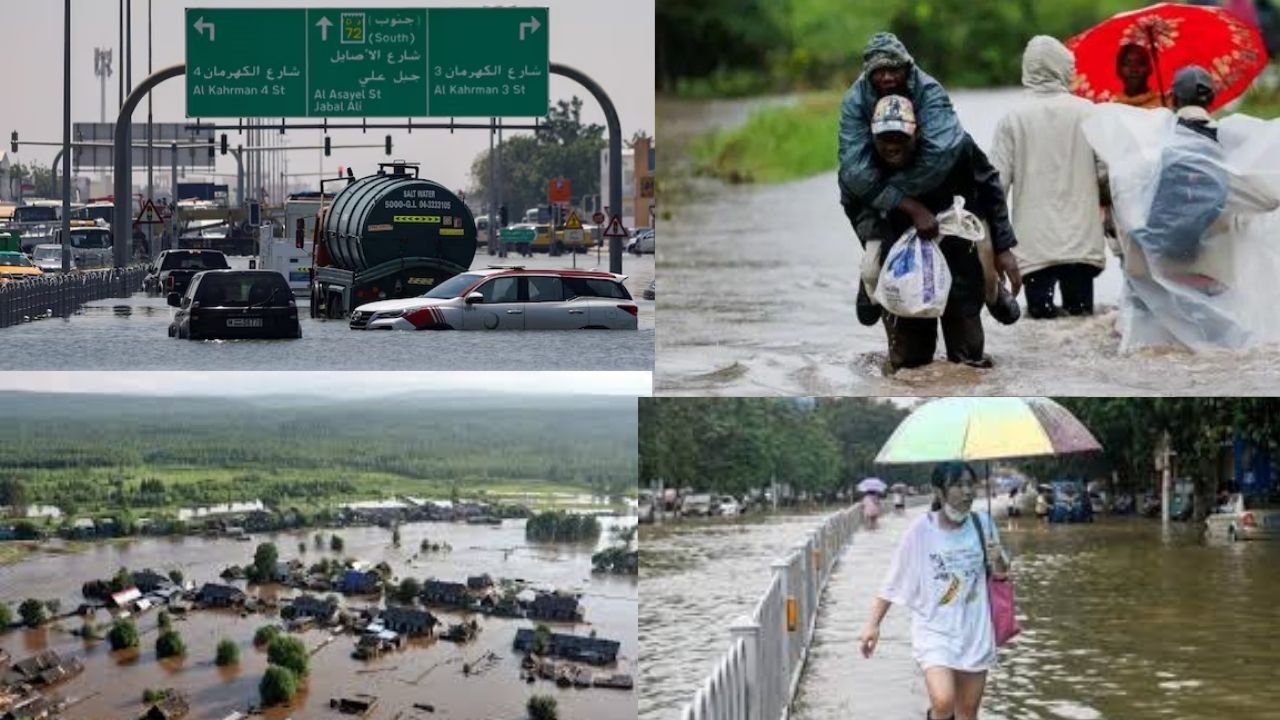
    Floods have been tearing a path of destruction across the globe, hammering Kenya, submerging Dubai, and forcing hundreds of thousands of people from Russia to China, Brazil and Somalia from their homes.

    Though not all directly attributed to global warming, they are occurring in a year of record-breaking temperatures and underscore what scientists have long warned – that climate change drives more extreme weather.

    Climate change isn’t just about rising temperatures but the knock-on effect of all that extra heat being trapped in the atmosphere and seas.

    April was the 11th consecutive month to break its own heat record, the EU climate monitor Copernicus said on Wednesday, while ocean temperatures have been off the charts for even longer.

    “The recent extreme precipitation events are consistent with what is expected in an increasingly warmer climate,” Sonia Seneviratne, an expert on the UN-mandated IPCC scientific panel, told AFP.

    Warmer oceans mean greater evaporation, and warmer air can hold more water vapour.

    Scientists even have a calculation for this: for every one degree Celsius in temperature rise, the atmosphere can hold seven percent more moisture.

    “This results in more intense rainfall events,” Davide Faranda, an expert on extreme weather at the French National Center for Scientific Research (CNRS), told AFP.

    In April, Pakistan recorded double the amount of normal monthly rainfall — one province saw 437 percent
    more than average — while the UAE received about two years worth of rain in a single day.

    This, however, doesn’t mean everywhere on Earth is getting wetter.

    Richard Allan from the University of Reading said “a warmer, thirstier atmosphere is more effective at sapping moisture from one region and feeding this excess water into storms elsewhere”.

    This translates into extreme rain and floods in some areas but worse heatwaves and droughts in others, the climate scientist told AFP.

    Natural climate variability also influence weather and global rainfall patterns.

    This includes cyclical phenomenon like El Nino, which tends to bring heat and rain extremes, and helped fuel the high temperatures seen over land and sea this past year.

    While natural variability plays a role “the observed long-term global increase in heavy precipitation has been driven by human-induced climate change”, said Seneviratne.

    Carlo Buontempo, a director at Copernicus, said cycles like El Nino ebb and flow but the extra heat trapped by rising greenhouse gas emissions would “keep pushing the global temperature towards new records”.

    Considering the overlapping forces at play, attributing any one flood to climate change alone can be fraught, and each event must be taken on a case-by-case basis.

    But scientists have developed peer-reviewed methods that allow for the quick comparison of an event today against simulations that consider a world in which global warming had not occurred.

    For example, World Weather Attribution, the scientists who pioneered this approach, said the drenching of the UAE and Oman last month was “most likely” exacerbated by global warming caused by burning fossil fuels.

    ClimaMeter, another rapid assessment network who use a different methodology, said major floods in China in April were “likely influenced” by global warming and El Nino.

    “It can be difficult to disentangle global warming and natural variability” and some weather events are more clear-cut than others, said Flavio Pons, a climatologist who worked on the China assessment.

    In the case of devastating floods in Brazil, however, ClimaMeter were able to exclude El Nino as a significant factor and name human-driven climate change as the primary culprit.

    Many of the countries swamped by heavy floods at the moment — such as Burundi, Afghanistan and Somalia — rank among the poorest and least able to mobilise a response to such disasters.

    But the experience in Dubai showed even wealthy states were not prepared, said Seneviratne.

    “We know that a warmer climate is conducive to more severe weather extremes but we cannot predict exactly when and where these extremes will occur,” Joel Hirschi from the UK’s National Oceanography Centre told AFP.

    “Current levels of preparedness for weather extremes are inadequate… Preparing and investing now is cheaper than delaying action.”

  • Dubai reels from floods chaos after record rains

    Dubai reels from floods chaos after record rains

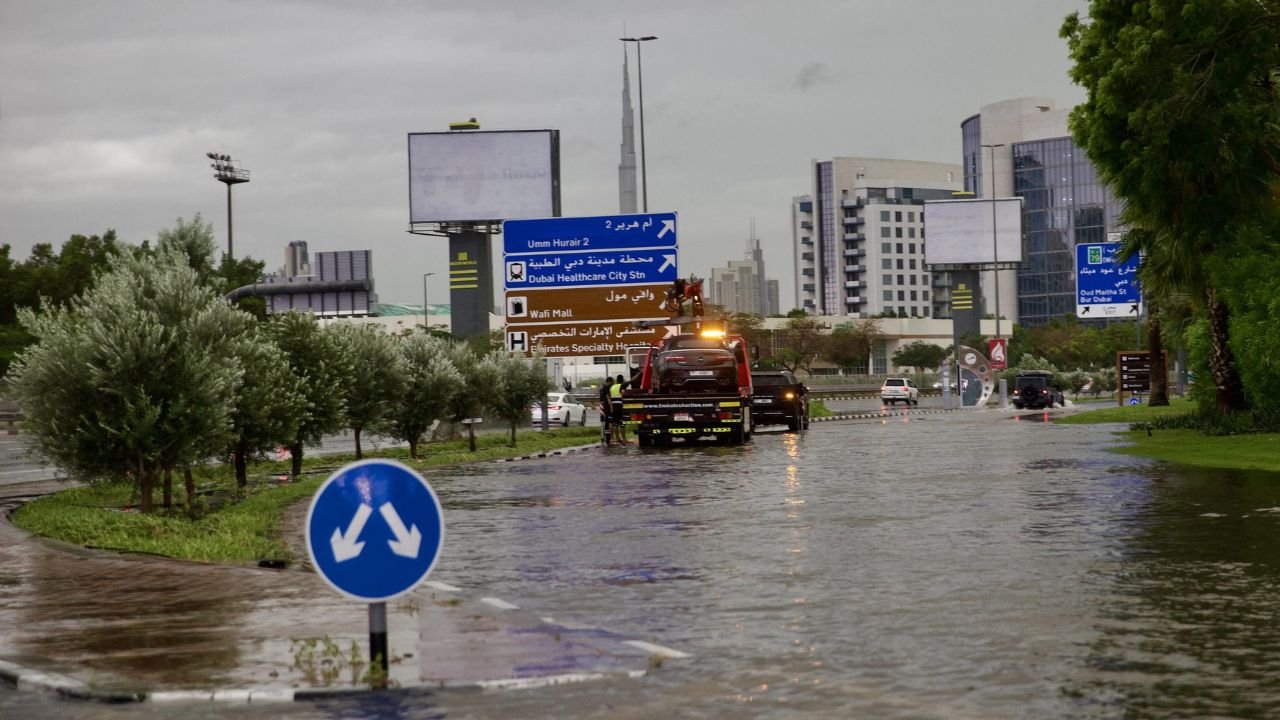
    Dubai, United Arab Emirates – Dubai’s giant highways were clogged by flooding and airport passengers were urged to stay away on Wednesday as the glitzy financial centre reeled from record rains.

    Huge tailbacks snaked along six-lane expressways after up to 254 millimetres of rain — about two years’ worth — fell on the desert United Arab Emirates on Tuesday.

    At least one person was killed after a 70-year-old man was swept away in his car in Ras Al-Khaimah, one of the country’s seven emirates, police said.

    Passengers were warned not to come to Dubai airport, the world’s busiest by international traffic, “unless absolutely necessary”, an official said.

    “Flights continue to be delayed and diverted… We are working hard to recover operations as quickly as possible in very challenging conditions,” a Dubai Airports spokesperson said.

    Dubai’s flagship Emirates airline cancelled all check-ins on Wednesday as staff and passengers struggled to arrive and leave, with access roads flooded and some metro services suspended.

    At the airport, long taxi queues formed and delayed passengers milled around. Scores of flights were also delayed, cancelled and diverted during Tuesday’s torrential rain.

    The storms hit the UAE and Bahrain overnight Monday and on Tuesday after lashing Oman, where 18 people were killed, including several children.

    Climatologist Friederike Otto, a specialist in assessing the role of climate change on extreme weather events, told AFP it was “high likely” that global warming had worsened the storms.

    Official media said it was the highest rainfall since records began in 1949, before the formation of the UAE in 1971.

    th/kir

    © Agence France-Presse

  • Heavy rains in Chennai flooded airport, leaving 8 dead, thousands affected

    Heavy rains in Chennai flooded airport, leaving 8 dead, thousands affected

    Cyclone Michaung was expected to make landfall on the coast of the southern Indian state of Andhra Pradesh around noon on Tue­sday, the country’s weather office said, with sustained winds of 90-100kph (56-62mph), gusting to 110kph.

    The cyclone was forecast to hit the coast of Andhra Pradesh state later Tuesday as a “severe cyclonic storm”, packing winds up to 100 kilometres, the Indian Meteorological Department (IMD) said.

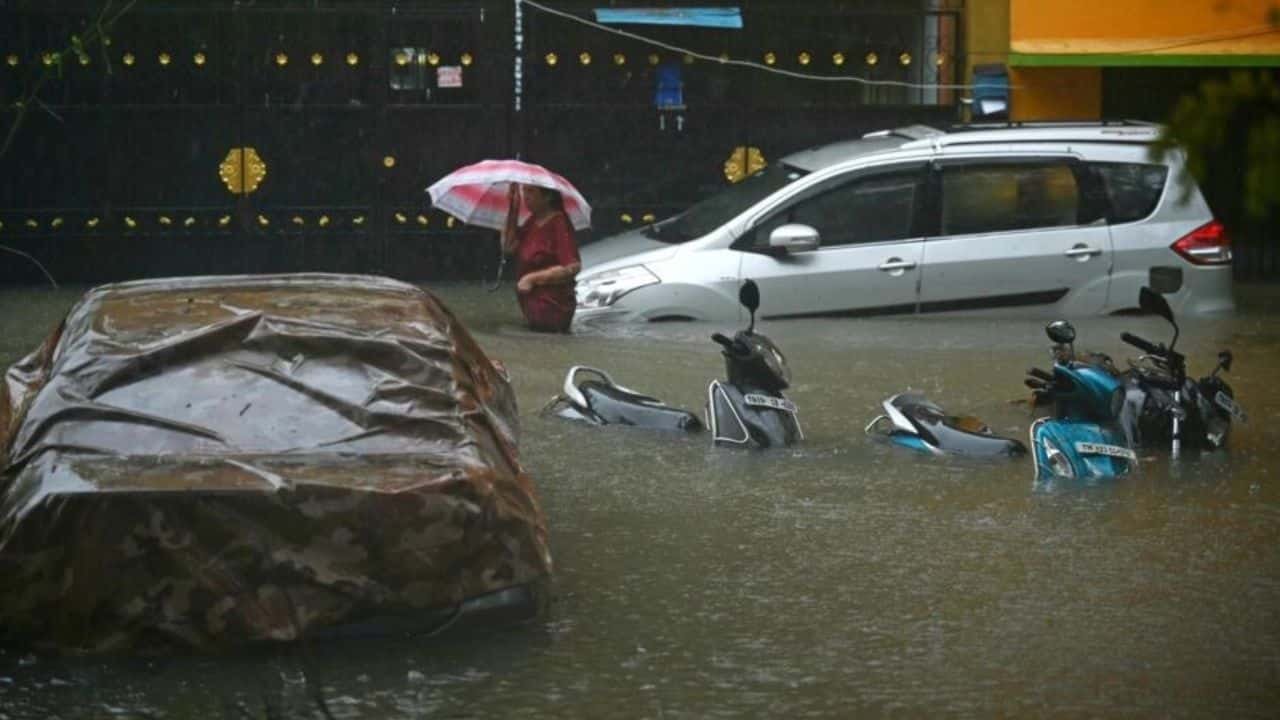
    In Chennai, cars were seen floating on raging torrents, homes were flooded, and a crocodile was spotted swimming the streets in the city.

    In some parts of the flooded city, people used boats to get out of their flooded neighbourhoods to the safety of government relief shelters.

    The IMD warned of “exceptionally heavy rainfall” in some areas.

    “We are facing the worst storm in recent memory,” Tamil Nadu state chief minister M.K. Stalin said, in a statement late Monday.

    Police said on Tuesday that eight people had been killed in the state capital of Chennai.

    They included some who drowned, as well as one person hit by a falling tree, another electrocuted by live wires in the water, and one crushed by a falling wall.

    Trees were uprooted and vehicles swept away due to the heavy rains, according to images posted on social media.

    Apple iPhone manufacturers Foxconn and Pegatron and automaker Hyundai suspended their operations in Tamil Nadu due to the storm, local media reported.

    The cyclone is expected to hit India’s southeast coast near the town of Bapatla, on the 300-kilometre (185-mile) stretch between Nellore and Machilipatnam.

    Hundreds of people from coastal villages in the neighbouring state of Andhra Pradesh have moved inland, with emergency rescue teams deployed to deal with the aftermath of the cyclone’s landfall, according to local media.

    Sea surges of waves up to 1.5 metres (nearly five feet) above normal tide levels are expected when the cyclone makes landfall, the IMD said.

    Home Minister Amit Shah said the government was “braced to provide all the necessary assistance to Andhra Pradesh”, with rescue teams deployed and more “on standby to mobilise as needed”.

    The cyclone is expected to weaken late Tuesday.

    Scientists have warned that storms are becoming more powerful as the world gets warmer with climate change.

    Cyclones — the equivalent of hurricanes in the North Atlantic or typhoons in the Northwest Pacific — are a regular and deadly menace on coasts in the northern Indian Ocean, where tens of millions of people live.

    Schools, colleges, offices and banks were closed on Monday and Tuesday in at least four districts of Tamil Nadu, including Chennai, because of weather conditions, a government notice said.

  • Climate crises drove 27 million children into hunger in 2022

    Climate crises drove 27 million children into hunger in 2022

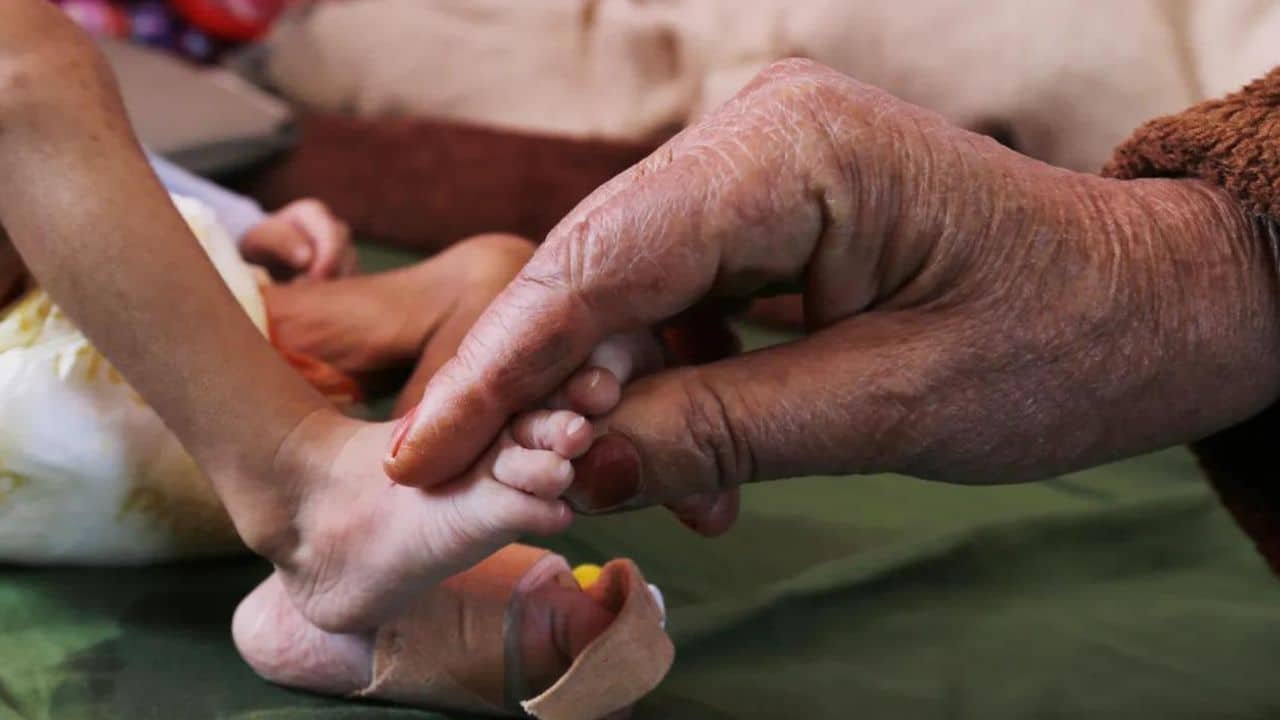
    Extreme weather events in countries vulnerable to climate change drove more than 27 million children into hunger last year, Save the Children said on Tuesday.

    The figure represented a sharp 135 percent increase over 2021, the UK-based charity said in an analysis ahead of the COP28 climate summit opening in Dubai on Thursday.

    It said children made up nearly half the 57 million people pushed into crisis levels of acute food insecurity or worse across 12 countries because of extreme weather in 2022, according to data from the IPC hunger monitoring system.

    Out of the 12, countries in the Horn of Africa were most affected, with Ethiopia and Somalia accounting for about half of the 27 million children facing hunger, Save said.

    “As climate-related weather events become more frequent and severe, we will see more drastic consequences on children’s lives,” Save’s CEO Inger Ashing said in a statement.

    The charity called on leaders meeting at COP28 in Dubai to take action on the climate crisis by recognising children as “key agents of change” but more broadly to address other causes of food insecurity such as conflict and weak health systems.

    Save highlighted the situation in Somalia, which is considered one of the most vulnerable countries to climate change, locked in a vicious cycle of drought and floods.

    It said the recent torrential rains and flooding that have engulfed many parts of the country had displaced about 650,000 people, about half of them children.

    Elsewhere, Save noted that two million children in Pakistan remained acutely malnourished after floods that swamped a third of the country last year.

    Across the planet, Save estimated that 774 million children -– or one third of the global child population — are living with the dual impacts of poverty and high climate risk.

    In a report issued last week, Save said that more than 17.6 million children will be born into hunger this year, one-fifth more than a decade ago.

  • Extreme Rainfall Increases Exponentially With Global Warming: Study

    State-of-the-art climate models drastically underestimate how much extreme rainfall increases under global warming, according to a study published Monday that signals a future of more frequent catastrophic floods unless humanity curbs greenhouse emissions.

    It comes as countries prepare to meet at the COP28 summit in Dubai beginning later this week, amid fears it could soon be impossible to limit long-term warming to the 1.5 degrees Celsius scientists say is necessary to curb the worst effects of human-caused climate change.

    Researchers from the Potsdam Institute of Climate Impact Research (PIK) looked at the intensity and frequency of daily precipitation extremes over land in 21 “next generation” climate models used by a UN body in its global assessments.

    They then compared the changes projected by the models with those observed historically, finding that nearly all climate models significantly underestimated the rates at which increases in precipitation extremes scaled with global temperature rise.

    “Our study confirms that the intensity and frequency of heavy rainfall extremes are increasing exponentially with every increment of global warming,” said Max Kotz, lead author of the paper published in the Journal of Climate.

    The changes track with the Clausius-Clapeyron relation in physics, which established that warmer air holds more water vapor. This finding underpinned the fact that temperature and not wind dominate the global change in extreme rainfall events, according to the authors.

    Stronger increases in rainfall intensity and frequency were found across the tropics and high-latitudes, like in Southeast Asia or Northern Canada, according to the study.

  • Pakistan’s climate problems partially due to world’s richest one per cent: Report

    Pakistan’s climate problems partially due to world’s richest one per cent: Report

    Oxfam has released a new report, “Climate Equality: A Planet for the 99%”, revealing that “The richest one per cent of the world’s population produced as much carbon pollution in 2019 as the five billion people who made up the poorest two-thirds of humanity.”

    While fighting the climate crisis is a shared challenge, not everyone is equally responsible and government policies must be tailored accordingly, Max Lawson, who co-authored the report, told AFP.

    “The richer you are, the easier it is to cut both your personal and your investment emissions,” he said. “You don’t need that third car, or that fourth holiday, or you don’t need to be invested in the cement industry.”

    Among the key findings of this study are that the richest one percent globally—77 million people—were responsible for 16 percent of global emissions related to their consumption.

    That is the same share as the bottom 66 percent of the global population by income, or 5.11 billion people.

    Pakistan

    The difference in recent floodings in Germany and Pakistan unveils how a country’s wealth can “enable or hinder its ability to respond to a climate emergency”.

    German floods affected a population of 40,000 people, resulting in damage and economic costs of 40 billion dollars. They were able to mobilise funding through federal and state government flood relief funds for reconstruction of 35 billion dollars within weeks.

    On the contrary, Pakistan floods affected a population of 33 million people, leading to damage and economic costs of 30 billion dollars. International donors pledged a funding of 8.57 billion dollars as of January 2023 for the next three years.

    While Germany could easily manage the financial and technical resources required, debt-troddened Pakistan was unable to allocate the necessary resources resulting in suffering from “the lasting impacts of the floods”.

    The report explains that this comparison between the two countries shows “a common double standard practised by many Global North countries: they rapidly find the funds needed when disasters hit within their borders, but fail to do so when they occur in the Global South”.

  • Hadiqa Kiani’s charity has built an astonishing number of homes in Balochistan

    Hadiqa Kiani’s charity has built an astonishing number of homes in Balochistan

    Actress and musician Hadiqa Kiani took to social media to share a monumental milestone achieved by her charity organisation ‘Vaseela-e-Raah’, revealing the organisation had surpassed their goal of building more than 200 homes in Balochistan. Taking to her Instagram account, the ‘Dobara’ actress revealed the organisation had constructed over 370 homes, and several other community facilities.

    “By the grace of Allah and your selfless help, we have surpassed our goal. The promise I made last year to the people of Balochistan, to my mother, and to my country is now complete.”

    “Our initial goal was 200 homes, but through prayer, determination, hard work, and community, we have now completed 370 homes, 2 mosques, 2 maternity centers, 1 school, and 1 grocery store in Tamboo and Kundi villages of Naseerabad, Balochistan. All funds collected over the past year have been fully utilized.”

    The actress went on to thank the love and gratitude other people had showered on her non-profit by donating medicine, water, food and other facilities to help them accomplish their goal. She said that a follow-up video will be posted with more details about their campaign.

    Hadiqa was one of the celebrities who offered support for communities effected by the devastating 2022 floods of Sindh and Balochistan, setting up her non-profit in an effort to reconstruct homes for the survivors. In March, Kiani shared that her organisation had built over a hundred homes, a maternity clinic, grocery store and primary school for children in Balochistan.

    “As many of you know, I have been in Balochistan for the past few days…by the grace of Allah + your support, we have completed the 1st phase of our project. 100 houses are complete and now occupied by flood victims, a maternity clinic, a grocery store and a primary school..”

  • Poverty-driven child marriages surge in flood-hit Balochistan

    Poverty-driven child marriages surge in flood-hit Balochistan

    Journalist and storyteller Shahar Baloch has recently reported for BBC about the aftermath of the devastating floods in Balochistan last year. The report reveals that families from lower income backgrounds, impacted by the aftereffects of the floods, are being compelled to sell their daughters due to mounting debts. The dire situation was uncovered in the Chowki Jamali area, one of the regions hit hardest by the 2022 floods.

    Chowki Jamali, a remote area on the border of Sindh and Balochistan, is home to approximately 50,000 people, primarily farmers and daily wage laborers. The 2023 floods displaced over 3.2 million families in 2022, with Sindh and Balochistan experiencing the worst of the brunt.

    As families struggled to recover, the economic downturn pushed many to sell their young daughters to older men, aged between 40 and 60 years, in exchange for money to pay off debts or cover medical expenses. Daily wage laborers, earning as little as 500 rupees a day, say that they are left with no other option.

    Residents of the area say that early marriages have been conducted here in the past as well.

    The Provincial Disaster Management Authority (PDMA) conducted a survey of 14 districts of Balochistan in August 2022. According to the survey, there has been a 13 per cent increase in the number of cases of selling female children.

    Most girls are sold for amounts ranging from three to five lakh rupees, providing relief for financially strained families, who often rely on the transaction to settle debts, access medical treatment, or invest in their son’s education.

    The situation is exacerbated by the fact that in some cases, girls are sold multiple times if they do not “adjust” to their new circumstances. Some girls even run away upon learning of their impending sale, leaving their younger sisters to be married off in their place.

    The term “climate brides” is used to describe these girls, and this alarming practice is not unique to Balochistan; it also occurs in countries like Africa and India where poverty and climate change intersect.

    Climate change and floods have made agriculture increasingly unprofitable in Balochistan, driving families to desperate measures. With little income and food scarcity, many in Chowki Jamali resort to selling their daughters to survive.

    Even though education has made a difference, parents continue to sell their daughters due to extreme poverty.

    Health workers report severe health consequences for young girls married off early, including complications during pregnancy and the development of conditions like fistulas. Despite being aware of this issue, authorities have struggled to curb these marriages.

    Lady health worker Shehzadi told the BBC that in some cases, girls cry in pain, and some die here. “We still make noise, we can say something, but the mothers of these girls cannot say anything in this matter because it is the men of the house who decide to sell the girls.”

    Madad Community, an organization working on climate change in Balochistan, recently said that as a result of climate change and floods, it has become very difficult to earn from the agriculture sector.

    Organizer Maryam Jamali said that most people were forced to migrate, including the middle class of Balochistan. Poor farmers still have nowhere to go. As a result of extreme heat, more droughts and floods have been predicted.

    Fauzia Shaheen, Chairperson of the Government Commission for Women, revealed that Balochistan lacks effective laws to prevent child marriages, and efforts to pass the Child Marriage Restraint Bill have faced obstacles.

    In Balochistan, it is clear that the true cost of flood damage is being borne by the region’s vulnerable young girls, who are forced into early marriages due to dire economic circumstances.