Tag: floods in Pakistan

  • Floods can push up to 9 million people in poverty: World Bank

    Floods can push up to 9 million people in poverty: World Bank

    The World Bank has said that catastrophic monsoon flooding linked to climate change may push between six and nine million Pakistanis into poverty.

    Unprecedented monsoon rains that hit Pakistan this year resulting in 1,700 fatalities, two million destroyed homes, and a third of the country being under water.

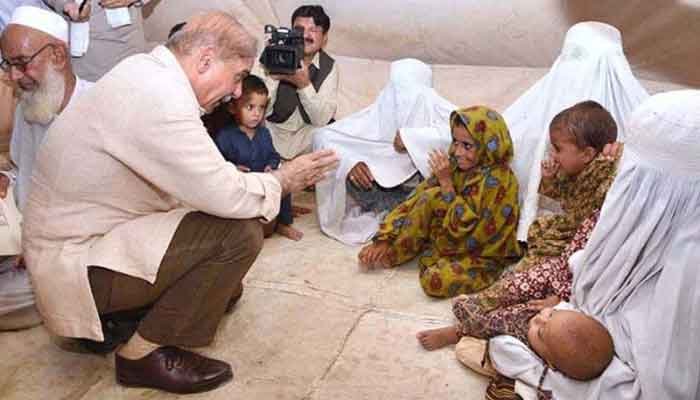
    In shabby tent cities and dispersed settlements close to the still waters that devoured their possessions and way of life, eight million people are still without a home.

    “The recent floods are expected to have a substantial negative impact on Pakistan’s economy and on the poor, mostly through the disruption of agricultural production,” said Najy Benhassine, the World Bank’s Country Director for Pakistan. “The Government must strike a balance in meeting extensive relief and recovery needs, while staying on track with overdue macroeconomic reforms. It will be more important than ever to carefully target relief to the poor, constrain the fiscal deficit within sustainable limits, maintain a tight monetary policy stance, ensure continued exchange rate flexibility, and make progress on critical structural reforms, especially those in the energy sector.”

    As many as 33 million people of the 220 million South Asian nation have been affected in some way by the floods that swept away houses, roads, railways and bridges and submerged around 4 million acres of farmland.

  • President Alvi stresses on women empowerment in sparsely attended session

    President Alvi stresses on women empowerment in sparsely attended session

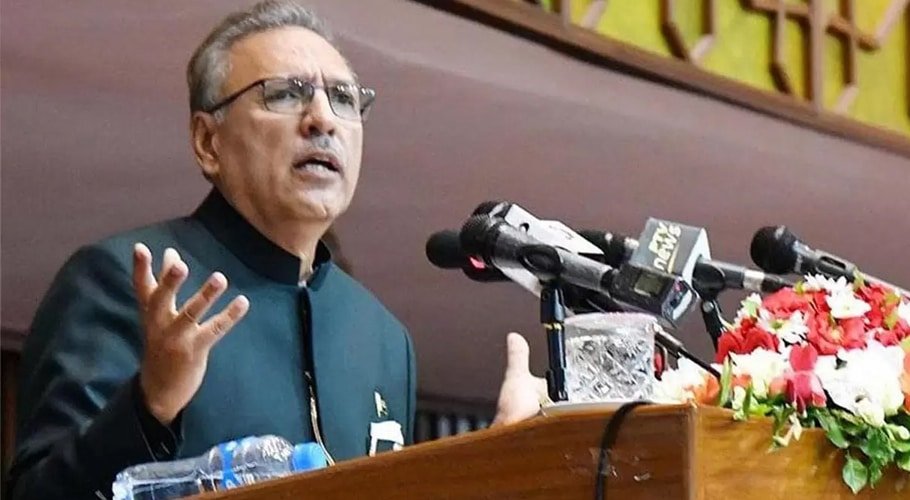
    Addressing a joint session of the parliament on Thursday, President Dr Arif Alvi stressed on empowerment of women in Pakistan, saying that opportunities should be made for them.

    Addressing a sparsely attended session, the President said that women should feel safe in public spaces and men in society can contribute to that. He pointed out that women in Pakistan can contribute a greatly to society.

    Moreover, the president said that women should be given chances to work in public offices and urged lawmakers to work on eliminating harassment.

    His remarks were addressed to a mostly empty hall, with legislators from both treasury and Opposition benches choosing to skip the session.

    Dr Alvi warned against neglecting youth as he called for the inclusion of children who were out of school and urged lawmakers to focus on it.

    “I have spoken to ulema that mosques should have sessions to provide school education. If you can’t provide education to children, give them skills,” he highlighted.

    Talking about the flood situation in Pakistan, the president, “I want to felicitate the Pakistan Army for helping victims while sacrificing their lives. The federal and provincial governments, PDMA (Provincial Disaster Management Authority), and NDMA (National Disaster Management Authority) all worked hard on the ground. I thank all of them.”

    He said that the recent floods had, once again, raised the demand for building dams. Furthermore, he pointed out that if the relief work is not done on time, human and economic losses from the floods would be higher.

    “The Netherlands is 19 times smaller than Pakistan but it has progressed in agriculture, and my country should have progressed more in this field. If we adopt a scientific approach, Pakistan can beat the world,” he stated.

    Talking about foreign affairs in his speech today, the president lauded the government for improving ties with the United States (US). On China, the president said, “I believe the Pakistan-China friendship is a real one and CPEC (China-Pakistan Economic Corridor) is an example of it.”

    At one point during his address, the president also called for the continuation of the work on Electronic Voting Machines (EVMs), saying “We shouldn’t delay this”.

    President Alvi was set to address the joint session on August 14, but due to the apprehensions of the coalition government, the address was postponed.

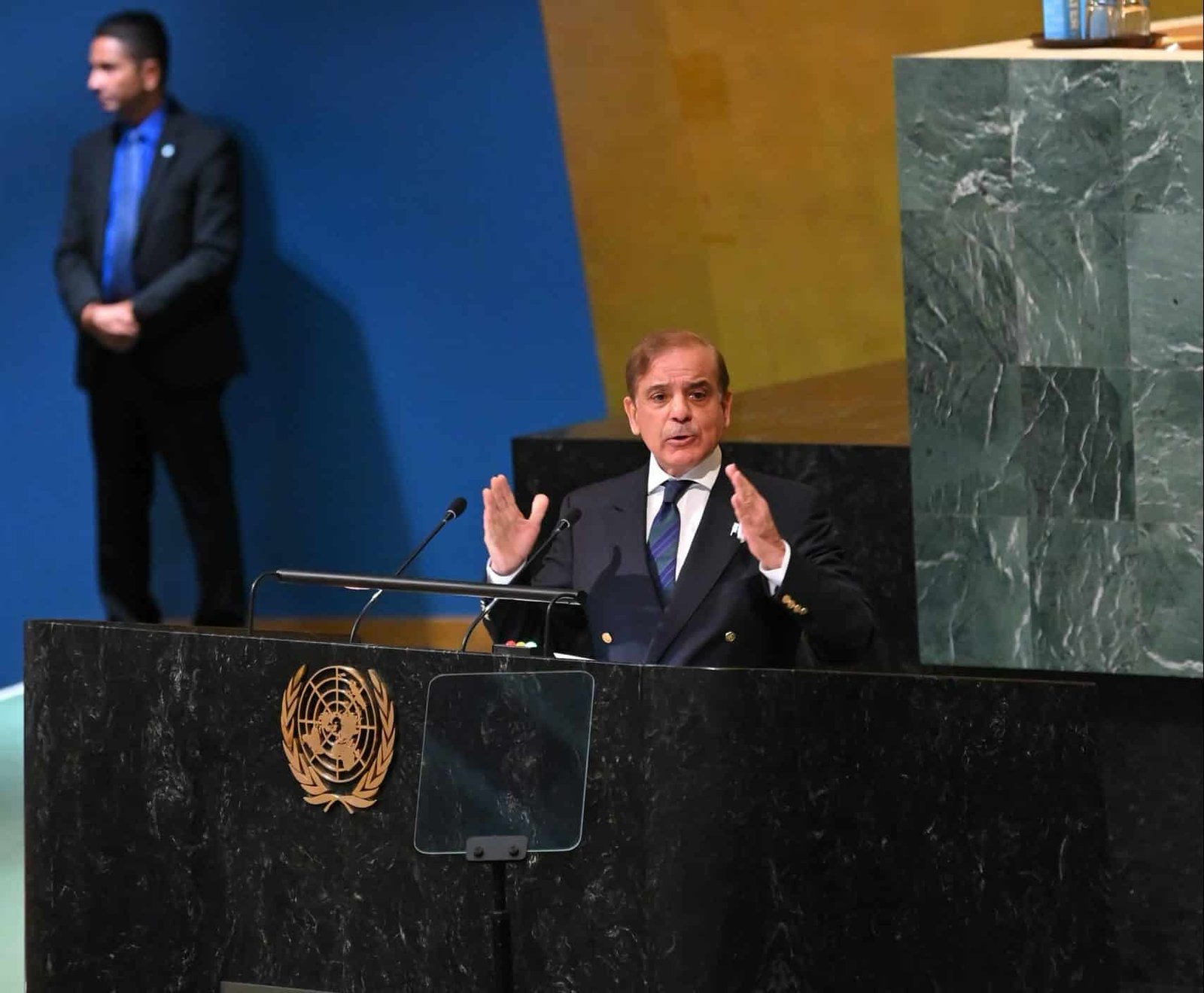
  • PM Shehbaz speaks about Islamophobia, climate injustice, and India at UNGA

    PM Shehbaz speaks about Islamophobia, climate injustice, and India at UNGA

    Prime Minister (PM) Shehbaz Sharif said that Pakistan strongly condemns terrorism in all its forms and manifestations, emphasizing that terrorism does not have a religion. “It is based on dogma, fueled by poverty, deprivation, injustice, and ignorance, and fanned by vested interests,” the Premier stated.

    During his debut speech at the United Nations General Assembly (UNGA), the Prime Minister said, “Pakistan is the principal victim of terrorism. Over the last two decades, we have suffered more than 80,000 casualties and over $150 billion in economic losses due to terrorist attacks. Our armed forces, with the support of our people, have broken the back of terrorism within Pakistan. Yet, we continue to suffer terrorist attacks from across our borders, sponsored and financed by our regional adversary. We are determined to defeat such cross-border terrorism.”

    Talking about Islamophobia, Shehbaz Sharif said that it is a global phenomenon. “Since 9/11, suspicion and fear of Muslims and discrimination against them have escalated to epidemic proportions. The officially sponsored campaign of oppression against India’s over 200 million Muslims is the worst manifestation of Islamophobia,” said the Premier.

    Continuing in the same vein, Sharif said that Muslims in India are subjected to discriminatory laws and policies, Hijab bans, attacks on mosques, and lynchings by Hindu mobs. “I am particularly concerned by the calls for ‘genocide’ against India’s Muslims by some extremist groups,” he told the General Assembly.

    “Pakistan needs a stable external environment. We look for peace with all our neighbours, including India,” the Prime Minister said, offering an olive branch to its regional arch rival. “Sustainable peace and stability in South Asia, however, remain contingent upon a just and lasting solution to the Jammu and Kashmir dispute. At the heart of this longstanding dispute lies the denial of the inalienable right of the Kashmiri people to self-determination,” he said.

    Talking about India, PM said, “India’s illegal and unilateral actions of 5th August 2019, to change the internationally recognised disputed status of Jammu and Kashmir and to alter the demographic structure of the occupied territory further undermined the prospects of peace and inflamed regional tensions. India’s relentless campaign of repression against Kashmiris has continued to grow in scale and intensity.”

    “In pursuit of this heinous goal. New Delhi has ramped up its military deployments in occupied Jammu and Kashmir to 900,000 troops, thus making it the most militarized zone in the world. The serial brutalization of Kashmiris takes many forms: extrajudicial killings, incarceration, custodial torture and death, indiscriminate use of force, deliberate targeting of Kashmiri youth with pellet guns, and ‘collective punishments’ imposed on entire communities.”

    “India is seeking to turn the Muslim-majority Jammu and Kashmir into a Hindu-majority territory, through illegal demographic changes. Millions of fake domicile certificates have been issued to non-Kashmiris; Kashmiri land and properties are being seized; electoral districts have been Jerry Mandered, and over 2.5 million non-Kashmiri illegal voters fraudulently registered. All this is in blatant violation of Security Council resolutions and international law, particularly the 4th Geneva Convention,” said Shehbaz.

    The PM made a passionate appeal to the world on Friday to undo the ‘climate injustice’ done to countries like Pakistan that make little contribution to global warming and yet face its worst consequences.

    “Why are my people paying the price of such high global warming through no fault of their own?” the premier asked.

    “Nature has unleashed her fury on Pakistan without looking at our carbon footprint, which is next to nothing. Our actions did not contribute to this,” he stressed, adding that he came to the UN to “explain first hand” the scale and magnitude of the climate catastrophe that has pushed one-third of the country under water in a super storm that no one has seen in living memory.

    “For 40 days and 40 nights a flood of biblical proportions poured down on us, smashing centuries of weather records, challenging everything we knew about the disaster, and how to manage it,” the prime minister said.

    “Even today, huge swathes of the country are still underwater, submerged in an ocean of human suffering. In this ground zero of climate change, 33 million people, including women and children, are now at high risk from health hazards, with 650,000 women giving birth in makeshift tarpaulins,” he told the world.

    The Prime Minister said Pakistan had never seen a more stark and devastating example of the impact of Global Warming. “Life in Pakistan has changed forever. People in Pakistan ask why, why has this happened to them? When global warming rips apart whole families and an entire country at this ferocious speed, it is time to ask why, and time to ask not what can be done but what MUST be done,” said the PM while explaining how this calamity had affected hearts and minds in Pakistan.
  • ‘Unless we get substantial relief how can the world expect from us to stand on our own feet? It is simply impossible’: PM Shehbaz

    ‘Unless we get substantial relief how can the world expect from us to stand on our own feet? It is simply impossible’: PM Shehbaz

    In an interview with Bloomberg TV, Prime Minister (PM) Shehbaz Sharif highlighted the damage caused by floods and urged that the world to pay more attention to the crisis.

    The premier said, “What the world has done is commendable but it is far from meeting our needs. We can’t do it alone”. He stressed that flood losses are estimated to be at $30 billion.

    “Unless the world comes up with billions of dollars for relief, rehabilitation, for building resilient infrastructure, things will not come back to normal. And I need to put the economy back on track and put millions of people back in their homes,” he told Bloomberg.

    “Unless we get substantial relief, how can the world expect us to stand on our own feet”, he asked. “It is simply impossible. The world has to stand by us”.

    He reiterated that although Pakistan contributes very little to carbon emission, the country is among the top ten most vulnerable countries to climate change, adding that around 1,500 people had died in the situation.

    Talking about the economic situation of the country, he said that Pakistan recently signed a deal with the International Monetary Fund (IMF) under “very tough” conditions, including taxes on petroleum and electricity.

    He went on to say that several world leaders had talked about the devastation in Pakistan.

    Recalling his meetings with the world leaders, he said that he is “very grateful” to United States (US) President Joe Biden for speaking about Pakistan’s plight. He added that Turkey’s President Recep Tayyip Erdogan and France’s Emmanuel Macron had also done the same.

    The premier was of the view that such action from the world shows the intentions and sincerity of global leaders. While saying that, he added that “But I think it should come very fast because time is running out and we are racing against time”.

  • ‘Six months’: Murad Ali Shah gives estimate on when flood waters will drain

    Sindh Chief Minister (CM) Murad Ali Shah said that the government is working on rehabilitating people and the province’s drainage, irrigation network. According to him, it will take “three to six months” to drain the water from flood-affected areas of the province as in “some areas, there is at least eight to 10 feet of water”.

    While speaking to the media in Karachi, the chief minister talked about the damages and loss of assets. He said that “12.5 million people are affected by the disaster and around 350 billion rupees’ losses to the farmers are being reported in the province.”

    He revealed that even in places where the floodwater is receding, “the situation is not such that people can return”, highlighting that Pakistan had received unprecedented rainfall this year.

    It is pertinent to mention that Sindh is the worst-hit province so far after biblical floods wreaked havoc across the country. Sindh had the most deaths and injuries. Out of the 1,396 fatalities countrywide, 578 people have died in Sindh province alone.

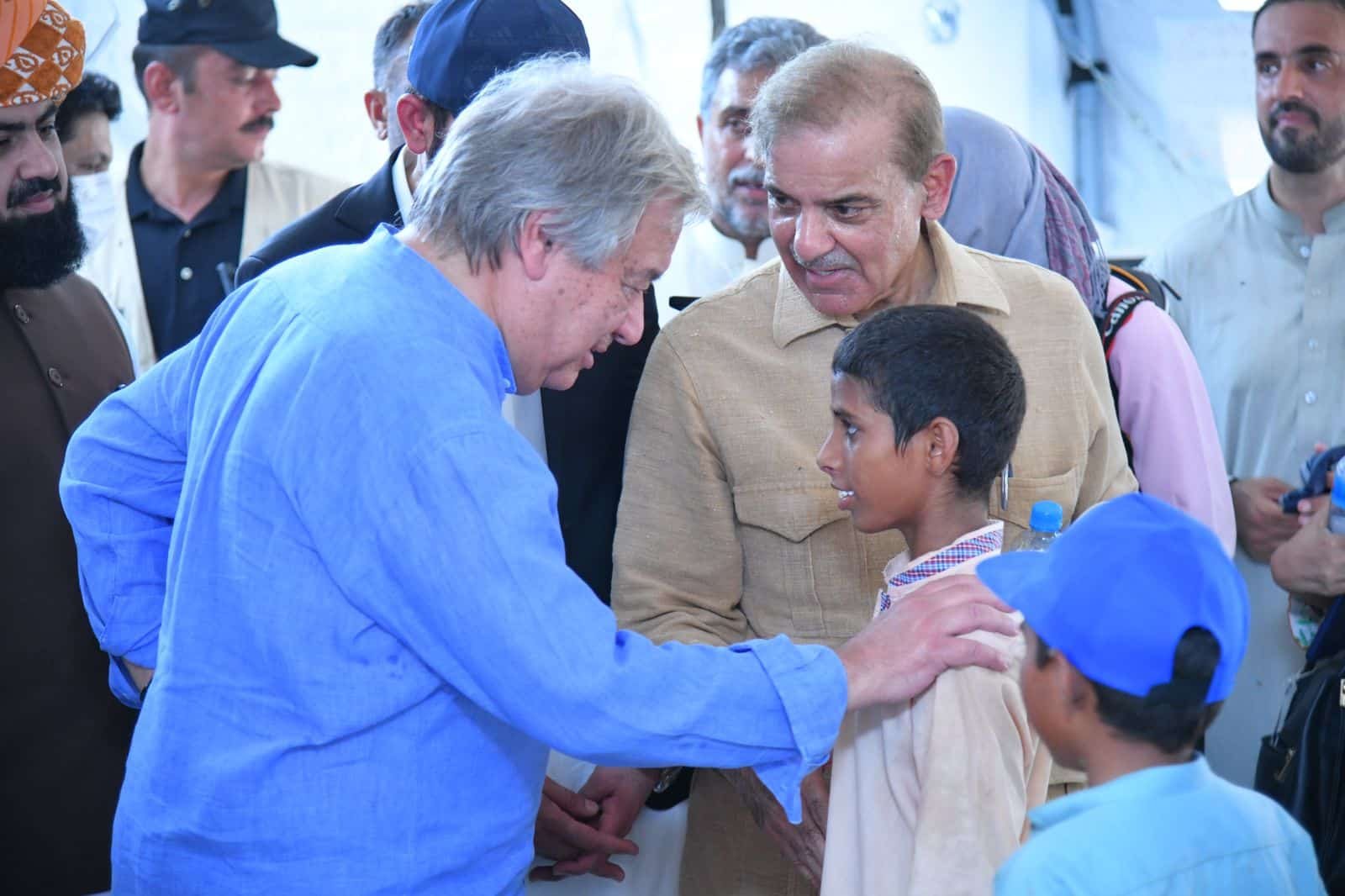
    Moreover, CM Shah said that the province is facing a shortage of tents and medicines and he had raised the issue with the United Nations (UN) chief Antonio Guterres during his recent visit to Sindh.

    “The whole world has to come together to combat climate change,” he said, adding that Guterres had also called on the world to “pitch in” to help Pakistan navigate the crisis.

    Earlier, the UN chief on his visit to Pakistan’s flood-affected areas said that he has “never seen climate carnage on this scale”.

    At a press conference in Karachi on Saturday after witnessing the worst of the damage in southern Pakistan, he said, “I have seen many humanitarian disasters in the world, but I have never seen climate carnage on this scale.”

    Guterres also strongly urged international creditors to introduce a new mechanism ‘Debt Swap’ for flood-devastated Pakistan.

  • Punjab CM Pervaiz Elahi increases financial assistance for flood victims to Rs10 lac

    Punjab CM Pervaiz Elahi increases financial assistance for flood victims to Rs10 lac

    Chief Minister (CM) Punjab, Chaudhry Pervaiz Elahi, has increased financial assistance for families of deceased victims from Rs. 0.8 million to 1 million (Rs 8lac to Rs10 lac).

    CM Elahi had a meeting with Provincial Minister Muhammad Muneeb Sultan Cheema in which they discussed the current political situation of the country and relief activities for flood affectees.

    Elahi was of the view that Pakistan has been greatly affected by climate change, with massive destruction caused by unusual rains and floods. For this purpose, the government has to take extraordinary measures, reports Geo Urdu.

    Commissioner Dera Ghazi Khan (DG Khan) said that Rs75,000 will be given for the loss of large animals due to floods.

    The aid for those who lost their cemented houses has been increased from Rs. 100,000 to Rs. 400,000. Similarly, the aid for those who lost their mud houses has been increased to Rs. 200,000 from Rs. 40,000.

    On Friday, Foreign Minister (FM) Bilawal Bhutto-Zardari presented a cheque of Rs15 million to PM Shehbaz as a contribution from the Ministry of Foreign Affairs towards the PM’s Flood Relief Fund.

    Last week, Prime Minister (PM) Shehbaz Sharif announced that PM Flood Relief Fund will be audited by the Accountant General Pakistan Revenues (AGPR) and a private audit firm to ensure transparency.

    Devastating floods in Pakistan have wreaked havoc across the country, leaving a path of destruction and loss in their wake. More than 1,400 people have lost their lives, one-third of whom are children.

    Record monsoon rains and melting glaciers triggered the disaster. The United Nations (UN) and Pakistan have linked the extreme weather to climate change; some 600,000 people have fled their homes.

    Community Verified icon
  • ‘Matter of justice’: UN chief appeals to the world to support Pakistan

    ‘Matter of justice’: UN chief appeals to the world to support Pakistan

    United Nations Secretary-General Antonio Guterres on Saturday, September 10, urged the international community to support disaster-hit Pakistan as the country needed massive financial help to overcome post-flood crises.

    “It is not a matter of generosity, but a matter of justice,” he said reiterating the United Nation’s commitment, strong support, and solidarity with the flood-affected populace of Pakistan.

    Guterres said that huge damages and losses were caused to human lives and properties. The Secretary General further said that the UN absolutely supported Pakistan and requested richer nations to generously help the country so that it could face the future challenges of climatic changes and save its people.

    He stressed that the international community must realize the serious impacts of greenhouse emissions as nature was striking back in the form of natural calamities.

    He continued that greenhouse gases had accelerated climatic changes and that nations with larger greenhouse emission footprints must understand these issues. Citing scientific estimates, the UN secretary-general emphasized that now was the right time to reduce greenhouse emissions.

    He said it was also a fact that they were living in a climatic changing era and have to make efforts to rebuild communities and to enable countries to resist and face future disasters that could be wrought by the natural calamities.

    Prime Minister (PM) Shehbaz Sharif, Foreign Minister Bilawal Bhutto-Zardari, Minister for Planning Ahsan Iqbal, Minister for Information and Broadcasting Marriyum Aurangzeb, provincial ministers, and the relevant authorities were present on the occasion.

    Sindh Chief Minister Murad Ali Shah gave a detailed briefing on the damages and loss of lives in the province.

    He said during the current monsoon season, different districts of the province had received unusual rainfall never witnessed in the past.

    He said that 30 districts of the province were affected, displacing about 12 million, adding that a total of 578 people lost their lives. A total of 3 million houses were destroyed and crops grown on an area of about 3.3 million acres were damaged while 500,000 livestock had been swept away.

    Earlier, the prime minister along with the UN secretary general and the federal ministers took an aerial review of the flood-affected areas of the Sindh province.

  • Across borders: Rahul Gandhi extends heartfelt sympathies to Pakistan’s flood victims

    The leader of India’s Congress party, Rahul Gandhi, has extended his heartfelt condolences and sympathies to the bereaved flood-affected families of Pakistan.

    In a tweet on Friday, Gandhi said, “The floods in Pakistan are a terrible tragedy. My heartfelt sympathies to all the people affected and deepest condolences to those who have lost their loved ones.”

    Earlier, Indian Prime Minister (PM) Narendra Modi also offered condolences to Pakistan.

    In a tweet posted on August 29, Modi said he was, “Saddened to see the devastation,” of the floods, adding that he hoped to see an early return to normalcy.

    PM Shehbaz Sharif had replied to his Indian counterpart’s tweet, thanking him for his words of condolence.

    Devastating floods in Pakistan have wreaked havoc across the country, leaving a path of destruction and loss in their wake. More than 1,400 people have lost their lives, one-third of whom are children.

    Record monsoon rains and melting glaciers triggered the disaster. The United Nations (UN) and Pakistan have linked the extreme weather to climate change; some 600,000 people have fled their homes.

    As many as 33 million people of the 220 million South Asian nation have been affected in some way by the floods that swept away houses, roads, railways and bridges and submerged around 4 million acres of farmland.

    UN Secretary-General Antonio Guterres is currently in Pakistan and all set to visit flood-affected areas of the country today (Saturday).

    On Friday, Guterres said that Pakistan is one of the countries most affected by climate change despite its minimal contribution to the phenomenon.

    During a briefing at the National Flood Response Coordination Centre (NFRCC), the UN chief said, “Pakistan has had little contribution to climate change but it is one of the most dramatically impacted by the consequences of climate change.”

    Earlier this week, PM Shehbaz said that the financial impact of the biblical floods might be in the “trillions”.

  • ‘Never seen this level of devastation’: first-hand account of what’s going on in flood affected areas

    ‘Never seen this level of devastation’: first-hand account of what’s going on in flood affected areas

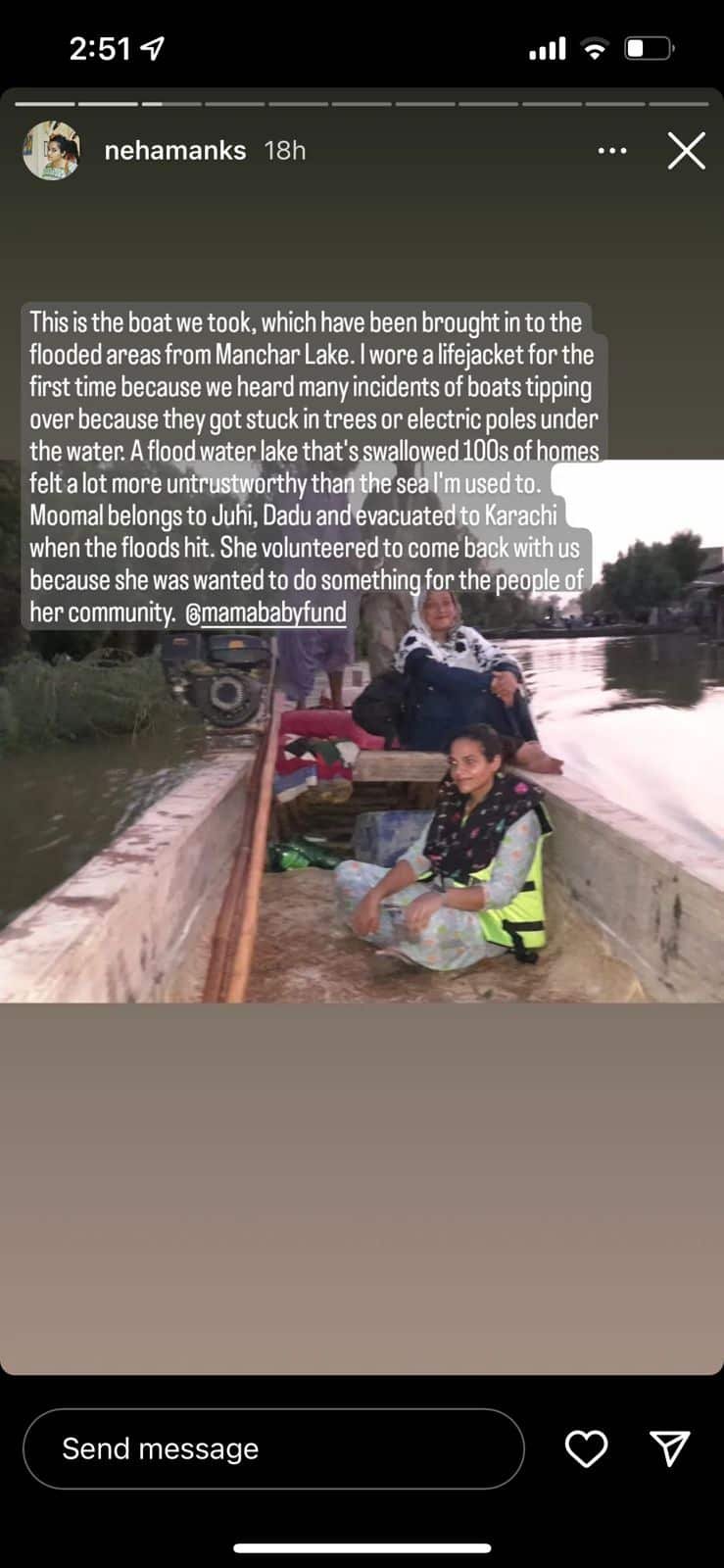
    Pakistan is in the throes of devastating floods that have wreaked havoc across all four provinces. The scale of devastation has been estimated to be more than $10 billion. Midwife, public health practitioner and founder of Mama Baby Funds (MBF), Neha Mankani, visited the flood-affected area of Dadu, located in Sindh, which is through and through inundated with floods.

    Neha Mankani, who was in the area for two days shared her experience of what she calls a devastation she has never seen in her career. Dadu is strategically located in an area where it gets water from Manchar, Hamal Lakes and hill flows from Gorak Hills.

    Talking about the wreckage, Mankani said, “It’s safe to say I have never seen this level of devastation in my entire career.”

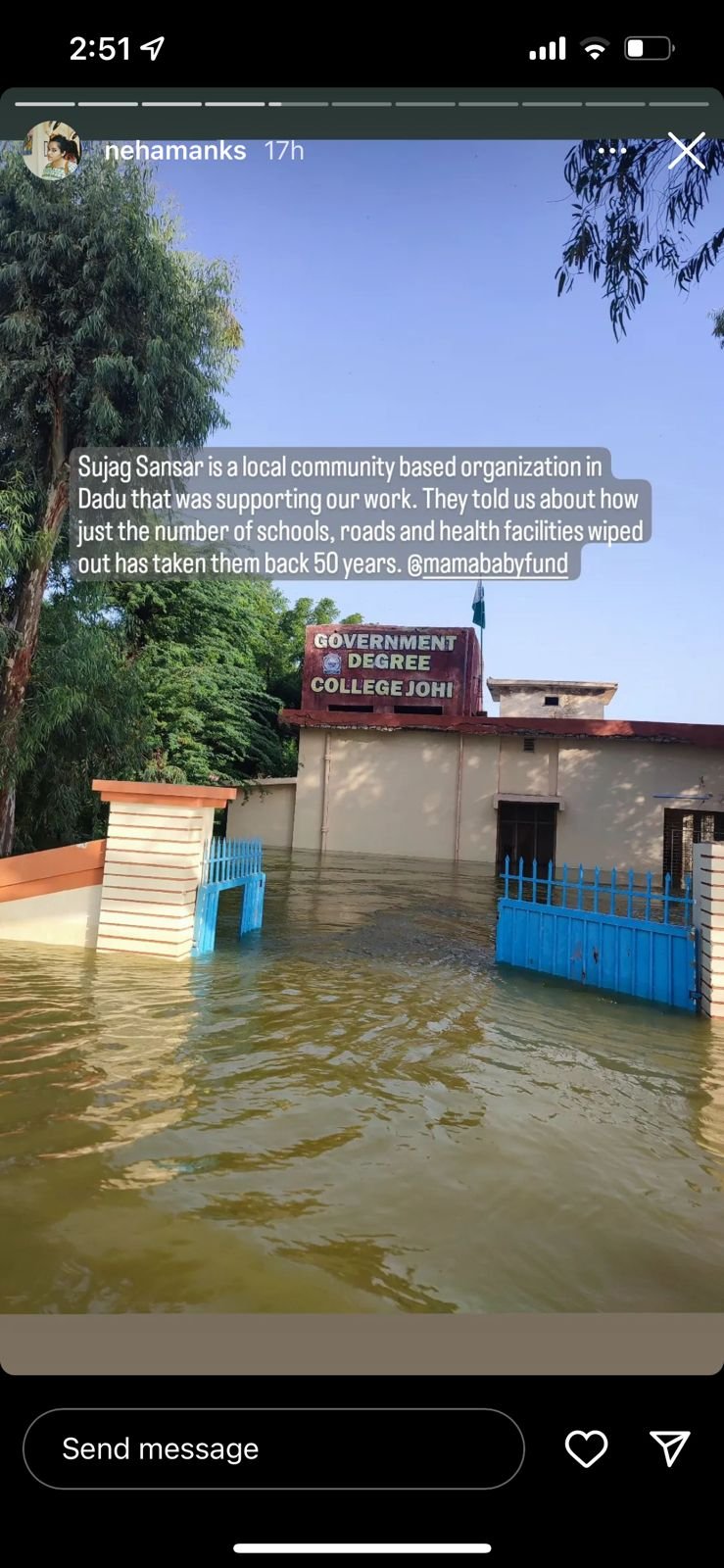
    Sharing pictures from the site on her Instagram story, Mankani wrote, “The next few images are of the water separating Dadu city and Juhi- which now has many many villages under it.”

    “There are IDP’s on the embankments of cities in makeshifts tents. The boat ride was an hour long and cost Rs 600 per person, a simple equation of demand and supply. We encountered two maternal deaths and 25 pregnant women in the first hour of our arrival. Both women died because they couldn’t get care on time.”

    “I wore a lifejacket for the first time. We heard many incidents of boast tipping over because they got stuck in trees or electric poles under the water. A flood water lake that’s swallowed 100’s of homes felt a lot more untrustworthy than the sea I’m used to.”

    Mankani explaining the aftermath and the toll the devastation has caused said, “Sujag Sansar [a right-based development organization working for the marginalized in most backward areas] told us that no one is really thinking about the children and how they are dealing at camps.” She further explained that women were given basic things like baltis, lotas, detergent, mosquito coil, towels, shoes, matches, and hygiene products. Sujag Sansar also informed them about how floods had taken them 50 years back, as everything was drowned under water.

    Mankani along with the volunteers who had accompanied her said that women their were told how to use medicals kits, make ORS and how will they be able to manage basic health challenges at their camps. Mankani also conducted an antenatal clinic both for women and some babies in a school.

    Explaining the conditions of health care, Mankani said that a baby was born on a boat without any medical support. She said that they found no health care providers on either side of the water- except for one government dispensary with a caretaker who dispenses medicines when he felt like and one woman who had turned herself into a dai after she reached the camps.

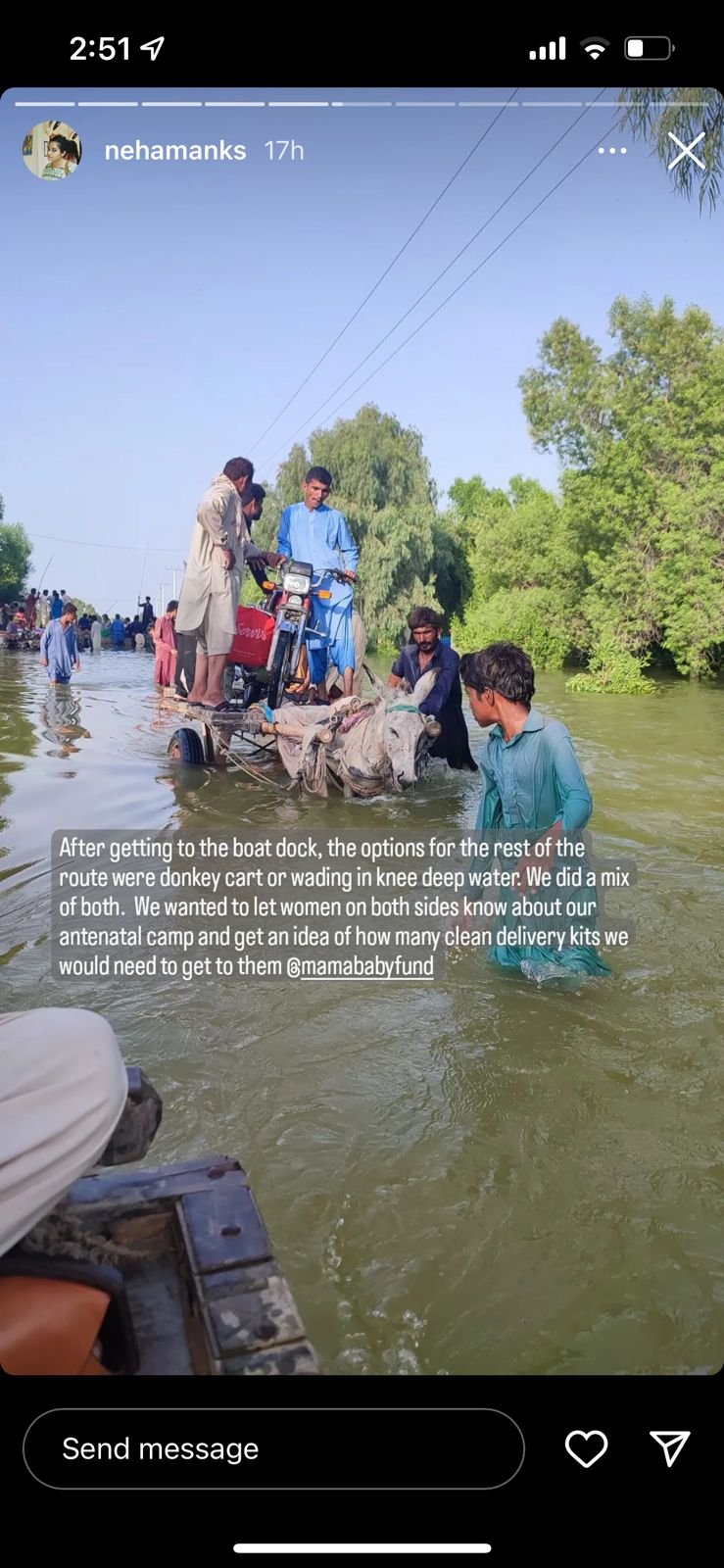
    The MBF founder further said that once they reached the boat dock, the only option for them was a donkey cart or wading through knee deep water. Adamant on spreading the message of the antenatal camp, Mankani said that they wanted to give women on both sides of the water the idea of the camp. And on how many clean delivery kits were needed to get to them.

  • ‘September sitamgar hoga’: Sheikh Rasheed announces Khan’s march in Islamabad

    ‘September sitamgar hoga’: Sheikh Rasheed announces Khan’s march in Islamabad

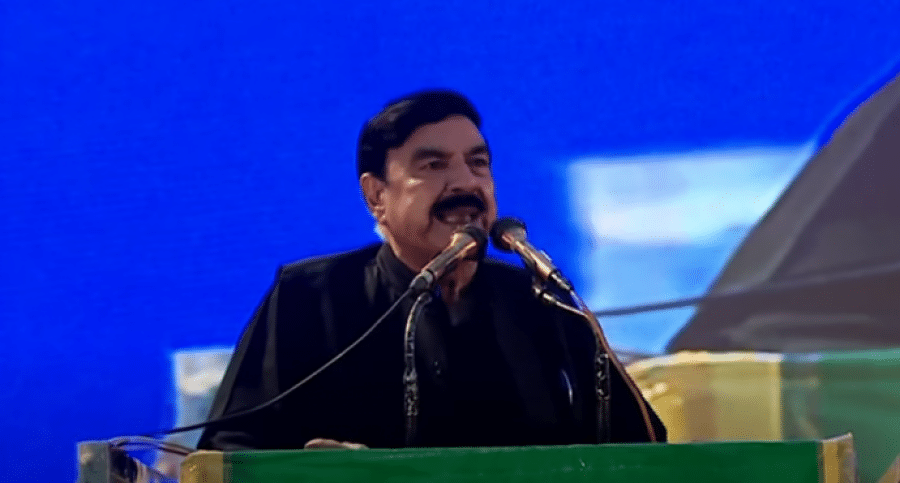
    Former interior minister and Awami Muslim League chief Sheikh Rasheed said on Sunday that Pakistan Tehreek-e-Insaf (PTI) Chairman Imran Khan will give a call to his supporters to march towards Islamabad once the flood situation eases down.

    Rasheed took to his Twitter handle and warned: “Sitambar Sitamgar ho ga (September will be cruel)”.

    The former federal minister pointed out that the International Monetary Fund (IMF) has made yet another agreement of Rs608 billion with the government. “First they robbed the treasury and now the people’s pockets”, he said.

    “Floods have opened the eyes of the people of Sindh, the floods have destroyed the Pakistan Democratic Movement’s (PDM) reputation. How will other countries give aid when the people of the country refuse to give money to money launderers?”

    He said that the people can not bear the burden of increasing petrol and power prices, yet the “government continues to raise them”.

    In a series of tweets, he said that IMF knows that there is a weak majority of the government and people can come to the streets.

    “The time is not far when factories and shops will be closed, people will be on the streets”, he warned again while adding that floods have become a matter of “political point scoring”.

    Rasheed’s statement came a day after Imran Khan warned the government to stop the “persecution” of his party workers otherwise he will again march on Islamabad.

    He said the government would have “no place to hide” in the event he comes to Islamabad.