Tag: floods

  • ‘Relief activities for floods could continue for next two years’: Ahsan Iqbal

    ‘Relief activities for floods could continue for next two years’: Ahsan Iqbal

    Minister for Planning and Development, Ahsan Iqbal, has said that relief activities after the devastating effects of floods across the country could continue for the “next two years”.

    “Natural disasters are a result of climate change, however, we are coming up with plans to deal with them in the future. For now, the government has allocated Rs40 billion for 20 underdeveloped districts.”

    The federal minister said that the armed forces, provincial governments and district administrations are working actively to provide relief.

    “The floods have caused wide-scale destruction”, he added while urging the nation to unite and help those affected by floods.

    On Thursday, Climate Change Minister Senator Sherry Rehman announced that the Parliament has approved the country’s largest “Living Indus” initiative that is aimed at protecting the cradle of civilizations which was under serious threat due to environmental degradation and anthropogenic activities.

    The floods have also raised questions on whether Pakistan will be able to pay its debts on time. Prime Minister (PM) Shehbaz Sharif and Foreign Minister Bilawal Bhutto-Zardari have sought climate justice to compensate for the destruction.

    It is pertinent to mention that the US is so far the largest donor to flood relief and rehabilitation funds. Washington has provided about $56 million to Pakistan since July.

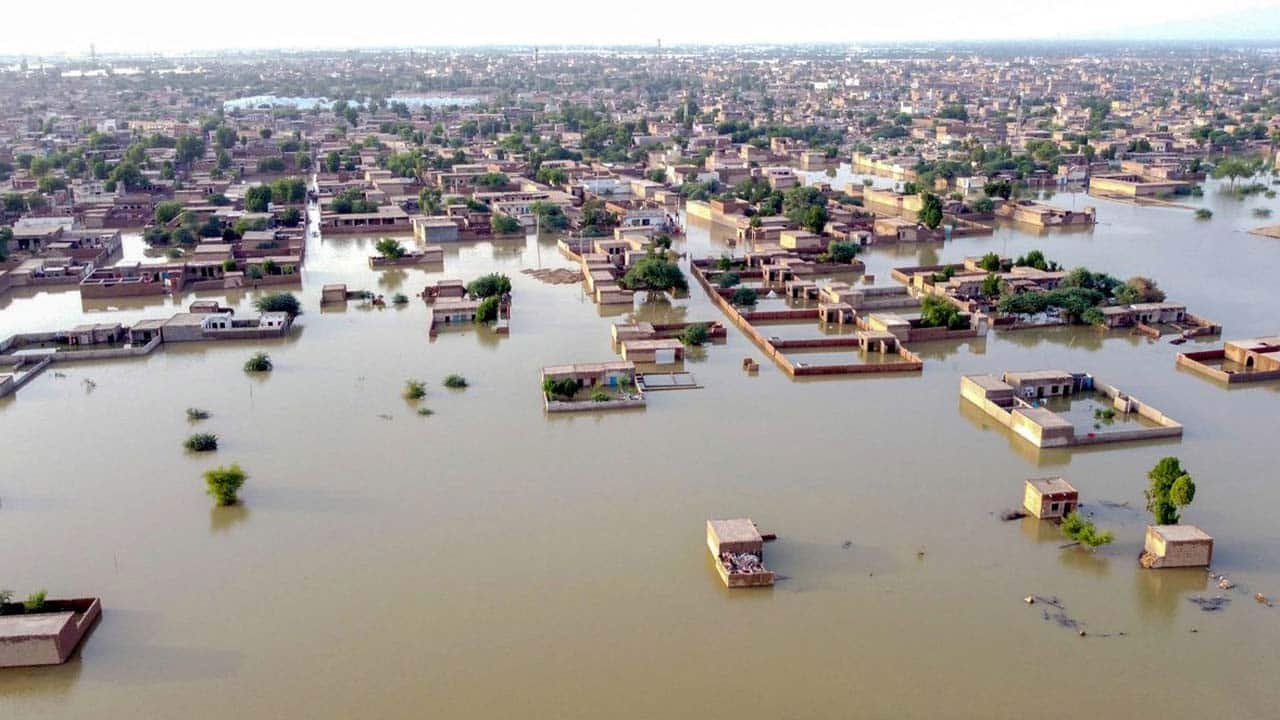
    Devastating floods are responsible for killing more than 1,600 people and the damages to the infrastructure is estimated at nearly $30 billion.

  • US to give $10m to Pakistan for food security

    US to give $10m to Pakistan for food security

    United States (US) Secretary of State, Antony Blinken, has said that the US government is pleased to announce another $10 million for Pakistan’s food security programme.

    Foreign Minister Bilawal Bhutto-Zardari met Blinken at the State Department in Washington DC on Monday.

    Holding a joint press conference following the meeting, Bilawal said that diplomacy between the State Department and the foreign ministry of Pakistan is back once again.

    “It is indeed true that diplomacy is back between the US State Department and the foreign ministry of Pakistan,” he stressed.

    Blinken said this is a very difficult time for Pakistan after floods wreacked havoc in the country. Floods will have long-term repercussions if the situation is not handled immediately, he warned.

    The US top official said, “We are meeting when Pakistan’s one-third [area] is under water. We have a sense of urgency and sense of determination. We’re looking ahead to rebuild.”

    He stated that the US stands with the people of Pakistan at this crucial time and added that 17 planes carrying aid for flood victims had already left the country. Pakistan will also receive an additional $10 million for its food security programme, he noted.

    “That has an immediate impact. But unless we’re able together to deal with the challenge, it will have a long-term impact as well,” said Blinken.

    “I also urged our colleagues to engage China on some of the important issues of debt relief and restructuring so that Pakistan can more quickly recover from the floods,” Blinken said.

    China is a key economic and political partner of Pakistan, pushing ahead with a $54 billion “economic corridor” that will build infrastructure and give Beijing an outlet to the Indian Ocean, although Chinese interests have also faced attacks from separatists.

    During the press conference, Bilawal also invited Blinken to visit Pakistan.

  • Pakistan’s GDP likely to decrease to 2% in FY23 as flood damage may cost $30 billion

    Pakistan’s GDP likely to decrease to 2% in FY23 as flood damage may cost $30 billion

    Syed Zafar Ali Shah, Secretary of the Ministry of Planning, Development, and Special Initiatives, stated on Thursday that a preliminary estimate indicated that the GDP growth rate may remain at two percent in the current fiscal year and that the estimated cost of damage repair, including reconstruction, may be $30 billion as a result of the nation’s floods.

    He stated that we are gathering damage assessment data for a preliminary report and that the preliminary report and verification procedure would both be finished by October 15.

    According to The Nation, teams from the government and ten international development organisations, such as the World Bank (WB), the Asian Development Bank (ADB), the United Nations (UN), and others, are working together to prepare the preliminary report for the damage assessment of the country’s floods.

    In order to prepare early estimates on damage and reconstruction, he claimed that 100 specialists from development partners, such as the World Bank, the ADB, the UN, the EU, Turkey, etc., are currently working in 12 to 17 sectors.

    According to him, the Pakistani government would take the initiative in relief operations, and technical skills will be provided by professionals to evaluate the field damage and the cost of rehabilitation. The administration will solicit donations for reconstruction after making the final determination.

    In relation to the evaluation of the damage to the railways, Zafar Ali stated that it has been initially predicted that $2.3 billion will be needed for the reconstruction of the railroad tracks, bridges, and other associated facilities that have been harmed by floods. In total, 113 districts in Pakistan have been damaged by flooding, but 83 of those areas are catastrophe hit and require complete repair and rehabilitation work, according to him.

    He claimed that the cost to rebuild homes is projected to be $3 billion. However, he said that the provinces are consistently reassessing damage. When the water recedes, he said, the Sindh government will begin work on reassessing those places. He claimed that water covers the majority of Sindh’s railroad rails.

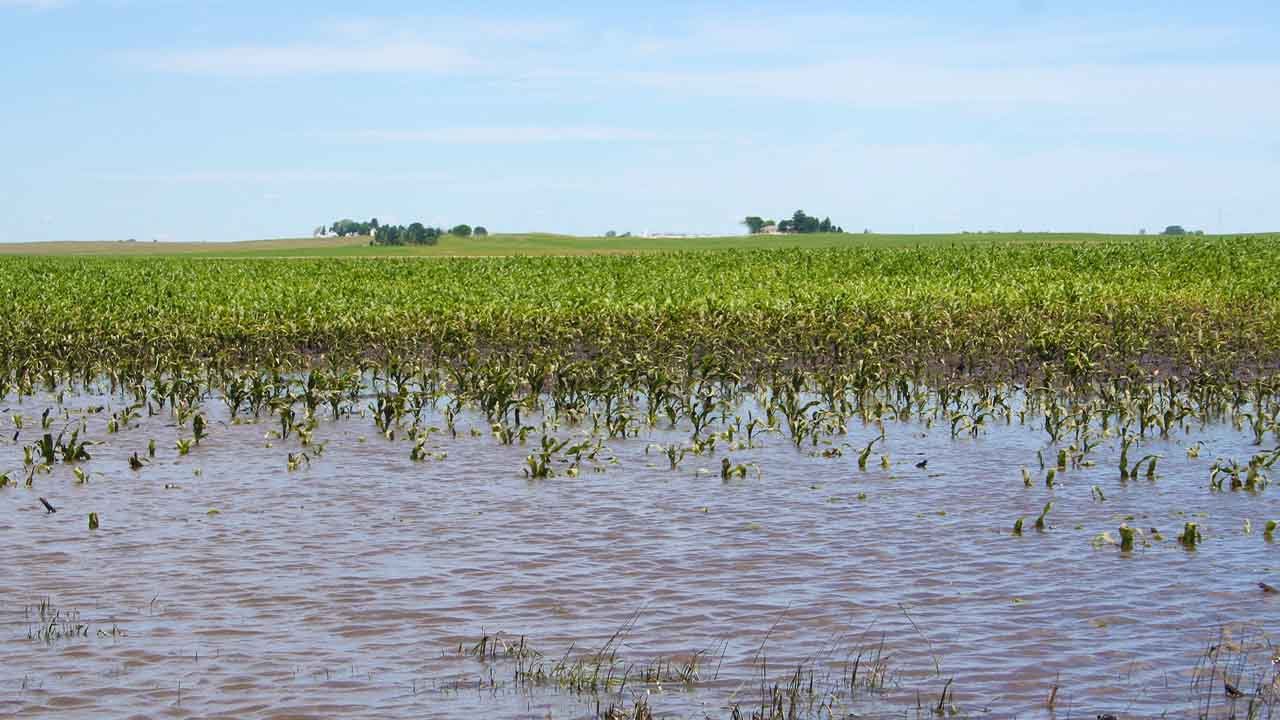
    He claimed that the Sindh flood had a significant negative impact on cotton, rice, and other crops. According to him, three million cotton bales are thought to have been lost. However, it appears that things are improving and the loss may only total 2.7 million bales, the secretary said, adding that it is still too early to provide a precise estimate of the cotton crop’s losses. He predicted that future wheat crop farming in Sindh and Khyber-Pakhtunkhwa would also be impacted.

    He claimed that the nation’s severe flooding has had an impact on 4.3 million families. He stated that more than 0.3 million people in Balochistan had been impacted by the floods. According to him, the ADB has authorised a $3 million grant to boost the Pakistani government’s emergency relief efforts in the wake of massive flooding around the nation.

    The planning secretary also mentioned that a Dutch expert would be working with NESPAK to update the flood prevention strategy for 2017. He said that the administration has so far used $303 million in donor funding that was intended for disaster relief. According to him, this sum consists of $3 million from the ADB and $300 million from the World Bank.

    Despite the $160 million in pledges made so far by the world community, he claimed that much more money will be needed to complete the reconstruction and rehabilitation.

    The planning secretary responded to a question concerning diverting PSDP-2022–23 monies for flood victims by saying that work is still being done on this issue, but no decisions have been made as of yet. He stated that the Benazir Income Support Program is now supporting the flood-affected population with Rs70 billion from the government.


  • World Bank to provide Pakistan $22.2 million in financial support for flood-affected farmers

    World Bank to provide Pakistan $22.2 million in financial support for flood-affected farmers

    In an attempt to help Pakistan’s flood-affected farmers, the World Bank will provide financial support of $22.2 million.

    A delegation led by the World Bank’s South Asia Regional Director for Sustainable Development, John A Roome, met with the Federal Minister for National Food Security and Research, Tariq Bashir Cheema.

    The discussion at the meeting focused on the farmer community and food security, as well as the rehabilitation and relief operations in the flood-affected areas.

    According to the minister, rain and flooding have wreaked havoc on the agricultural industry and destroyed the farming community. In order to restore normalcy, he claimed that at this crucial moment, all attention is being paid to restoration efforts in the flood-affected districts.

    He mentioned the government’s intention to provide subsidies for fertiliser and seeds to help the impacted farmers. According to the idea, the federal government will cost-share with the provinces to give farmers discounted inputs for the upcoming Rabi season.

    “We plan to provide subsidized wheat and edible oil seeds, and one fertilizer bag per acre to farmers in the calamity-hit areas,” he said.

    Provincial governments and the National Disaster Management Authority will handle the disbursement. He believed that with this support, farmers will be able to stand up again.

    According to John A. Roome, the World Bank would assist Pakistan by funding initiatives aimed at rebuilding the devastated neighbourhood. He consented to assist the World Bank’s Locust Emergency and Food Security (LEAFS) initiative in rehabilitating the farming community in the afflicted districts and locust-stricken regions. He said that the World Bank is assisting the farming community by collaborating with provincial agriculture agencies.

    He stated that he would ask the World Bank Group Board to extend aid to Pakistan as it attempts to recover from the damage brought on by unheard-of floods. The minister also praised the World Bank Group’s support at a time when assistance was most needed for the country.

  • US President says Pakistan ‘underwater’, other countries should help

    US President says Pakistan ‘underwater’, other countries should help

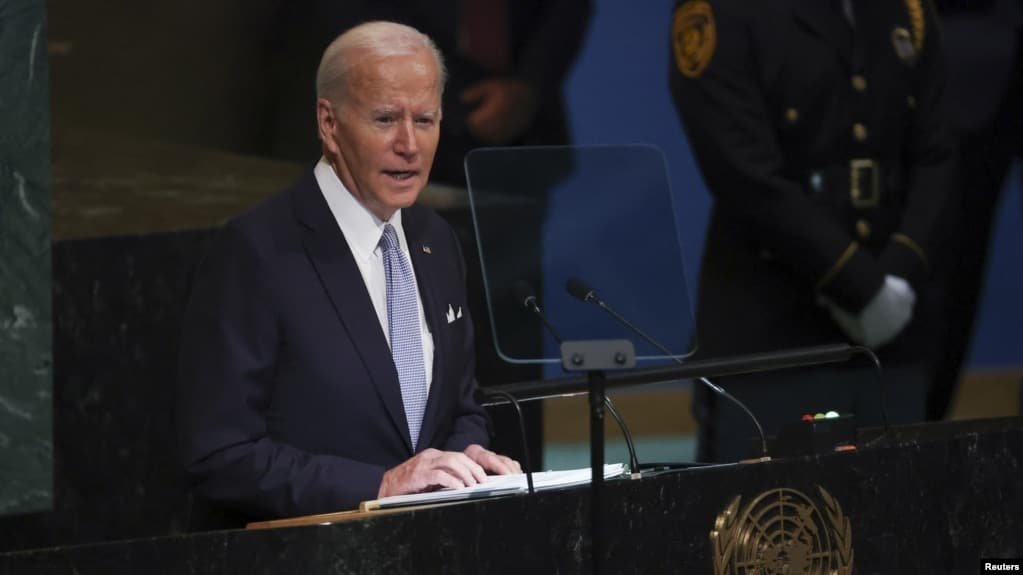
    President of the United States, Joe Biden, on Wednesday asked the world to step forward and stop the effects of climate change. While addressing the United Nations General Assembly (UNGA) in New York, the American President said that Pakistan must be helped as the country remains under water after devastating floods hit the country.

    In his address to the 193 member strong UNGA, the US President announced another $2.9 billion for a fund aimed at helping to resolve global food insecurity.

    “Pakistan is still under water, needs help,” he said during the speech.

    “Families are facing impossible choices, choosing which child to feed and wondering whether they’ll survive,” he said. “This is the human cost of climate change. And it’s growing, not lessening.”

    Devastating floods in Pakistan have wreaked havoc across the country, leaving a path of destruction and loss in their wake. More than 1,599 people have lost their lives, one-third of whom are children.

    Record monsoon rains and melting glaciers triggered the disaster. The United Nations (UN) and Pakistan have linked the extreme weather to climate change; some 600,000 people have fled their homes.

    As many as 33 million people of the 220 million South Asian nation have been affected in some way by the floods that swept away houses, roads, railways and bridges and submerged around 4 million acres of farmland.

  • What did Angelina Jolie do in Pakistan?

    What did Angelina Jolie do in Pakistan?

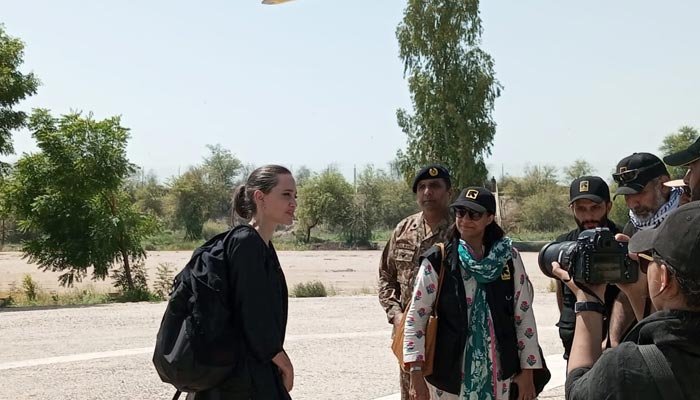
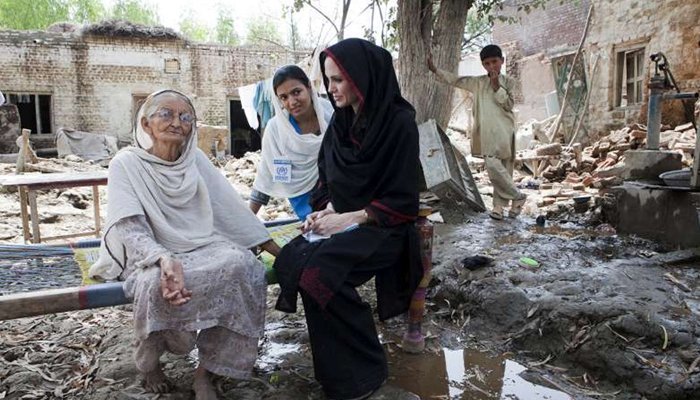
    United Nations High Commissioner for Refugees (UNHCR) Special Envoy and Hollywood actor Angelina Jolie arrived in Pakistan on Tuesday, September 20, to support communities affected by devastating floods.

    Jolie has arrived to witness and gain an understanding of the situation and to hear from people about their needs and steps to prevent such suffering in the future.

    Jolie will highlight the need for urgent support for the Pakistani people and long-term solutions to address the multiplying crises of climate change, human displacement and protracted insecurity we are witnessing globally.

    She will see first-hand how countries like Pakistan are paying the greatest cost for a crisis they did not cause.

    “The IRC hopes her visit will shed light on this issue and prompt the international community — particularly states contributing the most to carbon emissions — to act and provide urgent support to countries bearing the brunt of the climate crisis,” it said.

    IRC’s latest needs assessment shows people are in urgent need of food, drinking water, shelter, and healthcare. Every person the organisation surveyed reported women and girls have no access to menstrual hygiene products.

    Jolie, who previously visited victims of the 2010 floods and 2005 earthquake in Pakistan when she was the UNHCR’s goodwill ambassador, is scheduled to visit the IRC’s emergency response operations and local organisations assisting displaced people, including Afghan refugees.

    The Government of Pakistan stated that it finds Jolie’s gesture heart warming.

  • Pakistan is out of danger, there is no risk of the country going bankrupt: Miftah Ismail

    Pakistan is out of danger, there is no risk of the country going bankrupt: Miftah Ismail

    The present coalition government has lifted Pakistan out of danger, according to Federal Finance Minister Miftah Ismail, as there is no chance of the nation becoming bankrupt.

    In an interview during Geo News show “Aaj Shahzeb Khanzada Kay Sath” on Monday, the minister stated that Pakistan Tehreek-e-Insaf (PTI) leader Imran Khan had put the country at risk of default. However, he said, Pakistan is not currently in danger of going bankrupt.

    The economic crisis were made worse by flash floods. But we’ll run the economy effectively. The country’s economy won’t be in danger, he continued.

    The finance minister added that the government would implement measures to stabilise the currency market within the following four to five days.

    He claimed that certain banks offered overpriced dollars as a result of the circumstance. The minister stated that the Prime Minister has taken strict notice of these banks and has requested a report from the Governor State Bank within two days.

    Eight banks have also received letters regarding this and will also face penalties.

  • PKR continues losing ground against dollar amid fears of widening trade deficit

    PKR continues losing ground against dollar amid fears of widening trade deficit

    In the interbank market during the first hours of trading on Monday, the Pakistani rupee was trading between Rs229 and Rs230 versus the US dollar.

    When intra-day trading began at 11:00 AM, the rupee was quoted at Rs229.88, depreciating by 0.31 per cent against the US dollar.

    The rupee had a terrible prior week, falling against the US dollar in the inter-bank market to close at Rs228.18 after losing value in each of the five sessions for a total loss of almost 4 per cent.

    In the interbank market during the first hours of trading on Monday, the Pakistani rupee was trading between Rs229 and Rs230 versus the US dollar.

    When intra-day trading began at 11:00 AM, the rupee was quoted at Rs229.88, depreciating by Re0.70 or 0.31 per cent against the US dollar.

    The rupee had a terrible prior week, falling against the US dollar in the inter-bank market to close at Rs228.18 after losing value in each of the five sessions for a total loss of almost 4 per cent.

    The dollar index, which compares the value of the dollar to six important rival currencies, held steady at Rs108.82, retreating from a two-decade high achieved on Wednesday. In the previous session, it fell to Rs108.35, its lowest level since August 30.

    Investors remain cautious ahead of Tuesday’s release of the US CPI data, despite the fact that Fed officials continued to use hawkish language on Friday, the last day before a period of silence prior to the Federal Open Market Committee’s meetings.

    A significant factor in currency parity, oil prices fell on Monday as the outlook for global fuel demand was overshadowed by COVID-19 limitations in China and the possibility of future interest rate increases in the US and Europe.

  • Punjab CM Pervaiz Elahi increases financial assistance for flood victims to Rs10 lac

    Punjab CM Pervaiz Elahi increases financial assistance for flood victims to Rs10 lac

    Chief Minister (CM) Punjab, Chaudhry Pervaiz Elahi, has increased financial assistance for families of deceased victims from Rs. 0.8 million to 1 million (Rs 8lac to Rs10 lac).

    CM Elahi had a meeting with Provincial Minister Muhammad Muneeb Sultan Cheema in which they discussed the current political situation of the country and relief activities for flood affectees.

    Elahi was of the view that Pakistan has been greatly affected by climate change, with massive destruction caused by unusual rains and floods. For this purpose, the government has to take extraordinary measures, reports Geo Urdu.

    Commissioner Dera Ghazi Khan (DG Khan) said that Rs75,000 will be given for the loss of large animals due to floods.

    The aid for those who lost their cemented houses has been increased from Rs. 100,000 to Rs. 400,000. Similarly, the aid for those who lost their mud houses has been increased to Rs. 200,000 from Rs. 40,000.

    On Friday, Foreign Minister (FM) Bilawal Bhutto-Zardari presented a cheque of Rs15 million to PM Shehbaz as a contribution from the Ministry of Foreign Affairs towards the PM’s Flood Relief Fund.

    Last week, Prime Minister (PM) Shehbaz Sharif announced that PM Flood Relief Fund will be audited by the Accountant General Pakistan Revenues (AGPR) and a private audit firm to ensure transparency.

    Devastating floods in Pakistan have wreaked havoc across the country, leaving a path of destruction and loss in their wake. More than 1,400 people have lost their lives, one-third of whom are children.

    Record monsoon rains and melting glaciers triggered the disaster. The United Nations (UN) and Pakistan have linked the extreme weather to climate change; some 600,000 people have fled their homes.

    Community Verified icon
  • Pakistan continues to face liquidity crunch despite IMF programme’s revival

    Pakistan continues to face liquidity crunch despite IMF programme’s revival

    Even though the International Monetary Fund (IMF) programme has resumed after a seven-month hiatus, Pakistan continues to struggle with a major dollar liquidity crunch as the catastrophic floods have exacerbated the macroeconomic conditions.

    According to Geo, since many politicians and economists advocated for Pakistan to ask the IMF for a Rapid Financing Instrument (RFI) or Natural Calamity Response-related Funding Facility, the Pakistani government has not yet submitted a new request in anticipation of the Washington-based international lender’s unenthusiastic response.

    After being put on hold in February 2022 by the previous PTI-led government’s provision of unfunded fuel and energy subsidies, the IMF project under $6.5 billion was restarted in late August.

    Since then, there has been pressure on Pakistan’s currency; nevertheless, the recent devastating floods have hurt the economy, contrary to what experts had anticipated would happen with the restart of the IMF programme.

    The rupee has dropped 9 per cent against the US dollar in recent days due to intense pressure on the currency rate.

    According to reports, the issue has gotten worse as demand for imports has multiplied and there are not enough dollars in the country. Pakistan’s macroeconomic risks are not going away without greater dollar inflows.

    The early estimates of damages have now increased to almost $18 billion as a result of the severe flooding, with Pakistan’s agriculture industry taking the biggest hit.

    The worst agricultural performance will put pressure on rising import demand for commodities, and if Pakistan cannot attract the appropriate levels of dollar inflows, food shortages may occur in the ongoing financial year.

    In contrast to the projected aim of 3.9 per cent for the current fiscal year 2022–2023, the agriculture growth could remain zero or perhaps turn negative.